

-
 Redaction
Cosmic cartography: mapping a universe we can't see
Explore how astronomers map dark matter and dark energy using redshift surveys, gravitational lensing, and powerful new telescopes like Rubin and Roman today.
The horizon of the unknown
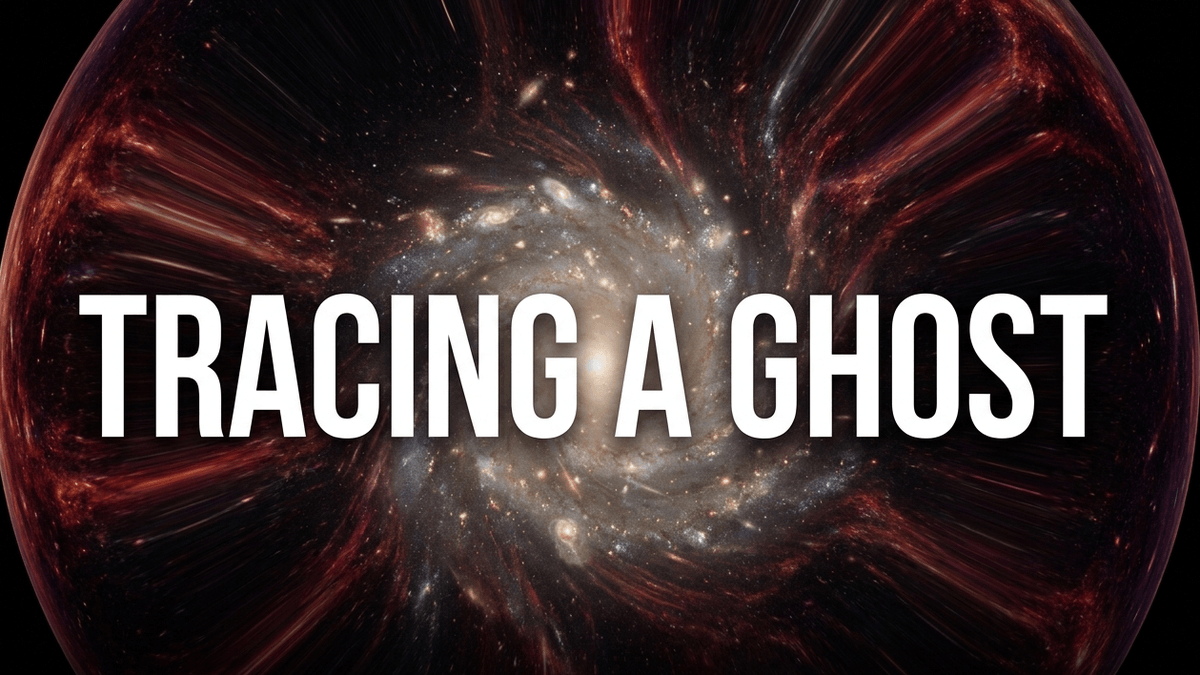
There is a peculiar stillness in the act of looking at the night sky. We stand on a small, rocky outcrop in the vastness, peering into a deep past that is simultaneously present. As a cosmic cartographer, one learns quickly that our maps are not merely representations of space, but of time and light. The fundamental challenge of mapping the universe is rooted in a heartbreaking reality: we are tracing the outlines of a ghost. Most of what exists is invisible, and most of what is visible is already gone or unreachable. This discipline, which I often think of as a form of celestial archaeology, requires us to reconcile the finite nature of human observation with the infinite ambition of our curiosity.
When we speak of the observable universe, we are describing a sphere of influence defined by the speed of light. Since the Big Bang occurred roughly 13.8 billion years ago, one might assume we can see 13.8 billion light-years in every direction. But the universe is not a static container; it is an expanding fabric. According to data from the Planck mission and subsequent cosmological studies, the current radius of this observable sphere is approximately 46.5 billion light-years. This discrepancy exists because while the light was traveling toward us, the space it traveled through was stretching. We are looking at a snapshot of where things were, projected onto a canvas of where they have drifted since. This physical limit is not a failure of our telescopes, but a boundary written into the laws of physics themselves.
The invisible architects of the void
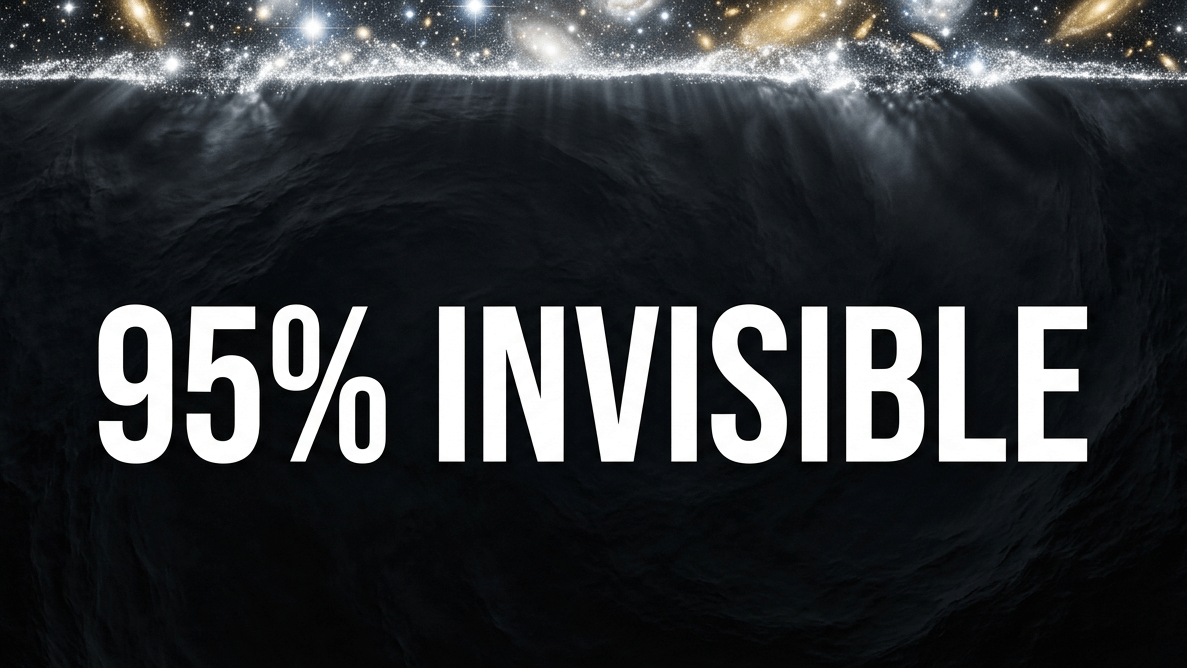
To map the universe is to confront the realization that the stars and galaxies we see are merely the foam on a deep, dark ocean. Standard baryonic matter - the stuff of atoms, people, and planets - comprises a mere 5% of the cosmic recipe. The rest is divided between two enigmatic entities: dark matter and dark energy. Dark matter, accounting for roughly 25% of the universe, does not emit, reflect, or absorb light. It is the silent scaffolding upon which galaxies are built, exerting a gravitational pull that holds the spinning stars in place. Without it, the Milky Way would fly apart. Yet it remains a shadow on our maps, inferred only by the way it tugs at the visible world.
Dark energy is even more elusive, occupying approximately 70% of the cosmic energy density. It acts as a repulsive force, driving the expansion of the universe at an accelerating rate. For a cartographer, this creates a shifting coordinate system. We cannot simply place a dot on a map and expect it to stay there. Objects are not at fixed comoving locations; their recessional velocities dominate their movements. This acceleration means that in the distant future, galaxies currently visible to us will cross the cosmological horizon, receding faster than their light can reach us. We are living in a privileged window of time where the cosmic story is still legible, even if we are only reading the footnotes.
It's worth sitting with how strange this is. The rule isn't that distant galaxies are moving through space faster than light - that would violate relativity. It's that space itself is expanding between us and them, and there is no speed limit on that stretching. A galaxy can be perfectly stationary relative to its own neighborhood and still slip past our horizon simply because the fabric between us keeps growing.
The tools of the trade: Redshift and light bending
Because we cannot see the dark components directly, we must rely on ingenious methods of indirect detection. Redshift surveys have become the backbone of modern cosmic cartography. By measuring how much the light of a galaxy has been stretched toward the red end of the spectrum, astronomers can determine its distance and velocity. Early efforts, such as the CfA Redshift Survey in the 1980s, revealed that the universe is not a uniform soup but a complex web. We found bubble-like structures, vast filaments of galaxies, and enormous voids where almost nothing exists. The "Great Wall," a massive filament of galaxies, was one of the first major landmarks discovered in this dark territory - a discovery that first suggested the cosmic web of filaments and voids we now take as the basic architecture of the universe.
Today, projects like the Dark Energy Spectroscopic Instrument (DESI), operating at Kitt Peak National Observatory in Arizona, have taken this to an industrial scale. As of April 2026, DESI completed its originally planned five-year survey, having mapped more than 47 million galaxies and quasars along with over 20 million Milky Way stars - far surpassing its original target of 34 million objects. The result is the largest high-resolution 3D map of the universe ever assembled, and researchers have described the instrument as roughly twenty times more efficient at 3D mapping than any facility that came before it. Because DESI performed so far ahead of expectations, the collaboration has chosen to keep observing into 2028, extending the map further still.
By watching how these millions of galaxies cluster together, we can see the fingerprint of the early universe's density fluctuations. This allows us to trace the history of expansion and, by extension, the behavior of dark energy. An earlier release of DESI data hinted that dark energy's strength might not be constant after all - a possibility that, if confirmed, would unsettle the standard model of cosmology that has held for decades. The final verdict is still pending, expected as researchers work through this expanded dataset. It is a slow, methodical process of connecting the dots across billions of parsecs, trying to understand the rhythm of a heartbeat that takes eons to pulse.

The lens of gravity
Another profound tool is gravitational lensing. According to Einstein's general relativity, mass curves space. When light from a distant galaxy passes by a massive foreground object - like a cluster of galaxies or a clump of dark matter - it bends. This creates distortions, sometimes appearing as multiple images or elongated arcs known as Einstein rings. Weak gravitational lensing, a more subtle version of this effect, involves measuring the slight statistical distortions in the shapes of millions of background galaxies. This is perhaps our most direct way of "seeing" the dark matter distribution. By mapping where the light is bent, we can map where the invisible mass resides.
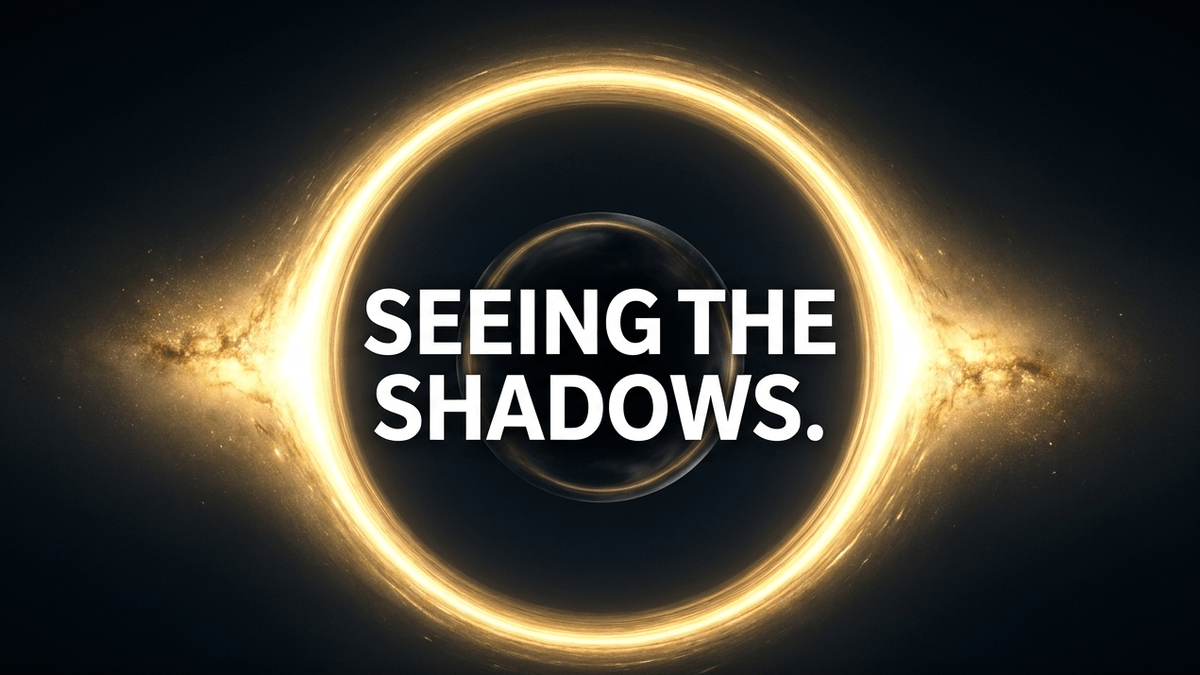
Some of the most striking recent work here has come from the Atacama Cosmology Telescope, perched high in the Chilean Andes. Rather than lensing the light of nearby galaxies, the ACT collaboration used the cosmic microwave background itself as a backlight, tracing how its ancient photons were warped on their fourteen-billion-year journey to us. As one of the project's leaders described it, the effect is a little like watching light stream through a curtain full of knots and bumps - each knot a clump of otherwise invisible matter. The resulting maps, covering a quarter of the entire sky, have so far agreed remarkably well with what Einstein's equations predict, offering reassurance at a moment when other measurements had raised doubts about the standard cosmological model.
A separate approach, pursued by the Dark Energy Survey using the Blanco Telescope in Chile, achieves something similar by studying the light of hundreds of millions of nearer galaxies rather than the CMB. Together, these complementary techniques - one looking at the universe's infancy, the other at its more recent structure - are slowly triangulating the true shape of the cosmic web.

Overcoming the terrestrial veil
Mapping from Earth is like trying to sketch a landscape through a frosted window. Our atmosphere, while essential for life, is a chaotic medium for light. Atmospheric turbulence, light pollution, and thermal variations blur the fine details of the cosmos. To combat this, we have moved our eyes into the silence of space. The Hubble Space Telescope and, more recently, the James Webb Space Telescope have provided clarity that ground-based observers could only dream of. However, even these have limits. Interstellar extinction - the way dust in our own galaxy blocks distant light - and foreground contamination remain persistent issues.
When we attempt to map the Cosmic Microwave Background, the oldest light in the universe, we encounter the fog of our own Milky Way. The CMB is the afterglow of the Big Bang, a snapshot of the universe when it was just 380,000 years old. It contains tiny temperature variations, on the scale of microkelvins, which represent the seeds of all future structures. To see them, we must subtract the microwave emissions from our own galaxy's gas and dust. It is a delicate act of subtraction, removing the local noise to hear the ancient signal. This work, conducted by missions like COBE, WMAP, and Planck, has revealed that our universe is remarkably flat, yet contains the seeds of the complexity we see today.
"It's a bit like silhouetting, but instead of just having black in the silhouette, you have texture and lumps of dark matter, as if the light were streaming through a fabric curtain that had lots of knots and bumps in it."
- Suzanne Staggs, director of the Atacama Cosmology Telescope collaboration
That image has stayed with me since I first read it. We are not looking at the universe so much as we are looking at its shadow play, inferring shape from distortion, presence from absence.
The future of the cosmic map
The field of cosmic cartography is entering what might be its most consequential decade. Two flagship projects, one newly operational and one about to launch, are set to transform how much of the dark universe we can chart.
The Vera C. Rubin Observatory, situated atop Cerro Pachón in Chile, has already begun its long-awaited Legacy Survey of Space and Time. After a first-light milestone in mid-2025 and months of careful calibration, the survey formally started on July 1, 2026. Its 3,200-megapixel camera - the largest digital camera ever built - now photographs the entire accessible southern sky roughly every three nights, generating around 10 terabytes of data and as many as 7 million automated alerts each night. Over its planned ten-year run, Rubin will revisit each patch of sky more than 800 times, building a genuine time-lapse of the universe rather than a static snapshot. In just its first six weeks of early operations, the observatory had already catalogued more than 11,000 previously unknown asteroids, a preview of the scale of discovery to come. This is precisely the kind of dynamic mapping our related coverage of Rubin's early asteroid haul has already started to document, and it is only the beginning.
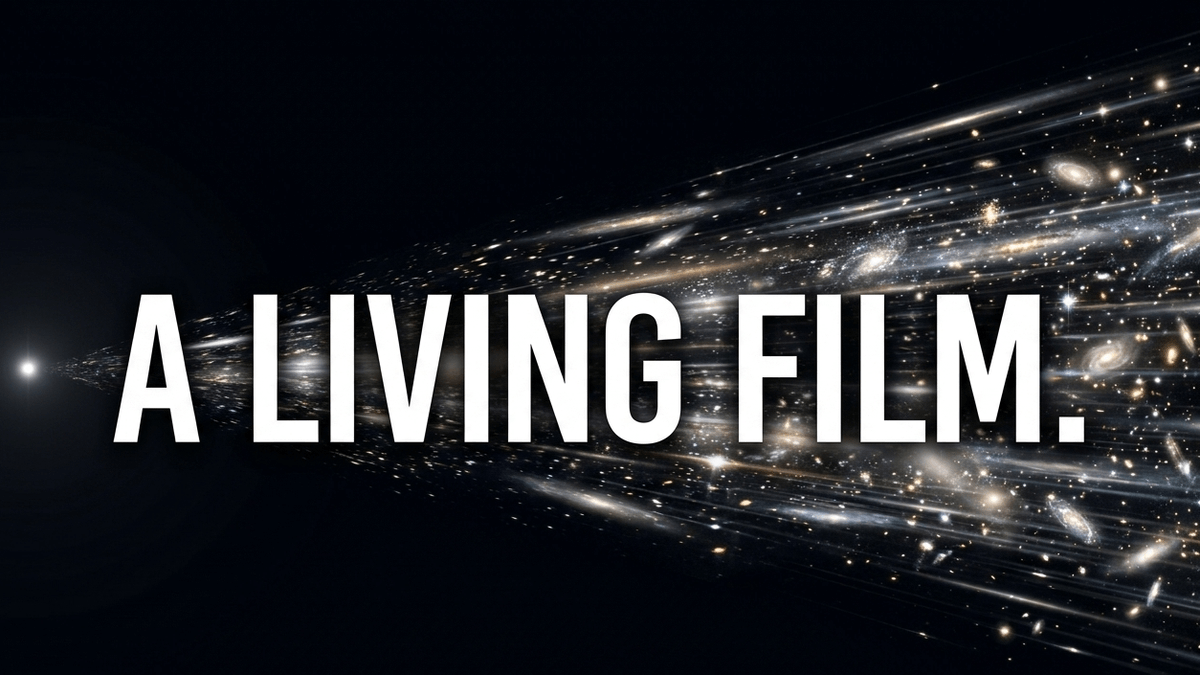
Not far behind is NASA's Nancy Grace Roman Space Telescope, now scheduled to launch from Kennedy Space Center on a Falcon Heavy rocket - a date that has moved earlier several times as the mission has consistently run ahead of schedule and under budget. Roman's Wide-Field Instrument will capture images with sharpness comparable to Hubble's, but across a field of view roughly 100 times larger, allowing it to survey the sky about 1,000 times faster. In its first five years alone, the mission is expected to reveal more than 100,000 new worlds, hundreds of millions of stars, and billions of galaxies, with three-quarters of its primary mission devoted to core surveys built specifically to probe dark matter and dark energy. Together, Rubin and Roman represent a shift from cosmic cartography as a series of still photographs toward something closer to a living film of the universe.
We are also beginning to integrate machine learning more deeply into our workflows. The sheer volume of data from these new observatories is too vast for traditional analysis alone. Algorithms can now combine galaxy positions with their peculiar motions, revealing hidden structures that influence the local expansion rate. This allows us to trace the invisible flows of matter through space - mapping the rivers of gravity that dictate the movement of everything from stars to superclusters.

Share now









Key takeaways
- The observable universe has a radius of approximately 46.5 billion light-years, even though the universe itself is only 13.8 billion years old - a result of space expanding while light travels.
- Ordinary matter (atoms, stars, planets, people) makes up only about 5% of the universe's total content.
- Dark matter accounts for roughly 25% of the cosmos and acts as invisible gravitational scaffolding holding galaxies together.
- Dark energy makes up about 70% of the cosmic energy density and drives the accelerating expansion of the universe.
- The Dark Energy Spectroscopic Instrument (DESI), at Kitt Peak National Observatory in Arizona, completed its five-year survey in April 2026, mapping over 47 million galaxies and quasars - far exceeding its original 34-million target.
- DESI's early data hinted that dark energy's strength may not be constant over cosmic time, a finding still under investigation as the collaboration continues observing into 2028.
- Gravitational lensing - the bending of light by massive objects - remains one of the only ways to directly map the distribution of dark matter.
- The Atacama Cosmology Telescope in Chile produced a dark matter map covering a quarter of the sky using the cosmic microwave background as a backlight, confirming predictions from Einstein's general relativity.
- The Vera C. Rubin Observatory in Chile officially began its ten-year Legacy Survey of Space and Time on July 1, 2026, imaging the entire southern sky roughly every three nights.
- In its first six weeks alone, Rubin catalogued more than 11,000 previously unknown asteroids.
- The Nancy Grace Roman Space Telescope is set to launch on a Falcon Heavy rocket, with a field of view about 100 times larger than Hubble's and survey speeds roughly 1,000 times faster.
- The Cosmic Microwave Background, the oldest observable light in the universe, is a snapshot of the cosmos at just 380,000 years old.
Sources
- Wikipedia (Observable universe) https://en.wikipedia.org/wiki/Observable_universe
- DESI Collaboration / Lawrence Berkeley National Laboratory https://www.desi.lbl.gov/2026/04/15/desi-surpasses-original-five-year-survey-goals/
- NASA Science (Nancy Grace Roman Space Telescope) https://science.nasa.gov/blogs/roman/2026/06/03/hello-world-nasa-shares-new-home-for-roman-space-telescope-updates/
- Rubin Observatory (Legacy Survey of Space and Time) https://rubinobservatory.org/explore/how-rubin-works/lsst
- SciTechDaily (Atacama Cosmology Telescope dark matter map) https://scitechdaily.com/groundbreaking-new-dark-matter-map-validates-einsteins-theory-of-general-relativity/
- Published 2026-08-01 23:38
- Modified 2026-08-01 23:38

-
Redaction