
-
 Redaction
Why DNA editing isn't just find and replace
Genome editing is more than find and replace. Learn how NHEJ, HDR, base editing, and prime editing actually correct DNA inside living human cells today.
When we first encounter the concept of CRISPR-Cas9, it is almost always through the lens of a word processor. We are told that science has finally found a way to scan the massive encyclopedia of the human genome, find a single typo, and replace it with the correct letter. This "find and replace" analogy served its purpose in the early days of public CRISPR coverage, when the world needed a quick way to grasp a genuinely revolutionary idea. But as we move deeper into the era of clinical trials and approved therapies, it is worth setting that simplification aside. The reality of genome editing is not a clean, digital command. It is a messy, biological negotiation with the cell's own ancient survival instincts.
To understand why this distinction matters, we have to look at the physical reality of a cell. Unlike a computer file, which sits quietly until a command is saved, a strand of DNA is a dynamic, guarded molecule. When CRISPR "finds" its target, it does not simply swap one piece of information for another. Instead, it behaves more like a molecular scalpel that inflicts a real injury - a double-strand break. What happens next is not decided by the scientist alone. It is decided by the cell's own repair machinery, which may or may not follow the instructions it was handed.
We are, today, at a genuinely interesting crossroads. Our tools are moving away from blunt cutting and toward something closer to careful, deliberate writing.
The fundamental mechanism: cut and repair, not just replace
The traditional CRISPR-Cas9 system has two main parts: a guide RNA that acts as a GPS, and the Cas9 enzyme that acts as the scissors. When these two find a match in the genome, Cas9 creates a double-strand break. This is exactly where the digital analogy falls apart. In a word processor, "find and replace" is one tidy step. In biology, the cut is only the opening scene of a much longer drama. The cell reads a double-strand break as a mortal threat and immediately calls in repair pathways to stitch the DNA back together.
Non-homologous end joining (NHEJ)
The most common response is Non-Homologous End Joining, or NHEJ. Think of it as an emergency triage crew. Their priority is speed, not accuracy. They grab the two broken ends of DNA and jam them back together as quickly as possible. Because the process is rushed, it often leaves behind small, random insertions or deletions - what researchers call "indels."
That sounds like a flaw, and in many contexts it is. But scientists have learned to use this messiness deliberately. If the goal is to disable a harmful gene entirely - a strategy called gene knockout - NHEJ is exactly the tool you want. A scrambled repair is often enough to make a gene unreadable to the cell. The trouble comes when your actual goal is a precise correction. In that case, NHEJ is working against you, introducing unpredictable noise right where you wanted a clean edit.

Homology-directed repair (HDR)
For a genuine "replace" function, researchers turn to Homology-Directed Repair, or HDR. Think of this pathway as the cell's resident master craftsman. If a scientist supplies a "template" - a piece of DNA that resembles the target site but carries the desired change - the cell may use that template to bridge the gap correctly.
The catch is that HDR is notoriously hard to coax into action. It mostly happens during the S and G2 phases of the cell cycle, when a cell is preparing to divide. In cells that rarely or never divide - neurons, cardiac muscle, mature skeletal muscle - HDR is, for practical purposes, almost impossible to trigger. That single biological fact is one of the largest hurdles standing between CRISPR and the treatment of many neurological and muscular diseases, and it is a major reason researchers have spent the last decade building tools that don't depend on HDR at all.

Off-target effects: the challenge of unintended edits
In a digital document, a "replace all" command is precise. Search for "cat" and you will not accidentally rewrite "bat." The genome offers no such guarantee. Cas9 is not perfectly discerning, and one of the most serious safety concerns in genomic medicine is the occurrence of off-target effects: unintended cuts made at sites that resemble the intended target but actually sit inside an entirely different gene.
Research on Cas9 specificity has shown that the enzyme can tolerate a number of mismatches between the guide RNA and the genomic DNA, particularly toward the far end of the guide sequence away from the PAM site. Mismatch tolerance is uneven across the guide: the "seed sequence" closest to the PAM must be highly complementary for cutting to proceed, while the far end of the guide tolerates considerably more mismatch. That uneven tolerance is precisely why most documented off-target sites differ from the intended target mainly at that distal end, while the seed region stays nearly identical.

The consequences of these genetic accidents can be serious. Off-target indels can disrupt gene regulation and expression, and in some cases have been linked to oncogenic transformation, while larger structural variations at on-target and off-target sites - translocations, large deletions, duplications, inversions, and chromosomal loss - add a further layer of genotoxic risk. If an off-target cut lands in a tumor suppressor gene, it could plant the seed of cancer years later. If it lands in a gene essential to heart muscle function, the consequences could be immediate. This is why so much current research effort goes into engineering "high-fidelity" Cas9 variants and shortened guide RNAs that are far more particular about where they're willing to land, along with computational tools designed to predict and screen out risky guide sequences before they ever reach a patient.
Real-world trial data is starting to reflect how seriously the field takes this risk. When Beam Therapeutics reported updated results for its liver-targeted base editor BEAM-302, the update leaned heavily on safety monitoring alongside efficacy, tracking patients for signs of the kind of unintended genomic consequences that once made off-target risk a purely theoretical worry. That dual focus, on doing the job correctly and on proving nothing else was disturbed in the process, has become the standard the entire field is now judged against.
Advanced CRISPR tools: moving toward molecular writing
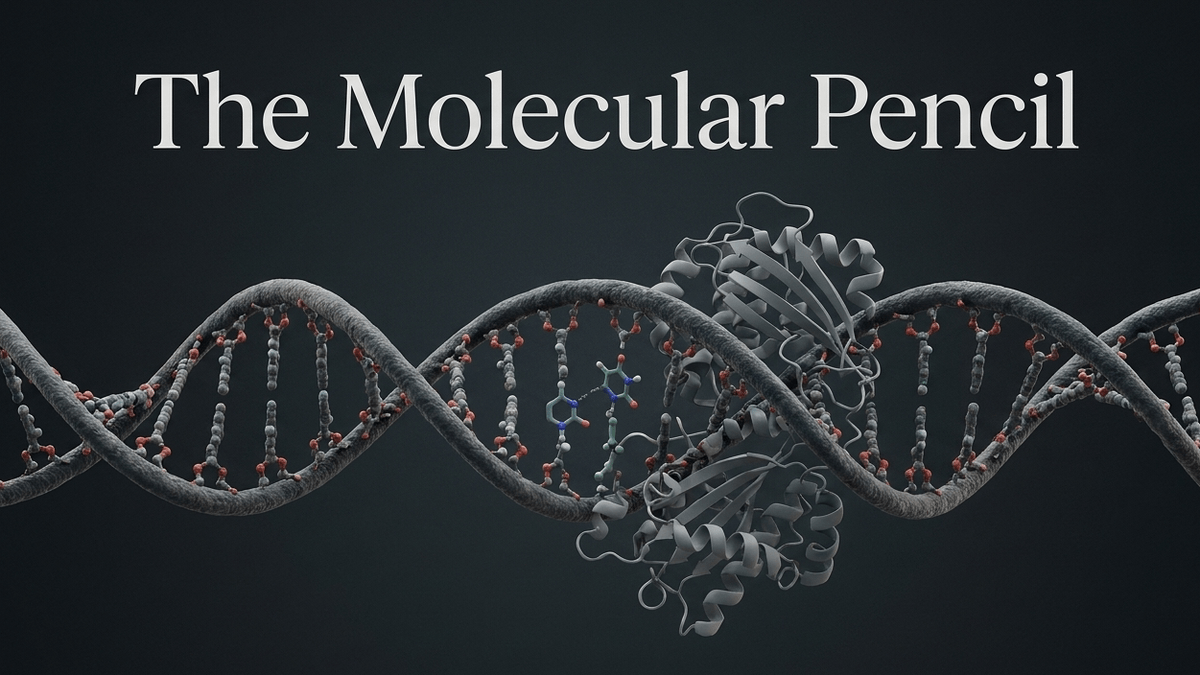
Recognizing both the risks and the limitations of creating double-strand breaks, the field has built a new generation of tools that behave less like scissors and more like pencils. Base editing and prime editing represent the clearest expression of where precision medicine is actually heading, because both largely sidestep the chaotic repair pathways that traditional CRISPR depends on.
Base editing: chemical conversion without the cut
Base editing is a genuine leap in precision. Instead of severing the DNA helix, base editors use a modified Cas9 that can still find a specific location but has lost its ability to cut both strands. This "dead" or "nicked" Cas9 is fused to a deaminase enzyme. When the complex lands on its target, that enzyme performs a small chemical reaction on a single DNA base - converting, for example, a cytosine into a thymine.
This process is far gentler than traditional CRISPR because it never triggers the error-prone NHEJ pathway. It is particularly well suited to "point mutations" - single-letter errors that are responsible for thousands of inherited diseases, including sickle cell disease and certain forms of cystic fibrosis.
Base editing has also moved well past a single disease target. Beam Therapeutics has pursued a liver-directed base editor for alpha-1 antitrypsin deficiency, and by early 2026 the company had gathered enough safety and efficacy data across dozens of treated patients to select a dose for a pivotal, potentially registration-enabling trial. The same company has separately received clearance to begin testing an in vivo base editor for phenylketonuria, a metabolic disorder in which the body cannot properly break down an amino acid found in ordinary protein. Together, these programs suggest base editing is no longer a proof-of-concept curiosity. It is becoming a platform, one capable of being pointed at different genes with a similar underlying chemistry.
Prime editing: the search-and-replace evolution
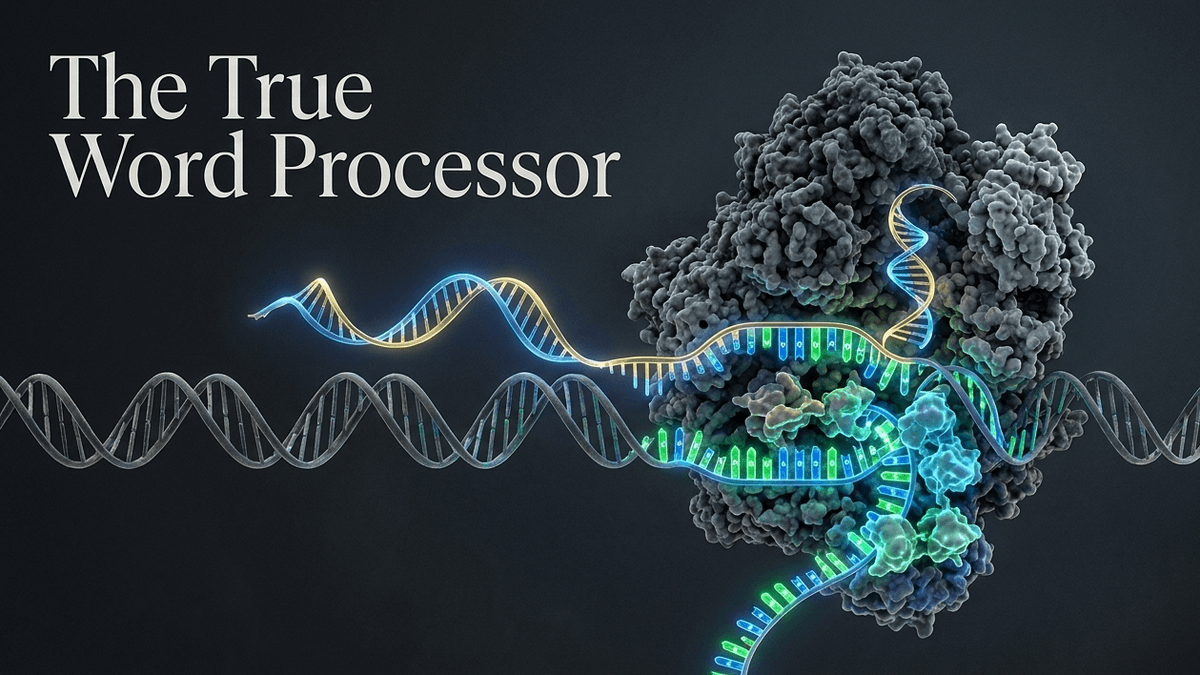
If base editing is a pencil, prime editing is closer to a word processor that finally works the way the early analogies promised. Developed to overcome the limitations of base editors, which can only perform certain types of letter swaps, prime editing can in principle handle all twelve possible base-to-base changes, along with small insertions and deletions.
It works by fusing a Cas9 nickase to a reverse transcriptase enzyme. The guide RNA used here, known as a pegRNA, actually carries the new genetic sequence the scientist wants written into the genome. The reverse transcriptase reads that RNA template and writes the new DNA directly onto the target site. Because it does not break the double helix completely, and does not depend on the cell's unpredictable HDR pathway, prime editing is considered one of the safest and most versatile tools available today. It can even reach so-called "PAM deserts" - stretches of the genome that traditional CRISPR simply cannot access.
From the lab to the clinic: what's already real
It would be easy to read all of this as distant, theoretical science. It isn't. Genome editing has already crossed into approved medicine, and the pace of clinical translation has picked up considerably in recent years.
The clearest landmark is Casgevy (exagamglogene autotemcel), the therapy developed by Vertex Pharmaceuticals and CRISPR Therapeutics. Casgevy is a cell-based gene therapy approved for treating sickle cell disease in patients twelve years of age and older with recurrent vaso-occlusive crises, and it was the first FDA-approved therapy to use CRISPR/Cas9 genome editing. The approach works by editing a patient's own blood stem cells outside the body to reactivate production of fetal hemoglobin, then returning those cells to the patient through a stem cell transplant procedure. It was approved for transfusion-dependent beta thalassemia shortly afterward.
"CASGEVY's approval by the FDA is momentous: it is the first CRISPR-based gene-editing therapy to be approved in the U.S." - Reshma Kewalramani, M.D., CEO of Vertex Pharmaceuticals
Base and prime editing are following close behind, and not just in early-stage research. Beam Therapeutics has selected a 60 milligram dose of BEAM-302 to carry into pivotal development for alpha-1 antitrypsin deficiency, after updated trial data showed patients maintaining functional AAT protein durably above the threshold associated with lung protection. On the prime editing side, Prime Medicine has now published results from two patients treated with its investigational therapy PM359 for chronic granulomatous disease, a rare inherited immune disorder. Both patients showed rapid restoration of the immune function the disease normally disables, offering the first published, peer-reviewed evidence that prime editing works safely in humans.
The pipeline has also broadened well beyond these two programs. Intellia Therapeutics has reported strong reductions in a disease-causing protein using an in vivo CRISPR approach for hereditary transthyretin amyloidosis, one of the therapies now closest to a possible approval. Verve Therapeutics, acquired by Eli Lilly in 2025, continues to develop a base-editing approach to permanently lower cholesterol by switching off a single liver gene, with meaningful LDL reductions already reported in early trial cohorts. According to the Innovative Genomics Institute's tracking of the field, more than 150 CRISPR-related trials were active worldwide as of early 2026, spanning blood disorders, cancer, cardiovascular disease, and rare inherited conditions.
Not every chapter of this story has been an unqualified success. The field recorded its first trial-related fatality when a participant receiving a custom-built gene-editing therapy for Duchenne muscular dystrophy died from an immune reaction to the viral vector used to deliver the treatment, a sobering reminder that the delivery vehicle can carry its own risks independent of the edit itself. At the same time, the field has also seen deeply personal triumphs: a bespoke base-editing therapy built for a single infant with a fatal metabolic condition has, by his second year of life, left him walking with only mild symptoms of a disease that once had no treatment at all.
None of this means genome editing has become routine. Casgevy remains a complex, one-time procedure that costs a substantial sum and requires a specialized treatment center, and most base- and prime-editing programs are still in Phase 1 or Phase 2 trials. But the gap between laboratory promise and bedside reality, which felt enormous even a decade ago, has narrowed considerably.
Share now









Key takeaways
- CRISPR-Cas9 doesn't directly "replace" DNA - it creates a double-strand break, and the final outcome depends on which of the cell's own repair pathways takes over.
- Non-Homologous End Joining (NHEJ) is fast but error-prone, making it ideal for disabling (knocking out) a harmful gene, but unreliable for precise corrections.
- Homology-Directed Repair (HDR) can make a precise edit using a DNA template, but it mostly only works in dividing cells, making it nearly unusable in neurons or mature muscle tissue.
- Off-target effects occur because Cas9 can tolerate mismatches between the guide RNA and the genome, especially toward the end of the guide sequence farthest from the PAM site.
- Base editing chemically converts a single DNA letter (such as C to T) without cutting both strands, avoiding the unpredictable NHEJ pathway entirely.
- Prime editing uses a reverse transcriptase to write new genetic sequences directly into the genome and can perform all twelve possible base-to-base conversions plus small insertions and deletions.
- Casgevy (exagamglogene autotemcel) was the first FDA-approved CRISPR/Cas9 therapy, treating sickle cell disease and transfusion-dependent beta thalassemia.
- Beam Therapeutics selected a 60 mg dose of BEAM-302 to advance into pivotal development for alpha-1 antitrypsin deficiency, after patients maintained durable, protective AAT levels.
- Prime Medicine has now published peer-reviewed results for two patients treated with its prime-editing therapy PM359, showing durable restoration of immune function in chronic granulomatous disease.
- Epigenetic editing changes how loudly a gene is expressed - without altering the underlying DNA sequence - making it reversible by design.
- Delivery remains a major bottleneck: viral vectors (like AAVs) have limited cargo space and can trigger dangerous immune reactions, while lipid nanoparticles are safer but currently mostly limited to reaching the liver.
- Most common diseases, including heart disease, diabetes, and Alzheimer's, are polygenic, involving hundreds of genetic variants rather than a single correctable gene.
Sources
- FDA https://www.fda.gov/news-events/press-announcements/fda-approves-first-gene-therapies-treat-patients-sickle-cell-disease
- Addgene https://blog.addgene.org/crispr-101-homology-directed-repair
- Synthego https://www.synthego.com/guide/crispr-methods/prime-editing/
- Innovative Genomics Institute https://innovativegenomics.org/news/crispr-clinical-trials-2026/
- Prime Medicine (Investor Relations) https://investors.primemedicine.com/news-releases/news-release-details/prime-medicine-announces-new-england-journal-medicine
- Published 2026-07-24 18:33
- Modified 2026-07-24 20:17

-
Redaction