

-
 Redaction
Chernobyl exclusion zone: nature's rewilding lab
Wolves, lynx and bears thrive across the Chernobyl exclusion zone. Discover what human absence reveals about rewilding, radiation and evolution today.
The scent of damp pine needles and the thick, iron-rich musk of undisturbed wetlands hang heavy in the air, a sensory profile that feels ancient rather than apocalyptic. Walking through the fringes of what was once an intensive agricultural landscape, the silence is not empty; it is filled with the low hum of insects and the distant, sharp call of a raptor. Standing within the boundaries of the Chernobyl Exclusion Zone (CEZ), the visual evidence of nature's reclamation is overwhelming. What was once a theater of technological failure has become a global classroom for passive rewilding, demonstrating that the absence of human interference is perhaps the most potent ecological filter of all.

The spatial scale of a silent continent
The sheer magnitude of the land surrendered to nature following the 1986 disaster is difficult to grasp without standing amidst its sprawling forests. Covering approximately 2,600 square kilometers in northern Ukraine and a similarly sized stretch of the Polesie State Radiological Ecological Reserve in Belarus, this combined territory forms one of the largest contiguous nature reserves in mainland Europe. This is not a mere park; it is a landscape the size of a small country - an unplanned experiment in what happens when the machinery of human progress is suddenly and permanently unplugged.
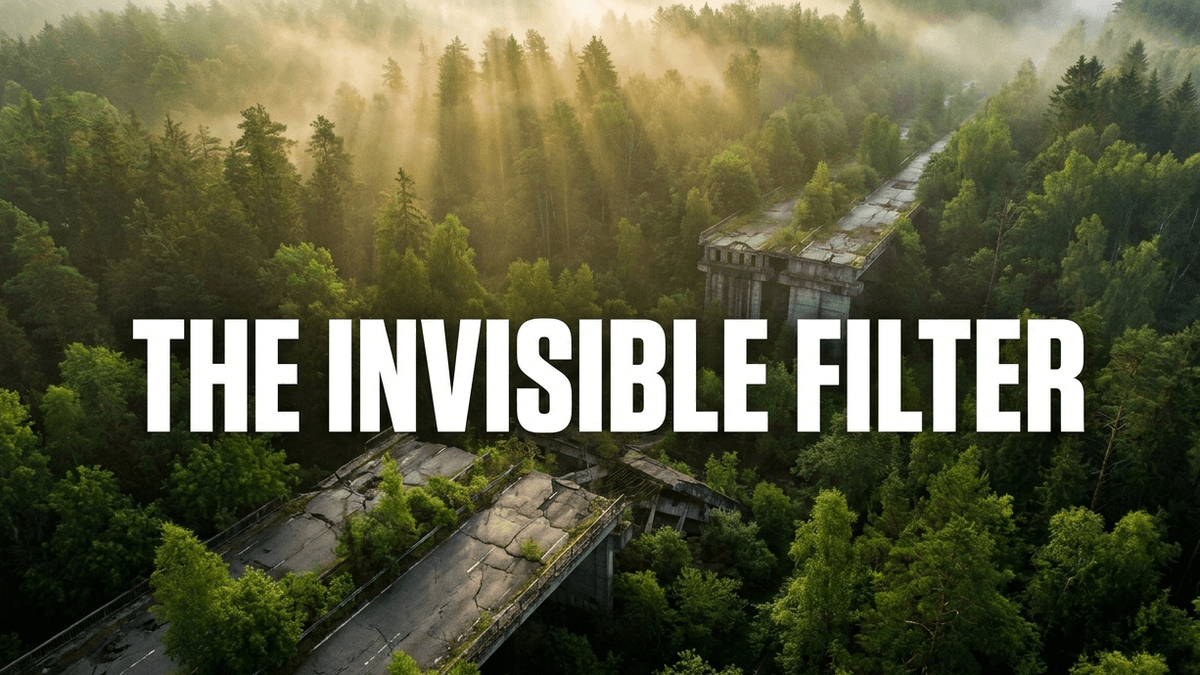
For decades, this land was subjected to intensive human use, from drainage for agriculture to the systematic management of timber. When the invisible filter of the exclusion zone was established, it inadvertently created a sanctuary defined by what it lacked: us. The transformation of the physical landscape has been radical. Data from 1999 to 2017 shows that wetland areas increased by a staggering 680%. Without the constant maintenance of drainage ditches and pumps, water returned to its natural depressions, recreating marshlands that had existed centuries before the industrial age. Simultaneously, forest cover expanded by 14%, as pioneer species like birch and aspen marched across abandoned fields and through the cracked foundations of village homes.
It is worth pausing on what this actually means on the ground. A drainage ditch, once it stops being pumped, does not simply vanish - it slowly fills, choking with reeds and sedges, until the geometry of human engineering dissolves back into something a seventeenth-century forester might have recognized. Roads crack under the pressure of tree roots. Rooflines collapse under nesting storks. It is a slow-motion unbuilding, and it happens without a single bulldozer.
The human effect versus the radiation effect
A central question has long haunted ecological researchers: can a landscape saturated with radionuclides truly be called a sanctuary? The emerging scientific consensus - though not a unanimous one, as we'll see - suggests a sobering reality. For many mammal communities, the removal of human activity, what researchers call human pressure, appears to outweigh the biological costs of ionizing radiation. In the absence of hunting, farming, and infrastructure development, the zone has become a haven for species that struggle to survive in the fragmented landscapes of modern Europe.
Consider the apex predators. In the Belarusian sector, wolf populations have been recorded at densities roughly seven times higher than those in comparable, uncontaminated nature reserves in the region. This disparity points to a profound ecological pattern: while radiation may cause individual genetic or physiological stress, the presence of humans is often the more decisive threat to population stability. Aerial census data from the first decade after evacuation revealed a marked rise in the numbers of boar, elk, and roe deer. These animals did not just survive; they multiplied in the vacuum left by human departure.
Camera trap surveys conducted across two field seasons provide even more granular evidence of this flourishing biodiversity. Across roughly 60,000 square kilometers of northern Ukraine - spanning the CEZ itself, four neighboring nature reserves, two nature parks, and unprotected surrounding land - 174 camera traps recorded over 31,000 animal sightings of 11 terrestrial mammal species. Nearly two-thirds of all sightings, some 19,832 of the 31,200 recorded, came from within the Chornobyl reserve alone. The other reserves also performed relatively well, but the gap between the large, connected CEZ-Drevlianskyi block and the smaller, fragmented protected areas nearby was stark.
As lead researcher Dr. Svitlana Kudrenko of the University of Freiburg has explained it, the pattern suggests that small, isolated protected areas may simply be too limited in size to sustainably support species that need large ranges to roam. Human disturbances like hunting and traffic, she notes, have an outsized impact on where large mammals choose to live, and the exclusion zone - with the lowest level of human disturbance of any site studied - was consistently the richest in wildlife. Wolves and brown bears were never seen by the research team in person; they only ever appeared as ghostly shapes on camera-trap footage, which is, in its own way, exactly the point.
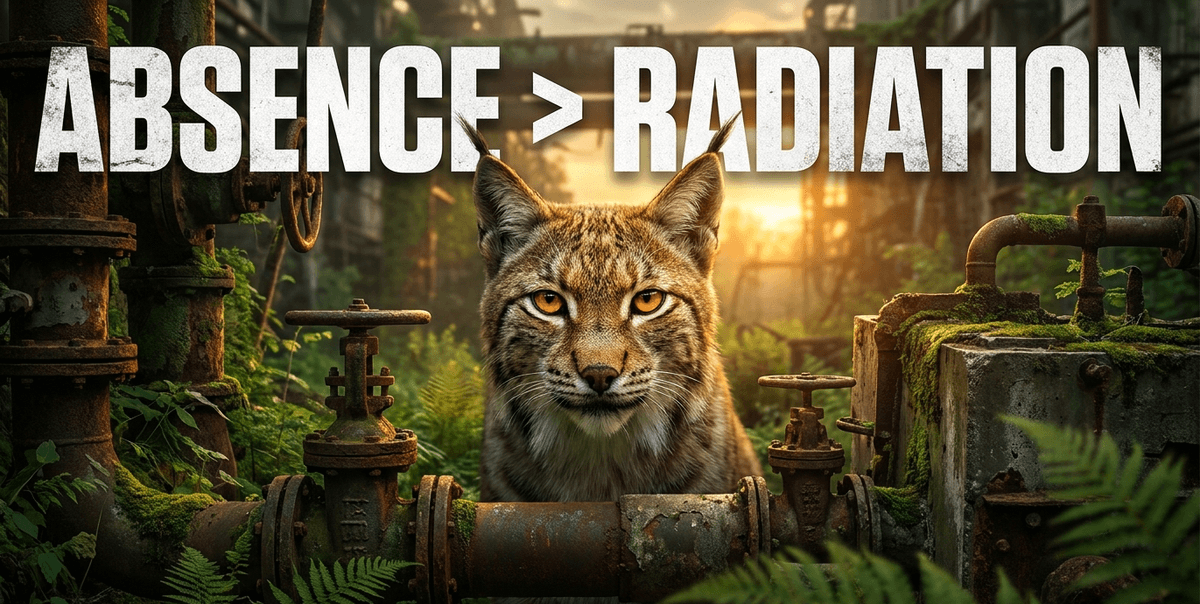
Most notably, the Eurasian lynx, a ghost-like predator of the deep woods, was roughly four times more likely to be captured on camera within the exclusion zone than in regional reserves specifically managed for wildlife protection.
A 2026 study, also led by researchers from the University of Freiburg and published in Proceedings of the Royal Society B, dug even deeper into what "restricted human access" actually buys a landscape. The findings confirmed that it was not radiation levels but the degree of human accessibility within different parts of the zone that best predicted where mammals chose to live and how confidently they moved through the terrain. In effect, the animals were reading the map of human absence more closely than the map of radioactive contamination.
"Land-use changes and habitat degradation threaten biodiversity and ecosystem functions globally," the Royal Society study notes, underscoring why the CEZ has become such a valuable natural experiment for understanding what protected areas actually need to work for large mammals.
Species recolonization and the return of the wild
The rewilding of the CEZ has occurred through both intentional reintroductions and natural migration. The story of the Przewalski's horse is particularly illustrative of the zone's challenges and triumphs. Introduced in the late 1990s with an initial population of 22 to 31 individuals, the herd grew to roughly 65 within a few years. Then the human element briefly returned in the form of poaching, causing the population to dip to approximately 50 individuals. Nature, supported by the zone's inherent isolation, pushed back. The population later recovered to roughly 150 individuals across the wider zone, with current estimates for the Ukrainian sector hovering between 110 and 120 healthy animals roaming the steppe-like clearings.
Other heavyweights of the European wilderness have also made their presence known. The European bison, successfully introduced to the Belarusian sector in the 1990s, has since dispersed across the border into the Ukrainian side. Perhaps more moving is the natural return of species that had been absent from the region for generations. The Eurasian lynx and the brown bear have reclaimed these forests, moving through the undergrowth of abandoned orchards and the corridors of rusted pylons.
Avian life has seen similar resurgences. The Greater Spotted Eagle, a globally endangered raptor, finds a rare stronghold here, with confirmed nesting pairs in the Belarusian CEZ representing one of the only growing populations of this species anywhere on the planet. Researchers have recorded some 1,200 plant species and 341 vertebrate species within the zone's boundaries, creating a mosaic of life that is as complex as any ancient woodland. Readers interested in how forests build these dense, interconnected webs of life below the surface may also enjoy our piece on how forests communicate through their fungal networks - a phenomenon quietly at work beneath the CEZ's own regenerating canopy.
When radiation writes evolution's script
Not every adaptation in the zone is about population numbers. Some of it is written directly into the biology of the animals themselves, and few examples are as striking as the frogs.
Since 2016, researchers led by biologist Germán Orizaola have documented eastern tree frogs (Hyla orientalis) within the CEZ that have turned almost black, a dramatic shift from the bright green typical of the species elsewhere. The pattern suggests these frogs underwent a process of rapid evolution in response to radiation, in which individuals with darker coloration at the time of the accident - normally a minority within the population - were favored by melanin's protective effects. Melanin does more than darken skin; it can absorb and dissipate radiation energy and help neutralize the reactive molecules that radiation generates inside cells. A study examining more than 200 male frogs across a dozen breeding ponds throughout the contamination zone found that, on average, 44% were darker than frogs living outside the exclusion zone. More than ten frog generations have passed since 1986, enough time for what amounts to a compressed, real-time lesson in natural selection.
Frogs are not the only organisms turning radiation into an unlikely asset. Deep within the ruins of the reactor itself, scientists discovered colonies of melanized fungi, dominated by a species called Cladosporium sphaerospermum, thriving in some of the most contaminated water on the planet. Researchers suspect the fungi's melanin can use ionizing radiation much the way chlorophyll uses sunlight, converting it into usable chemical energy in a process now called radiosynthesis. The implications reach far beyond the CEZ. Because these organisms populate not only Chernobyl's cooling ponds but also the interiors of spacecraft in low Earth orbit, where radiation exposure is intensified, scientists have begun exploring melanin-based coatings as a potential passive radiation shield for future space missions. NASA has already flown samples of the fungus aboard the International Space Station to test exactly that idea. It is a strange kind of poetry: a disaster on Earth quietly informing how humans might one day survive further from it than ever before.

A quieter, more contested story: genetic costs beneath the surface
It would be dishonest to end the story of Chernobyl's wildlife at population counts and rewilding maps. Beneath the visible abundance lies a much harder scientific debate, and good journalism about this place has to sit with that discomfort rather than resolve it too neatly.
For nearly two decades, biologists Timothy Mousseau and Anders Møller have conducted detailed genetic and reproductive surveys of birds, insects, and other small organisms across the zone's radiation gradient. Their findings have been sobering. They have recorded elevated mutation rates, smaller brain volumes in some songbirds, reduced sperm viability, and - in the most heavily contaminated patches studied in the mid-2000s - notably fewer bird species and lower overall bird abundance compared with background-level sites nearby. Their surveys extended the pattern to insects and spiders as well, with declines linked to soil-level contamination.
Other research groups, however, have struggled to replicate these effects using different methods. Camera-trap and aerial census work - the kind that produced the wolf and lynx figures above - consistently shows healthy, even thriving, populations of larger mammals regardless of local radiation dose. Wildlife ecologist James Beasley of the University of Georgia has published work finding no evidence that mammal populations are suppressed in the most contaminated areas, arguing instead that habitat quality, not radiation dose, best predicts where animals turn up. Even attempts to detect DNA damage directly in the cells of rat snakes and wild boar, at radiation doses comparable to those in the Mousseau and Møller studies, have come back negative.
This is not a case of one side being right and the other wrong. It more likely reflects the reality that different taxa respond differently, that methods measuring population presence answer a different question than methods measuring individual-level cellular damage, and that both kinds of effects can be true simultaneously: a landscape can support abundant, breeding populations of wolves and boar while individual animals - particularly smaller, shorter-lived, and more radiosensitive species like some songbirds and invertebrates - continue to carry a measurable biological cost. The CEZ, in other words, is not a simple story of triumph over radiation. It is a messier, more honest one about how ecological resilience and individual harm can coexist in the same square kilometer.
A laboratory of multiple stresses
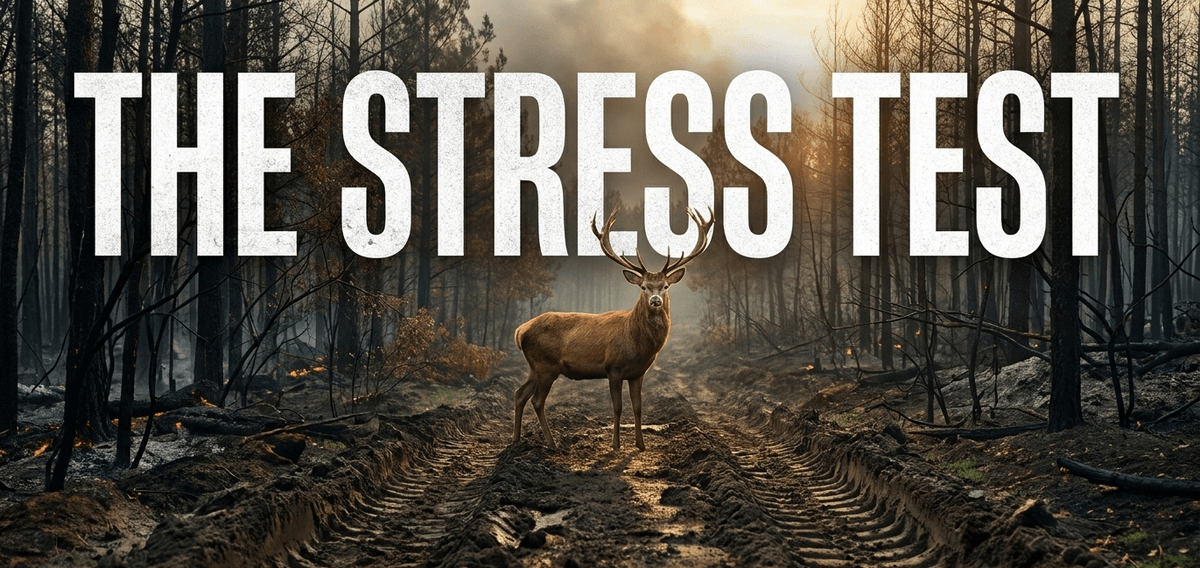
The CEZ is not just a study in radiation; it is a laboratory for how ecosystems respond to secondary environmental crises without a human safety net. In July 2016, a wildfire swept through roughly 80% of the Red Forest, a highly contaminated coniferous stand of up to six square kilometers near the reactor that remains among the most radioactive patches of ground on Earth. Researchers from the UK Centre for Ecology & Hydrology, led by Professor Nick Beresford, saw the fire as a rare, if unwelcome, opportunity to study how a heavily contaminated ecosystem responds to compounding disturbance.
Camera traps deployed across the Red Forest between September 2016 and September 2017, as the burned landscape began to recover, recorded 14 mammal species and 23 bird species moving through the scorched ground. Brown hare, Eurasian elk, red deer, and roe deer were the most frequent visitors, alongside wolves, lynx, badgers, and even foals of the Przewalski's horse. Critically, the researchers found no meaningful relationship between the density of radiation exposure at individual camera sites and how often animals showed up on film. This suggests that the ecosystem's structural integrity - its ability to still provide cover and food after a fire - remains a primary driver of wildlife presence, even when the ground itself remains contaminated. Follow-up work by the same team also found that current radiation doses in the zone do not appear to directly suppress soil biological activity, a small but important piece of evidence that the zone's underlying ecological engine, the community of decomposers and soil organisms that everything else depends on, is still functioning.
This resilience in the face of overlapping disturbances - radiation compounded by fire - underscores how robust passive rewilding can be as a recovery strategy, even under conditions no conservation planner would ever choose to test.
What the exclusion zone reveals about landscapes under pressure
More recently, the zone experienced a disturbance that no ecological model had anticipated: a period of military occupation. For roughly five weeks in early 2022, foreign armed forces held the exclusion zone, bringing armored vehicles, heavy traffic, and explosions into a landscape that had spent more than three decades reorganizing itself around human absence.
A research team led by Dr. Svitlana Kudrenko and Professor Marco Heurich of the University of Freiburg had, fortunately, already installed a network of 31 camera traps across the Ukrainian sector before the occupation began. That existing infrastructure let them do something ecologists studying conflict zones almost never get to do: compare detailed, quantitative wildlife data from before and during an active military presence, without anyone having to enter a live conflict zone to collect it. The team compared roughly 2,000 photos and video clips from February and March of the occupation year against footage from the same camera network and the same calendar weeks one year earlier.
The analysis, published in the journal Science, found that species including red deer, roe deer, red fox, and wild boar measurably shifted their daily activity patterns during the period of heightened military activity, particularly reducing how much time they spent moving around at night. Some predatory species, including the Eurasian lynx and red fox, were also detected closer to human settlements than usual, a pattern the researchers suggest may reflect scavenging opportunities or an effort to avoid the noise and movement concentrated along major roads.
As Kudrenko has reflected on the work, she wished the opportunity to study how an unfolding conflict affects wildlife had never needed to arise at all - a sentiment any researcher in her position would likely share. The finding is a sober reminder that the CEZ's decades of quiet recovery, while remarkable, remain vulnerable to the oldest and most disruptive of human activities. It does not undo the broader pattern of rewilding documented across the zone; it simply shows that even a landscape defined by the absence of people is not immune to what happens when large-scale human activity of any kind returns, however briefly. The researchers have suggested that camera-trap networks like theirs could become a valuable, low-risk tool for measuring the environmental costs of conflict more broadly, in places far beyond Ukraine.
Expert perspectives on a radioactive sanctuary
The paradox of a wildlife haven born from a nuclear disaster is not lost on the global scientific community. Prof. Jim Smith of the University of Portsmouth has noted that while radiation is certainly not "good" for wildlife in a biological sense, the effects of human habitation, including habitat destruction and hunting, are significantly worse for the survival of the species as a whole. This perspective shifts the focus from the toxicity of the land to the toxicity of human activity.
Dr. Nick Beresford of the UK Centre for Ecology & Hydrology emphasizes that while the exclusion zone has indeed become a wildlife sanctuary, these observational findings should not be used to dismiss the potential long-term impacts of radioactivity on animal health. We are seeing success at the population level, he suggests, but individual costs, such as shortened lifespans or reduced fertility in certain species, may still be present beneath the surface. This caution is echoed in the broader scientific literature: reviews of genetic research across the zone have documented measurable genetic damage in birds, mammals, plants, and insects living with chronic radiation exposure, even as those same populations persist and, in many cases, expand at the population level.
Tim Christophersen of the UN Environment Programme views the CEZ as a striking example of nature's inherent capacity to rebound from extreme degradation when given the space and time to do so, without active human intervention.
Tatiana Deryabina, a veteran researcher at the Polesie State Radioecological Reserve, points out that multi-year data consistently show a multitude of wildlife species abundant throughout the zone, largely regardless of the specific level of radiation contamination in their particular territory. This indicates that, at least for the current generation of larger wildlife, the zone offers a net benefit compared to the human-dominated landscape outside the barbed wire, even if that benefit is unevenly distributed across species and comes with genuine, still poorly understood costs.
The tourism question
It would be incomplete to describe the CEZ purely as an empty landscape. In years of relative regional stability, tens of thousands of visitors passed through Pripyat and the exclusion zone annually, drawn by dark tourism and a fascination with the site's unique history. This human presence, though tightly managed and confined mostly to a handful of well-trodden routes, is a reminder that "exclusion" here has always been relative rather than absolute. A small population of feral dogs, descended from pets left behind during the 1986 evacuation, still lives around the plant itself, sustained partly by contact with workers and past visitors - a strange, living footnote to the accident that continues to interest researchers studying how radiation moves through mammal populations over successive generations.
Lessons for urban biodiversity and global policy
What does the invisible filter of Chernobyl teach us about rewilding in our own backyards? The lesson is primarily one of humility. In our efforts to manage biodiversity, we often over-engineer solutions, forgetting that nature possesses an internal blueprint for recovery. Passive rewilding, the act of simply stepping back, can produce results that active management struggles to replicate. In urban and peri-urban environments, this might mean identifying "neglected" zones where human pressure can be minimized to allow for spontaneous ecological restoration: a disused rail corridor left to scrub, a flood plain no longer mowed, an industrial brownfield given twenty quiet years instead of a redevelopment permit.
Policy implications are equally profound. If one of the most contaminated places on Earth can support a thriving community of apex predators and endangered raptors, it suggests that current standards for "protected areas" may be insufficient if they still allow for significant human traffic and resource extraction. The 2026 Royal Society findings reinforce this directly: restricted human access, not just formal protected status on paper, appears to be the variable that most reliably predicts whether large mammals actually use a landscape. The CEZ suggests that genuine wilderness requires a real degree of exclusion. While we cannot and should not create more exclusion zones through disaster, we can certainly choose to create similar conditions through policy: designating areas where human pressure is intentionally filtered out to let the wild take the lead.

As the sun sets over the Pripyat River, casting long shadows across the encroaching forest, the reality of the exclusion zone feels less like a cautionary tale and more like a testament to life's stubborn persistence, tempered by the knowledge that persistence and unharmed individual lives are not always the same thing. The animals here do not know they live in a place defined by human tragedy. They only know, most days, the relative freedom of a landscape where the sound of an engine or the sight of a plow is a distant, fading memory. In this radioactive laboratory, we are learning that when humans step back, nature does not mourn; it simply begins the quiet, complicated, still not fully understood work of coming home.
Share now









Key takeaways
- The combined exclusion zone in Ukraine and Belarus forms one of the largest contiguous nature reserves in mainland Europe, covering roughly 2,600 square kilometers in Ukraine alone.
- Wetland areas increased by 680% between 1999 and 2017 due to the cessation of drainage and land management.
- Forest cover expanded by 14% in the same period as pioneer species like birch and aspen reclaimed abandoned fields.
- Wolf populations in the Belarusian sector are recorded at roughly 7 times higher density than in comparable uncontaminated nature reserves.
- The Eurasian lynx is roughly 4 times more likely to be detected on camera within the exclusion zone than in standard protected nature reserves nearby.
- Camera trap surveys across two field seasons recorded over 31,000 animal sightings across northern Ukraine, with the exclusion zone accounting for roughly 63% of them.
- Przewalski's horse populations recovered from poaching-driven lows to roughly 150 individuals zone-wide, with 110-120 currently estimated in the Ukrainian sector.
- Since 2016, researchers have documented eastern tree frogs within the zone evolving darker, near-black skin, with an average of 44% found to be darker than frogs living outside the zone.
- Melanized fungi discovered in the ruined reactor, including Cladosporium sphaerospermum, appear able to convert ionizing radiation into chemical energy through radiosynthesis, a discovery now studied for spacecraft radiation shielding.
- A 2016 wildfire burned roughly 80% of the highly contaminated Red Forest, yet post-fire camera monitoring found mammal presence was driven by habitat structure, not radiation dose.
- Research published in Proceedings of the Royal Society B found that restricted human access, more than radiation level itself, best predicted where mammals chose to live within the zone.
- Independent genetic studies have found measurable genetic damage and reduced fitness in some birds and insects at the individual level, even in species whose overall populations appear stable or abundant.
Sources
- Royal Society Publishing (Proceedings B) https://royalsocietypublishing.org/rspb/article/293/2071/20253151/481782/The-Chornobyl-Exclusion-Zone-as-a-wildlife-refuge
- UK Centre for Ecology & Hydrology (UKCEH) https://www.ceh.ac.uk/news-and-media/news/investigation-ecological-impact-chernobyl-wildfires
- The Conversation - Chernobyl black frogs reveal evolution in action https://theconversation.com/chernobyl-black-frogs-reveal-evolution-in-action-191034
- Live Science - Wildlife inside Chernobyl exclusion zone acted differently during Russia's invasion https://www.livescience.com/animals/wildlife-inside-chernobyl-exclusion-zone-acted-differently-during-russias-invasion-camera-traps-reveal
- Knowable Magazine - Chernobyl's impact on wildlife is still debated by scientists https://knowablemagazine.org/content/article/food-environment/2022/scientists-cant-agree-about-chernobyls-impact-wildlife
- Published 2026-07-18 23:46
- Modified 2026-07-18 23:46

-
Redaction