

-
 Redaction
Turritopsis Dohrnii: The jellyfish that cheats death
Discover how the immortal jellyfish Turritopsis dohrnii reverses aging through transdifferentiation - and what its genome reveals about human longevity.
The air near the Mediterranean coast often carries a sharp, briny scent - a mixture of drying kelp and the hidden pulse of the deep sea. Beneath the undulating surface of these temperate waters lives a creature so small it could rest comfortably on the tip of a finger, yet it carries a secret that defies the very foundations of biology. Turritopsis dohrnii, a translucent hydrozoan roughly 4.5 millimetres across, has achieved what philosophers and alchemists sought for millennia: the ability to cycle back from the brink of death to the dawn of its youth. This tiny organism is the only known metazoan capable of repeatedly reversing its biological age after reaching sexual maturity - a feat that has earned it the title of the immortal jellyfish.
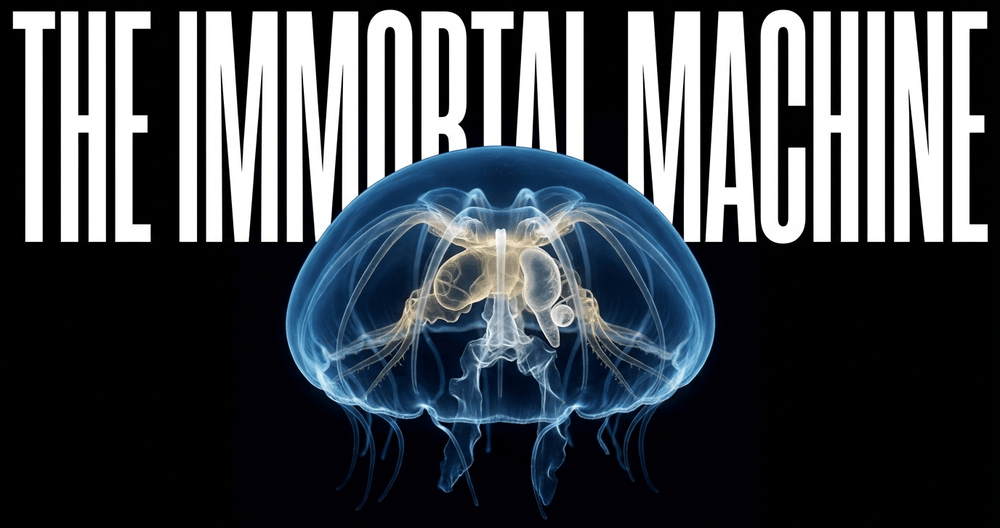
While most organisms follow a linear path from birth to senescence, T. dohrnii operates on a loop. This is not merely a survival tactic but a profound mechanical reset of its entire cellular architecture. In the quiet darkness of the ocean floor, this jellyfish manages to rewrite its own genetic narrative, transforming its specialised tissues back into a primitive state to begin life anew. For researchers in longevity, regenerative medicine, and biotech, this tiny drifter represents more than a curiosity - it is a living laboratory for understanding how we might one day manipulate the mechanisms of aging in human medicine.
A brief history of an extraordinary discovery
Turritopsis dohrnii was first described scientifically in 1883, when zoologist August Weismann documented specimens collected from the Bay of Naples. For more than a century, it attracted only modest interest. Then, in the late 1980s, a German marine biology student named Christian Sommer and Italian researcher Giorgio Bavestrello were conducting routine laboratory observations near Rapallo, Italy, when they noticed something deeply strange: medusae appeared to be reversing their development, returning to their polyp form under stress. The formal scientific description of this capacity did not come until 1996, when Stefano Piraino and colleagues published their findings in the Biological Bulletin, coining the term transdifferentiation to describe the process.
Since then, one scientist above all others has dedicated his life to watching this creature loop. Dr Shin Kubota, working at Kyoto University's Seto Marine Biological Laboratory on the Wakayama coast, has watched the same T. dohrnii jellyfish die and un-die so many times in his tank that he has started writing karaoke songs about the animal. His painstaking daily work - gathering plankton, monitoring colonies, changing water - has produced some of the most detailed observations of the life cycle reversal available to science. One of his studies documented a T. dohrnii colony that renewed itself ten times within a single month.
The reversal behaviour was first published in the scientific literature in 1996. That is the asterisk attached to the word "immortal." The animal is not invincible - it is, more precisely, ageless. In theory, a single T. dohrnii could cycle from polyp to medusa to polyp to medusa indefinitely, and the same genetic individual could persist for centuries or longer. Nobody has yet watched one do that for a human lifetime, because nobody has been watching for a human lifetime.
The mechanism of biological immortality: transdifferentiation
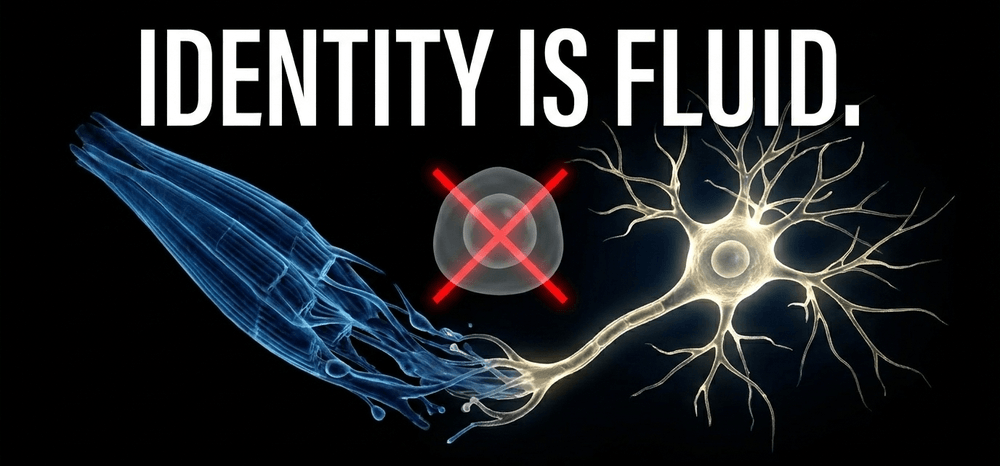
To understand how this jellyfish cheats the grave, one must first look at the unique process of transdifferentiation. Most animal cells follow a strict developmental trajectory. A stem cell becomes a nerve cell, a muscle cell, or a skin cell, and it remains that way until the organism dies. T. dohrnii, however, possesses the remarkable ability to instruct its mature, specialised cells to switch identities entirely.

When the jellyfish encounters unfavourable conditions - environmental stress, physical assault, starvation, or simply the onset of old age - it triggers a cellular emergency protocol that results in a life cycle reversal (LCR). This transformation begins with a dramatic physical shift. The adult medusa, the bell-shaped form we recognise as a jellyfish, begins to contract. It reabsorbs its tentacles, reducing its complex body to a minimal state. The jellyfish loses its ability to pulse through the water, eventually settling on the seafloor as a featureless, gelatinous mass known as a cyst.
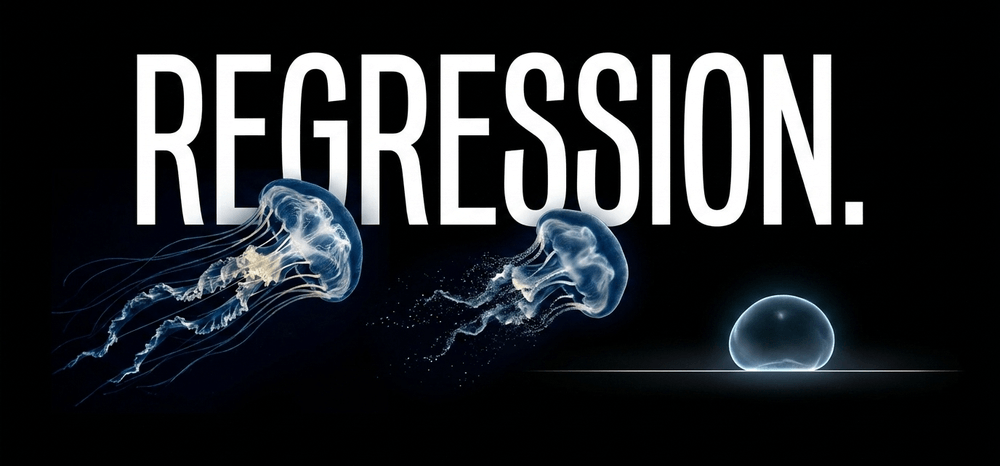
Within this cyst, the magic of transdifferentiation occurs. Over approximately 24 to 72 hours, the specialised cells reorganise and transform. Muscle cells may become something entirely different. Nerve cells reset. The cyst then develops into a polyp - the early, sessile stage of the jellyfish life cycle. Once established, the polyp attaches to a substrate and begins to grow into a colony through asexual budding. This colony eventually releases new, genetically identical medusae into the water column.
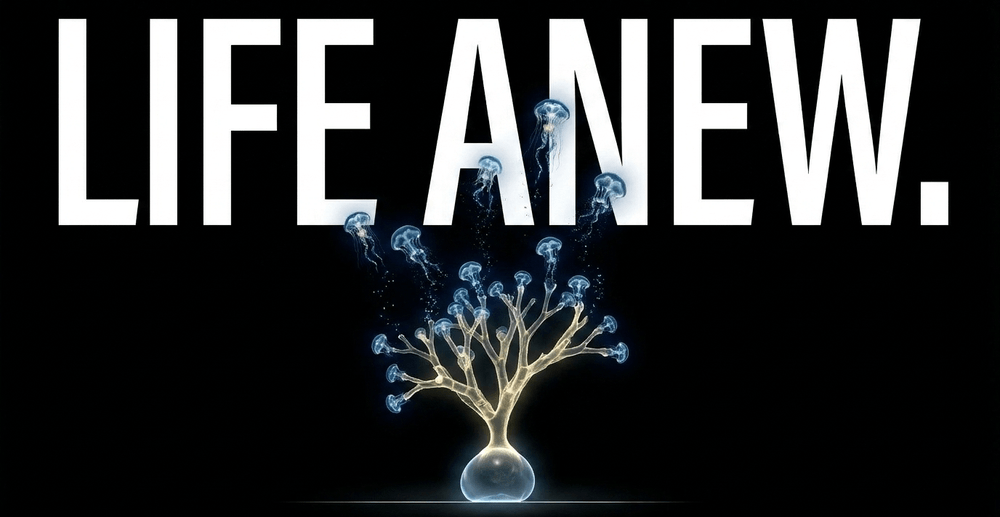
In theory, this cycle can continue indefinitely. Every time the jellyfish faces the prospect of death, it simply hits the reset button.
It is worth noting that this is not the same as standard regeneration, where an animal regrows a lost limb or organ. Transdifferentiation is a rare cellular phenomenon where fully differentiated, specialised cells convert directly into different cell types - without reverting to a stem cell state first. This distinction is critical: what T. dohrnii achieves is a wholesale identity shift at the cellular level, not just repair.
Key genetic and cellular insights into rejuvenation
Recent advances in genomic sequencing have allowed scientists to peek behind the curtain of this immortality. A landmark 2022 study published in the Proceedings of the National Academy of Sciences (PNAS), led by researchers at the Universidad de Oviedo in Spain, compared the genome of T. dohrnii with its mortal relative, Turritopsis rubra. The study identified variants and expansions of genes associated with replication, DNA repair, telomere maintenance, redox environment, stem cell population, and intercellular communication.
The researchers found that T. dohrnii had roughly double the number of genes associated with gene repair and protection compared to T. rubra, and also had mutations that allowed for stunting cell division and for preventing telomeres from breaking down.
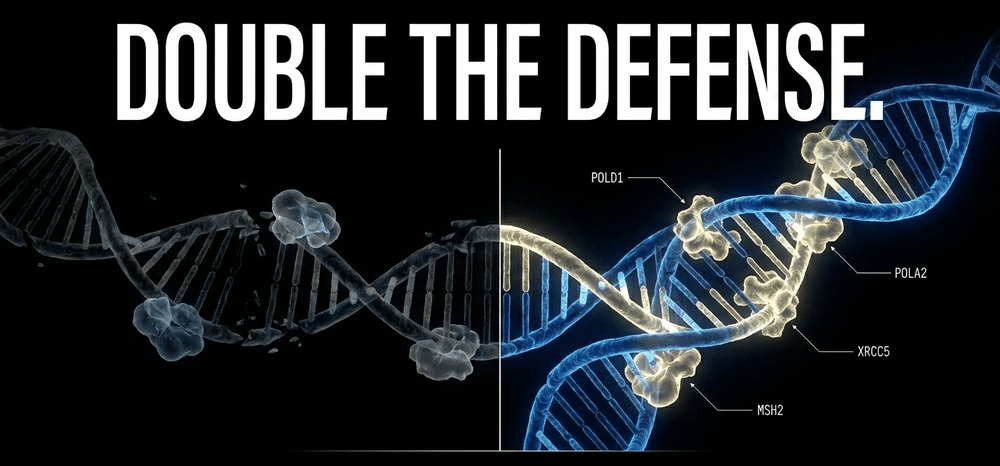
The jellyfish shows significant amplifications of genes like POLD1 and POLA2, which encode for DNA polymerase - enzymes responsible for DNA replication whose abundance suggests an enhanced capacity for error-free copying. Furthermore, the genome is rich in duplications of repair genes such as XRCC5, GEN1, RAD51C, and MSH2. These act as a sophisticated maintenance crew, patrolling the DNA for breaks and mutations, ensuring the genetic blueprint remains pristine even after the radical stress of life cycle reversal.
Telomere maintenance and cellular resetting
Another critical component of the T. dohrnii survival strategy involves the maintenance of telomeres. In most animals, telomeres - the protective caps on the ends of chromosomes - shorten every time a cell divides. When they become too short, the cell can no longer divide and eventually dies or becomes senescent. This process is a primary driver of aging in most multicellular life.
During its life cycle reversal, T. dohrnii effectively resets its telomere length. T. dohrnii has more copies of the GAR1 gene, enhancing the telomerase complex - the molecular machinery responsible for maintaining those protective chromosomal caps. By preserving telomere integrity across multiple life cycles, the jellyfish ensures that its cells remain functionally young, avoiding the cellular exhaustion that gradually dismantles higher organisms.
The role of Yamanaka factors in the ocean
Perhaps the most startling discovery in the transcriptomic data of T. dohrnii is the reactivation of developmental genes during LCR. In 2006, Japanese scientist Shinya Yamanaka showed that four specific transcription factors - Oct4, Sox2, Klf4, and c-Myc - could reprogram adult human skin cells into induced pluripotent stem cells (iPSCs), work that earned him the Nobel Prize in Physiology or Medicine in 2012. What researchers have found in the immortal jellyfish is a natural analogue of this process, operating autonomously in the deep sea long before any human laboratory thought to try it.
During its life cycle reversal, T. dohrnii manipulates genetic networks of high relevance in biomedical studies in mammals, including SIRT3, POU factors, RTEL1, and HSP70/90. Scientists identified elevated activity in reprogramming factors strikingly similar to the Yamanaka family, including POU and Sox transcription factors. By silencing polycomb repressive complex 2 (PRC2) targets and activating pluripotency markers, the jellyfish orchestrates a coordinated, organism-wide transformation that mirrors some of the most advanced techniques in modern regenerative biology - though it does so through mechanisms that remain only partially understood.
The parallel is both thrilling and humbling. Humans have spent billions of research dollars attempting to engineer cellular reprogramming from the outside. T. dohrnii does it from within, reflexively, in response to stress. Understanding how remains one of the most compelling open questions in biology.
Exploring the cyst stage: the bridge to a new life
The cyst stage serves as the critical transition point between the dying medusa and the rejuvenated polyp. It is a period of intense metabolic and genetic activity. Analysis of the cyst's gene expression reveals an upregulation of genes related to aging and lifespan, a heightened response to DNA damage, and enrichment in ubiquitin-related processes, among others.
Roughly 44% of the top 50 differentially expressed genes in the cyst are entirely novel and unannotated - they exist nowhere else in current scientific databases. This is not a minor footnote. It means the jellyfish's most critical biological transition is powered, in large part, by molecular machinery we have not yet named or categorised. The cyst remains, in some ways, a black box.
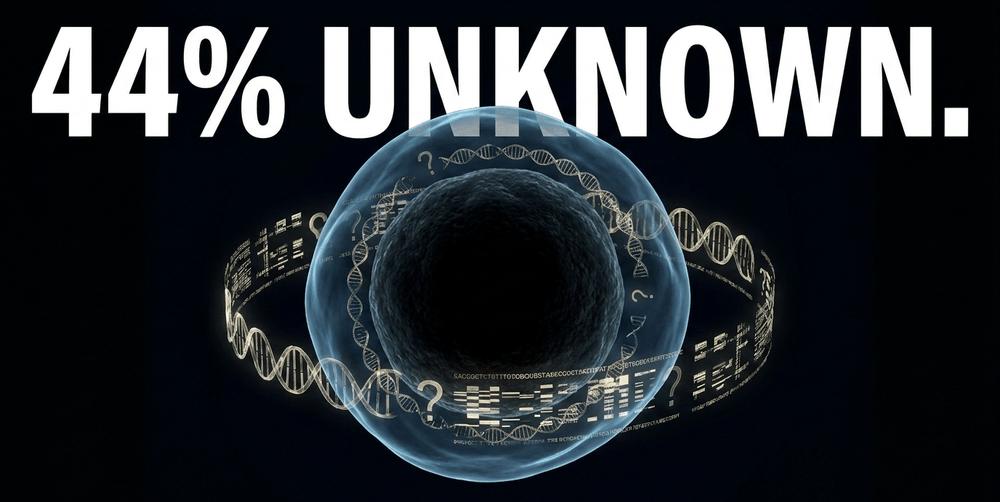
What we do know is that the cellular processes active during this stage are deeply interconnected. Biological processes at the cyst stage - including telomerase activity, regulation of transposable elements, DNA repair systems, and suppression of cell signalling pathways - may all be involved in T. dohrnii's reverse development and transdifferentiation. The suppression of mitotic division and cellular differentiation during this window is particularly significant; it suggests the organism actively pauses developmental time while it reconfigures.
A jellyfish without borders: global spread and ecology
T. dohrnii was originally native to the Mediterranean Sea, but it is no longer confined there. A potentially immortal jellyfish species that can age backward is silently invading the world's oceans, swarm by swarm. Specimens have now been recorded off the coasts of Spain, Italy, Japan, Florida, Panama, New Zealand, and beyond.
Research published in the journal Biological Invasions compared the DNA of immortal jellyfish from waters across the globe - Spain, Italy, Japan, Florida, Panama - and found, to the researchers' surprise, that all the genes examined were identical. There is no way genetically identical jellyfish swarms could have ended up in so many far-flung places simply by riding ocean currents. The prevailing theory is that the jellyfish are hitching rides inside long-distance cargo ships, likely travelling in ballast water - water sucked into and pumped out of vessels to provide stability.

The immortal jellyfish takes on slightly different forms as it spreads. Swarms living in tropical waters typically have only 8 tentacles, while those in temperate regions can have 24 or more tentacles. This morphological flexibility, along with the species' resilience and ability to survive stress by reverting to an earlier life stage, has made it a highly successful coloniser of new environments.
Their silent spread around the globe may have gone unnoticed for so long partly because they don't have a perceivable negative impact. While invasive species can be profoundly disruptive - like zebra mussels in North America or hippos in Colombia - no major ecological problems linked to immortal jellyfish have yet been identified. But their quiet proliferation, facilitated by global shipping, is a vivid reminder of how human activity reshapes ecosystems even when we barely notice.
What this means for medicine - and what it doesn't
The question everyone wants answered is a simple one: can any of this help humans live longer?
The honest answer is: not yet, and possibly not in the way we imagine. The human body is staggeringly more complex than a 4.5-millimetre hydrozoan. We have billions of specialised cells, organ systems that depend on differentiated tissue identities, and immune architectures that actively police abnormal cellular reprogramming - which, in our biology, often looks a great deal like cancer.
That said, the molecular parallels are real and they matter enormously.
The research into T. dohrnii has direct relevance to several areas of active investigation:
-
Cellular reprogramming therapies: The jellyfish's natural use of Yamanaka-like factors to achieve whole-organism rejuvenation is a proof of concept that systemic reprogramming is biologically possible. Researchers studying in vivo partial reprogramming - delivering Yamanaka factors in controlled doses to aging tissue in mice - are drawing, explicitly or implicitly, on the framework this animal provides.
-
Cancer biology: Understanding how T. dohrnii controls transdifferentiation without producing tumours may shed light on the molecular brakes that keep cellular identity stable. Uncontrolled dedifferentiation is, after all, a hallmark of malignancy.
-
Telomere medicine: The jellyfish's telomere-maintenance strategies, particularly its expanded GAR1 gene copies, offer a model for studying how telomerase activity can be controlled without triggering runaway cell division.
-
Age-related disease: Insights into the DNA repair and redox-regulation genes enriched in T. dohrnii could open new pharmaceutical avenues for conditions driven by the gradual accumulation of cellular damage - Alzheimer's, Parkinson's, and cardiovascular disease among them.
The challenges are real too. Researching T. dohrnii presents significant difficulties that have slowed scientific progress. The jellyfish's microscopic size makes it difficult to collect and track in the wild, and its transparency further complicates observation. Laboratory cultivation requires specialised expertise, as these jellyfish have complex life cycle requirements that are difficult to replicate in captivity. Additionally, the transformation from medusa back to polyp occurs randomly and unpredictably, making systematic study difficult. Few research laboratories worldwide maintain continuous cultures of T. dohrnii, limiting collaborative research opportunities.
Progress, in other words, is real but painstaking. The latest research, including a 2025 preprint from Texas A&M University at Galveston, continues to map the genetic networks involved in life cycle reversal. By employing a super transcriptome approach, researchers are profiling how the expression of putative homologs of genes involved in regeneration, pluripotency, and longevity changes throughout the life cycle stages of T. dohrnii - building a picture that grows more detailed with every study.
The limits of immortality
It would be a mistake to leave the story here, glowing with possibility, without sitting for a moment with its constraints.
T. dohrnii is not invulnerable. In nature, most T. dohrnii are likely to succumb to predation or disease in the medusa stage, without ever reverting to the polyp form. The ocean is full of creatures that eat jellyfish and do not pause to appreciate their genetic novelty. Biological immortality is a potential, not a guarantee - a door that remains open as long as the animal is lucky enough to reach it.
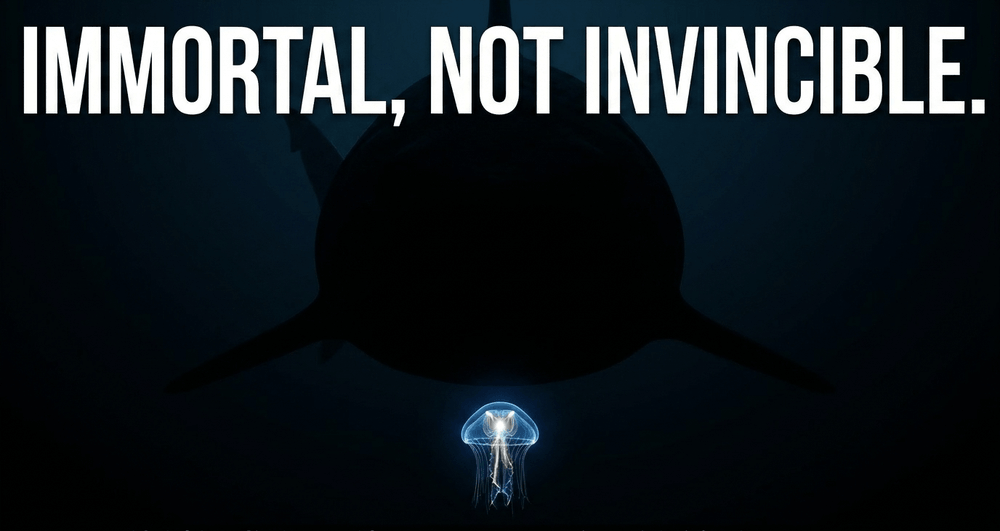
There is also a philosophical dimension worth sitting with. Immortality, even biological immortality, is not the same as permanence. T. dohrnii does not accumulate experience across its cycles. It does not remember its previous lives. Each reversal is a fresh start, not a continuation. Whatever it is that we mean when we speak of living - the thread of consciousness, the weight of memory - is something this jellyfish does not preserve. What it preserves, exquisitely, is its cellular machinery.
That is, in its own way, a profound enough thing.
Looking ahead
The study of T. dohrnii sits at a rare intersection: a biological phenomenon that is genuinely extraordinary and simultaneously tractable to modern molecular tools. Each new genome assembly, each transcriptomic dataset, each careful observation by researchers like Shin Kubota narrows the gap between the jellyfish's secret and our understanding of it.
We are nowhere near the point where a human patient might benefit from a therapy derived directly from this animal. But we are learning, with increasing precision, what it means for a living organism to rewrite the terms of its own aging. And that knowledge - careful, cumulative, anchored in the biology of a tiny translucent creature drifting through the Mediterranean night - is not nothing.
"The immortal medusa is the most miraculous species in the entire animal kingdom."
- Dr Shin Kubota, Kyoto University
It is a quietly radical idea: that the answer to one of biology's oldest questions may have been floating in the sea all along, waiting for us to ask the right questions and look closely enough to read it.
Share now









Key takeaways
- Turritopsis dohrnii is the only known metazoan capable of repeatedly reversing its biological age after reaching sexual maturity, earning it the title of the "immortal jellyfish."
- The organism is a hydrozoan measuring approximately 4.5 millimetres in diameter, with a nearly transparent body and a bright red stomach.
- Its biological immortality relies on a process called transdifferentiation - where fully specialised adult cells convert directly into different cell types, without reverting to a stem cell state first.
- When stressed, injured, or aged, the medusa contracts, reabsorbs its tentacles, and settles to the seafloor as a cyst, from which a new polyp develops in 24-72 hours.
- A landmark 2022 PNAS study (Universidad de Oviedo) found T. dohrnii has roughly double the DNA repair genes of its mortal relative, Turritopsis rubra, including amplifications of POLD1, POLA2, XRCC5, GEN1, RAD51C, and MSH2.
- During its life cycle reversal, T. dohrnii activates transcription factors similar to the Yamanaka factors (Oct4, Sox2, Klf4, c-Myc) used in human stem cell reprogramming - doing naturally what took Nobel Prize-winning science to replicate in a lab.
- The jellyfish resets its telomere length during reversal, aided by expanded copies of the GAR1 gene, which enhances the telomerase complex - effectively maintaining cellular youth across multiple life cycles.
- Approximately 44% of the top 50 differentially expressed genes in the cyst stage are entirely novel and unannotated, meaning the molecular machinery powering its most critical transition remains largely uncharted.
- Originally native to the Mediterranean, T. dohrnii has spread globally - to Japan, Florida, Panama, New Zealand, and beyond - primarily via ballast water in cargo ships; DNA analysis confirms all global populations are genetically identical.
- Dr Shin Kubota of Kyoto University has documented T. dohrnii colonies renewing themselves up to 10 times within a single month in laboratory conditions - the most sustained observation of the process ever recorded.
Sources
- PNAS - Comparative genomics of mortal and immortal cnidarians unveils novel keys behind rejuvenation https://www.pnas.org/doi/10.1073/pnas.2118763119
- The Scientist - An "Immortal" Jellyfish Offers Clues into Biological Aging https://www.the-scientist.com/an-immortal-jellyfish-offers-clues-into-biological-aging-73346
- PMC / NIH - Cellular Reprogramming and Immortality: Expression Profiling Reveals Putative Genes Involved in Turritopsis dohrnii's Life Cycle Reversal https://pmc.ncbi.nlm.nih.gov/articles/PMC8480191/
- Natural History Museum - Immortal jellyfish: The secret to cheating death https://www.nhm.ac.uk/discover/immortal-jellyfish-secret-to-cheating-death.html
- National Geographic - "Immortal" Jellyfish Swarm World's Oceans https://www.nationalgeographic.com/animals/article/immortal-jellyfish-swarm-oceans-animals
- Published 2026-06-01 11:45
- Modified 2026-06-01 11:52

-
Redaction