

-
 Redaction
How ritual mushrooms may have shaped human society
Explore how psilocybin's effects on empathy and the amygdala may have helped stabilize early human societies, from Algeria's caves to Mesoamerican codices.
The story of human civilization is usually told through the lens of technological conquest - the taming of fire, the forging of bronze, the slow domestication of wheat and barley. But a quieter, more internal revolution may have unfolded alongside these material milestones: a shift within the neurobiological architecture of our ancestors' brains. To understand how early hominid bands, prone to the same reactive aggression we see in other primates, gradually became capable of large-scale cooperation, we may need to look past stone tools and toward the chemistry that bridges private perception and collective belonging.
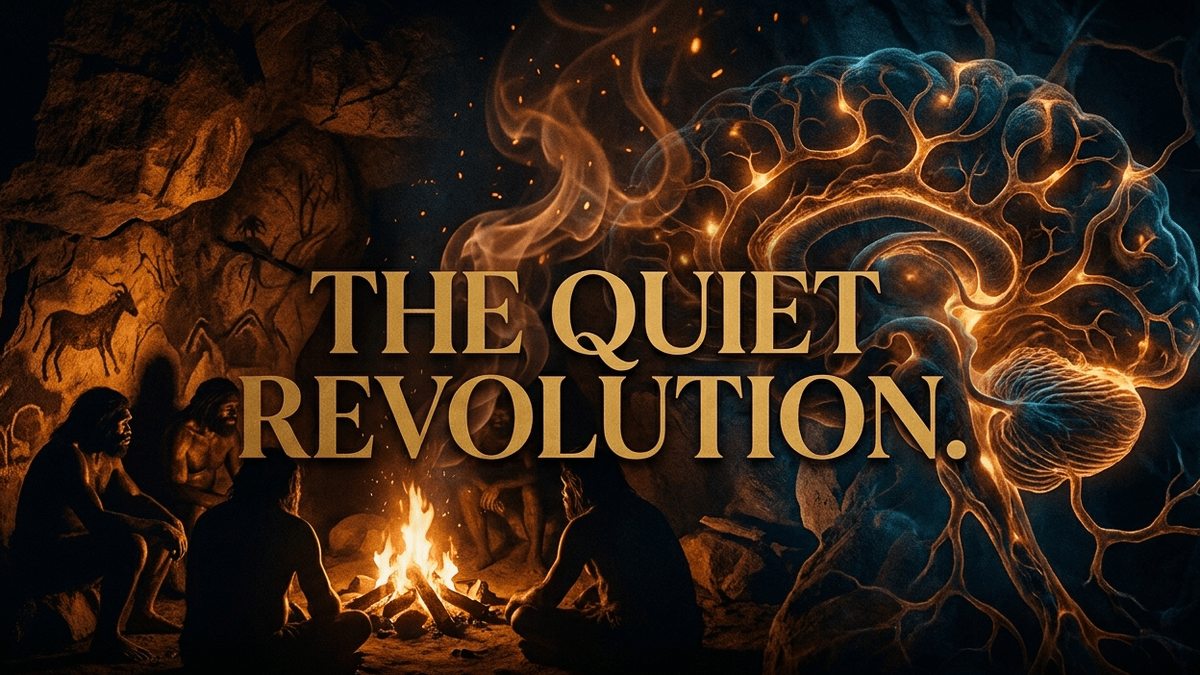
A growing body of research at the intersection of archaeology and clinical neuroscience points to an intriguing possibility: that the ritual use of psilocybin-containing mushrooms helped stabilize early social structures by inducing states of ego-dissolution and measurably enhancing emotional empathy. I want to be upfront about where the evidence is solid and where it thins into informed speculation, because this is a hypothesis still very much under construction - built from clinical data gathered in the twenty-first century, applied backward onto a past we can only partially reconstruct. Still, the pattern is compelling enough to take seriously.
The biochemical foundation of social bonding
At the center of this hypothesis sits a specific molecular action: psilocybin, once metabolized in the body into psilocin, behaves as a partial agonist at the brain's 5-HT2A and 5-HT1A serotonin receptors. This receptor stimulation has been shown to acutely enhance mood and empathy, boost prosocial behavior, and dampen the processing of negative facial expressions and social pain. These aren't scattered effects. The receptors in question cluster densely in the prefrontal cortex and limbic system - precisely the regions responsible for social cognition, threat assessment, and emotional regulation.

What makes this neurologically interesting for an evolutionary story is the specificity of the effect. A landmark placebo-controlled trial out of the University of Zurich, using a dose of roughly 0.215 mg/kg body weight, found that patients who received psilocybin showed significant improvements in explicit emotional empathy for at least two weeks following a single session. Emotional empathy here means something specific: the capacity to feel resonance with another person's state, rather than to intellectually model what they might be thinking.
That second capacity - cognitive empathy, the more calculating "theory of mind" skill - stayed essentially untouched. As the researchers put it, cognitive empathy was decreased or did not change in the acute or sub-acute time frame following psilocybin administration, suggesting the compound primarily affects emotional processing rather than the cognitive machinery of empathy. For a species trying to build trust without losing its analytical edge, that's an oddly convenient split. You get warmth without gullibility, connection without a dulled capacity to assess real threats.
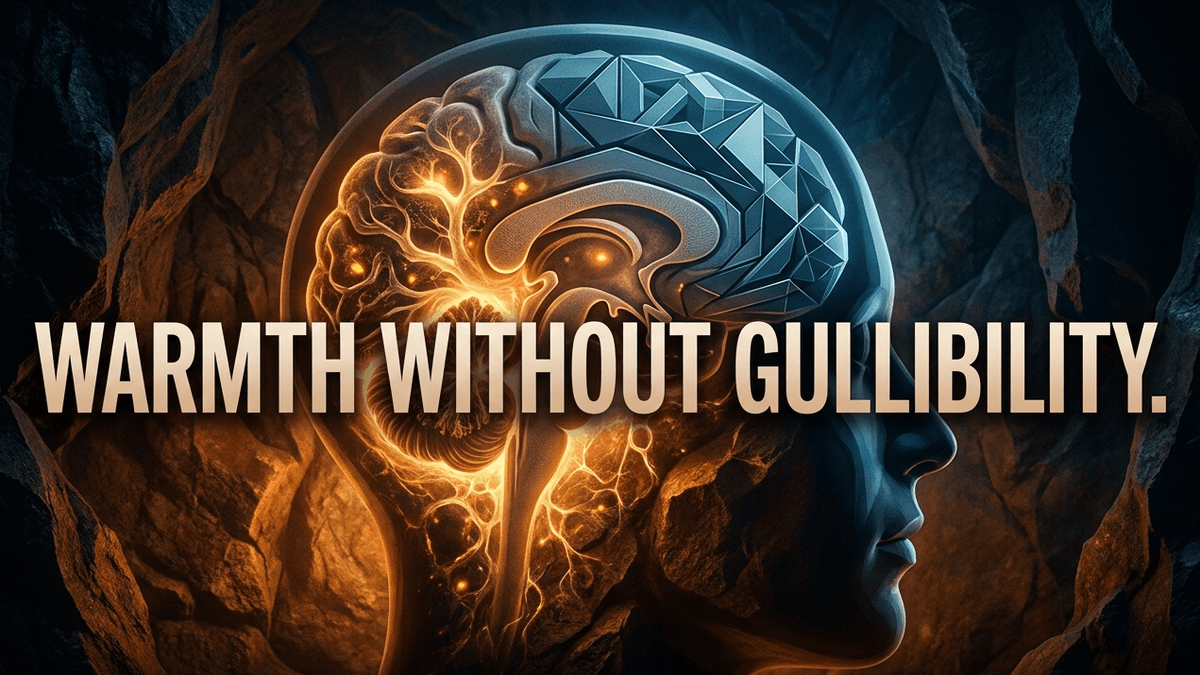
I find this distinction is often lost in more breathless accounts of psychedelics and human evolution. The mushrooms, on this evidence, weren't making our ancestors naive. They were making them more emotionally attuned while leaving their strategic thinking intact.
Amygdala dampening and the taming of reactive aggression
Small-scale primate societies run on a particular kind of threat logic. The amygdala - the brain's rapid-response alarm system - tends to interpret ambiguous social signals (a hard stare, an unexpected bump, a stranger's approach) as potential danger first and asks questions later. That bias serves an animal well in a predator-rich landscape. It is far less useful once you're trying to live in permanent proximity to dozens or hundreds of other humans.
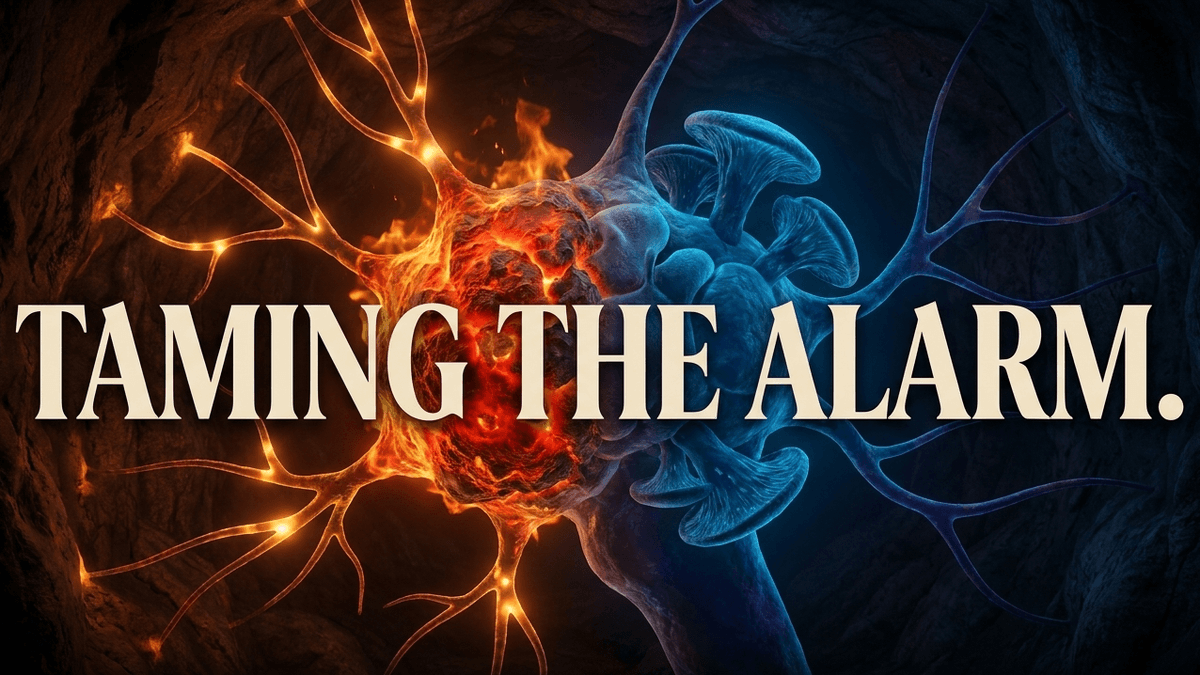
Neuroimaging work gives us a fairly clear picture of what psilocybin does to this system. Studies using dynamic causal modeling on fMRI data found that psilocybin substantially reduced the modulatory effect of threat on the top-down connection running from the amygdala to the primary visual cortex - in plainer language, it loosened the grip that threat perception has on how we interpret what we're seeing. Related research has gone further, showing that psilocybin acutely reduces amygdala activity and connectivity specifically when a person is viewing negative emotional facial expressions, and that this dampened reactivity can persist for at least a week after a single high dose.
I think of it less as a sedative effect and more as a recalibration. The alarm system doesn't go silent - it simply stops treating every ambiguous cue as a five-alarm fire. For early communities navigating the friction of close-quarters living, that recalibration would have been worth its weight in obsidian. Instead of a shove answered by a shove, there was room for the slower, more effortful work of talking things through.
Reading the archaeological record - carefully
This is where I want to slow down, because the archaeological evidence for ritual mushroom use is often presented with more confidence than the underlying scholarship actually supports.
The most frequently cited image is the so-called Tassili mushroom figure, part of the vast rock art complex at Tassili n'Ajjer in the Algerian Sahara - a UNESCO World Heritage site holding some 15,000 individual paintings and engravings, many dating to the region's "Round Head" period roughly nine to seven thousand years ago, when the Sahara was still a green savanna rather than a desert. The ethnobotanist Giorgio Samorini popularized the reading of certain masked, mushroom-headed figures at the site as evidence of early psychedelic ritual, a hypothesis further amplified by Terence McKenna's Food of the Gods. It's a genuinely striking image: humanoid figures whose bodies sprout what look like fungal caps, arranged in what could be a communal, dancing formation.
But I have to be honest about the state of the debate. This interpretation remains contested among archaeologists. Some researchers have proposed alternative readings of the same imagery - including the possibility that the forms represent sheep rather than mushrooms - and the shamanic reading, while widely repeated in popular writing, has never achieved anything like scholarly consensus. What we can say with confidence is that the Tassili paintings are extraordinary, that they depict masked figures in ritual-looking postures, and that the mushroom hypothesis is one plausible interpretation among several rather than an established fact.
The Mesoamerican evidence rests on somewhat firmer footing. The Codex Vindobonensis Mexicanus I, a Mixtec pictographic manuscript most likely produced between the fourteenth and sixteenth centuries, includes detailed depictions of mushroom rituals - deities crowned with mushroom headdresses, figures shown mid-vision with tears streaming from their eyes, a scene widely interpreted by scholars such as Gordon Wasson and Richard Evans Schultes as evidence of the "flesh of the gods" ceremonies later documented by Spanish chroniclers among the Aztec and Mixtec. The Florentine Codex separately details an Aztec ceremony in which participants consumed mushrooms, often mixed with honey, then danced, wept, and shared their visions collectively as guidance for the community. Here, unlike at Tassili, we have converging pictorial and textual sources, and the scholarly consensus is genuinely stronger: archaeological and historical evidence suggests that psilocybe mushrooms were used ritually, therapeutically, and divinatorially in Mesoamerica for at least three thousand years.
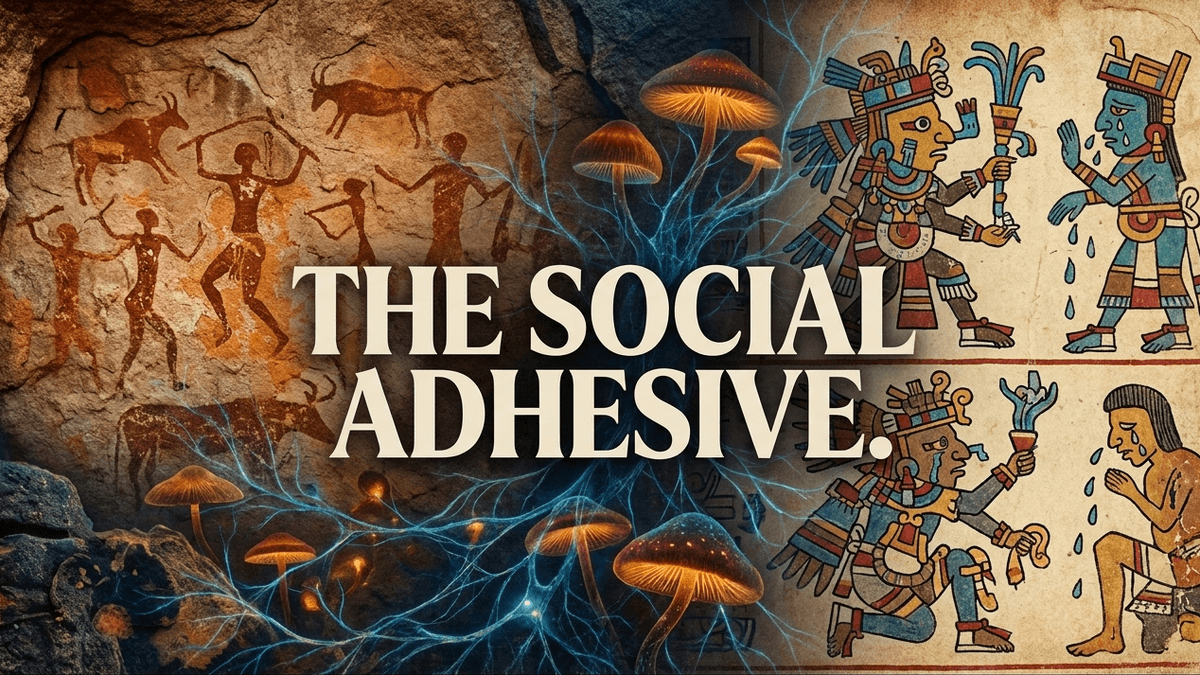
What both cases share, disputed or not, is a suggestion of collective rather than solitary use - a ritual technology, if the mushroom interpretation holds, designed to distribute an altered state across a group rather than reserve it for a lone visionary.
Stabilizing hierarchies through shared vulnerability
There's a popular assumption, especially in the modern West, that psychedelics are inherently anti-authoritarian - substances that dissolve social structure rather than reinforce it. The historical pattern, where it can be traced, tells a more complicated story. In early sedentary communities making the difficult transition from relatively flat hunter-gatherer bands to more hierarchical arrangements, ritual mushroom use appears to have functioned as a kind of social adhesive rather than a solvent.
The mechanism, as best we understand it, runs through what researchers call ego-dissolution: the temporary loosening of the felt boundary between self and other. When a group shares that experience together, the motivation to invest in the collective rather than the individual tends to rise. And these effects are not purely momentary. The Zurich trial mentioned earlier tracked empathy scores out to two weeks post-session and found the gains held. Other work on psilocybin's mood and social effects has documented meaningful shifts accompanied by decreased amygdala reactivity to negative stimuli and increased prefrontal cortex activation linked to emotional control, lasting well beyond the acute experience itself.
I'd stop short of the stronger claim - sometimes made in popular accounts - that a single ritual session produces benefits lasting six months. The controlled human data we actually have extends convincingly to about two weeks, occasionally longer in smaller or less rigorously controlled studies. That's still remarkable. A seasonal or occasional ritual, repeated across a community's calendar, could plausibly function as a recurring "social reset," smoothing over the frictions of hierarchy before they hardened into lasting fractures.

Resilience after conflict: the social defeat model
Life before written history carried its own steady drumbeat of trauma - predation, food scarcity, and, inevitably, conflict between neighboring groups. What happens to a community's social fabric after such an event is at least as important as what happens during it. This is where a strand of modern animal research becomes unexpectedly relevant.
In rodent models of chronic social defeat stress - a well-established paradigm for studying depression-like withdrawal - psilocin, the active metabolite of psilocybin, has been shown to ameliorate social avoidance behavior in mice repeatedly exposed to stress, though the effect depends on receptor activation and on timing, working when administered after stress exposure rather than before. A related comparative study found something equally striking: a single dose of psilocybin significantly reversed social avoidance behavior within 24 hours of treatment, with the effect still detectable a full two weeks later - a far faster and more durable response than standard antidepressants managed in the same experiment.
Translate that finding, carefully, to a hypothetical early human context, and the implications are suggestive. A community's long-term survival depends heavily on its capacity to recover from internal friction or external attack without splintering into isolated, mutually suspicious factions. If ritual mushroom use functioned - even partially - as a pharmacological buffer against the corrosive, isolating aftermath of shared trauma, it would have offered a genuine adaptive advantage: not the prevention of hardship, but a faster path back to cooperation once the hardship had passed.
For readers interested in how ritual itself, apart from any specific substance, shapes group cohesion through synchronized movement and shared physiological states, the related piece on the neurobiology of ritual and synchrony is worth a look - it explores a complementary mechanism operating through endorphins and neural synchrony rather than serotonergic chemistry.

What this hypothesis can and cannot claim
I want to be clear-eyed about the limits here, because it's easy for a genuinely interesting neurobiological story to calcify into an overconfident evolutionary just-so tale. The clinical data on psilocybin's empathy and amygdala effects is real, replicated across multiple labs, and reasonably robust. The archaeological record is far more uneven - strong at Mesoamerican sites, contested at Tassili n'Ajjer, and in either case incapable of telling us with certainty why these substances were used, only that images of them survive.
What the hypothesis offers, at its best, is not proof but a plausible mechanism: a biochemical pathway that could explain how early human groups managed the extraordinary cognitive leap from small, kin-based bands to larger, hierarchically organized settlements without collapsing under the weight of accumulated social friction. Cortical flexibility, dampened threat reactivity, heightened emotional (not cognitive) empathy, and faster recovery from social rupture - each piece is independently well-documented in modern humans. Whether they assembled into a coherent evolutionary force ten thousand years ago is a question archaeology alone cannot answer, and one that requires humility rather than certainty.
The evolution of the socio-cognitive niche
Taken together, this research offers a genuinely persuasive partial explanation for how early human societies stabilized - not as a single dramatic cause, but as one thread among many, alongside fire, language, agriculture, and the slow accumulation of shared myth. The combination of 5-HT2A receptor activity, quieted amygdala reactivity, and enhanced emotional (though not cognitive) empathy would have created conditions under which cooperation felt more rewarding, and safer, than competition.
If the hypothesis holds even partially, it reframes ritual mushroom use not as an isolated curiosity of certain ancient cultures but as one of several social technologies - alongside fire-lit gathering, synchronized dance, and shared feasting - that early humans may have leaned on to hold larger and more complex communities together. The roots of human empathy, in that light, may run deeper into our biochemistry, and further back into prehistory, than we tend to assume.
Share now









Key takeaways
- Psilocybin's active metabolite, psilocin, acts as a partial agonist at serotonin 5-HT2A and 5-HT1A receptors, concentrated in brain regions governing social cognition and emotional regulation.
- A placebo-controlled clinical trial (University of Zurich) found psilocybin produced significant improvements in emotional empathy lasting at least two weeks after a single session.
- Emotional empathy (feeling what another person feels) rises with psilocybin use, while cognitive empathy (modeling another's thoughts) remains largely unchanged.
- fMRI studies show psilocybin reduces amygdala reactivity to negative and threatening stimuli, with effects on emotional processing detectable up to a week later.
- The Tassili n'Ajjer rock art in Algeria (dated roughly 7,000-9,000 years) includes figures popularly interpreted as mushroom-related, though this reading remains disputed among archaeologists, with alternative explanations proposed.
- The Codex Vindobonensis Mexicanus I, a Mixtec manuscript, depicts deities and rituals involving mushrooms and represents one of the stronger pieces of documented evidence for ceremonial use in Mesoamerica.
- Mesoamerican ritual mushroom use is supported by converging archaeological, pictorial, and colonial-era textual sources spanning roughly 3,000 years.
- Animal studies show psilocin can ameliorate social avoidance behavior in mice following chronic social defeat stress, though the effect depends on timing and receptor activation.
- A comparative rodent study found a single dose of psilocybin reversed social avoidance behavior within 24 hours, with effects persisting for up to two weeks - faster than standard antidepressants tested in the same study.
- Ego-dissolution - the temporary blurring of self/other boundaries - is proposed as a key mechanism linking the psychedelic experience to increased motivation for collective, rather than purely individual, behavior.
- Historical and clinical evidence suggests psychedelics were often used to reinforce existing social structures in early sedentary communities, not merely to challenge them.
- The hypothesis connecting psilocybin to social hierarchy stabilization remains a plausible but unproven mechanism - clinical neuroscience is well-documented, but archaeological interpretation carries significant uncertainty.
Sources
- Molecular Psychiatry (Nature) https://www.nature.com/articles/s41380-024-02875-0
- PMC / NIH - Effects of psilocybin on cognitive and emotional functions https://pmc.ncbi.nlm.nih.gov/articles/PMC8801675/
- ScienceDirect - Psilocybin reduces threat-induced modulation of amygdala connectivity https://www.sciencedirect.com/science/article/pii/S2213158215001473
- Wiley Online Library - Contribution of the 5-HT2A receptor to psilocin's effect on social behavior deficits https://onlinelibrary.wiley.com/doi/10.1002/npr2.70152
- Wikipedia - Tassili Mushroom Figure https://en.wikipedia.org/wiki/Tassili_Mushroom_Figure
- Published 2026-07-19 14:17
- Modified 2026-07-19 14:17

-
Redaction