

-
 Redaction
Why insect pollinators are vanishing worldwide
From warming nights to hidden hunger, discover the hard science behind the global pollinator crisis and practical steps you can take to help reverse it.
I remember the sound of July. Walking through a high-altitude meadow once felt like wading through a vibrant, vibrating orchestra. The air was thick with the hum of hoverflies, the erratic zig-zag of bumblebees, and a gentle thrum of wings that seemed to vibrate the very stems of the wildflowers. Today, that same meadow is quiet. The flowers still bloom - some of them earlier than they used to - but the frantic energy of the insect world has been replaced by a heavy, hollow stillness. This is the "phantom" decline: a loss so gradual yet so absolute that we risk forgetting what a healthy landscape even sounds like.
This phenomenon, often called shifting baseline syndrome, is perhaps the greatest hurdle in conservation. Each generation accepts the diminished state of nature it inherits as the default. We no longer notice the lack of insects on our windscreens because we've forgotten the days when a drive through the countryside required a bucket and sponge. But the data now emerging reveals a crisis that can no longer be ignored by the collective consciousness. We are witnessing an ecological thinning that threatens the literal foundations of our food security and communal health.
The quantitative collapse of the insect world
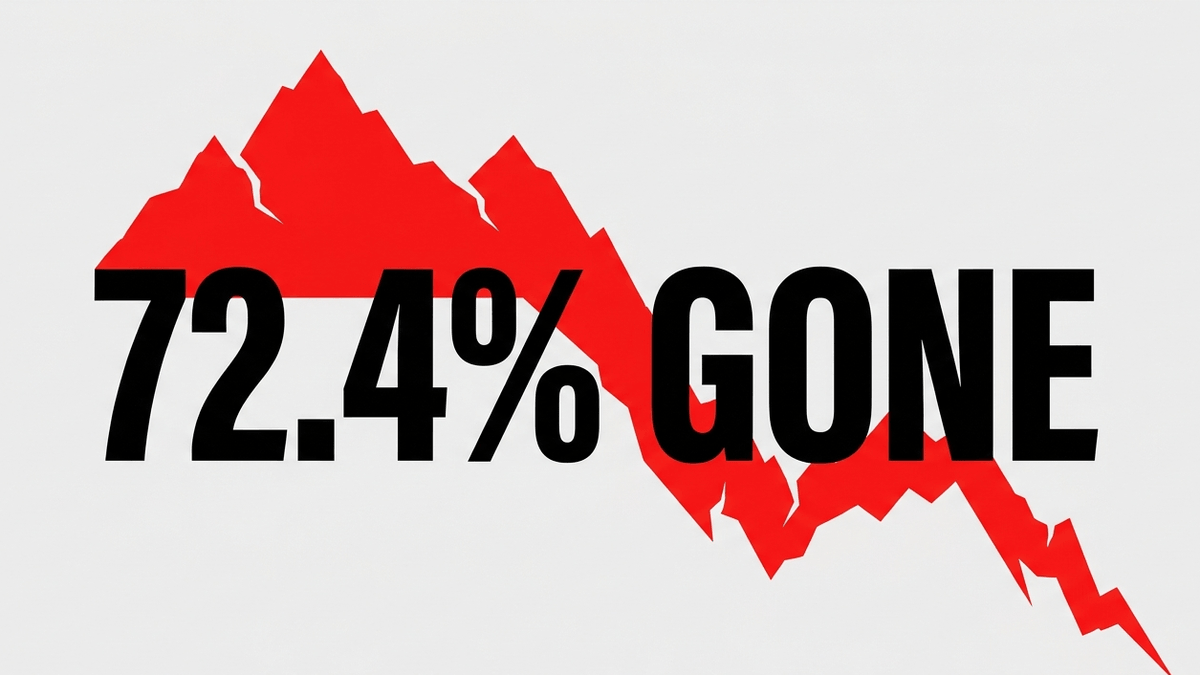
The scale of the decline is staggering when viewed through a longitudinal lens. In the subalpine meadows of Colorado, a twenty-year study tracked flying insect abundance at a remote, minimally disturbed site near Molas Pass in the Rocky Mountains - a 15-hectare meadow at 3,200 metres elevation, adjacent to the state's largest wilderness area. Led by biologist Keith Sockman of the University of North Carolina at Chapel Hill, the research monitored insects across 15 field seasons between 2004 and 2024 and found an average annual decline of 6.6% in abundance, amounting to a 72.4% drop over the twenty-year period. What makes this study so unsettling isn't just the number - it's the location. This wasn't farmland stripped bare by pesticides or a suburb paved over for parking lots. As Sockman himself put it, insects occupy "a unique, if inauspicious position in the biodiversity crisis," given both the ecological services they provide and their vulnerability to environmental change.
Related reading: for a look at how ecosystems beneath our feet are equally strained, see our piece on fungal necromass and the hidden key to soil health.
This is not an isolated finding. A companion study at the Rocky Mountain Biological Laboratory, tracking a different subalpine meadow over roughly three and a half decades, recorded a roughly 61.5% decline in insect abundance and a 47% drop in biomass - a slower rate, perhaps, but pointing in exactly the same grim direction.
Across the Atlantic, the picture is no less troubling. The UK's Pollinator Monitoring Scheme, which draws on the work of more than 3,000 citizen scientists across nearly 3,500 sites, found that hoverflies - a keystone group for both pollination and pest control - declined by between 26% and 37% in abundance over an eight-year monitoring window. Hoverflies are often overlooked in favor of showier bumblebees, yet they are thought to be the second most important pollinators after bees, visiting at least 52% of the world's food crops and 70% of animal-pollinated wildflowers. Their larvae are also voracious predators of aphids, making their disappearance a double loss: less pollination, and less natural pest control. Bumblebee numbers fell too, and the scheme's researchers flagged that one particularly wet spring and cool summer had made a bad trend even worse. Encouragingly, the same data showed honeybees, beetles, and other flies actually increasing in garden settings - a small but telling sign that even modest, cultivated green space can function as a refuge.
While wild populations suffer largely in silence, the commercial sector has been sounding the alarm loudly. Entomologists at Washington State University reported that up to 70% of commercial honey bee colonies died over the past year, a much steeper rate of loss than the historical average of roughly 40 to 50%. Researchers attribute the mounting losses to what they call the "4 P's": pests, poor nutrition, pesticides, and pathogens - a tangle of stressors that compound one another rather than acting in isolation. These commercial colonies are the workhorses of industrial agriculture, and their failure is a harbinger of broader environmental stress.
We are not just losing individual species. We are losing the functional redundancy that keeps ecosystems resilient - the buffer that allows a landscape to absorb one bad year without collapsing.
Thermal stress and the nocturnal recovery crisis
To understand why this is happening, we must look beyond simple habitat loss. While the conversion of meadows to monocultures remains a primary driver of insect decline worldwide, the Colorado research points to something more insidious operating even in untouched wilderness: heat, and specifically, warm nights.
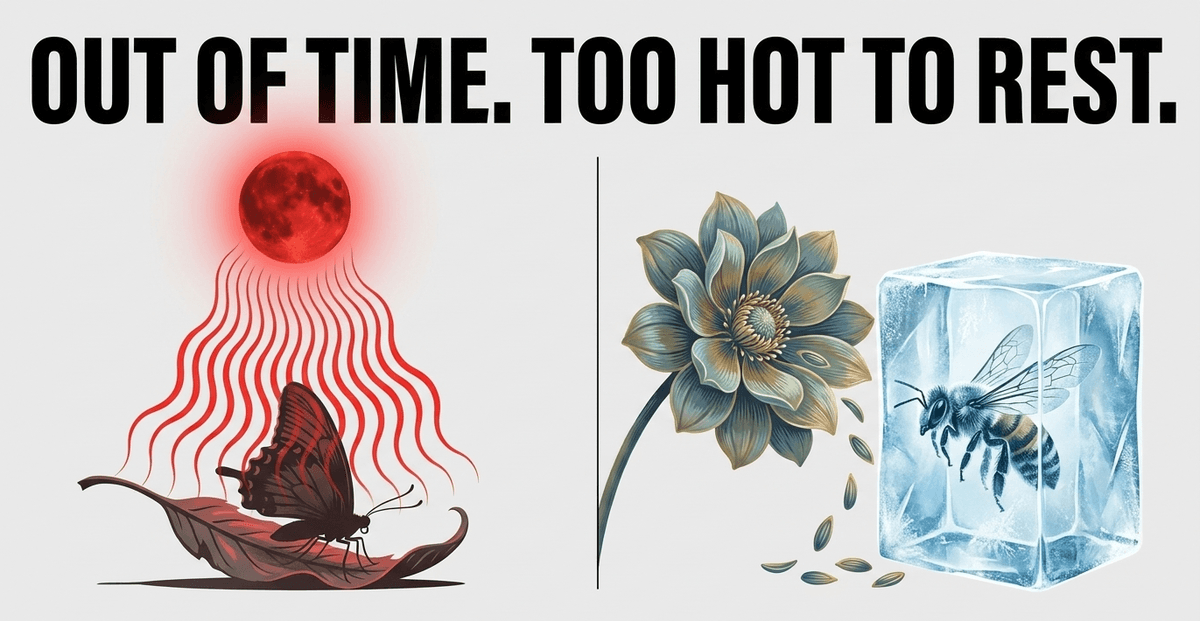
In the Colorado study, mountain summer daily lows rose by 0.8 degrees Celsius per decade, and this single variable turned out to be the strongest predictor of insect decline - stronger, notably, than any measure of daytime heat. For an insect, the night isn't simply a period of inactivity. It's a vital window for physiological recovery from the stress of the day's heat. When nights stay warm, metabolic rates remain elevated, denying insects the rest they need to repair cellular damage.
This produces what researchers describe as a climate lag effect. The analysis found that a seasonal increase in insect abundance flipped into a seasonal decline as the previous summer's temperatures rose - meaning a single scorching summer doesn't just hurt insects in the moment. It quietly erodes the population the following year, too. The stress is cumulative, weakening the ability of a population to overwinter or reproduce effectively come spring. We are, in effect, watching a slow-motion exhaustion of an entire class of life.
The mismatch of time and flower
Further complicating this survival struggle is phenological asynchrony. As the planet warms, the cues that tell a plant to bloom and an insect to emerge from dormancy are drifting apart, sometimes by weeks. For specialist pollinators - those that feed almost exclusively on a narrow window of specific floral nectar - this mismatch can be a death sentence. If the bee emerges and the flower has already gone to seed, the link in the chain is broken. This asynchrony doesn't stay contained to one relationship. It ripples through the food web, touching birds that rely on those insects to feed their chicks and mammals that rely on the resulting fruit.
The high cost of managed competition
There's a common misconception that "saving the bees" simply means installing more honeybee hives. It's an intuitive idea, and a well-meaning one. But the science tells a more complicated story. A systematic review of the research on this question found that among studies specifically examining resource competition, 53% reported negative effects of managed bees on wild bee populations, while only 28% found no effect at all. A more recent update to that same body of research, drawing on a much larger pool of studies, found the share reporting negative effects had climbed to roughly two-thirds. The trend, in other words, is moving in one direction.
Honeybees are extraordinarily efficient foragers, often outcompeting native bumblebees and solitary bees for a limited pool of floral resources. In a landscape already depleted of flowers, introducing thousands of managed bees can effectively starve the local, native specialists - who, ironically, are often more effective pollinators for native flora than honeybees ever were. It's a bit like importing cattle to fix an overgrazed field. It's also worth remembering that managed honeybees represent less than 1% of the roughly 20,000 bee species known worldwide - a single livestock species standing in, in the public imagination, for an entire order of insects it cannot replace.
Economic fallout and the nutritional gap
The disappearance of pollinators is not merely an aesthetic or ecological tragedy. It is, increasingly, an economic and public health catastrophe.
A landmark study published in Nature, led by researchers at the University of Bristol working with partners across Nepal, the UK, the US, and Finland, traced the connection between pollinator health and human welfare with unprecedented precision. Over the course of a year, the team tracked the diets of 776 people across ten smallholder farming villages in Nepal's Jumla district, running more than 15,000 dietary recall surveys and logging over 10,000 individual insect-crop interactions spanning 503 species. The result was one of the clearest mechanistic pictures yet drawn between pollinator abundance and human wellbeing: insect pollinators were responsible for 44% of people's farming income and contributed more than 20% of their intake of vitamin A, folate, and vitamin E. For these families, a meadow without bees is a direct pathway to poverty and poor health.
"Over half of the children in our study were too short for their age, which is largely driven by poor diets that depend upon insect pollinated vegetables, legumes and fruits," said Dr Naomi Saville of the UCL Institute for Global Health, who coordinated the nutrition work. "As pollinator biodiversity declines, loss of vitamin A, folate and protein from the diet can further damage these children's health and development, so efforts to restore pollinators are crucial."
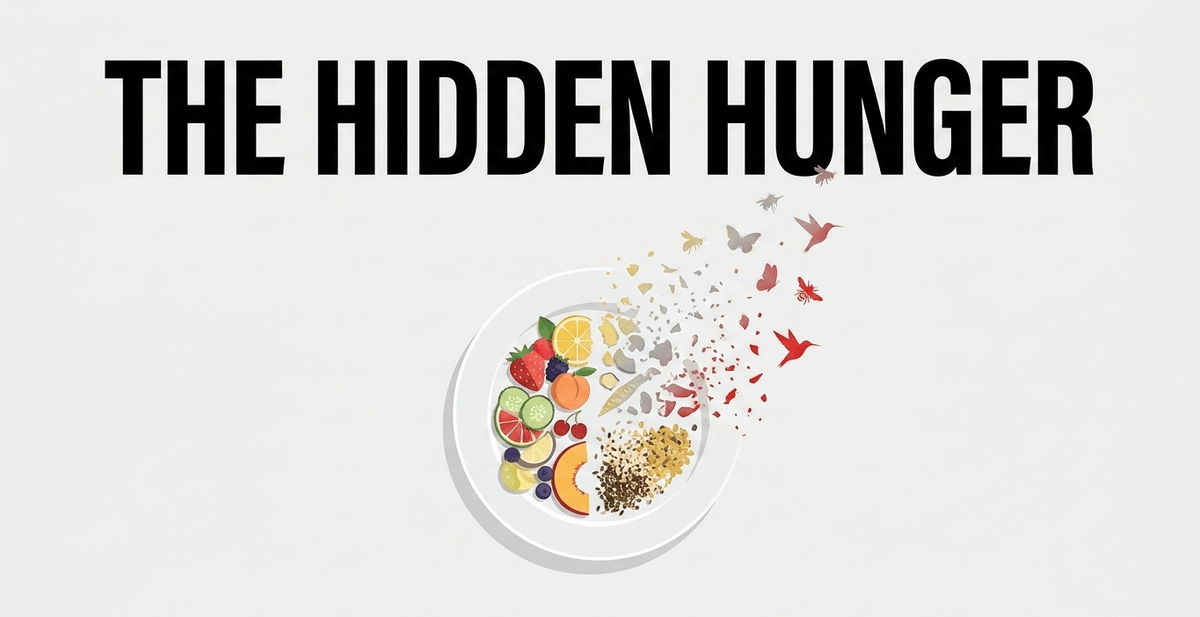
The researchers describe this as "hidden hunger" - a form of malnutrition that isn't about empty stomachs but about missing micronutrients, quietly compounding into higher vulnerability to illness and deeper cycles of poverty. One quarter of the global population currently lives with some form of this hidden hunger, and with close to two billion people worldwide relying on smallholder farming, the Nepal findings are unlikely to be a local anomaly.
The commercial toll is measurable, too. In the United States, colony losses among commercial honey bee operations between June 2024 and mid-March 2025 amounted to more than 1.6 million lost colonies and an estimated $600 million in economic losses, according to data compiled by Project Apis m. and cited by WSU researchers. Fewer bees also means higher rental costs for the hives that growers depend on to pollinate crops like almonds, blueberries, and apples - a cost that inevitably trickles down to the price of groceries.
Insects are, in a very real sense, the silent architects of our nutritional diversity. Research estimates that between 3% and 5% of global vegetable and fruit production is already lost annually due to pollination deficits. In regions like sub-Saharan Africa and Southeast Asia, this shows up as sharp declines in yields for cocoa and mango - crops central to both local nutrition and global trade.
Mapping the risk of extinction
The IUCN Red List provides a stark geographic breakdown of the crisis. The most recent Europe-wide assessment found that at least 172 of the 1,928 wild bee species evaluated - roughly one in ten - are now considered at risk of extinction, more than double the 77 species flagged back in 2014. Within that total, over 20% of bumblebee and cellophane bee species are threatened, groups responsible for pollinating everything from peas and beans to red maples and willows. European butterflies fared little better: the number of threatened species climbed 76% over the preceding decade, and hoverflies - assessed separately - showed 37% of species threatened continent-wide.
Meanwhile, conservation groups in North America estimate that more than 22% of native pollinators on the continent face a similar threat, with bees, butterflies, and bats topping the list of vulnerable groups. Habitat loss remains the single greatest driver behind these figures on both continents, a reminder that as urgent as the climate story is, it compounds an older and more familiar threat rather than replacing it.
Vulnerability modeling consistently identifies Southeast Asia and sub-Saharan Africa as the highest-risk zones for crop shortfalls tied to pollinator loss. These are regions where reliance on insect-pollinated crops runs high, and the capacity to adapt to rapid biodiversity loss runs low. We are looking at a future where the inequality of food access is worsened by the ecological poverty of our landscapes.
Restoring the symphony: a path forward
Fixing a phantom decline requires making the invisible visible again. We must move beyond the shifting baseline by anchoring our conservation targets in historical data rather than the degraded present. This involves a fundamental shift in land management - and, encouragingly, the Nepal study found real cause for hope here: when communities actively supported pollinators, nutrition and income measurably improved, and the findings are already informing a new national pollinator strategy for the country. We cannot expect pollinators to survive in "green deserts" of manicured lawns and chemically treated monocultures, but we also aren't powerless against that trend.
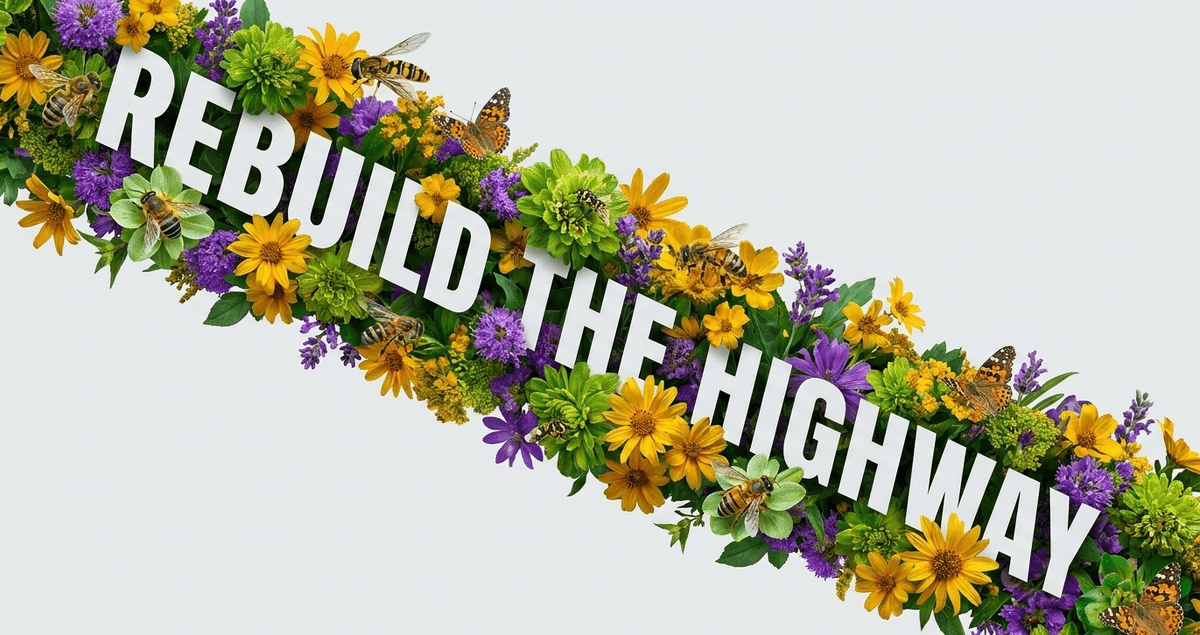
- Restoring floral connectivity. We need "pollinator highways" - continuous corridors of native vegetation that let insects migrate and find food across fragmented landscapes, rather than isolated pockets of habitat separated by inhospitable ground.
- Regulating managed bees. Policy must reflect the science of interspecific competition, ensuring honeybee hives aren't placed in sensitive areas where they might displace threatened native species.
- Climate-resilient planting. Selecting plant species with a broader blooming window can help buffer the effects of phenological asynchrony, giving insects a safety net as timing shifts underfoot.
- Reducing chemical loads. The cumulative stress of pesticides and heat makes insects more vulnerable to disease. Cutting back on chemical interventions is a non-negotiable step toward stabilizing populations.
- Closing the data gap. More than half of Europe's wild bee species remain classed as "data deficient" - too poorly studied to even assess their risk. Funding long-term, low-disturbance monitoring like Sockman's Colorado site or the UK's citizen-led PoMS is, in itself, a conservation act.
What a single garden can do
It's tempting to think this crisis is too vast for any individual response to matter. But pollinator ecologists are unanimous that small, deliberate changes at the scale of a backyard, balcony, or roadside verge add up - especially when they multiply across a neighborhood.
- Plant native species in clusters. Bees exhibit what biologists call "flower constancy," a preference for foraging on one species at a time. Grouping five to seven plants of the same native species together, rather than scattering single specimens, makes foraging dramatically more efficient for visiting pollinators.
- Keep something blooming from early spring through late fall. A garden with a single burst of color in June leaves pollinators with nothing to eat the rest of the season. Succession planting closes that gap.
- Leave the mess. Leaf litter, hollow plant stems, and small patches of bare, undisturbed soil are nesting habitat for solitary bees, which make up the vast majority of native bee species and don't live in hives at all.
- Skip the pesticides, especially neonicotinoids. Even products applied at the nursery, before a plant ever reaches a garden centre, can carry residues that harm visiting insects for months afterward.
- Add a shallow water source. A dish of pebbles and water gives thirsty pollinators somewhere safe to drink without risk of drowning.
- Give hoverflies a place to breed, not just feed. A small container of leaf-filled water - even an upcycled milk bottle tucked into a corner - can serve as a breeding site for hoverfly larvae, closing the loop between adult foraging and the next generation.
None of this requires acreage. A window box, mindfully planted, is still a rest stop on the pollinator highway.
The silence of the meadows is a warning. It is a quiet, steady erosion of the natural world that supports us. But if we listen closely to that silence, we can hear the urgency of the task ahead. We have the data, we have the maps, and we have the moral imperative to ensure that the orchestra of the meadow does not go dark forever. The future of our food, our health, and our landscapes depends on our ability to value the small, the buzzing, and the winged before they vanish from our memory entirely.
Share now









Key takeaways
- A twenty-year study of a remote Colorado subalpine meadow found flying insect abundance dropped by 72.4%, an average annual decline of 6.6%, driven primarily by rising nighttime temperatures rather than habitat loss.
- A separate multi-decade study at the Rocky Mountain Biological Laboratory recorded a 61.5% decline in insect abundance and a 47% drop in biomass in an equally undisturbed meadow.
- The UK's Pollinator Monitoring Scheme found hoverfly abundance fell by 26% to 37% over an eight-year window, based on data from over 3,000 citizen scientists across nearly 3,500 sites.
- Hoverflies visit at least 52% of the world's food crops and 70% of animal-pollinated wildflowers, making them the second most important pollinator group after bees.
- Up to 70% of commercial U.S. honey bee colonies died within a single year, according to Washington State University entomologists, who attribute the losses to the "4 P's": pests, poor nutrition, pesticides, and pathogens.
- U.S. commercial colony losses between June 2024 and mid-March 2025 totaled more than 1.6 million colonies, causing an estimated $600 million in economic damage.
- Mountain summer nighttime lows have risen by 0.8°C per decade, denying insects the cooling window they need for physiological recovery - the single strongest predictor of decline in the Colorado study.
- A landmark Nature study tracking 776 people in Nepal found insect pollinators support 44% of farming income in smallholder communities and contribute more than 20% of dietary vitamin A, folate, and vitamin E.
- Roughly one quarter of the global population currently experiences "hidden hunger" linked in part to declining pollination services.
- At least 172 of 1,928 assessed wild bee species in Europe - more than double the number in 2014 - are listed as at risk of extinction on the IUCN Red List.
- More than 22% of native pollinators in North America - including bees, butterflies, and bats - are considered at risk of extinction.
- Among studies examining resource competition between managed honeybees and wild bees, the share reporting negative effects on wild bee populations has risen from 53% to roughly two-thirds in the most recent research synthesis.
Sources
- ScienceDaily https://www.sciencedaily.com/releases/2025/09/250922074956.htm
- University of Bristol https://www.bristol.ac.uk/biology/news/2026/pollinator-decline.html
- Washington State University (WSU Insider) https://news.wsu.edu/2026/01/28/bees-on-the-brink/
- UK Centre for Ecology & Hydrology / Buglife https://www.buglife.org.uk/news/new-data-on-insect-pollinators-shows-dramatic-decline-in-hoverflies/
- IUCN https://iucn.org/press-release/202510/mounting-risks-threaten-survival-wild-european-pollinators-iucn-red-list
- Published 2026-07-14 16:56
- Modified 2026-07-14 16:56
