

-
 Redaction
How photosynthesis works: The complete guide
How photosynthesis converts sunlight into energy, oxygen and food - from the light-dependent reactions and Calvin cycle to C4 and CAM adaptations explained
Photosynthesis is one of the most consequential chemical processes on Earth - and yet it unfolds silently in the leaves of every plant you pass. It is the biological engine that converts sunlight into food, pumps oxygen into the atmosphere, and regulates the global climate. Without it, complex life as we know it could not exist.
This article explains exactly how photosynthesis works, why it matters for our planet's future, and what happens inside a leaf at the molecular level - from the first photon of light to the final carbon bond.
What is photosynthesis?
Photosynthesis is the biological process by which photoautotrophs - including plants, algae, and cyanobacteria - convert electromagnetic radiation from the sun into stable chemical energy. Using photons to rearrange molecular bonds, these organisms produce the high-energy organic compounds that sustain nearly every terrestrial and aquatic ecosystem on Earth.
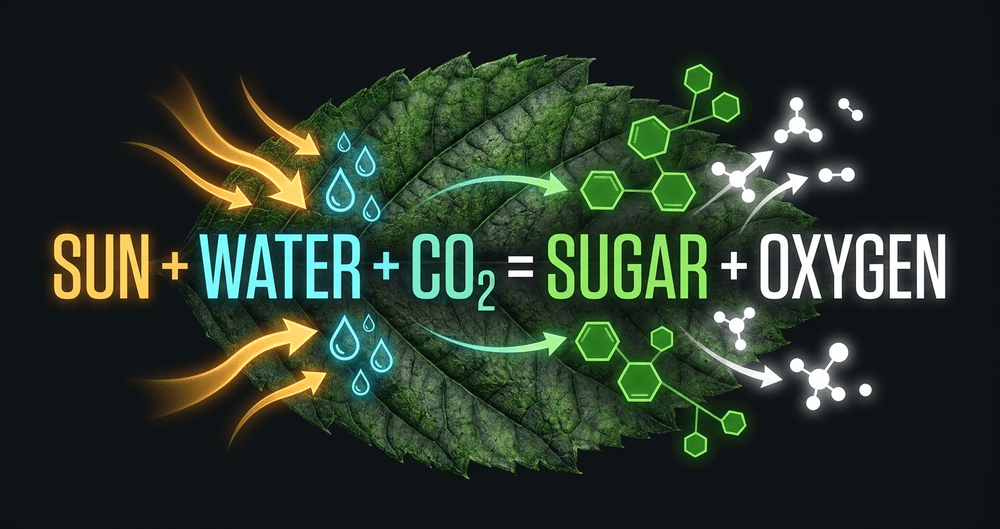
The process can be summarized in a single chemical equation:
6CO₂ + 6H₂O + light energy → C₆H₁₂O₆ + 6O₂
In plain terms: carbon dioxide and water, powered by sunlight, yield glucose and oxygen. The solar energy is effectively locked into the covalent bonds of glucose - a simple, versatile sugar that fuels biological work across virtually every living system.
Photosynthesis is not merely a method for plant growth. It is the primary engine of the global carbon cycle, converting inorganic carbon into the organic matter that forms the structural backbone of all complex living tissue.

How energy is captured and stored
The primary product of photosynthesis is glucose. Photosynthetic organisms use this sugar to fuel immediate metabolic demands - growth, cellular repair, and reproduction. But the utility of photosynthesis extends far beyond the single plant using it.
Plants synthesize complex carbohydrates from this glucose:
- Starch for long-term energy storage
- Cellulose for structural integrity in cell walls
- Lipids and proteins, modified from primary photosynthetic products, which form the dietary basis for herbivores
This is where the cascade begins. Herbivores consume plant biomass, and the stored chemical energy propagates upward through trophic levels - from primary consumers to apex predators and, ultimately, to decomposers that return nutrients to the soil. The entire food web is built on this single solar-to-chemical conversion.
Photosynthesis and the atmosphere: the oxygen connection
Beyond food production, photosynthesis is the primary source of atmospheric oxygen on Earth. This oxygen is released as a byproduct of the light-dependent reactions - specifically, from the splitting of water molecules.
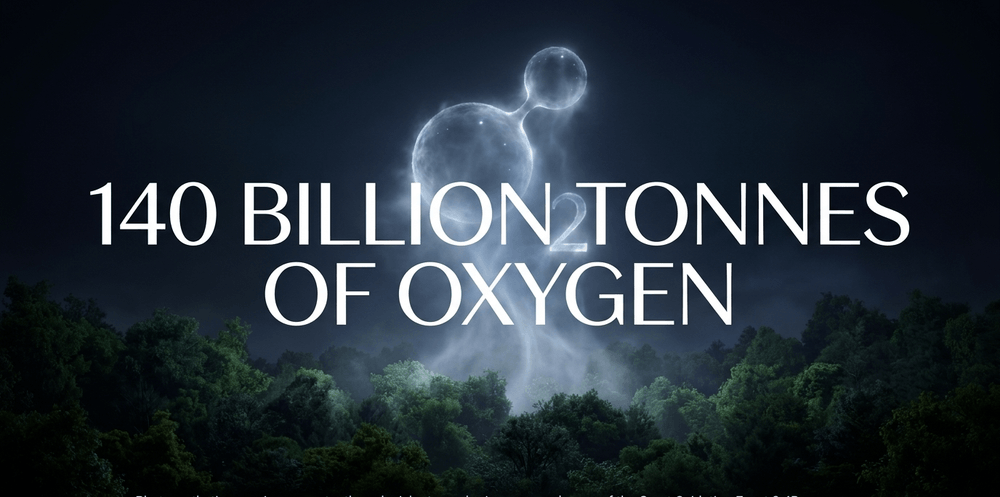
Scientific estimates indicate that photosynthetic organisms contribute approximately 140 billion tonnes of oxygen to the atmosphere every year. This constant replenishment is the prerequisite for aerobic respiration - the mechanism by which complex organisms, including humans, extract energy from organic molecules. Without it, atmospheric oxygen levels would deplete, and aerobic life would collapse.
The evolutionary impact of oxygen production
The emergence of oxygenic photosynthesis reshaped the entire trajectory of life on Earth. Current scientific estimates place its evolution as early as 3.5 billion years ago, though the precise timing remains an active area of research.
For hundreds of millions of years after its origin, the oxygen produced simply reacted with reduced minerals in the environment rather than accumulating in the atmosphere. The eventual build-up - known as the Great Oxidation Event - occurred approximately 2.4 billion years ago and is well-documented in the geological record through distinctive rock formations called banded iron formations.
The consequences were profound:
- More efficient aerobic metabolic pathways became possible
- Multicellularity and complex organisms could evolve
- The stratospheric ozone layer formed, absorbing harmful ultraviolet radiation and allowing life to colonize terrestrial surfaces
Every breath you take is a direct inheritance of this ancient biological innovation.
The role of photosynthesis in climate regulation
In the contemporary era, photosynthesis is one of the most important forces moderating the global climate. By absorbing carbon dioxide from the atmosphere, plants and phytoplankton act as massive carbon sinks.
Carbon dioxide is a potent greenhouse gas - it traps thermal energy within the atmosphere and drives temperature increases. By sequestering carbon into glucose and woody biomass, photosynthetic life maintains the atmospheric equilibrium necessary for stable global temperatures.
The two most significant biological carbon buffers on the planet are:
- Natural forests, particularly old-growth and tropical rainforests with dense woody biomass
- Oceanic phytoplankton, which account for roughly half of all global photosynthesis despite their microscopic size
The balance between photosynthesis (carbon uptake) and respiration (carbon release) governs atmospheric CO₂ concentration. When deforestation or ocean warming disrupts this balance, the consequences ripple through the global climate system.

Inside the cell: how photosynthesis actually works
The conversion of light into chemical energy takes place within specialized organelles called chloroplasts, found in the mesophyll cells of plant leaves and throughout many algae. Cyanobacteria, which lack these complex organelles, use specialized internal membranes to perform equivalent functions.
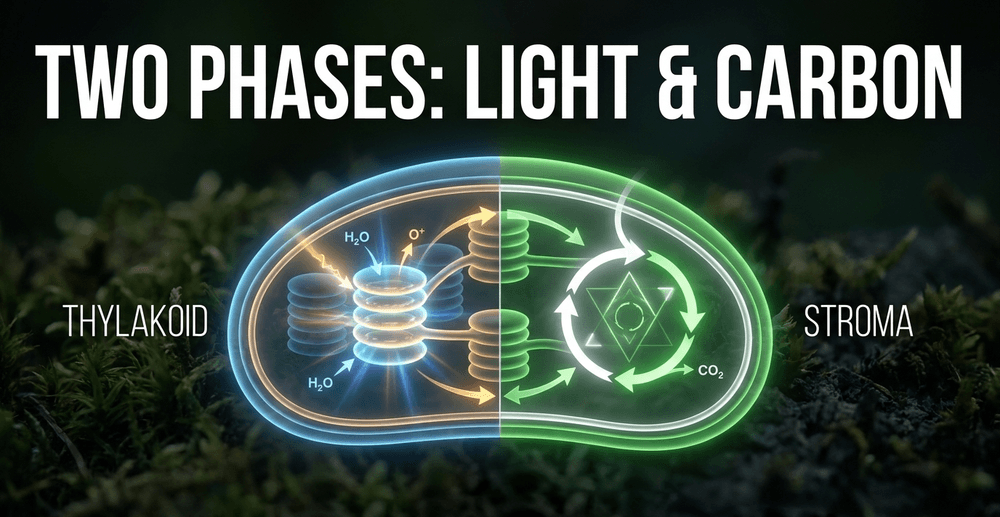
The internal architecture of a chloroplast is divided into two primary functional zones:
- Thylakoid membranes - stacked, disk-like structures where the light-dependent reactions occur
- Stroma - the aqueous fluid surrounding the thylakoid stacks, where carbon fixation takes place
Each zone hosts a distinct phase of photosynthesis, operating with mechanical precision.
Phase one: the light-dependent reactions
The first stage occurs within the thylakoid membranes, which contain chlorophyll - the green pigment that absorbs specific wavelengths of visible light (primarily red and blue). When photons strike chlorophyll molecules, electrons are excited to a higher energy state.
This energy drives photolysis - the splitting of water molecules (H₂O). This reaction:
- Releases oxygen gas as a byproduct (the source of atmospheric O₂)
- Provides the protons and electrons needed for the next stage
The energized electrons then move through an electron transport chain, a series of protein complexes embedded in the thylakoid membrane. This movement drives the production of two critical energy-carrying molecules:
- ATP (adenosine triphosphate) - the universal energy currency of cells
- NADPH (nicotinamide adenine dinucleotide phosphate) - a powerful electron carrier
These molecules act as the temporary energy currency of the cell, transporting solar-derived power from the thylakoid membrane to the next phase of synthesis.
Phase two: the Calvin cycle and carbon fixation
The second stage - the light-independent reactions, commonly known as the Calvin cycle - occurs in the stroma. Despite being called "light-independent," this phase depends entirely on the ATP and NADPH generated during phase one. Without constant light-driven energy supply, the cycle stops.
During the Calvin cycle, carbon dioxide is captured from the atmosphere and integrated into existing organic compounds - a process called carbon fixation. The key steps are:
- The enzyme RuBisCO catalyzes the attachment of CO₂ to a five-carbon sugar called ribulose-1,5-bisphosphate (RuBP)
- The resulting unstable six-carbon compound immediately splits into two three-carbon molecules
- ATP and NADPH are used to reduce these molecules through a series of enzymatic transformations
- The result is G3P (glyceraldehyde-3-phosphate) - a three-carbon sugar phosphate that the plant converts into glucose and other essential biomolecules
RuBisCO is widely considered the most abundant protein on Earth. Its central role in carbon fixation makes it arguably the most important enzyme in the global food chain. Yet it is also notably inefficient - a fact that drives significant research interest in photosynthesis engineering.
Photosynthetic adaptations: life in extreme environments
Photosynthesis is a resilient yet sensitive process. Environmental variables - light intensity, temperature, water availability, and CO₂ concentration - directly influence the rate of synthesis.
In challenging climates, some plants have evolved specialized biochemical strategies:
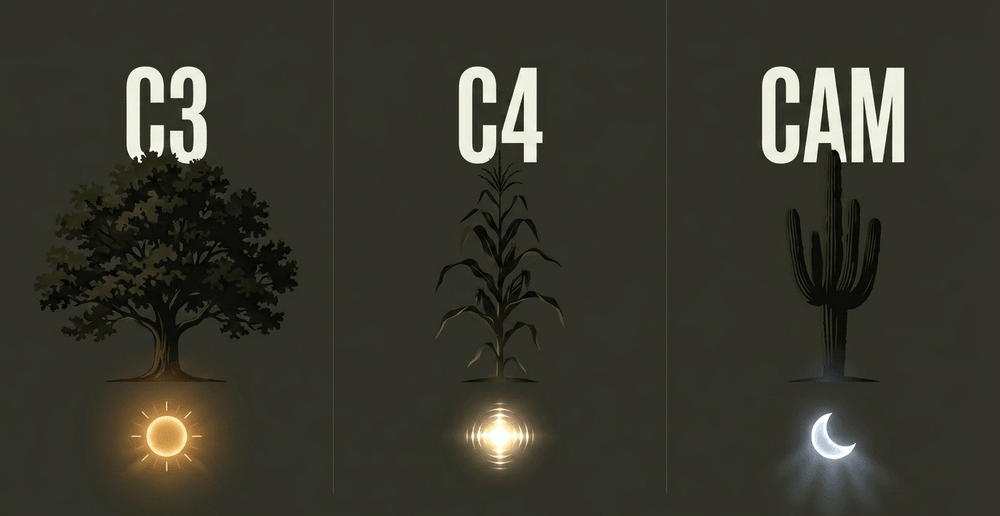
- C4 photosynthesis - used by grasses like maize and sugarcane, this pathway pre-concentrates CO₂ around RuBisCO, dramatically increasing efficiency in hot, high-light environments
- CAM photosynthesis (Crassulacean Acid Metabolism) - used by cacti and succulents, this strategy involves opening stomata only at night to capture CO₂, minimizing water loss in arid environments
These adaptations allow photosynthetic life to persist from arid deserts to the frigid waters of polar oceans - a testament to the evolutionary flexibility of this core biological process.
Why photosynthesis research matters now
Scientists around the world are studying photosynthesis not just to understand it, but to improve upon it. Fluctuations in forest density and ocean health have direct, measurable consequences for atmospheric oxygen, global temperatures, and food security.
Several active research areas include:
- Improving RuBisCO efficiency to increase crop yields without expanding farmland
- Artificial photosynthesis - engineering systems that mimic the light-to-chemical energy conversion for clean fuel production
- Monitoring phytoplankton health as an early indicator of ocean ecosystem stress and carbon cycle disruption
"Photosynthesis is not just a biological curiosity; it is the fundamental infrastructure upon which the entire architecture of life is built."
The stability of human civilization - our food systems, our climate, the very air we breathe - is tethered to the health of photoautotrophic systems. Understanding the molecular steps of the Calvin cycle and the biophysics of chlorophyll absorption is not an abstract exercise. It is essential knowledge for anyone seeking to understand the planet's life support systems.
Frequently asked questions about photosynthesis
What are the two main stages of photosynthesis?
The two stages are the light-dependent reactions (which occur in the thylakoid membranes and produce ATP and NADPH) and the light-independent Calvin cycle (which occurs in the stroma and uses those energy carriers to fix CO₂ into glucose).
Where does photosynthesis take place in a plant cell?
Photosynthesis occurs inside chloroplasts, primarily found in the mesophyll cells of leaves. Within the chloroplast, the thylakoid membranes handle light capture and the stroma handles carbon fixation.
Why is RuBisCO so important?
RuBisCO is the enzyme that performs the first step of carbon fixation in the Calvin cycle - attaching CO₂ to organic molecules. It is considered the most abundant protein on Earth and is responsible for nearly all of the biological carbon removal from the atmosphere.
How does photosynthesis affect climate change?
Photosynthetic organisms - forests and ocean phytoplankton in particular - absorb large quantities of CO₂ from the atmosphere, acting as carbon sinks that counteract greenhouse gas accumulation. The health of these systems is directly tied to the rate of global climate change.
What is the difference between C3, C4, and CAM photosynthesis?
C3 is the standard pathway used by most plants. C4 and CAM are evolutionary adaptations that improve water and carbon efficiency in hot or dry climates - C4 by concentrating CO₂ spatially, and CAM by separating CO₂ uptake temporally (at night).
Share now









Key takeaways
- Photosynthesis converts sunlight, water, and CO₂ into glucose and oxygen via the equation: 6CO₂ + 6H₂O + light energy → C₆H₁₂O₆ + 6O₂.
- Photoautotrophs - including most plants, algae, and cyanobacteria - are the organisms responsible for global photosynthesis.
- Photosynthetic organisms produce approximately 140 billion tonnes of oxygen annually, sustaining all aerobic life on Earth.
- The process consists of two stages: the light-dependent reactions (thylakoid membranes) and the light-independent Calvin cycle (stroma).
- RuBisCO is the enzyme responsible for carbon fixation in the Calvin cycle and is considered the most abundant protein on Earth.
- Oxygenic photosynthesis is estimated to have evolved as early as 3.5 billion years ago; the resulting Great Oxidation Event occurred approximately 2.4 billion years ago.
- Plants have evolved specialized photosynthetic pathways - C4 and CAM - to maximize efficiency in hot or water-limited environments.
- Forests and oceanic phytoplankton are the planet's two largest biological carbon sinks, directly moderating atmospheric CO₂ levels.
- The formation of the stratospheric ozone layer - which protects life from ultraviolet radiation - was a direct consequence of oxygen accumulation from early photosynthesis.
- Researchers are actively studying ways to improve RuBisCO efficiency and develop artificial photosynthesis for clean energy applications.
Sources
- Wikipedia - Photosynthesis https://en.wikipedia.org/wiki/Photosynthesis
- NIH/PMC - Photosynthesis (Walker, 2017) https://pmc.ncbi.nlm.nih.gov/articles/PMC5264509/
- Wikipedia - Calvin cycle https://en.wikipedia.org/wiki/Calvin_cycle
- Wikipedia - RuBisCO https://en.wikipedia.org/wiki/RuBisCO
- ASM - The Great Oxidation Event: how cyanobacteria changed life https://asm.org/articles/2022/february/the-great-oxidation-event-how-cyanobacteria-change
- Wikipedia - C4 carbon fixation https://en.wikipedia.org/wiki/C4_carbon_fixation
- Wikipedia - Crassulacean acid metabolism (CAM) https://en.wikipedia.org/wiki/Crassulacean_acid_metabolism
- NASA Earth Observatory - The carbon cycle https://earthobservatory.nasa.gov/features/CarbonCycle
- Khan Academy - Photosynthesis https://www.khanacademy.org/science/ap-biology/cellular-energetics/photosynthesis/a/steps-of-light-reactions
- Published 2026-05-27 01:15
- Modified 2026-05-27 01:15
