
-
 Redaction
The myth of Planet B: why Earth stands alone
New exoplanet data shows Earth is a statistical rarity, not the norm. Here's why the myth of a backup planet is a dangerous distraction from real stewardship.
The night sky has always been a canvas for our projections, a silent witness to our dreams of expansion and escape. When we look up, we often imagine that somewhere, circling a distant sun, is a twin of our world waiting for us. This "Planet B" narrative has become a staple of contemporary hope, a psychological safety net suggesting that if we finally break this world, there is another one waiting in the wings. Yet as our telescopes grow more sensitive and our data more granular, the cosmos is telling a quieter, more sobering story. The more carefully we search for a mirror of Earth, the more we come to understand that we are living on a statistical miracle.
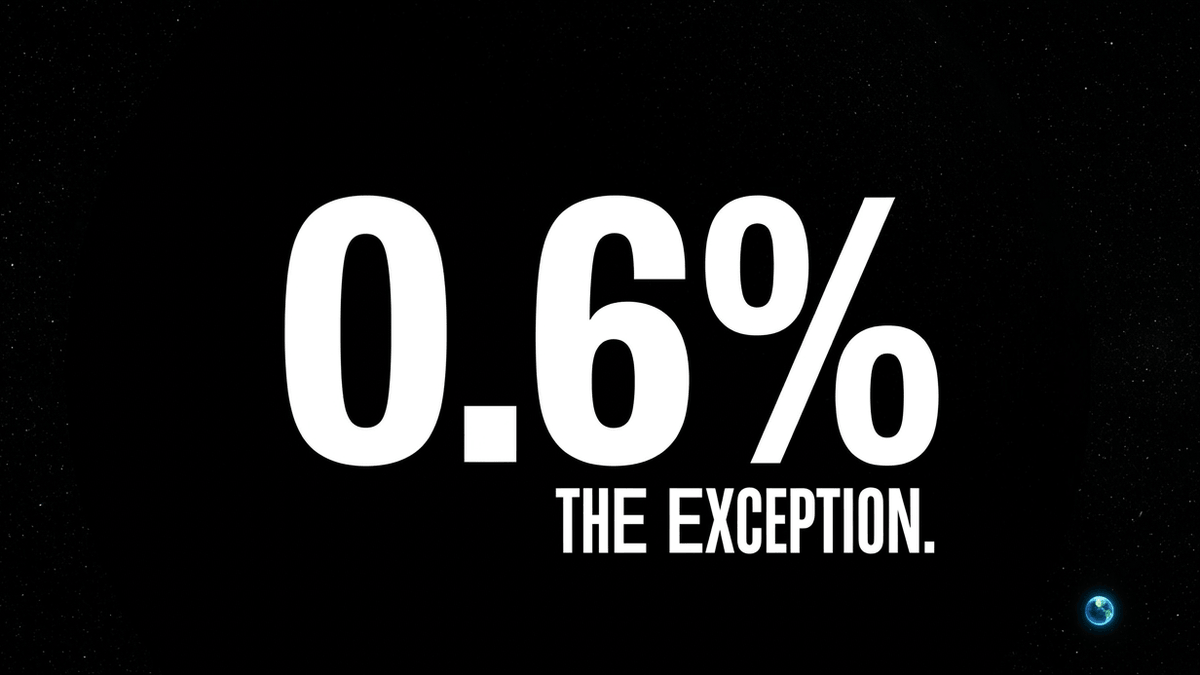
A recent analysis of the NASA Exoplanet Archive gives us a startling reality check to our colonial fantasies about the stars. In a multivariate statistical study examining 517 exoplanets across eight key parameters - planetary radius, equilibrium temperature, insolation flux, density, and four properties of the host star - researchers found that only 0.6 percent of these worlds met every habitability criterion under relaxed thresholds. That's three planets. Out of more than five hundred candidates drawn from a galaxy that holds billions of worlds, only three passed the test, and one of them was Earth itself.
It helps to sit with that number for a moment. Five hundred and seventeen worlds, examined in careful statistical detail, and only a handful crossed the threshold that Earth clears without even trying.
The statistical unusualness of our home
For a long time, the Copernican Principle suggested that Earth was just a typical planet orbiting a typical star in a typical galaxy. That remains true for our position in space. It is increasingly false regarding our biological suitability.
Using a method called Mahalanobis distance analysis - a statistical technique for measuring how far a single observation sits from the average of a whole population - the same researchers found that Earth sits in the 69.4th percentile for statistical unusualness. In the varied landscape of the cosmos, Earth is not a standard template. It's a specific, rare variant, and the math backs that up. Hotelling's T-squared test confirmed that potentially habitable planets are statistically distinct from the general exoplanet population, which is a formal way of saying: Earth-like worlds don't blend into the crowd. They stand apart from it.
This unusualness is driven by a particular kind of imbalance. Roughly 75 percent of the star systems studied showed what researchers term a "Good Star, Poor Planet" pattern - a stable, long-lived star not unlike our Sun, paired with a planet too small, too dense, or too chemically barren to ever support a biosphere. It's a reminder that a good star is only half the equation. The rock circling it has to bring its own kind of luck.
I should say, in fairness to the data, that the picture isn't entirely bleak. The same dataset placed two other worlds in the "Excellent Candidate" category alongside Earth: Kepler-22b and Kepler-538b. Kepler-22b in particular stood out, differing from Earth by only about 3 percent in temperature and 1 percent in insolation - numbers close enough that the paper's authors flagged it as a strong candidate for atmospheric follow-up observation by the James Webb Space Telescope. It's a hopeful footnote. But it's also worth remembering that Kepler-22b sits roughly 600 light-years away, which brings us to the second, harder wall.
And the pattern holds at a larger scale, too. When a separate team expanded their view to a dataset of nearly 5,900 exoplanets and applied machine-learning classifiers across 32 parameters, defining habitability through physics-based criteria rooted in liquid water, stable climates, and Earth-like characteristics, the habitable fraction barely moved. The "habitable zone" is a useful shorthand for finding liquid water on a chalkboard somewhere. It is a far cry from a livable zone for human beings.
It's worth sitting with that distinction, because it's easy to blur the two. A planet can sit at exactly the right distance from its star and still be a nightmare - crushed under a hundred atmospheres of pressure, blasted by stellar flares, or locked in a tidal embrace so that one side bakes while the other freezes for eternity. Distance from a star tells you almost nothing about whether a place could ever feel like home.

The insurmountable walls of distance and physics
Suppose we found a perfect twin of Earth tomorrow. The logistics of reaching it remain firmly in the realm of science fiction, not engineering.
Using our fastest current spacecraft, a one-way trip to even the nearest star system would take somewhere on the order of 70,000 years. Voyager 1, one of the fastest objects humanity has ever built, is not even pointed toward Proxima Centauri, but if it were, calculations based on its current speed put the crossing at roughly 70,000 to 77,000 years. To put that span in perspective: 70,000 years ago, Homo sapiens had barely begun the earliest migrations out of Africa. We would need to survive aboard a spacecraft for longer than the entire span of recorded human civilization, just to reach the front porch of a new world - one we haven't even confirmed is habitable.
Even our closest neighbor, Mars, serves as a grim warning about how close is not the same as livable. Often cited as a "backup" planet because it is roughly Earth-sized and sits in a relatively temperate region of the solar system, Mars is essentially a frozen desert. Its atmosphere is around 1 percent as thick as Earth's, made up of roughly 95 percent carbon dioxide, and its surface is closer to the harshest reaches of Antarctica than to anywhere we've ever called home - minus the oxygen, minus the magnetic shield, minus the pressure that keeps liquid water from simply boiling away. If we cannot yet make a genuine success of living on a planet in our own backyard, the idea of migrating to another star system isn't a plan. It's an escapist fantasy dressed up as a project.
Why Earth's stability is a cosmic fluke
We take the stability of our climate for granted, but it's the product of a complex interplay of factors that are rarely found together anywhere else.
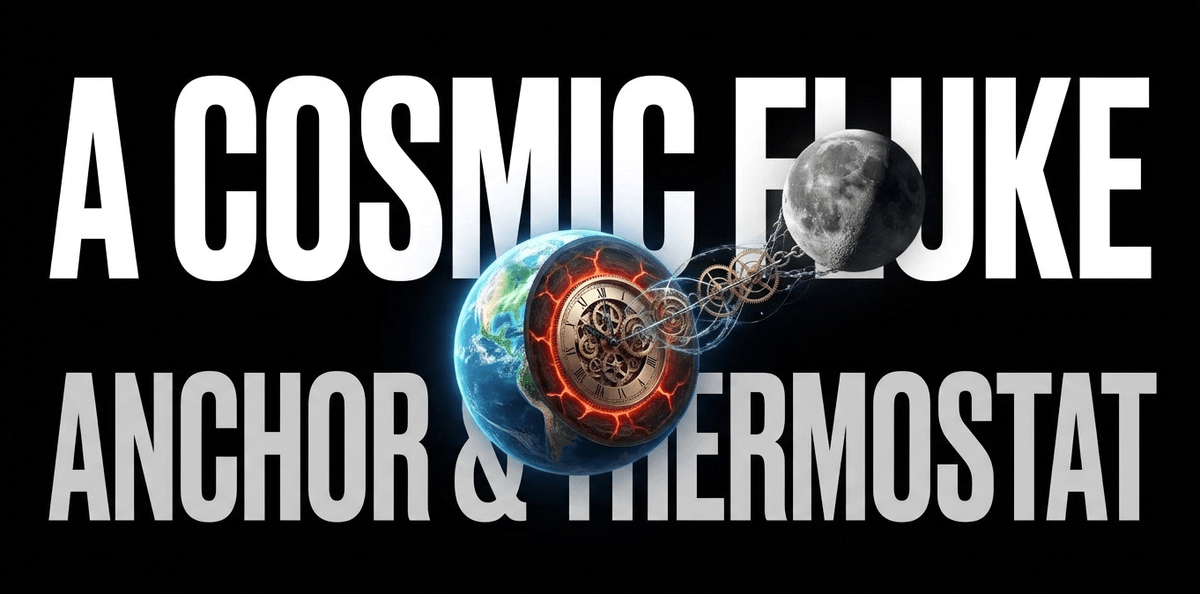
Earth's ability to hold a relatively steady climate over billions of years is tied closely to plate tectonics, which act as a kind of planetary thermostat, recycling carbon between the crust, the oceans, and the atmosphere over geological time. Without that slow-grinding engine beneath our feet, our planet might well have ended up like Venus, trapped in a runaway greenhouse, or like Mars, a world that lost its warmth and its atmosphere together.
Then there's the Moon. We possess a satellite unusually large relative to its host planet - most planets do not have a companion of such proportional size. That companion acts as a gravitational anchor, holding Earth's axial tilt steady across millions of years. Without it, our rotation would likely wobble in ways that trigger catastrophic and chaotic climate shifts, the kind that make the slow patience of evolution nearly impossible.
So when we search exoplanet data for another Earth, we aren't just hunting for a rock parked at the right distance from its star. We're hunting for a rock with a thermostat, an anchor, and a precise chemical recipe, all arriving together by chance. Layer these requirements on top of each other and the odds shrink toward vanishing. It's less like finding a needle in a haystack and more like finding one particular grain of sand that happens to be shaped like a house key.
If you're curious how scientists actually go looking for signs that this coincidence has happened anywhere else, it's worth reading about how researchers are hunting for life through exoplanet biosignatures, and why so many of the signals that look promising turn out to be false alarms.
Detection bias: why the numbers may be even more humbling
There's a subtlety worth pausing on, because it cuts both ways. Our current surveys are heavily biased toward finding large planets orbiting close to bright stars, simply because those are the easiest signals to detect. The "Good Star, Poor Planet" pattern that shows up in three out of every four systems studied isn't necessarily a complete portrait of what's out there. It's partly a portrait of what our instruments are good at seeing.
That should temper any conclusion in either direction. It doesn't mean quiet, well-behaved Earth analogs are secretly common and simply hiding from us. But it does mean we should hold our numbers with some humility, recognizing that the true rarity of Earth-like worlds could be different from what today's telescopes can confirm. Newer instruments, and especially the kind of long-baseline surveys needed to catch small, slow-orbiting rocky planets around Sun-like stars, may eventually sharpen this picture considerably. Until then, the data we have says: rare, and possibly rarer than it looks.
The astronomers' mandate: a call to stewardship
The scientific community has been speaking out against the "Planet B" myth with increasing urgency for years now. The volunteer network Astronomers for Planet Earth has grown from a small founding group in 2019 into more than 2,300 members spread across 85 countries, and an open letter organized under its banner has drawn support from thousands of professional astronomers worldwide, including Nobel laureate Michel Mayor. Their message is consistent and unambiguous: our expertise in looking at the stars has taught us there is no other place for us to go, and sustainability needs to become a primary goal for every human institution, including the ones dedicated to exploring space.
Mayor, who co-discovered the first exoplanet found orbiting a Sun-like star, has been characteristically blunt about our prospects. He has stated plainly that when it comes to exoplanets, we will not be migrating there. This isn't a failure of imagination on his part. It's a respect for the plain arithmetic of physics and biology. As A4E puts it, even in the optimistic case that some distant world could support human life, the nearest prospect is more than 40 trillion kilometers away - a distance that simply cannot be reasoned around with better rockets.
There's a real irony sitting inside all of this. The profession that keeps discovering how singular Earth is has itself become a meaningful emitter of greenhouse gases. Researchers estimate that the construction and operation of the world's astronomical observatories and space telescopes generates roughly 1.2 million tons of CO2-equivalent emissions every year, working out to about 37 tons per astronomer annually. That's on the order of twice the average work-related footprint of a citizen in a developed country - a sobering number for a field whose central discovery, over and over, is how precious and singular our own atmosphere really is.
The psychology of the escapist mindset
Why does the myth of a "Planet B" persist despite the evidence stacked so plainly against it? Environmental psychology offers something of an answer through the concept of psychological distance. When a threat feels far away, whether in time or in physical space, we tend to feel less urgency about acting on it. Researchers studying this effect, building on work associated with psychologist Yaacov Trope, have found that distant threats consistently get discounted relative to immediate ones, even when the underlying stakes are identical.
By framing the stars as a potential exit strategy, we quietly distance ourselves from the immediate reality of ecological strain here at home. If there's a backup planet somewhere out there, the stakes of our current behavior start to feel lower. It's a subtle sleight of hand, and a comforting one, but it doesn't hold up against the numbers.
This escapism carries a real ethical cost. Every dollar and every hour directed toward the fantasy of interstellar colonization is a dollar and an hour not spent on:
- Carbon sequestration and emissions reduction
- Renewable energy infrastructure
- Habitat and ecosystem restoration
- Climate adaptation for the communities already feeling the effects
From a purely practical standpoint, the odds of successfully protecting the planet we already have are immeasurably higher than the odds of successfully terraforming a distant, unconfirmed world light-years away. Stewardship, not escape, is the only strategy the math actually supports.
Moving from human-centered to ecologically grounded
There's a transformative power in seeing Earth from the outside, a shift so well-documented among astronauts that it has its own name: the Overview Effect. Apollo 8 astronaut Jim Lovell, orbiting the Moon in December 1968, described the vast, quiet emptiness surrounding him and how it made him realize just what humanity had waiting back home. His crewmate's photograph from that same mission, known as Earthrise, is widely credited with helping catalyze the modern environmental movement - a single image of a small blue marble suspended in black, doing more to shift public consciousness than volumes of argument ever could.
This move from a human-centered worldview to an ecologically grounded one is exactly what Carl Sagan invited us toward with his reflection on the Pale Blue Dot photograph, taken by Voyager 1 as it looked back on Earth from the edge of the solar system. Sagan's words on that image, from his 1994 book of the same name, remain the clearest expression of what all this data is really telling us: that for the foreseeable future, Earth is the only stage we get.
In our search for life elsewhere, we have inadvertently rediscovered the true value of life here. The data doesn't describe Earth as a disposable commodity with backups in stock. It describes a rare, complex, and deeply interconnected biological system with no confirmed equivalent anywhere in our galactic neighborhood. Our love for the cosmos shouldn't lead us away from home. It should lead us back to it, with a renewed sense of wonder and responsibility.
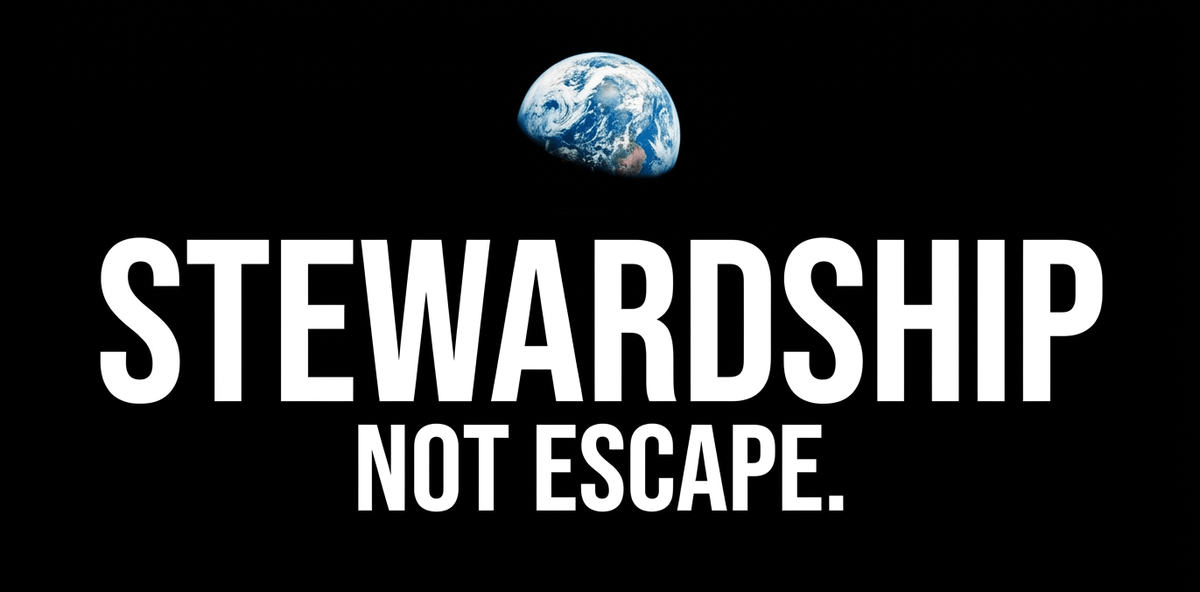
As we stand under the stars tonight, we might look at the twinkling lights differently: not as destinations, but as reminders of how fortunate we are to live on a world that breathes. The myth of "Planet B" is a dangerous distraction dressed up as hope. The truth is something quieter and more intimate. We are the inhabitants of a genuine cosmic outlier, a blue oasis in a vast and largely silent desert. We do not need a new world. We need to learn, finally, how to live well on the one we've already been given.
Share now









Key takeaways
- A 2025 multivariate statistical study of 517 exoplanets from the NASA Exoplanet Archive found that only 0.6 percent (three planets total, including Earth) met all habitability criteria under relaxed thresholds.
- The three "Excellent Candidate" planets identified were Earth, Kepler-22b, and Kepler-538b - with Kepler-22b differing from Earth by only about 3 percent in temperature and 1 percent in insolation.
- Using Mahalanobis distance analysis, researchers placed Earth in the 69.4th percentile for statistical unusualness among exoplanets studied.
- Roughly 75 percent of the star systems studied show a "Good Star, Poor Planet" pattern: a stable host star paired with a planet unsuited to hosting life.
- A separate analysis of nearly 5,900 exoplanets using machine-learning classifiers across 32 parameters found the habitable fraction remained similarly small.
- Using the fastest spacecraft humanity has built, a one-way trip to the nearest star system would take roughly 70,000 years or more.
- Mars, often floated as a backup planet, has an atmosphere only about 1 percent as thick as Earth's and roughly 95 percent carbon dioxide.
- Earth's long-term climate stability depends heavily on plate tectonics, which recycle carbon between the crust, oceans, and atmosphere over geological time.
- The Moon's unusually large size relative to Earth helps stabilize our planet's axial tilt, preventing chaotic climate swings.
- Astronomers for Planet Earth (A4E) has grown to more than 2,300 members across 85 countries, uniting behind the message that there is no viable "Planet B."
- Nobel laureate Michel Mayor, co-discoverer of the first exoplanet found around a Sun-like star, has stated plainly that human migration to exoplanets will not happen.
- The world's astronomical observatories and space telescopes generate an estimated 1.2 million tons of CO2-equivalent emissions annually, or about 37 tons per astronomer - roughly double the average per-capita footprint of someone in a developed country.
Sources
- arXiv (Multivariate Statistical Analysis of Exoplanet Habitability) https://arxiv.org/abs/2506.18200
- Frontiers in Astronomy and Space Sciences https://www.frontiersin.org/journals/astronomy-and-space-sciences/articles/10.3389/fspas.2025.1674754/full
- Universe Today https://www.universetoday.com/articles/a-statistical-analysis-of-exoplanet-habitability-turns-up-one-great-candidate-and-significant-observ
- Astronomers for Planet Earth (A4E) https://a4e.org/
- Nature Astronomy (The carbon footprint of astronomical research infrastructures) https://www.nature.com/articles/s41550-022-01612-3
- Published 2026-07-21 19:14
- Modified 2026-07-21 19:14

-
Redaction