





-
 Redaction
Your brain can keep improving well into old age
New research shows cognitive decline is not inevitable, and just 5-15 minutes of daily mental training can boost brain health at any age, study finds.
Rethinking the trajectory of cognitive aging
For decades, the standard clinical narrative regarding the human brain was one of inevitable attrition. After reaching a peak in early adulthood, our cognitive resources were said to begin a slow, irreversible slide - a biological fait accompli that medicine could only observe, not alter. That view is now under serious pressure.
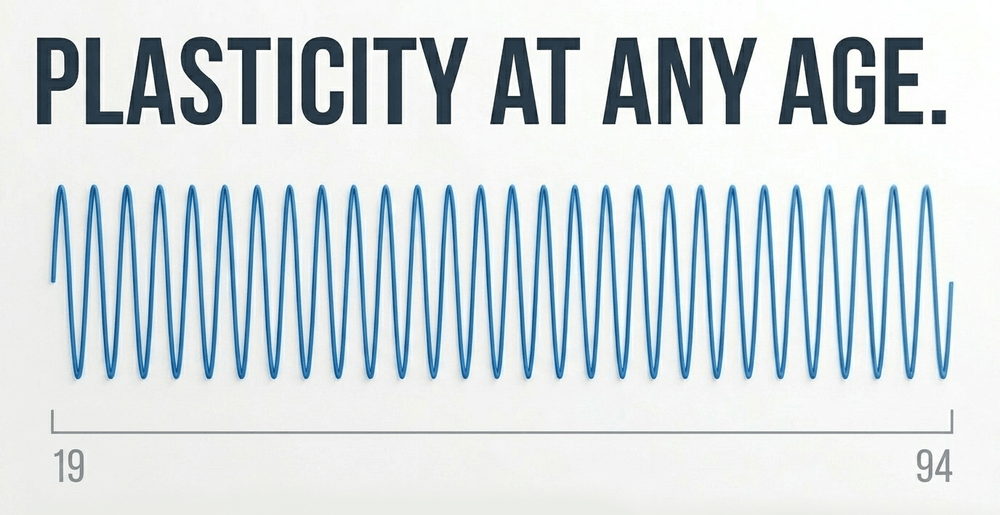
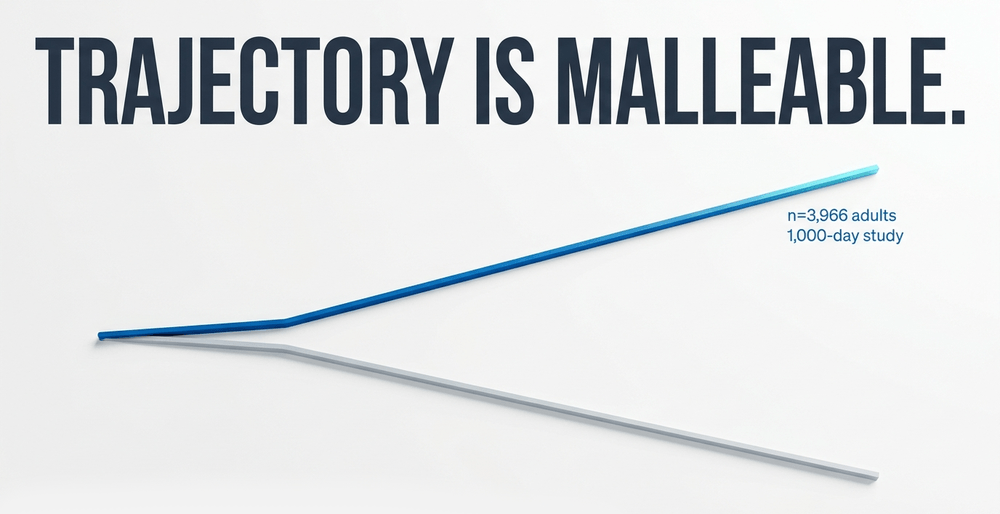
A landmark three-year study involving nearly 4,000 participants, published in the Nature Portfolio journal Scientific Reports, has provided compelling evidence that this trajectory is far more malleable than previously understood. Researchers from the Center for BrainHealth at The University of Texas at Dallas tracked 3,966 adults ranging in age from 19 to 94 - roughly one-fifth of all participants enrolled in the broader BrainHealth Project - and found that brain health can improve at any life stage, including well into the tenth decade, provided the right stimuli are consistently applied.
The implications are considerable. If cognitive function is shaped more by habit and environment than by the calendar, then the clinical framing of aging itself has to change.
What the study actually measured
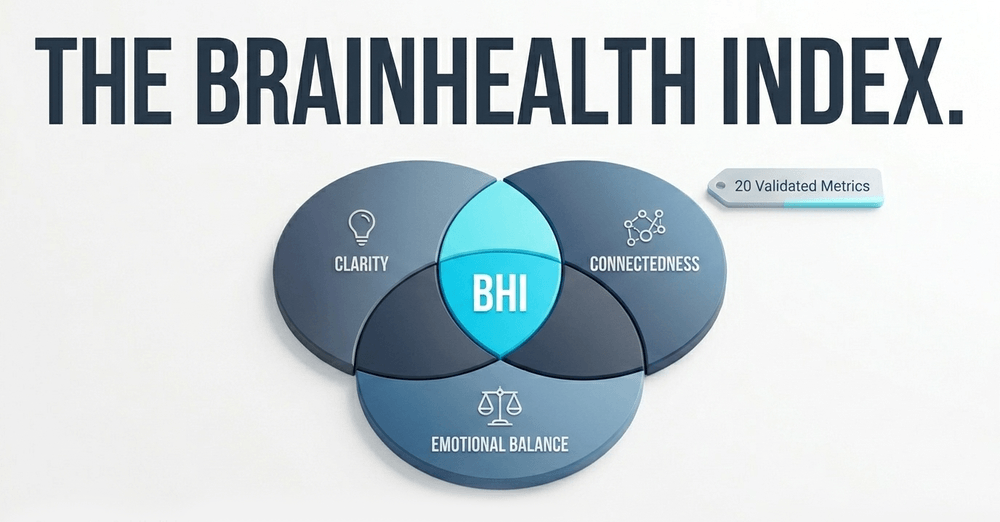
This research was not built on subjective self-reporting or a single-domain test. The team used the BrainHealth Index (BHI), a patent-pending multidimensional assessment tool developed at the Center for BrainHealth and first described in a 2021 pilot study. The BHI aggregates roughly 20 validated metrics - including established instruments like the Pittsburgh Sleep Quality Index and the Oxford Happiness Questionnaire - alongside tasks designed specifically to probe higher-order thinking.
The BHI measures three primary, empirically derived subdomains:
- Clarity - cognitive readiness to reason through complex situations and generate new solutions
- Connectedness - to people and purpose, representing social health
- Emotional balance - the ability to handle adversity while remaining productive and capable
Together, these three pillars produce a composite score that is sensitive to both gains and losses over time - a deliberate design choice, since most traditional cognitive assessments were built to detect deficits, not to capture the upward potential of a healthy brain.
Participants were assessed every six months over the study's three-year span. Progress was measured not against population norms, but against each individual's own earlier scores. That distinction matters. As the researchers describe it, the BHI was not designed around typical limits or fixed ceilings, because there is, in their view, no known ceiling on brain health.
The findings - and what sets them apart
Several key results emerged from the data. Significant gains in brain health were observed across all age groups. Even high-performing participants at baseline continued to improve over the full 1,000-day study period. Participants who entered the study with the lowest BHI scores showed the most dramatic rates of improvement - a finding the researchers describe as evidence that poor brain health is not a life sentence. And critically, gains were not dependent on demographics such as age, gender, or education level. The strongest predictor of improvement was simply engagement.
That last point deserves emphasis. Not who you are, but whether you show up.
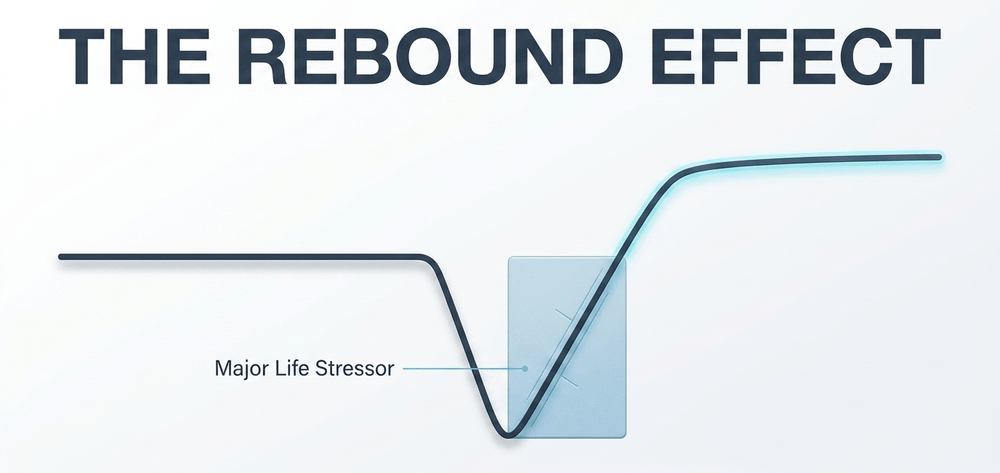
Participants spent five to 15 minutes a day during the three-year period on short training activities. The study also captured what researchers describe as a "rebound effect" - the way individuals used cognitive strategies to recover, maintain, or even increase brain health during major life stressors such as personal illness, job loss, or caregiving for loved ones. Brain health, in other words, is not simply a resting state. It is something that can be actively defended even under pressure.
Evidence of neuroplasticity in later life
Neuroplasticity - the brain's capacity to reorganize itself by forming new neural connections - was once thought to be the exclusive province of the young. The evidence has been shifting on this for years, but the UT Dallas study is among the largest and most comprehensive to demonstrate the principle across such a wide age range under real-world conditions.
Research in cognitive aging has shown that older adults can counteract age-associated neural decline by recruiting alternative brain regions when performing demanding tasks - a compensatory mechanism that can sustain performance at levels comparable to younger individuals. The biology behind this adaptation is reasonably well understood. When we engage in novel tasks that require focused attention and problem-solving, the brain increases its production of neurotrophic factors such as brain-derived neurotrophic factor (BDNF) - proteins that support the survival, growth, and connectivity of neurons, particularly in the hippocampus. Cognitively stimulating activity has repeatedly been linked to higher BDNF levels, and higher BDNF levels in turn have been linked to a lower risk of measurable cognitive decline in older adults. This is one of the more credible biological threads connecting "use it" to "don't lose it."
Research on experience-induced neuroplasticity has also shown that a person's initial cognitive status does not necessarily limit their neuroplastic potential later in life - suggesting that the brain's capacity to change does not expire with the years.
Think of it less as a non-renewable resource, and more as a muscle responding to progressive resistance. Stop demanding effort from it, and the biological systems supporting that effort begin to prune themselves. Maintain the demand, and the brain reads that signal as a reason to stay sharp.

The role of brief, consistent intervention
One of the more clinically useful aspects of the UT Dallas research is its modest time requirement. Participants were not asked to overhaul their lifestyles or dedicate hours to complex puzzles.
Five to 15 minutes a day.
That brevity is not a concession to convenience - it is the point. In clinical practice, the most durable interventions are those that integrate into existing routines without friction. Sporadic marathon sessions of mental effort appear to offer less benefit than shorter, consistent engagement repeated daily. The brain, it seems, responds more favorably to regularity than to intensity.
The training activities were designed to target fluid intelligence - the capacity to solve new problems, identify patterns, and reason through unfamiliar challenges. Unlike crystallized intelligence, which relates to accumulated knowledge, vocabulary, and stored expertise, fluid intelligence is typically the first cognitive domain to soften with age. Processing speed, working memory, and reasoning are among the abilities most consistently shown to decline across the seventh and eighth decades of life, while world knowledge and vocabulary often remain stable or even continue to grow. By focusing specifically on fluid domains, the BrainHealth Project's training protocol targets exactly the capacities most at risk.
The dementia connection - what the long-term evidence shows
The UT Dallas findings do not exist in isolation. A separate major study has added a striking complementary dimension to the picture.
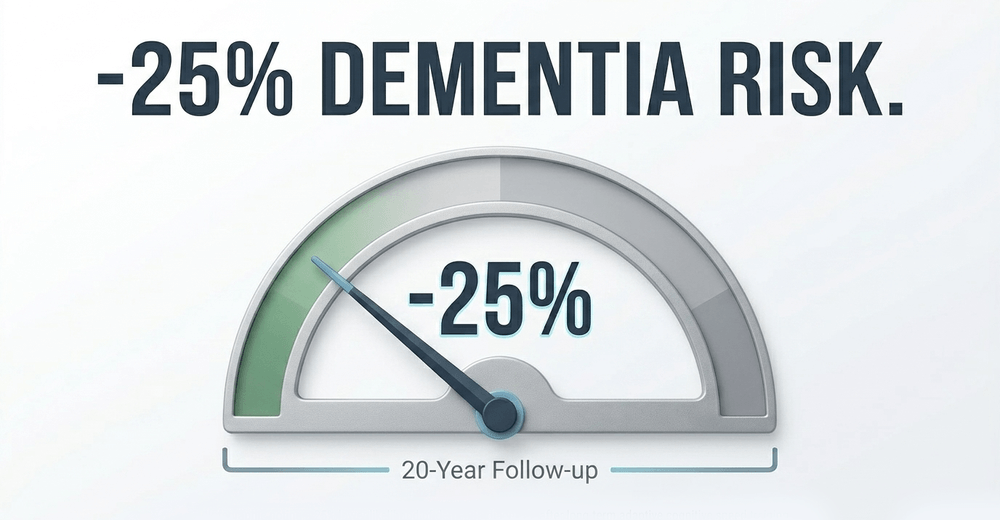
A 20-year follow-up of the Advanced Cognitive Training for Independent and Vital Elderly (ACTIVE) study, led by researchers at Johns Hopkins and funded by the National Institutes of Health, found that older adults who completed a short program of adaptive "speed of processing" training - along with booster sessions - were significantly less likely to develop dementia, including Alzheimer's disease, even two decades later.
In that 20-year follow-up, 105 of 264 participants (40%) in the speed-training group that also received booster sessions were diagnosed with dementia, compared with 239 of 491 participants (49%) in the control group - a 25% reduction in relative risk. It is worth being precise here: this benefit was specific to speed training paired with later booster sessions. The original analysis found that speed-trained participants who skipped the boosters showed no significant reduction in dementia risk at all, and memory or reasoning training, tested in the same trial, showed no comparable protective effect over the same period.
The protective mechanism appears to lie in how speed training forces the brain to process visual information rapidly while managing divided attention - engaging automatic, largely unconscious processing pathways rather than the slower, deliberate reasoning involved in memory or logic tasks. Researchers describe this as a route to building what is known as cognitive reserve through implicit learning. As Marilyn Albert, PhD, director of the Alzheimer's Disease Research Center at Johns Hopkins Medicine and corresponding author of the 20-year analysis, put it, even a modest, non-pharmacological intervention producing measurable effects two decades later is a remarkable finding, and even small delays in dementia onset could meaningfully reduce the public health burden of the disease.
That concept - cognitive reserve - is central to understanding why early and sustained investment in brain health matters.
What cognitive reserve actually means
The term appears frequently in neurological literature, but it is worth being precise about what it describes. Cognitive reserve refers to the brain's capacity to improvise - to find alternative routes when primary pathways are compromised. Individuals with higher cognitive reserve can often maintain functional independence even in the presence of physical brain changes, such as those observed in early-stage dementia.
Researchers generally describe cognitive reserve as operating through two related mechanisms. The first, sometimes called neural reserve, refers to brain networks that are already efficient and have more capacity to spare before deficits become noticeable. The second, neural compensation, describes the brain's ability to recruit alternative networks when the primary ones are disrupted by disease or injury. Both fluid and crystallized intelligence appear to contribute to this reserve, though they do so differently - fluid intelligence seems particularly important for protecting executive function and social cognition in later life.
Epidemiological studies have consistently linked sustained complex mental activity across the life course with reduced dementia risk, and social connection has emerged as a particularly effective component of that protective effect.
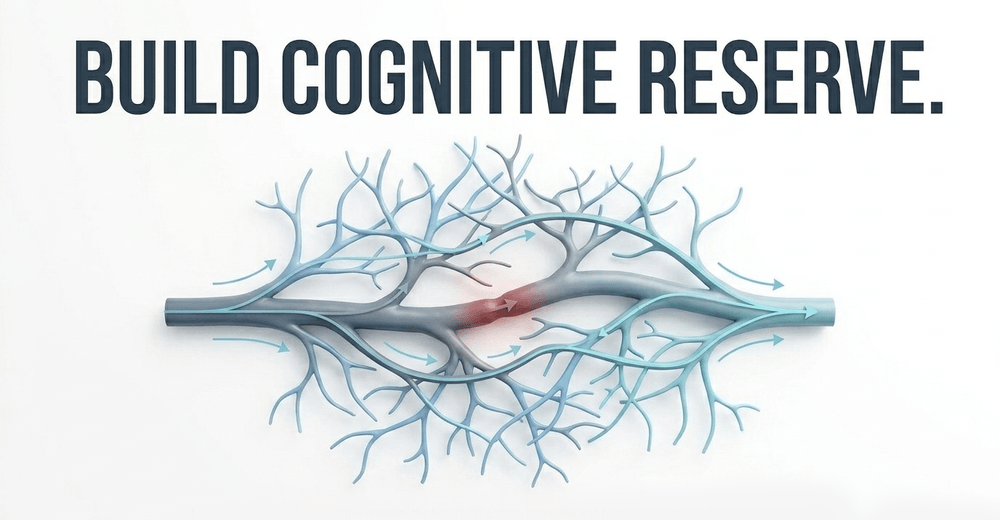
Building cognitive reserve is, in effect, building a buffer. By actively improving brain health in one's 70s, 80s, or even 90s, individuals are creating a physiological cushion against the insults - vascular, structural, and degenerative - that accumulate with age. This shifts the clinical conversation from treating pathology toward cultivating resilience before pathology takes hold.
"For too long, we've operated under the outdated notion that we need to wait until something bad happens to our brain before we do anything for it. This study reminds us that our brain is not defined by age - it is defined by possibility." - Sandra Bond Chapman, PhD, founder and chief director, Center for BrainHealth, UT Dallas
Fluid versus crystallized intelligence, in practice
It is worth dwelling a little longer on the distinction between fluid and crystallized intelligence, because it explains why generic "brain games" vary so widely in their reported benefits.
Crystallized intelligence is the library you have already built: vocabulary, facts, professional expertise, the accumulated residue of decades of living and working. It tends to hold steady, and in many people it continues to grow well into late life. Fluid intelligence is different. It is the capacity to think on your feet - to size up a new problem, notice a pattern you have not seen before, and reason your way to a solution without relying on prior knowledge.
It is fluid intelligence that tends to soften first, often beginning in a person's 30s or 40s in subtle, barely noticeable ways. Processing speed slows a touch. Working memory holds slightly less. The capacity to juggle several unfamiliar variables at once becomes a little more effortful. None of this is usually disabling on its own, but it is the domain where targeted training appears to have the most room to produce gains - and it is precisely the domain the BrainHealth Project's protocol was built to engage.

The intersection of lifestyle and neural health
While the BrainHealth Project focused primarily on cognitive training, the results cannot be viewed in isolation from broader lifestyle factors. Research from the University of Miami Miller School of Medicine has found that adults who maintained or improved healthy lifestyle behaviors since early adulthood - including physical activity, dietary quality, and social engagement - showed better cognitive performance, greater brain resilience, and healthier brain structures in later life, particularly when multiple behaviors were combined.
The notable takeaway from the UT Dallas research, however, is that cognitive intervention alone carries independent weight. It acts as a primary driver of neural maintenance - not merely a complement to cardiovascular or nutritional health, but a standalone input with its own measurable output. That said, the participants who saw the most significant gains tended to be those who also managed systemic health factors. The brain does not operate independently of the body it lives in.
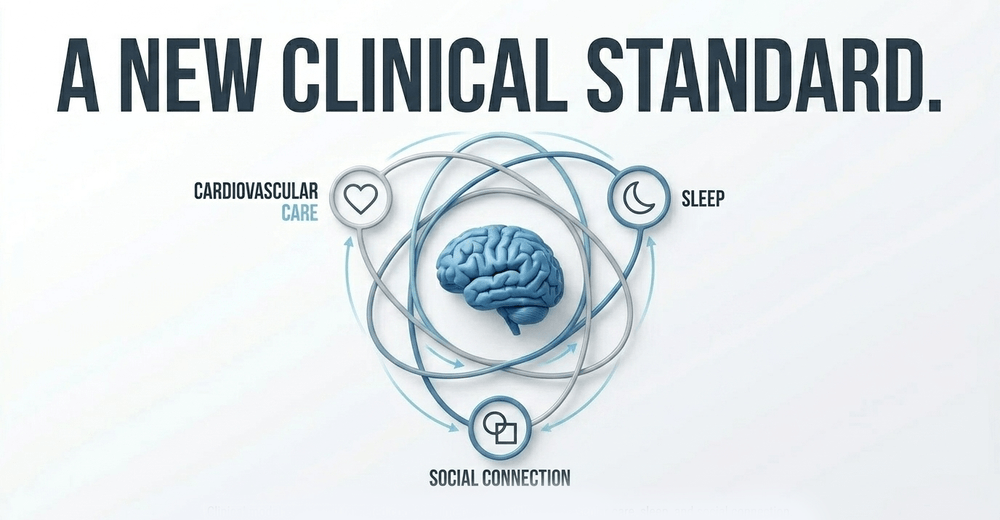
For clinicians, this suggests a tiered message: targeted cognitive training is valuable on its own, but its effects appear to compound when paired with cardiovascular care, adequate sleep, and sustained social connection. Readers interested in the sleep side of that equation may find it useful to look at what actually happens to the body during sleep, since restorative sleep is one of the more underrated inputs into next-day cognitive performance.
Beyond the laboratory - clinical implications
From a practice standpoint, these findings argue for a meaningful adjustment in how aging is discussed with patients. The language we use matters more than we often acknowledge. Too often, mild cognitive lapses are dismissed as "senior moments" or "just part of getting older" - fatalistic language that can become a self-fulfilling prophecy, discouraging the very activities that could preserve or improve function.
Clinicians should instead communicate that the brain remains a dynamic organ capable of measurable improvement. Recommending consistent cognitive stimulation - framed with the same seriousness as exercise or nutritional guidance - is a reasonable, evidence-based clinical action, not a soft lifestyle suggestion.
As Lori Cook, PhD, director of clinical research at the Center for BrainHealth and corresponding author of the study, put it: every brain is as unique as a fingerprint and carries potential for growth, and an objective measure that people can track over time can help build broader public awareness of that fact.
It is also worth noting the study's acknowledged limitations. The sample was largely white, majority female, and generally college educated. The researchers themselves have noted there is room to grow in demographic representation, and the BrainHealth Project is actively working to improve inclusivity so that findings can generalize more confidently to underrepresented communities. That is an honest and necessary caveat. The biology of neuroplasticity is not demographically selective, but the populations studied should reflect that universality more completely.
What you can actually do with this information
None of this requires a research lab or a subscription to a particular platform. A few principles translate directly into daily life.
The most actionable one is simple: pick something that forces your brain to work in a new way, for a short period, every day. That might mean learning a few phrases of a new language, practicing mental arithmetic without a calculator, working through a logic puzzle that genuinely challenges you, or picking up an instrument. The common thread across effective fluid-intelligence training is novelty plus effort - not repetition of something you have already mastered.
A few principles worth keeping in mind:
- Consistency beats intensity. A short daily habit - five to 15 minutes - appears to outperform occasional long sessions of mental effort.
- Novelty matters. Tasks that are unfamiliar and require active reasoning engage fluid intelligence more than passive or repetitive activities.
- Social connection is not separate from brain health - it is part of it. The BHI treats connectedness as a core pillar, not an afterthought.
- Stress does not have to mean decline. The "rebound effect" observed in the study suggests that cognitive strategies can help people maintain or even build brain health during difficult periods, not only in calm ones.
- Starting point does not determine ceiling. People who began with the lowest scores saw the largest gains - a reminder that it is rarely too late to begin.
- If you are caring for an older relative, the same logic applies to them. Encouraging a parent or grandparent toward short, engaging, varied mental activity - rather than passive television - is a low-cost, evidence-aligned habit to build into a daily routine.
A framework for the final decades
As we consider what the last chapters of a long life can realistically look like, this research provides a grounded and hopeful framework. The 90-year-old mind is not a fading echo of its former self. It is a complex system that, given consistent and appropriate stimulation, retains the capacity to optimize its own performance.
The BrainHealth Project is ongoing, currently enrolling participants across all 50 US states and more than 60 countries, with an eventual target of 100,000 adults aged 18 to 100 and a planned follow-up period of ten years or longer. Several hundred Dallas-area participants have already undergone brain imaging at the Sammons BrainHealth Imaging Center, providing the neural data needed to correlate BHI scores with direct biomarkers over time.
What the research establishes, here and now, is that the biological machinery of the brain retains a degree of plasticity that does not expire. The cognitive ceiling we assume for older adults is, far more often than we have appreciated, a product of environment, habit, and expectation - not of biology. Changing what we expect of an aging brain may be the first, and most consequential, step toward changing what it actually does.
Share now









Key takeaways
- A three-year longitudinal study tracked 3,966 adults aged 19 to 94, making it one of the largest lifespan brain health studies of its kind, published in the Nature Portfolio journal Scientific Reports.
- Researchers found that brain health can measurably improve at any age - including in participants in their 80s and 90s - challenging the long-held clinical assumption that cognitive decline is biologically inevitable.
- The study used the BrainHealth Index (BHI), a patent-pending multidimensional assessment tool measuring three core domains: Clarity (cognitive function), Connectedness (social and purpose-driven engagement), and Emotional Balance (mental resilience).
- Just 5 to 15 minutes of daily targeted cognitive activity was sufficient to produce measurable gains - demonstrating that consistency, not duration, is the critical variable for brain improvement.
- Participants who entered the study with the lowest baseline BHI scores showed the greatest rates of improvement, suggesting that poor brain health is not a permanent condition.
- The most significant predictor of improvement was level of engagement - gains were independent of age, gender, or education level.
- There is no known ceiling on brain optimization: even high-performing participants at baseline continued to show measurable gains over the full 1,000-day study period.
- A separate 20-year ACTIVE study (Johns Hopkins/NIH, 2026) found that a short course of adaptive cognitive speed training - with booster sessions - was associated with a 25% lower risk of dementia diagnosis over two decades, representing one of the strongest long-term protective effects ever recorded for any intervention.
- The brain's capacity for improvement is linked to neuroplasticity - its ability to form new neural connections and recruit alternative pathways - a mechanism that remains active well into older age, though it may slow over time.
- Cognitive reserve - built through sustained mental engagement - acts as a physiological buffer against age-related brain changes, potentially allowing individuals to maintain functional independence even in the early presence of neurodegenerative disease.
Sources
- Scientific Reports (Nature Portfolio) - Original Study https://www.nature.com/articles/s41598-026-51403-3
- EurekAlert! / Center for BrainHealth https://www.eurekalert.org/news-releases/1127335
- University of Texas at Dallas News Center https://news.utdallas.edu/health-medicine/cognitive-capacity-study-2026/
- ScienceDaily - ACTIVE Study / Brain Training and Dementia Risk https://www.sciencedaily.com/releases/2026/02/260211073023.htm
- Johns Hopkins Medicine - Cognitive Speed Training and Dementia https://www.hopkinsmedicine.org/news/newsroom/news-releases/2026/02/cognitive-speed-training-linked-to-lower-dementia-incidence-up-to-20-years-later
- Published 2026-06-17 21:55
- Modified 2026-06-17 21:55

-
Redaction