

-
 Redaction
What really happens to your body while sleeping
Explore the remarkable biology of sleep: how the brain flushes toxins, repairs DNA, strengthens immunity and why even the simplest organisms need rest.
The nightly transformation of the biological engine
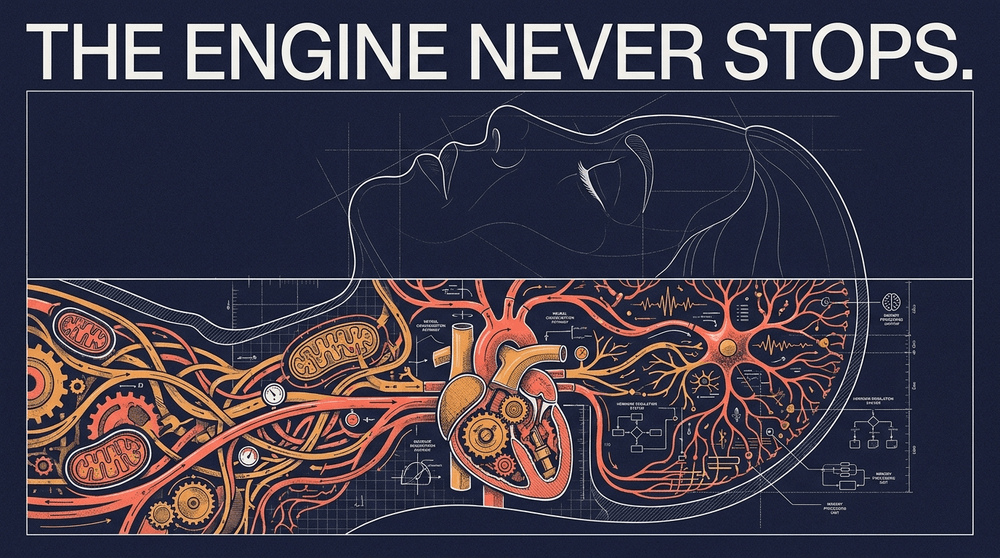
Every night, as the sun dips below the horizon and the world falls quiet, a silent and spectacular transformation begins within the architecture of the living body. To the casual observer, sleep appears as a period of inactivity - a passive withdrawal from the demands of the environment. However, beneath this stillness lies a hive of biological industry. Sleep is not merely a break from the day; it is a highly conserved, fundamental biological process that acts as a vital maintenance cycle for the mind and body. From the simplest jellyfish drifting in shallow coastal waters to the complex networks of the human brain, sleep is a universal requirement for life.
Scientific understanding of this phenomenon has moved far beyond the idea of simple rest. Researchers now view sleep as an active state of physiological housekeeping. While the conscious mind retreats, the brain initiates a sequence of complex operations: scrubbing toxins from its tissues, repairing fractured strands of DNA, and cataloguing the day's memories. This intricate dance of molecules and neurons is essential for survival, yet its mechanisms remain one of the most fascinating frontiers in modern biology.
The architecture of a sleep cycle
Before examining what sleep does, it is worth understanding what sleep is. A single night of rest is not a uniform state of unconsciousness; it is a carefully choreographed sequence of distinct stages, each performing its own essential biological function.
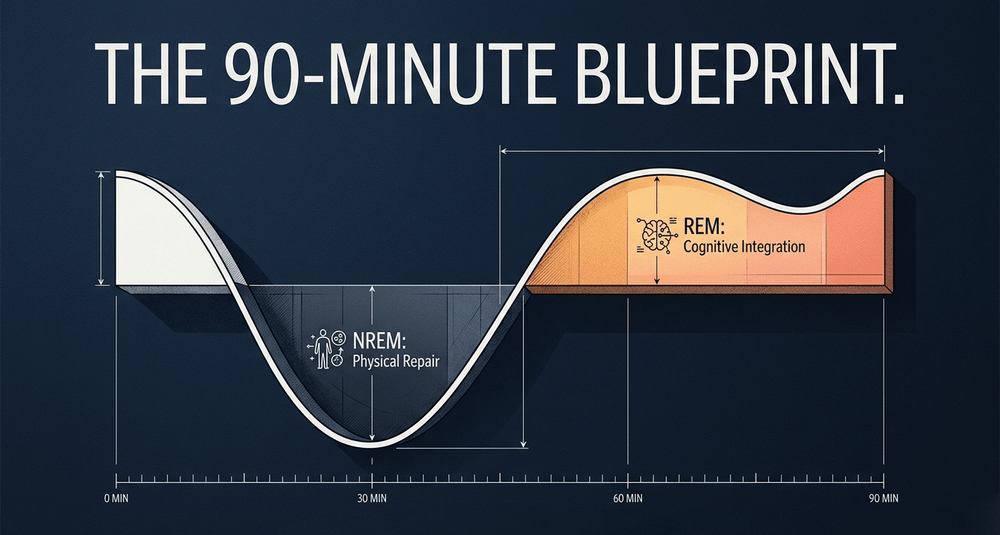
Sleep is broadly divided into two categories: non-REM (NREM) sleep and REM (Rapid Eye Movement) sleep. Within NREM, three distinct stages unfold in sequence. Stage 1 is a brief, light transition into sleep, lasting only a few minutes. Stage 2 brings genuine sleep - body temperature drops, heart rate slows, and the brain produces characteristic rhythms known as sleep spindles and K-complexes, structures believed to help the brain filter out disruptive stimuli and begin early consolidation of information. Stage 3, also known as slow-wave or deep sleep, is the most biologically restorative phase. It is here that the glymphatic system activates, growth hormone surges, and the vast majority of physical repair takes place.
Following a period of NREM sleep, the brain shifts into REM sleep - a phase defined by rapid eye movements, vivid dreaming, and near-paralysis of the voluntary muscles. This is where the brain performs much of its emotional processing and complex memory integration.
A complete sleep cycle lasts approximately 90 minutes, and a healthy adult passes through four to six of these cycles per night. The balance between deep NREM and REM sleep shifts as the night progresses - the early cycles are dominated by slow-wave sleep, while the later hours are rich in REM. This architecture is not arbitrary; it reflects the order in which the body and brain prioritize their nightly maintenance tasks.
The brain's hydraulic waste clearance system
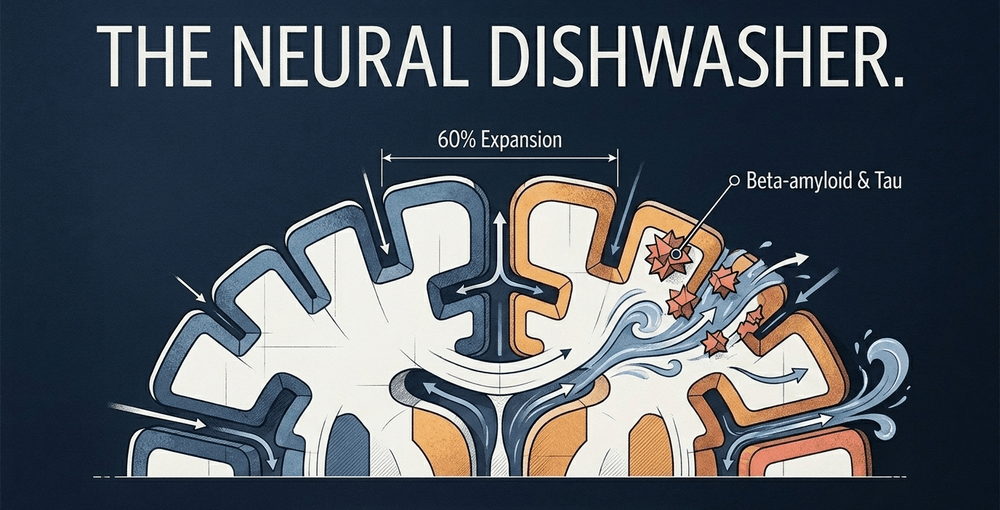
Perhaps the most remarkable discovery in recent neurology is the identification of the glymphatic system. Unlike the rest of the body, which relies on the lymphatic system to drain waste, the brain was long thought to lack such a network. Research led by neuroscientist Maiken Nedergaard and her colleagues at the University of Rochester established that the brain utilizes a unique hydraulic mechanism that only becomes fully operational during the depths of NREM sleep. This system acts like a biological dishwasher, using cerebrospinal fluid (CSF) to flush away the debris of a day's worth of thinking.
The mechanism of deep cleaning
During wakefulness, the brain is focused on processing sensory information and directing physical movement. This intense metabolic activity generates toxic byproducts, most notably beta-amyloid and tau proteins. These molecules are notorious in the medical community: when they accumulate and clump together, beta-amyloid forms the plaques and tau forms the neurofibrillary tangles associated with Alzheimer's disease. The glymphatic system is the brain's primary defense against this buildup.
As the body enters deep sleep, a physical shift occurs within the cerebral tissue. The extracellular space between brain cells expands by as much as 60%, allowing cerebrospinal fluid to flow far more freely through the brain and sweep away metabolic waste. This process is further facilitated by a drop in norepinephrine - a neurochemical that maintains alertness and constricts fluid channels during waking hours. When deep sleep is disrupted, this cleaning cycle is cut short, leaving the brain in a state of chemical clutter that contributes to cognitive fog and long-term neural inflammation.
Cellular restoration and the repair of the genetic code
While the brain is being scrubbed clean, the rest of the body's cells are undergoing their own intensive restoration. Life is a demanding process that subjects our tissues to constant oxidative stress and environmental toxins. These forces generate free radicals that can damage the very blueprints of our biology: our DNA. Sleep provides the necessary biological environment for the body to prioritize repair over performance.
The statistics of cellular injury
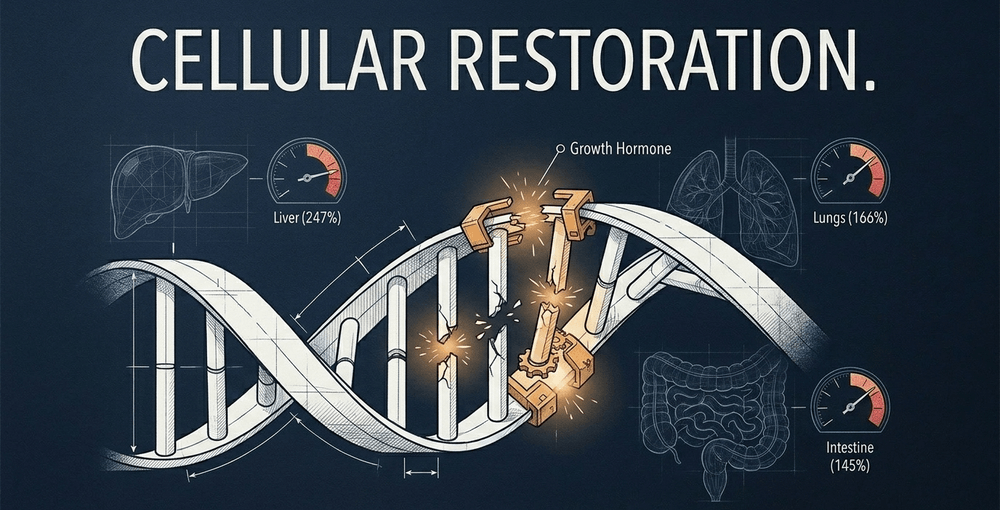
Research on sleep deprivation reveals the high cost of missing these repair windows. In controlled studies, total sleep deprivation in laboratory rats resulted in oxidative DNA damage reaching 139% of normal control levels. Certain organs suffered far more dramatically:
- The liver showed a 247% increase in oxidative DNA damage
- The lungs showed a 166% increase
- The small intestine showed a 145% increase
These figures, published through the National Institutes of Health, illustrate that sleep is a systemic requirement - not merely a neurological luxury. Every major organ system is enrolled in the nightly maintenance cycle.
During the deepest stages of sleep, the body experiences a pronounced peak in growth hormone secretion. This hormone is the primary driver of tissue repair and cell reproduction. It stimulates the production of essential structural proteins and helps neutralize the harmful molecular byproducts that accumulate throughout the day. Without this nightly window for genetic maintenance, the progressive buildup of DNA damage can lead to cellular dysfunction and accelerated aging across every major organ system.
The immune sentinels of the night
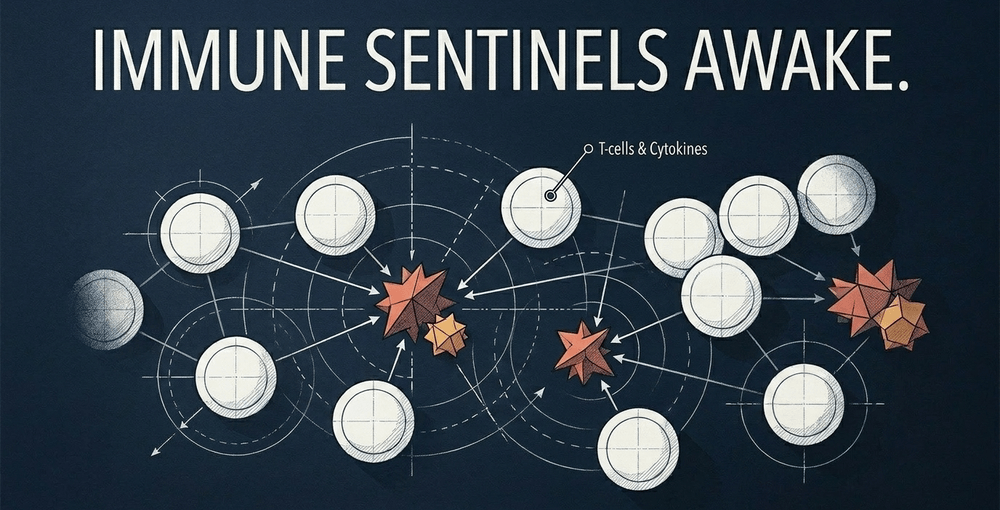
Quality sleep is also the primary fuel for a robust immune system. While we rest, our immune cells are active and vigilant. The body produces specialized infection-fighting agents - including cytokines and T-cells - which are critical for identifying and neutralizing pathogens. Sleep modulates the communication between these cells, ensuring that the immune response is both efficient and precisely targeted.
Chronic lack of sleep has a profound impact on the deepest foundations of immune defense: the immune stem cells themselves. Research from Mount Sinai has demonstrated that consistently losing even 1.5 hours of sleep per night can alter the epigenetic structure of DNA within hematopoietic stem and progenitor cells - the cells from which all white blood cells originate. Such epigenetic changes can push the immune system into a state of chronic overactivity, generating systemic inflammation that, crucially, does not fully reverse even after recovery sleep.
This persistent inflammatory state is a well-documented risk factor for:
- Cardiovascular disease
- Type 2 diabetes
- Inflammatory disorders, including rheumatoid arthritis
- Heightened vulnerability to viral and bacterial infections
A well-rested body is not merely a more energetic one. It is a more defended one - with an immune architecture calibrated by the consistency of its sleep.
Memory consolidation and the plasticity of the mind
In neuroscience, sleep is recognized as the architect of memory. The brain does not simply record events like a video camera; it must integrate new information into existing neural networks and prune away what is irrelevant. This process, known as memory consolidation, depends heavily on the specific stages of the sleep cycle.
The replay of the day
During both REM and slow-wave sleep, the brain replays neural activity patterns from the preceding day. It is as if the brain is rehearsing what it has learned - reinforcing useful connections between neurons while allowing weaker, redundant ones to fade. This neuroplasticity - the brain's capacity to adapt and reorganize itself - is what enables us to master new skills, retain complex knowledge, and extract meaning from experience.
"Sleep is not just a period of rest for the brain. It is the interval during which the brain actively selects what to keep, what to strengthen, and what to let go from a day's learning."
As explored by Laura J. Grays in Your brain resets and saves memories during sleep, the process of synaptic downscaling and selective reinforcement is central to how the brain maintains both the capacity for new learning and its long-term cognitive efficiency.
By weakening unnecessary synaptic connections and strengthening vital ones, sleep helps the brain extract patterns, identify solutions to unresolved problems, and develop insights that were not available during wakefulness. A sleep-deprived brain loses this filtering ability, making it difficult to make sound decisions, sustain attention, or regulate emotion. The cognitive decline observed after even a single night of poor sleep is a direct consequence of the brain's failure to complete this essential data management cycle.

The hormonal orchestra of sleep
Sleep is not only a neural event - it is a hormonal one. The shift from wakefulness to sleep triggers a precisely timed cascade of biochemical changes that govern much of what happens during the night.
Melatonin is perhaps the most widely known sleep hormone. Produced by the pineal gland in response to declining light levels, it signals the body that darkness has arrived and that sleep should begin. It does not induce sleep directly, but acts as the biological cue - adjusting body temperature, suppressing alertness, and recalibrating the metabolic rate in preparation for rest.
Cortisol, the body's primary stress hormone, reaches its lowest levels during the early hours of sleep. This suppression is not incidental; it creates the low-stress biochemical environment in which tissue repair and immune activity can proceed without interference. Cortisol then rises steadily in the early morning hours, peaking around the time of waking - a process known as the cortisol awakening response - which primes the brain and body for the demands of the coming day.
Growth hormone surges most powerfully during NREM Stage 3, the slow-wave deep sleep phase. This surge initiates the wave of protein synthesis, cell reproduction, and tissue repair described earlier. In children and adolescents, this nightly release is indispensable for physical development; in adults, it remains essential for metabolic regulation, muscle maintenance, and recovery from daily physical demands.
The coordinated interplay of these hormones illustrates why the timing of sleep matters as much as its duration. Sleeping at irregular hours, or in direct opposition to the body's natural circadian rhythm, disrupts this hormonal sequence - reducing the efficiency of every downstream biological process that sleep exists to support.

The genetic symphony of the sleep-wake cycle
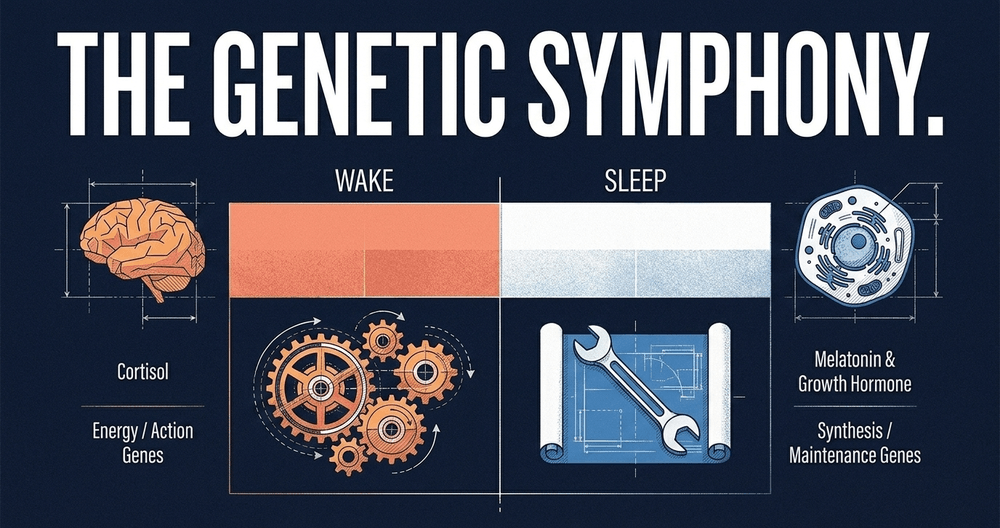
One of the most profound revelations in modern sleep science is the sheer scale at which sleep influences gene expression. The transition between wakefulness and sleep triggers a sweeping shift in which genes are active across brain tissue. Research published in peer-reviewed journals has documented that approximately 5% of all transcripts expressed in the cerebral cortex change their activity levels depending on whether an organism is asleep or awake - and this happens independently of the time of day.
When we are awake, or sleep-deprived, the genes that are upregulated are those governing energy metabolism, excitatory neurotransmission, and cellular stress responses. These are the genes of action and high-demand survival. Conversely, the genes that become active during sleep are those responsible for protein synthesis, membrane maintenance, and synaptic consolidation. This genetic turnover ensures that the brain has precisely the right molecular tools for the task at hand - shifting from the high-energy demands of wakefulness to the high-maintenance requirements of deep rest.
This finding carries significant implications: chronic sleep deprivation does not merely impair the brain acutely. It disrupts the brain at the level of genetic programming, progressively undermining the very processes needed to sustain it.
The ancient evolutionary roots of rest
Why did sleep evolve in the first place? To find the answer, scientists look back hundreds of millions of years. Sleep is so biologically essential that it predates the evolution of the complex human brain by an extraordinary margin. Even primitive creatures like hydra and jellyfish - organisms that lack a centralized nervous system and possess only a diffuse nerve net - exhibit cycles of activity and rest that share key hallmarks with human sleep. These include homeostatic rebound after sleep deprivation and sensitivity to sleep-promoting substances such as melatonin.
This conservation across the tree of life suggests that the original purpose of sleep was cellular. Long before animals needed to consolidate complex memories or process emotional experiences, they needed to repair their tissues and clear metabolic waste. Evolutionary theory also proposes that sleep served a strategic survival function: by remaining still during periods of darkness, early organisms could conserve precious energy and reduce their visibility to predators.
Sleep, then, appears to have originated as a survival strategy at the most elemental level of biology - and grew in complexity and function as life itself became more complex. The fact that even the simplest multicellular organisms rest strongly suggests that the cellular housekeeping functions of sleep are its most ancient and indispensable purpose.
The consequences of a world without rest
In our modern era, the biological necessity of sleep is frequently at odds with the demands of a 24-hour society. Yet the biological engine has no bypass for its maintenance cycles. When we deprive ourselves of sleep, we are effectively stopping the dishwasher mid-cycle - leaving the brain to steep in its own metabolic waste. We are halting the repair of our DNA, silencing the hormonal signals that govern recovery, and dismantling the architecture of our immune defense.
The consequences cascade across both immediate and long-term timescales:
- Short-term effects: impaired judgment, reduced cognitive performance, emotional dysregulation, increased pain sensitivity, and an acutely suppressed immune response
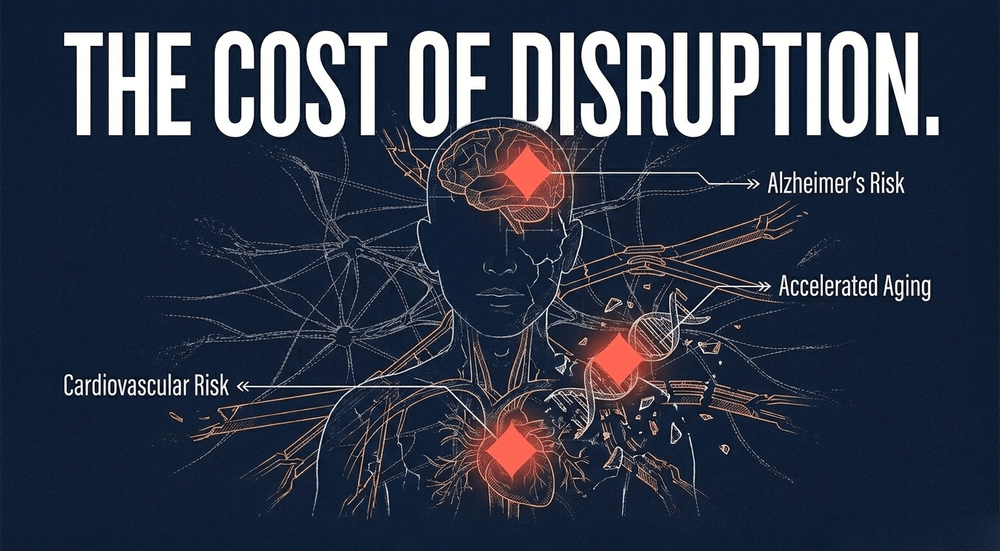
- Long-term effects: significantly elevated risk of Alzheimer's disease, cardiovascular disease, type 2 diabetes, obesity, and reduced overall lifespan
The accumulation of beta-amyloid and tau proteins - which the glymphatic system would ordinarily clear each night - is now considered one of the primary mechanistic links between chronic sleep deprivation and the eventual development of Alzheimer's disease. The failure of cellular DNA repair compounds this risk further, driving accelerated aging at the tissue level across every major organ system.
The evidence assembled across neurology, immunology, genetics, and evolutionary biology converges on a single, unambiguous conclusion: sleep is not a luxury, but a non-negotiable requirement for the maintenance of life. By understanding the intricate machinery that operates in the quiet hours of the night, we can begin to appreciate those hours not as time lost - but as the most productive investment the body makes each day.
Share now









Key takeaways
- The brain's glymphatic system - identified by researchers at the University of Rochester - flushes toxic metabolic waste, including beta-amyloid plaques and tau tangles linked to Alzheimer's disease, exclusively during deep NREM sleep. It does so by expanding the extracellular space between brain cells by approximately 60%, allowing cerebrospinal fluid to flow freely through brain tissue and sweep waste away.
- Sleep deprivation studies in laboratory rats revealed oxidative DNA damage at 139% of control levels overall, with organ-specific increases of 247% in the liver, 166% in the lungs, and 145% in the small intestine - demonstrating that sleep is a systemic biological requirement, not merely a neurological one. (NIH/PMC)
- Sleep-like states, including homeostatic rebound after deprivation and sensitivity to melatonin, are observed in brainless organisms such as jellyfish and hydra. This indicates that sleep evolved before the development of a centralized nervous system, and that its original purpose was likely cellular repair and metabolic waste clearance.
- Consistently losing even 1.5 hours of sleep per night can alter the epigenetic structure of DNA within hematopoietic stem and progenitor cells - the immune stem cells that give rise to all white blood cells. This drives elevated white blood cell production and systemic inflammation. Critically, these changes are not fully reversed by recovery sleep. (Mount Sinai)
- Approximately 5% of all transcripts expressed in the cerebral cortex change their activity levels depending on whether an organism is asleep or awake - independently of the time of day. Genes active during wakefulness govern energy metabolism and stress response; those active during sleep govern protein synthesis, membrane maintenance, and synaptic consolidation.
- Growth hormone secretion peaks during NREM Stage 3 (slow-wave deep sleep), making this phase the body's primary window for tissue repair, protein production, and cellular regeneration across all major organ systems.
- A complete sleep cycle lasts approximately 90 minutes. A healthy adult completes four to six cycles per night, with early cycles dominated by restorative deep NREM sleep and later cycles increasingly rich in REM sleep - the stage critical for emotional processing and complex memory consolidation.
Sources
- Wikipedia - Glymphatic system https://en.wikipedia.org/wiki/Glymphatic_system
- Cleveland Clinic - Glymphatic system https://my.clevelandclinic.org/health/body/glymphatic-system
- NIH/PMC - Cell injury and repair resulting from sleep loss and sleep recovery in laboratory rats https://pmc.ncbi.nlm.nih.gov/articles/PMC4548518/
- NIH/PubMed - A molecular window on sleep: changes in gene expression between sleep and wakefulness https://pubmed.ncbi.nlm.nih.gov/15632279/
- Mount Sinai - A consistent lack of sleep negatively impacts immune stem cells, increasing risk of inflammatory disorders and heart disease https://www.mountsinai.org/about/newsroom/2022/a-consistent-lack-of-sleep-negatively-impacts-immune-stem-cells-increasing-risk-of-inflammatory-disorders-and-heart-disease
- NIH/PMC - A sleep-like state in Hydra unravels conserved sleep mechanisms https://pmc.ncbi.nlm.nih.gov/articles/PMC7541080/
- University of Rochester Medical Center - To sleep, perchance to clean https://www.urmc.rochester.edu/news/story/to-sleep-perchance-to-clean
- Published 2026-06-05 13:14
- Modified 2026-06-05 13:32

-
Redaction