
-
 Redaction
The endocrinology of loneliness and heart aging
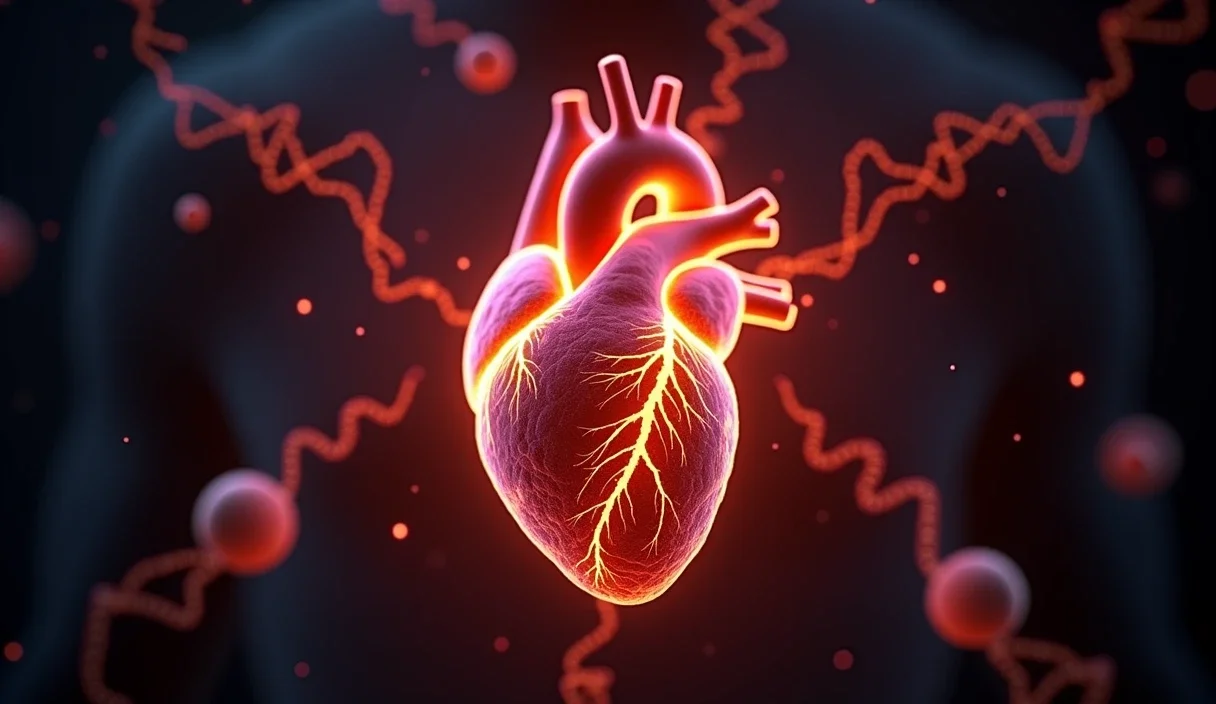
Chronic loneliness disrupts cortisol rhythms and inflames blood vessels, accelerating cardiovascular aging well beyond your true chronological age today.
The human body is fundamentally a social organism. For millennia, our survival depended on the cohesion of the tribe, and because of this evolutionary history, the brain interprets social isolation not merely as a psychological state but as a primary biological threat. When an individual feels disconnected from their social fabric, the central nervous system initiates a complex, primitive survival program. This investigation examines how that psychological perception is linked to a physical reality through the endocrinology of loneliness - a biological cascade that appears to contribute to accelerated cardiovascular aging, a premature wearing of the heart and blood vessels that outpaces chronological age.

Why the body treats loneliness as an emergency
Before diving into mechanisms, it's worth pausing on a simple but easily overlooked distinction. Social isolation is an objective state - living alone, having few social contacts, rarely leaving the house. Loneliness is subjective - the felt sense of being disconnected, regardless of how many people surround you. You can be lonely in a crowded room, and you can live alone without feeling lonely at all. Both, as it turns out, are associated with distinct biological signatures, though those signatures overlap considerably in their downstream effects.
The World Health Organization's Commission on Social Connection has described chronic loneliness as a genuine global health concern, estimating that roughly one in six people worldwide experiences persistent loneliness. That is not a fringe complaint. It is a population-level exposure, and like any widespread exposure, it deserves the same clinical rigor we apply to diet, smoking, or physical inactivity.
The neuroendocrine architecture of social disconnection
The primary mediator between the subjective experience of loneliness and the physical deterioration of the heart is thought to be the hypothalamic-pituitary-adrenal (HPA) axis. In a healthy state, this system regulates the body's response to stress by releasing cortisol in a rhythmic, diurnal pattern. Cortisol typically peaks shortly after waking and tapers off toward the evening, allowing the body to recover and repair overnight.
Research into the endocrinology of loneliness reveals a profound disruption of this rhythm. Socially isolated individuals often exhibit what researchers describe as flattened cortisol slopes. Instead of the healthy decline we'd expect across the day, cortisol levels remain elevated well into the evening, resulting in a higher total daily output. This isn't a temporary spike brought on by a stressful afternoon. It appears to reflect a shift in the physiological baseline itself.
Emerging data suggests the brain may maintain this altered state partly through oxidative stress in the hypothalamus, mediated by the enzyme NADPH oxidase. This molecular feedback loop is hypothesized to keep the HPA axis locked in a state of high alert - effectively pinning the body's stress response in the "on" position long after any acute threat has passed.

The paradox of glucocorticoid resistance
One might reasonably assume that high levels of cortisol - the body's primary anti-inflammatory hormone - would protect the cardiovascular system from inflammation. The reality is more insidious than that.
Chronic loneliness is associated with a state of cellular resistance known as glucocorticoid resistance. In this state, target tissues, including immune cells and the vascular endothelium, appear to become progressively less responsive to cortisol's signaling. Despite having high circulating levels of the hormone, the body seems to lose some of its capacity to downregulate inflammatory processes.
Mechanistically, researchers propose a specific chain of events. Chronic sympathetic activation causes norepinephrine to bind beta-adrenergic receptors on immune cells such as monocytes. Those same cells carry glucocorticoid receptors, but the combination of persistent beta-adrenergic stimulation and impaired glucocorticoid signaling is thought to allow nuclear factor kappa B (NF-kB) to drive the expression of proinflammatory cytokines largely unchecked. For the heart, this would mean the very vessels meant to transport life-sustaining blood are instead bathed in a low-grade inflammatory environment, day after day, year after year. This loss of hormonal responsiveness is considered a hallmark of the accelerated aging signatures observed in chronically lonely individuals, though the precise causal pathway from feeling to physiology is still being mapped.
Cardiovascular mechanics and markers of accelerated aging
The hormonal shifts described above are correlated with measurable changes in the physical architecture of the circulatory system, even if the full causal chain connecting them is not yet settled.
One of the most telling metrics in this research is Total Peripheral Resistance (TPR) - essentially, how hard the heart has to work against resistance in the blood vessels. Loneliness is linked to a chronic increase in TPR, and what's particularly striking is how early this shows up. Laboratory studies dating back to Cacioppo and colleagues' foundational work found that lonely young adults carry chronically elevated TPR relative to their non-lonely peers, even when both groups face identical everyday stressors. In one experience-sampling study that tracked ambulatory blood pressure throughout ordinary days, loneliness consistently predicted higher TPR alongside lower cardiac output - an association that, over years, may quietly reshape vascular health.
Researchers hypothesize that as the endocrine system signals a constant state of threat, the autonomic nervous system increases sympathetic drive, causing resistance arteries to constrict more than they otherwise would. This chronic constriction is thought to contribute to premature arterial stiffening, particularly before age 40, when TPR - rather than arterial stiffness itself - is the dominant driver of rising blood pressure.
The escalation of blood pressure
The impact on blood pressure is particularly striking, and the numbers are worth sitting with, with the caveat that these come from observational cohorts rather than controlled experiments. Longitudinal research has found that individuals who are one standard deviation lonelier than their peers show a systolic blood pressure (SBP) that starts out roughly 3.7 mmHg higher and climbs by another 2.3 mmHg over the following four years, after accounting for a range of measured confounders. Extrapolated across the full range of loneliness in a population, the most isolated individuals show an SBP increase of approximately 14.4 mmHg over that same four-year window - equivalent to roughly 3.6 mmHg per year, a rate that considerably outpaces the normal, gradual rise in blood pressure associated with aging (which averages closer to 1 mmHg per year past age 50). It's worth stressing that these figures come from observational cohorts: loneliness rarely occurs in isolation from other factors - depression, poor sleep, reduced physical activity, smoking - and while these studies adjust for many such confounders, an association of this size should be read as a strong statistical signal rather than proof of a single, isolated mechanism.
To put this in perspective: an escalation of that magnitude, if it reflects a genuine effect of loneliness itself, could plausibly move someone from a healthy blood pressure category into clinical hypertension in well under a decade - even after accounting for many traditional risk factors like diet, activity level, and genetic predisposition, which researchers have statistically controlled for rather than eliminated as contributors.
There's a second layer to this story involving the vascular endothelium directly. Elevated cortisol is thought to interfere with the nitric oxide (NO) system, and nitric oxide is the body's principal vasodilator - a molecule essential for keeping blood vessels supple and resistant to plaque formation. When chronic loneliness suppresses NO production, vessels appear to lose some of their capacity to relax on demand, which may further compound vasoconstriction and contribute to the slow buildup of arterial plaques. This is proposed as one plausible mechanical pathway toward heart failure and stroke, though it remains one strand among several under active investigation.
A newer piece of the puzzle: heart valve disease
Until recently, most of the cardiovascular conversation around loneliness centered on blood pressure, atherosclerosis, and stroke. A large 2026 study published in the Journal of the American Heart Association has added a structural dimension to that picture. Researchers followed nearly 463,000 adults in the UK Biobank for a median of almost fourteen years and found that people with the highest loneliness scores faced a substantially higher risk of developing degenerative valvular heart disease overall, including a meaningfully elevated risk of aortic valve disease specifically - and this association held true even after controlling for genetics and every traditional cardiovascular risk factor researchers could measure.
This matters because it suggests loneliness isn't only associated with the "plumbing" problems of cardiovascular disease - narrowed arteries, elevated pressure - but may also be associated with structural cardiac degeneration, the wear on the heart's own structural components, the valves that keep blood flowing in the correct direction with each beat. It's an early but compelling signal that the endocrine burden of isolation may reach deeper into cardiac architecture than previously appreciated - though as with any single observational study, it establishes association rather than a proven mechanism, and will need replication before the underlying causal story is clear.
Molecular and genomic signatures of adversity
At the microscopic level, loneliness is associated with a biological program known as the Conserved Transcriptional Response to Adversity (CTRA). This genomic shift is thought to be an ancient adaptation, one that prioritized wound healing and bacterial defense over viral immunity - a trade-off that may have made evolutionary sense in an ancestral environment where being cut off from the group meant a much higher likelihood of physical injury or infection, and a much lower likelihood of needing to fight off a crowd-transmitted virus.
The CTRA profile is characterized by the upregulation of proinflammatory genes such as IL-6, TNF-alpha, and IL-1beta, driven largely through NF-kB signaling, alongside a corresponding downregulation of antiviral genes governed by type I interferon pathways. In plain terms: the immune system appears to tilt toward inflammation and away from its usual vigilance against viruses. This same signature shows up not just in loneliness but across other chronic adversities - poverty, bereavement, prolonged stress - which is part of why researchers consider it a "conserved" response rather than something unique to social disconnection.
The proteomic profile of isolation
A landmark 2025 analysis published in Nature Human Behaviour, drawing on proteomic data from more than 42,000 UK Biobank participants, gave researchers their clearest window yet into how isolation and loneliness are correlated with changes in the bloodstream at a molecular level. The study identified proteins linked to social isolation and loneliness that were implicated in inflammation, antiviral responses and complement systems, with more than half of these proteins prospectively linked to cardiovascular disease, type 2 diabetes, stroke and mortality over the following fourteen years.
Specifically, the researchers found 175 proteins associated with objective social isolation and 26 associated with the subjective feeling of loneliness, with meaningful overlap between the two sets. Using a genetic technique called Mendelian randomization - which helps assess whether an exposure plausibly causes a downstream effect, rather than merely correlating with it - the team identified a handful of proteins that appear more likely to be influenced by loneliness than simply associated with it, though Mendelian randomization strengthens the case for causality without fully proving it. A few stand out:
- Adrenomedullin (ADM): This protein consistently emerged as one of the most important mediators between loneliness and disease risk. Higher ADM was tied to greater risk of cardiovascular disease, stroke, and mortality in the cohort. Interestingly, ADM also appears to interact with the brain's interoceptive circuitry - the internal-sensing systems that help us register our own bodily states - suggesting a plausible route by which a social feeling becomes a whole-body physiological event.
- ASGR1: This protein is associated with higher cholesterol levels and increased cardiovascular risk in this analysis, independent of diet.
- GDF15: Identified as the protein most strongly associated with social isolation specifically, GDF15 is a well-established inflammatory marker that has also drawn attention in metabolic and aging research more broadly.
- PCSK9: The protein most strongly linked to loneliness in particular, PCSK9 plays a central role in cholesterol regulation - notably, it's already a drug target for cardiovascular risk reduction, which raises an intriguing question about whether loneliness-related cardiovascular risk could eventually be pharmacologically addressed at this level.
- IL-6 and CRP: The CTRA shift is associated with elevated Interleukin-6 and C-Reactive Protein, both familiar systemic markers of inflammation linked to damage in heart muscle and vascular tissue over time.
This genomic and proteomic reprogramming suggests social isolation is not simply "in your head." It corresponds to a measurable, systemic reorganization of how the body deploys its resources - a pattern consistent with short-term survival mechanisms that, left unaddressed for years or decades, may quietly erode long-term cardiovascular health.
Share now









Key takeaways
- Chronic loneliness flattens the cortisol slope, keeping levels elevated throughout the day instead of tapering normally toward evening.
- Loneliness drives glucocorticoid resistance, making immune cells and blood vessels increasingly deaf to cortisol's anti-inflammatory signaling.
- The most isolated individuals show a systolic blood pressure increase of roughly 14.4 mmHg over four years (about 3.6 mmHg per year) - far outpacing normal age-related increases.
- Total Peripheral Resistance (TPR) is chronically elevated in lonely individuals, and this pattern shows up even in young adults.
- A large 2026 study of nearly 463,000 adults found loneliness independently raises the risk of degenerative heart valve disease, even after controlling for genetics and traditional risk factors.
- Loneliness triggers the Conserved Transcriptional Response to Adversity (CTRA), upregulating inflammatory genes while suppressing antiviral gene expression.
- Researchers have identified 175 proteins linked to social isolation and 26 proteins linked to loneliness specifically, many tied to cardiovascular and metabolic disease.
- Adrenomedullin (ADM) stands out among these proteins as a consistent marker of elevated cardiovascular disease, stroke, and mortality risk.
- Loneliness increases the risk of premature death by approximately 26%, a hazard often compared to smoking around fifteen cigarettes a day.
- Meta-analyses estimate loneliness raises coronary heart disease risk by roughly 29%, within a broader range of 15-30% across different cardiovascular outcomes.
- Post-menopausal women with high isolation and loneliness face a 29% greater risk of major cardiovascular disease compared to those with strong social ties.
- "Social prescribing" - formal referral to community and social programs - is emerging as a clinical intervention, with early evaluations showing meaningful reductions in reported loneliness.
Sources
- Nature Human Behaviour (Shen et al., plasma proteomic signatures study) https://www.nature.com/articles/s41562-024-02078-1
- Journal of the American Heart Association / American Heart Association Newsroom (2026 heart valve disease study) https://newsroom.heart.org/news/loneliness-linked-to-increased-risk-of-degenerative-heart-valve-disease
- Ning Xia & Huige Li, "Loneliness, Social Isolation, and Cardiovascular Health" https://pmc.ncbi.nlm.nih.gov/articles/PMC5831910/
- American Heart Association Newsroom (post-menopausal women and cardiovascular risk) https://newsroom.heart.org/news/social-isolation-and-loneliness-linked-to-increased-risk-of-cvd-in-post-menopausal-women
- University of Cambridge Research News (loneliness, heart disease, stroke, and infection) https://www.cam.ac.uk/research/news/loneliness-linked-to-higher-risk-of-heart-disease-and-stroke-and-susceptibility-to-infection
- Published 2026-07-26 20:31
- Modified 2026-07-26 20:32

-
Redaction