

-
 Redaction
Broken heart syndrome: the biology explained
Takotsubo cardiomyopathy mimics a heart attack but stems from a catecholamine storm overwhelming the heart. Learn the biology, risks and recovery path.
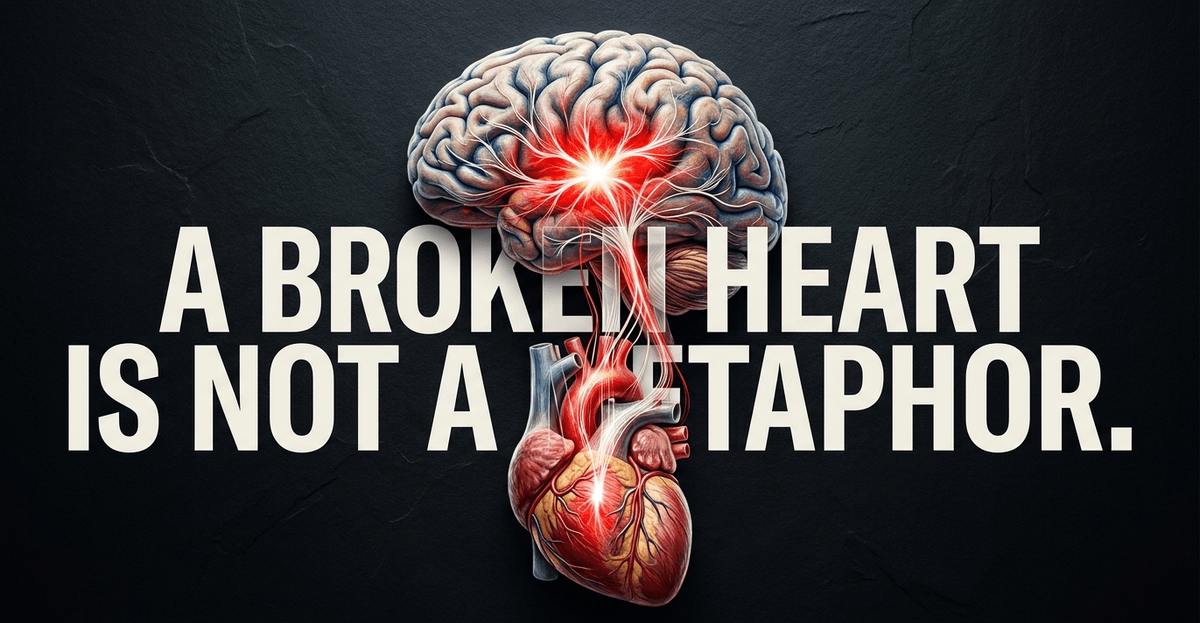
The intersection of human emotion and cardiovascular physiology is perhaps nowhere more evident than in the manifestation of Takotsubo cardiomyopathy. For decades, the notion of a "broken heart" belonged to poetry and literature - a metaphor for grief, not a clinical event. Yet since its initial description in Japan, the medical community has come to recognize this condition as a distinct, often profound acute heart failure syndrome. Clinically designated as Takotsubo cardiomyopathy (TC) or Takotsubo syndrome (TTS), this pathology reveals just how volatile the connection between our neurobiology and the mechanical pumping of the heart can be.
What I find most striking, after years of following this field, is how thoroughly our understanding has shifted. TTS was once dismissed as a curious but ultimately benign quirk of cardiology - a scare that resolved itself. We now know better. It is a genuine neurocardiac disorder, and its hospital morbidity can rival that of a traditional heart attack.
Understanding the nomenclature and historical context
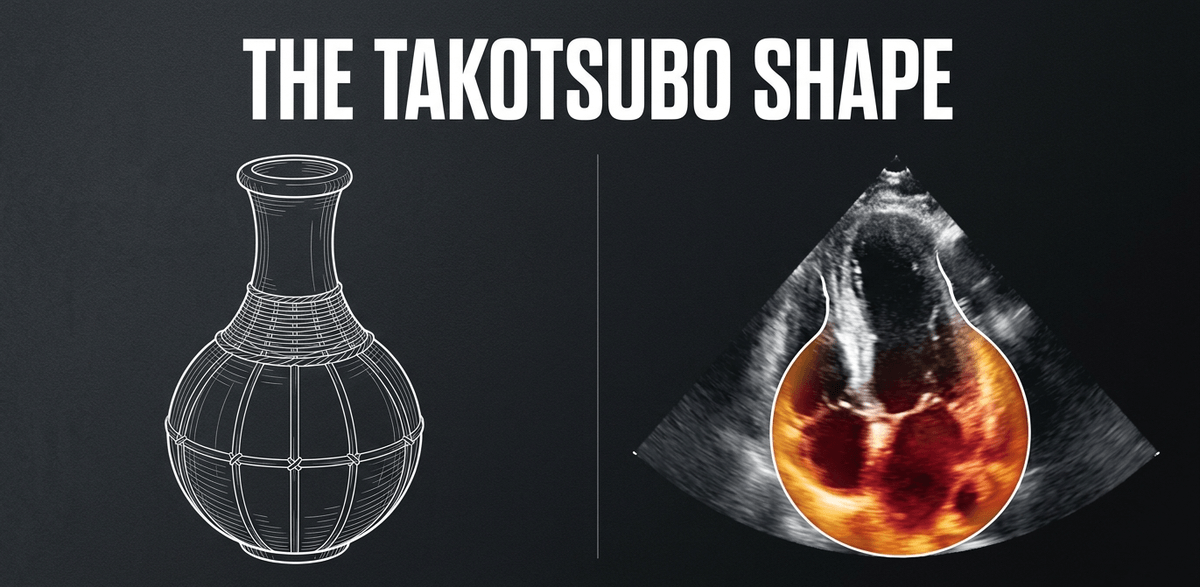
The term Takotsubo is derived from the traditional Japanese octopus trap - a ceramic pot with a round bottom and a narrow neck. This shape is a startlingly accurate visual match for the left ventricle during the acute phase of the syndrome. Viewed via echocardiography or ventriculography, the apex of the heart appears ballooned and motionless while the base contracts vigorously, mimicking the silhouette of the trap. This morphological signature isn't merely a diagnostic curiosity. It reflects a very specific type of myocardial stunning, one that defies the traditional models we use to think about coronary artery disease.
It's worth pausing on that image for a moment. A heart attack, in the classic sense, is a plumbing problem - a blocked artery starving a specific region of muscle. Takotsubo is something else entirely: a heart that has, in effect, been electrically and hormonally overwhelmed into partial paralysis, even while the plumbing remains intact.
While the condition was once considered a rare curiosity, modern diagnostic advances have shown it to be a meaningful contributor to emergency cardiac admissions. Data suggests that roughly 1-2% of patients presenting with suspected acute coronary syndrome are ultimately diagnosed with TTS. In specific cohorts, particularly postmenopausal women, that figure climbs considerably higher. For a meaningful slice of the population, in other words, an emotional or physical stressor can trigger a cardiac event that is, at the bedside, indistinguishable from a heart attack.
Clinical features and the diagnostic challenge
Identifying Takotsubo syndrome requires a high index of clinical suspicion, precisely because its presentation is nearly identical to that of acute coronary syndrome. Chest pain is the most frequent complaint, reported by the large majority of patients. Shortness of breath is common as well, and in more severe presentations, patients may experience syncope or dizziness. These symptoms are the direct result of the heart's sudden and dramatic inability to pump blood effectively.
The Revised Mayo Clinic criteria remain the gold standard for diagnosis. They require:
- Transient dyskinesis or akinesis of left ventricular segments that typically extend beyond the territory of a single coronary artery
- Absence of obstructive coronary artery disease or acute plaque rupture that would explain the wall motion abnormality
- New electrocardiographic abnormalities, such as ST-segment elevation or T-wave inversion
- A modest elevation in cardiac troponin, signaling some degree of myocardial injury
That first criterion is the crux of the matter. A traditional heart attack affects a specific territory supplied by a single blocked vessel. Takotsubo, by contrast, affects a broad, circumferential area of the heart that doesn't correspond to any one artery's distribution. This is the detail that, once you understand it, makes the whole condition make sense.
The catecholamine surge: a biological storm
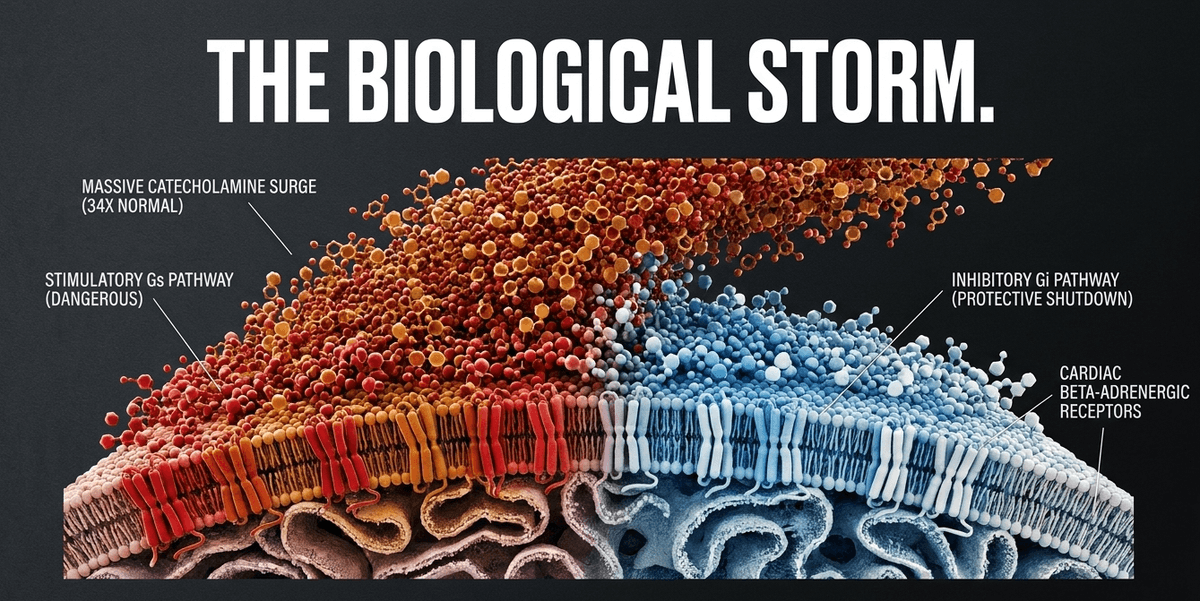
The pathophysiology of the broken heart is rooted in an overwhelming surge of catecholamines - epinephrine, norepinephrine, and dopamine. During a high-stress event, whether emotional (the loss of a loved one, a sudden shock) or physical (major surgery, a severe illness, trauma), the sympathetic nervous system enters a state of hyperactivation. In the acute phase of TTS, plasma catecholamine levels can run several times higher than those seen in a typical myocardial infarction, and in some documented cases, dramatically higher still.
This flood of stress hormones has a direct and genuinely paradoxical effect on heart muscle. The apex of the heart carries the highest density of beta-adrenergic receptors anywhere in the organ. When these receptors are overwhelmed by extreme epinephrine levels, something called biased agonism, or "stimulus trafficking," occurs. In plain terms: the beta-2 adrenergic receptors switch from their usual stimulatory signaling pathway to an inhibitory one. That switch depresses contractility locally, effectively stunning the apex of the heart.
Here is the part that tends to surprise people. While this cardiodepression produces acute heart failure, many researchers now believe it may actually function as a protective mechanism. By shutting down the most receptor-dense, most vulnerable part of the heart, the body may be preventing even more severe and permanent damage from toxic catecholamine levels. The stunning allows the myocardium to survive the metabolic storm without the cell death that typically accompanies a blocked artery.
The heart, in a sense, sacrifices function at its most vulnerable point in order to preserve itself as a whole. It is injury as a form of self-defense.
Recent reviews have pushed this picture further still, describing TTS not as a single mechanism but as a genuinely multifactorial process - one involving catecholamine overload alongside coronary microvascular dysfunction, disrupted myocardial energy metabolism, and dysregulation of the broader brain-heart axis. Advances in cardiac MRI, in particular, have helped clinicians see this energetic impairment directly, rather than inferring it indirectly from wall motion alone.
Demographics and the role of estrogen
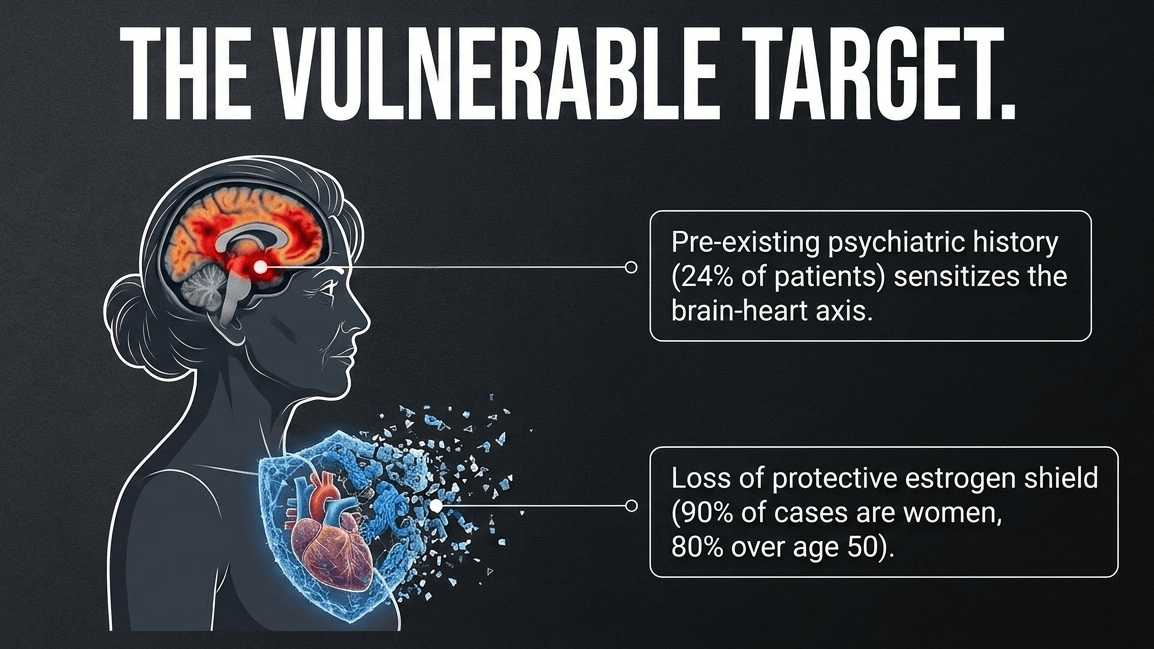
A striking feature of Takotsubo syndrome is its demographic profile. The overwhelming majority of cases occur in women, and most of those affected are well past menopause. This gender disparity has driven substantial research into the protective role estrogen appears to play in cardiovascular health. Estrogen modulates the heart's response to catecholamines; as levels decline with menopause, the heart may become measurably more vulnerable to sympathetic surges.
This vulnerability isn't purely physical. It's often intertwined with pre-existing psychiatric health. A meaningful share of TTS patients have a documented history of psychiatric illness, such as anxiety or depression, and these patients face a substantially elevated risk of recurrence. The brain-heart axis, then, isn't a poetic flourish - it's a central, measurable component of the disease, where psychological state directly shapes the threshold for cardiac dysfunction.
Interestingly, large national registry data has also revealed racial and demographic patterns in who develops TTS and how often, along with a gradual rise in recorded incidence over time - a trend that likely reflects improved recognition and diagnostic imaging as much as any true change in underlying risk.
Varieties of ventricular involvement
While the classic apical ballooning pattern is by far the most common presentation, it isn't the only way the syndrome manifests. In the midventricular variant, only the middle section of the heart is affected while the apex and base continue functioning more or less normally. Rarer still are the basal (or "reverse") variant and various focal variants, each affecting a different region of the ventricle.
The existence of these different patterns suggests that the distribution of adrenergic receptors may vary meaningfully between individuals, or that the nature and intensity of the triggering stressor shapes exactly how the heart responds. Regardless of the variant, the underlying mechanism typically involves the microvasculature as well - coronary vasoconstriction at the smallest vessel level and epicardial spasm, both of which further restrict blood flow and contribute to the wall motion abnormalities seen on imaging.
Management and the road to recovery
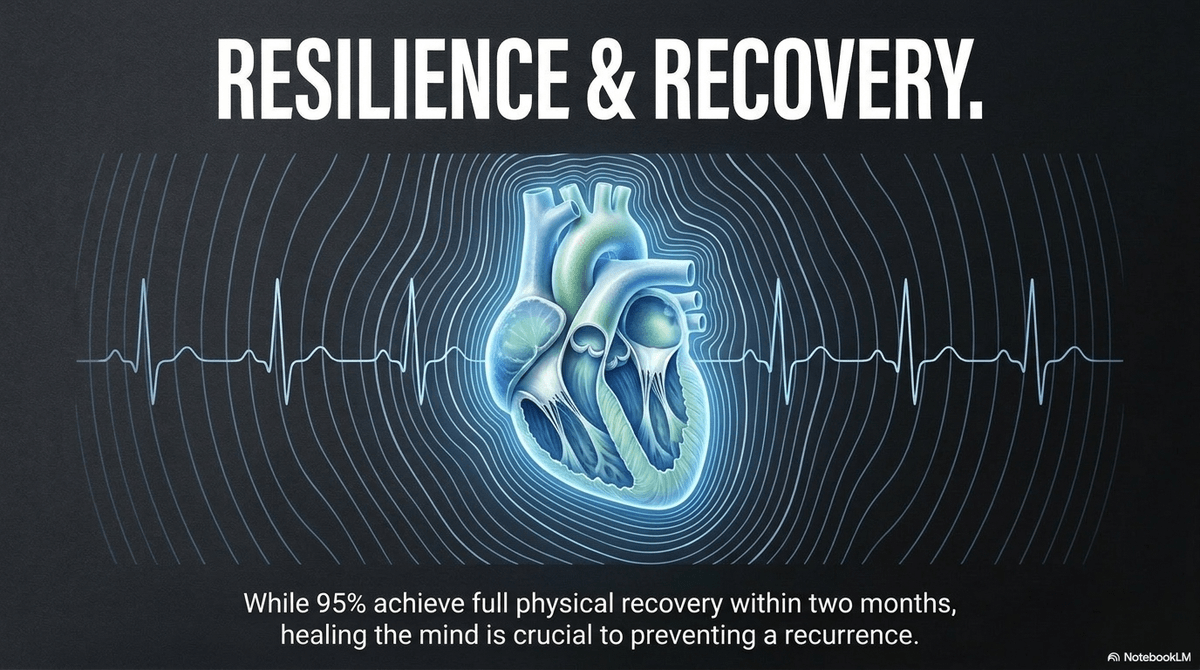
The prognosis for Takotsubo syndrome is generally favorable when compared with traditional heart failure or a full myocardial infarction. Most abnormalities in ventricular wall movement resolve within a matter of weeks, as catecholamine levels normalize and the stunning effect wears off. The overwhelming majority of patients regain full ventricular systolic function within a couple of months.
That said, the acute phase is not without genuine risk, and in-hospital mortality is not negligible. Interestingly - and this is a detail I think deserves more attention than it usually gets - while women are far more likely to develop the syndrome in the first place, mortality tends to run higher in men and in older patients generally. Men who develop TTS often do so in response to severe physical stressors, such as trauma or critical illness, rather than emotional ones, and this may partly explain the mortality gap.
Treatment during the acute phase is primarily supportive. Clinicians commonly use ACE inhibitors, diuretics, and beta-blockers to manage heart failure symptoms and reduce cardiac workload. Because the condition is fundamentally driven by catecholamines, many practitioners recommend long-term beta-blocker therapy specifically to blunt the impact of future stress-induced surges. Recurrence is possible but relatively uncommon in most patients, though the psychological aftermath of the event can linger well beyond the point where the heart muscle itself has recovered.
What the newest research is telling us
This is where the field has moved furthest in recent years, and it's genuinely encouraging. For a long time, there were no treatments specifically recommended for Takotsubo patients beyond the general supportive measures used for any heart failure presentation. That has started to change.
A landmark randomized controlled trial - the first of its kind for long-term TTS treatment - assigned patients to one of three groups: standard care, a structured 12-week exercise program, or 12 weeks of cognitive behavioral therapy tailored specifically to their condition. Both the exercise program and the cognitive behavioral therapy produced measurable improvements in physical function compared with standard care alone, including gains in six-minute walking distance and in VO2 max, a marker of the body's peak oxygen consumption during exertion. By contrast, patients receiving only standard care showed little change in either measure over the same period.
What makes this finding particularly compelling is the imaging behind it. Researchers used a specialized technique called 31P-Magnetic Resonance Spectroscopy to directly observe how patients' hearts were producing and using energy at the cellular level. After twelve weeks, both the therapy and exercise groups showed an increase in the fuel available to their hearts for pumping, a change not seen in the usual-care group. This lines up with what researchers have separately documented: Takotsubo hearts often carry a significant, persistent impairment in how they handle energy, one that can linger long after wall motion on echocardiography looks normal again.
I want to be careful not to overstate this. These are markers of improved fitness and cardiac metabolism, not yet confirmed reductions in long-term mortality - that longer-term follow-up work is still underway. But as a proof of concept, it's a meaningful validation of something clinicians have suspected for years: that the brain-heart axis in Takotsubo isn't just descriptive language. It's a treatment target.
Long-term implications and psychogenic health
Recovering from a broken heart is as much a psychological journey as it is a physiological one. Given how frequently anxiety and depression accompany this diagnosis, management of TTS has to extend well beyond the cardiology clinic. Structured cardiac rehabilitation, cognitive behavioral therapy, and mindfulness-based stress reduction are no longer just reasonable adjuncts - the evidence increasingly suggests they belong at the center of long-term care, not the periphery.
The heart's resilience is remarkable, but its sensitivity to our internal emotional landscape is a humbling reminder of how interconnected human health really is. Takotsubo syndrome serves as a genuine bridge between the physical and the emotional - proof that the stressors of the mind can, quite literally, reshape the heart.
In the years following a diagnosis, patients should remain attentive to their heart health without becoming preoccupied by it. While the heart muscle itself usually heals without permanent scarring, the underlying predisposition to sympathetic overactivity doesn't simply disappear. Routine follow-up, alongside a steady focus on both blood pressure and emotional well-being, remains the cornerstone of a good long-term outcome. As research continues to probe the genetic and molecular drivers of this syndrome, we're moving, gradually but genuinely, toward more personalized ways of protecting the most vulnerable hearts from the storms life inevitably brings.
Share now









Key takeaways
- Takotsubo cardiomyopathy (TC), also called Takotsubo syndrome (TTS), is an acute, usually reversible heart failure syndrome marked by transient left ventricular dysfunction and characteristic apical ballooning.
- Its name comes from the traditional Japanese octopus trap, whose round-bottomed, narrow-necked shape mirrors the stunned left ventricle on imaging.
- Roughly 1-2% of patients presenting with suspected acute coronary syndrome are ultimately diagnosed with TTS, with far higher rates in postmenopausal women.
- The condition is driven by an extreme catecholamine surge - epinephrine, norepinephrine, and dopamine - that overwhelms beta-adrenergic receptors concentrated at the heart's apex.
- It mimics a heart attack clinically but is defined by the absence of obstructive coronary artery disease or plaque rupture.
- The overwhelming majority of cases occur in women, most of them postmenopausal, pointing to estrogen's protective role in cardiovascular stress response.
- Roughly a quarter of patients have a documented history of psychiatric illness such as anxiety or depression, which raises their risk of recurrence.
- The classic apical ballooning pattern is most common, but midventricular, basal, and focal variants also occur.
- Most ventricular wall motion abnormalities resolve within weeks, and most patients recover full systolic function within about two months.
- Despite the generally favorable prognosis, in-hospital mortality is not negligible, and is notably higher in men and older patients than in the broader female-dominated patient population.
- A landmark randomized controlled trial found that 12 weeks of cognitive behavioral therapy or structured exercise measurably improved fitness and heart muscle energy metabolism compared with standard care alone.
- Long-term management increasingly treats the brain-heart axis as a genuine treatment target, not just a descriptive concept - pairing cardiology with structured psychological and rehabilitative support.
Sources
- British Heart Foundation https://www.bhf.org.uk/what-we-do/news-from-the-bhf/news-archive/2025/august/talking-therapy-boosts-recovery-from-broken-heart-syndrome
- NIH / NCBI - Takotsubo Syndrome in 2025: Evolving Concepts https://www.ncbi.nlm.nih.gov/pmc/articles/PMC12786540/
- NIH / StatPearls - Takotsubo Cardiomyopathy https://www.ncbi.nlm.nih.gov/books/NBK430798/
- American College of Cardiology - Ten Points to Remember: Takotsubo Syndrome https://www.acc.org/latest-in-cardiology/ten-points-to-remember/2020/03/30/12/17/takotsubo-syndrome
- Harvard Health Publishing - Takotsubo cardiomyopathy (broken heart syndrome) https://www.health.harvard.edu/heart-health/takotsubo-cardiomyopathy-broken-heart-syndrome
- Published 2026-07-20 16:54
- Modified 2026-07-20 16:54

-
Redaction