-
 Redaction
The double-slit experiment and quantum reality
The double-slit experiment explained: discover wave-particle duality, quantum superposition, and the observer effect - a complete guide to quantum reality.
The tapestry of light and shadow
In the chambers of theoretical physics, there exists an experiment so simple in its design yet so profound in its implications that it mirrors the very fabric of existence. The double-slit experiment is not merely a laboratory procedure; it is a meditation on the nature of being. When we cast light or matter toward two narrow apertures, we are not just observing particles; we are witnessing the universe's refusal to be defined by our classical expectations.
What does it mean for a single electron to behave like a ripple in a celestial pond, only to harden into a point of sand the moment we dare to look? This question, first posed in its modern quantum form in the early twentieth century, continues to breathe life into our understanding of the cosmos.

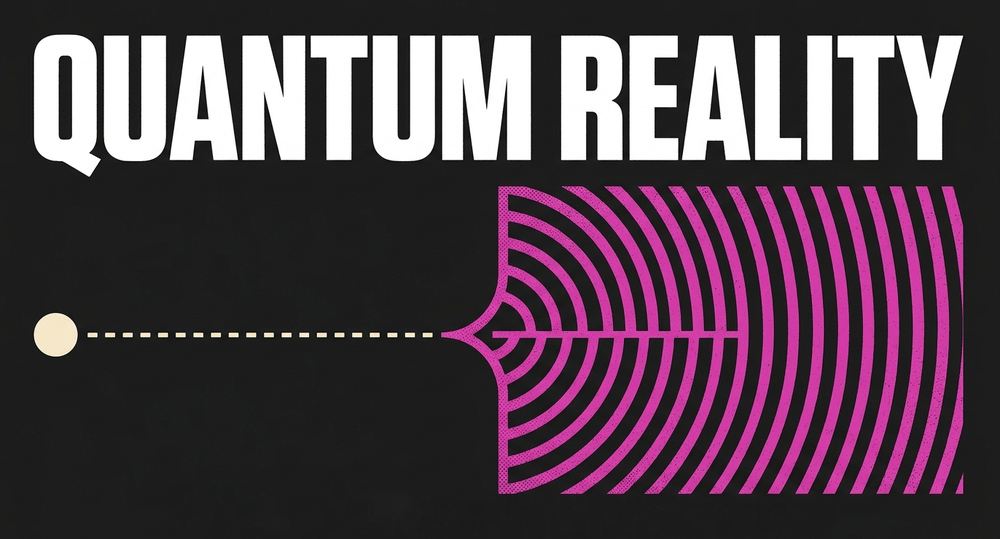
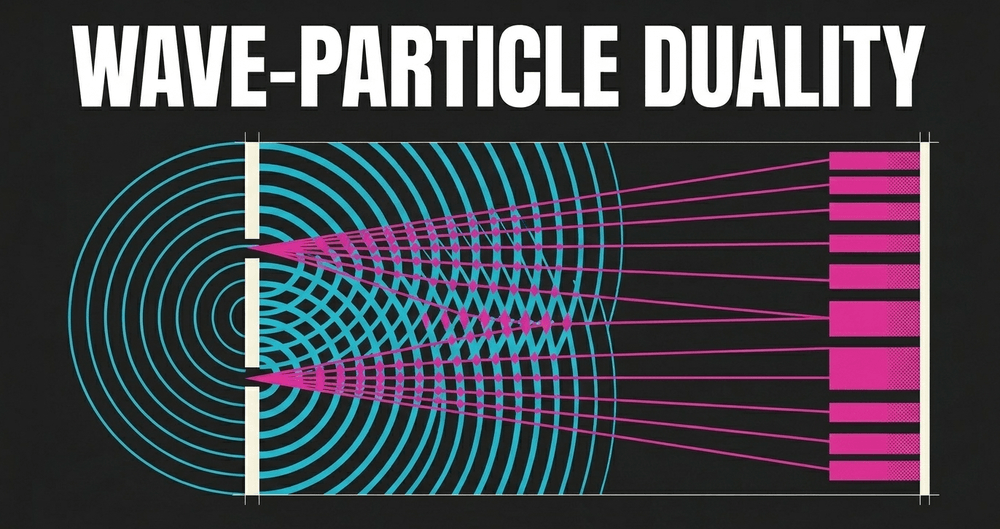
According to foundational quantum mechanics principles, when we fire particles through two slits, they do not behave like tiny billiard balls. Instead, they produce an interference pattern on the detector screen - alternating bands of intensity that are the unmistakable signature of a wave. Yet light is absorbed at the screen as discrete packets, or photons. This duality is the first whisper of a deeper reality: light is a ghost that wears the skin of a particle only when it must touch the world.
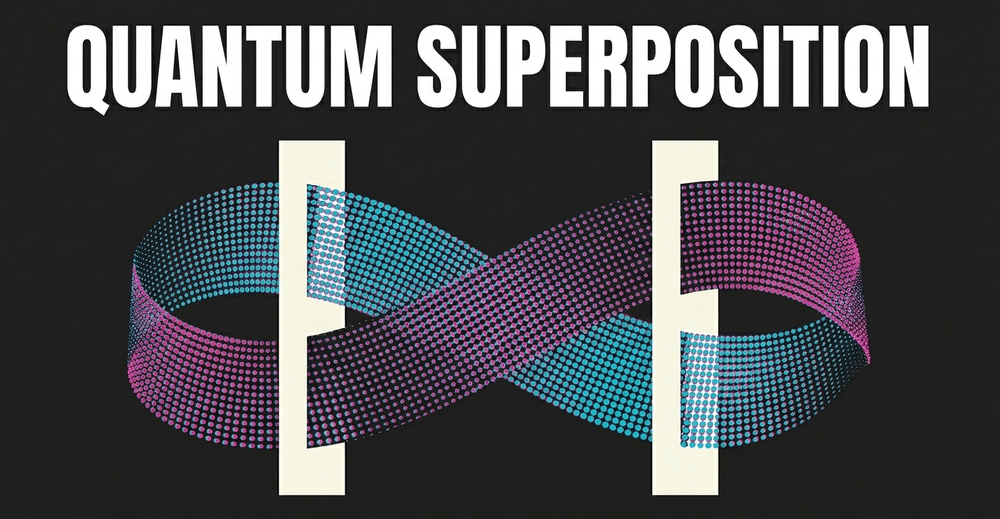
If we imagine a single photon departing from its source, it travels not as a localised bullet but as a cloud of possibilities. It drifts toward both slits at once, dancing with itself in a state of quantum superposition - the silent symphony of the quantum realm, where the melody is composed of probabilities rather than certainties.
From candlelight to quantum light: a brief history
Before the quantum revolution reshaped our understanding of the cosmos, the double-slit experiment had already overturned one of science's most stubborn assumptions. The English polymath Thomas Young directed a beam of sunlight through two pinholes in a card and watched the resulting pattern of light and dark fringes spread across a screen. His intention was to settle a long-standing argument - whether light was composed of particles, as Isaac Newton had championed, or waves, as Christiaan Huygens had proposed.
Young's fringes were unmistakable. Light, it seemed, was a wave phenomenon, capable of interfering with itself across the gap between two openings. For more than a century this verdict appeared final.
Then came the quantum age. When physicists refined Young's original setup to fire individual photons - and later individual electrons - one at a time, the interference pattern persisted even when no two particles could possibly be interacting with one another. The wave was not a property of many particles moving together. It was a property of each single particle, moving alone. This was the moment classical physics could no longer hold the door closed against the strangeness that lay beyond it.
The weight of the gaze
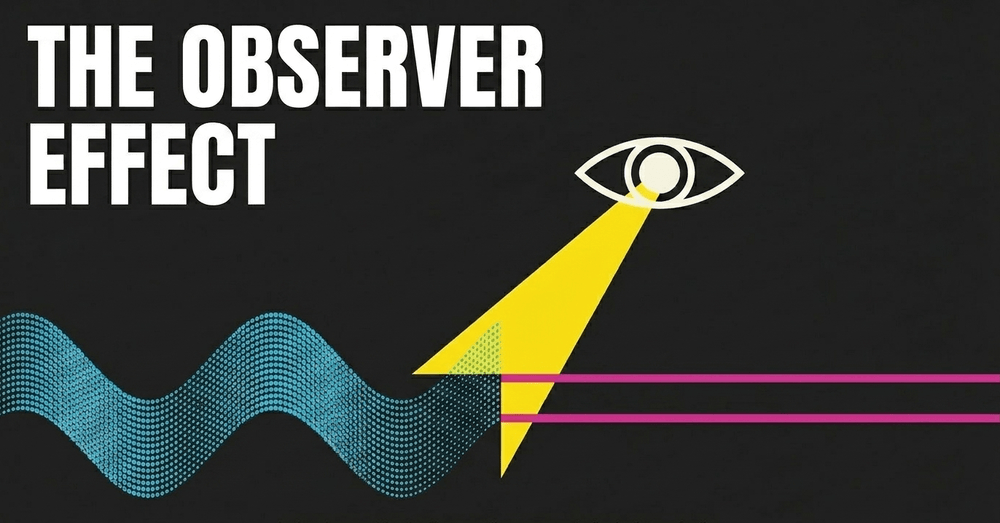
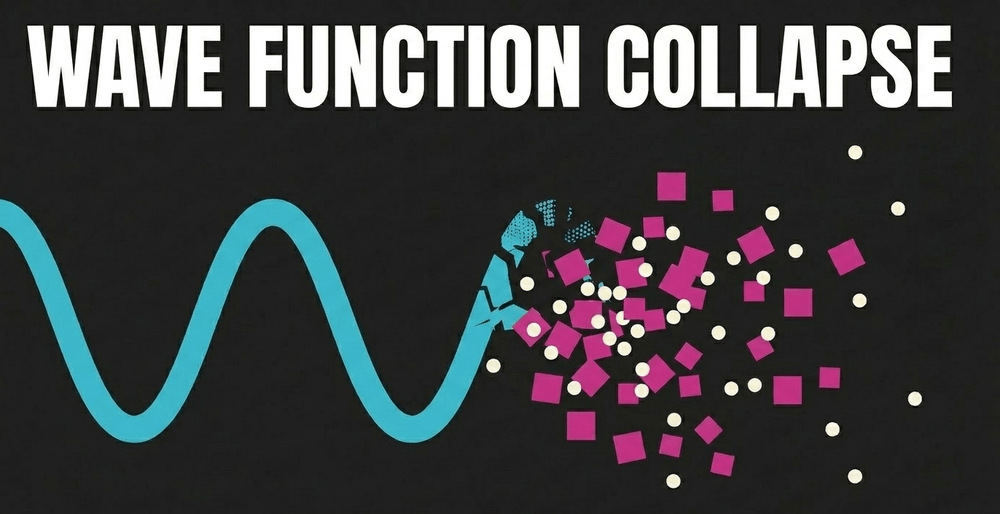
The tragedy - or perhaps the beauty - of this experiment lies in the moment of observation. If a detector is placed at the slits to discern which path the particle takes, the interference pattern vanishes. The ghostly wave retracts into a singular, solid entity. Two simple bands appear on the screen, mimicking the behaviour of ordinary matter.
Why does the universe hide its fluid nature from the inquisitive eye? Data from quantum optics laboratories indicates that observation is not an act of conscious will, but a physical interaction. The quantum measurement problem suggests that the very act of extracting which-path information forces the wave function to collapse. The particle is stripped of its ambiguity and compelled to register at a single location.
Is it possible that the universe requires a certain level of mystery to maintain its architectural integrity?
The mathematical heartbeat: Schrödinger and the wave function
To understand this transition from the infinite to the definite, we must look to the Schrödinger equation. This mathematical vessel describes how the wave function of a quantum system evolves through time. It is a description of movement that does not track a point in space, but a landscape of potential.
When the wave function encounters the two slits, the Schrödinger equation dictates that probability waves emanate from both openings. These waves then overlap, adding together in some places and cancelling each other out in others. This mathematical summation - known as quantum interference - is what creates the striped pattern observed when we do not peer too closely at the slits themselves.
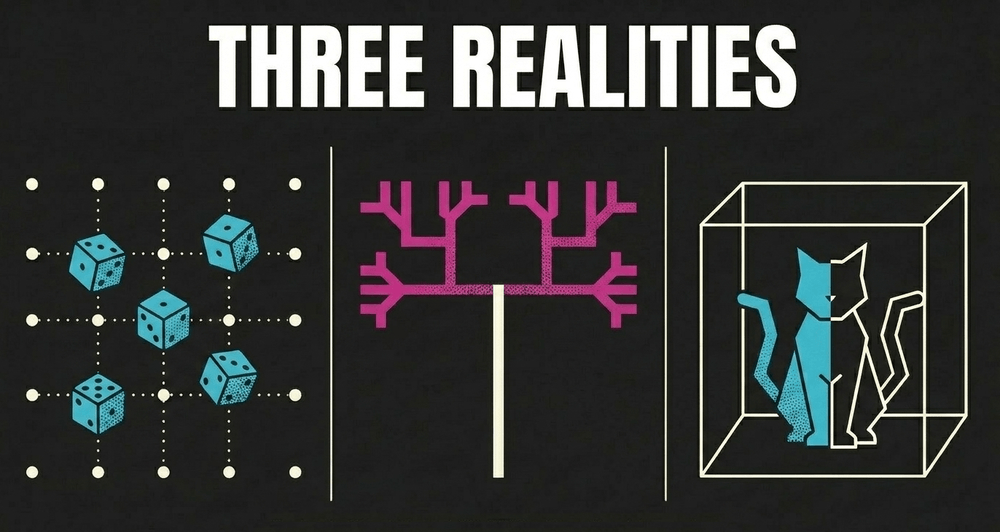
Niels Bohr, one of the principal architects of the Copenhagen interpretation alongside Werner Heisenberg, offered the Complementarity Principle as a way to reconcile this strangeness. He proposed that quantum entities possess mutually exclusive properties that cannot be observed at the same time. Like the two sides of a coin, the wave and the particle are both true, yet they cannot occupy the same moment of observation. This perspective asks us to accept a world that is fundamentally indeterminate until the moment of contact - a reality built not from fixed things, but from the act of asking.
Echoes in many worlds
Not all minds find solace in the collapse of the wave function. Hugh Everett III proposed the Many-Worlds Interpretation, a vision of the cosmos where nothing ever truly collapses. Instead, every possibility is realised. When the photon reaches the slits, the universe itself branches. In one branch, the photon passes through the left slit; in another, it passes through the right. The interference we see is the faint echo of these parallel branches overlapping before they drift too far apart to interact.
In this framework, we are not forcing the particle to choose; we are merely following one thread in an infinite tapestry of diverging realities. Ongoing research in quantum foundations continues to probe the boundaries of this interpretation, designing ever more refined experiments to test the coherence of the wave function at larger and larger scales.
The guided path of the pilot wave
There is another voice in this dialogue, one that seeks to restore a sense of classical order to the quantum chaos. The idea of a guiding wave was first conceived by Louis de Broglie and later developed in full by David Bohm into what is now known as Bohmian mechanics, or Pilot-Wave Theory. This interpretation suggests that there is no need for collapse because the particle and the wave both exist simultaneously. A quantum potential wave guides the particle through the slits - the particle follows a definite trajectory, like a leaf floating on a river, while the underlying wave creates the interference pattern.
This interpretation restores the idea of a determinate path, yet it requires us to accept a non-local universe where every part of the system is instantaneously connected to every other part. It is a vision of a deeply interconnected cosmos, where the path of a single electron is informed by the geometry of the entire experiment.

The quantum eraser: undoing the act of looking
The strangeness deepens further when we consider the quantum eraser experiment, a remarkable extension of the double-slit setup. Physicists can mark each particle with a which-path tag - a piece of information encoded in the particle's quantum state that reveals which slit it passed through. As expected, the interference pattern disappears. But here is the extraordinary part: if that which-path information is subsequently erased, before it is ever read by a human or recorded in any physical system, the interference pattern returns.
This is not a trick of the equipment. It is the universe demonstrating that what matters is not observation in the human sense, but whether distinguishing information exists anywhere in the physical world. The erasure of a possibility restores the wave, as though reality holds its final form in reserve until the last possible moment - unwilling to commit to a single story while another remains untold.
In a further twist, the delayed-choice quantum eraser shows that the erasure decision can be made after the particle has already been detected. Landmark experiments, including celebrated work by Anton Zeilinger's group at the University of Vienna and confirmations at institutions across North America and Europe, have demonstrated that the statistical results hold regardless of when the choice is made. Time, it seems, is a far more permeable boundary than our classical intuitions would suggest.
Decoherence and the quantum-classical boundary
If quantum superposition is so fundamental, why do we not see interference patterns in the objects of everyday life? The answer lies in a process called quantum decoherence. When a quantum system interacts with its surrounding environment - air molecules, ambient photons, thermal vibrations - it becomes entangled with an enormous number of particles. Each interaction carries away a tiny fragment of which-path information, effectively performing countless micro-measurements on the system simultaneously.
This process happens with staggering speed. The interference terms in the wave function do not vanish mathematically; they become scrambled across so many degrees of freedom that recovering them is, for all practical purposes, impossible. The quantum and the classical are not separated by a wall but by a gradient of complexity, and decoherence is the process by which a quantum system becomes, to all measurable appearances, classical.
The landmark demonstration of molecular-scale interference came from Markus Arndt and Anton Zeilinger's group at the University of Vienna, who confirmed interference fringes in buckminsterfullerene (C₆₀) - a sphere of sixty carbon atoms. Subsequent work at institutions including MIT and Delft University of Technology has pushed coherence into ever larger structures, including complex organic molecules containing hundreds of atoms. Each experiment narrows the gap between the quantum and the world we inhabit, without yet closing it entirely.
From the laboratory to the world: quantum technology and the experiment's legacy
The double-slit experiment may seem remote from daily life, but the quantum principles it lays bare are the very foundations upon which an emerging technological civilisation is being built.
Quantum computing exploits superposition - the same phenomenon that allows a single particle to pass through both slits at once - to process information in ways that are impossible for classical machines. A quantum bit, or qubit, can exist in a superposition of zero and one simultaneously, enabling certain computations to scale far beyond the reach of any conventional processor. Research groups at institutions worldwide are engineering systems that must preserve quantum coherence long enough to be useful, fighting the same decoherence forces that strip the double-slit experiment of its interference pattern.
Quantum cryptography draws on the measurement problem itself. Because the act of measuring a quantum system disturbs it irreversibly, any eavesdropper who intercepts a quantum-encoded message will leave a detectable fingerprint. The security of quantum key distribution is not a matter of computational complexity, as in classical encryption; it is a law of physics, written into the wave function.
Quantum sensors exploit the extraordinary sensitivity of quantum superposition to minute physical disturbances. Atom interferometers - devices that split a cloud of ultracold atoms, allow them to travel along two paths, and then recombine them - function as the direct descendants of the double-slit experiment. They are already being deployed as precision clocks, gravimeters for geological surveying, and navigation instruments of an accuracy that no GPS system can match in environments where satellite signals are unavailable.
The double-slit experiment is therefore not a relic of the past but a living ancestor of the technologies being born in this century. Every qubit that holds its superposition, every photon that carries an encrypted key, every atom that traces an interferometric arc is the descendant of those first perplexing fringes on Young's screen.
The silence of the quanta
We must ask ourselves: what does the double-slit experiment reveal about the role of the observer in the construction of reality? If the act of measurement defines the outcome, can we truly say that an objective world exists independently of our interactions with it?
The clinical precision of the detectors at the slits may seem detached, yet they are the proxies for our curiosity. The shift from wave to particle is a reminder that the act of asking a question inherently limits the answer we can receive. When we ask "which path?", the universe answers with a particle. When we remain silent and watch the screen, the universe answers with a wave.
This probabilistic nature of the quantum world is not a limitation of our technology, but a fundamental feature of the landscape. The wave function does not tell us where a particle is; it tells us where it might be found. Each flash on the detector screen is a single point of light in a larger story. Over thousands of trials, these individual points coalesce into the interference pattern, revealing the hidden structure of the wave - as if the universe is composed of a million tiny whispers that, when gathered together, form a clear and resonant tone. The double-slit experiment remains the most elegant demonstration of this cosmic paradox, a doorway into a realm where the laws of logic are rewritten by the fluidity of light.
Frequently asked questions
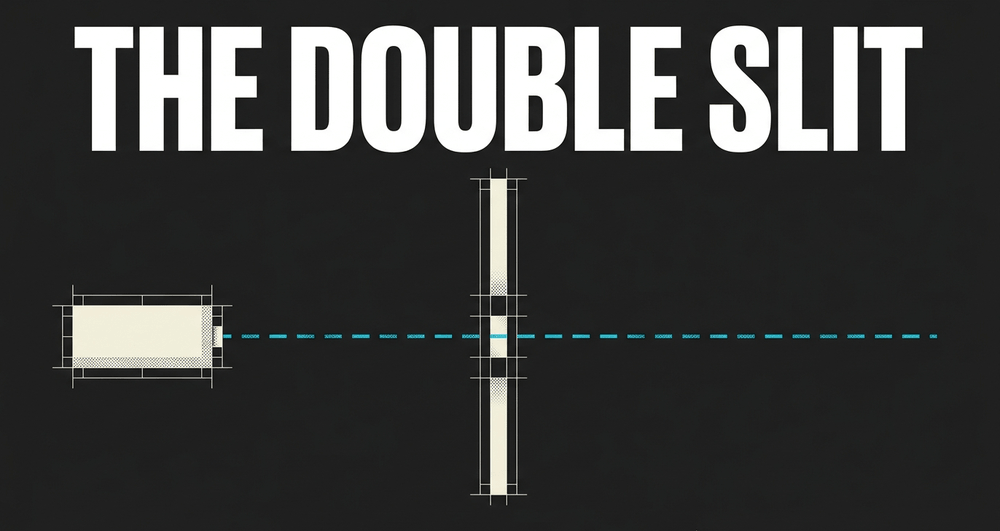
What is the double-slit experiment, in simple terms? The double-slit experiment fires particles - photons or electrons - one at a time toward a barrier with two narrow openings. Rather than passing through one slit like a classical object, each particle behaves as a wave and passes through both slits simultaneously, interfering with itself to produce a striped pattern on a detector screen. The moment a detector is placed at the slits to identify which one the particle used, the interference pattern vanishes and two simple bands appear.
Does the observer have to be a conscious human being? No. In quantum mechanics, observation means any physical interaction that records which-path information - a camera, a detector, even an air molecule. Consciousness plays no special role. What matters is whether the distinguishing information has become entangled with the environment in a way that is, even in principle, recoverable.
Has the double-slit experiment been performed with objects larger than electrons? Yes. Researchers have successfully demonstrated interference patterns using atoms, molecules, and even large organic molecules containing hundreds of atoms. Each successful experiment pushes the known boundary of quantum behaviour further into the macroscopic world, though everyday objects remain firmly classical due to decoherence.
What is wave-particle duality? Wave-particle duality is the principle that all quantum entities - photons, electrons, and others - exhibit both wave-like and particle-like properties. Which property manifests depends on the experimental setup: measure position and you find a particle; allow free propagation and you observe a wave. Niels Bohr formalised this as the Complementarity Principle - the two descriptions are mutually exclusive but equally necessary for a complete account of nature.
Which interpretation of quantum mechanics is correct? No single interpretation has yet been proven experimentally superior to the others. The Copenhagen interpretation, the Many-Worlds Interpretation, and Pilot-Wave theory all reproduce the same observable predictions. The choice between them currently rests on questions of philosophy, mathematical elegance, and ongoing theoretical debate - a reminder that the deepest questions in physics are also questions about meaning.
Why does the interference pattern disappear when we try to detect which slit the particle uses? The disappearance is a direct consequence of the quantum measurement problem. Any detector that determines which slit a particle passes through must physically interact with the particle or its surroundings. This interaction entangles the particle with the detector, causing the superposition of both-paths to decohere into a definite single-path state. The wave-like behaviour is not destroyed by knowledge itself, but by the physical disturbance that obtaining that knowledge necessarily requires.
What does the double-slit experiment have to do with quantum computing? Quantum computing relies on the same principle of superposition the double-slit experiment demonstrates. A qubit can exist in a superposition of states simultaneously - just as a particle can traverse both slits at once - and quantum algorithms exploit interference between these superposed states to arrive at correct answers more efficiently than any classical machine. Protecting that coherence from environmental decoherence is the central engineering challenge of quantum computing today.

The horizon of understanding
As we continue to push the boundaries of quantum mechanics - using larger molecules and more intricate detection systems - the fundamental mystery remains unchanged. The double-slit experiment continues to challenge the boundary between the subject and the object, between the seen and the unseen. It invites us to consider that the foundation of the physical world is not solid matter, but a shimmering field of possibilities that only crystallises into form when it is met by an observer.
In the end, perhaps the double-slit experiment is a metaphor for the human condition itself. We exist in a state of many potentials, our lives a wave of possibilities until the choices we make and the observations we record define our single, definite path. The electron and the photon are our teachers, showing us that reality is far more porous and poetic than the rigid laws of the past would have us believe.
In the silence between the slits, the universe continues its dance, waiting for us to decide how we will look, and in doing so, what world we will choose to see. The interference pattern is a map of where we have been, and the single bands are the marks of where we stand. Between them lies the entire mystery of the quantum soul - a symphony played in the key of light, forever evolving under the watchful eye of the inquirer.
Share now









Key takeaways
- Quantum entities such as electrons and photons exhibit both wave-like and particle-like properties, with the observed behaviour determined entirely by the experimental conditions and whether which-path information is available to the environment.
- Single particles fired through two slits individually still produce a striped interference pattern over many trials, demonstrating that each particle exists in a superposition of paths - passing through both openings simultaneously rather than just one.
- The act of obtaining which-path information causes the wave function to collapse, eliminating the interference pattern and returning particles to discrete, classical-like behaviour regardless of whether a human consciously reads the result.
- In the quantum eraser experiment, which-path information that is subsequently erased - even after the particle has been detected - allows the interference pattern to statistically re-emerge, challenging classical intuitions about time and causality.
- The Schrödinger equation provides the mathematical framework for the probabilistic, time-dependent evolution of quantum states, describing a landscape of overlapping potential rather than a fixed trajectory.
- Niels Bohr's Complementarity Principle, central to the Copenhagen interpretation, asserts that wave and particle natures are mutually exclusive and cannot be observed simultaneously in the same experimental setup.
- Hugh Everett III proposed the Many-Worlds Interpretation, in which every quantum outcome is realised in a branching universe and the wave function never truly collapses - every possibility is permanently preserved across an ever-growing multiverse.
- Bohmian mechanics (Pilot-Wave Theory), developed from Louis de Broglie's original 1927 concept by David Bohm, restores deterministic particle trajectories by positing a guiding quantum potential wave that shapes the particle's path, at the cost of accepting an explicitly non-local universe.
- Quantum decoherence - the rapid entanglement of a quantum system with its surrounding environment - explains why large everyday objects display no observable interference effects, marking the practical gradient between quantum and classical behaviour.
- Interference effects have been demonstrated in molecules as large as buckminsterfullerene (C₆₀) and beyond, confirming that quantum superposition is not exclusive to subatomic particles, while the precise boundary with the classical world remains an open research question.
- Thomas Young's original two-slit experiment, performed with light in the early nineteenth century, was the first empirical demonstration of wave interference and laid the historical foundation for all subsequent quantum double-slit research.
- The principles unveiled by the double-slit experiment are directly foundational to quantum computing, quantum cryptography, and quantum sensing - technologies that exploit superposition, interference, and measurement-induced decoherence in practical engineering contexts.
Sources
- Wikipedia - Double-slit experiment https://en.wikipedia.org/wiki/Double-slit_experiment
- Wikipedia - Copenhagen interpretation https://en.wikipedia.org/wiki/Copenhagen_interpretation
- Wikipedia - Many-worlds interpretation https://en.wikipedia.org/wiki/Many-worlds_interpretation
- Wikipedia - Quantum eraser experiment https://en.wikipedia.org/wiki/Quantum_eraser_experiment
- Wikipedia - Quantum decoherence https://en.wikipedia.org/wiki/Quantum_decoherence
- Wikipedia - Pilot wave theory https://en.wikipedia.org/wiki/Pilot_wave_theory
- Wikipedia - Thomas Young (scientist) https://en.wikipedia.org/wiki/ThomasYoung(scientist)
- Wikipedia - Bohmian mechanics https://en.wikipedia.org/wiki/De_Broglie%E2%80%93Bohm_theory
- Wikipedia - Quantum computing https://en.wikipedia.org/wiki/Quantum_computing
- Wikipedia - Quantum key distribution https://en.wikipedia.org/wiki/Quantum_key_distribution
- MIT Physics - Famous double-slit experiment holds up when stripped to its quantum essentials https://physics.mit.edu/news/famous-double-slit-experiment-holds-up-when-stripped-to-its-quantum-essentials/
- QuEra - Double-slit experiment glossary https://www.quera.com/glossary/double-slit-experiment
- Plus Maths - Physics minute: the double-slit experiment https://plus.maths.org/content/physics-minute-double-slit-experiment
- Stanford Encyclopedia of Philosophy - Many-worlds interpretation of quantum mechanics https://plato.stanford.edu/entries/qm-manyworlds/
- Stanford Encyclopedia of Philosophy - Bohmian mechanics https://plato.stanford.edu/entries/qm-bohm/
- Nature - Wave-particle duality of C60 molecules (Arndt et al.) https://www.nature.com/articles/44348
- Published 2026-05-05 00:07
- Modified 2026-06-11 00:16

-
Redaction