

-
 Redaction
Many-Worlds theory: The quantum multiverse
Explore Many-Worlds: the quantum theory that every event branches reality into infinite parallel worlds within a single, universal wavefunction.
The heartbeat of the universal wave
In the quiet spaces between our perceptions, there exists a possibility so vast it dwarfs the stars. We have long viewed the universe as a singular path - a lonely thread of light stretching from a distant beginning toward an unknown end. Yet if we listen to the mathematical rhythms of the quantum world, we hear a different story.
The Many-Worlds Interpretation (MWI) suggests that our reality is not a single thread, but an infinite tapestry, unravelling and reweaving itself with every breath of a subatomic particle. First proposed by Hugh Everett III in his 1957 doctoral dissertation at Princeton University, this framework invites us to consider that we live within a universal wavefunction that never truly breaks - it merely flows into endless, shimmering branches.
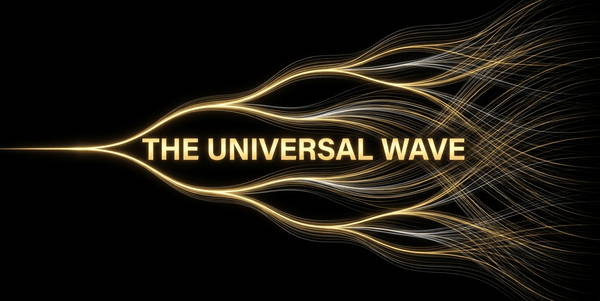
What does it mean to exist in a world without collapse? In the traditional Copenhagen interpretation, the act of observing a quantum system forces nature to choose a single outcome, discarding all other possibilities. Everett, however, saw a more elegant symmetry. He proposed that the wave equation is universally and always obeyed - that the wavefunction does not collapse at all.
According to Everett, there is no moment of jagged decision where the universe discards its potential. Instead, every possibility finds soil. When a quantum event occurs, the universe does not choose; it expands, creating space for every outcome simultaneously. The wholeness of the wavefunction remains intact, even as we, the observers, are carried along a single specific branch of what Everett called the universal wavefunction.
The architecture of infinite branching
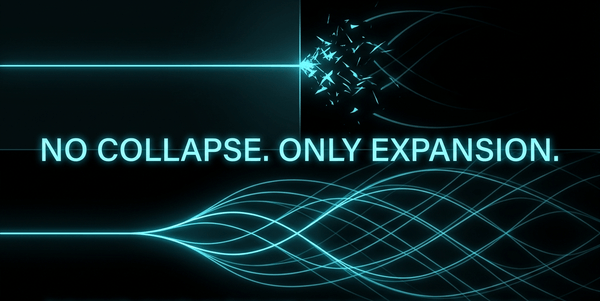
To understand this expansion, we need to look closely at the concept of unitary evolution. In the language of physics, this is a deterministic process. The Schrödinger equation - a pillar of quantum mechanics - describes how the wavefunction changes over time with a mathematical consistency that leaves no room for sudden jumps or discontinuities. If we accept this equation as a complete description of reality, the wavefunction never disappears. It simply becomes more complex.
This growing complexity manifests as what we perceive as 'worlds.' These are not fundamental physical structures like planets or galaxies, but emergent features of the quantum landscape - the shapes that reality takes when different parts of the wavefunction cease to interact with one another in any practically detectable way.

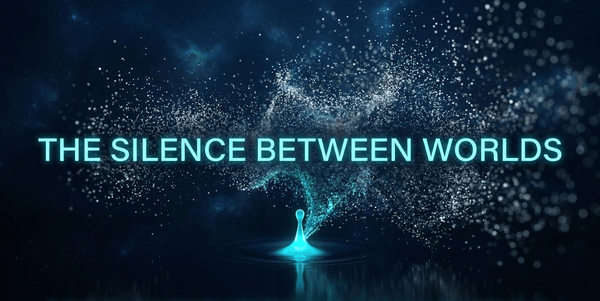
The effective silence between worlds is maintained by a process known as decoherence. Think of a drop of ink falling into a vast, still lake. At first, the drop is distinct - a singular point of potential. As it spreads, it interacts with countless water molecules, its information becoming so diluted and dispersed that it can never be gathered back into a single drop. Decoherence is the physical mechanism that makes the branches of the wavefunction dynamically independent for all practical purposes.
As a quantum system interacts with its environment, quantum information leaks out into the surroundings, making interference between different possibilities astronomically unlikely - though not absolutely forbidden in principle. We do not experience the other worlds because they have drifted too far into the environmental background, becoming ghosts of light that no longer touch our skin. This process is what gives our world its solid, classical appearance, masking the underlying fluid nature of the quantum realm.
The cat and the mirror
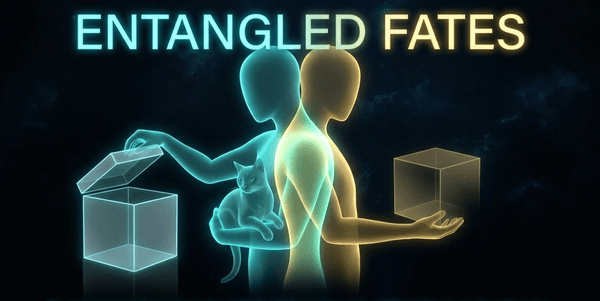
Perhaps the most vivid illustration of this branching is found in the fate of Schrödinger's famous feline. In the traditional telling, the cat is a tragic figure of uncertainty - existing in a ghostly state of being both dead and alive until a human hand lifts the lid of the box. MWI offers a more complex, if more compassionate, resolution.
When the lid is lifted, the observer does not determine the cat's fate. Instead, the observer becomes entangled with the cat's quantum state. The wavefunction branches. In one branch, a joyful scientist embraces a living companion; in another, a somber figure reflects on loss. Both realities are equally solid, equally vibrant, and equally real - existing in different rooms of the same infinite mansion. The paradox is resolved not by a choice, but by the inclusion of all possible histories.
For a deeper exploration of this thought experiment and its many proposed resolutions, see our companion article: Solving the mystery of Schrödinger's quantum cat by Lara Dean.
How many-worlds compares to other interpretations
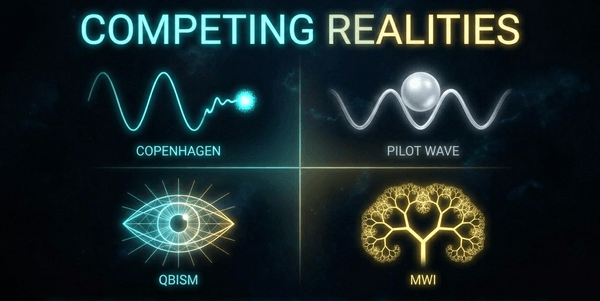
The Many-Worlds Interpretation does not exist in isolation. It is one of several competing frameworks that physicists use to make sense of the strange predictions of quantum mechanics, and understanding where it stands among them illuminates both its strengths and its peculiarities.
The Copenhagen interpretation - the oldest and still perhaps the most widely taught - holds that the wavefunction is a mathematical tool for calculating probabilities, not a description of physical reality. When a measurement is made, the wavefunction 'collapses' to a definite outcome. This is pragmatically effective, but it leaves deep conceptual questions unanswered: what exactly constitutes a 'measurement,' and what physical process triggers a collapse? These are questions Copenhagen largely sidesteps.

The de Broglie-Bohm pilot wave theory takes a different path entirely. It posits that particles always have definite positions and are guided by a real, physical wave. There is only one world in this framework, but it is a hidden, nonlocal one - deeply deterministic yet impossible to observe directly at the quantum level. It reproduces all the standard predictions of quantum mechanics but carries its own metaphysical weight.
QBism (Quantum Bayesianism), championed by physicists Christopher Fuchs and Rüdiger Schack, takes an almost opposite approach. It treats the wavefunction not as a feature of the external world at all, but as an expression of an agent's personal beliefs about the outcomes of their future experiences. There are no many worlds, no hidden variables - only the updating of expectations. Critics argue this makes quantum mechanics irreducibly subjective.
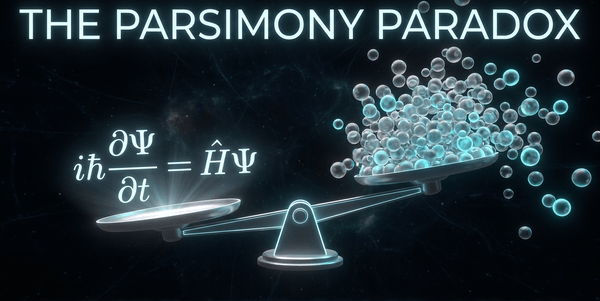
What distinguishes MWI from all of these is its radical commitment to the mathematics. It takes the Schrödinger equation at complete face value, introduces no collapse postulate, no hidden variables, and no observer-dependent reality. Whether this parsimony at the level of laws is worth the extravagance at the level of ontology - an unimaginable proliferation of branching worlds - is a question that continues to divide the physics community.
What leading physicists think about many-worlds
It would be misleading to suggest that the Many-Worlds Interpretation occupies a fringe position in modern theoretical physics. Some of the most prominent voices in the field have expressed strong support for it, while others remain genuinely unconvinced - and that tension is itself scientifically important.
Sean Carroll, a theoretical physicist and cosmologist at the California Institute of Technology, argues that MWI is the most straightforward reading of quantum mechanics available to us. He contends that resistance to it often stems from psychological discomfort with its implications rather than from scientific objection, and that the other branches are just as real as our own - in precisely the same sense that distant galaxies we have never observed are real.
David Deutsch, a pioneer of quantum computation at the University of Oxford, has similarly championed MWI and built much of his foundational work in quantum computing on its conceptual scaffolding. His decision-theoretic argument - which attempts to derive the Born rule from rationality principles alone - represents one of the most technically ambitious efforts to address MWI's open problems, and was published in the Proceedings of the Royal Society.
Not all physicists are so convinced:
- Roger Penrose, Nobel laureate and mathematical physicist, remains deeply skeptical. He believes that quantum gravity will eventually reveal a physical mechanism for wavefunction collapse, rendering the proliferation of worlds unnecessary.
- Steven Weinberg, the late Nobel Prize-winning physicist, expressed admiration for MWI's elegance but was troubled by the probability problem - the difficulty of making sense of the likelihood of finding oneself in a particular branch when all branches are equally real.
- N. David Mermin, a prominent quantum physicist at Cornell University, preferred a version of QBism, arguing that MWI's realism about the wavefunction creates more problems than it solves.
"The many-worlds interpretation is the only one that takes quantum mechanics seriously as a description of the physical world."
- Sean Carroll, theoretical physicist, California Institute of Technology
This diversity of expert opinion is itself important context. MWI is neither settled science nor fringe curiosity. It is a serious and actively debated interpretation, evaluated in peer-reviewed journals and at major physics conferences worldwide. The question of which interpretation is correct - or whether any of them can ever be proven correct - remains one of the most genuinely open problems in the foundations of physics.

The deterministic soul of the multiverse
There is a profound irony buried in the Many-Worlds Interpretation. While it describes a reality of infinite, unpredictable paths, it is, at its heart, a deterministic theory.
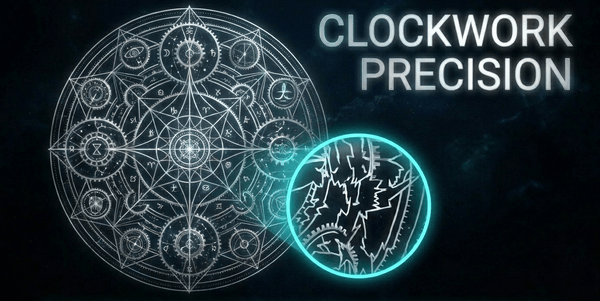
From our perspective within a single branch, life feels like a series of chance encounters and random fluctuations. We see the rolling of dice and the flickering of light as symbols of a chaotic universe. Yet at the level of the universal wavefunction, there is no chance at all. Every outcome of every quantum measurement is accounted for, and the total wavefunction evolves with a clockwork precision that would satisfy the most rigorous of classical thinkers.
It is only because we are small - because we are bound to a single branch - that we perceive the world as probabilistic. We are like sailors on a vast ocean who can only see the wave they are currently riding, unaware that the entire sea is moving in perfect, calculated harmony.
This realization challenges our understanding of identity and choice. If every quantum event leads to a branching of the wavefunction, then there is a version of us inhabiting every possible outcome. Every path not taken is, in fact, being walked by another version of ourselves. Does this diminish the value of our choices, or does it imbue them with cosmic significance?
In a universe where everything happens, the focus shifts from the 'what' to the 'where.' We are defined by the branch we inhabit - by the specific sequence of events that has led us to this precise moment. Our lives become a unique melody played on an infinite piano, a single sequence of notes in a symphony that contains every possible song.
The weight of unobservable truth
Critics often point to the staggering proliferation of universes as a violation of Occam's razor - the principle that the simplest explanation is usually the correct one. Why should nature be so extravagant? Why create an enormous number of branches just to explain the behaviour of a single electron?
Proponents of MWI counter that the complexity is not in the theory itself, but in the reality it describes. The theory is arguably simpler than the Copenhagen interpretation because it removes the need for a 'collapse' mechanism - a process that has never been directly observed and lacks a precise mathematical definition. By trusting the Schrödinger equation implicitly, we find ourselves in a multiverse not because we want to, but because the mathematics demands it.
Two technical hurdles, in particular, continue to occupy the minds of researchers working in the foundations of physics:
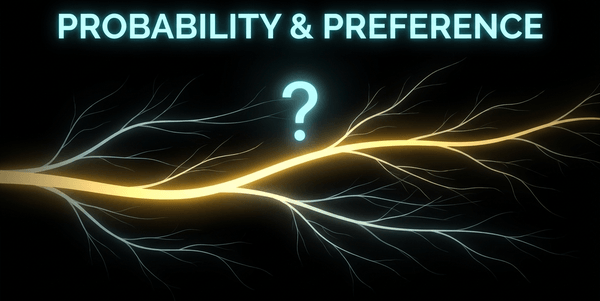
- The probability problem. If every outcome occurs with certainty in some branch of the wavefunction, how do we derive the Born rule - the formula that tells us the likelihood of observing a specific result in our own branch? Several approaches have been proposed, most notably David Deutsch's decision-theoretic argument and the envariance-based derivation by Wojciech Zurek - but no fully consensus solution yet exists.
- The preferred basis problem. Why does the wavefunction appear to branch into the specific worlds we see - cats, trees, and people - rather than some other, unrecognisable configuration of energy? Decoherence goes some way toward answering this, but what selects the classical basis in the first place remains an active area of research.
These questions reside in the delicate grey area between physics and philosophy, reminding us that even our most elegant theories remain works in progress - sketches of a reality far more complex than our current language can fully capture.
The test of the subjective
Can we ever truly know if these other worlds exist? Because they are, by definition, non-interacting for all practical purposes, they seem to lie beyond the reach of traditional experimentation. This has led some to argue that MWI is less a scientific theory and more a metaphysical framework. Yet the history of science is filled with 'unobservable' entities - from atoms to black holes - that eventually moved from the realm of speculation into the light of evidence.
Others have proposed more radical, and far more controversial, thought experiments. The 'quantum suicide' scenario, developed by Hans Moravec and later popularised by Max Tegmark, suggests that an observer could, in theory, subjectively experience apparent immortality through the lens of MWI. If a device is set to trigger a lethal event based on a quantum measurement, the reasoning goes that the observer will always find themselves in the branch where the device failed to fire - since they cannot be present to observe the branch where it did. This remains a deeply contested and entirely untested concept, and most physicists regard it as a philosophical curiosity rather than a serious prediction.
Many-worlds and quantum computing
One of the more tantalising connections in modern physics is the relationship between the Many-Worlds Interpretation and quantum computing. While no quantum computer constitutes proof of MWI, there is a conceptual resonance that many physicists find compelling.
Quantum computers harness the principle of superposition - the ability of qubits to exist in multiple states simultaneously - to perform certain calculations at speeds that classical machines cannot match. When a quantum computer runs an algorithm, it is, in some sense, exploring multiple computational paths at once.
David Deutsch has argued explicitly that the power of quantum computers is most naturally explained within the Many-Worlds framework. In his view, the exponential speedup offered by quantum algorithms - such as Shor's algorithm for factoring large numbers or Grover's algorithm for searching unsorted databases - is difficult to account for without invoking the idea that computation is distributed across many branches of the wavefunction simultaneously. This argument was developed in his landmark paper, The Structure of the Multiverse, published in the Proceedings of the Royal Society in 2001.
It is important to note, as physicists routinely stress, that quantum computing works equally well under any interpretation of quantum mechanics. The machines do not care about our philosophical preferences. Other interpretations, including Copenhagen and pilot wave theory, can account for quantum computational power without invoking many worlds. But the conceptual link remains a thread worth pulling - a reminder that the abstract architecture of the many-worlds idea may have more connection to experimental reality than its purely metaphysical reputation sometimes suggests.
As quantum computers grow in scale and complexity, the debate over why they work so powerfully may give fresh impetus to the question of which interpretation best describes the world they inhabit.
The garden of forking paths
In the end, the Many-Worlds Interpretation offers us a vision of a universe that is both terrifyingly vast and intimately connected. It suggests that we are never truly alone, and that no possibility is ever truly lost. Every dream deferred, every 'what if' that haunts our quiet hours, exists somewhere in the grand architecture of the universal wavefunction. This is not just a theory of particles and waves; it is a philosophy of abundance - a framework that tells us the universe is not a scarce resource, but a garden of forking paths where every flower has the chance to bloom.
As we look out at the stars, we can imagine countless other versions of our world looking back. In some, the oceans are different colours; in others, the course of history took a gentler turn. But all of them are part of the same singular reality - the same great unfolding of the quantum law. We are the witnesses to this unfolding, the poets of a single branch, tasked with finding meaning in our specific corner of the infinite. The Many-Worlds Interpretation does not seek to replace our world, but to give it context, showing us that our reality is but one shimmering facet of a diamond so large it encompasses everything that could ever be.
In this contemplation, we find a certain peace. The pressure to choose the 'perfect' path is softened by the knowledge that all paths are being explored. Our responsibility is not to the whole of the multiverse, but to the beauty and integrity of the branch we currently occupy. We are the consciousness of the wavefunction - the means by which the universe experiences its own diversity.
According to many contemporary physicists, the debate between interpretations of quantum mechanics may never be fully resolved by data alone. It may remain a choice of perspective - a decision between a world that collapses and a world that grows. But for those who find comfort in the infinite, the Many-Worlds Interpretation provides a home as wide as imagination itself, a place where the wave never ends, and the story never truly stops. We are the ripples on an eternal pond, forever expanding, forever becoming, forever part of the one great, unbroken whole.
Frequently asked questions about many-worlds
Is the Many-Worlds Interpretation accepted by mainstream physics? MWI is a serious, actively debated interpretation discussed in peer-reviewed journals and at major physics conferences. Physicists like Sean Carroll (Caltech) and David Deutsch (Oxford) strongly support it, while others such as Roger Penrose and the late Steven Weinberg expressed significant reservations. It is neither settled consensus nor fringe speculation - it occupies a genuinely contested space in the foundations of quantum theory.
What is the difference between many-worlds and the Copenhagen interpretation? The Copenhagen interpretation holds that the wavefunction collapses to a single outcome upon measurement, and that the wavefunction itself is a calculational tool rather than a description of reality. MWI rejects this entirely: it proposes that all outcomes occur simultaneously in separate branches, with no collapse ever taking place. Copenhagen is more widely taught; MWI is considered by some physicists to be more mathematically consistent and ontologically honest.
Can many-worlds ever be tested experimentally? Because the branches of the wavefunction do not interact for practical purposes, MWI currently makes no unique experimental predictions that distinguish it from other interpretations. Some physicists argue it is therefore a metaphysical rather than a strictly scientific claim, though others maintain that theoretical parsimony - the absence of any need for a collapse mechanism - is itself a scientific virtue worth taking seriously.
What is the 'probability problem' in many-worlds? If every quantum outcome is realised in some branch, all outcomes happen with certainty. This makes it difficult to explain why we assign different probabilities to different outcomes, as the Born rule requires. Proposed solutions from Deutsch and Zurek exist, but none has achieved consensus. It remains one of MWI's most significant unresolved challenges.
How does decoherence support the many-worlds picture? Decoherence is the physical process by which quantum systems interact with their environments, causing interference between different branches to become effectively undetectable. It explains why we experience a single, classical reality despite the wavefunction containing all possibilities simultaneously. Decoherence supports - but does not strictly prove - the MWI picture, and is also consistent with other interpretations of quantum mechanics.
Share now









Key takeaways
- Proposed by Hugh Everett III in his doctoral dissertation at Princeton University as the theory of the universal wavefunction.
- Asserts that the wavefunction never collapses but evolves unitarily and deterministically according to the Schrödinger equation at all times.
- Uses quantum decoherence to explain why branches of the wavefunction become dynamically independent for all practical purposes - making interference between them astronomically unlikely, though not absolutely impossible in principle.
- Resolves the Schrödinger's Cat paradox by holding that both outcomes - the cat alive and the cat dead - are realised in separate branches, with the observer becoming entangled with the system upon measurement.
- Faces the 'probability problem': if every outcome occurs with certainty in some branch, deriving the Born rule requires additional justification. Proposed solutions include David Deutsch's decision-theoretic argument and Wojciech Zurek's envariance-based approach, but no consensus yet exists.
- Faces the 'preferred basis problem': explaining why the wavefunction branches into familiar classical structures (cats, trees, people) rather than arbitrary superpositions of energy.
- The 'quantum suicide' thought experiment - developed by Hans Moravec and later popularised by Max Tegmark - explores the subjective implications of MWI but is widely regarded as a philosophical curiosity, not a testable prediction.
- Considered by some physicists, including Sean Carroll and David Deutsch, to be ontologically simpler than the Copenhagen interpretation because it eliminates the need for an ill-defined wavefunction collapse mechanism.
- The other 'worlds' in MWI are not separate physical locations but emergent structures arising from decoherence within a single, universal wavefunction.
- Because branches do not interact for practical purposes, MWI currently makes no unique experimental predictions that distinguish it from other interpretations of quantum mechanics.
- Competing interpretations include the Copenhagen interpretation, the de Broglie-Bohm pilot wave theory, and QBism (Quantum Bayesianism) - each offering a different account of quantum measurement without invoking many worlds.
- David Deutsch has argued that the exponential speedup of quantum algorithms (such as Shor's and Grover's algorithms) is most naturally explained within the MWI framework, though this view is not universally held among quantum computing researchers.
- Despite being actively debated in peer-reviewed physics journals and conferences, the question of which interpretation of quantum mechanics is correct may never be fully resolvable by experimental data alone.
Sources
- Wikipedia - Many-worlds interpretation https://en.wikipedia.org/wiki/Many-worlds_interpretation
- Stanford Encyclopedia of Philosophy - Many-worlds interpretation of quantum mechanics https://plato.stanford.edu/entries/qm-manyworlds/
- CERN Courier - The minimalism of many worlds https://cerncourier.com/a/the-minimalism-of-many-worlds/
- Preposterous Universe (Sean Carroll) - The wrong objections to the many-worlds interpretation https://www.preposterousuniverse.com/blog/2015/02/19/the-wrong-objections-to-the-many-worlds-interpretation-of-quantum-mechanics/
- Arvin Ash - Copenhagen interpretation vs many worlds: decoherence explained https://arvinash.com/copenhagen-interpretation-vs-many-worlds-decoherence-explained/
- David Deutsch - The structure of the multiverse (Proceedings of the Royal Society) https://royalsocietypublishing.org/doi/10.1098/rspa.2001.0910
- Wojciech Zurek - Decoherence and the transition from quantum to classical (Physics Today) https://pubs.aip.org/physicstoday/article/44/10/36/928204
- Hugh Everett III - Relative state formulation of quantum mechanics (Reviews of Modern Physics, 1957) https://link.aps.org/doi/10.1103/RevModPhys.29.454
- Published 2026-05-29 02:09
- Modified 2026-06-10 23:39
