




-
 PRO
PRO -
 Redaction
Why aluminum production burns so much energy
A data-driven look at aluminum's full energy chain, from mining and refining to smelting and recycling and what it means for global carbon emissions.
Aluminum is often called "frozen electricity." That's not a marketing phrase - it's a literal description of the physical economy behind the metal. Unlike iron or copper, which give up their metal through relatively straightforward thermal reduction, aluminum is bonded to oxygen in bauxite ore with such tenacity that only a massive infusion of electrical current can break it loose. This single chemical fact shapes the entire structure of the global aluminum industry, from where smelters get built to why prices swing the way they do.
The decarbonization push has put a forensic spotlight on the aluminum value chain. Estimates of the industry's share of global greenhouse gas (GHG) emissions vary by methodology, running from roughly 2% up toward 3-4% once the full mine-to-metal cycle is counted. In absolute terms, that works out to about 1.1 billion tons of carbon dioxide annually. Aluminum consumption is lower in volume than steel or cement, but its carbon intensity per unit is far higher. A single kilogram of primary metal generates somewhere between 12 and 17 kg of CO2e on a global-average basis, depending heavily on the regional power mix feeding the smelter. That creates a genuine paradox: aluminum is essential for lightweighting electric vehicles and building out renewable infrastructure, yet making it remains one of the most stubborn industrial obstacles to hitting climate targets.
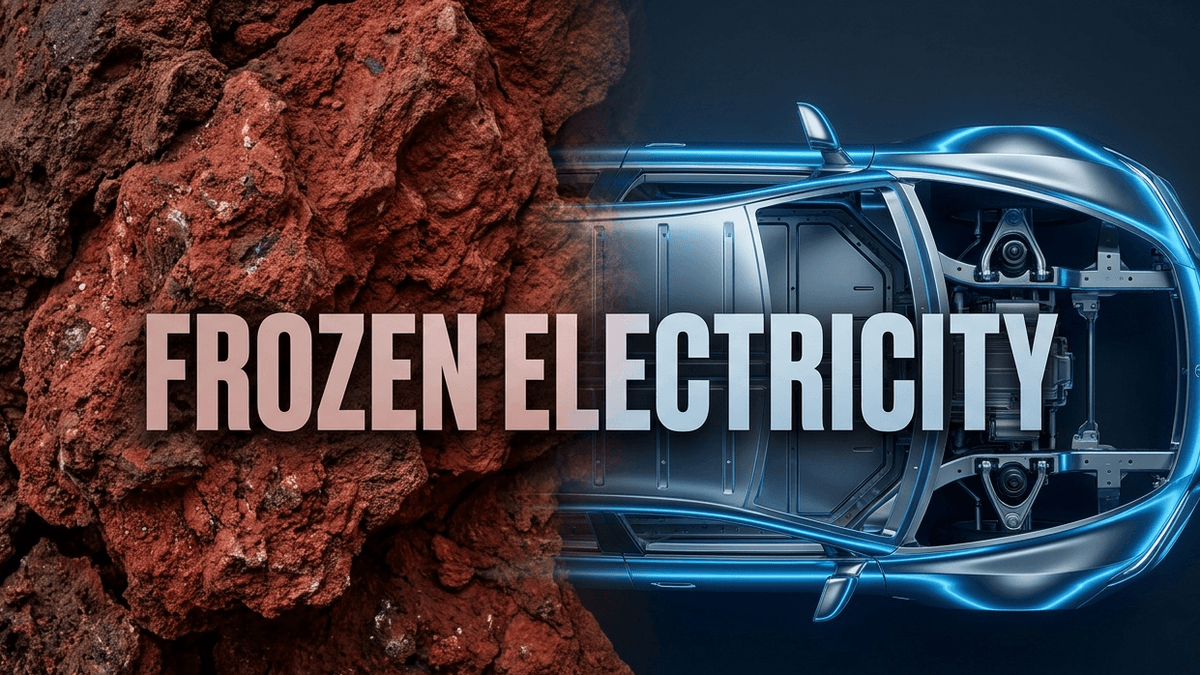
Aluminum is the second most widely used metal on earth. It touches nearly every sector of the modern economy - transmission lines, vehicle bodies, aircraft fuselages, building facades - which is precisely why its energy footprint carries such outsized consequences for the broader climate math.
The initial extraction: bauxite mining mechanics
The chain begins with bauxite, a rock formed from the intense weathering of silicate rocks in tropical and subtropical regions. In the hierarchy of energy consumption across the value chain, mining is the least intensive phase, though it remains the physical foundation everything else sits on. It takes between 4 and 6 tonnes of bauxite to eventually produce a single tonne of aluminum metal.
Data indicates that bauxite mining requires less than 1.5 kilograms of fuel oil and less than 5 kWh of electricity per tonne of ore extracted. Primary energy consumption ranges from 15 to 30 MJ per tonne for extraction itself and roughly 5 to 10 MJ per tonne for transportation to processing facilities. In Australia, a major global supplier, emissions from bauxite production total approximately 0.4 Mt CO2e per year - representing only about 1% of the total domestic aluminum industry's emissions.
The emissions profile of this stage is dominated by diesel, roughly 80% of it, burned by haul trucks and heavy machinery. The remaining 20% comes from electricity used in conveying, initial crushing, and ship loading. The carbon footprint here is genuinely low - approximately 0.1 tonne CO2e per tonne of finished aluminum - though the environmental cost often shows up more in land disturbance and biodiversity loss than in atmospheric chemistry.
Alumina refining: the Bayer process thermal demand
Once extracted, bauxite has to be refined into alumina (aluminum oxide). This happens through the Bayer process, a chemical method that dissolves bauxite in sodium hydroxide under high temperature and pressure. This is the first major energy bottleneck in the chain. Estimates of its share of cradle-to-gate emissions vary by source, landing anywhere between 16% and 23% of the total value chain, depending on whether indirect electricity emissions get folded into the count.
Refining is primarily a thermal process. The International Aluminium Institute reports an average total energy consumption of 11.2 GJ per tonne of alumina. Unlike mining, which runs on mobile diesel power, the Bayer process demands enormous quantities of stationary heat and steam.
Breaking down the refining energy load
- Digestion: consumes 30-35% of total energy, requiring high-pressure steam at temperatures between 140°C and 260°C.
- Evaporation: concentrating the liquor accounts for 20-25% of energy use.
- Calcination: the most fuel-intensive sub-step, run at 950°C to 1100°C to drive off chemically bound water. It consumes 25-30% of refining energy and is the largest source of direct on-site CO2 emissions.
Fossil fuels, mainly natural gas and coal, supply roughly 90% of the energy for refining. The quality of the bauxite feedstock dictates how energy-intensive this stage gets; lower-grade ores (böhemitic or diasporic) require higher digestion temperatures, which pushes up the fuel load accordingly. While the theoretical minimum energy for the Bayer process approaches zero through aggressive heat recovery, practical limits currently sit between 2.1 and 2.6 GJ per tonne, largely because of evaporation requirements that can't be engineered away entirely. Global refining energy performance has improved by nearly 10% over the last several years, mostly on the back of cogeneration systems.
Some producers are already testing what comes after natural gas here. Electric boilers and mechanical vapor recompression - which uses electricity to compress and reheat waste steam rather than burning fuel for fresh steam - are both being piloted for the lower-temperature stages of the Bayer process, though neither is expected to reach commercial scale before the end of the decade.
The smelting bottleneck: Hall-Héroult electrolysis
Smelting is the defining characteristic of aluminum production. Because aluminum is so reactive, it can't be reduced with carbon in a blast furnace the way iron can. Instead, it has to be dissolved in a molten bath of cryolite and hit with a massive electric current. The Hall-Héroult process that results is the most energy-intensive manufacturing process in common industrial use, full stop.
Smelting dominates the emissions picture by a wide margin. Figures from the industry's own trade groups and independent researchers put its share anywhere from just over half to more than three-quarters of total lifecycle emissions - the wide spread simply reflects how much coal still sits in a given region's grid. On average, the process requires between 13 and 15 MWh of electricity per tonne of aluminum. For scale, a single modern smelter can draw upward of 11 TWh of electricity annually, a load comparable to the total consumption of a mid-sized metropolitan area.
"If we don't decarbonize this sector, we're at risk of causing unintended climate damage in our race to build out solutions," notes RMI's assessment of an industry that is currently responsible for about 2 percent of global greenhouse gas emissions, with demand projected to grow by up to 80 percent by 2050.
The carbon anode problem
Beyond the electricity bill, Hall-Héroult electrolysis consumes carbon anodes as it runs. Oxygen liberated from the alumina reacts with the carbon anode to form CO2. That reaction, combined with the release of perfluorocarbons (PFCs) - gases with a global warming potential thousands of times that of CO2 - makes smelting an environmental problem that extends well beyond simple electricity accounting.
The theoretical minimum energy for an idealized cell using a carbon anode sits at 5.99 kWh/kg, yet actual industrial averages run around 13-15 kWh/kg. The gap comes down to electrical resistance and heat loss across the cell. Where a smelter runs on coal-fired power, as is common in China, indirect emissions from power generation add substantially to the metal's footprint, pushing the total toward the higher end of the 15-to-20-tonne-CO2e-per-tonne range.
Geographic divergence and the electricity mix
Aluminum's carbon footprint isn't uniform. It's a function of geography and whatever sits behind the local power grid, which has produced a bifurcated global market where the "greenness" of the metal is determined almost entirely by the source of the electrons used to smelt it.
In China, where production leans heavily on coal-fired electricity, the carbon footprint typically ranges from 15 to 20 tonnes of CO2e per tonne of metal. European primary aluminum, often powered by hydroelectricity or nuclear, can come in under 7 tonnes of CO2e per tonne. Producers running on nearly 100% renewable grids, like those in Norway, report footprints closer to a quarter of the world average.
This gap is pushing the industry toward so-called stranded energy locations - regions where renewable power is abundant but hard to export. Iceland, Quebec, and parts of Norway have become hubs for primary smelting precisely because their hydroelectric resources allow for lower-cost, lower-emission production. The market is increasingly pricing this in, with low-carbon aluminum commanding a premium in sectors like consumer electronics and automotive manufacturing, where original equipment manufacturers face their own supply-chain emissions disclosure requirements.
Related to this geographic sorting is the broader question of how supply shocks in adjacent commodities ripple through industrial metal production; energy-intensive sectors rarely move in isolation, as copper's own widening supply gap illustrates for the wider electrification build-out.
China's production cap and the shifting supply map
No discussion of aluminum's energy footprint is complete without China, which produces and consumes more than half of the world's aluminum supply. Beijing imposed a 45-million-tonne annual capacity cap on primary aluminum back in 2017, explicitly to curb oversupply and rein in the sector's carbon emissions. That ceiling has effectively been reached: the country's primary aluminum output hit 45.02 million tonnes in 2025, and capacity utilization stood at 98.5% by year-end, leaving almost no room for further primary expansion without either shuttering older, less efficient smelters or Beijing granting exemptions to renewable-powered facilities.
That ceiling has real consequences for the emissions math in this article. With new primary capacity essentially frozen inside China, the country has leaned harder into recycling as a release valve - it commissioned roughly 22 million tonnes of secondary aluminum capacity between 2022 and 2026, though domestic scrap supply still hasn't caught up with that capacity build-out. Outside China, the supply response has been slow: western smelting remains constrained by high energy costs, secondary supply is limited by scrap availability, and new capacity is only emerging gradually in places like India and Indonesia. The practical upshot is a tighter global market and a continued incentive for the world's marginal tonne of aluminum to come from wherever coal power is cheapest - unless the cap itself is loosened or scrap supply catches up faster than current trends suggest.
The recycling imperative: closing the loop
If primary aluminum is frozen electricity, recycled (secondary) aluminum is the ultimate energy battery. The single most effective way to cut the energy intensity of the value chain is to avoid primary production altogether.
Recycling aluminum requires only about 5% of the energy needed for primary production - a 95% energy saving. Primary production might consume 200-250 MJ/kg; secondary production requires only 5-10 MJ/kg. In practical terms, recycling a single aluminum can saves enough electricity to power a television for roughly three hours.

Environmental benefits of secondary production
- Carbon abatement: recycled aluminum emits only 0.5-1.0 kg CO2/kg, compared to the 12-20 kg CO2/kg range seen in primary production.
- Resource conservation: every tonne of aluminum recycled prevents the mining of roughly 4 tonnes of bauxite ore.
- Infinite recyclability: aluminum can be melted and reformed indefinitely without loss of structural integrity.
In the United States, the market has shifted dramatically. More than 80% of domestic aluminum production is now secondary, up from just 20-30% in the 1980s. That shift has decoupled a meaningful share of domestic manufacturing from the energy volatility tied to primary smelting. Still, because aluminum stays in use for decades inside buildings and aircraft, the available scrap pool can't yet meet growing global demand, so continued primary production remains necessary alongside recycling.
Recycling has to be paired with other decarbonization strategies, not treated as a substitute for them - the scrap simply isn't available in the volumes the world will need over the next two decades.
Casting and fabrication energy costs
After smelting or recycling, the metal gets cast into ingots or fabricated into finished products. Primary ingot casting requires approximately 1.01 kWh/kg of product. Secondary casting, which involves melting cold scrap, actually requires more energy at this specific stage - about 2.50 kWh/kg - because the scrap has to be brought up to melting point from room temperature rather than arriving as a hot liquid straight out of the electrolytic cell.
Heating aluminum to its melting point of 660°C and providing the latent heat of fusion requires roughly 0.291 kWh per kilogram. Fabrication processes like extrusion and die casting are comparatively efficient and carry real downstream energy benefits. Aluminum's high thermal conductivity makes it well suited to heat exchangers and cooling systems, which improves the energy efficiency of whatever machine it ends up installed in. Similarly, the light weight of aluminum extrusions cuts fuel consumption in transport vehicles, creating a net-positive energy impact over the product's full lifecycle - a fact that partially offsets the metal's heavy upstream footprint.
Technological frontiers and decarbonization
The industry is chasing several breakthrough technologies to close the gap between current energy intensity and net-zero targets.
The most closely watched is the inert anode. Traditional carbon anodes get consumed during Hall-Héroult electrolysis, releasing CO2 as a direct byproduct. Inert anodes, made from proprietary ceramics or metallic alloys, release pure oxygen instead. This is no longer purely theoretical: in November 2025, ELYSIS - the joint venture between Alcoa and Rio Tinto - successfully started up its 450 kiloampere inert anode cell at Rio Tinto's smelter in Alma, Québec, marking the first deployment of the technology at an amperage typical of a modern smelter. The cell will undergo several more years of testing as the company works to measure and validate how it performs inside a working commercial smelter, and Rio Tinto has already licensed the technology, with plans for a demonstration plant of ten 100 kA cells at its Arvida smelter, possibly by 2027. Commercial-scale retrofits of existing smelters remain some years off. When paired with renewable electricity, inert anode smelting could eventually push the total carbon footprint of a tonne of aluminum below 4 tonnes of CO2e.
Other alternative processes include carbo-chlorination, estimated to be roughly 35% more energy-efficient than standard Hall-Héroult. In the refining sector, concentrated solar thermal energy is being trialed to replace a meaningful share of the natural gas used in Bayer process boilers. There's also a push toward green hydrogen for the calcination phase and, separately, in secondary smelting furnaces - Hydro's pilot at its Høyanger recycling facility in Norway is one of the more advanced examples, aiming to unlock near-zero-emission recycled aluminum by replacing natural gas with hydrogen in the melting furnace.
Economic and policy implications
Aluminum's extreme energy dependency makes it highly sensitive to geopolitics and carbon policy. The European Union's Carbon Border Adjustment Mechanism (CBAM) is designed to penalize metal imported from regions with high-emission power grids, and it moved from a reporting-only exercise into its definitive, financially binding phase on January 1, 2026. From that date, importers bringing in more than 50 tonnes of covered goods - including aluminum - per year must hold or have applied for authorized CBAM declarant status; smaller importers below that threshold are exempt from the regime entirely under the 2025 Omnibus simplification. Actual certificate purchases don't begin until February 2027, when the first annual declarations covering 2026 imports come due, so the financial bite arrives with a lag even though the compliance clock is already running. The mechanism currently covers cement, iron and steel, aluminum, fertilizers, electricity, and hydrogen, with proposals on the table to expand coverage to aluminum-intensive downstream goods from 2028. It's a compliance burden that falls squarely on producers still reliant on coal-fired grids, and it creates a powerful economic incentive for those producers to either shift toward renewables or invest in radical efficiency measures.
North American industry roadmaps illustrate the scale of what's being asked of the sector: reaching net-zero alignment is projected to require emission cuts of roughly 24% by 2030, 63% by 2040, and 92% by 2050, measured against a 2021 baseline. The Aluminum Association's own analysis notes that North American primary aluminum already carries a carbon footprint roughly half the global average, a legacy of the region's historic access to hydroelectric power and decades of voluntary efficiency gains. Meeting the steeper targets further out on the curve, however, is expected to require on the order of $10 to $15 billion in capital investment in the U.S. alone through 2050, with global figures for the sector's full transition estimated near $1 trillion.
Global aluminum consumption is projected to keep climbing through the end of the decade, driven by grid expansion and the automotive shift to EVs - some projections put demand growth near 80% by 2050 relative to recent levels. Layer China's production ceiling on top of that demand curve and the arithmetic gets tighter still: with the world's largest producer effectively capped and secondary supply constrained by scrap availability everywhere, most of the incremental tonnage the world needs over the next decade will have to come from somewhere new, or from technologies - like inert anodes - that haven't yet reached commercial scale. This trajectory ensures aluminum will remain at the center of the energy-climate debate for years to come. The challenge for the industry isn't just producing more aluminum, but producing it in a way that respects the physical limits of the global carbon budget.
Forensic summary of the value chain
The aluminum value chain is a study in thermodynamic extremes. From the low-energy diesel-powered mines of the tropics to the high-voltage electrolytic cells of the north, energy is both the primary cost driver and the primary environmental hurdle.
- Bauxite mining: low energy, diesel-dependent, minimal direct CO2 contribution.
- Alumina refining: high thermal energy, fossil fuel-dependent, significant direct CO2.
- Smelting: extreme electrical energy demand, carbon-anode dependent, the largest share of lifecycle CO2.
- Recycling: minimal energy, high efficiency, the primary near-term path to decarbonization.
As energy prices stay volatile and carbon costs get internalized into global trade, the aluminum industry's trajectory will depend on its ability to shift from coal-derived frozen electricity toward a circular model powered increasingly by stranded renewable resources and, eventually, carbon-free smelting cells. The physics of the metal can't be changed. But the origin of the energy that freezes it into form remains the single most consequential variable in the industrial economy - and increasingly, the one regulators, buyers, and financiers are all watching most closely.
Share now









Key takeaways
- The aluminum industry accounts for roughly 2% to 4% of global greenhouse gas emissions, or approximately 1.1 billion tonnes of CO2e annually.
- It takes 4 to 6 tonnes of bauxite to produce a single tonne of finished aluminum metal.
- The Hall-Héroult smelting process requires 13 to 15 MWh of electricity per tonne of aluminum - the most energy-intensive manufacturing process in common industrial use.
- Smelting represents the largest single share of lifecycle emissions in aluminum production, with estimates ranging from just over half to more than three-quarters of total emissions depending on the regional grid.
- Alumina refining via the Bayer process accounts for roughly 16% to 23% of cradle-to-gate emissions, driven mainly by thermal energy for digestion, evaporation, and calcination.
- Recycled (secondary) aluminum requires only about 5% of the energy needed for primary production - a 95% energy saving.
- Recycled aluminum emits just 0.5-1.0 kg CO2/kg, versus 12-20 kg CO2/kg for primary metal.
- China's coal-heavy aluminum production averages 15 to 20 tonnes of CO2e per tonne, while European hydro-powered production stays below 7 tonnes.
- China's primary aluminum output hit a record 45.02 million tonnes in 2025, brushing up against its self-imposed 45 Mt capacity cap, with capacity utilization near 98.5%.
- More than 80% of U.S. domestic aluminum production is now secondary (recycled) aluminum, up from just 20-30% in the 1980s.
- In November 2025, ELYSIS (the Alcoa-Rio Tinto joint venture) started up the first commercial-scale inert anode cell (450 kA) at Rio Tinto's Alma, Québec smelter - a carbon-free smelting milestone now entering years of further testing.
- The EU's CBAM entered its definitive, financially binding phase on January 1, 2026, requiring importers of over 50 tonnes of covered goods, including aluminum, to hold authorized declarant status.
Sources
- International Aluminium Institute https://international-aluminium.org/statistics/greenhouse-gas-emissions-aluminium-sector/
- IEA (International Energy Agency), Aluminium https://www.iea.org/energy-system/industry/aluminium
- RMI, Decarbonizing Aluminum https://rmi.org/decarbonizing-aluminum/
- ELYSIS, commercial-size inert anode cell breakthrough https://elysis.com/en/elysis-achieves-breakthrough-with-commercial-size-cell-a-first-in-aluminium-production-using-the
- European Commission, Carbon Border Adjustment Mechanism https://trade.ec.europa.eu/access-to-markets/en/news/start-definitive-period-cbam-eu
- Published 2026-08-04 22:54
- Modified 2026-08-04 22:54

-
Redaction