

-
 Redaction
Agency theory vs stakeholder capitalism explained
From agency theory to ESG and B Corps: a deep look at how corporate governance is being redefined, who pays the cost, and what replaces shareholder primacy.
Corporate governance is undergoing its most significant transformation in a century. The old question - how do you stop a manager from acting in their own interest? - has given way to something far harder: whose interests should a corporation serve in the first place? Understanding this shift requires tracing the arc from agency theory to stakeholder capitalism, and asking honestly whether either model is fit for the world we now inhabit.
The stakes are not merely academic. How we answer this question shapes capital allocation, determines which risks get priced into equity markets, and ultimately decides how much of the cost of doing business lands on workers, communities, and the natural environment rather than on balance sheets.

The fiction of the obedient executive
For nearly a century, the corporate world has been obsessed with a single, uncomfortable question: how do you stop a CEO from stealing the company? This is not about literal theft, though that happens. It is about the subtle, expensive drift of interests that occurs when the person who owns a business is not the person running it.
This tension is the bedrock of agency theory - a concept that has shaped corporate governance debates since at least the 1930s. It assumes that managers are agents and shareholders are principals. The agent, left to their own devices, will always choose the private jet and the vanity project over the dividend check.
Berle and Means identified this structural problem in their landmark work The Modern Corporation and Private Property, showing that the separation of ownership and control created a structural vacuum requiring constant, expensive monitoring. Jensen and Meckling later formalised it as modern agency theory in their influential paper Theory of the Firm: Managerial Behavior, Agency Costs and Ownership Structure - the framework that still dominates business school curricula today.
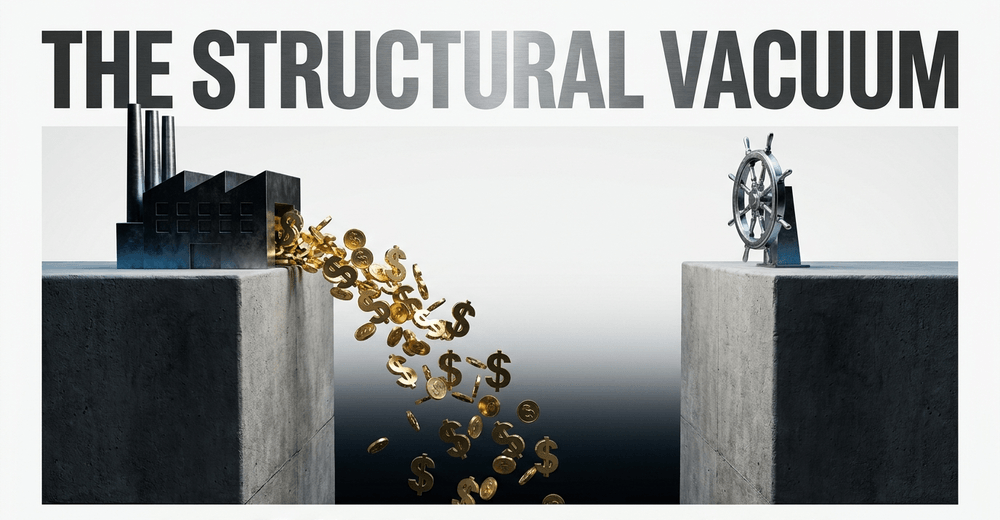
To fix this misalignment, we built a cage made of independent directors, financial disclosures, and stock-based compensation. We told ourselves that if we tied the executive's personal fortune to the stock price, they would act like an owner. Instead, we created a generation of financial engineers. The singular focus on shareholder wealth maximisation became the dominant outcome of every board meeting.
This orthodoxy had a powerful ideological anchor: Milton Friedman's doctrine, published in The New York Times, that the sole social responsibility of a business is to increase its profits. For decades, that sentence functioned less like an opinion and more like a legal covenant. The argument was elegant in its simplicity - shareholders bear the residual risk of enterprise, therefore they are the party whose interests must be protected above all others.
However, this model was built on a remarkably cynical premise: that managers are inherently egoistic and opportunistic. It ignored the possibility that a business might exist for something other than the extraction of capital for a group of often-anonymous investors.
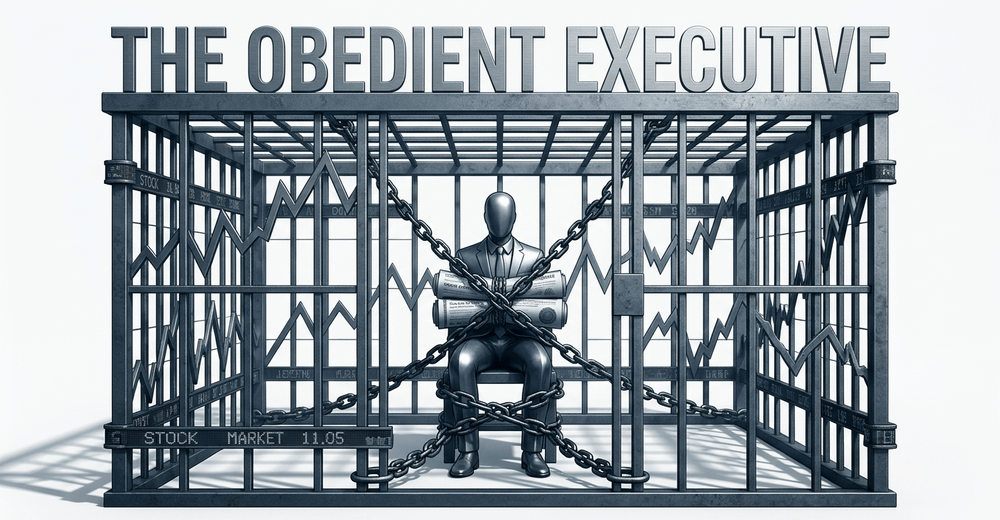
The expensive failure of control mechanisms
Despite its dominance, agency theory is failing under its own weight. The control mechanisms we designed to protect shareholders are not just expensive - they are corrosive.
Information asymmetry remains a permanent fixture of high-level management. An agent will always know more about the internal workings of a firm than a principal ever can. This gap allows for the very financial fraud the system was supposed to prevent. When an executive's entire net worth depends on hitting a specific quarterly target, the incentive to manipulate the narrative becomes overwhelming.
The pressure to align with shareholder interests frequently leads to short-termism, where long-term R&D is sacrificed on the altar of immediate earnings per share. The consequences are measurable:
- Chronic underinvestment in workforce development and training
- Deferred infrastructure and capital expenditure
- A systematic bias against projects whose payoff horizon extends beyond the next earnings call
- Suppression of innovation cycles that require patient, multi-year capital commitments
Furthermore, the focus on just two parties - the owner and the manager - is an intellectual dead end. A corporation is not a closed circuit. It is an ecosystem. By ignoring the roles of employees, suppliers, and the local communities that provide the infrastructure for commerce, agency theory created a fragile version of capitalism. It assumed that externalities like environmental degradation or social unrest were someone else's problem. This narrow theoretical scope is precisely why the model is now being challenged in favour of something more complex and, frankly, more difficult to manage.

What the principal-agent problem actually costs
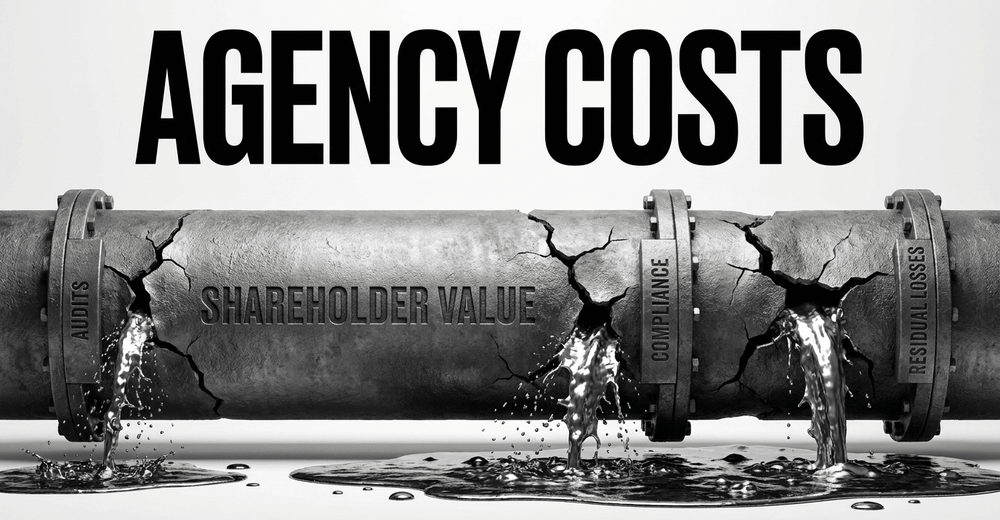
The financial literature on agency costs - the expenses incurred to monitor, bond, and align the interests of agents - suggests these are not trivial. They include:
- Monitoring costs borne by principals (audits, board oversight, compliance teams)
- Bonding costs borne by agents (financial disclosures, contractual restrictions)
- Residual losses from decisions that still diverge from the owner's ideal outcome
What this taxonomy misses is the systemic cost: an entire corporate culture trained to optimise for a narrow metric while the broader consequences accumulate silently on society's balance sheet.
The stakeholder pivot and the illusion of balance
We are currently witnessing a significant migration toward stakeholder capitalism. The intellectual foundations of this model are older than most boardroom conversations acknowledge. In his book Strategic Management: A Stakeholder Approach, philosopher R. Edward Freeman made the foundational argument that businesses have obligations to a broad network of parties - not just their investors. That idea spent decades on the academic margins before finally achieving mainstream traction.
Today, stakeholder capitalism is championed by figures like Klaus Schwab of the World Economic Forum, who argues that a company must serve everyone it touches. It is a seductive idea. It promises a world where businesses pursue sustainable and ethical practices, where conscious consumerism and ESG (Environmental, Social, and Governance) investing dictate the flow of capital. Proponents argue that by addressing the needs of all stakeholders, a firm builds a more resilient reputation and secures long-term value.

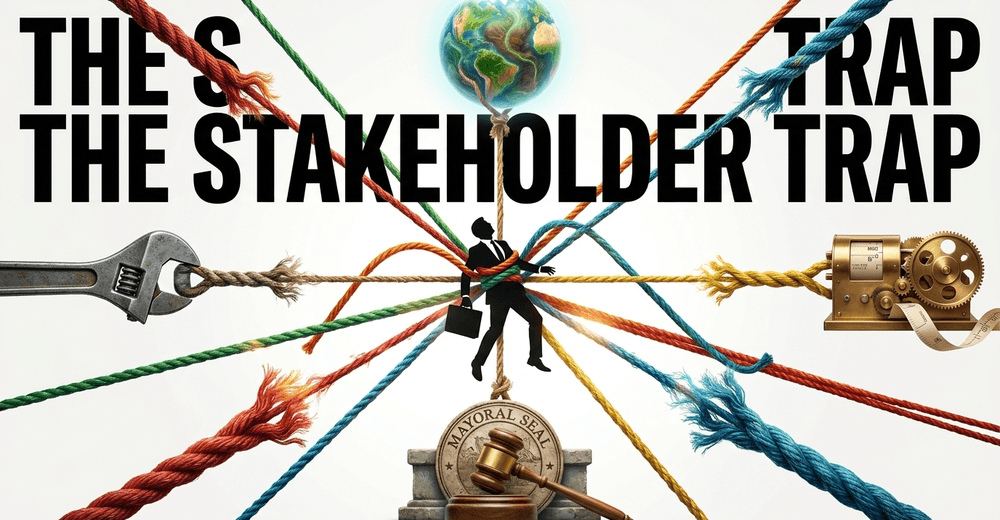
However, stakeholder capitalism introduces a new set of problems. If a CEO is responsible to everyone - the planet, the workers, the local mayor, the suppliers, and the shareholders - then they are effectively responsible to no one. When there is no single metric of success, like profit or stock price, it becomes much easier for a manager to hide poor performance behind a veil of social utility.
A failing company can point to its high ESG score as a distraction from its collapsing margins. This is the stakeholder trap: the replacement of a clear, albeit narrow, goal with a murky set of conflicting objectives that are nearly impossible to measure with precision.
The ESG measurement problem
The practical challenge of ESG is not philosophical - it is methodological. Different rating agencies produce wildly divergent scores for the same company. A corporation rated highly on one environmental index may score poorly on another depending on the weighting of carbon intensity versus water usage. Without standardised measurement frameworks, ESG risks becoming a reputational currency rather than a genuine governance mechanism.
The EU's Corporate Sustainability Reporting Directive (CSRD) represents one of the most serious attempts to impose rigour, requiring large companies to disclose detailed sustainability information under a common framework. Similarly, the International Sustainability Standards Board (ISSB) has published global baseline standards aimed at bringing consistency to climate-related financial disclosures. Full adoption and enforcement remain works in progress across global markets, and significant divergence between jurisdictions continues to create arbitrage opportunities for companies that prefer opacity.

The Business Roundtable moment
The most telling signal of a mainstream governance shift came not from regulators or academics, but from the corporate establishment itself. The Business Roundtable - an association of chief executives of America's largest companies - published a revised Statement on the Purpose of a Corporation, signed by 181 CEOs including the heads of Apple, JPMorgan Chase, and Amazon.
The statement formally abandoned the language of shareholder primacy and committed its signatories to delivering value to all stakeholders: customers, employees, suppliers, communities, and shareholders alike. For an organisation that had explicitly endorsed shareholder primacy since 1997, this was a remarkable reversal.
"Each of our stakeholders is essential. We commit to deliver value to all of them, for the future success of our companies, our communities and our country."
- Business Roundtable, Statement on the Purpose of a Corporation
Whether the statement represented a genuine transformation or a sophisticated piece of reputational management is a question the evidence has yet to settle decisively. Critics noted that many signatory companies continued to pursue aggressive share buyback programmes in the months that followed. Advocates argued that the statement nonetheless shifted the Overton window of acceptable governance discourse in a lasting way. Both observations are probably correct.
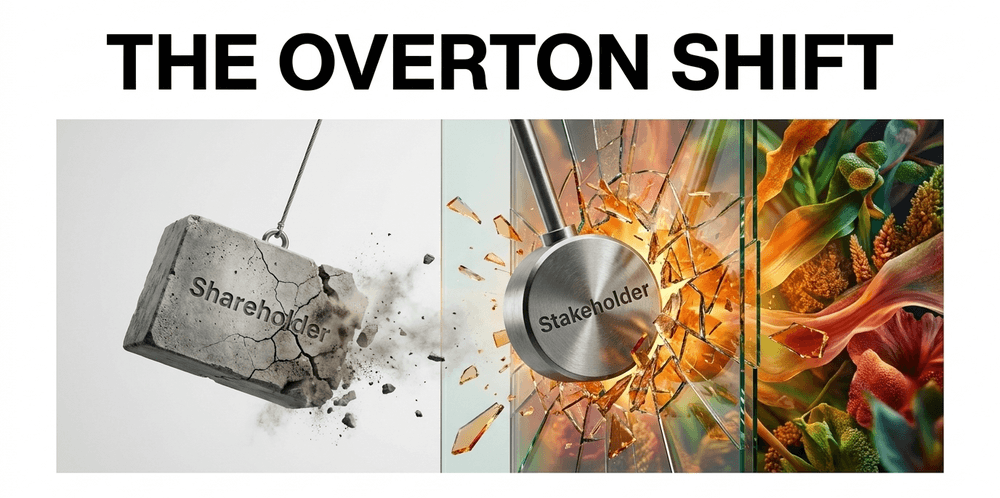
The rise of the benefit corporation
Legal structures are changing to accommodate this shift. Many jurisdictions have introduced benefit corporation statutes, allowing boards to legally prioritise social goals without fear of being sued by shareholders for failing to maximise profits. There are now approximately 9,500 Certified B Corporations worldwide, spanning over 160 industries across more than 100 countries.
These entities represent a departure from the traditional fiduciary duty that has governed Western capitalism for decades. To achieve B Corp certification, a company must score at least 80 out of 200 points on the B Impact Assessment - a comprehensive review covering governance, workers, community, environment, and customers. It must also legally embed stakeholder accountability into its articles of association, and recertify every three years.
Well-known certified B Corporations include Patagonia, Danone North America, and Ben & Jerry's - companies that have made their stakeholder commitments a central part of their brand identity. Their existence proves the model is viable at scale. It does not, however, prove that it is replicable without the particular cultural DNA those companies have spent decades building.
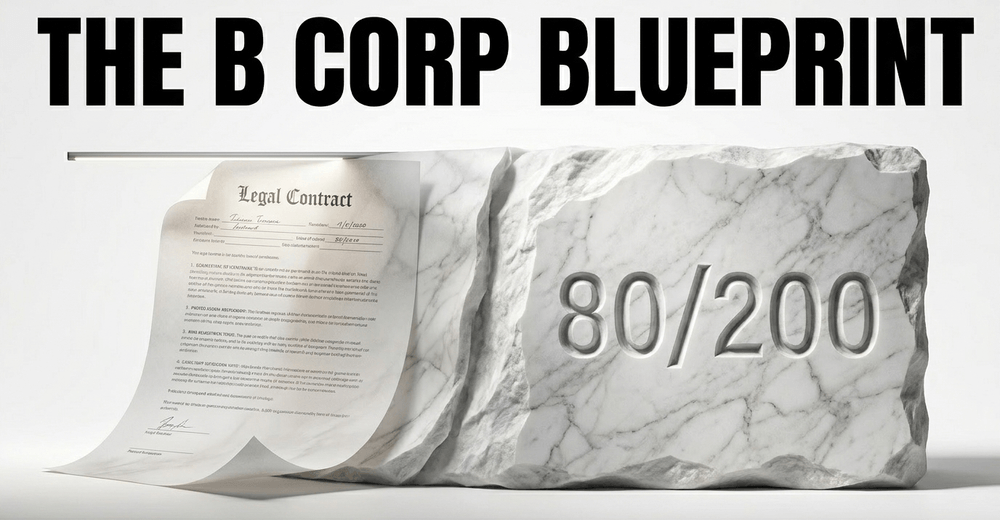
This legal evolution reflects a growing realisation that the market alone cannot solve global problems like climate change or extreme inequality. Governments and civil society are demanding that the private sector take an active role. But we must be careful. As the focus shifts from the principal-agent conflict to a broader stakeholder mandate, the risk of mission drift increases. Without the discipline of market mechanisms and clear accountability, the corporate form risks becoming a tool for social engineering rather than a driver of economic efficiency.
The evolution of corporate governance is a journey from the simple to the complex - but complexity is often where accountability goes to die.
Short-termism and the innovation deficit
One of the least-discussed costs of the shareholder primacy model is its corrosive effect on innovation. The logic is straightforward: when executive compensation is tied to quarterly earnings per share, investment in genuinely transformative R&D becomes structurally irrational.
The research bears this out. Studies have consistently shown that companies under intense short-term earnings pressure cut R&D expenditure, reduce capital investment, and deprioritise talent development at precisely the moments when long-term strategic positioning demands the opposite. The pharmaceutical industry offers a sobering case study: the pressure to deliver consistent earnings growth has driven major companies toward me-too drug development - incremental refinements to existing molecules - rather than the riskier, longer-horizon research into genuinely novel therapies.
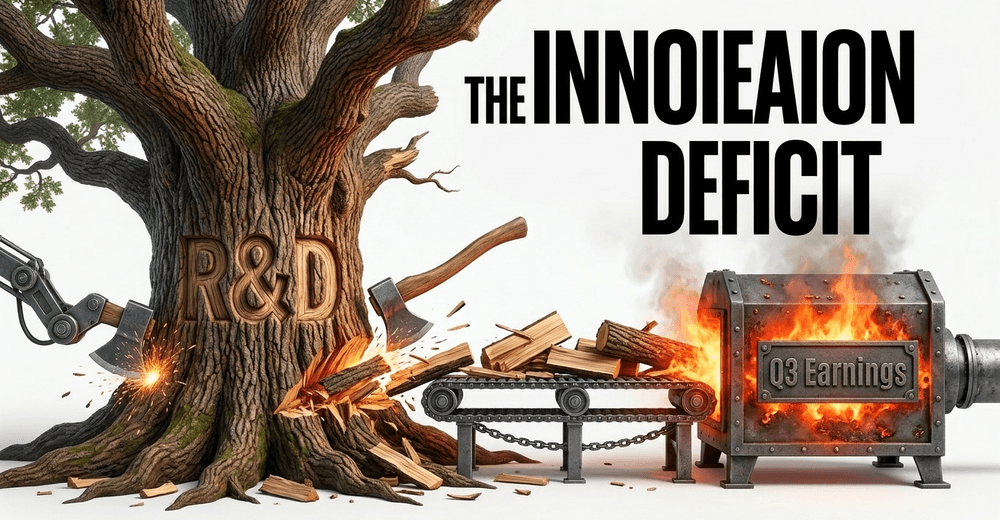
Stakeholder capitalism, in theory, offers a structural correction. A governance model that explicitly values employee wellbeing, community investment, and long-term environmental sustainability creates space for a longer planning horizon. The challenge, once again, is measurement. How do you tell your investors that this quarter's earnings are lower because you are building something that will matter in a decade? That is a conversation that requires a level of institutional trust that most listed companies have not earned and most capital markets are not structured to reward.
Activist investors and the governance battleground
No account of modern corporate governance is complete without examining the explosive rise of activist investors - hedge funds and asset managers who acquire minority stakes in listed companies specifically to agitate for governance change. Firms such as Elliott Investment Management, Third Point, and Starboard Value have made their reputations by identifying companies where the gap between current and potential shareholder returns can be exploited through aggressive board-level intervention.
Activist campaigns typically target one or more of the following:
- Board composition - demanding the removal of entrenched directors perceived as insufficiently focused on returns
- Capital allocation - pressuring management to abandon acquisitions, return cash via buybacks, or spin off underperforming divisions
- Executive pay - challenging compensation structures seen as rewarding failure or excessive risk-taking
- Strategic direction - pushing for asset sales, mergers, or fundamental changes to business model
The irony is that activist investors simultaneously represent the most extreme expression of shareholder primacy and its most powerful internal critique. When an activist forces a board to confront years of mediocre governance, they are doing what agency theory always promised independent directors would do - but so rarely did. The activist succeeds precisely where the system was supposed to make them unnecessary.
The relationship between activism and stakeholder frameworks is complicated. Some activists have adopted ESG language selectively, arguing that social and environmental shortcomings destroy long-run shareholder value and justify intervention. Others have used activist pressure to dismantle the sustainability programmes of target companies, arguing these represent management self-indulgence at shareholders' expense. The governance battleground, in short, is not neatly aligned with any ideological camp.

Technology, transparency, and the future board
A development that neither Berle and Means nor Jensen and Meckling could have anticipated is the degree to which technology is now reshaping the information asymmetry at the core of the principal-agent problem.
For most of the twentieth century, the information gap between manager and shareholder was structural and largely permanent. Quarterly filings, annual reports, and occasional analyst briefings were the primary channels through which principals received signals about agent behaviour. That gap is narrowing - unevenly and imperfectly, but narrowing nonetheless.
Several forces are driving this:
- AI-powered audit and compliance tools can now process vastly larger volumes of financial and operational data than human auditors, making anomalies and misstatements harder to conceal for extended periods.
- Real-time ESG data platforms - from satellite monitoring of deforestation to supply chain emissions tracking - are creating independent verification mechanisms that sit outside management's control.
- Proxy advisory firms such as ISS and Glass Lewis have industrialised the analysis of corporate governance disclosures, providing institutional shareholders with standardised voting recommendations at scale.
- Digital shareholder engagement platforms are lowering the cost of collective action among dispersed shareholders, making it easier to coordinate opposition to management proposals at annual general meetings.

None of this eliminates information asymmetry. Executives will always have privileged access to operational reality. But the growing availability of alternative data sources means that the agent's narrative is increasingly cross-referenced against independent signals in ways that were simply not possible a generation ago.
The board of directors, traditionally a lagging indicator of governance quality, is also evolving in response. The model of the twelve-person board comprising retired executives and social acquaintances of the CEO is giving way - slowly - to smaller, more diverse, more technically capable boards equipped with the specialist skills that complex modern enterprises actually require. Whether this evolution is fast enough to stay ahead of the governance failures it is meant to prevent remains an open question.
Navigating the new governance landscape
Ultimately, the debate between shareholder primacy and stakeholder capitalism is a debate about the nature of the corporation itself. Is it a private contract between owners, or is it a social institution with public responsibilities? The reality is likely somewhere in the middle.
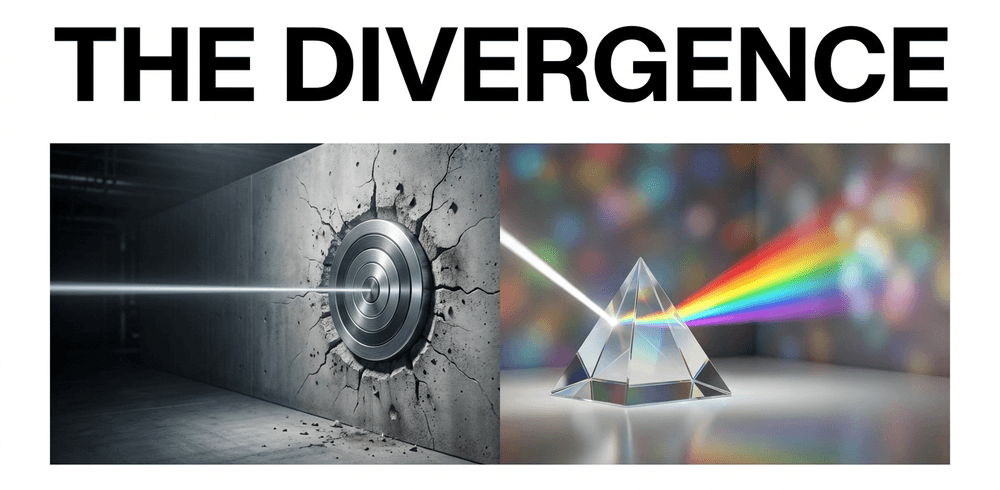
The most successful firms of the next decade will be those that realise the two models are not mutually exclusive. A company that mistreats its employees or destroys its environment will eventually see its shareholder value evaporate through lawsuits, strikes, and brand erosion. Conversely, a company that ignores its shareholders in pursuit of social goals will eventually run out of the capital needed to do any good at all.

We are moving toward a more inclusive form of business, but we should do so with our eyes open. The agency costs that defined the twentieth century have not disappeared - they have simply changed shape. The challenge for the modern board is no longer just aligning the manager with the owner, but aligning the entire organisation with a reality that is increasingly volatile and demanding.

This is not just a change in strategy. It is a fundamental shift in the social contract of the corporation. Whether this leads to a more sustainable world or just more sophisticated corporate PR is the defining question of our era.

Frequently asked questions
What is the difference between agency theory and stakeholder theory? Agency theory focuses narrowly on the relationship between shareholders (principals) and managers (agents), seeking to align their interests through financial incentives and monitoring. Stakeholder theory - formalised by R. Edward Freeman - argues that corporations have obligations to a broader set of parties: employees, suppliers, communities, and the environment, not just their owners.
What are the main criticisms of stakeholder capitalism? The primary criticism is the accountability gap: when a CEO is responsible to everyone, there is no clear benchmark for success or failure. Critics also point to the risk of ESG metrics being used to obscure poor financial performance, the absence of standardised measurement frameworks, and the potential for executives to use stakeholder language as cover for self-interested decision-making.
How does B Corp certification work? Companies seeking B Corp status must complete the B Impact Assessment, scoring at least 80 out of 200 across five impact areas: governance, workers, community, environment, and customers. They must also amend their legal governing documents to account for stakeholder interests, and recertify every three years.
Is shareholder primacy still legally required? In most US states, traditional fiduciary duty still requires directors to act in shareholders' best financial interests. However, the introduction of benefit corporation statutes in many jurisdictions - and the Business Roundtable's revised statement redefining corporate purpose - has substantially loosened this requirement in practice.
What is the principal-agent problem in simple terms? The principal-agent problem arises when one party (the agent, such as a CEO) is hired to act on behalf of another (the principal, such as shareholders), but the two parties have different interests and the agent has more information. The agent may prioritise their own comfort, pay, or risk preferences over the principal's goal of maximising returns - making alignment expensive and imperfect.
What role do activist investors play in corporate governance? Activist investors acquire minority stakes in listed companies and use that position to agitate for board-level change, improved capital allocation, or strategic overhauls. They represent one of the most effective - and contentious - mechanisms for enforcing shareholder accountability, often succeeding where institutional oversight has been passive or ineffective.
Share now









Key takeaways
- Corporate governance has shifted from controlling managerial self-interest to debating the fundamental purpose of the corporation itself.
- Agency theory holds that shareholders (principals) and managers (agents) have inherently conflicting interests that require expensive monitoring and alignment mechanisms.
- Berle and Means identified the structural tension between ownership and control in The Modern Corporation and Private Property, establishing the foundational problem that agency theory attempts to solve.
- Jensen and Meckling formalised modern agency theory in their paper Theory of the Firm: Managerial Behavior, Agency Costs and Ownership Structure, which remains a cornerstone of business school teaching.
- Milton Friedman argued in The New York Times that the sole social responsibility of a business is to increase its profits - a doctrine that dominated corporate governance thinking for decades.
- Agency costs fall into three categories: monitoring costs (borne by principals), bonding costs (borne by agents), and residual losses from decisions that still diverge from the owner's ideal outcome.
- Short-termism driven by quarterly earnings targets has been shown to suppress R&D investment, delay capital expenditure, and stifle long-horizon innovation across industries.
- Stakeholder capitalism - formalised by philosopher R. Edward Freeman in Strategic Management: A Stakeholder Approach - argues that corporations owe obligations to employees, suppliers, communities, and the environment, not only to shareholders.
- Klaus Schwab of the World Economic Forum is among the most prominent contemporary advocates of stakeholder capitalism as a replacement for shareholder primacy.
- The Business Roundtable published a revised Statement on the Purpose of a Corporation signed by 181 CEOs, formally abandoning shareholder primacy after explicitly endorsing it since 1997.
- Signatory companies to the Business Roundtable statement included the heads of Apple, JPMorgan Chase, and Amazon.
- Critics noted that many Business Roundtable signatories continued aggressive share buyback programmes shortly after signing the statement.
- ESG (Environmental, Social, and Governance) ratings produced by different agencies frequently diverge significantly for the same company, limiting their reliability as governance benchmarks.
- The EU's Corporate Sustainability Reporting Directive (CSRD) is one of the most rigorous regulatory attempts to standardise sustainability disclosure requirements.
- The International Sustainability Standards Board (ISSB) has published global baseline standards for climate-related financial disclosures, though adoption remains uneven across jurisdictions.
- Approximately 9,500 Certified B Corporations operate across more than 160 industries in over 100 countries.
- B Corp certification requires a score of at least 80 out of 200 on the B Impact Assessment across governance, workers, community, environment, and customers.
- B Corp companies must legally embed stakeholder accountability into their governing documents and recertify every three years.
- Patagonia, Danone North America, and Ben & Jerry's are among the most prominent certified B Corporations globally.
- Benefit corporation statutes now exist in many jurisdictions, allowing boards to prioritise social goals without legal exposure from shareholders claiming breach of fiduciary duty.
- Activist investors - including firms such as Elliott Investment Management - use minority shareholdings to force board-level governance changes, capital reallocation, and strategic overhauls.
- Technology is narrowing the information asymmetry at the core of the principal-agent problem through AI-powered audit tools, real-time ESG data platforms, and digital shareholder engagement systems.
- Proxy advisory firms such as ISS and Glass Lewis now provide institutional investors with standardised governance analysis at scale, lowering the cost of coordinated shareholder action.
- The stakeholder trap describes the risk that broad, multi-party accountability - when poorly implemented - provides cover for executives to obscure poor financial performance behind social or environmental narratives.
- The most durable governance model likely integrates both shareholder discipline and stakeholder accountability: ignoring society erodes long-run value; ignoring shareholders eliminates the capital needed to pursue social goals.
Sources
- Berle, A.A. & Means, G.C. - The Modern Corporation and Private Property (1932) https://www.google.com/books/edition/The_Modern_Corporation_and_Private_Prope/SKgvAAAAMAAJ
- Jensen, M.C. & Meckling, W.H. - Theory of the Firm: Managerial Behavior, Agency Costs and Ownership Structure (1976), Journal of Financial Economics https://www.sciencedirect.com/science/article/pii/0304405X7690026X
- Friedman, M. - A Friedman Doctrine: The Social Responsibility of Business Is to Increase Its Profits (1970), The New York Times https://www.nytimes.com/1970/09/13/archives/a-friedman-doctrine-the-social-responsibility-of-business-is-to.html
- Freeman, R.E. - Strategic Management: A Stakeholder Approach (1984), Cambridge University Press https://www.cambridge.org/core/books/strategic-management/80B4A29CFD9B1D8B2F26B3EE3D6F44D3
- Business Roundtable - Statement on the Purpose of a Corporation (2019) https://www.businessroundtable.org/business-roundtable-redefines-the-purpose-of-a-corporation-to-promote-an-economy-that-serves-all-americans
- B Lab Global - B Corp Certification https://www.bcorporation.net/en-us/certification/
- B Lab - B Impact Assessment https://www.bcorporation.net/en-us/programs-and-tools/b-impact-assessment/
- World Economic Forum - Stakeholder Capitalism https://www.weforum.org/focus/stakeholder-capitalism
- Schwab, K. - Stakeholder Capitalism: A Global Economy that Works for Progress, People and Planet (2021), World Economic Forum https://www.weforum.org/publications/stakeholder-capitalism-a-global-economy-that-works-for-progress-people-and-planet/
- European Commission - Corporate Sustainability Reporting Directive (CSRD) https://finance.ec.europa.eu/capital-markets-union-and-financial-markets/company-reporting-and-auditing/company-reporting/corporate-sustainability-reporting_en
- IFRS Foundation - International Sustainability Standards Board (ISSB) https://www.ifrs.org/groups/international-sustainability-standards-board/
- Institutional Shareholder Services (ISS) - Proxy Advisory and Governance Research https://www.issgovernance.com/
- Glass Lewis - Proxy Research and Voting https://www.glasslewis.com/
- Patagonia - B Corp Certification Profile https://www.bcorporation.net/en-us/find-a-b-corp/company/patagonia/
- Published 2026-05-31 21:40
- Modified 2026-05-31 21:40

-
Redaction