


-
 PRO
PRO -
 Redaction
Rare earth monopoly: The geological constraints
Explore the physical and geopolitical realities of rare earth elements, China's market dominance and the environmental costs of the digital infrastructure.
The physical paradox of rare earth elements
The term rare earth is a geological misnomer that masks a complex industrial reality. While elements like cerium are more abundant in the Earth's crust than copper or lead, they do not aggregate in the concentrated veins typical of base metals. This lack of concentration defines the first geological constraint of the digital age: the entropy problem. Extracting 17 chemically similar metallic elements - the 15 lanthanides plus scandium and yttrium - requires moving vast quantities of earth to recover trace amounts of usable material. This physical reality dictates the economics of the entire technology sector.

Industrial experts often describe these elements as the vitamins of modern materials. They are not the bulk of the product, but without them, the system fails. From the neodymium in a wind turbine's permanent magnet to the europium providing the red hue on a smartphone screen, these metals supply the specific magnetic, phosphorescent, and catalytic properties that enable miniaturization and efficiency. A single smartphone uses approximately eight different rare earth materials - for its display, speakers, vibration motor, and circuitry. The price of these properties is a supply chain defined by extreme concentration and significant environmental externalities.
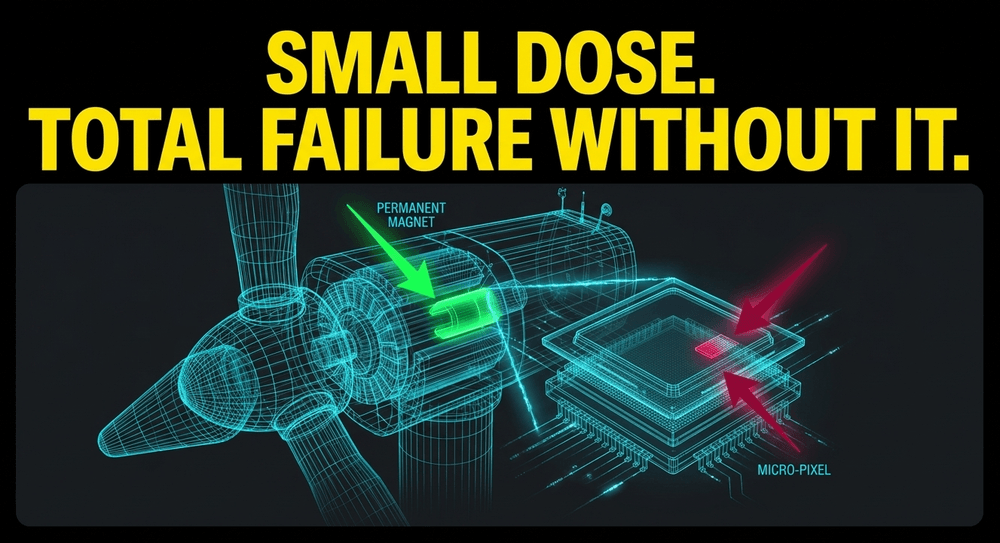
According to the United States Geological Survey (USGS), at least 245 individual REE-bearing minerals exist, yet only a handful - such as bastnäsite and monazite - are commercially exploited. These minerals are typically found in carbonatites and alkaline igneous systems, geological formations that are not evenly distributed globally. This spatial inequality is the foundation of the current geopolitical landscape.

China's industrial and refining dominance
In 2024, China produced 270,000 metric tons of rare earths - a figure that does not include undocumented production volumes - accounting for approximately 70% of global mine output. That growth represents a near-decade-long exponential expansion: in the mid-1990s, China's output was below 50,000 tonnes. While extraction figures are significant, the true bottleneck lies in the downstream value chain.
According to the International Energy Agency (IEA), China controls approximately 90% of the world's rare earth separation and refining capacity. For specific heavy rare earths like dysprosium and terbium - which are critical for high-temperature permanent magnets used in EV motors and wind turbines - the monopoly is effectively absolute. China also accounts for roughly 90% of global high-performance rare earth magnet production.
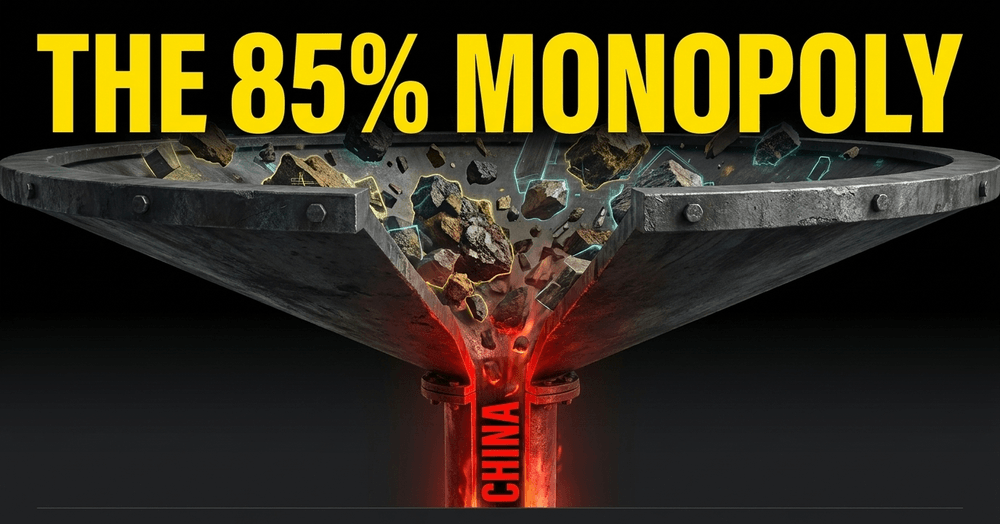
Historical policy decisions facilitated this dominance. While Western nations shuttered refineries due to environmental regulations and high operational costs, China invested in the chemical engineering expertise required to master liquid-liquid extraction. This process involves hundreds of stages of chemical separation to isolate elements that are almost identical in atomic weight and behavior. Today, the world faces a scarcity of chemical engineers with REE expertise outside China - a human capital barrier to supply chain diversification that is at least as significant as any physical infrastructure deficit.
Chinese suppliers also undercut American producers through state support, lower environmental standards, and cheaper labor. At one point, the Mountain Pass mine in California - the world's top producer in the mid-1990s - fell to zero output following a 1997 wastewater incident and legal actions. It took two decades for U.S. production to recover.
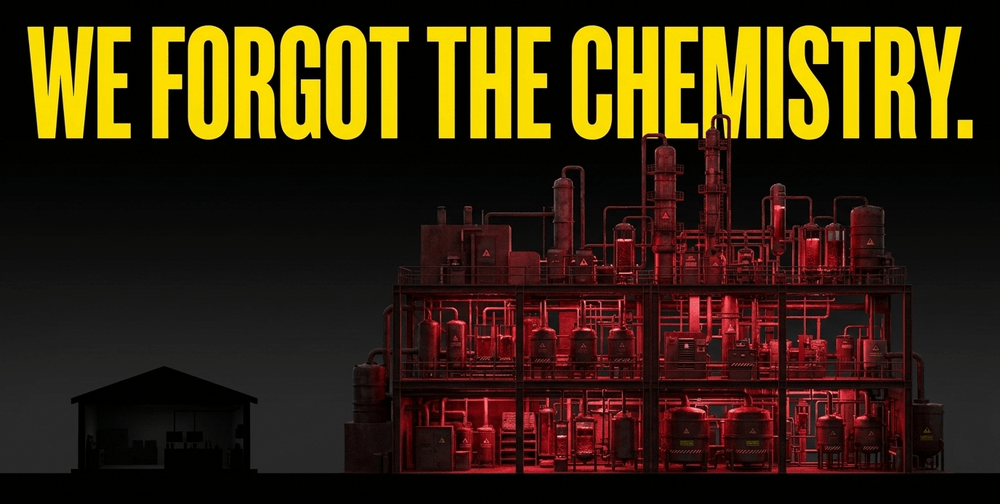
The pattern is visible in trade flows. China's two dominant state-owned enterprises - China Rare Earth Group and China Northern Rare Earth Group - control the allocation of national production quotas. Despite being the world's largest producer by volume, China imported 129,500 metric tons of raw REE materials in 2024 - primarily from Myanmar - to feed its midstream and downstream processing industries. China is simultaneously the world's dominant producer and a net importer of ore feedstock, which underlines the scale of its industrial appetite.
Other producers have entered the market. In 2024, the United States produced approximately 46,000 metric tons, primarily from the Mountain Pass mine. Myanmar, Nigeria, Thailand, and Australia also contributed meaningful volumes. Yet a large portion of the ore extracted in these countries is still shipped to China for final processing.
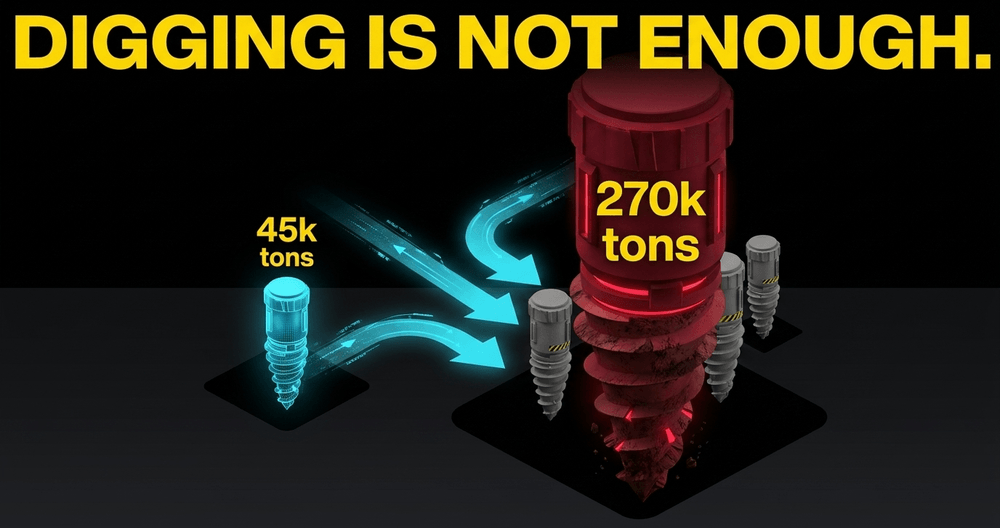
Without domestic refining infrastructure, extraction alone does not grant mineral security. This is the core lesson that took Western policymakers a decade to internalize, and it explains why recent legislative focus has shifted from mining permits to processing investment.
The environmental cost of digital infrastructure
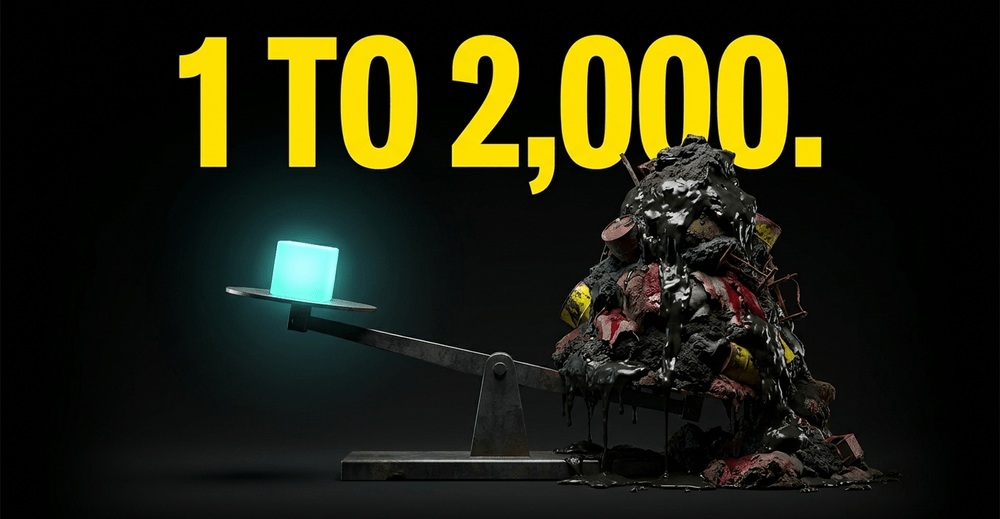
The chemical similarity of rare earths necessitates the use of aggressive hydrometallurgical techniques. Separation and purification require strong acids, high temperatures, and volatile solvents. The scale of the resulting waste is difficult to overstate. For every tonne of rare earth produced, the process generates approximately 13 kg of dust, 9,600-12,000 cubic meters of waste gas, 75 cubic meters of wastewater, and one tonne of radioactive residue - totaling up to 2,000 tonnes of toxic waste per tonne extracted.
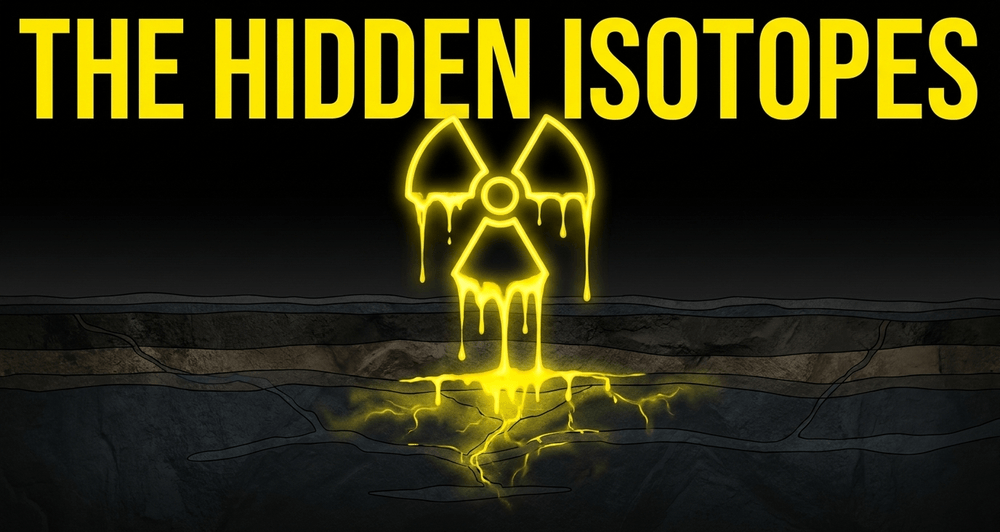
Radioactive co-occurrence is a persistent challenge. REE ores frequently contain thorium and uranium. When these ores are crushed and leached, these radioactive isotopes are liberated into the tailings. Managing these waste streams for extended periods is a fiscal and logistical burden that many private mining companies are unwilling to assume. In Ganzhou, China, the practice of in-situ leaching - where chemicals are pumped directly into the ground - has resulted in severe soil acidification and groundwater contamination, threatening both agricultural land and the health of surrounding communities.
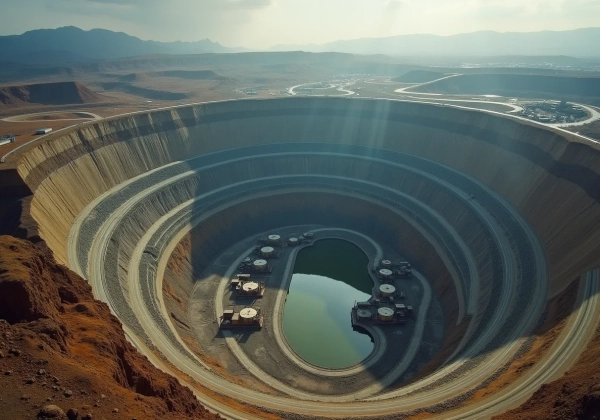
China's State Council acknowledged as early as 2010 that the industry caused intense harm to the ecological environment. The Bayan Obo mining site in Inner Mongolia - the largest rare earth operation in the world - has become a symbol of this degradation. Decades of processing discharged chemically contaminated waste into tailings reservoirs, most notably the Weikuang Dam. Pollutants have seeped into surrounding soils and groundwater, contributing to localized desertification, land loss for herder communities, and long-term health impacts for nearby populations.
These environmental costs are the hidden subsidy that has kept rare earth prices artificially low for decades, enabling the rapid proliferation of consumer electronics.
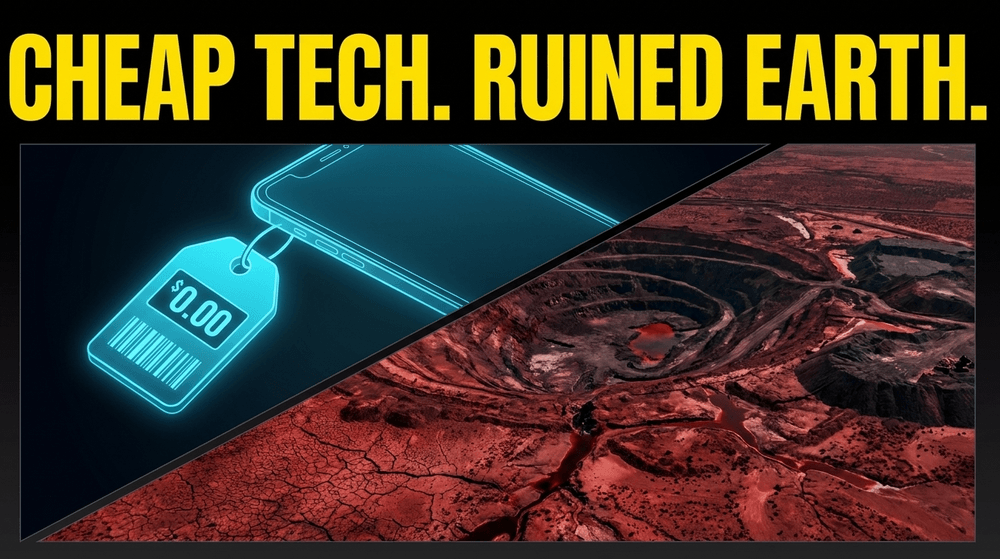
That subsidy is borne by ecosystems and local populations, not reflected in the cost of the smartphones, wind turbines, or EV motors they enable. It is an externality that Western regulatory frameworks did not allow domestically - and one that gave Chinese producers a structural cost advantage the rest of the world has not been able to match.
Foundations of the artificial intelligence boom
The recent surge in artificial intelligence development has deepened the world's reliance on these elements. AI is not merely a software phenomenon; it is a physical infrastructure project. Global investment in data centers tied to AI and hyperscale infrastructure is expected to reach approximately $580 billion in 2025 - exceeding what the world spends annually on new oil supplies.

Data centers require massive storage and cooling capacity, which relies on neodymium-iron-boron (NdFeB) permanent magnets for hard disk drives, server cooling fans, and power electronics motors. The semiconductor manufacturing process uses cerium oxide for chemical-mechanical planarization (CMP) - a critical step in creating the flat surfaces required for advanced logic chips. Gadolinium, dysprosium, and europium are used in nuclear fuel performance and reactor control systems, relevant as major technology companies explore small modular reactors to meet the energy demands of large-scale AI training.
Global data center electricity consumption reached 415 terawatt-hours in 2024, representing approximately 1.5% of total global electricity use. The IEA projects that figure could approach 1,000 terawatt-hours by 2030 - roughly half of it driven by AI-specific workloads. The mineral requirements scale with that growth.
As Guillaume Pitron, author of The Rare Metals War, observed:
"Changing our energy model means doubling rare metal consumption."
This captures the fundamental contradiction embedded in the green transition.

To build the wind turbines and electric vehicles needed to reduce carbon emissions, the world must engage in mining activities that are themselves carbon-intensive and ecologically damaging. According to the IEA, demand for magnet-grade rare earths has already doubled since 2015. A McKinsey analysis projects that global demand for magnetic REEs will triple - from 59 kilotons in 2022 to 176 kilotons by 2035 - driven primarily by EV adoption and offshore wind deployment. Each EV traction motor requires roughly 1-2 kg of NdFeB magnets; a single 3 MW offshore turbine requires significant quantities of neodymium-praseodymium and dysprosium. The digital economy is, in material terms, a structure built on a foundation of rare earth chemistry.
Geopolitical leverage and supply chain vulnerability
Concentrated supply chains are inherently fragile. China has demonstrated a clear willingness to use its market position as a tool of statecraft. In 2010, a maritime dispute near the Senkaku/Diaoyu Islands triggered a de facto suspension of rare earth exports to Japan - widely interpreted as economic coercion, and widely cited as the incident that reframed REEs from commercial commodities into strategic assets.
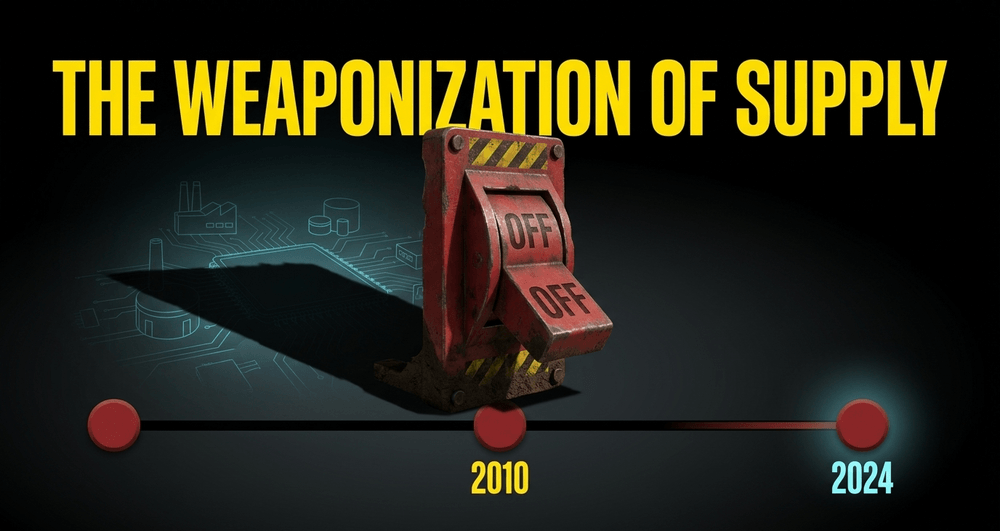
In 2024, approximately 70% of U.S. rare earth imports originated from China. This dependency creates a structural vulnerability. Disruptions to REE supply can halt production lines for everything from fighter jets to medical imaging equipment - and that vulnerability is not theoretical.

In April 2025, China announced export licensing requirements on seven medium and heavy rare earth elements - including samarium, gadolinium, terbium, dysprosium, lutetium, scandium, and yttrium - citing diversion risks and retaliating against U.S. semiconductor export controls. Automotive, defense, and life sciences supply chains reported disruptions within weeks. A 90-day diplomatic truce temporarily stabilized shipments, but China reimposed stricter restrictions in October 2025, extending them to 12 rare earth elements and introducing extraterritorial provisions requiring export licenses for products manufactured outside China if they contain Chinese-origin rare earth materials or are produced using Chinese technologies. The implications are structurally significant: Beijing's export control reach now extends well beyond its own borders, into the supply chains of companies that believed they had diversified.
The leverage is not limited to raw material exports. China also announced controls on rare earth separation and processing technologies, creating a parallel barrier to Western refinery construction. A country that cannot mine, separate, and fabricate its own materials - and cannot license the technology to learn - has very few options in the short term.

The scramble for supply chain independence
The 2025 escalation catalyzed international coordination at a scale not seen previously in critical minerals policy. The U.S. Department of Defense has committed over $439 million to domestic REE supply chain development since 2020. A bilateral U.S.-Australia critical minerals pact, announced in October 2025, pledges $1 billion from each country within six months to accelerate rare earth and battery mineral projects. The Export-Import Bank has issued $2.2 billion in letters of interest for Australian rare earth and battery metal financing.
Legislative frameworks have been constructed in parallel. The EU's Critical Raw Materials Act targets 40% domestic refining capacity by 2030 - from a current base that is effectively near zero for most heavy rare earths. Japan, which invested $250 million into Lynas Rare Earths in 2011 following the 2010 supply disruption, has spent 15 years building strategic stockpiles, alternative supplier relationships, and recycling capabilities. Even so, Japan remains nearly fully dependent on China for heavy rare earths like terbium and dysprosium.
A small number of credible non-Chinese supply nodes are beginning to form. Neo Performance Materials opened a 2,000-tonne-per-year rare earth magnet production facility in Narva, Estonia in September 2025 - Europe's most advanced dedicated rare earth processing site. Sillamäe, also in Estonia, hosts the EU's only rare earth separation plant. MP Materials in the United States is pursuing full vertical integration from its Mountain Pass mine to magnet production, with long-term offtake agreements in place with General Motors and the Department of Defense.
None of these initiatives approaches Chinese scale in the near term. Building refining capacity requires not just capital and permits, but specialized chemical engineering expertise that took decades to develop inside China. For heavy rare earths specifically, a genuine alternative supply infrastructure remains a decade or more away at realistic construction timelines. The 2025 crisis exposed the gap between policy ambition and industrial reality.

Recycling and the secondary supply challenge
A parallel set of efforts aims to reduce dependence on primary mining through recovered materials. The logic is straightforward: rare earths are not consumed in use. The neodymium in a decommissioned EV motor can, in principle, be extracted and reused. In practice, the process is technically demanding and currently operates at negligible scale.
Less than 1% of rare earths are currently recycled globally, according to industry data. The barriers are both technical and economic. REE components are small, embedded in complex assemblies, and difficult to isolate cleanly. The disassembly economics are poor, and China's artificially low primary prices suppress the financial incentive to invest in recycling infrastructure. A Belgian rare earth refinery that opened its French facility in 2025 intends to source approximately 30% of its input from recycled electronics - a meaningful signal, but still a marginal contribution to global supply.
The longer-term trajectory is more encouraging. The IEA estimates that recycling could reduce primary supply requirements by up to 35% by 2050, if end-of-life recovery rates improve substantially. Europe is particularly well-positioned: by 2030, it is projected to generate approximately half of global wind turbine magnet scrap and roughly a quarter of global EV motor scrap. Companies such as Cyclic Materials - with facilities in Kingston, Ontario and Mesa, Arizona - are building commercial-scale rare earth magnet recycling operations. McKinsey notes that magnetic REEs represent roughly 30% of overall REE volume by weight, but capture over 80% of market value, making magnet scrap the priority target.
The gap between current recycling rates and projected demand growth remains large, however, and unlikely to close at pace with the 2025-2035 demand trajectory. Recycling is a necessary part of the long-term supply equation. It is not a near-term substitute for extraction, refining, or geopolitical stability.
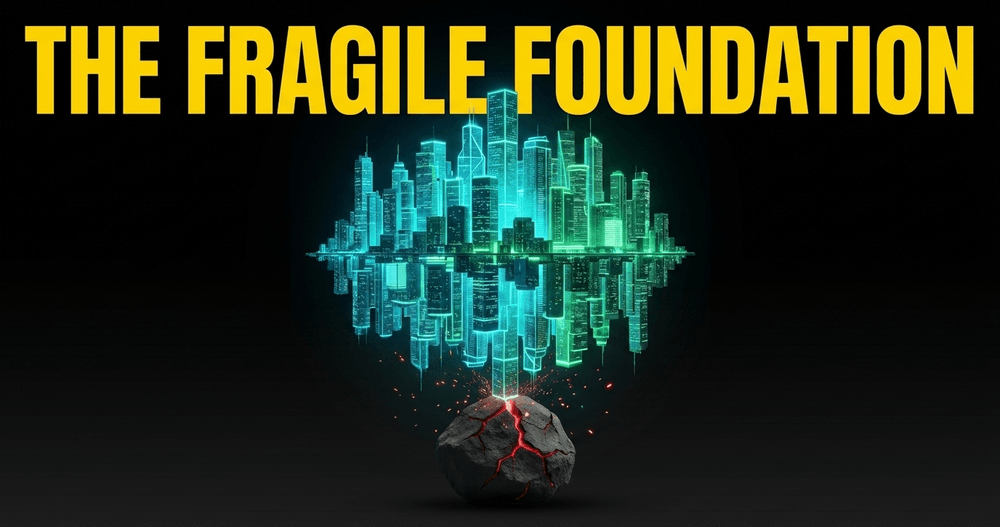
The structural reality is unchanged by either geopolitical maneuvering or recycling ambition in the short term. The supply chain that powers electric vehicles, wind turbines, smartphones, and AI data centers remains concentrated in a single country across the processing stages that matter most. Diversification is achievable, but it is a multi-decade project requiring physical infrastructure, trained engineers, and environmental permitting at a scale that does not yet exist outside China. The digital economy and the green transition share a foundation that is, simultaneously, essential and fragile.
Share now









Key takeaways
- Rare earth elements (REEs) comprise 17 metallic elements - the 15 lanthanides plus scandium and yttrium - that are essential to high-tech applications but rarely found in economically viable concentrations.
- In 2024, China produced 270,000 metric tons of rare earths, accounting for approximately 70% of global mine output - up from less than 50,000 tonnes in the mid-1990s.
- China controls approximately 90% of global rare earth separation and refining capacity, according to the International Energy Agency (IEA, 2025), with a near-absolute monopoly on heavy rare earth processing (dysprosium, terbium, europium).
- Every tonne of rare earth produced generates up to 2,000 tonnes of toxic waste, including radioactive thorium and uranium, plus millions of cubic metres of contaminated wastewater annually.
- Less than 1% of rare earths are currently recycled globally, leaving the supply chain almost entirely dependent on primary extraction.
- A single smartphone uses approximately 8 different rare earth materials for its display, speakers, vibration motor, and circuitry.
- In April 2025, China imposed export licensing requirements on seven heavy rare earth elements, triggering supply disruptions across automotive, defence, and semiconductor industries worldwide.
- McKinsey projects global demand for magnetic rare earth elements will triple - from 59 kilotons in 2022 to 176 kilotons by 2035 - driven by electric vehicles and offshore wind expansion.
- Each EV traction motor requires roughly 1-2 kg of neodymium-iron-boron (NdFeB) magnets; a single 3 MW offshore wind turbine incorporates hundreds of kilograms of magnet-grade rare earths.
- The global REE market was valued at approximately $13-14 billion in 2024 and is projected to exceed $28 billion by 2032, expanding at over 10% CAGR.
Sources
- International Energy Agency - Rare Earth Elements Report https://www.iea.org/reports/rare-earth-elements
- Chatham House - The rare earths race risks environmental disaster https://www.chathamhouse.org/2026/03/rare-earths-race-risks-environmental-disaster
- CSIS - Rare Earth Export Restrictions One Year Later https://www.csis.org/analysis/rare-earth-export-restrictions-one-year-later
- Visual Capitalist - Visualizing 30 Years of Rare Earth Production by Country https://elements.visualcapitalist.com/visualizing-30-years-of-rare-earth-production-by-country/
- U.S. Geological Survey - Rare Earth Elements https://www.usgs.gov/publications/rare-earth-elements
- Published 2026-06-16 15:03
- Modified 2026-06-16 15:03

-
Redaction