

-
 Redaction
How smart contracts power the DeFi movement
How smart contracts automate lending, trading, and governance in DeFi - and what the risks of immutable code mean for institutional investors and developers.
The algorithmic trust behind decentralized finance
To observe the current landscape of financial technology is to witness a migration from human-led institutions to cold, mathematical certainties. At the center of this shift lies the smart contract. While popular discourse often focuses on the volatile price action of digital assets, the true engine of the Decentralized Finance (DeFi) movement is the foundational technology of self-executing agreements. These scripts, residing on distributed ledgers like Ethereum, Solana, and Polygon, do not merely facilitate transactions; they codify logic into the very fabric of value exchange.
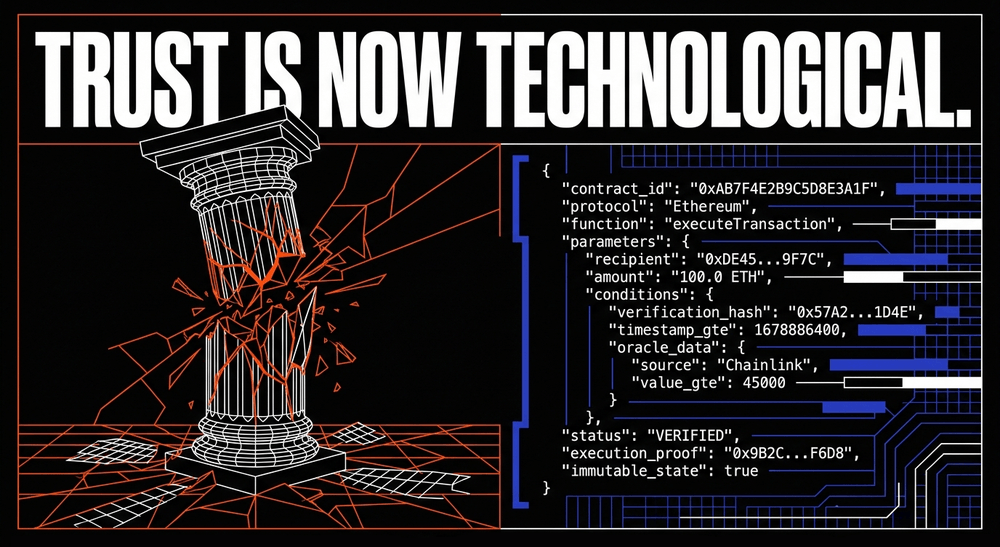
The premise is deceptively simple. A smart contract is a protocol that executes predefined actions when specific conditions are met. This removal of discretionary power is what defines the transition from traditional finance to DeFi. In a world where trust has historically been a service sold by banks and legal firms, smart contracts offer a version of trust that is technical rather than institutional. The implications of this shift are profound, affecting everything from how a loan is originated to how a global currency peg is maintained.
Understanding this technology is no longer the exclusive domain of software engineers. As smart contracts underpin an ecosystem measured in hundreds of billions of dollars in total value locked (TVL), they have become a subject of legitimate interest for institutional investors, regulators, and developers building the next generation of financial infrastructure.
Automation as a replacement for institutional friction
Efficiency in traditional finance is often hindered by the manual nature of verification and settlement. A mortgage or a corporate loan requires a sequence of human checkpoints: credit analysts, legal departments, and compliance officers. Smart contracts replace these checkpoints with automated logic. In decentralized lending platforms such as Compound or Aave, the smart contract serves as the clerk, the vault, and the enforcer simultaneously.
The mechanism of automated lending
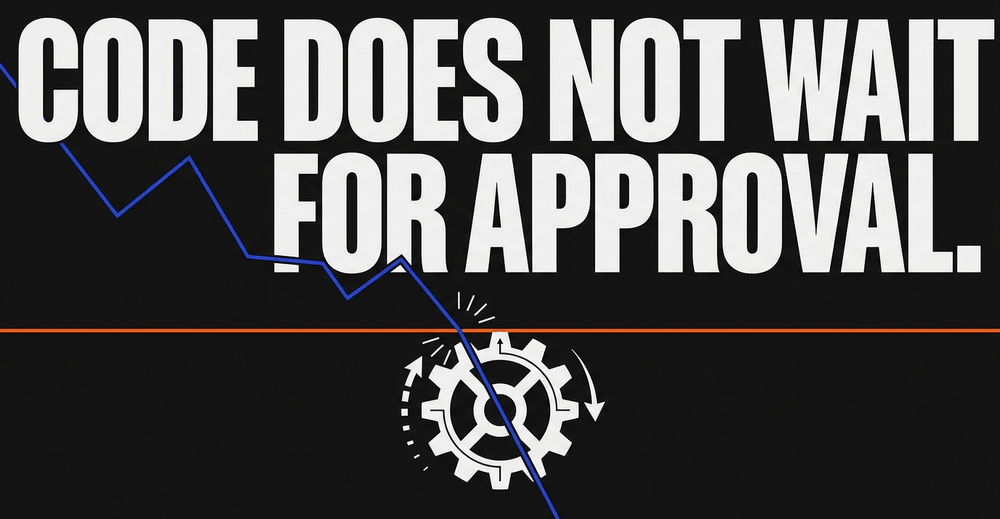
When a user interacts with a lending protocol, the smart contract automatically manages the collateralization ratios. According to system parameters, it calculates how much a user can borrow against their deposited assets. If the value of the collateral falls below a certain threshold, the contract does not wait for a margin call from a human representative. It initiates a liquidation event autonomously. This systemic coldness ensures that the protocol remains solvent without the need for a central risk management department, reducing operational costs and minimizing the potential for human error or favoritism.
- Collateral validation: Instantaneous verification of asset value against predefined protocol thresholds.
- Margin calls: Code-driven alerts and triggers based on real-time price data from oracle networks.
- Liquidation: Automated sale of assets to protect the liquidity pool, executed without human approval.
The speed of this process represents a genuine structural advantage over traditional lending. What would take days in a conventional banking environment is resolved within a single block confirmation - often measured in seconds.
Trustlessness and the removal of the middleman
The concept of trustlessness is frequently misunderstood as a lack of security. In the context of smart contracts, it refers to a system where participants do not need to know or trust their counterparties. The code acts as the neutral arbiter. Because the terms are transparent and immutable, the risk of a counterparty reneging on an agreement is theoretically eliminated by the execution logic itself. This is a significant departure from traditional systems that rely on centralized authorities to settle disputes and enforce contracts.
The reliance on these automated structures continues to grow as market participants seek refuge from the overhead of legacy banking. It is worth noting, however, that trustlessness transfers rather than eliminates risk - participants must now trust the correctness of the code itself, which demands rigorous scrutiny before deployment.

The pillars of transparency and immutability
One of the most distinct features of a smart contract is its permanence. Once a developer deploys a contract to a blockchain, the terms become part of the public record. This immutability ensures that no party - not even the original creator - can alter the rules of the game while it is in progress.
Public auditing and open source logic
Unlike the proprietary algorithms used by Wall Street firms, most DeFi smart contracts are open source. Any individual with sufficient technical proficiency can audit the code to ensure it functions as advertised. This transparency creates a level playing field and allows for a form of public scrutiny that is impossible in the closed-door world of private banking. When every line of logic is visible, the hidden fees and complex clauses that characterize traditional financial products become structurally difficult to sustain.
This openness has given rise to a professional ecosystem of smart contract security auditors. Firms such as Trail of Bits, OpenZeppelin, and Certik have developed methodologies specifically designed to identify vulnerabilities before deployment. Their findings are typically published in public audit reports, adding another layer of community-accessible accountability that has no equivalent in traditional finance.
The risk of the permanent error
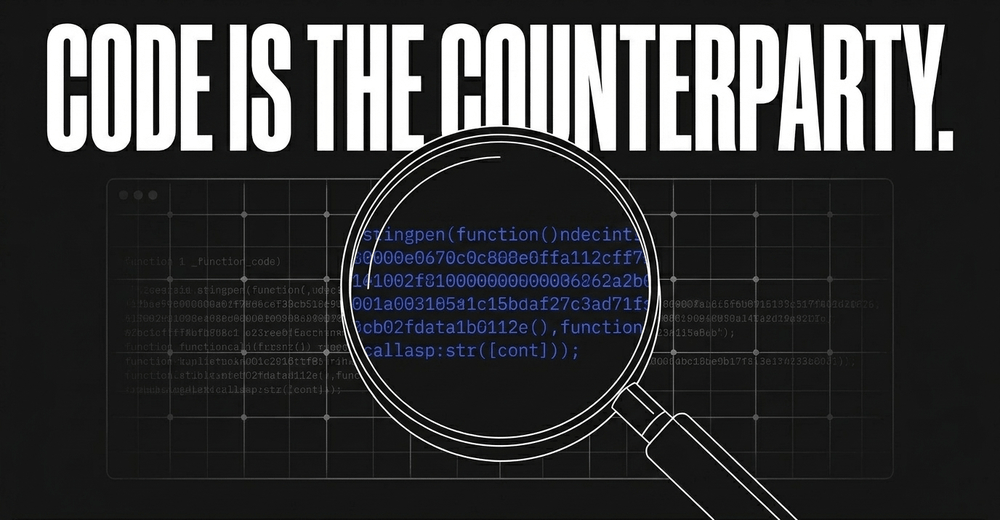
However, immutability is a double-edged sword. While it prevents tampering, it also means that a bug in the code is as permanent as the contract itself. If a vulnerability is discovered after deployment, the path to correction is often complex, requiring the migration of funds to a new contract or the use of specific governance mechanisms. The history of the DeFi sector is marked by instances where logic errors led to the permanent loss of capital, underscoring the necessity of rigorous auditing and formal verification before any deployment.
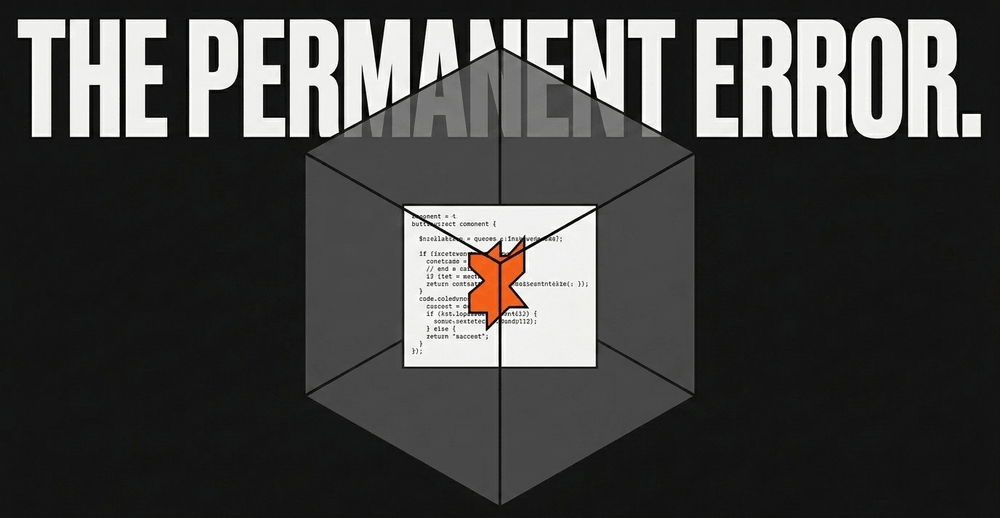
Some protocols have introduced proxy contract patterns and upgrade mechanisms to mitigate this risk. These allow certain parameters to be adjusted by designated governance entities, though they reintroduce a degree of centralization that purists within the space find philosophically problematic.
Core applications within the DeFi ecosystem
The utility of smart contracts is best observed through their specific applications. They are the building blocks for a new suite of financial tools that mimic, and in some cases meaningfully improve upon, traditional financial products.
Decentralized exchanges and liquidity
Platforms like Uniswap and SushiSwap have pioneered the use of Automated Market Makers (AMMs). In these systems, smart contracts manage liquidity pools where users can trade assets without a traditional order book. The contract uses a mathematical formula to determine the price of an asset based on the ratio of tokens in the pool. This peer-to-peer model eliminates the need for professional market makers and centralized exchange operators, distributing the fees instead to the users who provide the liquidity.
Uniswap's progression through successive protocol versions illustrates how smart contract architecture can evolve iteratively. Its concentrated liquidity model allows liquidity providers to allocate capital within specific price ranges, significantly improving capital efficiency compared to earlier, more diffuse approaches.

Yield farming and automated incentives
Yield farming represents an advanced application of smart contract logic. Contracts are programmed to distribute rewards to users who stake their assets in specific protocols. These rewards, often in the form of governance tokens, are issued automatically based on the duration and volume of the stake. This has created a highly competitive environment where capital moves fluidly between protocols to find the most efficient return, all governed by automated distributions with no central coordinating authority.
The strategy carries meaningful risk. The complexity of multi-protocol yield strategies can expose participants to compounded vulnerabilities across several interdependent contracts simultaneously - a consideration that demands careful due diligence before deployment of capital.

Stablecoins and algorithmic pegs
Maintaining a stable value for a digital asset is a complex engineering challenge. Smart contracts facilitate the issuance and burning of stablecoins to maintain their peg to a fiat currency like the US Dollar. Whether through over-collateralization - as seen in MakerDAO's DAI - or algorithmic balancing, the contract manages the supply of the token in real-time, reacting to market demand without human intervention.
The collapse of the TerraUSD (UST) algorithmic stablecoin in May 2022 exposed the catastrophic fragility that can exist in purely algorithmic peg mechanisms. This event accelerated both industry self-reflection and regulatory interest in the distinction between collateral-backed and algorithmically managed stablecoins - a debate that continues to shape protocol design and legislative proposals alike.
Composability: the "money lego" principle
One property of smart contracts that is frequently underappreciated by observers outside the ecosystem is composability - the ability of independent protocols to interlock and interact with one another. Because DeFi smart contracts share a common runtime environment and standardized token interfaces, developers can build new protocols that leverage the functionality of existing ones without requiring permission or coordination.
This has given rise to the popular metaphor of money legos: just as plastic building blocks can be snapped together in arbitrary configurations, DeFi protocols can be stacked and combined to produce sophisticated financial instruments from simpler primitives. A single transaction can borrow from a lending protocol, swap through a decentralized exchange, deposit into a yield vault, and repay the loan - all atomically, in one block, without any central orchestrator.

The practical consequences are significant. Innovation in DeFi moves at a pace that is structurally impossible in traditional finance, where building a new product on top of a bank's infrastructure requires years of negotiation, licensing, and regulatory approval. In a composable ecosystem, the same objective can be accomplished in days by a small team of developers working with publicly available contracts.
Composability is not without systemic risk, however. When protocols are deeply interdependent, a critical failure in one can cascade rapidly through the ecosystem. The concept of contagion - familiar from traditional finance - applies with particular ferocity in a composable environment where capital flows are automated and liquidations are instantaneous.
Maximal Extractable Value (MEV) and its implications
A consequential - and frequently misunderstood - phenomenon native to smart contract blockchains is Maximal Extractable Value (MEV). This refers to the profit that can be extracted by reordering, inserting, or excluding transactions within a block, a power held by the validators and block producers who determine the sequence in which transactions are confirmed.
In practice, MEV manifests in several forms:
- Sandwich attacks: A bot detects a pending large swap, places one transaction before it to buy the asset and another after it to sell - profiting at the expense of the original trader.
- Arbitrage: Automated agents exploit price discrepancies between protocols, equalizing prices across the ecosystem but capturing the difference as profit.
- Liquidation racing: When a borrower's position becomes eligible for liquidation, multiple bots compete to execute it first and claim the liquidation bonus.
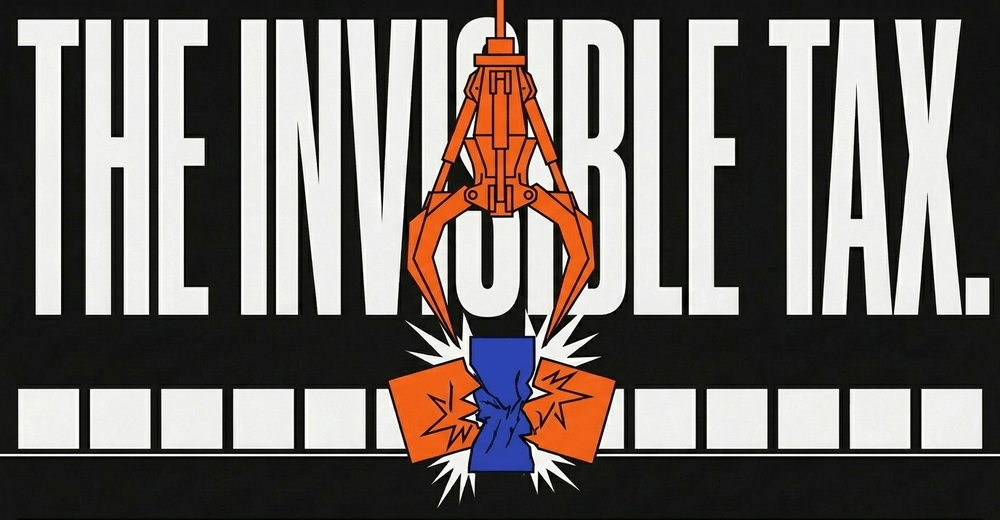
MEV is neither purely extractive nor purely beneficial. Arbitrage, for instance, serves the useful function of keeping prices consistent across the ecosystem. However, predatory forms like sandwich attacks impose invisible costs on ordinary users and have prompted significant protocol-level and infrastructure-level responses.
Solutions such as Flashbots and MEV-Boost emerged to create more transparent and democratized block-building markets, reducing the most harmful expressions of MEV while acknowledging that some degree of ordering advantage is an irreducible feature of any sequenced ledger. Understanding MEV is now considered essential due diligence for any institution interacting with smart contract infrastructure at scale.
Security considerations and systemic vulnerabilities
The security of a smart contract is only as strong as its logic. Because these contracts often handle significant value, they are primary targets for malicious actors. Data from security firms consistently indicates that even minor oversights can lead to catastrophic exploits, with hundreds of millions of dollars lost annually to DeFi-specific attacks.
Common attack vectors
Two of the most prevalent vulnerabilities in the industry are reentrancy attacks and oracle manipulation.
- Reentrancy: This occurs when a contract makes an external call to an untrusted contract before it updates its own state. The attacker can repeatedly call the withdrawal function, draining the balance before the contract records the first transaction. The most historically significant example remains the 2016 DAO hack on Ethereum, which led to a contentious hard fork of the network.
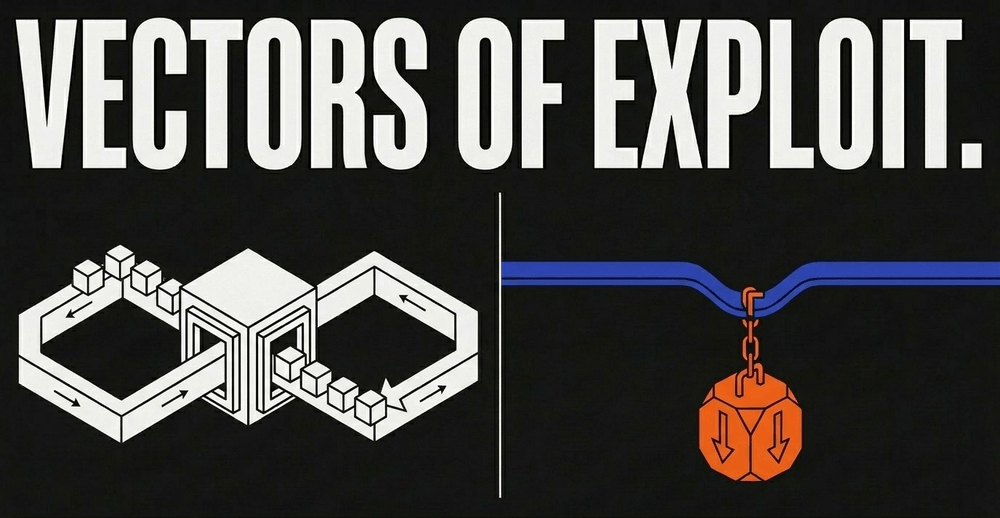
- Oracle manipulation: Smart contracts often rely on external data feeds, known as oracles, to determine prices. If an attacker can manipulate the price reported by the oracle - frequently using flash loans to temporarily distort on-chain liquidity - they can trick the smart contract into executing trades or liquidations at artificial rates.
To mitigate these risks, the industry has adopted increasingly stringent security frameworks. External audits by specialist firms have become a standard requirement for any reputable project. Many protocols now implement fail-safe mechanisms such as circuit breakers that pause operations if suspicious activity is detected, and time-locked governance changes that give the community time to identify malicious upgrades before they take effect.
Formal verification as a higher standard
Beyond standard audits, a growing segment of high-value protocols is adopting formal verification - a mathematical approach to proving that contract code behaves exactly as specified under all possible inputs and conditions. Unlike traditional testing, which checks behavior against a limited set of scenarios, formal verification reasons about the entire state space of a contract.
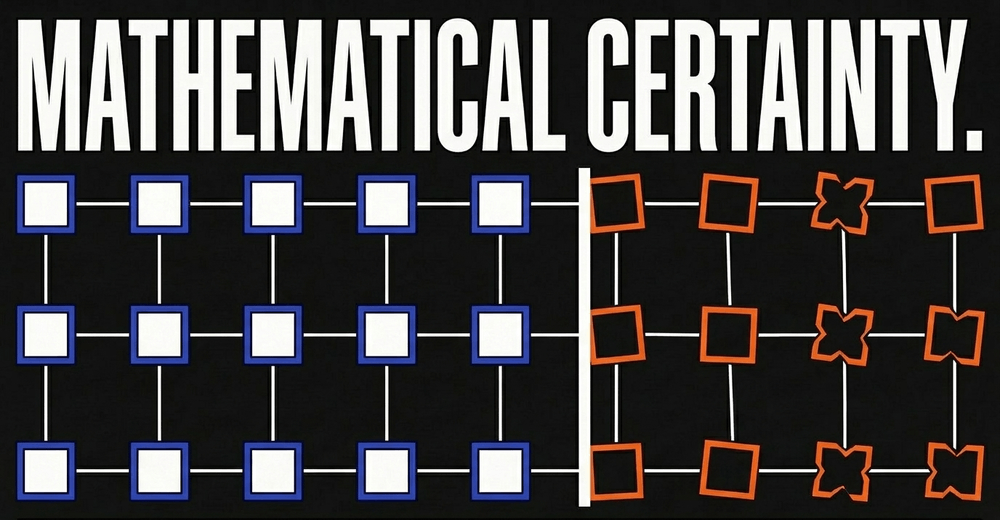
Projects securing significant TVL increasingly treat formal verification as a baseline requirement rather than an optional enhancement. While the process is expensive and demands specialized expertise, the cost is trivially small compared to the potential loss from a single exploited vulnerability in a protocol holding billions of dollars in deposited assets. The growing availability of formal verification tooling - including platforms such as Certora and the K framework - is making this practice more accessible to development teams of all sizes.
Governance, DAOs, and the democratization of protocol control
A dimension of smart contract technology that receives comparatively less attention is its role in organizational governance. Decentralized Autonomous Organizations (DAOs) use smart contracts to encode the rules by which a collective makes decisions. Rather than a board of directors determining policy, token holders submit and vote on proposals, with outcomes automatically executed by the governing contract.
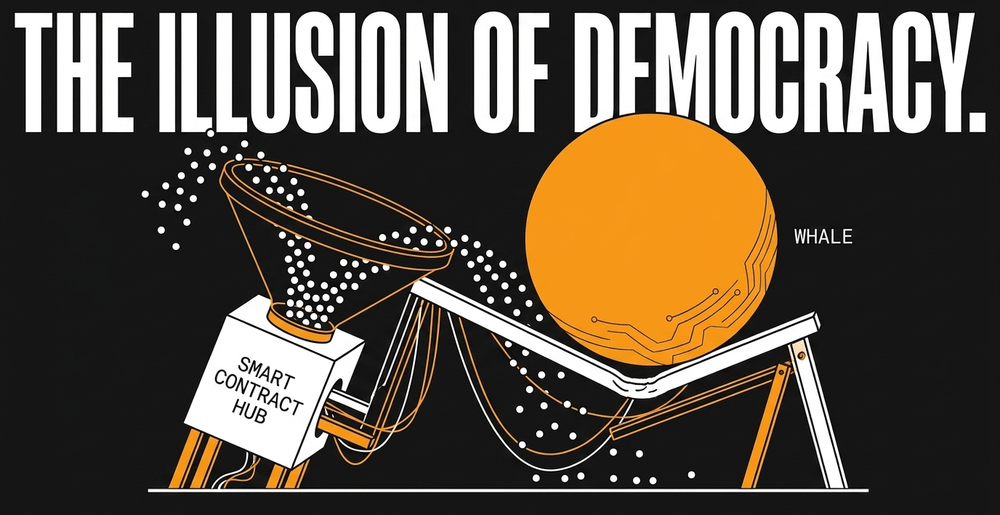
This model has been adopted across major DeFi protocols. Compound's governance system allows COMP token holders to propose and vote on changes to protocol parameters - adjusting interest rate models, adding new assets, or allocating treasury funds - with results executed on-chain without a centralized operations team.
The implications extend beyond finance. DAOs have been used to coordinate grant-making, manage collectively owned assets, and fund public goods in the broader blockchain ecosystem. However, practical experience has revealed notable structural challenges. Low voter turnout, the concentration of voting power among large token holders (commonly referred to as whale dominance), and the susceptibility of governance to coordinated manipulation remain ongoing problems that the industry has not yet fully resolved.
Real-world asset tokenization: smart contracts meet traditional finance
One of the most consequential developments in recent years has been the application of smart contract infrastructure to real-world assets (RWAs). This refers to the process of representing ownership of traditional financial instruments - government bonds, private credit, equities, and real property - as tokens on a blockchain, managed by smart contracts.
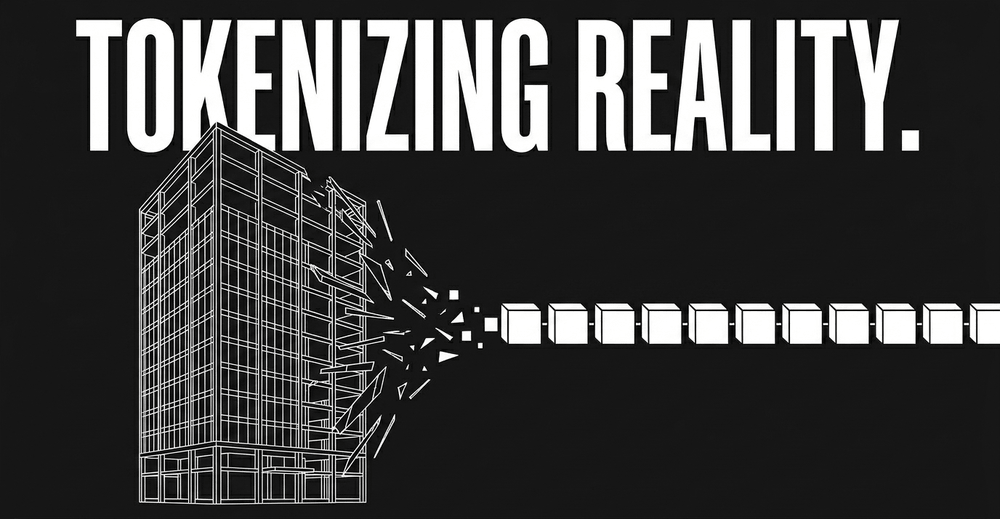
The appeal for institutional participants is significant. Tokenized assets can settle in minutes rather than days, be fractionalized to allow broader investor access, and be programmed with compliance rules - such as transfer restrictions or automatic dividend distributions - directly into the contract logic. Major asset managers and financial institutions have begun piloting these structures at meaningful scale, signaling that the boundary between DeFi infrastructure and conventional finance is becoming increasingly permeable.
For the broader DeFi ecosystem, the growth of RWA protocols introduces a new category of collateral with more stable valuations, potentially reducing the systemic volatility that has historically characterized over-collateralized lending markets.
Zero-knowledge proofs: the next frontier for smart contract privacy
Among the most technically significant developments shaping the next phase of smart contract evolution is the integration of zero-knowledge (ZK) proof systems. A ZK proof allows one party to prove to another that a statement is true - such as proof of sufficient collateral, or compliance with a regulatory threshold - without revealing the underlying data itself.
For smart contracts, this capability resolves a fundamental tension that has limited institutional adoption: the blockchain's transparency, while a feature for accountability, is a liability when the data involved is commercially sensitive or personally identifiable. A counterparty that must prove its solvency to a lending contract today must do so by exposing its entire on-chain portfolio to public view.
ZK-enabled contracts allow that same proof to be generated and verified cryptographically, without disclosing the underlying figures. The implications extend across compliance, privacy-preserving DeFi, and identity verification. Projects building ZK-native virtual machines - capable of executing general smart contract logic with embedded privacy guarantees - represent one of the most actively funded areas of blockchain infrastructure development and are expected to reach production maturity progressively over the coming years.

The regulatory landscape for smart contracts
As the DeFi ecosystem has matured, it has inevitably attracted legislative attention. The question of how to classify and regulate smart contract-based financial activity remains one of the most contested issues in global financial policy.
In the European Union, the Markets in Crypto-Assets (MiCA) regulation, which came into full effect in December 2024, established a comprehensive framework for digital asset issuers and service providers. While MiCA addresses crypto assets broadly, its implications for DeFi protocols - particularly those issuing stablecoins - are direct. Issuers of significant stablecoins face reserve requirements and authorization obligations that fundamentally alter the cost structure of operating an algorithmic or partially collateralized peg.
In the United States, the regulatory picture remains more fragmented, with ongoing deliberations concerning whether certain DeFi tokens constitute securities and who bears legal responsibility for a protocol governed entirely by code. The industry's central argument - that a sufficiently decentralized protocol has no identifiable operator to regulate - continues to be tested in both court and legislative committee.
This regulatory uncertainty creates a meaningful risk factor for protocol developers and institutional participants alike. However, it also represents a structural opportunity: protocols that demonstrate proactive compliance architecture may find a durable competitive advantage as clearer rules emerge.
The evolution from Ethereum to a multi-chain reality
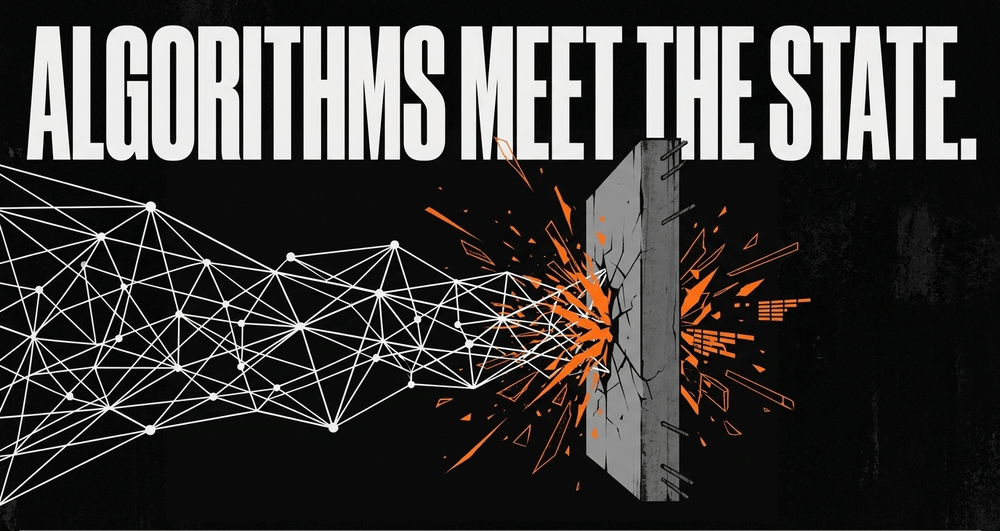
The launch of Ethereum's mainnet in July 2015 provided the first major global, programmable blockchain at scale, serving as the catalyst for the current DeFi explosion. It introduced the Ethereum Virtual Machine (EVM), a decentralized computing environment that executes smart contracts. Since then, the ecosystem has expanded significantly.
Independent networks like Solana offer higher transaction throughput and lower costs through a different architectural approach, while Layer 2 scaling solutions like Polygon enhance the scalability of Ethereum by processing transactions off the main chain before settling them back on it.
This multi-chain reality has enabled increasingly sophisticated financial instruments. Flash loans - loans that are borrowed and repaid within the same transaction block - would be impossible in any traditional setting. They rely entirely on the atomicity of smart contract execution: if the loan is not repaid within the same transaction, the entire event is reverted as though it never occurred. While frequently used for arbitrage and collateral swapping, flash loans have also served as a tool of choice in several high-profile exploits.
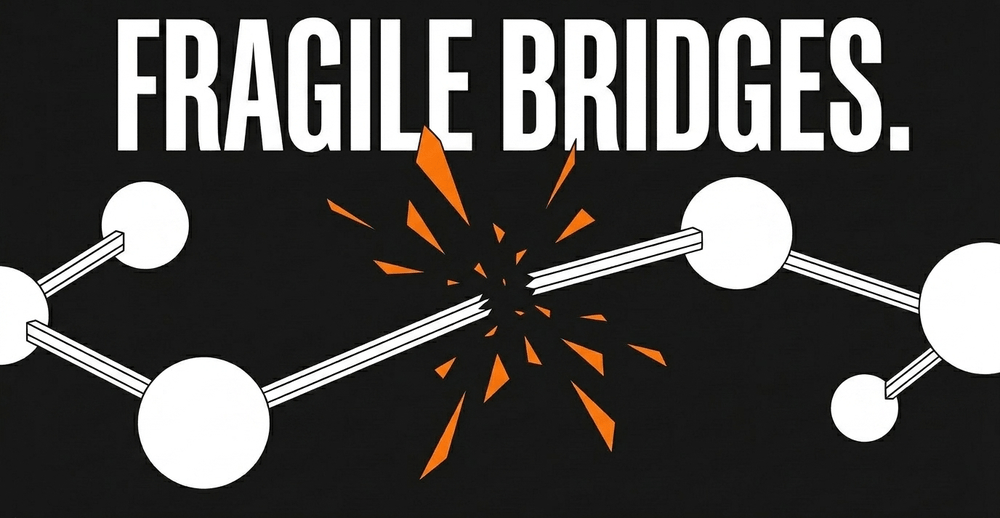
The expansion across multiple chains has introduced its own complexity. Cross-chain bridges, which allow assets to move between different blockchain networks, have emerged as one of the most frequently exploited attack surfaces in the ecosystem, given the technical difficulty of maintaining consistent security guarantees across heterogeneous environments.
Expanding horizons beyond finance
While DeFi remains the primary use case, the logic of smart contracts is beginning to permeate other sectors. The ability to manage trust and compliance through code has clear applications in fields where record-keeping and verification are paramount.
- Legal: Smart contracts can automate the execution of certain legal clauses, such as the release of escrow funds upon verified delivery of goods or the distribution of royalties to content creators in proportion to verified consumption data.
- Healthcare: Managing patient data and consent through immutable logs can enhance privacy and interoperability across fragmented health systems, reducing the administrative burden of records management.
- Real estate: Tokenizing property allows for fractional ownership and the automation of rental payments and title transfers, reducing the friction and cost associated with traditional property transactions.
These non-financial applications are moving from the experimental phase into early adoption in several jurisdictions. The objective is to apply the same principles of automation and transparency to physical and data-heavy industries, reducing the administrative burden that currently defines these sectors.

How to evaluate a smart contract before committing capital
For those approaching DeFi as participants rather than observers, the technical complexity of smart contracts does not eliminate the obligation to conduct due diligence - it redefines what due diligence looks like. The following principles represent a practical starting point.
- Audit status: Has the contract been audited by a recognized firm, and is the report publicly available? A single audit from a lesser-known provider is not equivalent to multiple reports from firms with established track records.
- Audit age and scope: An audit conducted before a major protocol upgrade may not cover the current code. Check whether the audited commit hash matches the deployed contract.
- Bug bounty programs: Reputable protocols maintain active bug bounty programs, typically hosted on platforms such as Immunefi, that incentivize the responsible disclosure of vulnerabilities.
- Time in production: Contracts that have secured significant TVL over extended periods without incident provide a degree of empirical confidence that newly deployed contracts cannot. This is sometimes called battle-tested code.
- Governance structure: Assess who controls upgrade keys and emergency pause functions. A protocol that is nominally decentralized but controlled by a two-of-three multisig among known founders retains meaningful centralization risk.
- Oracle dependencies: Identify which oracles the protocol relies upon and whether those oracle feeds have adequate decentralization and manipulation resistance.
"Code is law only when the code is correct. The due diligence burden in DeFi does not disappear - it shifts from evaluating counterparties to evaluating contracts."
No checklist eliminates risk entirely. But approaching smart contract protocols with the same rigor applied to counterparty evaluation in traditional finance meaningfully reduces the probability of a catastrophic outcome.
A skeptical look at the automated future
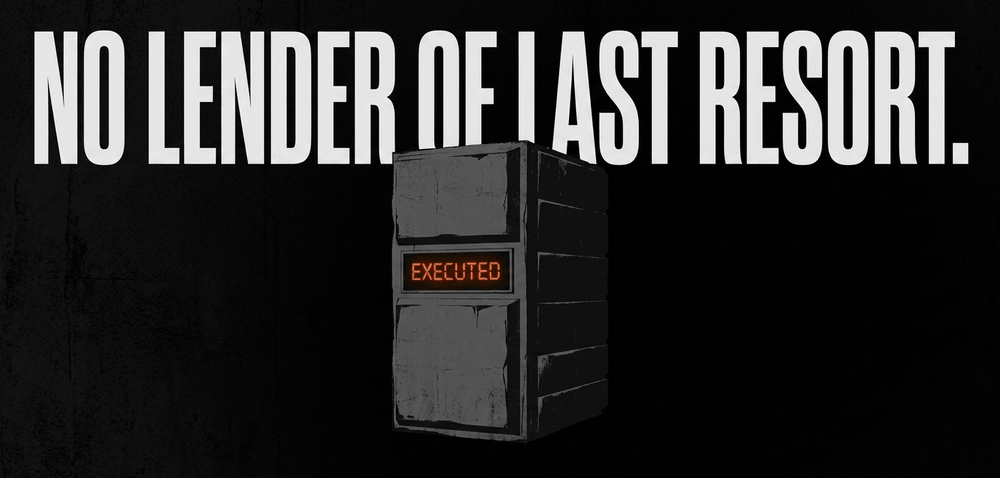
Despite the technical elegance of smart contracts, a measured perspective on their broader adoption remains essential. The transition to an algorithmic financial system is not without friction. The loss of human discretion means there is no lender of last resort and no judge to appeal to when the code executes a technically correct but economically devastating outcome. The rigidity that provides security also creates inflexibility in exceptional circumstances - a feature that traditional financial safety nets were specifically designed to address.
Furthermore, the reliance on oracles introduces a persistent point of failure that can undermine the very decentralization the system seeks to achieve. If the data feeding the contract is compromised, the contract itself becomes a precision instrument for inaccuracy. The industry is in a sustained phase of refining these bridges between the digital and physical worlds, with decentralized oracle networks such as Chainlink representing the current leading attempt at a robust solution.
The skills required to audit, deploy, and interact safely with smart contracts also represent a meaningful barrier to genuine democratization. The vision of a globally accessible financial system is compelling, but it currently requires a level of technical literacy that excludes the majority of the global population that DeFi theoretically exists to serve.
In conclusion, smart contracts represent a fundamental shift in how human cooperation is organized at scale. By moving the locus of trust from institutions to mathematics, they offer a glimpse into a financial system that is more efficient, transparent, and potentially more accessible. The path forward requires a sober and ongoing assessment of the risks associated with immutable code, the evolving regulatory environment, and the continued development of robust security standards to protect all participants in this still-maturing digital economy.
Share now









Key takeaways
- Smart contracts are self-executing protocols with terms written directly into code, deployed on blockchain networks such as Ethereum, Solana, and Polygon.
- These protocols automate core processes in decentralized lending - including collateral validation, margin enforcement, and liquidation - without any human intervention.
- The trustless model eliminates the need for centralized intermediaries in binding agreements, replacing institutional trust with cryptographically verifiable code.
- Immutability ensures that deployed smart contract code cannot be altered after launch, creating a permanent and publicly verifiable record of terms.
- Most DeFi smart contracts are open source, allowing any technically proficient individual to audit the logic - enabling community-level scrutiny that is impossible in traditional finance.
- Composability allows independent DeFi protocols to interact and interlock, enabling developers to build sophisticated financial instruments from simpler smart contract primitives without requiring permission or licensing.
- Maximal Extractable Value (MEV) refers to profit extracted by reordering or inserting transactions within a block - a structural phenomenon with both beneficial (arbitrage) and predatory (sandwich attacks) expressions.
- Formal verification uses mathematical proofs to guarantee that a smart contract behaves correctly under all possible inputs and conditions, going beyond conventional audit testing.
- Zero-knowledge (ZK) proof systems allow smart contracts to verify sensitive information - such as solvency or regulatory compliance - without exposing the underlying data, resolving a key tension between blockchain transparency and institutional privacy requirements.
- Security risks include reentrancy attacks, oracle manipulation, and cross-chain bridge vulnerabilities, with hundreds of millions of dollars lost to DeFi-specific exploits annually.
- Ethereum's mainnet launched on 30 July 2015, introducing the Ethereum Virtual Machine (EVM) and serving as the primary catalyst for the global DeFi ecosystem.
- Layer 2 solutions like Polygon scale Ethereum by processing transactions off-chain before final settlement on the main network; independent chains like Solana operate as entirely separate blockchain architectures.
- Flash loans - borrowed and repaid within a single transaction block - are a DeFi-native financial instrument made possible entirely by the atomicity of smart contract execution.
- Decentralized Autonomous Organizations (DAOs) use smart contracts to govern protocol decisions through on-chain token voting, replacing centralized management structures with code-enforced collective processes.
- Real-world asset (RWA) tokenization is a rapidly growing application that brings traditional financial instruments - such as government bonds and private credit - onto blockchain infrastructure managed by smart contracts.
- The EU's Markets in Crypto-Assets (MiCA) regulation, which came into full effect in December 2024, established the first comprehensive regulatory framework directly affecting smart contract-based stablecoin issuers.
- The collapse of the TerraUSD (UST) algorithmic stablecoin in May 2022 exposed critical vulnerabilities in purely algorithmic peg designs and accelerated global regulatory scrutiny of DeFi mechanisms.
- Beyond finance, smart contracts are being applied in legal, healthcare, and real estate sectors to automate compliance, record-keeping, and transactional logic - moving from experimental to early adoption.
- Key due diligence factors before committing capital to a smart contract protocol include audit status and scope, bug bounty programs, time in production, governance structure, and oracle dependencies.
Sources
- Inta Capital Swiss https://intacapitalswiss.com/the-rise-of-defi-smart-contracts-and-collateral-in-the-digital-age/
- Antier Solutions https://www.antiersolutions.com/blogs/the-role-of-smart-contracts-in-decentralized-finance/
- DeFi Education Fund https://www.defieducationfund.org/docs/educational/explainers/smart-contracts/
- CoinMarketCap https://coinmarketcap.com/academy/article/a-dive-into-smart-contracts-and-defi
- Hacken https://hacken.io/discover/defi-security/
- Ethereum.org https://ethereum.org/ethereum-history-founder-and-ownership/
- Flashbots https://www.flashbots.net/
- Immunefi https://immunefi.com/
- Certora https://www.certora.com/
- Chainlink https://chain.link/
- OpenZeppelin https://www.openzeppelin.com/
- European Securities and Markets Authority (MiCA overview) https://www.esma.europa.eu/esmas-activities/digital-finance-and-innovation/markets-crypto-assets-regulation-mica
- Published 2026-06-06 19:49
- Modified 2026-06-10 23:16

-
Redaction