
-
 Redaction
Light hygiene: the hidden key to metabolic health
Discover how morning sunlight and evening darkness shape insulin sensitivity, weight, and diabetes risk - plus simple habits to align your body's clock.
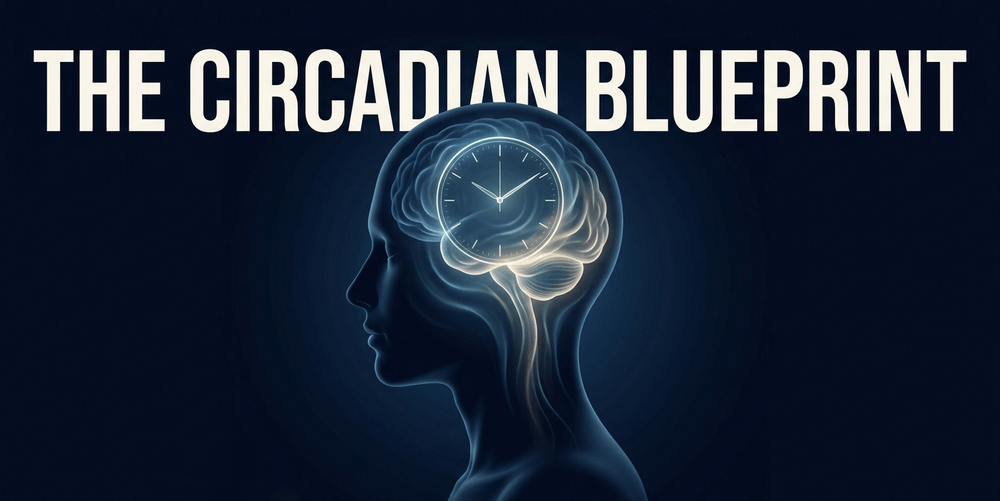
The human body does not operate as a static machine but rather as a rhythmic symphony governed by an internal tempo known as the circadian blueprint. This biological architecture, refined over millions of years of evolution under the solar cycle, dictates nearly every aspect of our physiological existence. From the subtle ebb and flow of core body temperature to the complex orchestration of insulin sensitivity and lipid metabolism, our health is inextricably linked to the light-dark cycle of our environment. As we move further into a technologically saturated era, the concept of light hygiene has emerged as a critical pillar of metabolic wellness, standing alongside nutrition and exercise as a primary determinant of long-term health outcomes.
What makes this topic so urgent isn't theoretical. It's measurable, repeatable, and - as we'll see - reversible with surprisingly small changes to how and when we expose ourselves to light.
The master conductor: understanding the circadian system
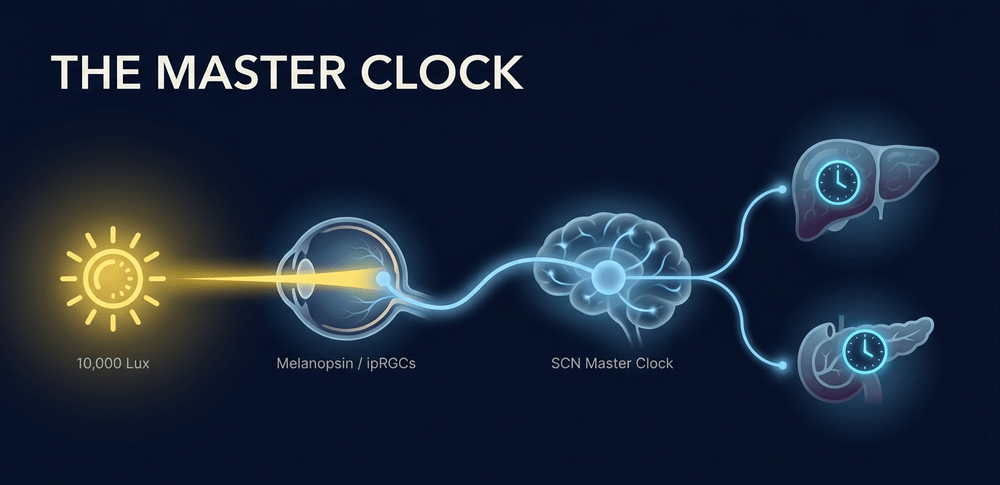
At the heart of our internal timing system is the suprachiasmatic nucleus (SCN), a tiny region located in the hypothalamus of the brain. Often referred to as the master clock, the SCN is responsible for synchronizing the trillions of peripheral clocks located in the liver, pancreas, adipose tissue, and skeletal muscle. This synchronization ensures that metabolic processes occur at the optimal time of day. For instance, the body is naturally primed to process glucose more efficiently during daylight hours when food intake is most likely, while transitioning toward repair and fat oxidation during the dark phase of the night.
This system relies on specific environmental cues, known as zeitgebers (German for "time-givers"), to stay aligned with the external world. While temperature and social interactions play minor roles, light is by far the most potent zeitgeber. Specialized cells in the eye, called intrinsically photosensitive retinal ganglion cells (ipRGCs), contain a photopigment known as melanopsin. Unlike the rods and cones that allow us to see shapes and colors, these cells are specifically designed to detect brightness and communicate that information directly to the SCN. This pathway informs the brain whether it is day or night, triggering a cascade of hormonal responses that define our metabolic state.
The role of melanopsin and blue light
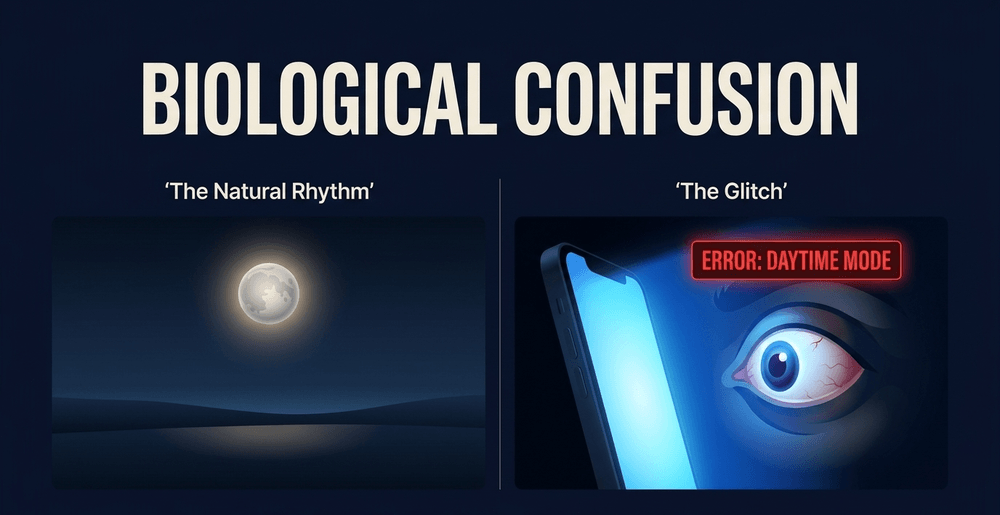
Melanopsin is uniquely sensitive to short-wavelength blue light, peaking at approximately 480 nanometers. This is the specific frequency most abundant in natural morning sunlight. When this light hits the retina, it signals the SCN to suppress melatonin production and increase cortisol, effectively telling the body to wake up and begin its active metabolic phase. The modern world, however, is now flooded with this same blue light from artificial sources - LED bulbs, smartphones, tablets, and television screens - long after the sun has set. This creates a state of biological confusion, where the master clock receives a daytime signal during a period when the body should be preparing for restorative sleep and metabolic maintenance.
It's a strange paradox of progress: the same technology that lets us read, work, and connect after dark is quietly working against the very system that keeps our metabolism in rhythm.
The metabolic cost of artificial light at night
When we expose ourselves to artificial light at night (ALAN), we are essentially rewriting our circadian blueprint in real time - often with detrimental consequences for our waistlines and blood sugar levels. The disruption of melatonin is perhaps the most well-documented effect of evening light exposure. Melatonin is not merely a sleep hormone; it is a powerful antioxidant and a regulator of glucose metabolism. A growing body of research, including narrative reviews on artificial light at night and liver health, indicates that blue-enriched light in the 460-480 nanometer range suppresses melatonin, desynchronizes the central clock from peripheral clocks in organs like the liver, and disrupts the delicate balance of glucose and lipid metabolism - setting the stage for insulin resistance and oxidative stress.
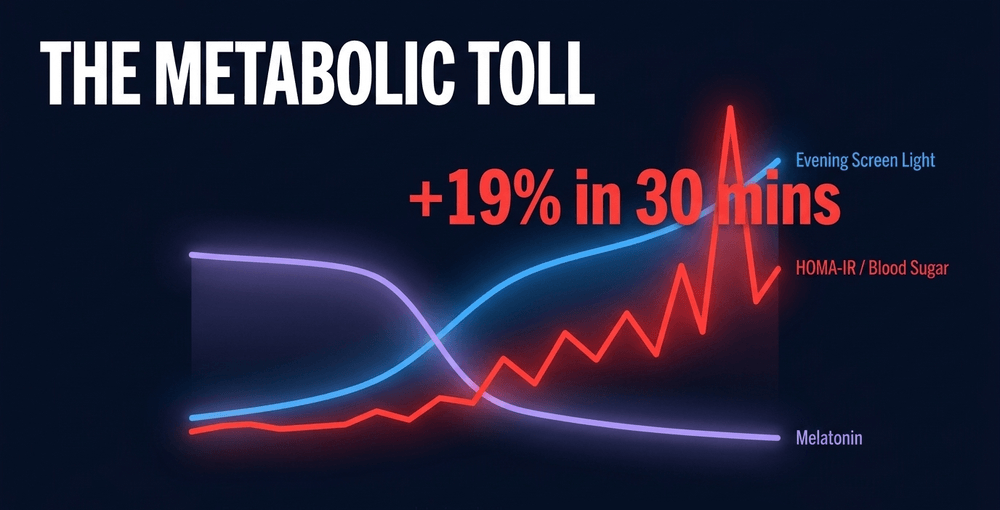
Data from Northwestern Medicine has provided startling insight into how quickly this disruption can manifest. In a controlled inpatient study, nineteen healthy adults were exposed to three hours of blue-enriched light either shortly after waking or roughly ten hours later, in the evening. The results were striking: bright light exposure increased insulin resistance in both the morning and evening groups compared to dim light. Most notably, evening blue-enriched light caused higher peak glucose levels than dim light did - something that didn't happen in the morning group. Within just 30 minutes of exposure, a measure of insulin resistance known as HOMA-IR was roughly 19% higher in the evening group, and, interestingly, even higher - about 30% - in the morning group, though without the corresponding glucose spike. This suggests that even brief periods of scrolling through a digital device before bed can measurably impair the body's ability to process the nutrients from the previous meal.
A separate Northwestern study published in PNAS found something equally unsettling: a single night of sleeping in a moderately lit room (about 100 lux, roughly the brightness of a hallway light, compared with just 3 lux) was enough to increase insulin resistance the following morning and to keep the cardiovascular system in a more "daytime" state of activation throughout the night, when it should have been winding down. The researchers described this as the autonomic nervous system staying in a state of sympathetic activation - the same branch responsible for the "fight or flight" response - even while the participants were fast asleep.
Implications for weight gain and obesity
The link between light hygiene and obesity is supported by both epidemiological and mechanistic evidence. A landmark study published in JAMA Internal Medicine, which followed nearly 44,000 women over roughly five years as part of the NIH-funded Sister Study, found that those who slept with a television or a light on in the room were about 17% more likely to gain 11 pounds (around 5 kilograms) or more over the study period - even after accounting for diet, physical activity, and sleep duration. Interestingly, a small nightlight didn't carry the same risk; it was specifically exposure to a television or room light that mattered. This wasn't just a matter of lost sleep leading to tiredness or mindless snacking. It points to something more fundamental: a shift in how the body partitions and stores energy.
Animal models have helped clarify the underlying mechanisms. When animals are exposed to constant light, the amplitude of their circadian rhythms flattens. This leads to a reduction in energy expenditure and a decrease in fat oxidation, even if total caloric intake remains the same. Essentially, the light-disrupted body becomes more efficient at storing fat and less efficient at burning it. Some of the most compelling recent work has even tested whether this process can be reversed; in mouse studies published in the Biomedical Journal, a compound that activates certain circadian-clock genes (a molecule sometimes referred to by the experimental name SR9009, or "stenabolic") was able to partially reverse the weight gain, insulin resistance, and white fat accumulation caused by constant light exposure over eight weeks - reinforcing the idea that the clock genes themselves are doing the heavy lifting here, not just behavior.
Furthermore, poor light hygiene appears to alter the delicate balance of hunger hormones. It tends to increase ghrelin, which signals hunger, and decrease leptin, which signals satiety, although this effect has been more consistently observed in studies combining light exposure with sleep restriction than in light exposure alone. This hormonal shift often leads to intense cravings for high-carbohydrate and sugary foods late at night, creating a feedback loop that's hard to break without addressing the lighting environment itself.
"These results provide further evidence that bright light exposure may influence metabolism," noted Kathryn Reid, a research associate professor of neurology at Northwestern University's Feinberg School of Medicine, whose team has run some of the most cited experiments in this field.
Chronotype: the intersection of biology and lifestyle
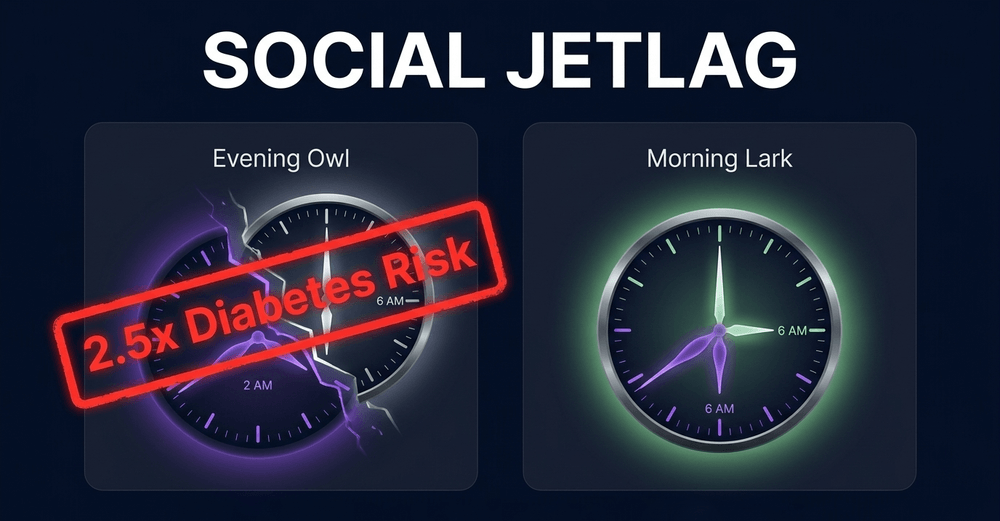
Every individual possesses a chronotype - an inherent preference for the timing of sleep and activity. While some are naturally morning larks, others are evening owls, and most of us fall somewhere in between. Research has shown that evening chronotypes are at a significantly higher risk for metabolic syndrome and type 2 diabetes. According to the Finnish FINRISK 2007 study, which examined over 6,000 adults, individuals with an evening chronotype had roughly 2.5 times the odds of developing type 2 diabetes compared to those who preferred mornings - and this association held even after accounting for how long and how well people slept. Larger meta-analyses pooling multiple studies have found smaller but still meaningful associations, on the order of roughly 10 to 20% higher odds of type 2 diabetes for evening types, which makes sense; chronotype is a spectrum, and the size of the effect tends to vary depending on how strictly "evening type" is defined and which population is studied.
This increased risk stems partly from a phenomenon known as social jetlag. Evening types often find themselves forced into early-morning schedules for work or school, creating a chronic mismatch between their internal biological clock and their external environment. This misalignment tends to push meals later into the evening, when insulin sensitivity is naturally at its lowest. Large cohort studies from various populations, including research drawing on the Korean Genome and Epidemiology Study, have linked this kind of circadian mismatch to a higher prevalence of metabolic disorders - underscoring the importance of aligning one's light exposure and eating windows with one's natural biological rhythm wherever possible.
If you're someone who's been working on optimizing your circadian rhythm, you might also find it useful to read about what really happens to your body while sleeping, since the deeper restorative processes of sleep and the timing signals discussed here are deeply intertwined.
Molecular pathways and clock genes
At the molecular level, the circadian blueprint is maintained by a complex network of clock genes, including Per1, Per2, Bmal1, and Cry1. These genes operate in a transcriptional-translational feedback loop that takes approximately 24 hours to complete - essentially, they switch each other on and off in a continuous loop that the body uses to keep time. Chronic exposure to even low levels of light at night can alter the expression of these genes, not only in the brain but also in peripheral tissues like the liver and pancreas. A recent comprehensive review on circadian rhythm and insulin resistance describes this relationship as bidirectional: disruptions in clock genes (CLOCK, BMAL1, PER, CRY) can drive insulin resistance, but insulin resistance itself can, in turn, alter the expression of clock-controlled genes and melatonin receptors such as MTNR1B. It's a feedback loop within a feedback loop.
When the circadian clock in the pancreas is genetically disrupted in animal models, it leads directly to the development of diabetes-like symptoms. This highlights that our metabolic health is not just about the food we eat, but the temporal integrity of our cellular machinery - the when matters almost as much as the what.
The other half of the equation: when we eat
Light isn't the only signal the body listens to. Feeding patterns act as a second, powerful synchronizer - particularly for the peripheral clocks in the liver, gut, and fat tissue. This is the basis of an emerging field called chrononutrition, which examines how the timing of meals interacts with the light-dark cycle to shape metabolic outcomes.
Research into time-restricted eating, where food intake is confined to a defined window of the day, has consistently found that eating earlier in the day - aligned with the period of highest light exposure and insulin sensitivity - tends to produce better results for blood sugar regulation, blood pressure, and insulin resistance than the same eating window shifted later into the evening. In a sense, this is the dietary mirror image of light hygiene: just as bright light late at night sends a confusing "daytime" signal to the brain, a large meal late at night sends a confusing "daytime" signal to the liver and pancreas, asking them to spring into action precisely when they're biologically primed to be winding down. The two systems - light and food - are not separate levers so much as two hands on the same clock.
Shift work and metabolic syndrome
Nowhere is the impact of light hygiene more visible than in shift workers. These individuals often live in a state of near-permanent circadian misalignment, and the data reflects that. A large umbrella review pooling 33 systematic reviews found that shift workers overall face roughly a 25% higher risk of being overweight, a figure that climbs to around 38% specifically among those working rotating night shifts. The same review found roughly a 10% excess risk of diabetes among shift workers generally, regardless of the specific type of night work, with a suspected dose-response effect in women of an additional 5 to 7% increase in risk for every five years of night-shift work.
Animal models of "jet lag" and night work paint a similar picture. In rat studies, simply inverting the light-dark cycle by 12 hours - mimicking what a night-shift worker experiences - was enough to cause insulin resistance at the start of the animals' new "active" phase, even though other rhythms, like activity levels, adapted within just a few days. The glucose-handling system, in other words, seems to be one of the slowest parts of the body to catch up after a circadian disruption.
This population serves as a stark, real-world reminder of the physiological toll that occurs when we repeatedly ignore our internal blueprint.
What a major new study revealed about light exposure and diabetes
One of the most compelling pieces of evidence to emerge recently comes from a large-scale analysis published in The Lancet Regional Health - Europe, conducted by researchers at Flinders University. The study tracked nearly 85,000 UK Biobank participants who wore light sensors for a week and were then followed for an average of almost eight years. The findings were notable for their scale: people exposed to the brightest nighttime light (the top 10% of the group) had roughly 1.5 times the risk of developing type 2 diabetes compared to those with the darkest nights, with the risk climbing incrementally across each brighter-light category in between - from about 29% higher risk in the next tier up, to 39% higher in the tier after that, to 53% higher in the brightest group.
What's particularly striking is how this compares to genetic risk. The researchers found that the difference in diabetes risk between people with bright versus dark nights was similar in magnitude to the difference between people with low versus moderate genetic predisposition to diabetes. In other words, your nighttime lighting environment may matter about as much as a meaningful chunk of your genetic risk - and unlike your genes, it's something you can change starting tonight. Importantly, the association held up even after the researchers accounted for participants' polygenic risk scores, meaning that light exposure and genetics appeared to act as independent contributors to overall risk, rather than one simply masking the other.
As the study's senior author, Associate Professor Andrew Phillips, put it in the press materials accompanying the research: light exposure at night can disrupt circadian rhythms, leading to changes in insulin secretion and glucose metabolism that, over time, affect the body's ability to regulate blood sugar.

Practical strategies for light hygiene
Reshaping metabolic health does not necessarily require radical lifestyle changes; rather, it requires a mindful approach to how we interact with light throughout the day. By adopting a few key habits, we can reinforce our circadian blueprint and support our metabolic goals.
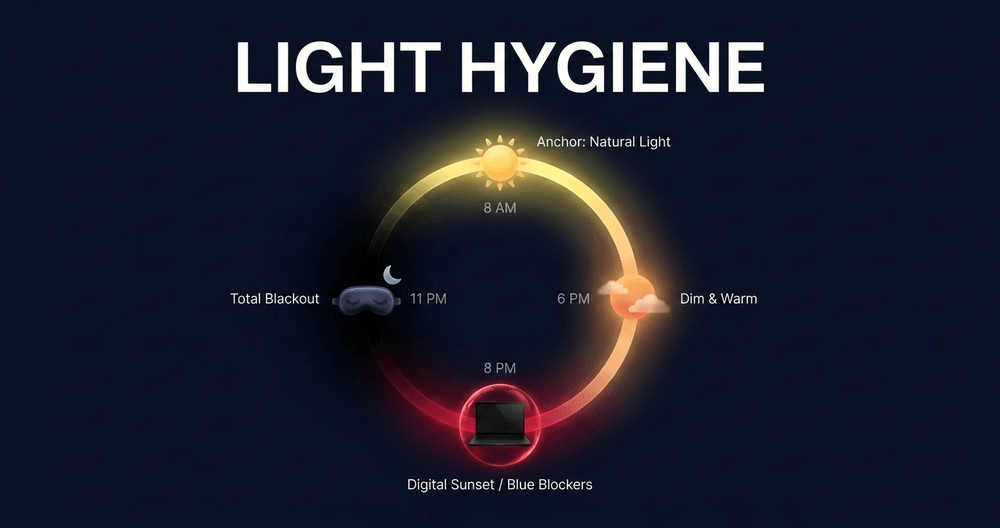
- Seek bright natural light early in the day. Within 30 to 60 minutes of waking, step outside or sit by a large window. Even on overcast days, outdoor light can reach several thousand lux - far brighter than typical indoor lighting - and this high-intensity exposure helps suppress any lingering melatonin and sets a strong anchor for the SCN. Most research suggests somewhere between 10 and 30 minutes is enough, depending on how bright it is outside.
- Prioritize daylight exposure throughout the day. Even on cloudy days, outdoor light provides a much broader and more intense spectrum than indoor lighting, helping to maintain alertness and metabolic vigor. Interestingly, the circadian system appears to be most sensitive to light in the morning - some research suggests that 15 minutes of bright light shortly after waking can have a stronger effect on your internal clock than two hours of the same brightness in the afternoon.
- Transition to dim, warm lighting as the sun sets. Red and orange wavelengths do not activate melanopsin-containing cells to the same degree as blue light, allowing the body to begin its natural transition into the sleep phase without unnecessarily suppressing melatonin.
- Implement a digital sunset. Aim to minimize screen use for at least an hour or two before bed. If devices must be used, utilize built-in software filters ("night mode" or similar) that shift the screen toward the warmer end of the spectrum, and consider lowering brightness as much as possible.
- Be thoughtful about blue-light filtering tools. Blue-light blocking glasses worn in the evening have shown promise for advancing sleep timing and reducing daytime irritability and disruptive behavior in studies on schoolchildren, even in some cases where melatonin levels themselves didn't change much - suggesting the benefit may not be purely hormonal. Amber-tinted lenses have long been studied for their effects on melatonin and sleep quality more broadly. The evidence for direct metabolic benefits, like fasting glucose, is still emerging, but for people who genuinely cannot avoid screens at night, these tools represent a reasonable, low-risk option to consider alongside other habits.
- Align your eating window with your light exposure. Where practical, try to front-load your largest meals earlier in the day, when natural light exposure is highest and insulin sensitivity tends to be at its best, rather than relying heavily on a large dinner or late-night snacking.
- Optimize the sleep environment. Ensure the bedroom is as dark as possible. Even low levels of light, such as those from an alarm clock, charging cable indicator, or streetlamp seeping through curtains, can be detected through closed eyelids and influence the SCN. Blackout curtains and sleep masks remain among the most effective and low-cost interventions available.
"It's cool that bright light has this effect, but we don't understand why yet," said Reid. "In theory, you could use light to manipulate metabolic function."
The future of circadian medicine
As we look toward the future, the integration of light hygiene into standard medical care represents a significant opportunity for the prevention and management of metabolic diseases. Researchers are beginning to understand that the timing of light exposure may be just as important as its intensity - a concept sometimes called "light as medicine."
In clinical and research settings, the use of OLED lighting, which produces a fundamentally different light spectrum with less blue-wavelength content than traditional LEDs, has shown particular promise. In one controlled study from the University of Tsukuba in Japan, ten male participants spent four hours before bed under either LED, OLED, or dim lighting (under 10 lux), then slept in a metabolic chamber that measured their energy use in real time. The results were clear: fat oxidation during sleep was significantly higher after exposure to OLED light compared to LED light, alongside lower energy expenditure and core body temperature - patterns that more closely resembled what happened under dim light. The researchers also found that fat oxidation was positively correlated with levels of a melatonin metabolite following OLED exposure, suggesting the hormone may play a more direct role in fuel selection (burning fat versus carbohydrates) than previously appreciated, and that this role may depend on the specific spectral composition of the light involved.
It's a small study, and more research is needed before anyone redesigns their living room based on it - but it points toward a future where the type of light we use in our homes, offices, and hospitals could become a genuine, evidence-based tool for metabolic health, alongside diet and exercise. Some researchers in the field have even floated the idea of "light prescriptions": individualized recommendations for timing, intensity, and spectral composition of light exposure, much like a prescription for diet or exercise, tailored to a person's chronotype, occupation, and existing metabolic risk factors.
It's a small but growing area of inquiry, and one that fits neatly alongside other circadian-adjacent research - including work on how the brain resets and saves memories during sleep, which depends on many of the same underlying rhythms.
Putting it all together
Ultimately, our circadian blueprint is a roadmap for how to live in harmony with our biology. By respecting the natural cycle of light and dark, we provide our bodies with the necessary cues to regulate hormones, manage energy, and maintain a healthy weight. None of this requires perfection. A morning walk, dimmer evening lights, and a darker bedroom won't undo years of poor sleep or diet on their own - but as a foundation, they're remarkably cheap, remarkably accessible, and backed by a growing pile of evidence that says they matter more than most of us realize.
Light hygiene is a quiet but powerful form of self-care - a way to nurture our internal rhythm and protect our metabolic future in an increasingly luminous world.
Share now









Key takeaways
- The suprachiasmatic nucleus (SCN), a tiny region in the hypothalamus, acts as the body's "master clock," synchronizing peripheral clocks in the liver, pancreas, fat tissue, and muscle.
- Melanopsin, a photopigment in specialized retinal cells (ipRGCs), is most sensitive to blue light around 480 nm - the wavelength most abundant in morning sunlight.
- In a Northwestern Medicine study, just 30 minutes of evening blue-enriched light raised insulin resistance (HOMA-IR) by about 19% compared to dim light - and by roughly 30% when the same exposure happened in the morning.
- Evening blue-enriched light exposure was linked to higher peak blood glucose after meals, an effect not seen with the same exposure in the morning.
- A single night sleeping with moderate room lighting (about 100 lux), versus near-darkness, was enough to raise insulin resistance the next morning and keep the cardiovascular system in a more "daytime" state overnight, according to a 2022 Northwestern PNAS study.
- A large NIH-funded study of nearly 44,000 women found that sleeping with a TV or light on was associated with a 17% higher likelihood of gaining 11 pounds (about 5 kg) or more over roughly five years.
- A 2024 Lancet Regional Health - Europe study of almost 85,000 people, tracked for nearly 8 years, found that those with the brightest nighttime light exposure had about 1.5 times the risk of type 2 diabetes compared to those with the darkest nights - and that this diabetes-risk difference was comparable to the difference between low and moderate genetic risk for the disease.
- People with an evening chronotype had roughly 2.5 times the odds of type 2 diabetes compared to morning types in Finland's FINRISK 2007 study, independent of sleep duration.
- Shift workers face roughly a 25% higher risk of being overweight (up to 38% for rotating night shifts) and around a 10% higher risk of diabetes, according to a large umbrella review of 33 systematic reviews.
- In a controlled sleep-lab study from the University of Tsukuba, exposure to OLED lighting (which emits less blue light than standard LEDs) before bed led to significantly higher fat oxidation during sleep compared to LED lighting, an effect linked to melatonin levels.
Sources
- Morning and Evening Blue-Enriched Light Exposure Alters Metabolic Function in Normal Weight Adults (PLOS ONE) https://journals.plos.org/plosone/article?id=10.1371/journal.pone.0155601
- Personal light exposure patterns and incidence of type 2 diabetes (The Lancet Regional Health - Europe) https://www.thelancet.com/journals/lanepe/article/PIIS2666-7762(24)00110-8/fulltext
- Sleeping with artificial light at night associated with weight gain in women (National Institutes of Health) https://www.nih.gov/news-events/news-releases/sleeping-artificial-light-night-associated-weight-gain-women
- Light exposure during sleep impairs cardiometabolic function (PNAS) https://www.pnas.org/doi/10.1073/pnas.2113290119
- Metabolic responses to polychromatic LED and OLED light at night (Scientific Reports / Nature) https://www.nature.com/articles/s41598-021-91828-6
- Published 2026-06-12 20:31
- Modified 2026-06-12 20:31

-
Redaction