

-
 PRO
PRO -
 Redaction
The Paleolithic palette: humanity's first art
Explore the pigments, tools, and cave sites behind humanity's oldest art - from a 100,000-year-old South African paint studio to the bison of Altamira.
The echoes of human creativity stretch back into the deep time of the Paleolithic, an era often called the Old Stone Age. It was here, amidst formidable landscapes and shifting climates, that our ancestors first began articulating their understanding of the world through art. The Paleolithic Palette is not merely a collection of colors - it represents the ingenious array of materials, sophisticated techniques, and carefully chosen locations that defined humanity's very first studios. While often associated with the period spanning roughly 30,000 to 10,000 BCE, archaeological discoveries continually push the origins of these artistic endeavors further back, revealing a creative impulse far more ancient than we once imagined.
These initial studios were predominantly the dark, echoing chambers of caves, transformed into galleries of breathtaking imagery. Yet the artistic impulse was never confined to monumental rock faces. Portable art - carved figurines, decorated bones, perforated shell beads - also played a significant role, providing a more intimate and mobile canvas for expression. Understanding this ancient palette requires a journey across continents and through millennia, examining the physical evidence left behind by our earliest artists.

Chronology and key sites of Paleolithic artistry
The story of Paleolithic art is told through a network of remarkable sites, each offering a different window into the minds and hands of our ancestors. These locations reveal not only the antiquity of human artistic expression but also the evolving complexity of methods and symbolism across thousands of years - and, more recently, across continents that were long overlooked.
Blombos Cave, South Africa: The dawn of pigment use
Far from the more famously known European cave systems, Blombos Cave on South Africa's southern Cape Coast provides some of the earliest and most compelling evidence of sophisticated artistic practice. It is here that archaeologists unearthed the oldest known evidence of paint-making: a meticulously prepared ochre-based mixture, astonishingly dated to 100,000 years ago.
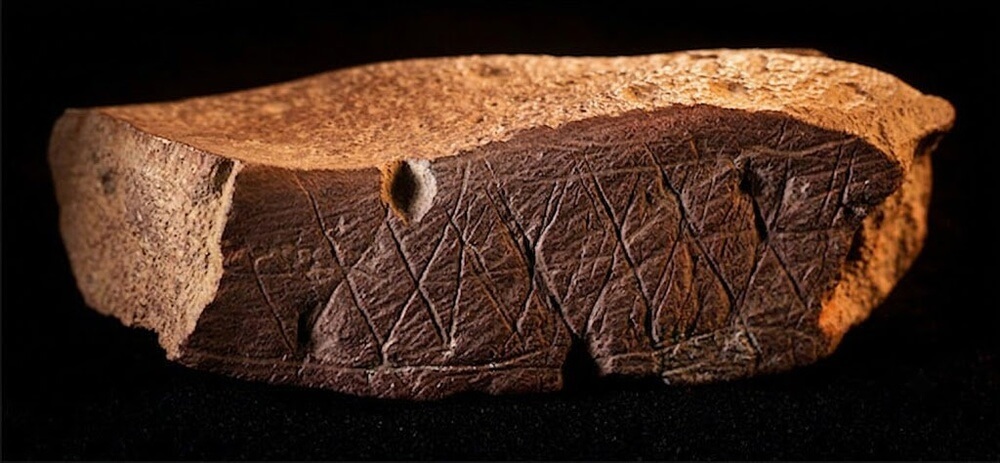
The ochre-rich mixture, possibly used for decoration, painting, and skin protection, was stored in two abalone shells. The two coeval, spatially associated toolkits were discovered in situ and included ochre, bone, charcoal, grindstones, and hammerstones. What makes this assembly so striking is not just the age, but the deliberate complexity of the process itself. The ochre pieces had to be crushed and ground into powder, the bones heated to release their oils and then crushed, and wood burned to create charcoal before everything was combined inside the shells and gently stirred.
The recovery of these toolkits adds evidence for early technological and behavioural developments and documents deliberate planning, production, and curation of a pigmented compound. It also demonstrates that humans had an elementary knowledge of chemistry and the ability for long-term planning 100,000 years ago.

Beyond paint-making, Blombos has yielded perforated shell beads dating to at least 75,000 years ago, as well as abstract designs etched onto pieces of ochre - confirming a capacity for symbolic thought long before the figurative cave art of Europe. More recently, a 2025 study published in Science Advances added another layer to the site's significance. Researchers at SapienCE found that ochre was not only a medium for symbolic expression but also a key material in specialized stone tool production, reflecting a level of technological sophistication previously associated with much later periods.
Sulawesi, Indonesia: The world's oldest known cave art
For decades, the story of cave art was understood primarily through a European lens. That framing has been decisively dismantled by discoveries in Southeast Asia.
A drawing of a hand on the wall of a cave in Sulawesi, Indonesia is now the oldest known rock art in the world, dating to at least 67,800 years ago - exceeding the previous record holder in the same region by 15,000 years or more. The faint image - a negative outline of a human hand created by placing a hand against a rock wall and spraying pigment around it - was discovered in a limestone cave called Liang Metanduno on Muna, a small satellite island off Sulawesi.
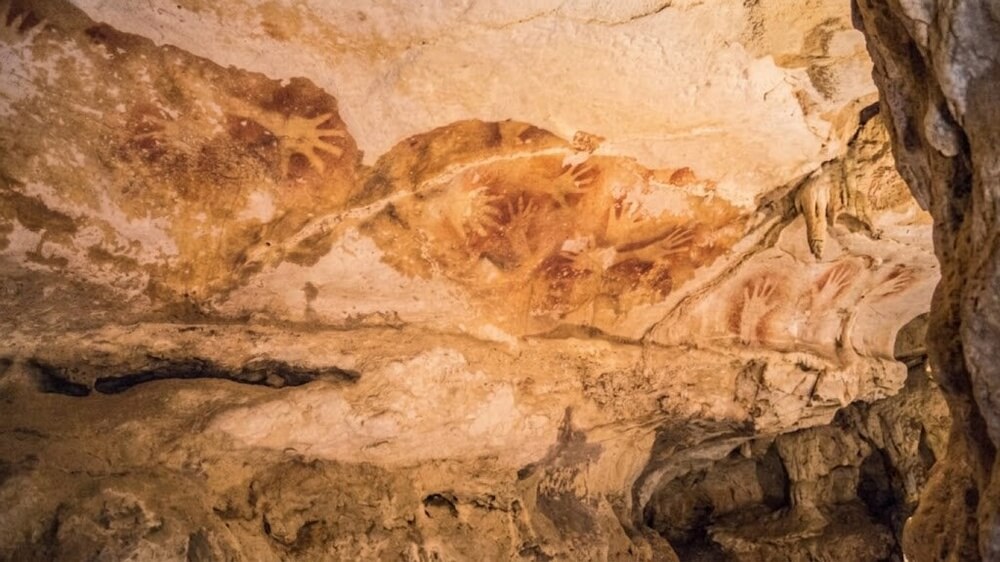
The paintings were dated by analyzing mineral crusts that had gradually formed on top of them. The finding is "pretty extraordinary, because usually rock art is very difficult to date and it doesn't date back to anywhere near that old," said Adam Brumm, a professor of archaeology at Griffith University in Brisbane, Australia.
This discovery, published in Nature in January 2026, sits alongside a growing body of evidence from Sulawesi. In 2024, the same research team dated a nearby painting depicting three humanlike figures interacting with a pig to approximately 51,200 years old. Together, these finds suggest that the Sulawesi caves were sites of sustained artistic activity across many tens of thousands of years - and that the human impulse to make images on rock walls may have deep roots among the ancestors of the first Australians.

Porc-Epic Cave, Ethiopia: An ancient pigment processing hub
Adding to the growing narrative of early African artistry, Porc-Epic Cave near Dire Dawa in eastern Ethiopia has revealed what some researchers have termed the world's first documented art studio. The 40,000-year-old Porc-Epic Cave served as a site for the continuous production of ochre powder for at least 4,500 years.
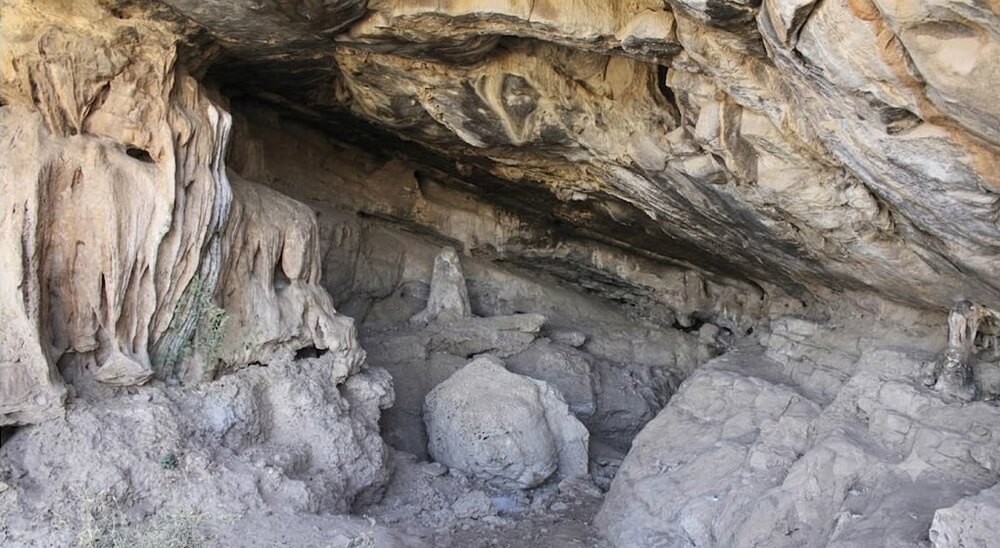
At the site, archaeologists found a stash of 4,213 pieces - nearly 90 pounds - of ochre, the largest such collection ever discovered at a prehistoric site in East Africa. Ancient visitors processed iron-rich ochre stones by flaking and grinding the raw materials to produce powders of varying coarseness in shades of yellow, orange, red, brown, and grey. The remarkable continuity of this practice over such a long period points to a deep-seated cultural tradition - not casual or incidental use, but something deliberately transmitted across generations.

Chauvet-Pont-d'Arc Cave, France: A masterpiece of ancient art
Nestled in the Ardèche region of southern France, Chauvet-Pont-d'Arc Cave is a sanctuary of ancient art, housing some of the oldest known paintings in Europe. A large multidisciplinary dating program has obtained more than 350 dates using multiple methods over the last fifteen years, showing two distinct periods of human activity in the cave: one from 37,000 to 33,500 years ago, and another from 31,000 to 28,000 years ago.
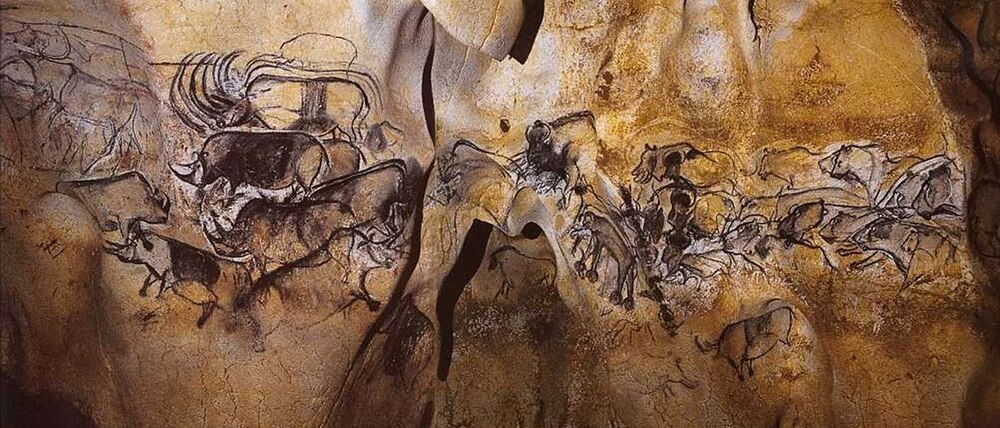
The Aurignacian people, among the first Homo sapiens to live in Europe, brought to the cave a fully formed artistic tradition that used a variety of techniques involving charcoal and red pigment. The artistry within Chauvet is characterized by an extraordinary level of sophistication - the artists employed shading and perspective with remarkable skill, creating a sense of depth and movement that rivals much later traditions. Animals like lions, bears, rhinoceroses, and mammoths dominate the narrative, often rendered with a dynamic energy that brings the ancient world to life.
The cave stretches over 1,000 feet in length and features two large chambers. The use of natural rock contours to enhance animal forms is particularly pronounced here, suggesting a deep understanding of the medium. Artists brought wood into the cave and burned it to create both light and charcoal for drawing - a practice confirmed by radiocarbon dating of the charcoal marks themselves.
For a broader picture of how ancient people engineered the spaces around them for symbolic and communal purposes, the study of sites like Chauvet connects interestingly with findings elsewhere - including research on acoustic properties in Neolithic megaliths that suggests early humans paid careful attention to how enclosed spaces could shape experience.

Lascaux Cave, France: The Sistine Chapel of prehistory
Perhaps the most famous Paleolithic site, Lascaux Cave in the Dordogne region of France offers a stunning collection of art dated to approximately 17,000 to 22,000 years ago, placing it within the early Magdalenian period. Over 600 wall paintings cover the interior walls and ceilings of the cave, representing primarily large animals typical of the Upper Paleolithic fauna in the area and combined with roughly 1,400 engravings. When symbols, abstract marks, and other imagery are counted alongside these, total figures across the site reach close to 6,000.
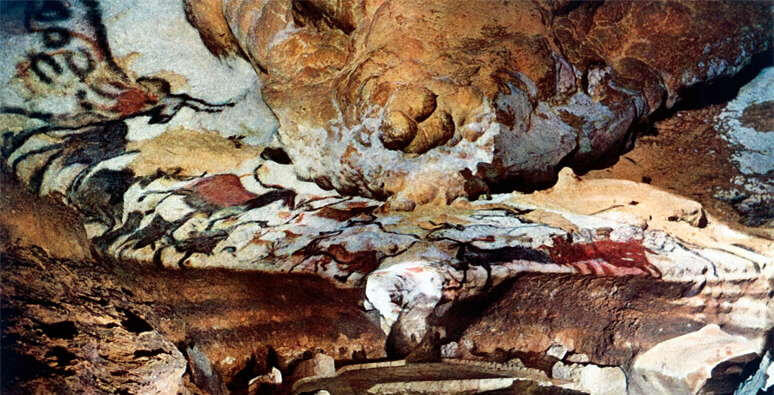
Horses dominate the compositions, but deer, aurochs, ibex, bison, and felines also appear. Interestingly, while reindeer bones are found in abundance in the archaeological deposit, reindeer are conspicuously absent from the walls. The cave also holds what may be the most haunting scene in all of Paleolithic art: a figure at the bottom of a shaft - part man, part bird-headed form - lying near a disemboweled bison with a broken spear.
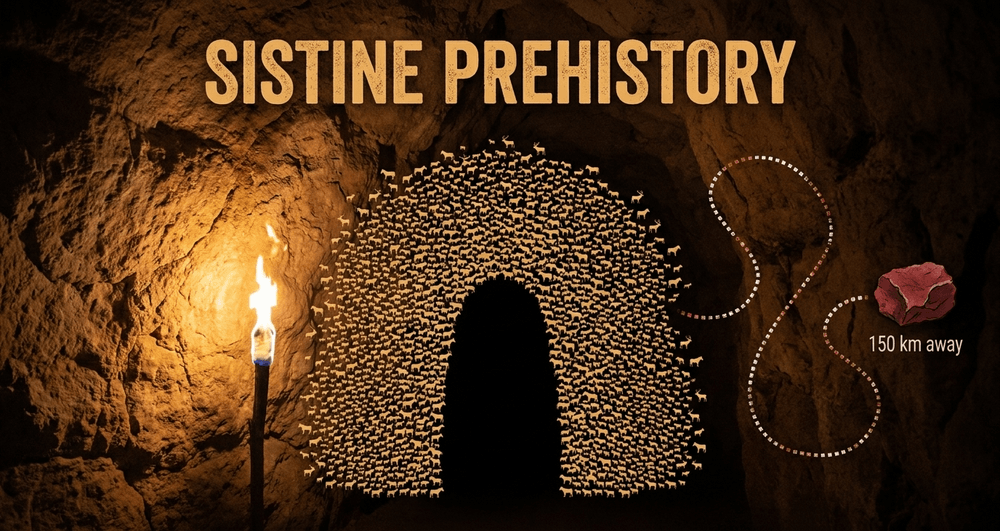
Lascaux also provides tangible evidence of the practical challenges faced by these ancient artists. Holes in the cave walls suggest that scaffolding or ladders were used to reach the lofty areas of the ceiling. The pigments themselves were sourced with extraordinary effort. There are no known deposits of the specific manganese oxides found at Lascaux anywhere in the surrounding area - the closest known source is approximately 250 kilometres away, in the central Pyrenees, suggesting either a trade or supply route or an extraordinary journey made in the service of art.
Altamira Cave, Spain: Bison of the great ceiling
Across the Pyrenees, in Cantabria, northern Spain, lies Altamira Cave, renowned globally for its polychrome cave paintings. The art was created over a period of 20,000 years, between 35,559 and 15,204 calendar years before present, with artists either respecting and avoiding existing depictions, or adding to them and using them in new figures - leaving a spectacular Paleolithic palimpsest.
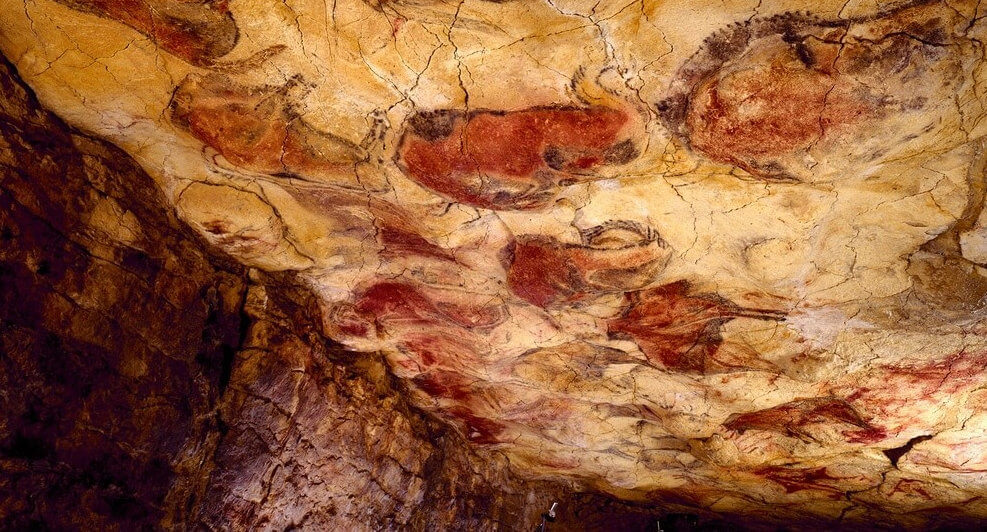
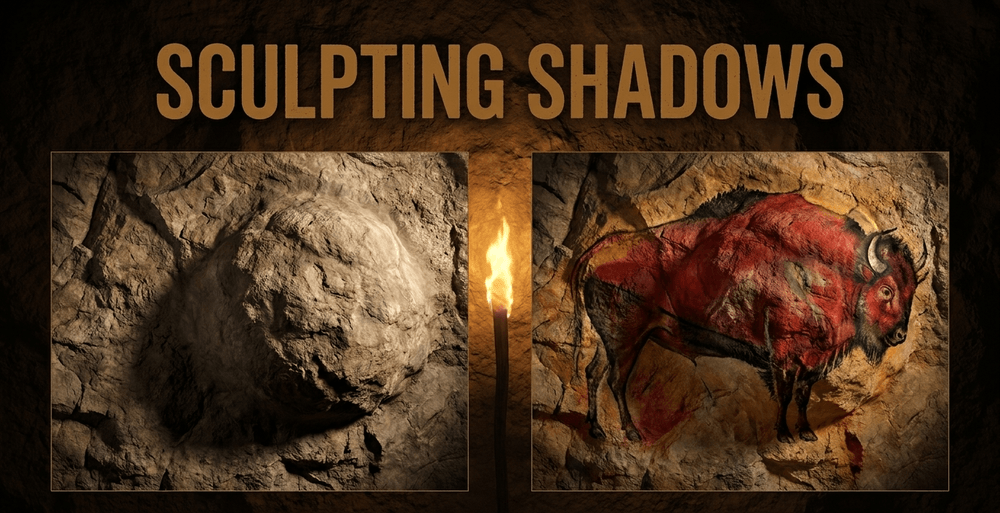
The most iconic feature is the Hall of the Polychromes ceiling, an expanse adorned with large polychrome figures including magnificent bison, horses, and a female deer reaching an impressive two metres in length. The Polychrome Ceiling depicts a herd of extinct steppe bison (Bison priscus) in different poses, two horses, a large doe, and possibly a wild boar. Artists expertly utilized the natural contours of the cave walls to imbue their subjects with a sense of three-dimensionality - the bulges and depressions of the rock were integrated into the forms of the animals, giving them volume and a lifelike presence that still stops visitors in their tracks. It was, in fact, an eight-year-old girl who first noticed these paintings when her father brought her to explore the cave in 1879.
Materials and pigments: the components of the Paleolithic palette
The vibrant hues that bring Paleolithic art to life were derived from the earth itself. Early artists possessed an intimate knowledge of their environment, meticulously identifying and processing natural mineral deposits to achieve their desired effects.
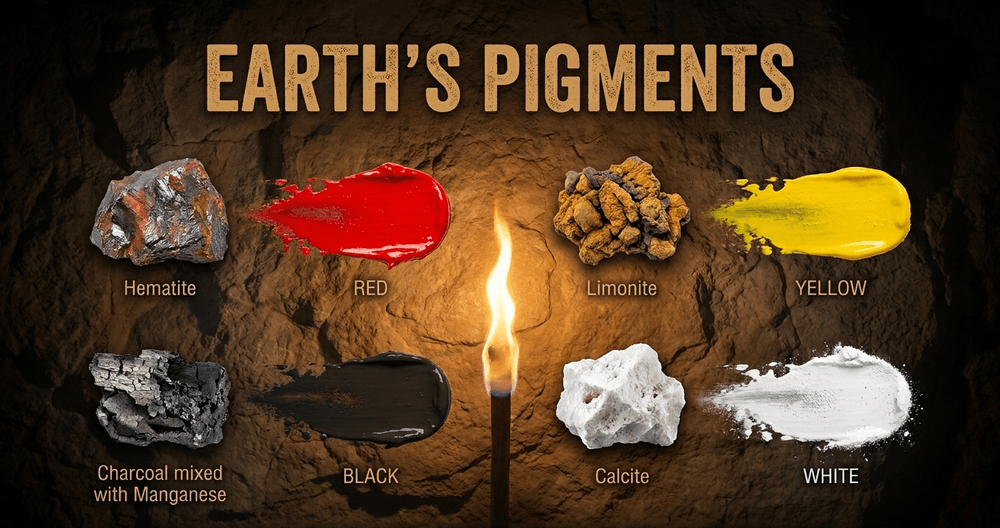
Red was the most ubiquitous color, primarily obtained from hematite (iron(III) oxide ochre). Other sources included bauxite and maghemite, particularly in regions like Provence. At Altamira, red ochre was the dominant pigment, providing a striking contrast against the dark cave walls.
Yellow pigments were chiefly sourced from limonite and goethite (both forms of hydrated iron oxide). At Lascaux, analysis confirms that the reds are hematites and the yellows are goethites.
Black was produced primarily from charcoal - derived from burnt organic material such as Scots pine at Chauvet - or from manganese oxides. Regional variations are clear: in the Périgord, black pigments were almost exclusively manganese-based, while sites in Lot, Ardèche, and Ariège relied more on wood or bone charcoal.
White was achieved using natural minerals such as calcite, chalk, kaolinite clay, or diatomaceous earth - providing stark contrasts or highlights within broader compositions.
Binders and preparation
The raw pigments, once selected, required preparation to become usable paint. They were ground into fine powders using grindstones and crushed bones, then mixed with organic liquids. Evidence points to the use of water, saliva, urine, animal fat, blood, bone marrow, and various plant extracts. The choice of binder would have influenced texture, drying time, and long-term durability. The recipe recovered at Blombos - ochre ground and mixed with heated bone and charcoal, stirred together in abalone shells - demonstrates an advanced grasp of material properties that amounts to a rudimentary form of chemistry.

Techniques and tools: the artisan's skill set
Creating Paleolithic art required a diverse array of techniques and specialized tools, reflecting a profound mastery of craft and an innovative spirit that continually surprises researchers.
Fingers were the simplest and most direct method - broad strokes, textured surfaces, immediate contact with the stone. Animal-hair brushes or crushed twigs likely served for finer detail, though most organic tools have long since decomposed. Spraying and blowing involved ejecting powdered pigment, mixed with water and possibly a binder, either directly from the mouth or through a hollowed-out bone - particularly effective for the hand stencils that appear across so many sites from Europe to Southeast Asia. Ochre crayons - pieces of pigment shaped and sharpened to a point - allowed for controlled, pencil-like lines. Engraving, perhaps the most common technique of all, involved cutting the rock surface with flint flakes or sharp bone fragments to create grooved outlines.

For shading and blended areas, charcoal marks were smeared or stumped with a finger or soft pad. And throughout it all, artists integrated the natural contours, crevices, and cracks of the cave walls into their compositions - not working against the rock, but with it. This is one of the most consistent and remarkable features across Paleolithic art, appearing at Altamira, Chauvet, and dozens of other sites.
Lighting and scaffolding
Creating art deep within lightless cave systems was no casual undertaking. Stone lamps - small limestone or sandstone bowls filled with animal fat and a wick - have been recovered from several sites, but torches were likely more common: fragments of charcoal on cave walls and ceilings serve as their traces. Resinous wood, predominantly pine, was used for both torches and fires within Chauvet.

At Lascaux, holes drilled into the cave walls tell their own story. Artists erected scaffolding to reach ceilings and high walls, ground minerals with a mortar and pestle to mix the paints, and worked by the light of torches and oil lamps. The canvas was enormous - Lascaux's main caverns run longer than a football field, with some animals depicted at sixteen feet tall. This level of planning and coordination speaks to art-making as a deliberate, organized, communal activity.
Themes and interpretation: the message from the past
The subjects chosen by Paleolithic artists offer tantalizing clues into their worldview, beliefs, and daily lives.
Animals overwhelmingly dominate the record - horses, bison, mammoths, ibex, aurochs, deer, lions, bears, and wolves, rendered with remarkable anatomical accuracy and vitality. At Lascaux, equines are the most common subject, followed by stags, even as the bones of reindeer fill the archaeological deposit nearby.

Human figures are strikingly rare in cave paintings. When they appear, they are typically simplified or stylized - the solitary figure at Lascaux, for example, is a "bizarre stick figure" of a hunter with a bird's head, quite unlike the detailed animals surrounding it. Human form is handled with far more care in portable sculptures, including the famous Venus figurines found across a wide swath of Eurasia.
Abstract signs and geometric patterns appear consistently alongside figurative representations - straight lines, parallel lines, branching forms, dots, club shapes, and V-shapes. Their meaning remains one of the most debated questions in the field.

Purpose and interpretation: the debate continues
No single theory for the purpose of Paleolithic art has achieved anything close to universal acceptance, and the debate itself reflects the complexity of interpreting symbols across a gulf of 20,000 or 40,000 years.
The oldest and most intuitive reading is sympathetic magic - that the paintings were intended to ensure hunting success or enhance the fertility of prey animals. The deliberate placement of figures within specific cave chambers is consistent with ritualistic use of underground space.
A more recent and influential framework is shamanism, developed most fully by archaeologist David Lewis-Williams in the 1990s. Lewis-Williams argued that Paleolithic artists, likely functioning as shamans, depicted neurologically universal experiences encountered during trance states. His approach drew on neuropsychology, ethnographic parallels with contemporary shamanic cultures, and a close reading of the images themselves. The caves, dark and acoustically resonant, would have been ideal environments for inducing altered states through drumming or chanting. The abundant geometric signs and hand stencils are consistent with the visual phenomena humans report during trance. This interpretation has been widely discussed and remains influential, though it is also contested.
Other scholars read the paintings as narrative and communication - records of significant events, educational tools for younger generations, or means of establishing group identity. Still others propose forms of seasonal or astronomical notation encoded in the precise depictions of animal coats and behaviors.
"Culture is everything you don't have to do." - Brian Eno
That observation, however modern in origin, captures something essential about what Paleolithic art represents. Drawing in ochre may eventually have proven useful to the people who did it, but someone had to choose to do it first. Long before any acknowledged purpose, there was the act itself.

Academic studies and current research: unveiling ancient secrets
The study of Paleolithic art is a dynamic and interdisciplinary field, continuously reshaped by new discoveries and technological advancements. Understanding what our ancestors really ate - recovered through stable isotope analysis and coprolite studies - sits alongside the analysis of pigments as part of the same broader effort to reconstruct how early humans lived, thought, and communicated.
Experimental archaeology
Researchers meticulously analyze pigments to understand their chemical composition, preparation methods, and geographic origin. Experimental work involves replicating ancient paint-making processes using period-appropriate tools and materials - grinding ochre, mixing it with bone-derived fat, testing application methods on limestone surfaces. This hands-on approach provides insights into the labor, skill, and planning that each completed image represents.
Cognitive and motor skills
Recent research integrates archaeology with experimental psychology to explore what making Paleolithic images required cognitively. Studies suggest that artistic expertise is strongly linked to enhanced spatial abilities. The specialized techniques observed - rendering animal movement, utilizing rock contours, planning compositions across irregular cave ceilings - likely required significant training over many years. Art was, in these communities, a profession.
Technological advancements in analysis
The preservation of cave art is paramount, and modern research has developed a suite of non-invasive analytical methods that allow study without causing damage.
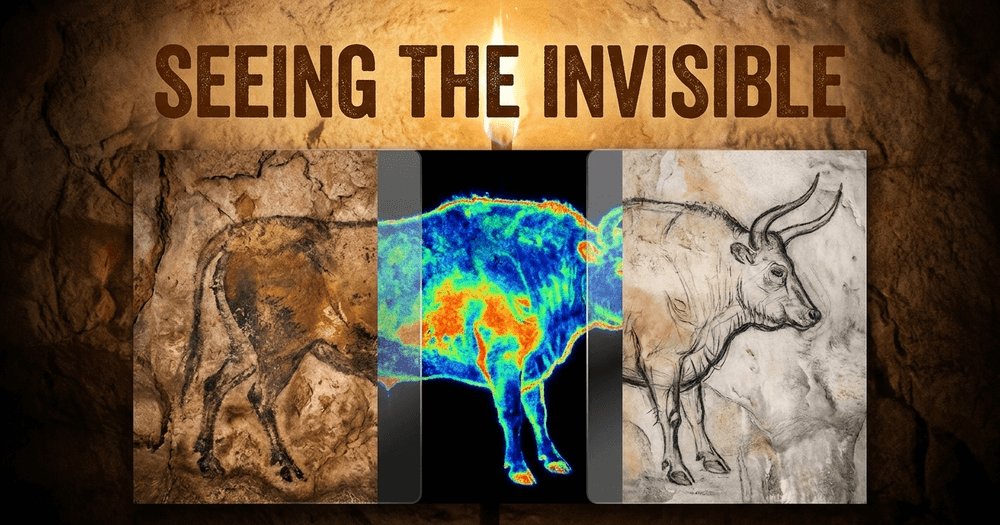
X-ray fluorescence (XRF) spectroscopy identifies the elemental composition of pigments, revealing the specific minerals used. Raman spectroscopy provides detailed information about molecular structure, helping to understand binders and preparation methods. Infrared reflectography can reveal preliminary sketches or underdrawings invisible to the naked eye. Multispectral imaging captures data across different light spectrums, enhancing contrast and revealing details obscured by time.
The uranium-series dating technique - used to date the Sulawesi hand stencils - has proven particularly powerful for assigning accurate ages to images where organic charcoal is absent.
A global picture of early art
Recent developments have broadened the understanding of Paleolithic art far beyond the Eurocentric frame that dominated early scholarship. The discoveries in Sulawesi, the findings at Blombos and Porc-Epic, and a growing body of evidence from the Americas and Australia have fundamentally shifted the question. It is no longer "when did humans begin making art in Europe?" It is "when did our species begin making art - and where?"
The answer, increasingly, appears to be: earlier than we thought, and everywhere we looked.
Portable art - once overlooked in favor of monumental cave murals - is now recognized for its intricate designs, diverse materials, and wide distribution across continents. The burial practices of ancient societies, studied through new DNA and archaeological methods, reveal that ochre was used in mortuary contexts too, suggesting that symbolic color use permeated many dimensions of early human life.

The meticulous work of early artists continues to inform our understanding of human ingenuity and the timeless drive to create, communicate, and explore the world through aesthetic form. In the end, what the evidence keeps returning to is something simpler than ritual or record-keeping. Someone, standing in the dark with a handful of ochre powder and a hollowed bone, chose to press a hand against cold stone and blow. The outline that remained was a statement, however unspoken: I was here.
Share now









Key takeaways
- The Paleolithic Palette refers to the materials, techniques, and locations used by early humans for art-making, with evidence now spanning from roughly 100,000 years ago to 10,000 BCE.
- Blombos Cave, South Africa, contains the oldest known evidence of paint-making: a 100,000-year-old ochre-processing workshop using abalone shells as mixing bowls - demonstrating elementary knowledge of chemistry and long-term planning.
- A 2025 study at Blombos revealed that ochre also served as a key material in stone tool production 70,000-90,000 years ago, showing it was far more than a symbolic pigment.
- The world's oldest known cave art is a hand stencil dated to at least 67,800 years ago, discovered in 2026 in the Liang Metanduno cave on Sulawesi, Indonesia - overturning the long-held European focus of Paleolithic art studies.
- Chauvet-Pont-d'Arc Cave, France, holds some of Europe's oldest paintings, with two distinct periods of human activity: 37,000-33,500 years ago (Aurignacian) and 31,000-28,000 years ago (Gravettian).
- Lascaux Cave, France (17,000-22,000 years old), required artists to source manganese oxides from approximately 250 km away in the central Pyrenees - evidence of extraordinary effort or established trade routes.
- Altamira Cave, Spain, was decorated over a remarkable span of 20,000 years, with individual paintings dated between 35,559 and 15,204 years before present.
- Porc-Epic Cave, Ethiopia (~40,000 years old), functioned as a continuous ochre processing studio for at least 4,500 years, with over 4,000 pieces of ochre recovered - the largest Middle Stone Age assemblage in East Africa.
- Primary Paleolithic pigments were mineral-based: red from hematite (iron oxide), yellow from goethite or limonite, black from charcoal or manganese oxides, and white from calcite or kaolinite clay.
- The purpose of Paleolithic art remains actively debated; major theories include sympathetic hunting magic, shamanic trance imagery, narrative communication, seasonal record-keeping, and fundamental aesthetic expression.
Sources
- ScienceDaily - Blombos Cave 100,000-year-old ochre-processing workshop https://www.sciencedaily.com/releases/2011/10/111019154507.htm
- NBC News - World's oldest cave art (67,800-year-old hand stencil, Sulawesi, 2026) https://www.nbcnews.com/world/asia/indonesia-cave-art-oldest-world-hand-stencils-australia-rcna255351
- PNAS - High-precision chronological model for Chauvet-Pont-d'Arc Cave https://www.pnas.org/doi/10.1073/pnas.1523158113
- World History Encyclopedia - Lascaux Cave (pigments, techniques, manganese source) https://www.worldhistory.org/Lascaux_Cave/
- Hyperallergic - Porc-Epic Cave, Ethiopia: one of the world's oldest art workshops https://hyperallergic.com/one-of-the-worlds-oldest-art-workshops-is-a-cave-in-ethiopia/
- Published 2026-06-11 19:27
- Modified 2026-06-11 19:34

-
Redaction