

-
 PRO
PRO -
 Redaction
Burial sites reveal secrets of ancient societies
New DNA and archaeological finds reveal Neanderthal burial rituals, ancient plague impacts in Europe, and pre-colonial pathogens in the Americas.
The silent whispers from ancient burial sites, once locked within the earth, are now speaking with remarkable clarity. Recent breakthroughs in archaeogenomics, ancient DNA analysis, and field excavation are offering profound new insights into the lives, beliefs, migrations, and diseases of our ancestors. From the limestone caves of the Levant to the Bolivian Altiplano, and from Iron Age France to a Neolithic tomb north of Paris, these discoveries are fundamentally reshaping what we know about early human behavior and the deep history of infectious disease.
Shared solemnity: Neanderthal and Homo sapiens burial traditions
New research published in L'Anthropologie offers a sweeping comparative analysis of 17 Neanderthal and 15 Homo sapiens burial sites in the Levant region. The study, led by Professor Ella Been of Ono Academic College and Dr. Omry Barzilai of the University of Haifa, reveals both striking parallels and meaningful divergences in the funerary practices of two distinct hominin species.
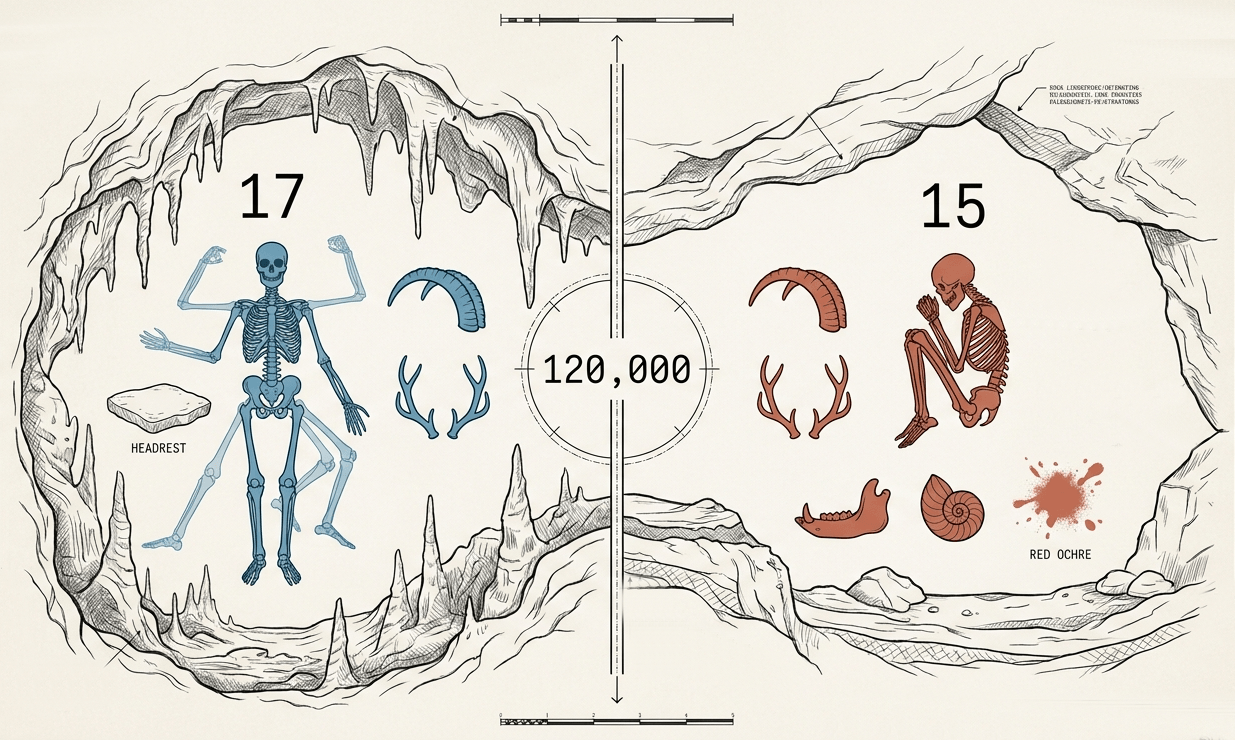
Both species appear to have begun burying their dead approximately 120,000 years ago - coinciding with the period when Neanderthals first entered the Levant from Europe. This temporal overlap raises a compelling question: did burial as a cultural practice emerge from a shared common origin, or did it arise independently and in parallel across two distinct hominin lineages? Either answer challenges long-held assumptions about Neanderthal cognitive complexity and symbolic thinking.
What they had in common
Several key similarities emerged from the comparative data:
- Individuals were buried regardless of age or sex, suggesting a broad societal recognition of each life's worth
- Grave goods accompanied the deceased in both groups - notably goat horns and deer antlers - pointing to shared symbolic or ritual meaning
- Both species practiced intentional, structured interment rather than simple abandonment of the dead
These commonalities are significant. The deliberate inclusion of animal materials across both species implies a level of symbolic thought and shared cosmological concern that was once attributed exclusively to anatomically modern humans.
Where they diverged
Despite the overlap, the two species approached burial very differently in terms of method and setting.
Homo sapiens tended to inter their dead near cave entrances or within rock shelters, and did so in a strikingly uniform flexed (fetal-like) posture - a bodily arrangement that may carry symbolic meaning related to rebirth, or may simply reflect an established cultural convention. Their burials also featured materials entirely absent from Neanderthal graves: boar jaws, red ochre, and marine shells, all of which suggest a richer or at least different symbolic vocabulary.
Neanderthals, by contrast, buried their dead deep within caves, often using stones as grave markers or placing modified limestone pieces beneath the head as a form of headrest. Their body positions were more varied - flexed, extended, or semi-flexed - suggesting either less standardization in ritual practice or a different set of cultural conventions altogether.
These findings invite us to reconsider the cognitive and cultural distance between Neanderthals and our own species - a distance that appears to have been far smaller than once believed.

Genetic revelations: ancient DNA reshapes demographic narratives
The power of ancient DNA analysis continues to unlock secrets of past populations, revealing demographic shifts and movements that were previously unknowable.
A "prehistoric reset" near Paris
Ancient DNA extracted from a large megalithic tomb at Bury, approximately 50 kilometres north of Paris, has revealed evidence of a dramatic population collapse. A study published in Nature Ecology & Evolution, based on the sequencing of 132 ancient human genomes from the site, shows that an indigenous Neolithic population mysteriously declined around 3000 BC and was subsequently replaced by a genetically distinct group with ties to southern France and the Iberian Peninsula.
The causes were likely multiple. Disease - including early forms of plague - probably played a role, but it was not the only driver. The demographic shift also ended tightly knit family burial traditions and coincided with the disappearance of Europe's megalith builders entirely. The genetic evidence marks a clear break in generational lineage, underscoring the turbulent and dynamic nature of ancient population movements across the European continent.
This discovery is part of a broader pattern now emerging from archaeogenomics: prehistoric Europe was not a static landscape of settled peoples, but a stage of repeated arrivals, replacements, and admixtures that have left layered genetic signatures in the modern population.
Neanderthal social life reconstructed in Poland
Concurrently, genetic analysis at Stajnia Cave in northern Poland has provided an unprecedented view into Neanderthal social structure. A study published in Current Biology reports the analysis of mitochondrial DNA extracted from eight Neanderthal teeth found at the site, north of the Carpathian Mountains.
For the first time, researchers reconstructed the genetic profile of a small Neanderthal group - at least seven distinct individuals - who coexisted approximately 100,000 years ago. Some of the teeth shared identical mitochondrial DNA, indicating close biological kinship within the group.
This finding directly challenges the long-held image of Neanderthals as solitary nomads or purely opportunistic wanderers. Instead, the evidence paints a picture of cohesive, kin-based social groups with structured communal living - a portrait far more recognizable to modern human sensibilities than the traditional narrative allowed.
Unearthing ancient pathogens: scarlet fever in the Andes
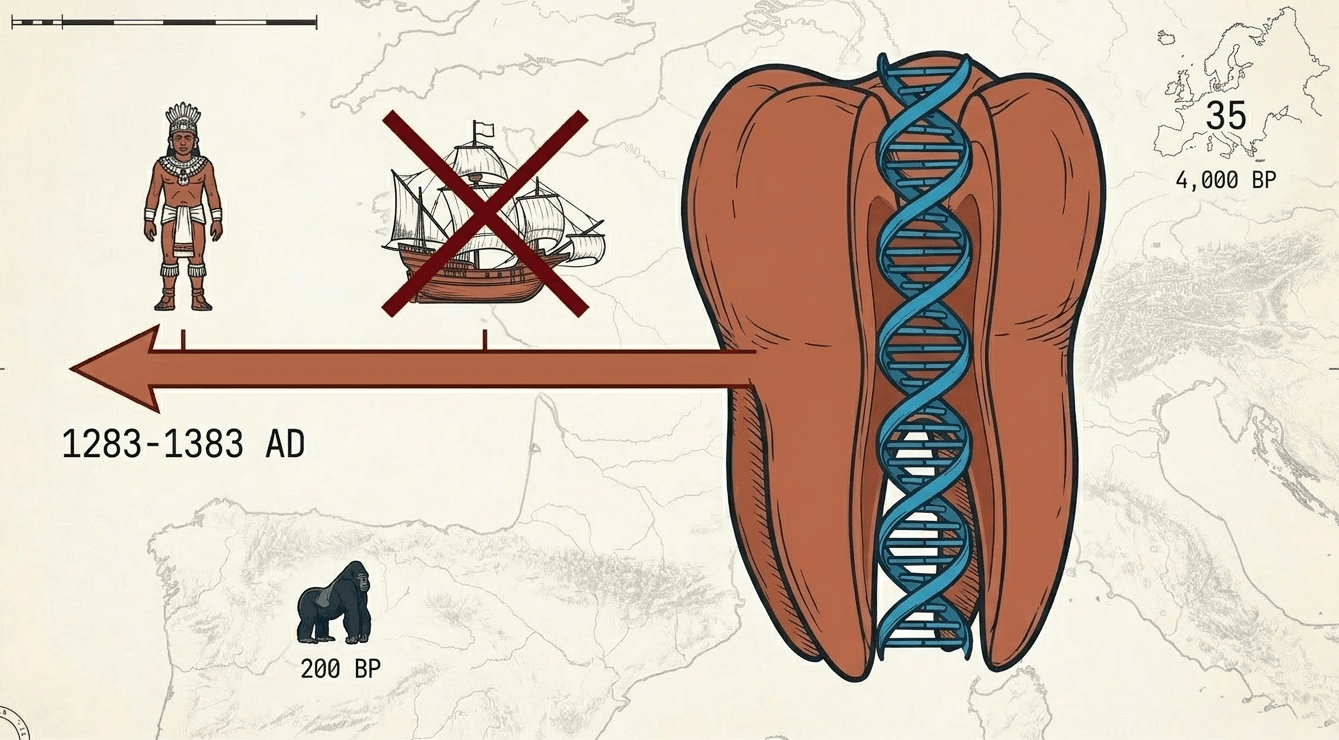
A remarkable discovery has significantly altered the timeline for the presence of certain pathogens in the Americas. Genetic material from Streptococcus pyogenes - the bacterium responsible for scarlet fever and strep throat - has been identified in a 700-year-old tooth belonging to a young man who lived on the Bolivian Altiplano, most likely between 1283 and 1383 AD, with his remains housed at Bolivia's National Museum of Archaeology (MUNARQ) in La Paz.
This finding, made by the Eurac Research Institute for Mummy Studies and published in Nature Communications, directly challenges the established belief that Streptococcus pyogenes arrived in South America only with European colonizers. The presence of the bacterium centuries before significant European contact suggests a much older and potentially indigenous history of the pathogen on the continent.
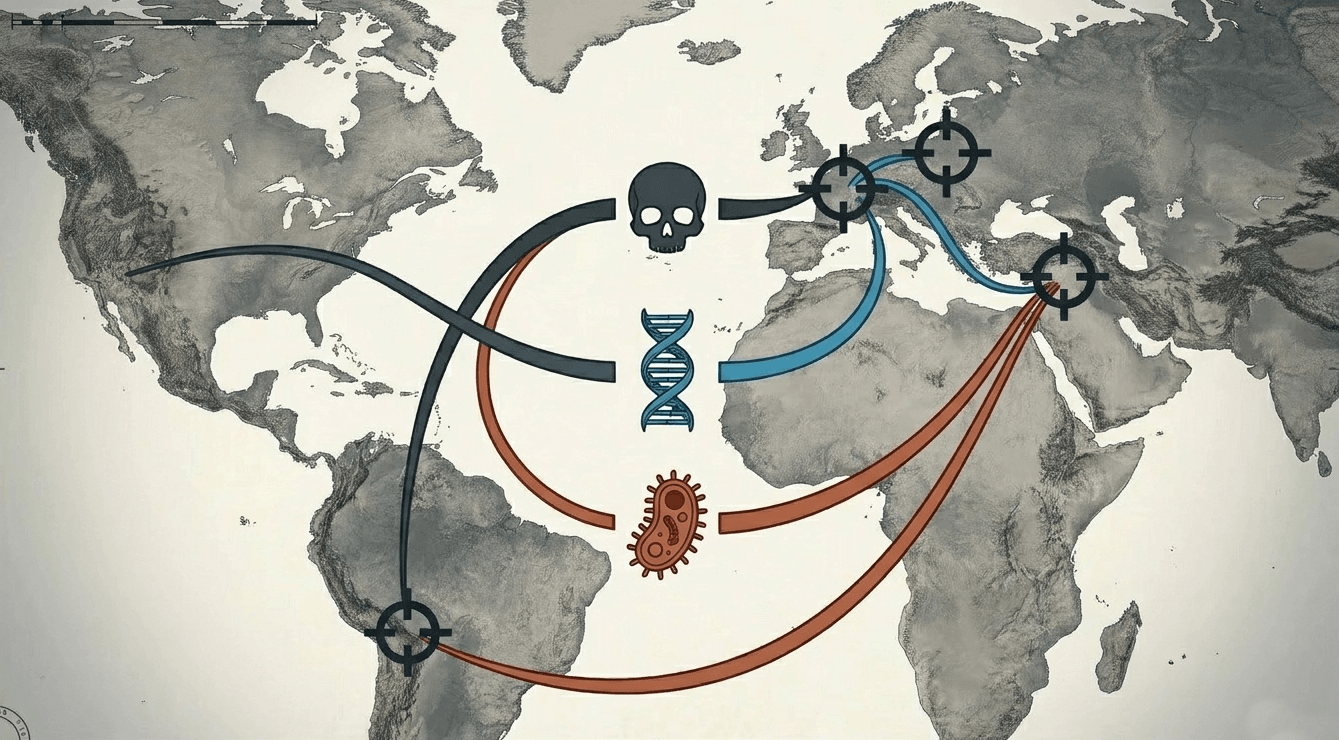
The excellent preservation of the ancient DNA allowed researchers to reconstruct a nearly complete genome of the bacterium using a de-novo assembly method - rebuilding the genome from numerous short DNA fragments without a reference template. This reconstruction revealed that the ancient strain possessed many, though not all, of the pathogenic genes found in modern Streptococcus pyogenes, providing valuable insight into the bacterium's evolutionary trajectory and the development of its virulence factors over time.
A globally ancient pathogen
Further analysis places this discovery within a broader, global context:
- S. pyogenes has been identified in 35 ancient DNA samples from Europeans who lived approximately 4,000 years ago
- A closely related Streptococcus species was detected in 200-year-old gorilla remains from Africa
Together, these data points indicate a deep and pervasive co-evolutionary relationship between this pathogen and various human and primate hosts - one that predates European colonialism by millennia and crosses continental boundaries.
Dijon's seated dead: a glimpse into Gallic ritual
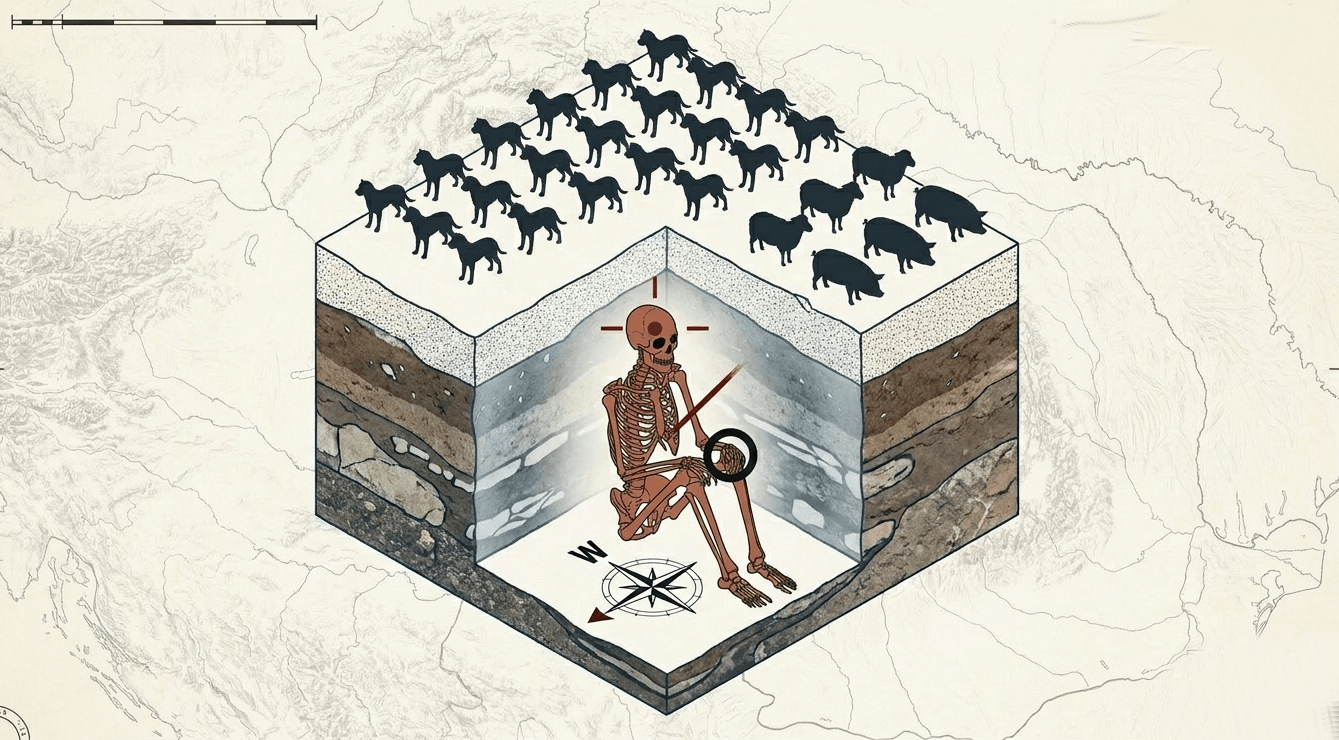
Ongoing excavations beneath the Josephine Baker school complex in Dijon, France, have uncovered one of the most unusual burial concentrations in the ancient world. Across multiple excavation campaigns - including 13 skeletons found in 2024 and five to six more uncovered in early 2026 - archaeologists have now identified approximately 20 ancient human skeletons, all interred in a rare seated upright position and consistently facing west.
These burials date to approximately 300-200 BC, the late Gallic (Iron Age) period, and were conducted by INRAP (France's National Institute for Preventive Archaeology).
Why this site is globally significant
Prior to these excavations, only 75 seated Gallic burials had been documented worldwide - spread across France, Switzerland, and Great Britain. The roughly 20 examples concentrated within a compact area of central Dijon now represent more than a quarter of all known examples globally, suggesting a specific and significant local funerary tradition rather than an isolated anomaly.
All recently excavated individuals were men aged between 40 and 60, ranging in height from 1.62 to 1.82 metres, and exhibited notably well-preserved teeth. The consistent westward orientation likely carries symbolic meaning - perhaps relating to the setting sun, ancestral homelands, or a specific spiritual cosmology.
Signs of violence and ritual complexity
The archaeological evidence points to a more complex, and potentially violent, narrative. Several skeletons show clear signs of a violent death:
- One individual bore a long deliberate cut mark on an upper arm bone, consistent with a sharp metal blade
- Another suffered two direct blows to the skull
These injuries strongly suggest intentional killing. Yet the careful, structured interment of these individuals - despite their violent ends - indicates that even those who died violently were afforded formal burial rites, hinting at a nuanced relationship between violence, social status, and ceremonial practice in Gallic society.
Excavations in the wider Dijon area during the 1990s also revealed the carefully buried remains of 28 dogs, five sheep, and two pigs in the vicinity of the site. Dating to the same late Gallic period, the meticulous manner of their interment strongly suggests ritual animal sacrifice as part of the broader ceremonial complex. The only artifact found in direct association with a human skeleton was a single black stone armband, which has allowed archaeologists to date at least one burial precisely to between 300 and 200 BC.
The relative scarcity of grave goods in the human burials - contrasting with the elaborate attention given to the animal interments - suggests a nuanced and layered approach to mortuary ritual that continues to challenge modern interpretations.

Why these discoveries matter: a broader view
Taken together, these discoveries from across the globe - from Neanderthal caves in the Levant to an Andean burial ground and an Iron Age necropolis in France - collectively illuminate several themes that are transforming our understanding of the human past:
The cognitive gap between Neanderthals and Homo sapiens was smaller than we thought. Shared burial practices, communal living evidence from Stajnia Cave, and overlapping grave good traditions all suggest a degree of symbolic thought and social organization in Neanderthals that was long underestimated.
Ancient populations were far more mobile and interconnected than the archaeological record once implied. The "prehistoric reset" near Paris and the presence of S. pyogenes in pre-Columbian South America both demonstrate that people, cultures, and pathogens moved across vast distances in ways we are only beginning to reconstruct.
Disease shaped demographic history long before recorded history began. The intersection of ancient DNA research with paleopathology is revealing that epidemic events, genetic vulnerabilities, and pathogen evolution were powerful forces in shaping which populations survived, migrated, or disappeared.
Mortuary ritual reflects deep social meaning. Whether seated Iron Age warriors in Dijon or Neanderthals placing stone headrests beneath their dead in Lebanon's caves, the act of structured burial is a window into belief systems, social hierarchies, and community bonds that transcend species and millennia.
Share now









Key takeaways
- Research published in L'Anthropologie shows both Neanderthals and Homo sapiens began burying their dead around 120,000 years ago in the Levant - suggesting either a shared cultural origin or independent, parallel invention of burial ritual
- Both species interred individuals regardless of age or sex, and included grave goods such as goat horns and deer antlers, implying shared symbolic or ritual significance
- Homo sapiens burials featured items entirely absent from Neanderthal graves: boar jaws, red ochre, and marine shells; Neanderthals used modified limestone as headrests and stones as grave markers
- Homo sapiens were buried in a uniform flexed (fetal-like) posture near cave entrances or in rock shelters; Neanderthals were buried deep inside caves in more varied positions
- Ancient DNA from 132 sequenced genomes at a megalithic tomb in Bury (~50 km north of Paris), published in Nature Ecology & Evolution, reveals a "prehistoric reset" around 3000 BC: a Neolithic population collapsed and was replaced by newcomers genetically linked to southern France and the Iberian Peninsula
- Disease - including early forms of plague - likely contributed to the population collapse near Paris, which also ended tightly knit family burial traditions and coincided with the disappearance of Europe's megalith builders
- Mitochondrial DNA from eight Neanderthal teeth at Stajnia Cave, Poland, published in Current Biology, reconstructed the profile of at least seven individuals who coexisted ~100,000 years ago - the first time a coherent group portrait of Neanderthals from a single site has been achieved
- Shared mitochondrial DNA among some Stajnia individuals indicates close biological kinship, directly challenging the perception of Neanderthals as solitary or purely nomadic
- Streptococcus pyogenes DNA - the bacterium behind scarlet fever and strep throat - was found in a 700-year-old tooth from a young man on the Bolivian Altiplano (c. 1283-1383 AD), upending the assumption that the pathogen arrived in the Americas with European colonizers
- Eurac Research reconstructed a nearly complete genome of the ancient S. pyogenes strain using de-novo assembly; it carried many but not all pathogenic genes found in modern strains, offering a window into the bacterium's evolutionary history
- S. pyogenes has also been identified in 35 ancient European DNA samples dating ~4,000 years ago, and a closely related Streptococcus species was found in 200-year-old gorilla remains from Africa, confirming its ancient, cross-continental presence
- Excavations at the Josephine Baker school complex in Dijon, France, have uncovered approximately 20 seated Gallic burials dating to 300-200 BC - more than a quarter of the 75 such examples known worldwide - pointing to a significant local funerary tradition
- All recently excavated seated individuals were men aged 40-60; several show unhealed trauma consistent with intentional killing, including blade cuts to the arm and blunt-force blows to the skull
- A black stone armband was the only artifact found with a human skeleton; nearby animal remains (28 dogs, five sheep, two pigs) from the same period suggest ritual animal sacrifice as part of the broader ceremonial complex
Sources
- Archaeology Magazine - Neanderthal and Homo sapiens burial practices in the Levant https://archaeologymag.com/2024/11/neanderthals-and-homo-sapiens-had-different-burial-practices/
- Mapping Ignorance - Burial practices of Neanderthals and early humans in the Levant https://mappingignorance.org/2024/10/29/burial-practices-of-neanderthals-and-early-humans-in-the-levant/
- ScienceDaily - Ancient DNA reveals a lost Neolithic population near Paris replaced by strangers https://www.sciencedaily.com/releases/2026/04/260421042800.htm
- ScienceDaily - Ancient DNA reveals a hidden Neanderthal group frozen in time at Stajnia Cave, Poland https://www.sciencedaily.com/releases/2026/04/260421042757.htm
- Archaeology Magazine - Scarlet fever bacterium detected in 700-year-old Bolivian tooth https://archaeology.org/news/2026/04/21/scarlet-fever-bacterium-detected-in-700-year-old-tooth/
- Eurac Research - Scarlet fever before Columbus: the genome of Streptococcus pyogenes in a Bolivian mummy https://www.eurac.edu/en/magazine/scarlet-fever-before-columbus-genome-streptococcus-pyogenes-bolivian-mummy
- Smithsonian Magazine - Archaeologists mystified by 2,000-year-old bodies found seated and facing west in France https://www.smithsonianmag.com/smart-news/archaeologists-are-mystified-by-these-2000-year-old-bodies-found-seated-upright-and-facing-west-in-france-180988425/
- Published 2026-04-28 19:50
- Modified 2026-06-11 13:35

-
Redaction