

-
 Redaction
From variolation to mRNA: The evolution of vaccines
Immunology has evolved from 16th-century variolation to modern mRNA blueprints. This shift enables targeted cancer therapy and genetic correction.
The historical foundations of immunological priming
The idea that controlled exposure to a pathogen could prevent a fatal disease is not a modern insight - it is one of the oldest and most consequential observations in medical history. Long before clinical trials, randomized studies, or regulatory frameworks, communities across Asia, Africa, and the Middle East were already practicing deliberate immunological priming. Understanding this lineage is essential to appreciating just how radical - and how logical - today's mRNA therapeutics really are.
What separates ancient practice from modern science is not the underlying principle, but the precision, safety, and programmability with which that principle is applied.

Variolation: the world's first vaccine strategy
Variolation - the deliberate transfer of material from active smallpox sores to a healthy person - predates Edward Jenner's cowpox experiments by at least two centuries. Documented evidence from 16th-century China shows the use of dried smallpox scabs administered nasally to healthy individuals. Similar practices were independently developed across West Africa, and were introduced to the American colonies in 1716 by an enslaved man named Onesimus, whose contribution to colonial medicine remains historically underacknowledged.
The mortality data was striking: natural smallpox infection carried a fatality rate of approximately 30%, while variolation reduced that risk to between 1% and 2% - a roughly fifteen-fold improvement with no understanding of germ theory, immune cells, or antibodies.
The practice reached Europe through Lady Mary Wortley Montagu, who observed Ottoman variolation methods and introduced them to English society. Its military utility was recognized by General George Washington, who mandated variolation across American Revolutionary War troops to prevent smallpox from decimating his forces - one of history's earliest examples of population-level immunization policy.

Variolation was gradually replaced in the 19th and early 20th centuries by Edward Jenner's safer cowpox-based vaccine, which demonstrated that cross-reactive immunity could be achieved without exposure to the actual pathogen. This shift - from live virulent material to a safer biological proxy - established the template for every vaccine platform that followed.
How mRNA vaccines work: from concept to clinical use
Unlike traditional vaccines that introduce a weakened pathogen or a protein fragment directly into the body, mRNA vaccines deliver genetic instructions. Specifically, they provide cells with a synthetic messenger RNA sequence encoding a target antigen - most famously, the spike protein of SARS-CoV-2. The cell's own ribosomes read those instructions, produce the antigen, and trigger an immune response. The mRNA itself degrades within days and never enters the cell nucleus.
This approach offers three transformative advantages over conventional platforms:
- Speed of development: once a pathogen's genome is sequenced, an mRNA vaccine candidate can be designed in days
- Scalability: mRNA is synthesized chemically, not grown in eggs or cell cultures
- Programmability: the same delivery infrastructure can be repurposed for entirely different diseases by swapping the encoded sequence
The COVID-19 pandemic made mRNA vaccines a household term, but the underlying science had been in development since the early 1990s. The platform's true potential, however, extends well beyond infectious disease.
The shift toward programmable molecular blueprints
Modern immunology has moved decisively away from live-virus exposure toward the use of synthetic molecular instructions. This programmability is enabling vaccine applications that would have been unthinkable a generation ago - most significantly, personalized cancer immunotherapy.
Novel pathways in oncology therapeutics
Research published in Nature by Washington University School of Medicine has identified new mechanisms in how mRNA vaccines engage the immune system. Previous models assumed a primary reliance on cDC1 dendritic cells; however, data from murine studies confirms that cDC2 dendritic cells can also independently stimulate potent anti-tumor CD8+ T cell responses. This redundancy in immune activation pathways is a clinically important finding - it suggests that mRNA cancer vaccines can work through multiple parallel mechanisms, making them more robust than earlier models predicted.
This research directly supports the development of individualized mRNA vaccines targeting multiple neoantigens in non-small cell lung cancer following surgical resection. Clinical trials are currently assessing these vaccines in combination with pembrolizumab (Keytruda), an immune checkpoint inhibitor that prevents cancer cells from suppressing the immune response. Similar combinatorial approaches are under active investigation for melanoma, pancreatic cancer, and brain tumors.
Notably, data also indicates that direct intratumoral injection of mRNA vaccines may sensitize malignant cells to existing immunotherapies - an avenue with significant implications for treatment-resistant cancers.

Refinement of delivery and immunological outcomes
The efficacy of any mRNA-based therapy depends not just on the genetic sequence it carries, but on how that sequence is delivered to cells. The primary vehicle is the lipid nanoparticle (LNP) - a microscopic fat-based capsule that protects mRNA from degradation and facilitates cellular uptake.
Recent research has demonstrated that tuning the ionizable lipids within LNPs can redirect the resulting immune response with remarkable specificity. Optimized lipid formulations have been shown to enhance macrophage-associated antigen expression, drive superior neutralizing antibody activity, promote T follicular helper cell differentiation, and generate more robust germinal center reactions - the lymph node structures where long-lived immune memory is forged.
This level of delivery-system precision represents a fundamental shift in vaccinology: the same mRNA sequence, packaged differently, can elicit qualitatively different immune responses. Tuning the container, not just the cargo, is now a core design parameter.
Comparing vaccine platforms: protein-based vs. mRNA
Findings from the COMPARE study - a phase 4 trial involving approximately 1,000 adults - provided a direct head-to-head analysis of protein-based and mRNA-based COVID-19 booster vaccines. The study compared Sanofi's Nuvaxovid (protein-based) with Moderna's mNEXSPIKE (mRNA-based).
Key findings:
- Nuvaxovid showed statistically significant lower systemic reactogenicity
- Severe systemic symptoms occurred in fewer than 10% of Nuvaxovid recipients
- Approximately 20% of mNEXSPIKE recipients reported severe systemic reactions - more than double the rate
- Local injection-site symptoms were also less frequent and less severe with the protein-based formulation
These results do not suggest that one platform is universally superior - immunogenicity, durability, and individual risk factors all matter - but they do confirm that platform choice has real, measurable effects on tolerability. For patients with reactogenicity concerns, a protein-based option may be preferable.
Research into multicomponent vaccines is also advancing. The mRNA-1083 candidate, which combines influenza and SARS-CoV-2 antigens in a single injection, represents ongoing efforts to reduce the burden of seasonal immunizations for adults aged 50 and older.
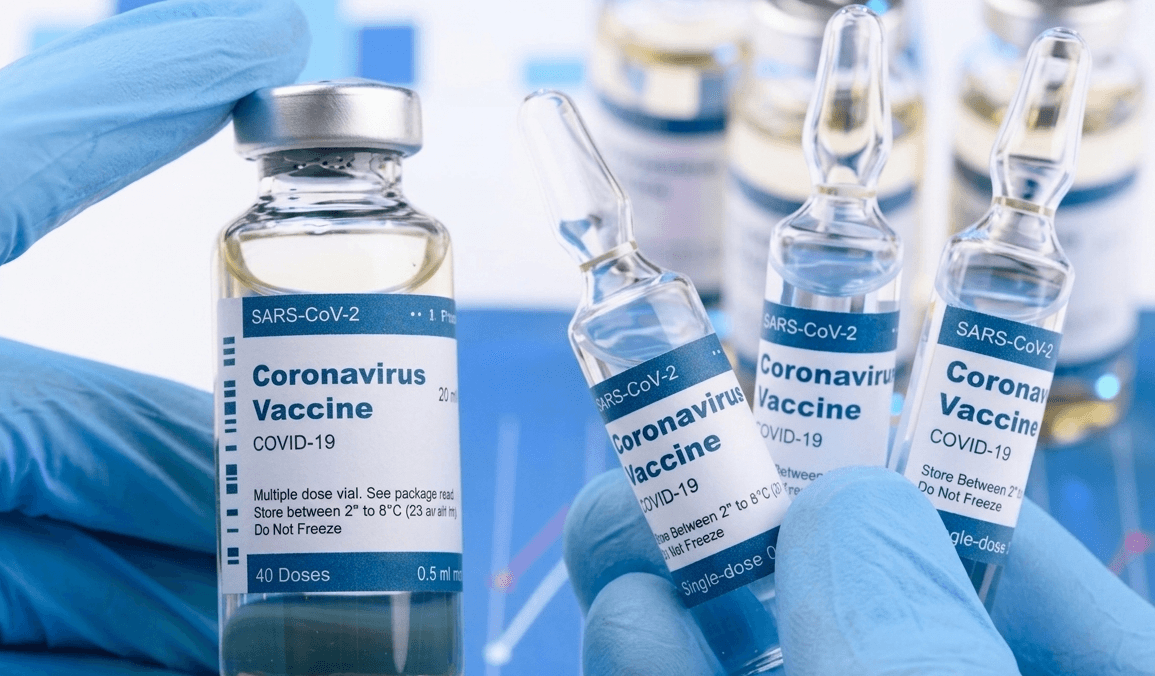
Breakthroughs in gene therapy: viral vectors and CRISPR editing
The scope of nucleic acid medicine now extends beyond immunization into the realm of permanent genetic correction. The distinction between vaccination, immunotherapy, and gene editing is narrowing - all three now operate at the level of molecular instruction.
The 2026 Breakthrough Prize in Life Sciences recognized two landmark advances:
Researchers at the University of Pennsylvania and Children's Hospital of Philadelphia (CHOP) used adeno-associated virus (AAV) vectors to deliver functional RPE65 gene copies to retinal cells, effectively treating inherited forms of blindness caused by mutations in that gene. AAV vectors are engineered to carry a therapeutic gene sequence into target cells without replicating or integrating unpredictably - a key safety advantage.
A separate prize honored Stuart Orkin of Harvard Medical School and Swee Lay Thein of the National Institutes of Health for foundational research that directly enabled Casgevy - the first FDA-approved CRISPR medicine - to treat sickle cell disease and beta-thalassemia. Casgevy works by reactivating fetal hemoglobin production in edited stem cells, effectively compensating for the defective adult hemoglobin gene.
Both approaches exemplify a broader shift: rather than compensating for biological dysfunction pharmacologically, medicine is increasingly correcting dysfunction at its genetic source.

What this means for the future of immunization
Taken together, these developments suggest that the word "vaccine" will carry an increasingly broad meaning in the decades ahead. The same lipid nanoparticle technology that delivered COVID-19 mRNA vaccines is now being adapted for cancer neoantigen therapies. The AAV vectors used to restore vision in patients with inherited blindness are being evaluated for muscular dystrophy, hemophilia, and neurological conditions. CRISPR editing, once a laboratory curiosity, is now an approved clinical tool.
The trajectory from variolation - a practice with no mechanistic understanding, guided purely by empirical observation - to programmable molecular medicine has taken roughly five centuries. The next five decades may see permanent, single-intervention cures become standard for diseases that currently require lifelong management.
Frequently asked questions
What is the difference between variolation and vaccination? Variolation involved direct transfer of material from active smallpox sores and carried a 1-2% mortality risk. Vaccination, as developed by Edward Jenner, used the related but far less dangerous cowpox virus, eliminating most of that risk while still conferring protective immunity.
How do mRNA vaccines differ from traditional vaccines? Traditional vaccines introduce a weakened pathogen or an isolated protein to trigger immunity. mRNA vaccines instead deliver genetic instructions that prompt the body's own cells to produce a target antigen, after which the mRNA degrades. No live virus is involved, and the genetic instructions do not alter DNA.
Can mRNA vaccines be used to treat cancer? Yes - this is an active and rapidly advancing area of oncology research. Personalized mRNA vaccines targeting tumor-specific neoantigens are being evaluated in clinical trials for non-small cell lung cancer, melanoma, pancreatic cancer, and brain tumors, typically in combination with checkpoint inhibitors like pembrolizumab.
What is Casgevy and why is it significant? Casgevy is the first FDA-approved therapy based on CRISPR gene editing. It treats sickle cell disease and beta-thalassemia by editing a patient's own stem cells to reactivate fetal hemoglobin production. Its approval marks the transition of CRISPR from laboratory research tool to clinical medicine.
What are lipid nanoparticles (LNPs)? Lipid nanoparticles are microscopic fat-based capsules used to protect and deliver mRNA into cells. The specific ionizable lipids within LNPs can be tuned to influence the type and strength of the immune response generated, making LNP design a critical variable in next-generation vaccine development.
Share now









Key takeaways
- Variolation reduced smallpox mortality from approximately 30% with natural infection to just 1-2% - a roughly fifteen-fold improvement - centuries before germ theory was understood.
- Onesimus, an enslaved man, introduced variolation to the American colonies in 1716, making a foundational but historically underrecognized contribution to public health.
- General George Washington mandated variolation for Revolutionary War troops, marking one of history's earliest documented examples of state-level immunization policy.
- Research from Washington University School of Medicine, published in Nature, demonstrates that mRNA cancer vaccines can engage both cDC1 and cDC2 dendritic cells redundantly - triggering potent anti-tumor CD8+ T cell responses through multiple independent pathways.
- Personalized mRNA cancer vaccines targeting tumor-specific neoantigens are in clinical trials for non-small cell lung cancer in combination with pembrolizumab (Keytruda), with parallel programs in melanoma, pancreatic cancer, and brain tumors.
- The COMPARE phase 4 study found that Sanofi's protein-based Nuvaxovid produced severe systemic reactions in fewer than 10% of recipients, compared to approximately 20% for Moderna's mRNA-based mNEXSPIKE - more than a 50% difference in reactogenicity.
- Ionizable lipid tuning within lipid nanoparticles (LNPs) can redirect immune responses, enhancing CD4+ T cell immunity, T follicular helper cell differentiation, and germinal center reactions - making delivery-system design a core variable in vaccine efficacy.
- Casgevy, the first FDA-approved CRISPR gene editing therapy, treats sickle cell disease and beta-thalassemia by editing patients' own stem cells - a direct result of foundational research by Stuart Orkin (Harvard) and Swee Lay Thein (NIH), honored with the 2026 Breakthrough Prize.
- The 2026 Breakthrough Prize in Life Sciences also recognized researchers at the University of Pennsylvania and CHOP for developing an AAV-based gene therapy that restores vision in patients with inherited blindness caused by RPE65 mutations.
- The convergence of mRNA vaccines, viral vector gene therapy, and CRISPR editing signals a broader shift in medicine: from managing disease symptomatically to correcting its molecular source.
Sources
- Wikipedia - Variolation https://en.wikipedia.org/wiki/Variolation
- World Health Organization - History of smallpox vaccination https://www.who.int/news-room/spotlight/history-of-vaccination/history-of-smallpox-vaccination
- WashU Medicine - mRNA vaccines follow unconventional immune path to destroy tumors https://medicine.washu.edu/news/mrna-vaccines-follow-unconventional-immune-path-to-destroy-tumors/
- Nature - mRNA vaccines engage unconventional pathways in CD8+ T cell priming https://www.nature.com/articles/s41586-026-10353-6
- Sanofi - COMPARE study press release (April 2026) https://www.sanofi.com/en/media-room/press-releases/2026/2026-04-18-10-00-00-3276558
- Breakthrough Prize - 2026 Life Sciences laureates announcement https://breakthroughprize.org/News/98
- Published 2026-04-29 14:37
- Modified 2026-05-23 13:33

-
Redaction