
-
 Redaction
The Epstein suicide note hidden for seven year
A newly revealed suicide note, found by a cellmate weeks before Jeffrey Epstein's death, raises questions about legal transparency and judicial oversight.
For nearly seven years, a critical piece of evidence surrounding the final weeks of Jeffrey Epstein's life remained hidden from public and investigative scrutiny. Investigative reporting by The New York Times has brought to light that a purported suicide note - allegedly penned by Epstein in July 2019 - was discovered by his cellmate at the Metropolitan Correctional Center (MCC) in Manhattan. The discovery occurred approximately two weeks before Epstein was found dead in his cell on August 10, 2019, and crucially, it came after his first failed suicide attempt on July 23, not before it. The existence of this note, and its subsequent incorporation into a sealed court file, raises serious questions about the transparency of the investigation into the high-profile financier's death.
What the note was and how it was found
The note was reportedly found by Nicholas Tartaglione, a former police officer who was at the time awaiting trial on quadruple murder charges, while he was still sharing a cell with Epstein. According to Tartaglione, it was written on yellow legal pad paper and tucked inside a graphic novel in the cell. He found it sometime between July 23 and July 27, 2019 - in the days immediately following Epstein's first apparent suicide attempt, during which Epstein was discovered on the floor of his cell with a makeshift noose around his neck.
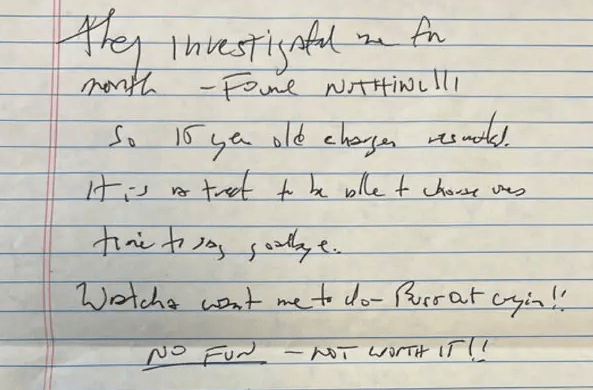
Rather than reporting the note to prison authorities, Tartaglione passed it directly to his own lawyers. His decision was driven by self-interest: Epstein had initially alleged that Tartaglione had tried to kill him - an accusation he later retracted - and the note could potentially be used as evidence in Tartaglione's defense. The note, still physically held in a vault at a New York courthouse, was then sealed as part of Tartaglione's criminal case file, not as an independent judicial act of suppression.
Judicial secrecy and institutional failure
The sealing of the note as part of Tartaglione's case is now under intense examination. In the aftermath of Epstein's death, the Department of Justice and the Office of the Inspector General conducted extensive reviews of MCC operations. Those reviews highlighted catastrophic failures in protocol - sleeping guards, falsified records, and systemic neglect. However, the presence of a purported suicide note, one that could have served as an additional warning sign, was notably absent from the public-facing summaries of these investigations, including the OIG's 2023 report.
Federal prosecutors from the Southern District of New York told ABC News that they had no knowledge of any suicide note written by Epstein. A DOJ spokesperson declined to confirm the note's authenticity, stating it was difficult to comment on a document neither the agency nor The New York Times had physically seen.
This lack of transparency has fueled long-standing skepticism about the official account of Epstein's suicide. The legal mechanism of incorporating evidence into a sealed case file is routine - but in this instance, it effectively placed a potentially significant document beyond the reach of parallel federal investigations. The nearly seven-year delay in any public acknowledgment of the document represents a meaningful gap in the public record surrounding the MCC's security failures.
Why this note matters for the broader Epstein investigation
The note's late emergence has potential ramifications for civil litigation involving Epstein's estate and his victims. For years, legal teams have sought every available document to reconstruct the timeline of Epstein's activities and the full extent of his influence. A note written in the shadow of his impending trial could provide insight into his state of mind or reveal details about the pressures he was facing in the weeks before his death. Its absence during the peak of the sex trafficking investigations may have hindered the pursuit of a complete and accurate picture of the events that preceded his death.
The revelation also challenges the credibility of the Federal Bureau of Prisons. If the Bureau or the presiding judge were aware of a written indication of suicidal intent as early as late July 2019, the failure to implement more rigorous and sustained suicide watch protocols becomes even harder to justify. Analysts have noted that the timeline suggests Epstein was signaling his intentions well before the system failed to protect him. This pattern of neglected warnings underscores a systemic indifference to protocol within the federal detention system.
The role of Tartaglione and what happened next
Nicholas Tartaglione's role in the discovery adds considerable complexity to the story. His lawyers subsequently authenticated the note in January 2020, according to a two-page chronology document later found within the Justice Department's Epstein file disclosures - though the precise method of authentication was not described publicly. Tartaglione, who was convicted of the four murders in 2023 and sentenced to four consecutive life terms in 2024, first publicly discussed the note's existence on a podcast in 2025. His appeal is currently pending before the 2nd U.S. Circuit Court of Appeals.
Questions now turn to why the note was not released as part of Freedom of Information Act (FOIA) requests filed by various media outlets over the preceding years. Federal agencies frequently cite "privacy" or "ongoing investigation" exemptions to deny such requests. However, with Epstein deceased and his primary accomplice, Ghislaine Maxwell, already convicted and serving her sentence, the justification for continued secrecy is rapidly eroding.
The unsealing petition and what comes next
On April 30, 2026, The New York Times filed a formal petition with U.S. District Judge Kenneth Karas to unseal the alleged note, with the judge ordering all parties to respond by May 4. The emergence of this information suggests that other critical documents may still be under seal, hidden from public view by a judiciary that has, in this case, prioritized institutional protection over transparency.
As the details of this hidden note begin to surface, the demand for a full unsealing of all Epstein-related documents is growing louder. The nearly seven-year delay has not only obscured the truth but has also allowed federal institutions to avoid the full weight of their failures at the MCC. Investigators must now determine whether the contents of the note were ever shared with the FBI, or whether it remained strictly within the purview of Tartaglione's defense team and the court. The answer to that question will determine whether this was a failure of inter-agency communication - or something more deliberate.
What we still don't know
Several critical questions remain unanswered:
- What did the note actually say? The contents have not been publicly disclosed, and the DOJ has not confirmed authenticity.
- Was the FBI ever informed? No evidence has emerged that federal investigators with jurisdiction over Epstein's case were made aware of the document.
- Are there other sealed documents? Legal analysts have noted that the Epstein file disclosures may contain additional materials still under court seal.
- Will Judge Karas order the unsealing? The outcome of The New York Times' April 2026 petition remains pending.
The Epstein case remains an open wound in the American justice system. Until every document - including those written in the final weeks of his life - is brought to light, the narrative of his death will remain incomplete. The public's right to know the truth about how a high-profile federal prisoner managed to end his life, and what he wrote before doing so, outweighs the judicial preference for secrecy.
Share now









Key takeaways
- A purported suicide note attributed to Jeffrey Epstein was discovered by his cellmate Nicholas Tartaglione between July 23 and July 27, 2019 - approximately two weeks before Epstein's death on August 10, 2019.
- The note was found after, not before, Epstein's first failed suicide attempt on July 23, 2019, during which he was discovered on his cell floor with a makeshift noose around his neck.
- The note was reportedly written on yellow legal pad paper and concealed inside a graphic novel in Epstein's cell at the Metropolitan Correctional Center (MCC) in Manhattan.
- Tartaglione passed the note to his own lawyers rather than alerting prison staff, as it could serve as evidence in his defense against Epstein's initial - and later retracted - allegation that Tartaglione had attacked him.
- The note was sealed as part of Tartaglione's criminal case file; federal prosecutors from the Southern District of New York stated they had no knowledge of any suicide note written by Epstein.
- The note's existence came to light through investigative reporting by The New York Times, which filed a formal petition on April 30, 2026, with U.S. District Judge Kenneth Karas to unseal it; the judge ordered all parties to respond by May 4.
- The note was not mentioned in official federal investigations into Epstein's death, including the DOJ Office of the Inspector General's 2023 report.
- Tartaglione was convicted of four murders in 2023 and sentenced to four consecutive life terms in 2024; his appeal is currently pending before the 2nd U.S. Circuit Court of Appeals.
- Epstein's death on August 10, 2019, was officially ruled a suicide by hanging by the New York City Medical Examiner's Office, a finding later corroborated by the Department of Justice.
- The DOJ has not confirmed the note's authenticity and declined to comment, citing the fact that neither the agency nor The New York Times had physically seen the document.
Sources
- ABC News (The New York Times reporting) https://abcnews.go.com/US/cellmate-found-suicide-note-jeffrey-epstein-earlier-suicide/story?id=132552825
- Newsweek https://www.newsweek.com/jeffrey-epstein-cellmate-reveals-details-of-possible-suicide-note-11900369
- The Daily Beast https://www.thedailybeast.com/secret-epstein-suicide-note-could-be-exposed-in-court-fight/
- Washington Examiner https://www.washingtonexaminer.com/news/justice/4550569/epstein-suicide-note-found-cellmate/
- ABC7 Los Angeles https://abc7.com/post/ex-cellmate-says-he-found-suicide-note-jeffrey-epstein/19009703/
- Published 2026-05-01 13:59
- Modified 2026-05-23 14:39

-
Redaction