

-
 Redaction
Why diplomatic breakthroughs take decades, not days
Why do peace agreements take so long to reach? Discover the hidden pre-negotiation work behind history's most famous diplomatic breakthroughs and treaties.
The public imagination has long preferred to capture diplomacy as a series of sudden, electric moments. We picture a handshake on a sun-drenched lawn, or a late-night signing ceremony, and we allow ourselves to believe that history has just been altered in an instant. This is the metaphor of the lightning strike: an unpredictable, high-energy event that illuminates the darkness and changes the landscape forever. It is a compelling image. It is also, on any rigorous reading of the historical record, a convenient fiction.
That image does not survive contact with the mechanics of international relations. The most significant resolutions in diplomatic history are not bolts from a clear sky. They are the culmination of years, and very often decades, of deliberate, multi-faceted engagement and grueling pre-negotiation. What the public sees as the event was, almost without exception, merely its final and most photogenic stage.

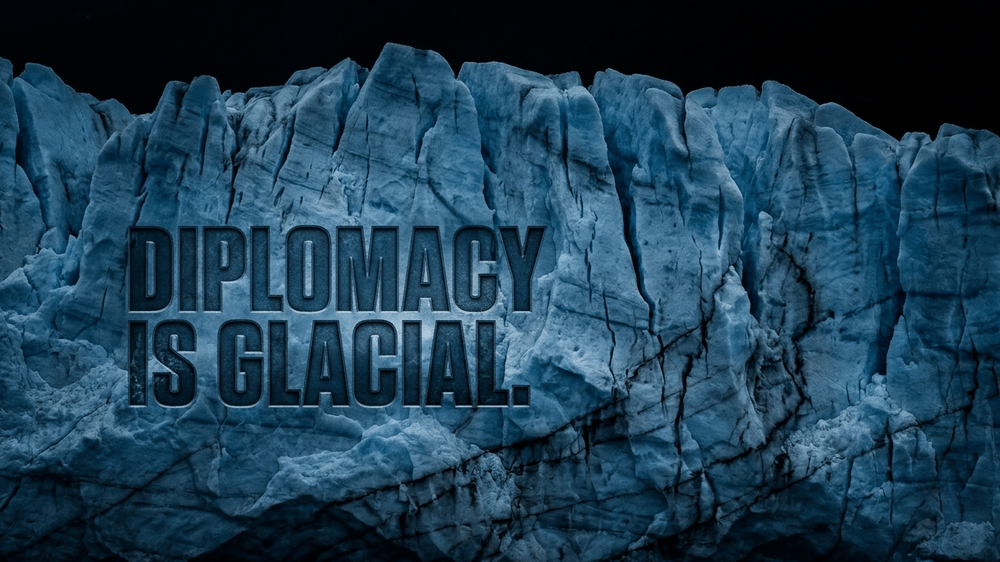
To understand the gravity of this misconception, one must look at the nature of diplomatic inertia. States and non-state actors do not move quickly. They move with the tectonic slow-motion of glaciers. When an agreement finally surfaces, it is not because of some sudden spark of inspiration. It is because the underlying friction of decades has been meticulously lubricated by back-channel communications, cultural exchanges, and the slow erosion of interests once thought immovable. By ignoring the pre-negotiation phase, we fail to appreciate the most critical labor of the diplomat: the preparation of the soil long before any seed is planted.

This is not a new observation, though it is one each generation seems compelled to relearn for itself. The record of formal diplomacy, stretching back more than three thousand years, tells a remarkably consistent story: agreements that endure are the culmination of decades of deliberate engagement, and of the slow, grinding erosion of interests that both sides once considered fixed and non-negotiable.
The deep roots of historical peace
History offers a sobering corrective to the narrative of speed. One of the earliest recorded instances of formal diplomacy is the Egyptian-Hittite Peace Treaty, sometimes called the Treaty of Kadesh. The battle from which it takes its informal name was a bloody stalemate between Ramesses II and the Hittite forces, and it settled nothing on its own. The treaty itself was not concluded until roughly fifteen years later. This ancient document, inscribed on silver and preserved in clay, was not the product of sudden inspiration. It was a weary acknowledgment of mutual exhaustion, arrived at only after more than a decade of administrative and symbolic calibration. Notably, the two monarchs are believed to have never met. The agreement was carried, clause by clause, through intermediaries.
The classical world offers a parallel lesson in the so-called Thirty Years' Peace between Athens and Sparta, an attempt to stabilize hostilities that had simmered for over a decade before the treaty was ever drafted. The intervening years were not silent. They were filled with tentative overtures and failed truces, the discarded scaffolding of every agreement that eventually holds.

Even the modern era, for all its instantaneous communication, remains tethered to this slow cadence. The Treaty of Versailles emerged only after delegates found themselves mired in competing demands and the absence of a clear agenda, a deliberation that consumed months of exhausting argument despite the desperate urgency of a shattered continent.
In South America, the War of the Pacific provides a starker illustration still. Though active fighting ended in 1883, the formal Treaty of Peace and Friendship between the warring parties was not concluded until 1904. For roughly twenty-one years, the unresolved residue of conflict lingered, requiring nearly a generation of diplomats to navigate residual animosity before a permanent settlement could be codified. The signing of a paper, in every one of these cases, was merely the final stroke of a pen that had been moving for years.

The critical architecture of pre-negotiation
The diplomat and scholar Harold Saunders, who helped broker some of the most consequential agreements of the twentieth century, gave this phenomenon its proper name: pre-negotiation. In his foundational essay on the subject, Saunders observed that persuading parties to commit to a negotiated settlement is often more complicated and more time-consuming than reaching the agreement itself once talks have actually begun.
"In many cases, persuading parties to a conflict to commit to a negotiated settlement is even more complicated, time-consuming, and difficult than reaching agreement once negotiations have begun."
This observation, drawn largely from his work on Middle East diplomacy, holds true across an extraordinary range of human conflict, from the international down to the deeply personal. Saunders later refined his thinking further, suggesting that the term "pre-negotiation" was too narrow. He preferred "circum-negotiation," a wider frame that recognized many of history's most intractable disputes are never resolved through formal bargaining at all, because the underlying issues, questions of identity, dignity, and security, cannot simply be traded away across a table.

The pre-negotiation phase is the invisible scaffold of diplomacy. It is where the most dangerous obstacles are identified and quietly removed, often through channels the public will never see. During this phase, the primary goal is not to solve the problem. It is to agree, painstakingly, that the problem can be solved. This involves procedural questions that sound bureaucratic but are, in truth, deeply political: who will sit at the table, what the agenda will contain, where and when discussions will occur. The presence or absence of a single sub-state actor can lend legitimacy to an entire process, or fatally deny it.
Trust-building during this stage rarely resembles negotiation at all. It takes the form of informal meetings, academic exchanges, and quiet cultural contact, the kind of engagement diplomats and scholars now describe as track two diplomacy, a term coined in 1981 to distinguish unofficial, people-to-people contact from the formal negotiations of governments. These exchanges are designed to reduce the baseline hostility that prevents parties from even acknowledging one another as legitimate counterparts. The Oslo Accords of 1993 began this way, as informal discussions between Israeli academics and unofficial Palestinian representatives in Norway, long before either government would admit such contact was occurring. The same pattern preceded the secret talks that eventually produced the 1998 Good Friday Agreement in Northern Ireland, where a single intermediary spent years quietly carrying messages between political leaders who would not yet speak to one another directly.
In many protracted social conflicts, this groundwork is the only thing that makes formal negotiation possible at all, because the issues at stake involve the protection of societal values or the deprivation of basic human needs. These are not things that can be settled in a single afternoon. They require a systemic shift in perception that only time, and consistent, low-stakes engagement, can provide.

Case study: The shadow behind a thirteen-day summit
The Camp David Accords of 1978 are frequently cited as a triumph of rapid, modern diplomacy. They are, in fact, a near-perfect illustration of how thoroughly the popular narrative can obscure what actually happened.
The summit itself ran for thirteen days. But the context for those thirteen days had been building for decades, through generations of regional hostility and a sequence of prior wars between the parties involved. The animosity was not resolved by any single decisive moment. It was managed through years of secret meetings and behind-the-scenes diplomatic spadework, much of it conducted by American officials operating far from any camera.
Even within the summit itself, the popular image of two leaders hammering out terms across a table does not survive scrutiny. For the greater part of the thirteen days, the two principal leaders did not meet directly at all. President Jimmy Carter served as the sole channel between them, shuttling drafts back and forth between separate cabins, listening to grievances that could not yet be spoken aloud in the other's presence. The American delegation alone produced more than twenty revised drafts of the agreement before anything resembling consensus emerged. The breakthrough, when it came, was not a single dramatic concession. It was the product of a series of smaller confidence-building measures, mutual recognitions of sovereignty, quiet assurances on security, that had been whispered through private corridors long before the world ever knew a summit was occurring.
The true success of Camp David was not found in those thirteen days. It was found in the years of exhausting preparation, and in the deeper history of diplomatic contact, that made those thirteen days survivable.

Factors that prolong the path to peace
Several structural and psychological factors conspire to draw out the diplomatic process, and they are worth examining individually.
- Fixed interests and incompatible goals. When two parties both lay claim to the same territory, or to a fundamental right whose recognition the other side has historically withheld, negotiation cannot proceed until those interests are carefully reframed. This reframing is a slow, cognitive process that requires shifting the assumptions of leadership and of the wider population alike. It cannot be legislated into existence on a deadline.
- The weight of "soft" factors. A desire for fairness, for recognition, for the healing of historical trauma, these forces elude the theoretical nets of conventional foreign policy analysis, yet they can derail a technically sound agreement in an instant if one party feels its dignity has been overlooked. Mediators often find themselves caught between two competing instincts: state-building, which prioritizes immediate security and stability, and peace-building, which insists on a sustainable, long-term settlement. A mediator who attends only to the outcome, without respecting the procedure by which that outcome is reached, tends to produce a peace that is brittle and short-lived.
- Cultural variations in the perception of time itself. The anthropologist Edward T. Hall observed that cultures differ fundamentally in how they experience time. Monochronic cultures treat it as a linear resource, to be managed with punctuality and firm deadlines. Polychronic cultures treat it as a fluid environment, something to be inhabited rather than scheduled. When these two worldviews meet across a negotiating table, the resulting friction produces misunderstandings and delays that have nothing whatsoever to do with the underlying geopolitical substance, and everything to do with how each side understands the nature of waiting.
The complexity of multiple stakeholders
Diplomacy in the present era is rarely a tidy bilateral affair. The involvement of multiple parties, state, non-state, and sub-state actors alike, increases the complexity of any process exponentially. Each additional party creates new possible coalitions, but also new opportunities for what scholars of conflict resolution term spoiling behavior: the deliberate undermining of a process by an actor who perceives that peace threatens their own power or standing.

This dynamic is not theoretical. The transitional process in Sudan produced more than a dozen separate peace agreements across its various tracks, and the conflict in Yemen has generated a comparable number of distinct accords, ceasefires, and partial settlements over the past decade, all signed in good faith, none of them sufficient on their own to end hostilities durably. The pattern recurs because the signing of a single document is never, by itself, the culmination it appears to be. Without the deep-rooted trust built through patient pre-negotiation, and without the careful identification and neutralization of spoilers, even a formally signed agreement amounts to a temporary pause in hostilities rather than a genuine resolution.
This same dynamic of competing, often irreconcilable claims to territory and standing is what makes territorial disputes over enclaves and exclaves so resistant to tidy resolution. The map rarely cares how many parties have signed their names to it.

The discipline of the back channel
If pre-negotiation is the soil, the back channel is the root system beneath it: largely invisible, and entirely load-bearing.
Back-channel diplomacy refers to communication conducted outside the bureaucratic structures and public scrutiny that ordinarily govern state-to-state contact. Such channels permit a kind of candor that official negotiation cannot accommodate, because there is no audience before whom either party must perform strength or avoid the appearance of weakness. Practitioners have long understood this. Henry Kissinger, in his years as a senior American official, conducted extensive secret diplomacy with adversaries on several continents, often without the knowledge of the very officials nominally responsible for those relationships. He was hardly unusual in this regard; similar arrangements have recurred throughout the diplomatic record for centuries, dating at least as far back as the secret treaty-making that accompanied the great congresses of nineteenth-century Europe.
The advantage of secrecy is straightforward. Symbolic postures taken in public, postures often required by domestic politics or cultural expectation, can be safely set aside when no audience is present to witness the concession. This encourages a frank pursuit of actual interests, rather than a performance built around historic grievance. The back channel does not replace formal diplomacy. It clears the ground that formal diplomacy will later walk across, often so thoroughly that by the time the public negotiation begins, the most difficult questions have already, quietly, been answered.
Scientific parallels: The true anatomy of the strike
The lightning metaphor, it turns out, is not only diplomatically misleading. It is, on its own scientific terms, frequently misunderstood as well, and the correction is instructive.
Benjamin Franklin's eighteenth-century experiments established that lightning was a form of electrical discharge, and the lightning rod followed shortly after as a practical application of that discovery. Yet modern atmospheric science is careful to note that the rod does not neutralize a storm cloud, nor prevent a strike from happening. It provides a safe path of least resistance for a discharge that was, by the time the rod is needed, already physically inevitable, the release of an electrical tension that has been accumulating, often for an extended period, within the cloud itself.
A diplomatic breakthrough operates on precisely the same principle: the release of tension that has been building for years, channeled through a pathway, the negotiating table, that was constructed in advance to receive it safely. Atmospheric scientists today even employ a technique known as rocket-triggered lightning, deliberately inducing a discharge under controlled conditions because they recognize that the energy involved is too significant, and too unpredictable, to simply wait for nature to release it on its own schedule. Diplomacy demands an identical proactiveness. Peace cannot be awaited passively. The pathways that allow accumulated tension to discharge safely, rather than catastrophically, have to be built.

The necessity of patience in a volatile world
The most dangerous consequence of this misconception is that it breeds impatience among the very public and policymakers who must ultimately support a diplomatic process to its conclusion. When rapid results are expected as a matter of course, the slow work of pre-negotiation is too often abandoned in favor of grand, performative gestures. These gestures, lacking the necessary groundwork beneath them, tend to fail, and their failure deepens a corrosive cynicism: the quiet, creeping belief that peace itself is simply not possible.
Diplomatic negotiations require a form of long-term engagement that sits uneasily within the rhythm of the modern news cycle. As history demonstrates with some consistency, the treaties that endure are rarely those that arrived quickly. They are the ones forged in the slow, patient fire of persistent dialogue, sustained over years that produced no headlines at all. There are no shortcuts through this terrain, only the long, quiet hours of preparation that precede any genuine resolution.
We would do well to retire the expectation of the sudden strike, and to cultivate instead a deeper appreciation for the unglamorous architecture that makes peace possible: the back-channels, the cultural exchanges, the tedious procedural debates over who will sit where and speak when. It is in this unphotographed labor that the real work of diplomatic history is done. Peace is not an accident of nature. It is a meticulously constructed edifice, built stone by stone, over years of silent and largely unrewarded effort.

Share now









Key takeaways
- The Egyptian-Hittite Peace Treaty, one of the earliest recorded peace treaties in history, was not concluded until roughly fifteen years after the battle from which it takes its informal name, and the two monarchs involved are believed to have never met in person.
- The classical Thirty Years' Peace between Athens and Sparta followed more than a decade of failed truces and tentative overtures before it was formally drafted.
- The Treaty of Versailles, despite the urgency of a continent shattered by war, took months of exhausting deliberation to negotiate due to competing demands and the absence of a clear agenda.
- The War of the Pacific settlement took 21 years to formalize after active fighting ended, illustrating how residual animosity can outlast the conflict itself by a generation.
- Diplomat and scholar Harold Saunders argued that persuading parties to commit to negotiation is often more difficult and time-consuming than the negotiation itself.
- Pre-negotiation is not about solving the underlying problem; it is about establishing that the problem can be solved, through procedural agreement on who negotiates, what the agenda covers, and where talks occur.
- The Camp David Accords lasted thirteen days, but the two principal leaders did not meet directly for most of that time; the American delegation alone produced more than twenty revised drafts before reaching consensus.
- Track two diplomacy, coined in 1981, describes unofficial, people-to-people contact, academic exchanges, informal dialogue, that often lays the groundwork years before formal governmental negotiation begins.
- Back-channel diplomacy allows negotiators to set aside public, symbolic postures and pursue frank discussion away from domestic political pressure.
- Protracted conflicts can generate dozens of separate peace agreements over years without producing a durable resolution, because signing a document is not the same as removing the underlying spoilers and distrust.
- The metaphor of the lightning strike is scientifically imprecise: a lightning rod does not prevent a strike, it provides a safe path for tension that was already inevitable, much like a negotiating table channels pressure that has built for years.
- Cultural differences in the perception of time itself, as described by anthropologist Edward T. Hall, can produce diplomatic delays that have nothing to do with the substantive issues being negotiated.
Sources
- Beyond Intractability (Saunders on pre-negotiation) https://www.beyondintractability.org/artsum/saunders-negotiation
- United States Institute of Peace (multi-track diplomacy primer) https://www.usip.org/publications/2019/07/primer-multi-track-diplomacy-how-does-it-work
- Jimmy Carter Library (Camp David Accords retrospective) https://www.jimmycarterlibrary.gov/research/thirteen_days_after_twenty_five_years
- Wikipedia (Egyptian-Hittite peace treaty) https://en.wikipedia.org/wiki/Egyptian%E2%80%93Hittite_peace_treaty
- Wikipedia (Track II diplomacy) https://en.wikipedia.org/wiki/Track_II_diplomacy
- Published 2026-07-22 08:53
- Modified 2026-07-22 08:53

-
Redaction