

-
 Redaction
Who owns low Earth orbit? The legal vacuum
Low Earth Orbit now holds thousands of satellites, yet no clear property law governs it. Here's why the 1967 treaty can no longer keep up with reality.
The erosion of the extraterritorial commons
The technological acceleration of the twenty-first century has outpaced the static legal frameworks established during the Cold War. The orbital environment is no longer a vast, empty frontier; it is a congested industrial zone. This shift from exploration to exploitation has exposed a critical flaw in the global governance of Low Earth Orbit (LEO): a jurisdictional vacuum. The 1967 Outer Space Treaty (OST) succeeded in one narrow task - preventing the nuclearization of the cosmos - but it failed to anticipate a reality in which private corporations, not sovereign states, would dictate the density of the orbital shell.
Low Earth Orbit, generally defined as the region extending up to roughly 1,000 to 2,000 km above the surface, is now the primary theater for telecommunications, Earth observation, and global surveillance. The population of active satellites has swelled to somewhere between 14,000 and 18,000, depending on the tracking source - a striking jump from the roughly 2,000 to 3,300 satellites present less than a decade ago. That growth is not evenly distributed. It is driven almost entirely by megaconstellations, most notably SpaceX's Starlink, which alone accounts for well over two-thirds of all operational satellites currently in orbit.

This concentration of assets in a narrow altitude band creates a de facto occupation of space that the OST explicitly sought to avoid, yet the treaty lacks the granular mechanisms to regulate commercial saturation on this scale.
The fundamental tension of the Outer Space Treaty
The legal architecture of space rests on Article II of the OST, which mandates that outer space is not subject to national appropriation "by claim of sovereignty, by means of use or occupation, or by any other means." For decades, this principle of non-appropriation functioned reasonably well, because space access was prohibitively expensive and reserved almost exclusively for state actors. Today, the ambiguity of that clause with respect to private entities has opened a genuine regulatory gray zone. A nation cannot claim a given orbital shell as sovereign territory - but it retains "jurisdiction and control" over the objects it launches into that shell.
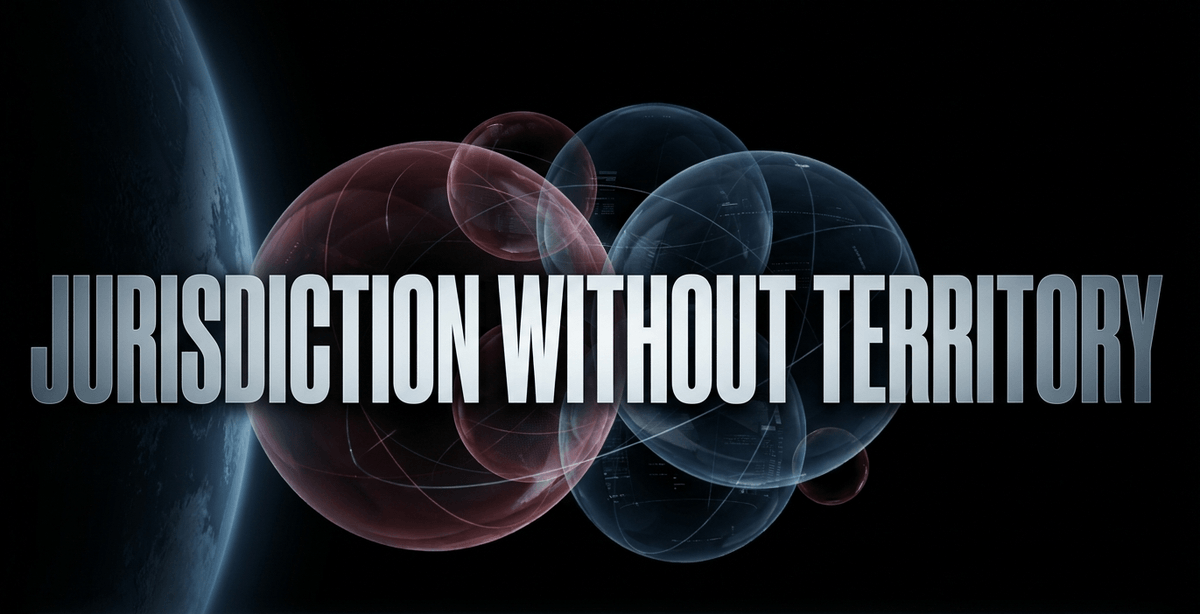
This produces a phenomenon worth naming plainly: jurisdiction without territory. A satellite registered in the United States or the European Union remains under the legal purview of that state, carrying a bubble of national law into a fundamentally non-sovereign environment. What this model does not address is the physical reality of orbital slots. When a company deploys thousands of satellites into a specific shell, it is effectively "using" that space to the exclusion of others - not through any legal claim, but through the sheer collision risk its presence generates for everyone else. This is occupation in all but name. It challenges the spirit of the OST while remaining, technically, within its letter.
The role of the International Telecommunication Union
Orbital space and the radio frequencies required to communicate with it are limited natural resources. That makes the International Telecommunication Union (ITU) the primary administrative body for orbital distribution. Critically, the ITU does not grant "property rights" - it assigns "rights of use." To prevent what the industry calls spectrum warehousing, where an operator claims a frequency and orbital slot but never actually deploys hardware there, the ITU enforces strict deployment milestones: operators must bring 10% of a filed constellation into orbit within two years, 50% within five years, and the full constellation within seven.
These rules exist to stop slots from being held indefinitely by paper projects. But they carry an unintended side effect. They also encourage a land-grab mentality. Operators are incentivized to launch as many satellites as possible, as quickly as possible, simply to secure their regulatory standing before a rival files for the same slot. This rush to populate LEO compounds the jurisdictional vacuum, because the speed of commercial deployment now vastly exceeds the speed of international legal reform.
The escalating threat of the Kessler Syndrome
The most immediate consequence of this jurisdictional vacuum is the unmanaged proliferation of space debris. Cataloged objects in orbit - defunct satellites, spent rocket stages, and tracked fragments - now number somewhere between 28,000 and 46,000, depending on which tracking network is doing the counting. The real danger, though, lies in the untracked population. Current estimates from the European Space Agency put the count at roughly 1.2 million objects between 1 and 10 cm, and more than 140 million fragments smaller than 1 cm. At orbital velocities near 17,000 miles per hour, even a fragment the size of a marble carries the kinetic energy of a hand grenade.
"Satellite collisions are bad for business, and bad for space." That is roughly the consensus view among public and private space operators alike, according to the Atlantic Council's analysis of space traffic management - a rare point of agreement in an otherwise fractured regulatory landscape.
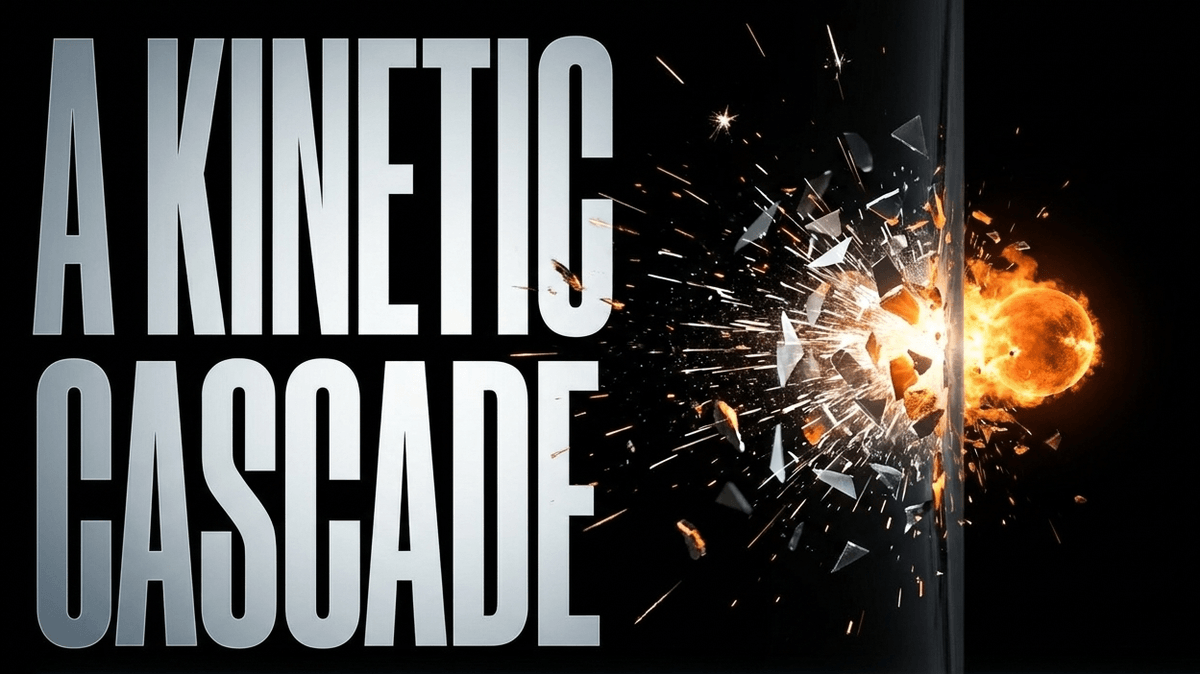
The Kessler Syndrome, a theory proposed by NASA scientist Donald Kessler in 1978, warns of a tipping point at which the density of objects in LEO becomes so high that a single collision triggers a cascade of further impacts - a self-sustaining chain reaction that could render entire orbital altitudes unusable for generations. Close approaches between satellites in megaconstellations now occur on the order of every 22 seconds. In the 500-600 km band specifically, a single satellite can expect nearly 30 conjunction events per year, each one requiring a fuel-burning maneuver that shortens its operational lifespan. Some models go further still: if operators stopped performing collision-avoidance maneuvers altogether, current tracking data suggests a major collision would occur within days, not years.
Scientific and observational impacts
The density of satellites is not merely a physical hazard. It is an environmental one for the scientific community, and increasingly a cultural one as well. A 2025 study found that if all proposed megaconstellations - a figure that has ballooned toward the hundreds of thousands of planned satellites, with over a million satellite filings now sitting somewhere in the regulatory pipeline - are fully deployed, the impact on astronomy will be severe. Roughly 96% of exposures from sensitive instruments like SPHEREx and Xuntian would be marred by satellite trails. The light pollution from these reflective objects is not a minor nuisance; researchers have estimated that within a decade, as many as one in fifteen points of light visible in the night sky could be a moving satellite rather than a star.
This represents a genuine loss of what might be called the "celestial commons," and there is, at present, no international law protecting the visual or electromagnetic clarity of the night sky as a shared heritage. The concern is not purely scientific, either - Indigenous communities that rely on the night sky for navigation, oral tradition, and spiritual practice are affected by a form of light pollution that current space law was never designed to even recognize, let alone regulate.
Liability and the failure of accountability
The 1972 Liability Convention was designed to provide a framework for damage caused by space objects. It establishes a binary system: absolute liability for damage on Earth's surface or to aircraft in flight, and fault-based liability for damage occurring in space itself. In the satellite age, that fault-based requirement is a significant legal hurdle. Proving which specific fragment, from which specific launch, caused a given collision is technically difficult and, in most real-world cases, close to impossible.
The emergence of autonomous AI systems for collision avoidance complicates matters further. When two satellites from different constellations rely on independent, proprietary algorithms to maneuver away from one another, they may - through no fault of either operator individually - end up steering into a more dangerous trajectory rather than a safer one. If a collision results from that kind of algorithmic interaction, the question of legal accountability becomes genuinely murky. Does fault lie with the software developer, the satellite operator, or the state that registered the object? The existing treaty architecture offers no clear answer, largely because it predates the very concept of machine-driven maneuvering decisions.
Space traffic management and mitigation efforts
Recognizing the limitations of existing law, a growing number of international and commercial entities have stepped in to provide technical, if partial, solutions. Space Traffic Management (STM) has become an essential - and essentially improvised - service. The US Space Force's 18th Space Defense Squadron remains the primary public source for tracking active satellites and issuing conjunction notifications, drawing on the Space-Track.org catalogue. Commercial providers like LeoLabs are increasingly filling the gaps left by government systems, offering high-resolution radar tracking capable of detecting smaller fragments than most public networks can manage.
On the regulatory side, the European Space Agency introduced the Zero Debris Charter, aiming for debris-neutrality by 2030 and encouraging operators to design spacecraft for controlled disposal and active removal of defunct assets. The European Union has since gone further, advancing a proposed EU Space Act and a formal Space Traffic Management approach built around three pillars: strengthening the capability to track objects and avoid collisions, establishing a proper normative and legislative framework, and building international partnerships toward a genuinely multilateral STM regime. While charters like these remain voluntary in large part, they signal a growing consensus that the improvisational era of LEO governance needs to end.
Key strategies for debris mitigation now generally include:
- Passivation of spacecraft at the end of their mission, to prevent battery or fuel-tank explosions that generate secondary debris.
- Designing for re-entry, so satellites deorbit and burn up within a defined window - typically five years - after mission completion.
- Standardized docking interfaces, to make active debris removal (ADR) missions technically feasible across different manufacturers.
- Cross-platform collision avoidance, meaning automated systems that can actually communicate with satellites from rival constellations rather than maneuvering blind.
The property rights question beyond Earth orbit
The jurisdictional vacuum in LEO does not exist in isolation. It mirrors, and is increasingly entangled with, a parallel debate over property rights on the Moon and other celestial bodies - a debate our related piece on who owns the Moon explores in more depth. The same Article II ambiguity that governs orbital slots also governs lunar resource extraction, and four states - the United States, Luxembourg, the United Arab Emirates, and Japan - have already passed domestic legislation asserting that extracted space resources can be privately owned, even though the underlying celestial body itself cannot be claimed.
The Artemis Accords, a non-binding political framework rather than a treaty, have become the primary vehicle for exporting that interpretation internationally. The Accords state plainly that resource extraction "does not inherently constitute national appropriation" under the OST - a legal position that Russia and China have pointedly declined to endorse. By 2026 the Accords had grown to more than sixty signatory states, a scale that gives an ostensibly non-binding instrument real normative weight, even as its hardest legal tests - disputes over safety zones, priority access, and resource-sharing obligations - remain largely untested in practice.
The parallel is instructive. In both LEO and on the lunar surface, states are using domestic law and soft-law political declarations to fill gaps that a formal treaty amendment process is too slow, and too politically fraught, to close.
The path toward a new orbital legal order
The current state of LEO requires more than voluntary guidelines. It requires a structural rethink of how international space law actually works. The jurisdictional vacuum cannot be filled by national regulation alone, since satellites pass over every jurisdiction on Earth roughly every 90 to 120 minutes. A fragmented, country-by-country approach simply produces "flags of convenience," where operators register their satellites in whichever jurisdiction offers the most lenient debris and liability standards.
One proposal gaining traction among legal scholars - articulated recently by Harvard Kennedy School's Ely Sandler - sidesteps the near-impossibility of negotiating a brand-new treaty among more than 110 signatory states with competing interests. Instead, it borrows a model from climate diplomacy: a recurring Conference of the Parties (COP) for OST signatories, empowered to develop shared definitions and protocols incrementally, without requiring the kind of unanimous, one-shot treaty ratification that has stalled meaningful reform for decades. The UN's own COPUOS body has floated a similar idea, proposing a fourth UN Conference on the Exploration and Peaceful Uses of Outer Space for 2027, explicitly framed around space traffic management, debris, and sustainability.
To make any of this durable, several structural changes seem necessary. First, a move toward a genuinely multilateral Space Traffic Management authority - something closer to an ICAO for orbital space - with real capacity to enforce maneuver protocols rather than merely recommend them. Second, a clearer definition of "property rights" that permits commercial investment while strictly prohibiting the permanent monopolization of orbital shells - likely through time-limited leases or usage permits contingent on demonstrated compliance with debris-removal standards, rather than indefinite claims.
Finally, an international fund for active debris removal, financed by something like a "space sustainability tax" levied on every launch, could address the legacy debris problem directly - the tens of thousands of defunct objects that no single nation is currently incentivized to remove, given the cost involved and the complicated liability questions raised by touching another country's registered property. Without a genuine shift in how the orbital commons is perceived and policed, the very technology that enabled the global information age may eventually seal off our view of - and access to - the stars above it.
Share now









Key takeaways
- Low Earth Orbit (LEO) is generally defined as the region up to 1,000-2,000 km above Earth's surface, home to the vast majority of active satellites.
- Active satellite counts vary by tracking source, but most range between 14,000 and 18,000 - up from roughly 2,000-3,300 less than a decade ago.
- SpaceX's Starlink accounts for well over two-thirds of all currently operational satellites, making it the single largest driver of orbital congestion.
- Article II of the 1967 Outer Space Treaty prohibits national appropriation of space but remains ambiguous on private property rights - a gap now exploited by commercial megaconstellations.
- The ITU requires satellite operators to deploy 10% of a constellation within two years, 50% within five years, and 100% within seven years to prevent "spectrum warehousing."
- Close approaches between satellites in megaconstellations now occur roughly every 22 seconds, with some orbital bands seeing nearly 30 conjunction events per satellite per year.
- Estimates suggest over 140 million untracked debris fragments smaller than 1 cm are currently in orbit, alongside roughly 1.2 million objects between 1-10 cm.
- The Kessler Syndrome, first proposed by NASA scientist Donald Kessler in 1978, describes a potential cascading collision chain reaction that could render entire orbital bands unusable.
- If all proposed megaconstellations are deployed, up to 96% of exposures from sensitive astronomical instruments could be marred by satellite trails.
- The 1972 Liability Convention applies absolute liability for damage on Earth but only fault-based liability for collisions in space - a standard that is increasingly difficult to enforce.
- The Artemis Accords, a non-binding political framework, had grown to more than 60 signatory states by 2026, shaping international norms around space resource extraction.
- The EU Space Act and the EU's Space Traffic Management approach represent the most advanced multilateral regulatory effort to date, though they remain under negotiation.
Sources
- UNOOSA https://www.unoosa.org/oosa/en/ourwork/spacelaw/treaties/introouterspacetreaty.html
- Wikipedia (Kessler Syndrome) https://en.wikipedia.org/wiki/Kessler_syndrome
- FAA - Convention on International Liability for Damage Caused by Space Objects https://www.faa.gov/about/office_org/headquarters_offices/ast/media/Conv_International_Liab_Damage.pdf
- RAND Corporation - The Time for International Space Traffic Management Is Now https://www.rand.org/pubs/research_briefs/RBA1949-1.html
- European Commission - Space Traffic Management https://defence-industry-space.ec.europa.eu/eu-space/space-traffic-management_en
- Published 2026-07-12 20:29
- Modified 2026-07-12 20:29
