

-
 Redaction
Anatomy of a corporate spin-off: Unlocking value
Corporate spin-offs eliminate the conglomerate discount by separating businesses. Learn the mechanics, strategic drivers and what performance data shows.
The blunt reality of the conglomerate discount
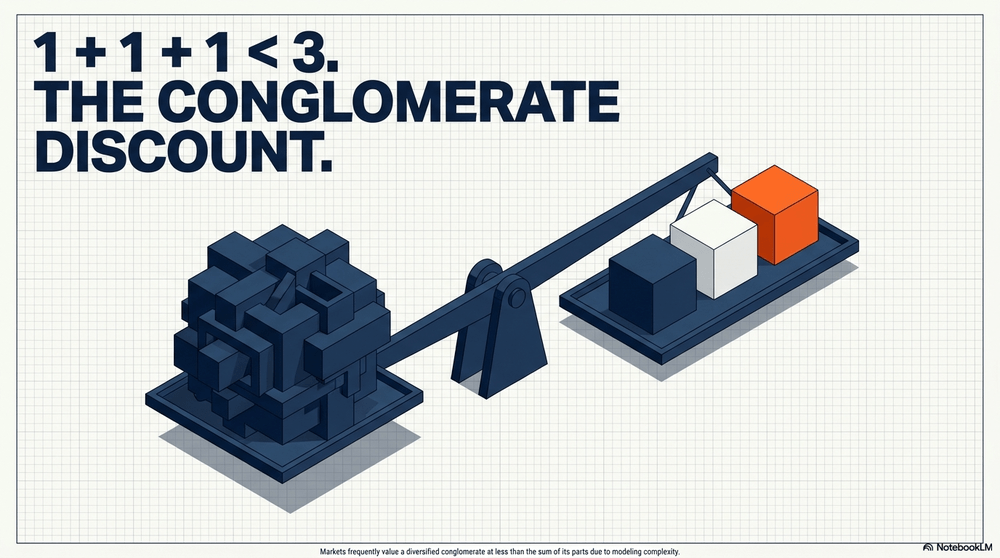
Corporate structures frequently become victims of their own success. As companies expand into diverse industries, they often find themselves burdened by a phenomenon known as the conglomerate discount - the market's habit of valuing a diversified group at less than the sum of its individual parts. Analysts, who tend to specialize in specific sectors, find it genuinely difficult to model a firm that sells breakfast cereal and advanced semiconductors. So they apply a safety margin, and the stock price pays for it.
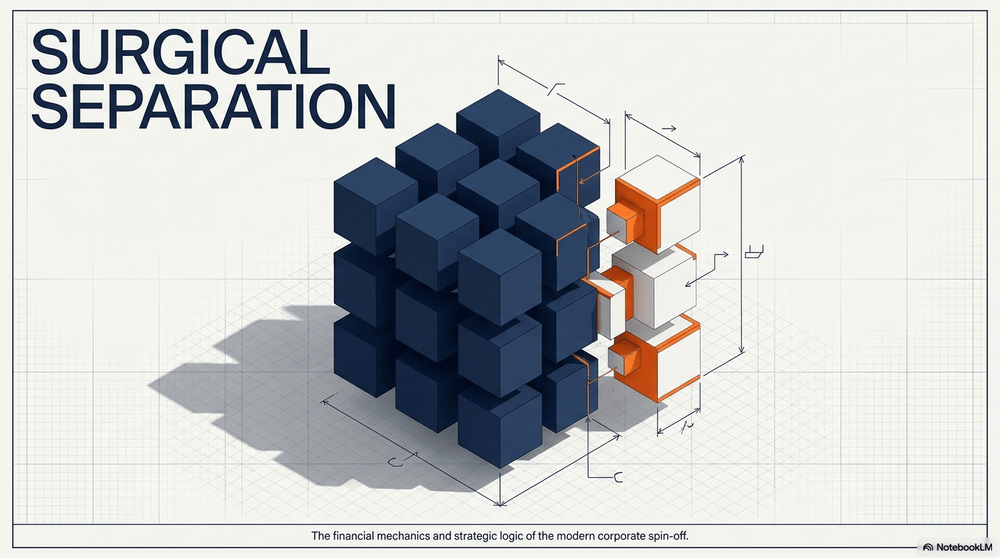
A corporate spin-off is the process of surgically removing a business unit to allow it to breathe as an independent entity. This is not merely a financial maneuver; it's a declaration of strategic independence. By separating a division, a parent company (RemainCo) creates a new, standalone organization (SpinCo) with its own management team, board of directors, and mandate. The goal is deceptively simple: let the market see the pure play value, and let management focus without the distraction of a parent company's competing priorities.
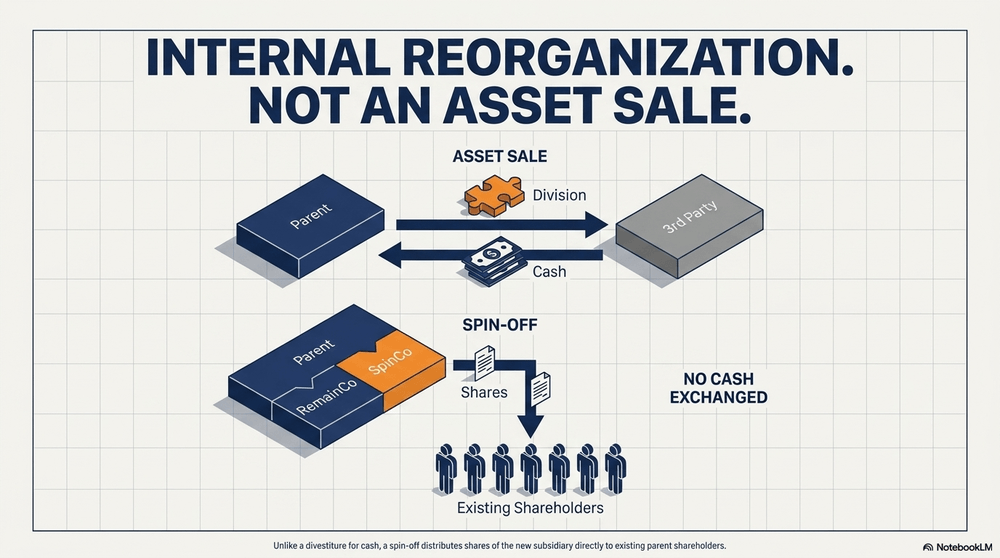
The mechanism is also what distinguishes a spin-off from a straight asset sale. Unlike a divestiture, where a division is handed to another corporation for cash, a spin-off is an internal reorganization. The parent company distributes shares of the new subsidiary to its existing shareholders on a pro rata basis. If you own 1% of the parent, you receive 1% of the new company. The economic interest of the shareholder remains intact, even as the corporate form changes entirely.
Why companies choose to break apart
The decision to dismantle a corporate empire is rarely driven by a single factor. It is the result of converging pressures - financial, strategic, and often external.
Eliminating the conglomerate discount and creating pure plays
Investors today crave transparency. They want to choose exactly what kind of risk they are taking, and a conglomerate forces them to take on a mixed bag whether they like it or not. When a company becomes a pure play, it attracts a more dedicated investor base. Growth-oriented funds that might have avoided the parent due to its legacy baggage can now buy into the SpinCo directly. Value investors can stick with the RemainCo if it offers the stable cash flows and dividends they seek.
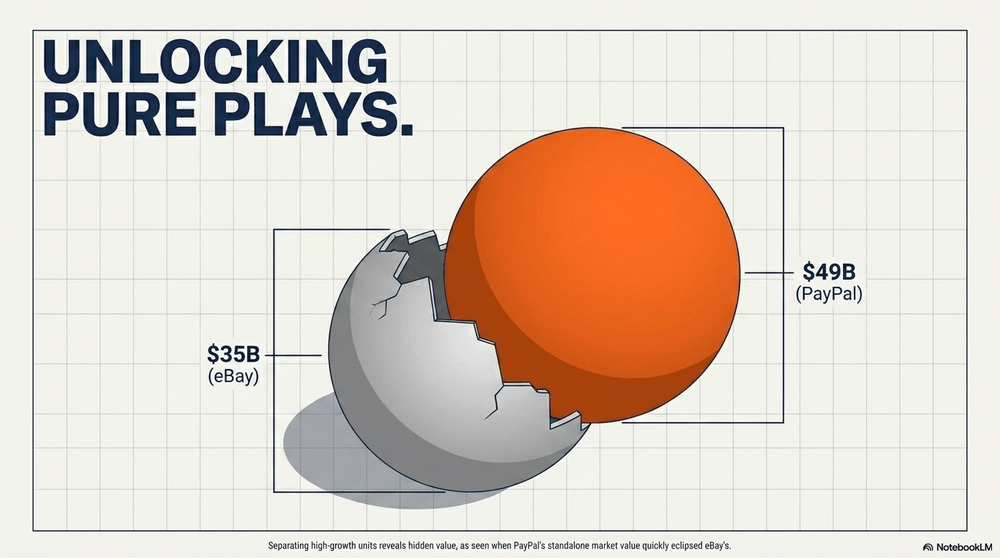
The eBay and PayPal separation is the canonical example. When PayPal was tucked inside eBay, its explosive fintech growth was being masked by the more mature, slower-growing marketplace business. On its first official day trading as a public company in July 2015, PayPal's market value climbed to near $49 billion, eclipsing the market cap of its former parent eBay, which came in at around $35 billion. The company had been acquired by eBay for $1.5 billion in 2002. The separation unlocked something that was always there - it just needed room to be seen.
Strategic focus and operational agility
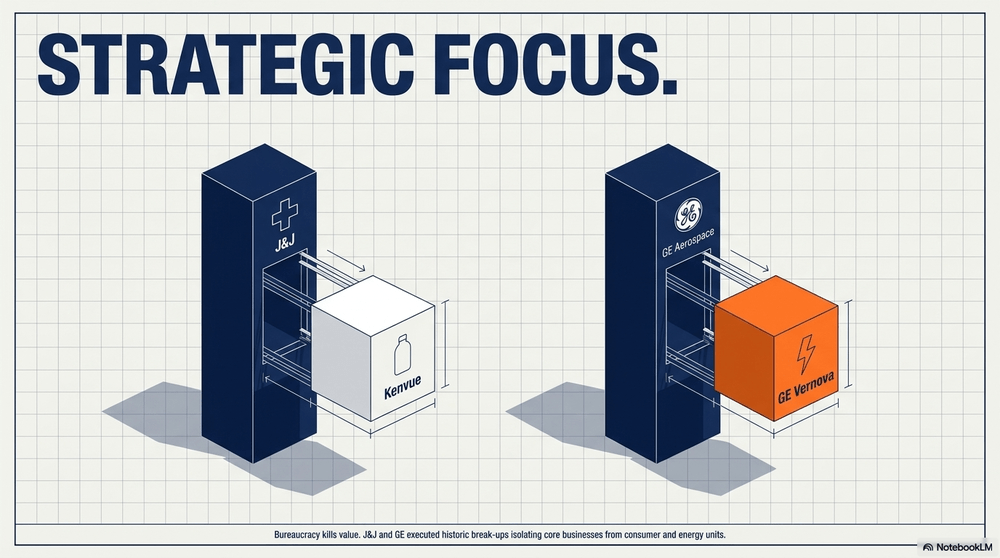
Bureaucracy is the silent killer of corporate value. In a massive conglomerate, the CEO's time is finite. Is it better spent on the $10 billion pharmaceutical division or the $2 billion consumer health wing? Often, the smaller unit loses.
Separating these businesses allows for strategic focus. When Johnson & Johnson spun off Kenvue - its consumer health division, home to brands like Tylenol, Neutrogena, and Listerine - in May 2023, it wasn't just accounting housekeeping. The Kenvue IPO was the biggest U.S. IPO in more than a year, with shares jumping 22% on their market debut on the New York Stock Exchange, valuing the new company at roughly $50 billion. The parent raised $13.2 billion in proceeds from the Kenvue debt offering and IPO, and used the transaction to sharpen its identity as a pure pharmaceutical and MedTech company. Pharma runs on clinical trials and patent cliffs; consumer goods run on brand loyalty and shelf space. Different animals entirely.
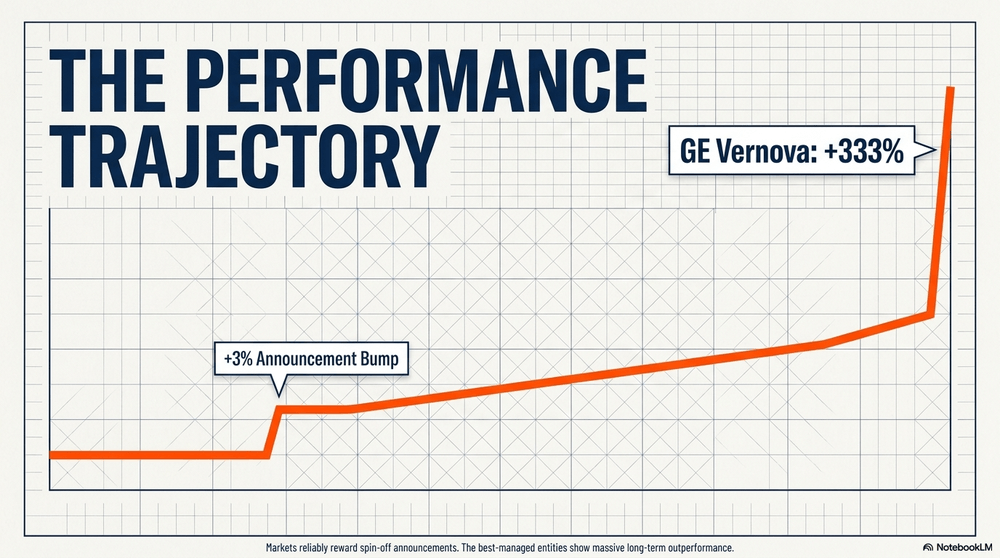
More recently, the GE breakup demonstrated this logic at the most audacious scale. General Electric completed the spin-off of GE Vernova on April 2, 2024, with GE shareholders receiving one share of GE Vernova for every four shares of GE owned. What remained became GE Aerospace. Since its spinoff, GE Vernova's stock has surged 333%, while the broader Morningstar US Market Index rose only 25.0% over the same period. That is the kind of outperformance that makes activist investors sit up and take notice.
Capital structure optimization
Not all businesses should carry the same amount of debt. A mature utility business can handle significant leverage because its cash flows are predictable and consistent. A startup-like biotech unit needs a clean balance sheet to attract venture-style equity investment. A spin-off allows each company to build a capital structure suited to its own reality, not a compromise averaged across a sprawling portfolio.
The parent can load the SpinCo with a specific amount of debt - often using the proceeds to pay a one-time dividend to itself - while ensuring the SpinCo has enough liquidity to operate as a standalone entity. Done poorly, this becomes an extraction exercise that saddles the new company with crippling obligations before it even rings its opening bell. Done well, it's elegant financial engineering that benefits both parties.
Responding to activist investors
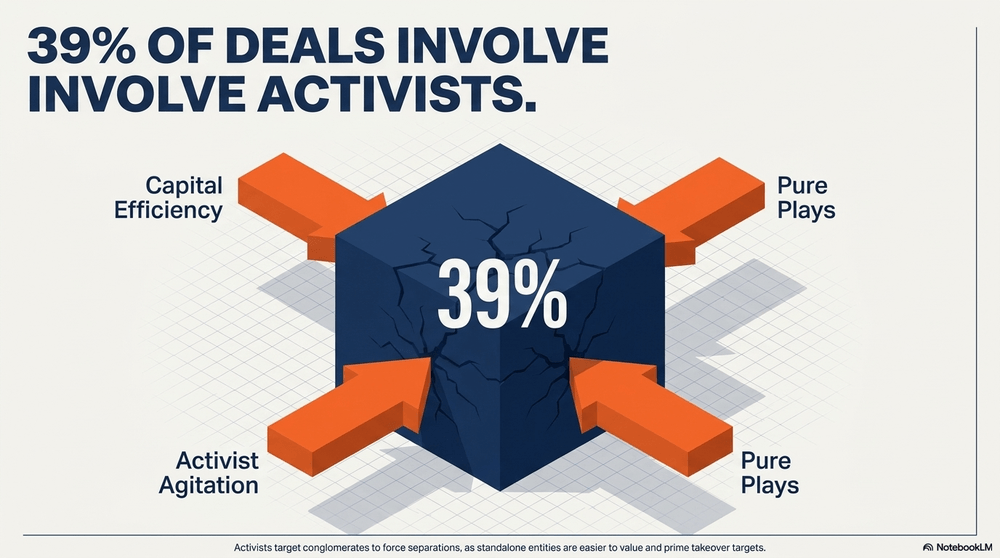
Spin-offs have become the activist investor's favorite script. The playbook is straightforward: identify a conglomerate where one division is obscuring the value of another, agitate publicly for a separation, watch the stock react, and hold through the breakup.
Activist pressure is accelerating this trend. According to a report from Trivariate Research, shares in companies that are spun off from existing firms tend to outperform the S&P 500 by an average of 10% over the subsequent 18-24 months. That kind of data keeps activists knocking on boardroom doors.
One of the most closely watched current situations involves Honeywell. Elliott Management launched a campaign at the company demanding a breakup. The result: Honeywell announced plans in February 2025 for the full separation of its Aerospace Technologies business, with Honeywell Aerospace expected to become one of the largest pure-play aerospace suppliers globally, with over $17.4 billion in net sales based on 2025 figures. The spin-off is expected to be completed in the second half of 2026.
FedEx is also in the process of separating its freight division - a transaction analysts expect to unlock around $20 billion in market value.
The complex process of execution
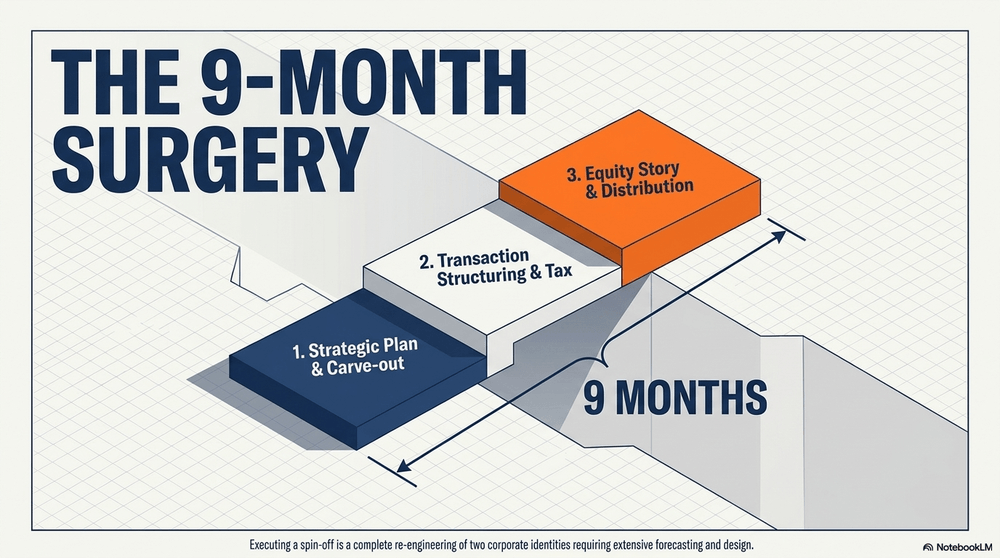
Executing a spin-off is a high-stakes surgical procedure that requires months, sometimes years, of preparation. It is far more than a legal filing. It is a complete re-engineering of two corporate identities.
Phase 1: Strategic planning and board approval
The process begins with a clear articulation of why. The board must be convinced that the separation will create more value than the current integrated structure - and that conviction needs to hold up against rigorous challenge. During this phase, leadership for the new SpinCo is identified early. Appointing a CEO and CFO before the formal announcement gives the new company architects who can shape their own future organization rather than inheriting someone else's blueprint.
Financial forecasting during this stage is intense. The team must project what the business would have looked like as a standalone entity for several years prior - a process known as a financial carve-out. This creates the analytical foundation for everything that follows: valuations, investor communications, regulatory filings, debt sizing.
Phase 2: Transaction structuring and regulatory filings
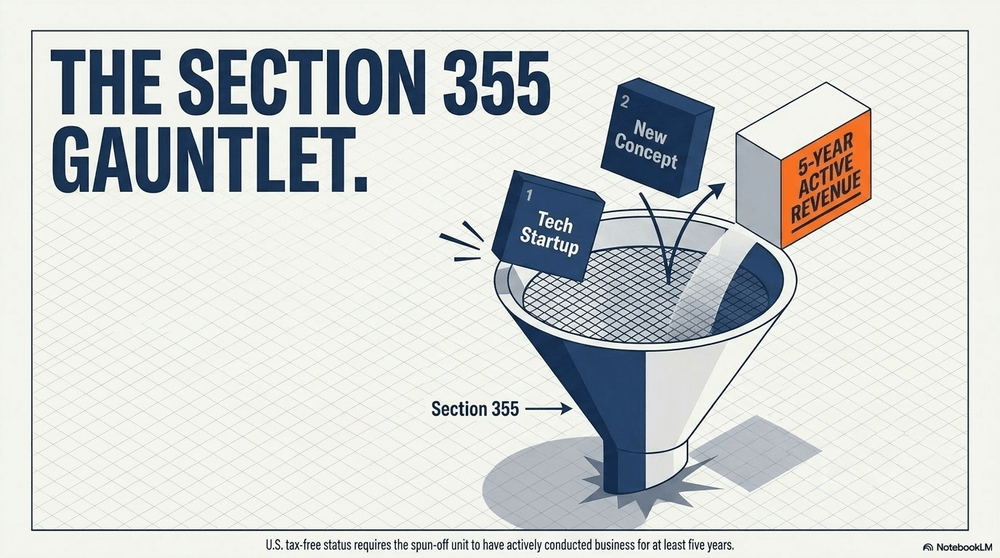
This is where the legal and tax heavy lifting happens. In the United States, most spin-offs are structured to be tax-free under Internal Revenue Code Section 355. To qualify, both the distributing and controlled corporations must be engaged in the active conduct of a trade or business, and that trade or business must have been actively conducted for at least five years prior to the distribution. The transaction must also be motivated by a real and substantial non-tax business purpose, and it cannot be used principally as a device to distribute earnings and profits in a manner akin to a dividend.
The five-year active trade or business requirement is frequently the most technically demanding hurdle. Many otherwise promising spin-offs stumble on exactly this point - particularly technology companies spinning out newer business lines that haven't yet generated revenue for the required period.
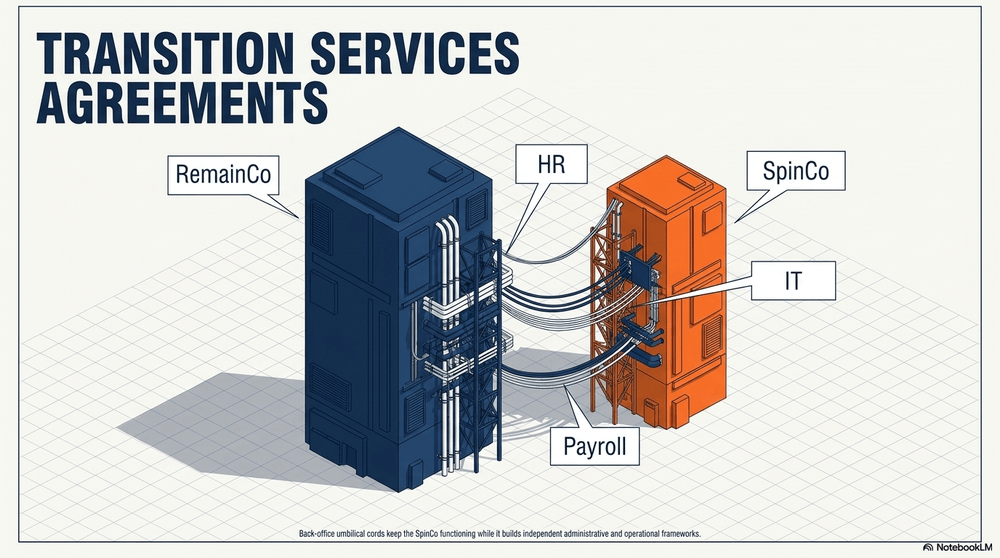
Regulatory filings, specifically the SEC Form 10, are prepared during this phase. This document is the bible for the new company: detailed information on risks, strategy, historical financials, and the equity story management wants to tell. Simultaneously, the companies negotiate Transition Services Agreements (TSAs) - temporary contracts where the parent provides back-office support (HR, IT, payroll) to the SpinCo for a defined period until it can stand fully on its own feet.
Phase 3: The equity story and distribution
As the effective date approaches, focus shifts to investor communication. Management goes on roadshows to explain why the new company is a compelling investment. This matters more than most executives initially appreciate.
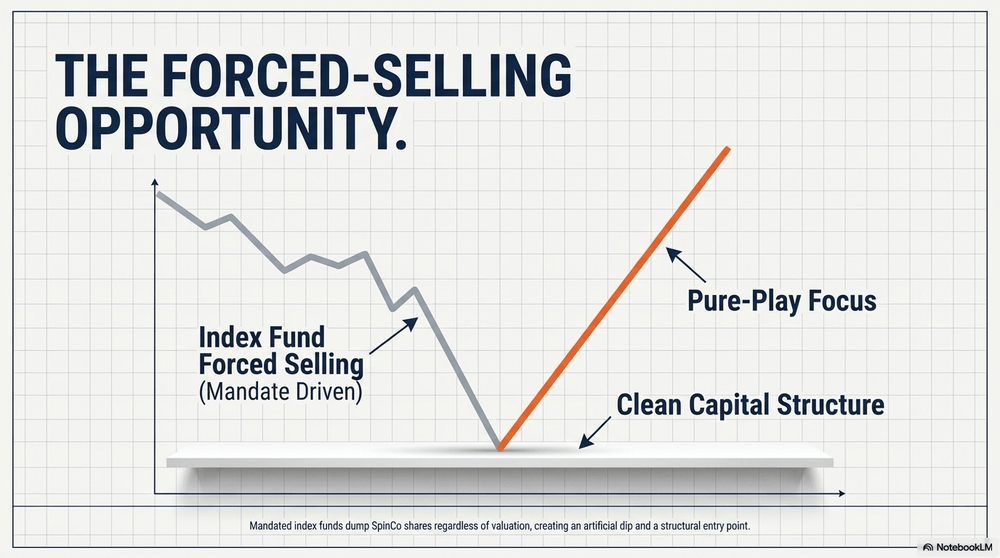
Many institutional investors are restricted by their mandates. An S&P 500 index fund that receives shares in a new mid-cap SpinCo not yet included in the index will be forced to sell immediately, regardless of valuation. A strong equity story helps attract new buyers to absorb that initial selling pressure. It can mean the difference between a healthy debut and a demoralizing first week. The when-issued trading period - which typically begins a few weeks before the formal separation - gives management an early read on how the market is pricing the new entity.
Following the completion of the spin-off, the parent company is referred to as "RemainCo." According to the Houlihan Lokey Fall 2025 Spin-Off Transaction Study, the number of spin-offs completed has ranged from 5 to 15 per year in the U.S. between 2019 and 2025, with 15 completed in 2022 and 10 in each of 2019 and 2024.
The surge in modern spin-off activity
The market for spin-offs has entered an expansionary phase. Globally, 237 spinoff IPOs raised $53.9 billion in 2024, a 21.3% increase in size compared to the prior year, even as the number of transactions fell by 17.4%, according to LSEG data. Fewer deals, bigger deals. The average market value of a spin-off has grown significantly: before 2008, the average market value of a spinoff was around $1 billion. By 2024, that figure had grown to $2.5 billion, according to Trivariate Research data compiled between 1999 and 2024.
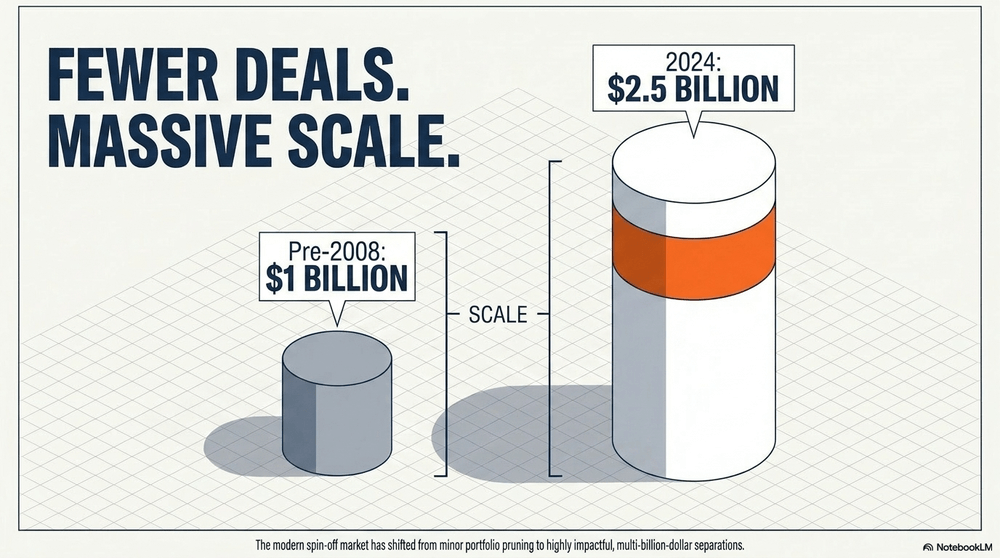
The composition of the deal pipeline reflects this shift toward scale. In the U.S., the trend is toward companies doing "larger separations that are more impactful rather than portfolio pruning," according to Michael Kagan, a managing director at Morgan Stanley.
This scaling up is partly driven by a richer environment for corporate restructuring: activist pressure, the post-pandemic re-evaluation of business models, and a credit environment that has forced CFOs to think harder about where capital is most efficiently deployed. It also reflects what a few spectacular breakups have proven - that the market will handsomely reward clarity.
Analyzing financial performance
Does breaking apart actually work? The data suggests that, while not a guaranteed win, spin-offs have a strong and consistent track record of value creation.
Short-term market reaction
The mere announcement of a spin-off reliably generates positive abnormal returns. According to a meta-analysis of 26 event studies, the announcement of a spin-off typically results in an average abnormal return of around 3%. Research examining 163 spin-off announcements on the Bombay Stock Exchange from 2000 to 2023 found similar results, identifying positive cumulative abnormal returns of 3.32% during the days surrounding the spin-off announcement. The market consistently treats a spin-off announcement as a signal that management is serious about unlocking value - across geographies, across sectors, across decades.
Long-term outperformance
The long-term picture is more nuanced, but generally positive for the SpinCo. A 2015 study of U.S. spin-offs found that new subsidiaries outperformed their benchmarks by an average of 49.4% over the first 36 months - though this outperformance is not distributed evenly. The best-managed spin-offs, those with disciplined strategies and clear industry focus, are the ones that truly excel.
Recent real-world evidence reinforces this. GE Vernova is perhaps the most dramatic example of what a well-timed, strategically coherent separation can produce. The stock has more than quadrupled in value since it started trading on April 2, 2024, making it the second best performer in the S&P 500 in the year and a half since its spinoff from GE, behind only Palantir.
The 2022 Houlihan Lokey study, examining 38 transactions, found that while SpinCos often outperform, RemainCos can struggle. One European study showed a long-term abnormal return of -4.11% for parents compared to +13.76% for the spun-off entities. This asymmetry matters: stripping out a high-growth division can, if not carefully managed, leave a slow-growth rump company struggling to articulate its identity to a market that has moved on.
The role of the activist investor
The data on activist involvement is striking. The 2022 Houlihan Lokey study found that 39% of spin-off transactions involved a noted activist investor. These investors often push for a split precisely because standalone entities are easier to value, easier to manage, and - crucially - more attractive takeover targets. Once a company is clean and independent, a strategic buyer can offer a premium without having to price in complexity.
This creates an interesting dynamic: the spin-off is often not the end of the story. It is frequently the penultimate act before an acquisition.
What the numbers say about a typical deal
Insights from Houlihan Lokey's research on spin-off transactions provide a statistical snapshot of what a typical deal looks like. The median transaction takes 9 months from announcement to completion - but that figure hides enormous variation. Complex, multinational separations regularly take 18 months or more, particularly when pension plans, shared IT infrastructure, and regulatory approvals are involved across multiple jurisdictions.
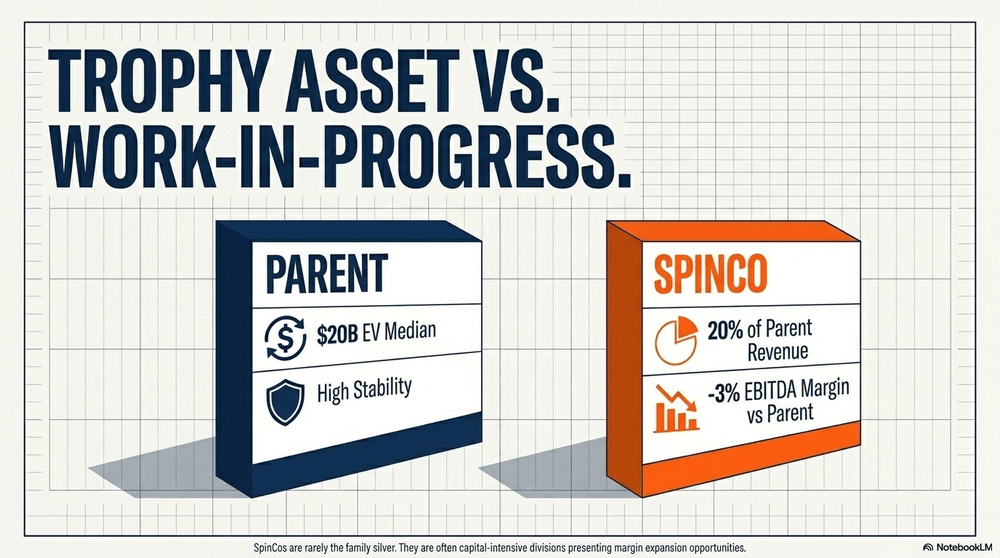
Parent companies tend to be large and mature, with a median enterprise value of around $20 billion. The median SpinCo represents about 20% of the parent's revenue and EBITDA. Interestingly, spun-off units often carry slightly lower EBITDA margins - roughly 3 percentage points lower than their parents - and lower credit ratings at launch. This suggests that parents often spin off their more capital-intensive or work-in-progress divisions: businesses that need focused management and operational independence to realize their potential, rather than trophy assets being jettisoned opportunistically.
The median SpinCo, in other words, is not the family silver. It is often a business that was being held back.
Navigating the challenges and risks
For all the talk of unlocking value, the path to a successful spin-off is littered with traps. Many transactions that looked logical on paper have produced deeply disappointing results. The reasons are usually operational, not financial.
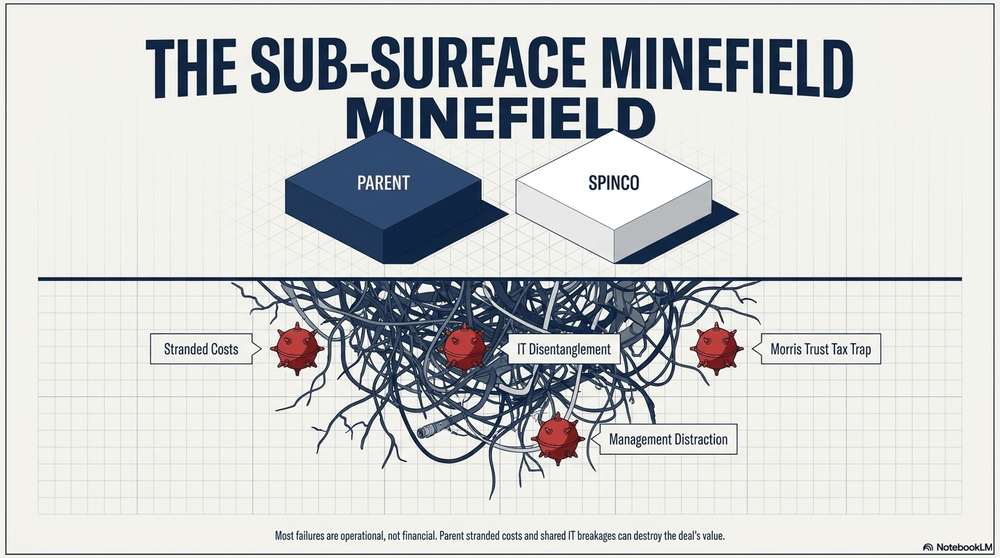
- Stranded costs. When a division leaves, the parent is often left holding the bill for headquarters overhead, software licenses, and support staff sized for a larger organization. If the RemainCo cannot quickly cut these costs, the spin-off destroys value for the parent, even if the SpinCo thrives.
- Operational disentanglement. Splitting a shared IT infrastructure, a global defined-benefit pension plan, or a shared manufacturing facility is a genuinely difficult operational problem. If not handled correctly, it leads to service disruptions, data migration failures, and collapsing employee morale on both sides of the separation.
- Tax risks - the Morris Trust rule. If a spun-off company is acquired too quickly after the separation, the IRS may view the entire transaction as a disguised taxable sale. This can trigger a massive tax bill that wipes out much of the financial rationale for the deal. The rule creates a de facto acquisition moratorium on the SpinCo for a period after separation, which must be factored into any activist investor's timeline.
- Management distraction. The process of spinning off a company is consuming. Legal documents, organizational design, investor roadshows, TSA negotiations, IT separation planning - executives can lose sight of the actual business. Sales may slip. Customers may defect. The operational bill for a poorly managed separation can be substantial and slow to recover.
- Index fund forced selling. As noted above, institutional investors constrained by mandate will sell SpinCo shares that don't fit their benchmark. This creates predictable early selling pressure. Sophisticated management teams time their distribution to align with index inclusion reviews, or structure their equity story to attract offset buyers in advance.
Understanding these failure modes is arguably more important than understanding the mechanics of the deal itself. The financial structure is the easy part. The organizational re-plumbing is where most spin-offs run into trouble.
The investor's perspective: how to think about spin-offs
For investors, spin-offs represent a structurally interesting opportunity - one that is partially driven by the mechanics of how shares are distributed rather than pure fundamental reassessment.
When institutional investors receive shares in a new SpinCo that doesn't fit their mandate, they sell. They don't care about valuation. They sell because they have to. This creates forced selling unrelated to fundamentals, which can produce attractive entry points for investors willing to do the work.
The due diligence framework for evaluating a spin-off should focus on several key questions. First, is the separation driven by genuine strategic logic, or is it a financial engineering exercise to dress up a struggling division? Second, who is the management team at SpinCo - are these operators who have been building toward independence, or administrators who were given a job? Third, what does the balance sheet look like? Has the parent loaded the SpinCo with debt to generate proceeds, leaving the new company financially constrained before it has established its standalone track record?
"Some parent companies load their upcoming spinoffs with debt or undesirable assets. Therefore, this list can serve as a starting point for investors looking in a corner of the market that is still a source of meaningful alpha." - InsideArbitrage
The SpinCo's EBITDA margins being lower than the parent's is not automatically disqualifying - in fact, the historical data suggests this is normal and often represents the margin expansion opportunity that makes the investment compelling. A SpinCo that has been starved of investment under a conglomerate parent, is now led by a management team with proper incentives, and has a clean capital structure is often a very interesting situation.
Conclusion: the strategic necessity of the break-up
In a market that punishes complexity and rewards focus, the corporate spin-off remains one of the most powerful tools in the executive toolkit. It is a recognition that bigger is not always better - that the organizational structure which made sense during a period of acquisition-led growth may actively impede value creation once those businesses have matured.
The recent wave of high-profile separations - GE's complete transformation from industrial conglomerate to pure-play aerospace company, J&J's shedding of its consumer health division, Honeywell's ongoing restructuring - is not a coincidence. It reflects a coherent view, shared by management teams and activist investors alike, that the market values clarity.
But success is not a byproduct of the transaction itself. It is the result of rigorous execution. Managing stranded costs, crafting a compelling equity story, navigating the five-year active trade or business gauntlet of Section 355, building a management team that is genuinely ready to run an independent company - these are the variables that separate transformational spin-offs from expensive restructuring exercises.
For the corporation, a spin-off is a chance to redefine the future by letting go of the past. For the investor, it is one of the rare structural moments where the mechanics of the market - not just the fundamentals of the business - create an opportunity.
Share now









Key takeaways
- A spin-off creates an independent entity with its own management and board from a parent company division; unlike a sell-off, no cash changes hands - shareholders receive new shares directly.
- Shareholders typically receive SpinCo shares on a pro rata basis, usually tax-free under IRC Section 355, which requires both companies to have operated active trade or businesses for at least five years prior to the distribution.
- The primary strategic drivers are eliminating the conglomerate discount and sharpening operational focus - markets consistently undervalue diversified groups relative to the sum of their parts.
- Historical data shows average abnormal returns of ~3% at spin-off announcement, reflecting investor confidence that management is serious about unlocking hidden value.
- A 2015 study of U.S. spin-offs found SpinCos outperformed their benchmarks by an average of 49.4% over the first 36 months.
- The 2022 Houlihan Lokey study found that 39% of spin-off transactions involved a noted activist investor - spin-offs are the activist's preferred restructuring tool.
- GE Vernova, spun off from General Electric in April 2024, surged over 333% in value by mid-2025, becoming one of the best-performing stocks in the S&P 500 since its debut.
- Globally, 237 spinoff IPOs raised $53.9 billion in 2024, a 21.3% increase in size year-over-year, with the average spin-off market value growing from ~$1 billion (pre-2008) to $2.5 billion today.
- SpinCos typically start life with ~3% lower EBITDA margins and lower credit ratings than their parents, suggesting parents frequently spin off work-in-progress divisions rather than premium assets.
- The median spin-off transaction takes 9 months from announcement to completion; the SpinCo typically represents around 20% of the parent's revenue and EBITDA at the time of separation.
Sources
- Houlihan Lokey Fall 2025 Spin-Off Transaction Study https://www2.hl.com/pdf/2025/spin-off-transaction-study-fall-2025.pdf
- Axios - U.S. corporate spinoffs grow in size and complexity (LSEG / Trivariate Research data) https://www.axios.com/2025/01/13/corporate-spinoffs-increase-size-complexity
- The Tax Adviser - Recent developments in Sec. 355 spinoffs https://www.thetaxadviser.com/issues/2024/mar/recent-developments-in-sec-355-spinoffs/
- CNBC - How GE spinoff Vernova rode the AI trade to the top of the stock market https://www.cnbc.com/2025/09/21/ge-vernova-gev-ai-data-center-gas-nuclear-wind-grid.html
- Sagepub / Journal of Business Research - Corporate Spin-offs and the Wealth of Shareholders: Evidence from India (163 BSE announcements, 2000-2023) https://journals.sagepub.com/doi/10.1177/09721509251321613
- Published 2026-06-04 19:04
- Modified 2026-06-04 19:04

-
Redaction