

-
 Redaction
Senolytic drugs: How science kills zombie cells
Learn how senolytic drugs target zombie cells and SASP to fight aging. From fisetin to DNA aptamers, explore the science of longevity medicine in 2026.
Cellular senescence - the accumulation of so-called zombie cells - has emerged as one of the most compelling targets in modern longevity medicine. First described in 1961 by Leonard Hayflick and Paul Moorhead, the phenomenon involves damaged cells that halt division yet refuse to undergo programmed cell death (apoptosis). These cells remain metabolically active and biologically disruptive for years, quietly undermining tissue health long before any symptoms appear.
While this arrest mechanism originally evolved to suppress tumour formation and prevent damaged DNA from replicating, its long-term persistence drives measurable systemic aging across multiple organ systems. Their accumulation is not a passive process - it is an active, self-reinforcing cycle of inflammation and tissue degradation.
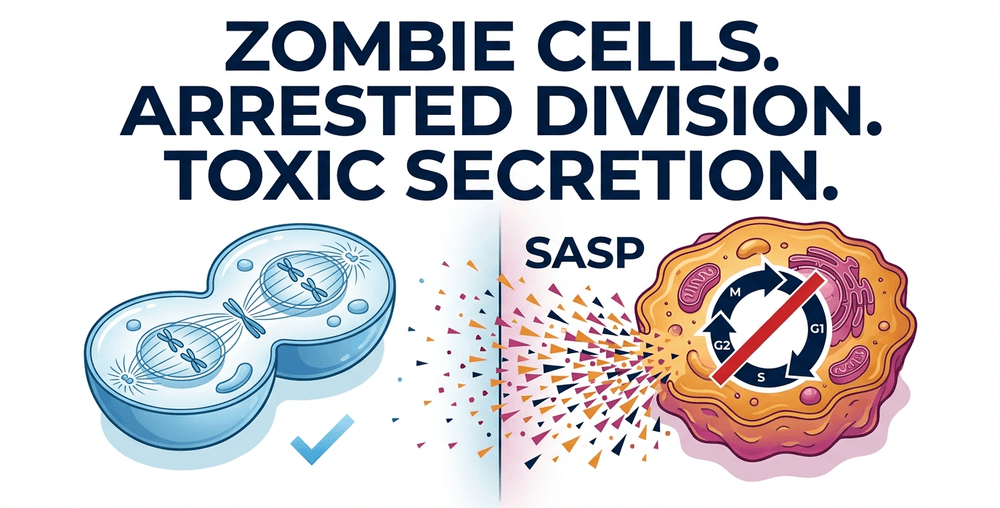
These lingering cells accumulate as immune surveillance efficiency declines with age - and their presence becomes a quantifiable driver of tissue dysfunction long before symptoms of age-related disease appear.
The biological landscape of cellular senescence
The primary mechanism through which senescent cells inflict damage is the senescence-associated secretory phenotype (SASP). This biochemical profile involves the continuous secretion of inflammatory molecules, proteases, and growth factors into surrounding tissue - functioning as a sustained, localised source of biological toxicity that healthy neighbouring cells cannot escape.
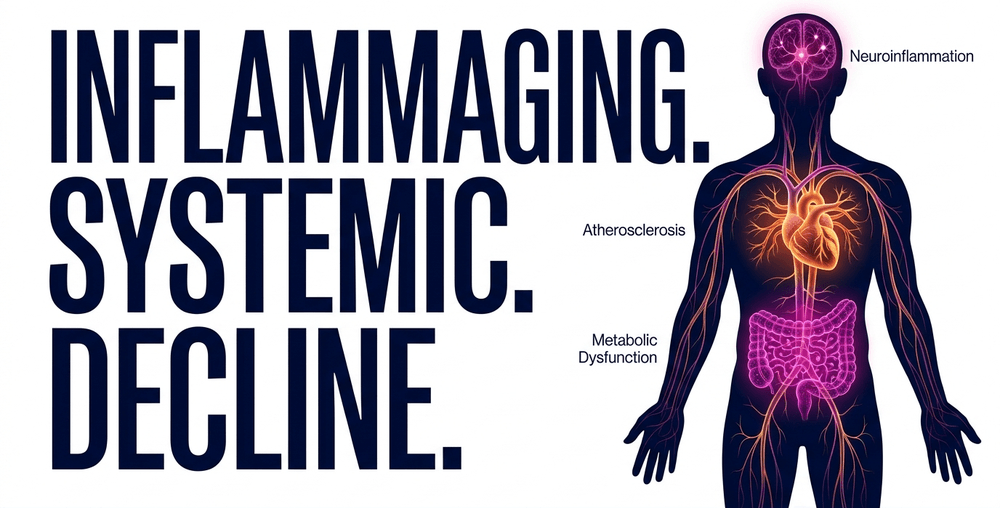
Data from the longevity research sector confirms that SASP is a major contributor to inflammaging: a state of chronic, low-grade systemic inflammation that underpins several of the most prevalent age-related conditions, including:
- Atherosclerosis - arterial wall inflammation driving cardiovascular disease progression
- Neuroinflammation - a key mechanism in cognitive decline and neurodegenerative disease
- Metabolic dysfunction - impaired insulin signalling and adipose tissue inflammation that accelerates type 2 diabetes risk
Because senescent cells do not self-clear, they act as persistent disruption sources, progressively impairing the homeostasis of healthy surrounding tissue and compounding biological age faster than chronological time alone would suggest.
The functional diversity of senescent cells
Not all senescent cells are equal in their consequences. Research confirms that senescent cells play indispensable roles in embryonic development, acute wound healing, and the initial phases of tissue repair. Their transient presence in these contexts helps coordinate the structural remodelling required after injury - suppressing excessive fibrosis and guiding the cellular architecture of regenerating tissue.
The clinical challenge, therefore, is not the blanket elimination of every senescent cell, but the selective removal of chronically accumulated harmful populations - particularly those congregating in:
- Adipose (fat) tissue
- Neural and brain structures
- Cardiovascular tissue
Precision is not merely a design goal for next-generation therapy - it is a fundamental requirement. Broad-spectrum elimination risks removing cells that still perform essential physiological functions.

How senescent cell burden is measured
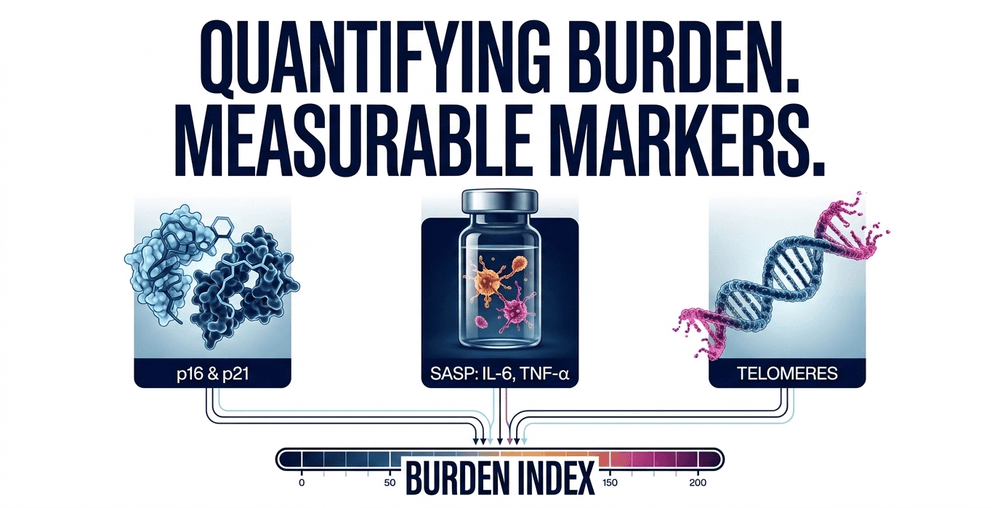
Before any senolytic intervention can be optimised, it is essential to quantify an individual's senescent cell load. Several biomarker approaches are currently in clinical and research use.
p16^INK4a and p21^CIP1 are the most established cell-cycle inhibitor proteins associated with senescence. Elevated expression of these markers in tissue biopsies is a reliable indicator of senescent cell accumulation - and a direct measurable target for therapeutic intervention. Fisetin, for example, has been shown to reduce both markers by approximately 50% in human tissue explants.
Circulating SASP factors - including interleukin-6 (IL-6), tumour necrosis factor-alpha (TNF-α), and matrix metalloproteinases (MMPs) - can be measured via blood panels. Declining levels of these inflammatory markers following senolytic treatment serve as a clinical proxy for reduced senescent cell burden.
Telomere length and mitochondrial dysfunction markers offer complementary signals of cellular aging, though they are less specific to senescence and must be interpreted alongside other indicators.
As precision senotherapy advances, the ability to non-invasively quantify individual senescent cell burden will be essential for personalising dosing schedules and objectively evaluating treatment response at scale.
Pharmacological strategies for cellular clearance
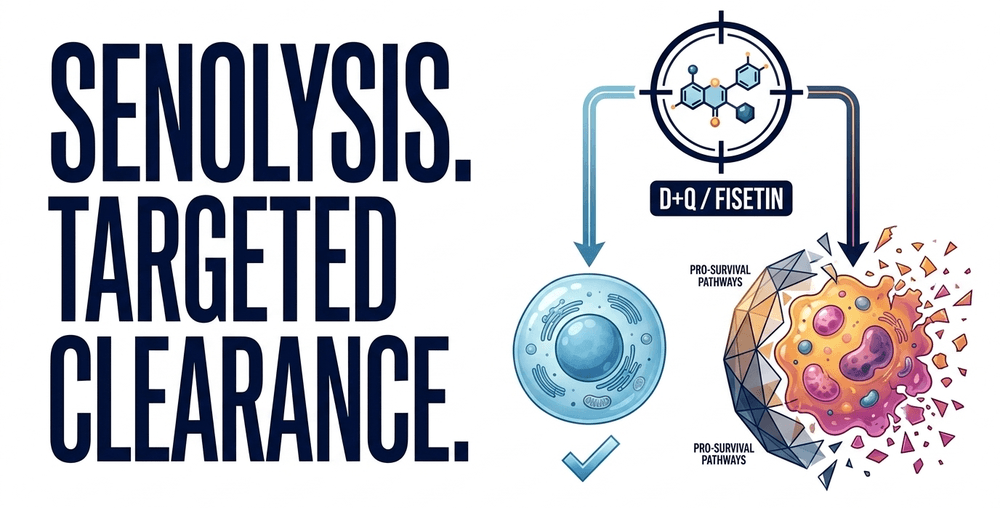
Senolytic drugs are engineered to interfere with the pro-survival pathways that senescent cells exploit to evade apoptosis. Unlike healthy cells, senescent cells depend on specialised survival networks that actively suppress internal self-destruct signals. By disrupting these pathways, senolytics selectively sensitise zombie cells to their own apoptotic triggers - leaving healthy surrounding tissue functionally intact.
Current research focuses on several key compounds and their synergistic mechanisms.
Dasatinib and quercetin: the pioneering combination
The most extensively studied senolytic regimen combines dasatinib, a tyrosine kinase inhibitor, with quercetin, a natural flavonoid widely present in onions, capers, and apples. Dasatinib functions by blocking aberrant protein signalling cascades that allow both tumour cells and senescent cells to persist despite accumulated damage signals. Quercetin possesses well-characterised antioxidant properties and has demonstrated particular potency against senescent endothelial cells, among other senescent cell types.
Clinical trial data confirms this combination can reduce the senescent cell burden in human adipose tissue and measurably lower circulating SASP factors. In studies involving patients with idiopathic pulmonary fibrosis, nine oral doses of D+Q administered over a three-week period resulted in quantifiable physical improvements - including increased walking speed and improved scores on standardised physical performance batteries.
Murine models of diabetic kidney disease have further reinforced these findings, showing significant reductions in inflammation markers and improved renal function following treatment. Clinical trial NCT07025226, sponsored by the Mayo Clinic, continues to investigate these compounds in the context of residual glioma - testing their combined efficacy in a complex oncological environment.

Fisetin: the natural alternative
Fisetin is a flavonoid found in strawberries and the Smoke Tree (Cotinus coggygria) that has emerged as one of the most potent standalone senolytic compounds identified to date. In a 2018 comparative study of ten flavonoids, fisetin ranked as the most effective agent - reducing senescent markers p16 and p21 by approximately 50% in human tissue explants.
Several properties distinguish fisetin as a clinical candidate:
- Its ability to cross the blood-brain barrier, enabling it to address neuroinflammation and support neuronal health in ways that most senolytics cannot
- Broader tissue specificity than quercetin, with demonstrated efficacy across adipose, vascular, and neural tissue simultaneously
- More robust SASP suppression in comparative preclinical models
- Laboratory evidence suggesting that even late-life administration can extend median lifespan by 10% to 15%
These characteristics position fisetin as a primary candidate for geriatric senolytic protocols, particularly in the context of neurodegenerative disease prevention and cognitive healthspan extension.
Navitoclax and the challenge of BCL-2 inhibition
Navitoclax (ABT-263) represents a mechanistically distinct class of senolytics that directly inhibit the BCL-2 family of anti-apoptotic proteins. By blocking these survival pathways, Navitoclax forces senescent cells into programmed death - an approach that is highly effective in controlled settings but carries a significant clinical liability.
The core problem is dose-limiting thrombocytopenia: a dangerous suppression of platelet count that occurs because platelets rely on the same BCL-XL survival mechanism as senescent cells. At doses effective against senescent cell populations, Navitoclax simultaneously compromises platelet viability, creating a narrow and clinically problematic therapeutic window.
Research published in Nature Aging further highlighted that certain senescent cell populations develop active resistance mechanisms against ABT-263. This suggests future applications of BCL-2 inhibitors will likely require combination strategies - pairing Navitoclax with agents targeting alternative survival pathways, while holding individual doses below the systemic toxicity threshold.

Novel discoveries and technical breakthroughs
The field is rapidly expanding beyond traditional small-molecule pharmacology. Two recent breakthroughs illustrate the direction the science is heading.
GPX4 inhibition and ferroptosis induction
Research published in Nature Cell Biology identified a specific metabolic vulnerability in senescent cells: their dependency on the protein GPX4, which protects cells from ferroptosis - an iron-triggered form of programmed cell death mechanistically distinct from classical apoptosis. By screening thousands of compounds, scientists identified molecules that selectively interfere with GPX4 activity, successfully reducing tumour size and increasing survival rates in mouse models.
This is significant because certain senescent cell populations that develop resistance to conventional apoptosis-inducing drugs may remain fully susceptible to ferroptosis - opening a parallel pathway for treatment-resistant cases of age-related disease.
DNA aptamers and precision targeting
Mayo Clinic researchers introduced synthetic DNA molecules known as aptamers, engineered to bind with high specificity to cell-surface proteins uniquely expressed on senescent cells. By screening over 100 trillion random DNA sequences, the team identified aptamers capable of acting as biological identification tags - allowing zombie cells to be located within complex tissue environments with extraordinary molecular precision.
This technology directly addresses the long-standing problem of off-target damage, where senolytic compounds inadvertently harm healthy neighbouring cells. Aptamer-guided targeting represents a fundamental shift toward precision senotherapy, where intervention is defined by molecular identity rather than tissue proximity or generalised cellular characteristics.
Genetic influences and individual variability
The rate at which an individual accumulates senescent cells is not biologically uniform. Genetic architecture plays a critical role in determining the efficiency of cellular clearance and the robustness of DNA repair mechanisms - and these differences carry direct implications for personalised senolytic protocols.
The SOD2 Val16Ala variant, present in a significant proportion of the general population, reduces the activity of the MnSOD (manganese superoxide dismutase) enzyme. This reduction accelerates mitochondrial senescence - meaning carriers may experience earlier onset of age-related tissue dysfunction compared to those without the variant, even when chronological age is identical.
Identifying these genetic predispositions allows clinicians to stratify patients by their intrinsic rate of biological aging, enabling treatment schedules calibrated to individual risk rather than chronological age alone. As genomic sequencing becomes more accessible and cost-effective, this type of personalised risk profiling is expected to become a standard element of longevity medicine consultations.
Lifestyle strategies that support senescent cell clearance
While pharmacological senolytics remain in the clinical trial phase, substantial evidence points to several modifiable lifestyle factors that support the immune system's natural capacity to identify and eliminate senescent cells - potentially delaying the accumulation threshold at which pharmaceutical intervention becomes necessary.
Exercise - particularly moderate-intensity aerobic activity performed consistently - activates immune surveillance pathways involved in senescent cell recognition and clearance. Regular physical activity also measurably reduces circulating SASP factors and improves mitochondrial function, slowing the rate at which new senescent cells are generated.
Caloric restriction and fasting protocols, including time-restricted eating, appear to activate autophagy - a cellular quality control mechanism that clears damaged components before they accumulate and trigger senescence pathways.
Dietary polyphenols found in berries, green tea, red onions, and cruciferous vegetables - including naturally occurring flavonoids such as fisetin and quercetin - may provide mild background senolytic activity at dietary concentrations. While not equivalent to pharmaceutical dosing, consistent intake contributes to a cellular environment less conducive to senescent cell persistence.
Stress management and sleep quality are frequently underestimated in this context. Chronic psychological stress and poor sleep both elevate cortisol and baseline systemic inflammation, accelerating the cellular conditions that drive senescence. Addressing these factors represents a meaningful, accessible element of any longevity strategy.
These lifestyle factors do not replace senolytic therapy but may meaningfully alter the trajectory of senescent cell accumulation - and are particularly relevant for individuals carrying genetic variants that elevate their baseline accumulation risk.
The future of precision senotherapy
Despite dozens of active clinical trials, no senolytic therapy has yet received general regulatory approval. Early trials have yielded encouraging biological signals, but large-scale efficacy evidence in human populations remains the outstanding challenge. The direction of the field, however, is increasingly clear.
One localised success is UBX1325, a BCL-xL inhibitor delivered directly into the eye for diabetic macular edema. In the BEHOLD study, patients treated with the senolytic demonstrated a 5.6-letter vision advantage over the control group at week 48 - proving that tissue-specific, localised senolytic delivery can overcome the systemic toxicity challenges that constrain broader pharmacological approaches.
The broader industry trajectory is converging on several advanced strategies:
- Immune-based senolysis - Engineering CAR T-cells to recognise and selectively destroy senescent cells expressing unique surface markers such as uPAR, bringing immunotherapy precision to the aging field
- Senomorphics - Compounds that suppress SASP secretion without killing the senescent cell, neutralising its toxicity while preserving any remaining functional contributions to tissue homeostasis
- Combination therapy protocols - Simultaneously targeting multiple survival pathways to reduce the required dose of any single agent and minimise off-target consequences
- Biomarker-guided dosing - Using p16, p21, and circulating SASP panels to determine when treatment begins, how long it continues, and when it should be paused between cycles
- Lifestyle integration - Formally incorporating exercise, nutrition, and stress management as foundational components of clinical senolytic protocols rather than afterthoughts
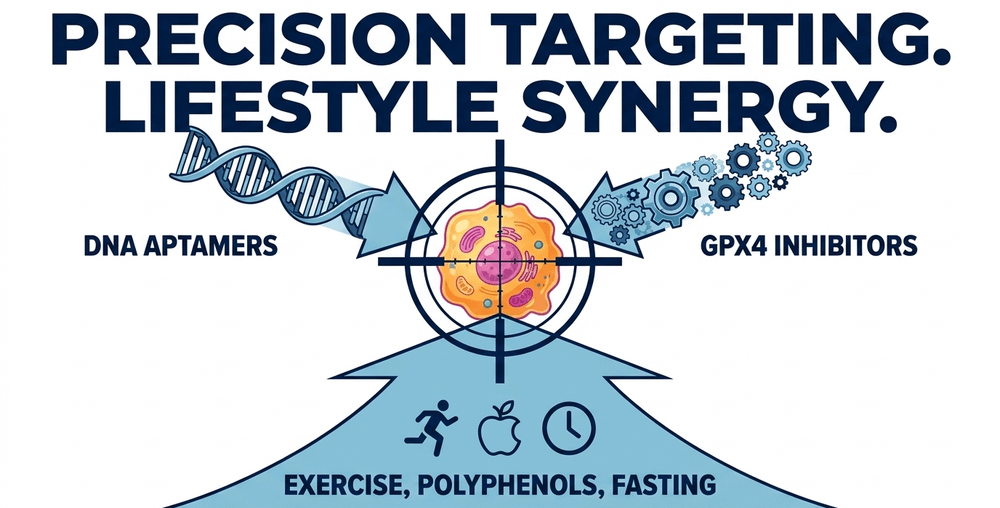
Senolytic therapy holds the potential to de-repress endogenous regenerative pathways - allowing stem cells to proliferate and repair tissues that were previously suppressed by the inflammatory environment created by senescent neighbours. The data consistently points away from broad-spectrum pharmacology and toward a biomarker-driven, precision approach in which the right compound reaches the right cell at the right biological moment.
The ultimate goal is not simply an extended lifespan, but a longer healthspan - tissues that remain resilient, regenerative, and functionally capable well into the later decades of life.
Frequently asked questions about senolytics
What are senolytic drugs, and how do they work? Senolytics are compounds - both pharmacological and natural - that selectively eliminate senescent cells by disrupting the pro-survival pathways these cells use to evade apoptosis. They differ from senomorphics, which suppress SASP toxicity without killing the cell. Both approaches target the harms of senescence, but through mechanistically distinct routes.
Are senolytics currently available to the public? No senolytic therapy has received general regulatory approval as of 2026. Compounds like dasatinib are prescription-only drugs approved for other conditions (primarily certain cancers). Natural flavonoids including fisetin and quercetin are commercially available as dietary supplements - though doses studied in clinical trials may differ significantly from typical supplement formulations.
What is the most promising natural senolytic? Fisetin shows the strongest preclinical evidence among naturally occurring compounds. Its ability to cross the blood-brain barrier, reduce p16 and p21 markers by approximately 50%, and demonstrate efficacy across multiple tissue types distinguishes it from quercetin and other flavonoids in current research models.
How long do senolytic treatment protocols typically last? Clinical trial data on D+Q protocols have shown measurable physical improvements over three-week treatment periods at specific dosing intervals. However, the optimal duration, dosing frequency, and long-term cycling schedules for human use remain active areas of investigation - no standardised protocol has yet been established for general clinical use.
Can lifestyle changes meaningfully reduce senescent cell accumulation? Evidence supports that regular aerobic exercise, caloric restriction, quality sleep, and dietary polyphenols can reduce the rate of senescent cell accumulation and support immune-mediated clearance. These interventions are unlikely to eliminate established chronic senescent cell populations to the extent that pharmaceutical senolytics can - but they remain the most accessible tools available while clinical trials continue.
What is the difference between senolytics and senomorphics? Senolytics kill senescent cells outright by triggering apoptosis or other cell death pathways. Senomorphics, by contrast, suppress the SASP secretion that makes senescent cells harmful - leaving the cells alive but neutralising their inflammatory output. Both strategies are being investigated, and future protocols may combine them depending on tissue type and patient profile.
Share now









Key takeaways
- Senescent "zombie cells" resist programmed cell death (apoptosis) and continuously secrete toxic inflammatory molecules known as the senescence-associated secretory phenotype (SASP).
- SASP is a primary driver of inflammaging - chronic low-grade systemic inflammation linked to cardiovascular disease, neurodegeneration, and metabolic dysfunction.
- The dasatinib and quercetin (D+Q) combination has demonstrated clinical promise in idiopathic pulmonary fibrosis and diabetic kidney disease, with measurable improvements in physical performance after a three-week protocol.
- Fisetin, a natural flavonoid found in strawberries, is the most potent senolytic among flavonoids tested - reducing the senescent markers p16 and p21 by approximately 50% in human tissue explants.
- Unlike most senolytics, fisetin can cross the blood-brain barrier, making it a leading candidate for neuroinflammation and cognitive healthspan research.
- Researchers have identified GPX4 inhibitors as a novel approach to inducing ferroptosis - an iron-triggered cell death mechanism - selectively in senescent cells, including populations resistant to conventional drugs.
- Mayo Clinic scientists developed synthetic DNA aptamers that can identify senescent cells with extraordinary molecular precision by binding to unique proteins on their surface - a breakthrough for targeted senolytic delivery.
- UBX1325, a BCL-xL inhibitor injected directly into the eye, demonstrated a 5.6-letter vision advantage over placebo in the BEHOLD study for diabetic macular edema, proving localised senolytic delivery can sidestep systemic toxicity.
- Navitoclax (ABT-263) is limited in clinical use by dose-limiting thrombocytopenia - platelets share the BCL-XL survival pathway targeted by the drug, causing dangerous platelet suppression at therapeutic doses.
- The SOD2 Val16Ala genetic variant reduces MnSOD enzyme activity and accelerates mitochondrial senescence, meaning carriers may accumulate senescent cells faster than chronological age alone would suggest.
- No senolytic therapy has received general regulatory approval as of 2026; clinical trials are ongoing across multiple indications.
- Lifestyle factors - aerobic exercise, time-restricted eating, dietary polyphenols, quality sleep, and stress management - support immune-mediated senescent cell clearance and may delay the threshold at which pharmaceutical intervention is needed.
Sources
- Mayo Clinic / ClinicalTrials.gov - NCT07025226 https://clinicaltrials.gov/study/NCT07025226
- PubMed Central - Fisetin as a senotherapeutic agent https://pmc.ncbi.nlm.nih.gov/articles/PMC8687661/
- TechTimes - Mayo Clinic DNA aptamers pinpoint aging zombie cells https://www.techtimes.com/articles/316688/20260515/mayo-clinic-dna-molecules-pinpoint-aging-zombie-cells-unlocking-precision-senolytic-therapy.htm
- Aging-US - UBX1325 / BEHOLD study results https://www.aging-us.com/article/205581/text
- LongevityNext - The senolytics pipeline in 2026 https://longevitynext.com/the-senolytics-pipeline-in-2026-where-the-science-still-looks-strong-and-where-it-doesnt/
- Published 2026-05-28 19:27
- Modified 2026-05-28 19:27
