

-
 Redaction
Understanding bias and fairness in AI systems
From hospital algorithms to COMPAS scoring, AI bias causes real harm. Learn the sources, types, and fixes for fairness in machine learning systems today.
The integration of AI into hiring pipelines, hospital systems, courtrooms, and credit decisions has brought one uncomfortable fact into sharp focus: these systems don't just reflect the world's inequalities, they can lock them in and scale them up. When AI goes wrong on bias, it's not a glitch you patch with a software update. It's a structural problem baked into data, design, and deployment, and it's already producing measurable harm in healthcare, hiring, and law enforcement. This isn't theoretical. It's documented, it's repeatable, and it's costing companies money and reputations.
What AI bias actually is
AI bias, sometimes called machine learning bias or algorithmic bias, is the systematic tendency of a model to produce skewed outputs that favor or disadvantage particular groups. It's not an accident that happens once and gets fixed. It's a property that gets built into a system across its entire lifecycle, from the moment someone decides what data to collect to the moment a deployed model starts learning from how users interact with it.
Ignoring this is no longer an option, and not just for ethical reasons. Regulators are now treating biased outputs as a compliance failure, not a footnote. The EU AI Act requires high-risk systems to be trained and tested with sufficiently representative datasets to minimise the risk of unfair biases, with appropriate bias detection and correction measures in place. That's a legal requirement now, not a nice-to-have.
Where bias actually comes from
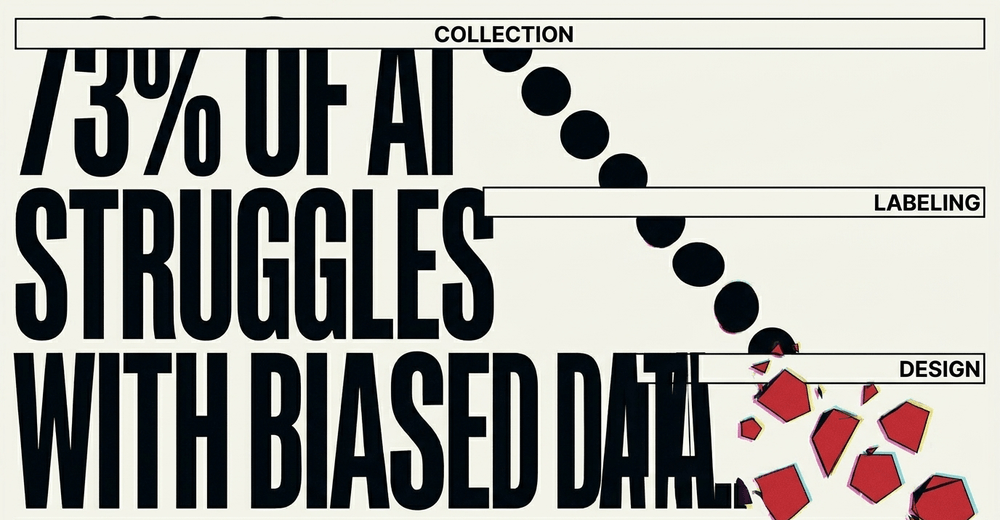
Bias isn't a single point of failure. It's a cascade, and it can enter a model at almost any stage of its lifecycle.
- Data collection. This is where most problems start. If training data doesn't represent the population a model will serve, the outputs will reflect that gap. Train a hiring model on a decade of resumes from a male-dominated industry, and you'll get a model that thinks "male" correlates with "qualified."
- Data labeling. Humans label training data, and humans carry cultural and personal biases into that work, especially for subjective categories like sentiment or tone. This isn't malicious. It's just how human cognition works, and it needs to be accounted for in the data pipeline rather than ignored.
- Algorithmic design and model training. The architecture and optimization choices baked into a model can favor majority-group predictions by default. If fairness isn't part of the spec from day one, accuracy metrics alone will paper over the problem.
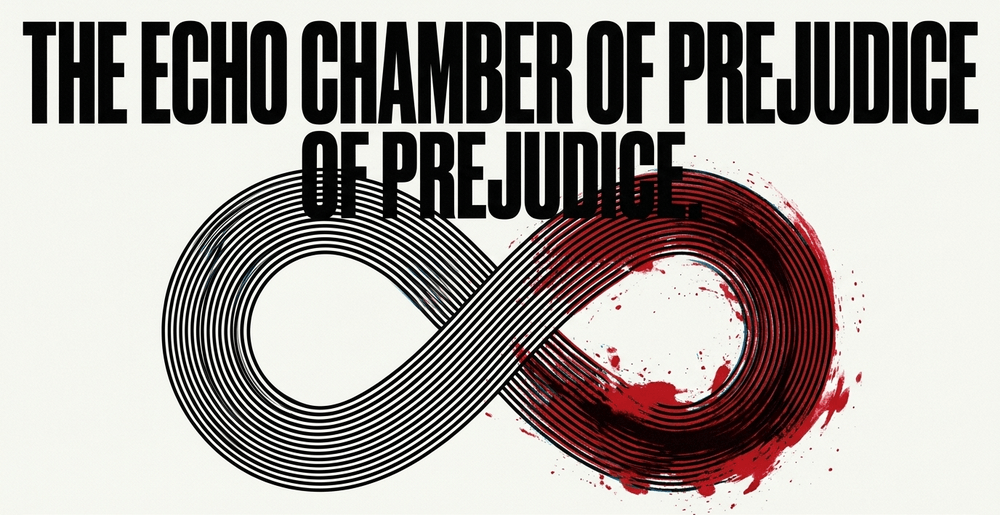
- Human input and confirmation bias. AI systems lean on patterns in historical data, and when those patterns reflect old prejudices, the model reinforces them. This is confirmation bias at scale: the system finds what it expects to find because that's what it was trained to expect.
- Deployment and feedback loops. A model that looks clean in testing can drift once it's live. Interaction bias creeps in as systems adapt to how users actually engage with them, internalizing stereotypes from real-world behavior and feeding them back into future outputs. It's a self-reinforcing loop, and without continuous monitoring, nobody notices until the damage is visible in the numbers.
The taxonomy: types of bias worth knowing
These categories overlap constantly in real systems, but knowing the vocabulary helps when you're trying to diagnose what's actually going wrong.
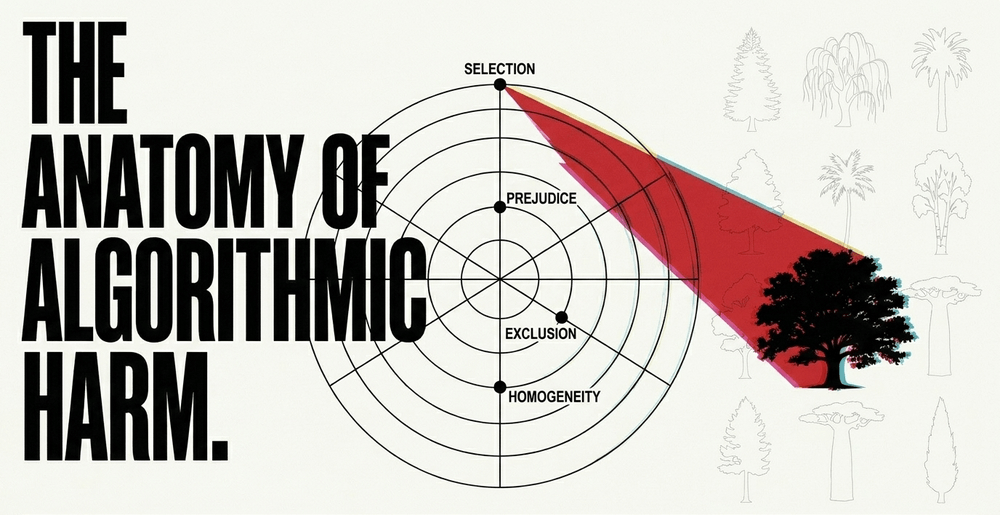
Selection bias happens when training data isn't a true reflection of the real-world population - like trying to understand an entire forest by studying one type of tree. Confirmation bias is the model's tendency to over-rely on patterns already present in the data, reinforcing whatever prejudices were already there. Measurement bias shows up when the data collected doesn't match the true variable of interest, often because the collection method itself is flawed - a miscalibrated sensor gives you bad readings no matter how good your model is.
Stereotyping bias is when a model's learned associations reinforce harmful stereotypes, visible in everything from image generators to chatbots. Out-group homogeneity bias causes a model to treat people from underrepresented groups as more similar to each other than they actually are, erasing individual variation within minority populations. Prejudice bias is the direct infiltration of stereotypes and faulty assumptions into a dataset - not just imbalance, but explicitly negative or inaccurate representation. And exclusion bias is the quiet one: important variables get left out entirely because nobody on the team thought to include them, and the model never gets the chance to learn they matter.
Real-world examples: this isn't hypothetical
Healthcare
AI's potential in medicine is enormous, but the deployment record so far has some serious black marks.
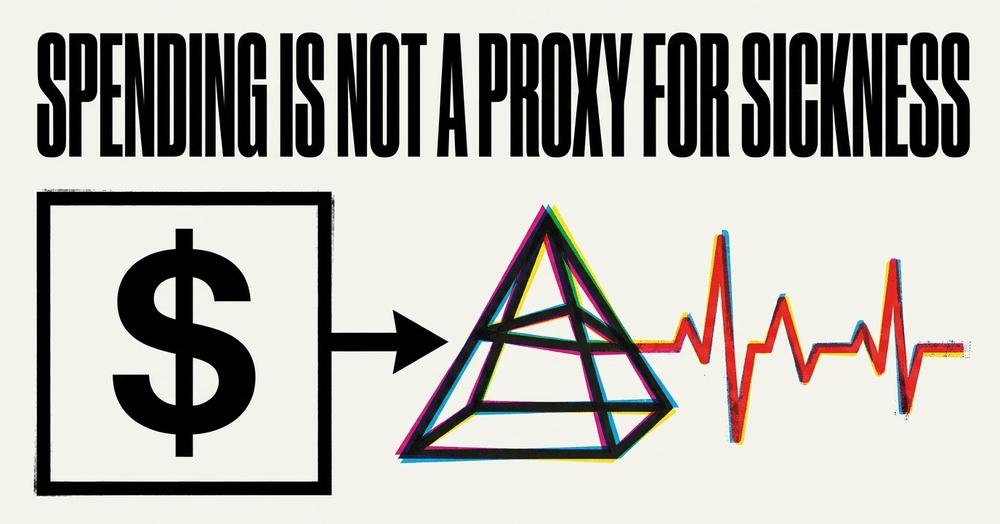
A widely-cited algorithm used across US hospitals to flag patients who needed extra care was found to systematically favor white patients over Black patients - cutting the number of Black patients identified for additional care by more than half. The root cause was a proxy problem: the algorithm used healthcare spending as a stand-in for medical need. But Black patients have historically faced systemic barriers to accessing care, meaning lower spending didn't reflect lower need - it reflected lower access. The algorithm was technically accurate at predicting spending. It was catastrophically wrong at predicting sickness.
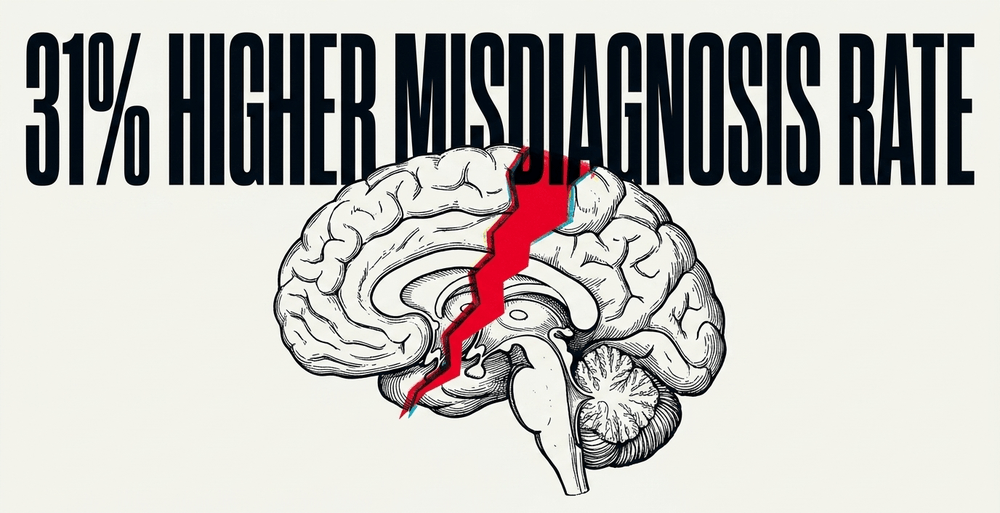
More recently, frontier large language models have been observed recommending lower-quality psychiatric care for Black patients compared to white patients with identical presentations, including adding alcohol-reduction guidance to anxiety treatment plans specifically for African American patients - a clear case of representational bias inherited from historical patterns in medical literature and clinical data. Independent research has also flagged that a large share of neuroimaging-based AI models built for psychiatric diagnosis carry a high risk of bias, which is a serious problem in a field where the diagnostic stakes are this high.
Hiring and recruitment
If you want a master class in how AI bias compounds, look at hiring tech.
Amazon's internal AI recruiting tool, trained on roughly a decade of historical applications, was found to systematically downgrade resumes containing the word "women's" and penalize graduates of all-women's colleges. The cause wasn't a rogue line of code - it was the historical gender imbalance of the tech industry's applicant pool, faithfully learned and amplified by the model. Amazon scrapped the tool, but the case became the textbook example of how "neutral" historical data can encode decades of discrimination.
More recent testing has gotten even starker. Resume-screening LLMs favored white-associated names in 85.1% of tests while favoring Black-associated names in only 8.6% - and in some 2026 testing, AI hiring tools selected Black male names 0% of the time in head-to-head resume comparisons. That's not a marginal gap. That's a tool that has essentially learned to filter out a category of applicants before a human ever opens the file.
Age discrimination shows up too. AI salary recommendation algorithms have been found to suggest lower compensation for older workers, with gaps reaching 15-25% for similar roles and experience levels, and screening tools have shown measurably higher rejection rates for candidates over 40 compared to younger applicants with identical qualifications. The legal exposure here is real: in February 2023, Workday faced a lawsuit alleging its AI-based applicant screening discriminated based on age, race, and disability - and in May 2025, a federal judge allowed that case to proceed as a collective action, a significant signal that courts aren't going to treat "the algorithm did it" as a defense.
One settled case is worth knowing because it's concrete: a company that used an AI tool to screen out candidates disqualified more than 200 qualified applicants purely on the basis of age, and settled for $365,000. No ambiguity, no "the model is a black box" defense - just a straightforward disparate impact claim that cost real money.
If you're working on the math behind these models, it's worth understanding the foundations that drive these systems - bias doesn't live in some separate "ethics module," it's baked into the same linear algebra and optimization that powers everything else the model does.
Criminal justice
The COMPAS algorithm, used across US court systems to assess recidivism risk, produced one of the most-cited fairness failures in the field: it predicted recidivism false positives for Black offenders at roughly 45%, compared to about 23% for white offenders. In plain terms, Black defendants were nearly twice as likely to be wrongly flagged as high-risk - despite not actually being more likely to reoffend than their white counterparts. That gap translates directly into harsher bail decisions, longer sentences, and extended incarceration based on a number that was systematically wrong for one group more than the other.
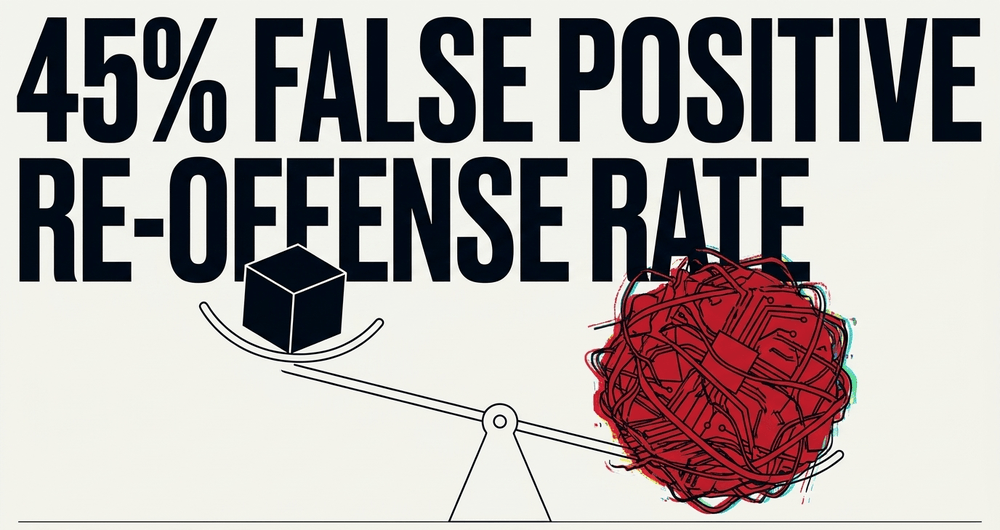
Image generation and language models
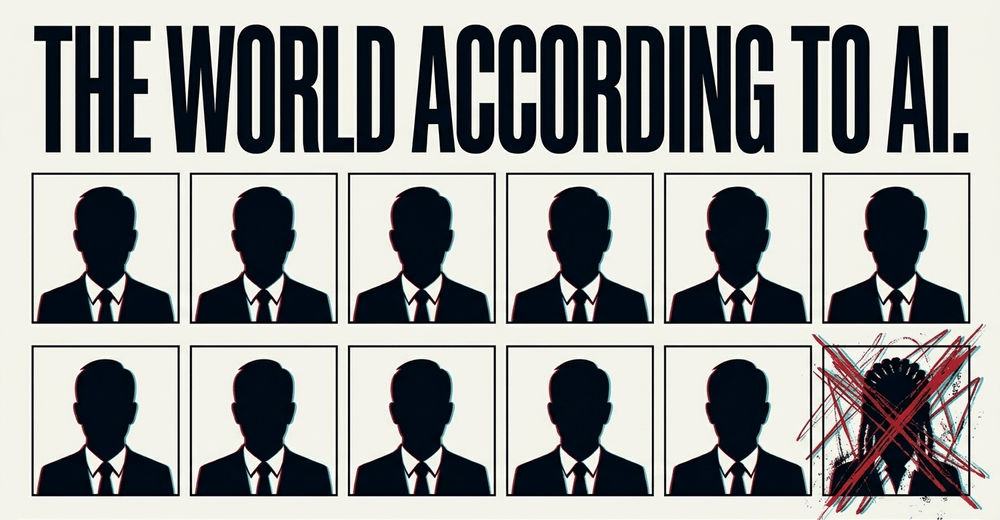
Even in the "fun" corners of AI, the bias is impossible to miss. Bloomberg's testing of an image generator found that its version of the working world was overwhelmingly run by white male executives, with women rarely depicted as doctors, lawyers, or judges - a textbook case of stereotyping and selection bias showing up visually instead of statistically.
Separate testing found that AI tools evaluating professional headshots gave lower "intelligence" and "professionalism" scores to images featuring braids and natural Black hairstyles - a direct racial bias rooted in either the training data or the feature-extraction process itself. And research into generative tools has found "evident gender and racial biases" that in some cases are more pronounced than the real-world status quo, which is the worst possible outcome: a tool that doesn't just mirror inequality but actively amplifies it. One widely-discussed study found that AI image databases portrayed women more negatively than men, and frequently associated Muslims with terrorism - the kind of prejudice bias that doesn't need a complicated explanation. It's just bad data, reflected back at scale.
Credit scoring and lending
Lending algorithms face the same structural risk. Models trained on historical lending patterns can end up being stricter on applicants from low-income neighborhoods, or using variables that function as proxies for race even when race itself was explicitly excluded from the model - which is exactly the kind of indirect discrimination that fair lending law is supposed to prevent. The financial stakes here are not small: researchers analyzing financial-sector bias have pointed to losses in the trillions of dollars in aggregate economic potential when racial bias in lending algorithms restricts access to capital for entire communities.
Information access and democracy
AI bias doesn't stop at individual decisions - it shapes what information people see in the first place. Recommendation systems and content moderation tools can quietly narrow the range of viewpoints people encounter, amplify misinformation, and build the kind of filter bubbles that reinforce whatever someone already believes. It's a slower, less visible harm than a denied loan or a rejected resume, but it operates at a much larger scale.
If this kind of large-scale manipulation interests you, there's a related piece on how coordinated AI systems are being used to shape public opinion that's worth a read - it's the same underlying dynamic, deployed deliberately rather than accidentally.
Fairness in machine learning: there's no single definition
Here's the part that trips up a lot of engineering teams: "fairness" isn't one thing. It's a family of competing mathematical definitions, and satisfying one often means violating another. What counts as fair in a loan approval system might be completely wrong for a medical diagnosis tool. Picking the right definition requires actually thinking about the context, not just running a fairness library and calling it done.
- Group fairness (statistical parity). Met when people with protected and unprotected characteristics are equally likely to get a positive outcome - equal approval rates across groups, for example. This can be hard to satisfy if the underlying base rates genuinely differ.
- Individual fairness. Similar individuals should be treated similarly. Two applicants with identical qualifications should get identical outcomes regardless of group membership - though this depends on having a similarity metric that isn't itself biased.
- Treatment equality. Fair if the ratio of false positives to false negatives is equal across groups - focused on whether the type of error a system makes is distributed evenly, not just the overall error rate.
- Test fairness (calibration). A model is well-calibrated if a given predicted probability means the same thing for every group. If the model says "70% default risk," that should translate to roughly the same actual default rate no matter who the applicant is.
- Equalized odds. The stricter combination of treatment equality and test fairness - parity in both false positive and false negative rates across groups simultaneously.
- Causal fairness. Goes beyond statistical correlation to ask why an outcome occurs, checking whether two otherwise-identical individuals who differ only in a protected characteristic get the same treatment. It's more computationally demanding, but it's the closest thing to addressing root causes rather than symptoms.
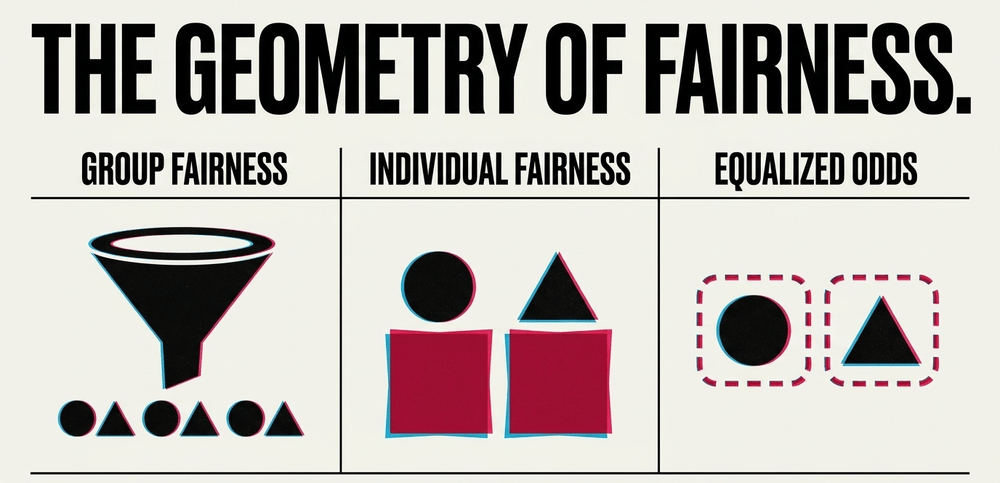
As one commonly cited framing puts it: bias is fundamentally a human problem, and "when we talk about 'bias in AI,' we must remember that computers learn from us." That's not a cop-out - it's the entire reason technical fixes alone won't solve this.
What actually works to fix it
Start with the data
Fair AI starts with fair data. That means actively building datasets that represent the populations a system will actually serve, and running regular audits to catch imbalances before they calcify into model behavior. If your training data is skewed, your model will be skewed - there's no clever architecture that gets around that. For most teams, this is the single highest-leverage intervention available, and it's also the most neglected, because it's unglamorous compared to model tuning.
Test like you mean it
Adversarial testing and structured fairness audits matter because they force a model to confront inputs it wouldn't naturally encounter in training - particularly inputs from underrepresented groups. The goal is to find differential performance before deployment, not after a journalist finds it for you.
Make the system explainable
If stakeholders can understand how a model arrived at a decision, they can challenge it when something looks wrong. That means documenting training data sources, model architecture choices, and evaluation metrics in a way that isn't buried in an appendix nobody reads.
Keep humans in the loop - and mean it
This one matters more than it sounds. Research has found that recruiters using AI-assisted hiring tools follow the AI's recommendation around 85% of the time, which raises an obvious question: if a human reviewer rubber-stamps the model's call nearly nine times out of ten, is that meaningful oversight, or just a liability shield? Real human-in-the-loop design means giving reviewers the time, training, and authority to actually override the system - not just a checkbox that says a human looked at it.
Pick the right mitigation technique for the right stage
- Pre-processing fixes happen before training: oversampling underrepresented groups, undersampling overrepresented ones, or generating synthetic data to balance a skewed dataset.
- In-processing changes how the model learns, using fairness-aware optimization that explicitly penalizes biased outcomes during training rather than treating fairness as an afterthought.
- Post-processing adjusts outputs after training - re-weighting predictions or shifting classification thresholds for different groups to correct for disparities that slipped through earlier stages.
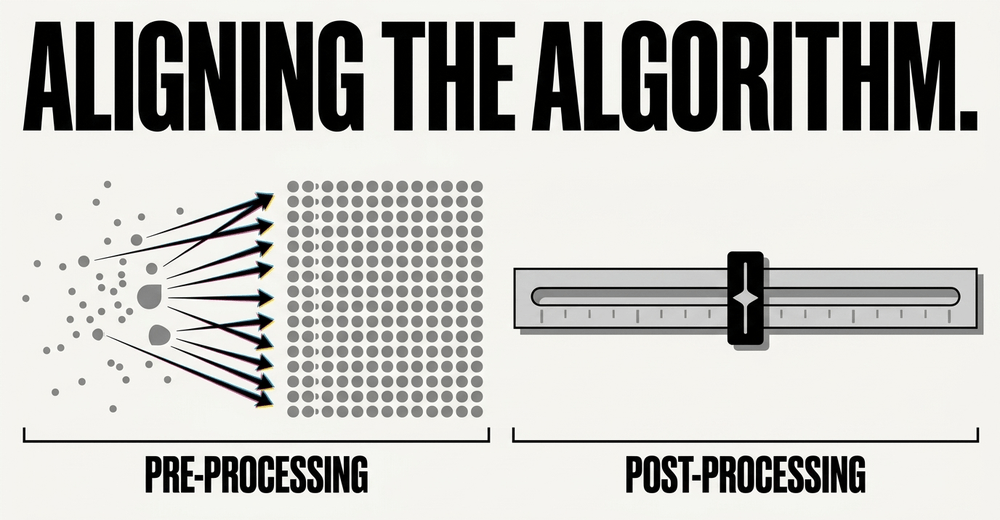
Which technique fits depends entirely on which definition of fairness you're targeting from the list above. There's no universal fix, and vendors who claim there is one should be treated with suspicion.
The regulatory landscape is no longer theoretical
This is the part that's changed fastest. As of 2026, AI bias has gone from an ethics-committee talking point to an active compliance and litigation risk, and the timeline is tight.
The EU AI Act classifies hiring and credit-scoring systems as high-risk, and requires providers to undergo a conformity assessment, maintain technical documentation, provide transparency notices, and implement human-oversight measures. Obligations for high-risk systems already on the market apply in full from August 2, 2026, and fines for non-compliance with prohibited practices can reach up to EUR 35 million or 7% of global annual turnover - numbers large enough to get a board's attention.
It's not just Europe. New York City's Local Law 144 requires annual independent bias audits of automated employment decision tools, with public reporting of results. South Korea's AI Framework Act became effective in January 2026, mandating fairness and non-discrimination across high-impact sectors like healthcare and public services, along with transparency requirements including labeling AI-generated content. Colorado's AI Act, after a delay, is set to require developers and deployers of high-risk hiring tools to use reasonable care to prevent algorithmic discrimination. Japan passed its first AI-specific framework legislation in 2025.
The legal posture in the US has shifted too. Courts have been explicit that disparate impact law applies whether a human or an algorithm made the discriminatory call - there's no "software exception" that lets a company off the hook because a model, rather than a person, made the decision.
A note on the EU's debiasing exception
One detail worth knowing if you're building in regulated sectors: the AI Act includes a narrow exception allowing providers to process sensitive personal data - the kind normally restricted under privacy law - specifically for the purpose of detecting and correcting bias. The exception is being held to a standard of strict necessity, meaning you can't just collect demographic data "in case it's useful for fairness later." You need a documented, specific bias-detection purpose. It's a useful tool, but it's not a blank check, and regulators are watching how it gets used.
Why companies still get this wrong
Given how much attention this topic gets, you'd expect the problem to be shrinking. It isn't, and the data on why is genuinely useful.
77% of companies with existing bias-testing programs still discovered bias in their AI systems - which tells you that having a testing program isn't the same as having an effective one. Many of these programs check for bias once, at launch, and never again, missing the drift that happens once a model is live and learning from real user interactions.
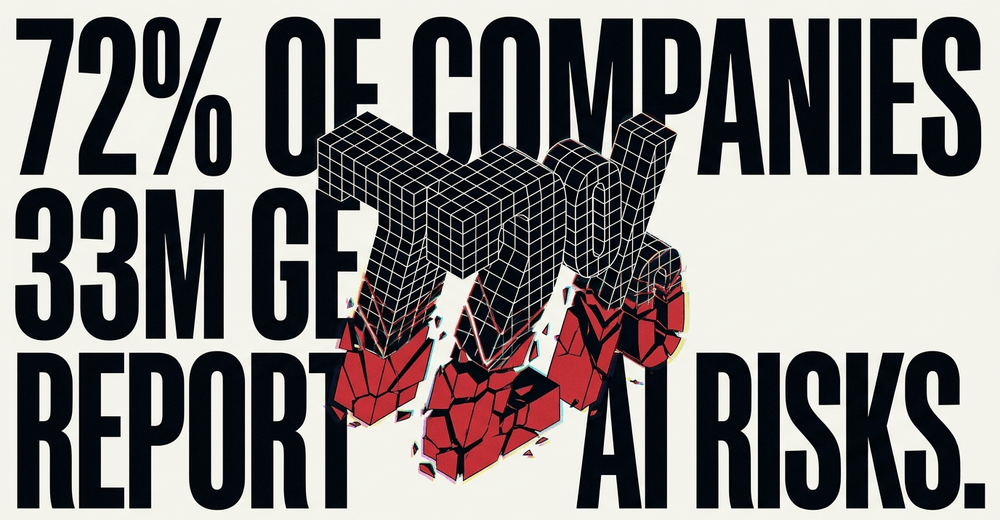
A 2025 Pew Research Center survey found that two-thirds of US adults are highly concerned about getting inaccurate information from AI - and that broader trust deficit makes bias incidents more reputationally costly than they would have been five years ago. People are primed to expect AI systems to get things wrong, which means a single high-profile bias story lands harder.
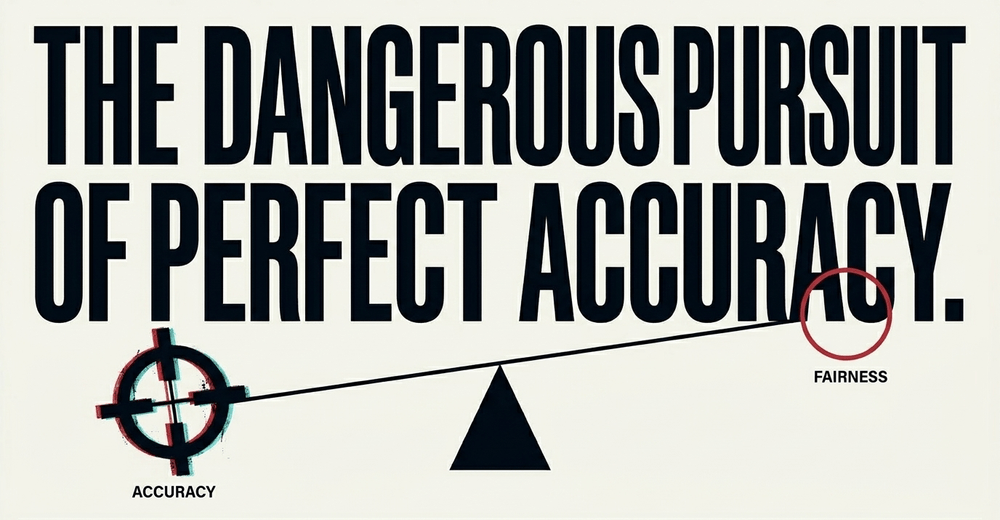
There's also a structural tension that doesn't get talked about enough: research consistently shows accuracy and fairness can move in opposite directions, meaning organizations sometimes face a genuine tradeoff - and given a choice between a model that's marginally more accurate and one that's measurably fairer, plenty of companies still pick accuracy, because that's the number that shows up in the quarterly review. 42% of employers using AI hiring tools admit they're aware of potential bias but choose efficiency over fairness anyway - which is about as honest an admission of the problem as you're likely to get from an industry survey.
Interdisciplinary work isn't optional anymore
Fixing this requires more than engineers. It needs ethicists, social scientists, legal experts, and policymakers working alongside the technical team - and, critically, it needs the people most affected by these systems involved in designing and governing them. Participatory approaches that bring in marginalized communities aren't a diversity checkbox; they're how you catch the failure modes that an all-engineering team will never think to test for, because they've never lived them.
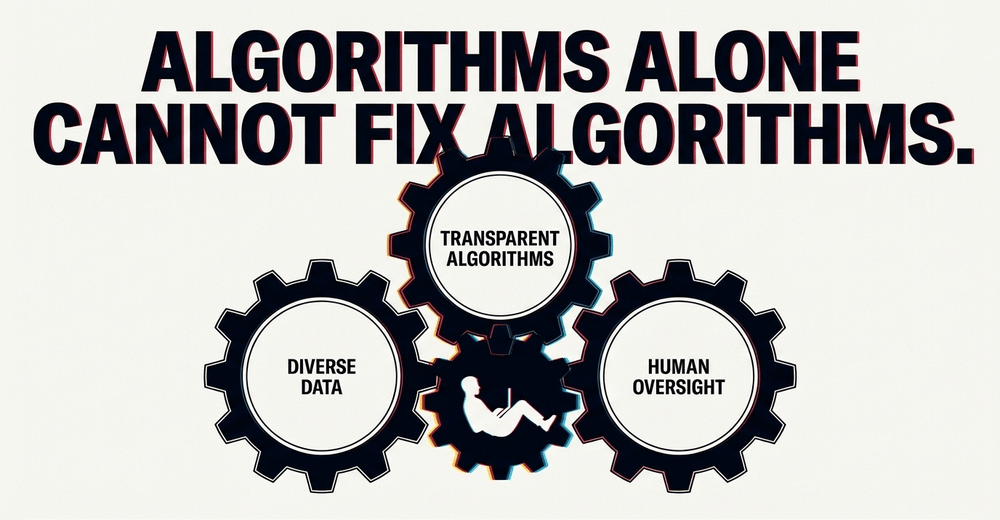
This isn't just about tweaking a loss function. It's about rethinking how technology gets built and deployed in a society that has to live with the consequences - and given how fast the regulatory net is closing in 2026, "we'll get to fairness later" is no longer a viable engineering roadmap.
Share now









Key takeaways
- AI bias is a systematic, lifecycle-wide problem - it enters through data collection, labeling, model design, human input, and post-deployment feedback loops, not just one stage.
- A widely-cited US hospital algorithm reduced the identification of Black patients needing extra care by more than half because it used healthcare spending as a flawed proxy for medical need.
- Resume-screening LLMs favored white-associated names in 85.1% of tests versus Black-associated names in just 8.6%, and some 2026 testing found Black male names selected 0% of the time.
- The COMPAS recidivism algorithm flagged Black defendants as high-risk false positives at roughly 45%, compared to 23% for white defendants.
- Amazon scrapped an internal AI hiring tool after it was found to systematically downgrade resumes containing "women's" and penalize all-women's college graduates.
- 77% of companies with existing bias-testing programs still discovered bias in their AI systems, showing that having a program isn't the same as having an effective one.
- The EU AI Act classifies hiring and credit-scoring systems as high-risk, with fines for non-compliance reaching up to EUR 35 million or 7% of global annual turnover, fully applicable from August 2026.
- A 2025 Pew Research Center survey found two-thirds (66%) of US adults are highly concerned about getting inaccurate information from AI.
- AI salary recommendation tools have suggested 15-25% lower pay for older workers in equivalent roles, and one company settled an age-discrimination AI screening case for $365,000.
- Research consistently shows accuracy and fairness can pull in opposite directions - and 42% of employers using AI hiring tools admit awareness of bias but prioritize efficiency anyway.
Sources
- IBM https://www.ibm.com/think/topics/ai-bias
- Pew Research Center https://www.pewresearch.org/internet/2025/04/03/views-of-risks-opportunities-and-regulation-of-ai/
- European Commission (Digital Strategy) https://digital-strategy.ec.europa.eu/en/faqs/navigating-ai-act
- Stanford HAI https://hai.stanford.edu/news/ai-hiring-tools-can-yield-racial-bias-and-systemic-rejection
- Wikipedia - Fairness (machine learning) https://en.wikipedia.org/wiki/Fairness_(machine_learning)
- Published 2026-06-14 18:30
- Modified 2026-06-14 18:30

-
Redaction