
-
 Redaction
Planetary gear failure: 10,000-hour test data
What 10,000 hours of industrial testing reveals about planetary gearbox failure - bearing fatigue, lubrication chemistry, and predictive monitoring.
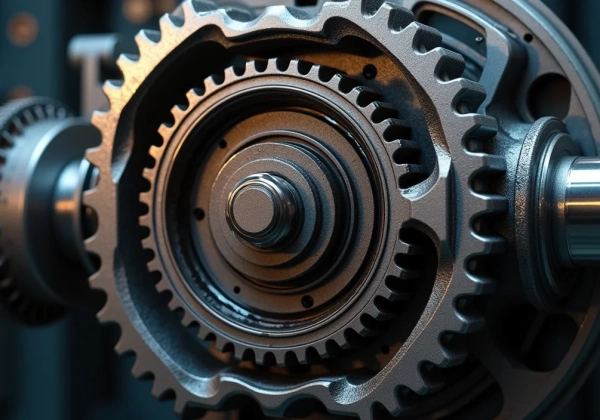
Planetary gear systems represent the pinnacle of power density in mechanical engineering. By distributing torque across multiple planet gears simultaneously, these systems achieve compact footprints that are impossible with standard spur or helical arrangements. From the precision joints of robotic arms to the megawatt-scale drivetrains of wind turbines, the planetary gearbox is the invisible workhorse of modern infrastructure. The very complexity that allows for such high torque density, though, also introduces intricate failure pathways that require rigorous investigation.
Industrial applications demand extreme reliability. A gearbox in a remote wind farm or a heavy mining conveyor cannot simply be swapped out with ease. Consequently, durability testing has evolved from short-term stress checks to exhaustive endurance cycles. An industrial durability test spanning 10,000 hours provides a unique window into the slow-motion decay of materials under cyclic loading. This duration - equivalent to well over a year of continuous 24/7 operation - reveals nuances in material fatigue, lubricant chemistry, and thermal stability that shorter tests frequently overlook.
Well-maintained industrial planetary gearboxes commonly run for 20 to 30 years in service, and heavy-duty units built to AGMA and ISO gearing standards are often rated for a nominal L10 bearing life of 100,000 hours under continuous duty. That figure is a statistical target, not a guarantee - it represents the point at which 90 percent of a population of identical gearboxes is still expected to be running. The gap between that theoretical rating and what actually happens on the shop floor is precisely what 10,000-hour test benches exist to close.
The cost of falling short of that target is not trivial. Unplanned downtime is estimated to cost industrial manufacturers hundreds of billions of dollars annually worldwide, and in high-throughput sectors like automotive assembly, a single unexpected line stoppage can run into the millions of dollars per hour once you account for idle labor, missed shipments, and contractual penalties. This financial reality makes the study of failure mechanisms not just an academic pursuit, but a critical business imperative.
Mechanical failure modes: the anatomy of material fatigue
Mechanical failure in planetary systems is rarely the result of a single catastrophic event. Instead, it's the culmination of micro-structural changes that occur over millions of load cycles. Understanding these modes requires a teardown-level focus on how surfaces interact under pressure.
Pitting and spalling as surface fatigue indicators
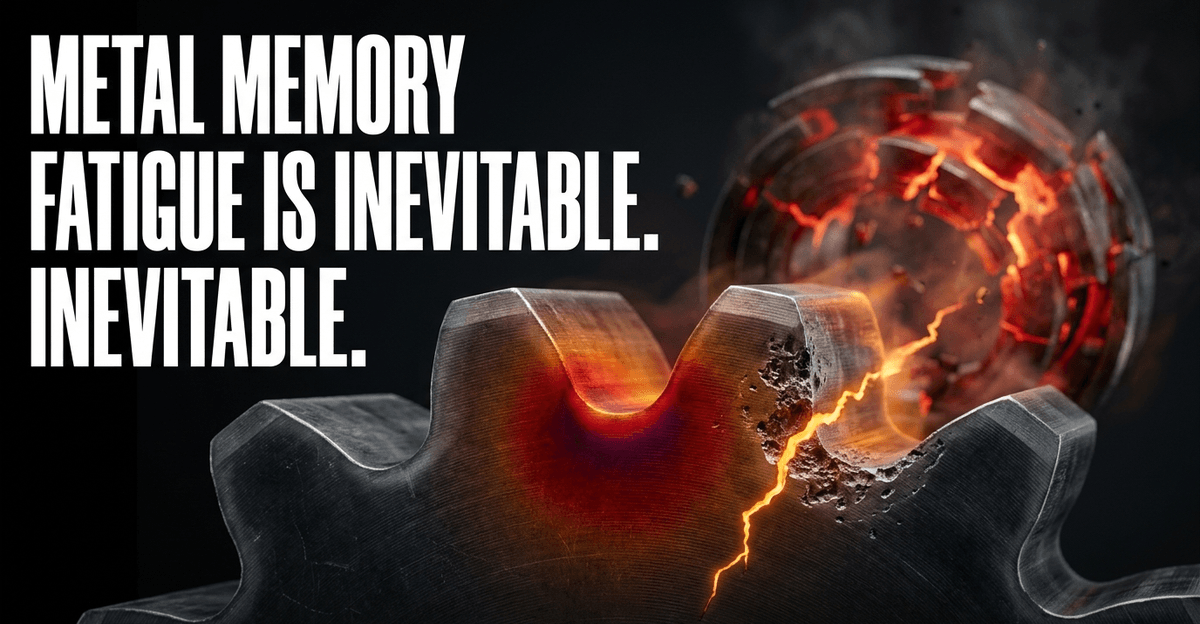
Pitting is perhaps the most pervasive fatigue failure observed in 10,000-hour trials. The mechanism begins with the formation of microscopic cracks, often initiated below the surface at inclusions or irregularities in the metal matrix. Under repeated contact stress, these cracks propagate toward the surface, eventually causing small flakes of metal to break away. What's left behind is a pitted surface that disrupts the smooth rolling action of the gear teeth.
As pitting progresses, it evolves into spalling. Spalling involves the removal of larger sections of material, creating significant pits that act as stress concentrators. This process is highly sensitive to the strength of the oil film. If the elastohydrodynamic lubrication (EHL) film is breached, metal-to-metal contact generates localized heat, further weakening the surface and accelerating the rate of peeling. In high-load industrial environments, fatigue pitting can develop with surprising speed once the initial threshold of material endurance is crossed.
The vulnerability of planet support bearings
While the gears themselves are often the focus of design attention, field data tells a different story: bearings are consistently the weak link in the fatigue life calculation. In a planetary arrangement, the planet gears rotate on bearings that are themselves orbiting the central sun gear. This dual-rotation creates complex centrifugal forces and loading patterns that a simple fixed-axis gear never has to contend with.
The scale of this problem is not a minor footnote. Reliability data collected by the U.S. National Renewable Energy Laboratory across hundreds of wind turbine gearbox damage records found that bearings were responsible for the majority of failures, with gears identified as the second leading cause at around 17 percent, followed by lubrication and filtration issues. Put simply: in most forensic teardowns, the damage visible on the gear teeth is secondary to an initial bearing collapse. When a bearing fails due to race spalling or roller fatigue, it introduces misalignment into the gear mesh. That misalignment causes uneven load distribution across the tooth face, leading to rapid fracture or scoring. Calculating the L10 life of the planet support bearings is therefore not an optional step in the 10,000-hour validation process - it's arguably the most important one.
"The majority of wind turbine gearbox failures are caused by the bearings," notes NREL's Gearbox Reliability Collaborative, which points to axial cracking during high- and intermediate-speed stages as a leading contributor to premature bearing failure.
Tooth wear and fracture mechanisms
Tooth wear occurs through the gradual removal of material, typically classified as abrasive or adhesive. Abrasive wear is driven by contaminants within the lubricant - such as metallic debris shed from pitting - acting as a grinding paste. Adhesive wear, or scoring, occurs when the lubricant film fails entirely, allowing the asperities of the mating teeth to weld and tear apart.
More critical still is the development of fatigue cracks at the tooth root. Every time a tooth engages, it acts as a cantilever beam subjected to bending stress. Repeated cycles of this stress can initiate cracks in the root fillet. These cracks change how gears share force, shifting the load onto neighboring teeth and creating a cascading failure risk. A fully fractured tooth is a catastrophic event that usually results in the immediate seizure of the gearbox - and, in some drivetrain designs, engineers deliberately size the planet gear teeth to be the intentional "fuse," failing before a shaft or housing does, so the failure mode stays predictable rather than explosive.

The chemistry of reliability: lubrication-related failures
Lubrication is not merely a consumable; it's a structural component of the gearbox. Failure of the lubricant is a failure of the entire system. During 10,000-hour durability tests, the chemical stability of the oil is monitored as closely as the physical state of the gears themselves.
Viscosity and film strength
The primary role of the lubricant is to maintain a physical barrier between moving parts. Using an oil with incorrect viscosity is a recipe for rapid degradation. If the viscosity is too low, the oil cannot support the load, leading to surface contact. If it's too high, the internal friction of the fluid generates excessive heat, leading to parasitic power losses and increased operating temperatures. Getting this balance right is a first-principles problem, not a guess - it's why gear oil selection is tied directly to the expected operating temperature range and load spectrum of the specific application.
Thermal degradation and the ten-degree rule
Heat is the enemy of lubricant longevity. Standard operating ranges for industrial gearboxes typically sit between 60 and 80 degrees Celsius. A long-standing rule of thumb in lubrication engineering holds that for roughly every 10 degrees Celsius increase in fluid temperature above that range, oxidation will cut the service life of the lubricant in half. Overheating drives oxidation, where the oil reacts with oxygen to form sludge and acidic compounds. This degradation reduces the oil's ability to protect against corrosion and significantly lowers its film strength.
Contamination and aeration
Environmental factors play a massive role in real-world durability. Dirt, dust, and water are common contaminants in industrial settings. Water is particularly destructive, as it can lead to hydrogen embrittlement in high-strength steels and promote the formation of rust. Incorrect oil levels can also lead to foaming - aerated oil is compressible and cannot maintain a stable EHL film, producing the same wear patterns seen in systems that are simply under-lubricated.
Insights from long-term durability test benches
Executing a 10,000-hour test requires sophisticated infrastructure. Modern gearbox test benches are designed to simulate years of service life in controlled conditions, allowing engineers to push materials to their absolute limits. These benches utilize dynamic load simulation to replicate the erratic torque demands found in applications like wind turbines or heavy-duty conveyors, rather than relying purely on steady-state loading, which tends to flatter a design that would otherwise struggle under real transient shock loads.
Material science and steel selection
Testing has led to significant breakthroughs in material selection. Studies comparing SCM420H and SCM822H - common low-alloy steels for machine structures - show that SCM822H provides a superior strength profile, particularly regarding contact stress resistance. By analyzing the results of 1,000 to 10,000-hour runs, engineers have refined the use of carburized low-alloy steels such as AISI 9310 and 8620. These materials are chosen for their ability to achieve a surface hardness of 58-62 HRC while maintaining a tough, ductile core.
This combination is essential for resisting both surface pitting and root fracture. According to published gear steel data, these alloys can reach contact fatigue strengths in the range of 1,400 to 1,600 MPa. Optimization of the gear geometry, including tooth profile crowning and root fillet radius adjustments, further assists in distributing stress and preventing the localized concentrations that lead to early crack initiation.
Lubrication strategies and additive packages
Durability tests have also confirmed the necessity of high-performance lubricants. Synthetic oils offer much wider operational temperature ranges and higher Viscosity Indices (VI) than mineral-based alternatives. The inclusion of Extreme Pressure (EP) additives is non-negotiable for high-torque systems. NASA testing on AISI 9310 spur gears found that a lubricant formulated with a phosphorus-based EP additive delivered a pitting fatigue life 2.6 times longer than the same base oil without it. The additives work by reacting with the metal surfaces to form a sacrificial chemical layer that prevents welding under high-load conditions - essentially a self-renewing barrier that steps in exactly where the hydrodynamic oil film runs out.
Condition monitoring and the future of predictive maintenance
The shift from reactive to predictive maintenance is driven by the need to avoid the catastrophic costs associated with unplanned downtime. Advanced monitoring techniques allow operators to see inside the gearbox without stopping production, and this is arguably where the biggest gains in gearbox reliability have come from over the past decade - not from better steel, but from catching degradation earlier.
Vibration and acoustic analysis
Vibration monitoring remains the most common and effective technique for predicting imminent failure, particularly in bearings. Every rotating component has a unique vibration signature. When a pit forms on a bearing race or a tooth cracks, that signature changes in a detectable way. Modern systems utilize multiple sensors to provide a comprehensive view of the system's health rather than relying on a single accelerometer that might miss a fault developing outside its detection axis.
Recent academic studies have explored multi-sensor data fusion, where information from several vibration sensors is combined and analyzed using advanced algorithms. In specific test cases, this fusion method achieved up to 100 percent accuracy in fault detection, meaningfully outperforming single-sensor methods, which typically fall in the 79 to 94 percent accuracy range.
MEMS and acoustic emission sensors
A newer frontier in monitoring involves Micro-Electromechanical System (MEMS) acoustic emission sensors. These tiny sensors, often no larger than a few millimeters, can detect high-frequency stress waves generated by crack growth or surface impacts long before they become visible or detectable by standard vibration sensors. With a sensitivity range spanning roughly 15 kHz to 620 kHz, these sensors provide an ultra-early warning system - they're picking up the acoustic "click" of a crack propagating at the microstructural level, well before that crack has grown large enough to disturb the bulk vibration signature of the gearbox. When paired with residual neural networks (ResNet) for pattern classification, these sensors enable intelligent, automated fault diagnosis that can pinpoint the exact component at risk.

Digital twin technology
The integration of digital twin technology is transforming how durability data gets used. By creating a virtual model of a physical gearbox fed with real-time sensor data, engineers can simulate future wear patterns based on current operating conditions. These systems draw on historical data from 10,000-hour tests to calibrate their predictive models. This allows for the calculation of remaining useful life (RUL) with meaningfully higher precision than fixed maintenance intervals, enabling service to be scheduled only when truly necessary and maximizing the return on investment for the equipment.

Adherence to global engineering standards
To ensure consistency and safety, planetary gear design and testing must adhere to international standards. The ISO 6336 series and AGMA 2001-D04 provide the fundamental methodologies for calculating gear strength and fatigue resistance. These two rating systems are related but not interchangeable - a gear rated under AGMA methodology will not necessarily carry the same torque and power rating as the identical gear rated under ISO 6336, and ISO figures tend to run somewhat higher than their AGMA counterparts for a given geometry. This is a common source of confusion for engineers moving between North American and European supply chains, so specifying which standard a given rating was calculated against matters just as much as the number itself.
These standards define how factors such as load distribution, dynamic effects, and surface roughness influence the final durability rating of a gearbox. Compliance with them ensures that a gearbox designed for 10,000 hours of validated service will perform reliably under the specified conditions, and it gives buyers a common language for comparing components from different manufacturers on equal footing.
Conclusion: the path to zero-failure operation
Planetary gear systems are marvels of mechanical efficiency, but they are not immune to the laws of physics. The lessons learned from 10,000 hours of industrial durability testing emphasize that reliability is the result of a holistic approach. It requires the right steel chemistry, optimized tooth geometry, high-performance lubrication, and rigorous condition monitoring, with bearing health treated as the priority it demonstrably is.
As industries move toward more autonomous and high-intensity operations, the demand for planetary gearboxes that can exceed their expected 20-to-30-year service life will only grow. By applying the data-driven insights gained from exhaustive endurance testing, engineers can continue to push the boundaries of what these compact powerhouses can achieve, minimizing downtime and driving the next generation of industrial productivity.
Share now









Key takeaways
- Well-maintained planetary gearboxes typically deliver 20 to 30 years of service life, with heavy-duty industrial units often rated for a nominal L10 bearing life of 100,000 hours.
- 10,000-hour durability tests are the industry benchmark for validating long-term reliability, roughly equivalent to over a year of continuous 24/7 operation.
- Bearing fatigue, not gear tooth damage, is the dominant root cause of planetary gearbox failure - NREL's Gearbox Reliability Collaborative found bearings responsible for the large majority of documented wind turbine gearbox failures, with gears a distant second at around 17 percent.
- Pitting begins as sub-surface microcracks and progresses to spalling once the elastohydrodynamic (EHL) oil film is breached and metal-to-metal contact begins.
- A widely cited rule of thumb: for every 10°C rise above the standard 60-80°C operating range, oxidation cuts lubricant service life roughly in half.
- NASA testing on AISI 9310 spur gears showed a phosphorus-based Extreme Pressure (EP) additive extended pitting fatigue life to 2.6 times that of the same oil without it.
- Carburized low-alloy steels like AISI 9310 and 8620 achieve a surface hardness of 58-62 HRC with contact fatigue strengths of roughly 1,400 to 1,600 MPa.
- Multi-sensor vibration data fusion has demonstrated up to 100% accuracy in fault detection in test cases, versus 79-94% for single-sensor methods.
- MEMS acoustic emission sensors detect stress waves in the 15 kHz to 620 kHz range, catching crack growth before it's visible on standard vibration monitoring.
- Digital twin models calibrated with 10,000-hour test data allow engineers to calculate remaining useful life (RUL) and schedule maintenance only when genuinely needed.
- The ISO 6336 series and AGMA 2001-D04 are the two dominant global standards for gear strength and fatigue rating - their results are not directly interchangeable.
- Unplanned downtime remains one of manufacturing's costliest risks, with single production-line stoppages in sectors like automotive capable of running into the millions of dollars per hour.
Sources
- NREL / U.S. Department of Energy https://www.energy.gov/cmei/systems/articles/statistics-show-bearing-problems-cause-majority-wind-turbine-gearbox-failures
- NASA Technical Reports Server https://ntrs.nasa.gov/archive/nasa/casi.ntrs.nasa.gov/19850004926.pdf
- Lubrication Engineers https://lelubricants.com/lubricants/gear-oils/
- Gear Technology Magazine (AGMA/ISO standards comparison) https://www.geartechnology.com/topics/389-agma-2001
- PatSnap Eureka - Planetary gearboxes vs. spur gears durability metrics https://eureka.patsnap.com/report-planetary-gearboxes-vs-spur-gears-durability-metrics
- Published 2026-07-16 09:44
- Modified 2026-07-16 09:44
