

-
 Redaction
Early adopters: The 16% that control markets
Most products die because companies target the wrong people first. A forensic look at Rogers' adoption curve, the chasm and the 16% that gatekeep success.
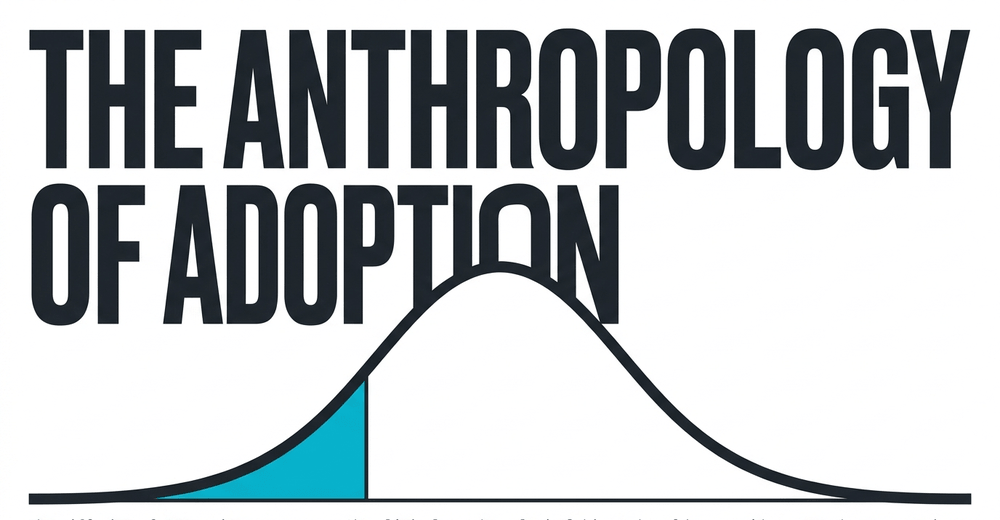
The myth of the self-made market success is a convenient fiction for marketing departments, but the reality of how ideas spread is far more clinical. Most products do not fail because they lack utility; they fail because they cannot navigate the rigid, anthropological hierarchy of human social systems. According to the foundational Diffusion of Innovations theory established by Everett M. Rogers - first published in 1962 and now the second-most-cited book in the social sciences - the spread of any new practice or technology is not a linear march toward progress but a tiered psychological filter. At the very tip of this filter sits a group so small and so distinct that they are often misunderstood as mere hobbyists. These are the innovators and early adopters - the combined 16% of the population that determines whether an idea lives or dies.

To understand the 2% that matter - the elite sliver of innovators who introduce risk to the system - we must first strip away the notion that adoption is a rational financial decision. For the average person, adoption is an act of conformity. For the innovator, it is an act of identity. This anthropological divide is why most companies burn through capital trying to convince the majority to buy something they are not yet socially permitted to own. Understanding the mechanics of the 2.5% of innovators and the 13.5% of early adopters is the difference between achieving a critical mass and becoming a historical footnote.
The anatomy of the 2.5%: The innovators
Innovators are the extreme outliers of the social system. Comprising roughly 2.5% of any given population - approximately 1 in every 40 people - these individuals are defined by what Rogers described as "venturesomeness." They are the risk-seekers who possess the financial liquidity to absorb the cost of a failed experiment and the technical literacy to troubleshoot products that are not yet ready for the consumer. Unlike the groups that follow them, innovators are not looking for a polished solution; they are looking for the edge.
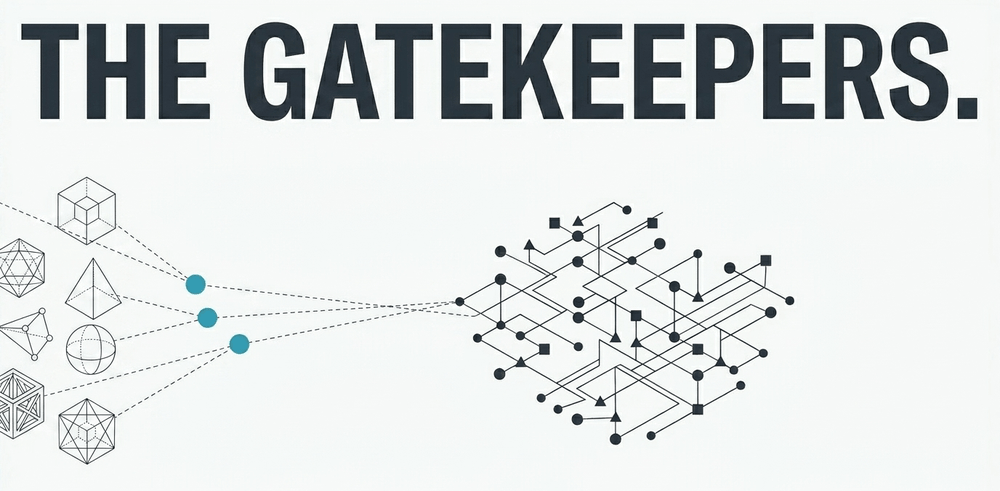
Anthropologically, innovators function as "cosmopolites." While most people are oriented toward their local community and peer groups, innovators look outward. Their interest in new ideas leads them out of local peer networks and into more cosmopolitan social relationships - crossing geographical and professional boundaries. This allows them to act as gatekeepers who import new ideas from the outside world into their local social system. This group is often viewed with skepticism by their peers because their behavior appears obsessive or reckless. However, without this 2.5% to absorb the initial shock of uncertainty, the innovation would never reach the soil where it can grow.
In the modern landscape, these are the developers tinkering with open-source code at 3:00 AM or the investors backing unproven hardware. They are the first to deploy AI agents or experiment with decentralized finance protocols long before there is a user interface. Their role is not to influence the masses - they are often too fringe for that - but to validate that the technology actually works. They are the laboratory for the world's new ideas.
Rogers was clear that the innovator category is not a fixed identity. A farmer might be an early adopter of mechanical innovations but a late majority adopter of biological ones. The category describes a relationship with a specific innovation, not a permanent character type - which is why targeting them requires intimate knowledge of the specific domain, not just a general "tech enthusiast" profile.
The bridge-builders: Why the 13.5% are the real kingmakers
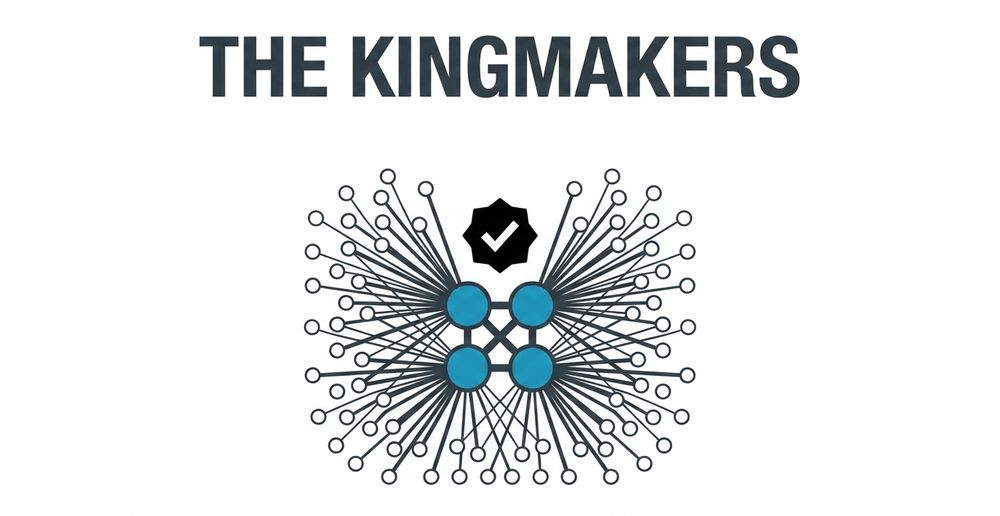
If innovators are the scientists of the adoption curve, the early adopters - the next 13.5% - are the politicians. This is the segment that truly matters for the survival of a brand or idea. Early adopters are deeply integrated into their social systems. Unlike innovators, they are respected by their peers. They hold the highest degree of opinion leadership. When they adopt a product, it serves as a "stamp of approval" that signals to the rest of the community that the innovation is safe, useful, and socially advantageous.
"Early adopters are instrumental in getting an innovation to the point of critical mass, and, therefore, they are instrumental in the successful diffusion and adoption of an innovation." - Everett M. Rogers
Data from Pew Research Center and YouGov illustrates a clear profile for this group. Approximately 22% of Americans identify with early adoption tendencies - actively on the lookout for new technology devices or services. Their demographics are telling. Two-thirds of America's early tech adopters are men (66%), even though men form only 49% of the overall population. They skew younger: Gen Z and Millennials comprise around seven-tenths of early tech adopters while making up only two-fifths of the national population. Early adopters are seven percentage points more likely than the general population to belong to high-income households. Adults with family incomes above $150,000 annually express the strongest preference for early adoption (39%), according to Pew.
Perhaps most critically: 77% of early tech adopters love recommending things to others, compared to just 55% of the overall US population. This verbal and social signaling is the engine of the diffusion process. YouGov BrandIndex data shows early adopters are twice as likely to have spoken to friends and family about emerging smartphone brands compared to the broader population. That word-of-mouth reach is worth far more than any paid media impression.
Early adopters are motivated by a strategic mix of social identity and the fear of missing out. They possess the vision to see the promised outcome of a technology but are discerning enough to wait until the initial innovator bugs have been ironed out. They are the group that bridges the "chasm" famously described by Geoffrey Moore. Without the early adopters, an innovation remains a niche curiosity for the 2.5% and never crosses into the early majority.
Crossing the chasm and the threat of the majority
The transition from the early adopter to the early majority (34%) is where most ventures collapse. First described by Geoffrey Moore in his 1991 book Crossing the Chasm, this gap is not a smooth progression but a fundamental rupture in market psychology. The early majority is deliberate. They do not want to be the first; they want to benefit from the mistakes of the first. They require evidence of utility and social proof - not the promise of a competitive edge.
This shift represents a fundamental change in the psychology of the market. The early majority does not buy because a product is new; they buy because it has become a standard.
This creates a paradox in high-tech industries. The high demand for specialized features from early adopters can actually slow the spread of technology to the mainstream. Research on the diffusion of commercial satellites - studying launches across several decades - found that early adopters were able to extend the introduction stage of the technology over an extraordinarily long period, and actually shaped market conditions for mainstream buyers rather than smoothly handing them off. Their specialized needs can trap a product in a cycle of constant iteration, preventing the standardization required for the late majority (34%) and laggards (16%) to enter the market.
The late majority adopts out of economic necessity or peer pressure. Laggards only join once the old way of doing things is no longer an option - these are the final 16%, often defined by a deep skepticism of change and a strong connection to traditional practices. They are, as Rogers categorized them, "Traditional."

Enterprise adoption and the AI era
This anthropological framework is currently playing out in the corporate world with Artificial Intelligence - and the pace is accelerating dramatically. Data from the IBM Global AI Adoption Index found that 42% of enterprise-scale companies (those with over 1,000 employees) had already actively deployed AI, with an additional 40% exploring or experimenting with it. Of those engaged, 59% had accelerated their investments. This data suggested we were squarely moving from the innovator phase into early adoption in the corporate world.
The subsequent trajectory has been steep. By 2025, McKinsey's State of AI report put the figure at 88% of organizations using AI in at least one business function - a figure that would place enterprise AI adoption squarely in the early majority phase of the Rogers curve. The numbers are not uniform, however. Only 23% of enterprises have scaled agentic AI, and PwC's 2026 CEO survey found that just 12% of CEOs report achieving both revenue gain and cost reduction from AI. The majority has adopted the label; far fewer have crossed the operational threshold.
That gap is precisely what Rogers would have predicted. The early majority adopts because the innovation looks standard. But moving from adoption to value requires the institutional equivalent of what early adopters did naturally - experimentation, tolerance for failure, and genuine integration. Most enterprise AI "adoption" is still, functionally, the early majority performing the rituals of adoption without the underlying commitment.
In an enterprise setting, the "early adopter" is often the CTO or the forward-thinking department head willing to risk a portion of budget on a promise of increased efficiency. Their success or failure determines whether the rest of the organization - the cautious managers and skeptical finance directors - will follow suit. This is why change agents and consultants focus so heavily on identifying these internal early adopters: they are the leverage points for the entire organization.
Share now









Key takeaways
- Everett Rogers introduced the Diffusion of Innovations theory in 1962; the book became the second-most-cited work in the social sciences.
- Adopter categories follow a normal bell curve: innovators (2.5%), early adopters (13.5%), early majority (34%), late majority (34%), laggards (16%).
- Innovators represent approximately 1 in every 40 people and are defined by "venturesomeness" - willingness to absorb financial and social risk before any proof exists.
- Early adopters hold the highest degree of opinion leadership of any adopter category; their adoption acts as a social "stamp of approval" for the rest of the population.
- 77% of early tech adopters love recommending things to others, compared to 55% of the general US population (YouGov).
- Two-thirds of America's early tech adopters are men (66%), while Gen Z and Millennials make up approximately 70% of this group.
- Adults with household incomes above $150,000 are nearly 2.5x more likely to be early technology adopters than the average American (Pew Research Center).
- Geoffrey Moore's "chasm" - the dangerous gap between early adopters and the early majority - is the single most common point of failure for high-technology ventures.
- Enterprise AI adoption moved from roughly 42% of large companies actively deploying AI (IBM, 2023) to 88% using AI in at least one business function by 2025 (McKinsey), indicating a rapid shift from early adoption to early majority.
- Higher formal education is consistently associated with earlier adoption across Rogers' compilation of hundreds of diffusion studies; earlier adopters also score higher in Openness to Experience, a core Big Five personality trait.
Sources
- Everett M. Rogers, Diffusion of Innovations (Wikipedia overview) https://en.wikipedia.org/wiki/Diffusion_of_innovations
- IBM Global AI Adoption Index (2023 report, IBM Newsroom) https://newsroom.ibm.com/2024-01-10-Data-Suggests-Growth-in-Enterprise-Adoption-of-AI-is-Due-to-Widespread-Deployment-by-Early-Adopters
- YouGov Profiles - Early tech adopters, US (2023) https://business.yougov.com/content/46098-why-brands-should-target-tech-adopters-us
- Pew Research Center - 28% of Americans are "strong" early adopters of technology https://www.pewresearch.org/short-reads/2016/07/12/28-of-americans-are-strong-early-adopters-of-technology/
- Geoffrey A. Moore, Crossing the Chasm (Grokipedia summary) https://grokipedia.com/page/Crossing_the_Chasm
- Published 2026-07-24 22:36
- Modified 2026-07-24 22:36

-
Redaction