
-
 Redaction
Siberian Traps: the eruption that nearly killed life
Discover how a two-million-year volcanic eruption in Siberia poisoned the atmosphere, wiped out 96% of marine life, and what it means for climate today.
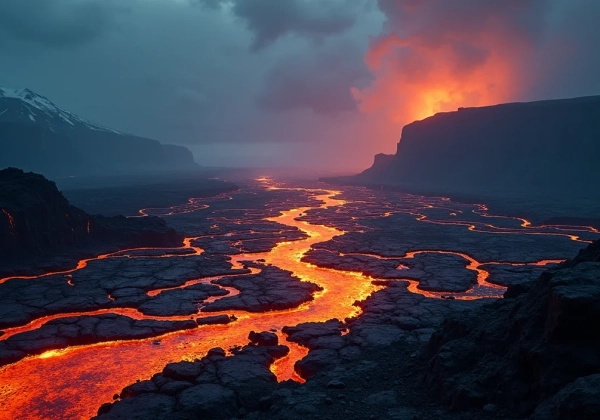
The Siberian Traps represent one of the most formidable geological phenomena in the history of the Phanerozoic Eon. Roughly 252 million years ago, the Earth underwent a violent transition that nearly extinguished all multicellular life. This period, marking the boundary between the Permian and Triassic periods, is characterized by the formation of a Large Igneous Province (LIP) in what is now modern-day Siberia. This was not a standard volcanic eruption involving a single mountain peak. It was a sustained, catastrophic bleeding of the Earth's mantle through the crust, persisting for roughly two million years.
From a geological perspective, the Siberian Traps provide a hauntingly clear window into the fragility of the global carbon cycle. As a geologist, one learns to view events of this scale not as isolated disasters but as systemic failures - moments where the planet's internal heat overwhelms its surface regulatory mechanisms faster than those mechanisms can respond. The magnitude of this event is so vast that it serves as the ultimate benchmark for climate sensitivity and biological resilience. By examining the stratigraphy and chemical signatures left in the rock record, we can reconstruct a timeline of environmental collapse that offers sobering, if imperfect, parallels to the modern era.

The scale of the Siberian Traps volcanic province
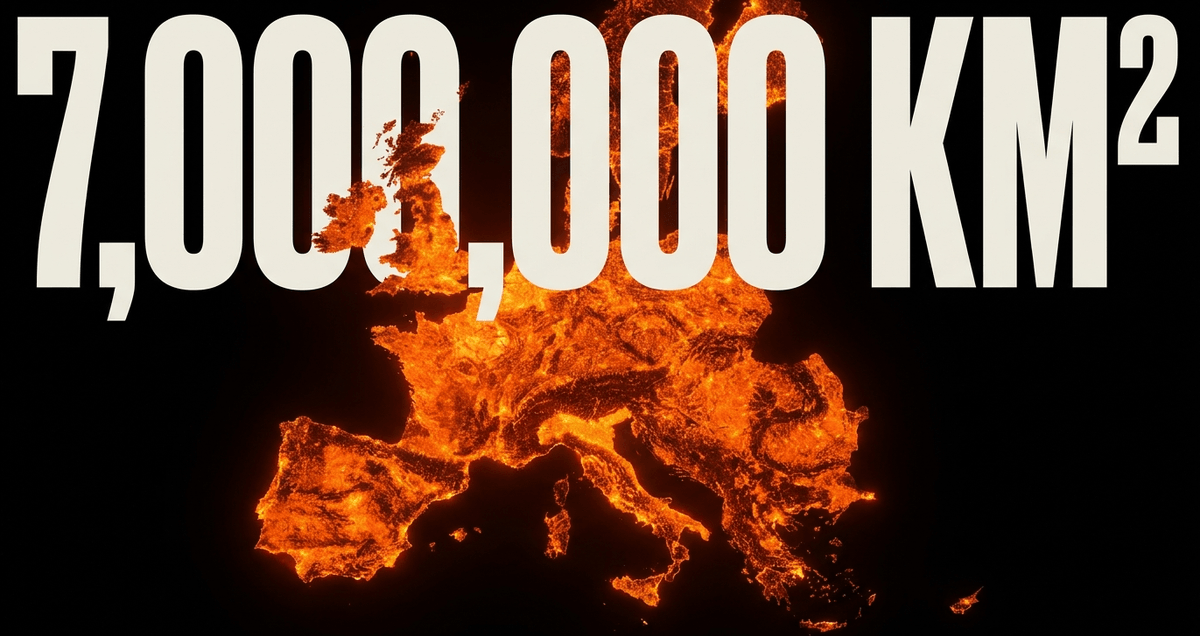
The sheer volume of material produced by the Siberian Traps is difficult to comprehend within the framework of human experience. According to data from various geological surveys, the volcanic products still visible today cover at least 1.5 million square kilometers. Some researchers suggest the original coverage, before millions of years of erosion stripped much of it away, could have reached as high as 7 million square kilometers. To put this in perspective, that upper estimate is roughly equivalent to the size of Australia. The basaltic rock volume alone is estimated at approximately 1 to 4 million cubic kilometers, though more expansive studies that include the intruded magmas below the surface suggest a total volume that may exceed 10 million cubic kilometers.
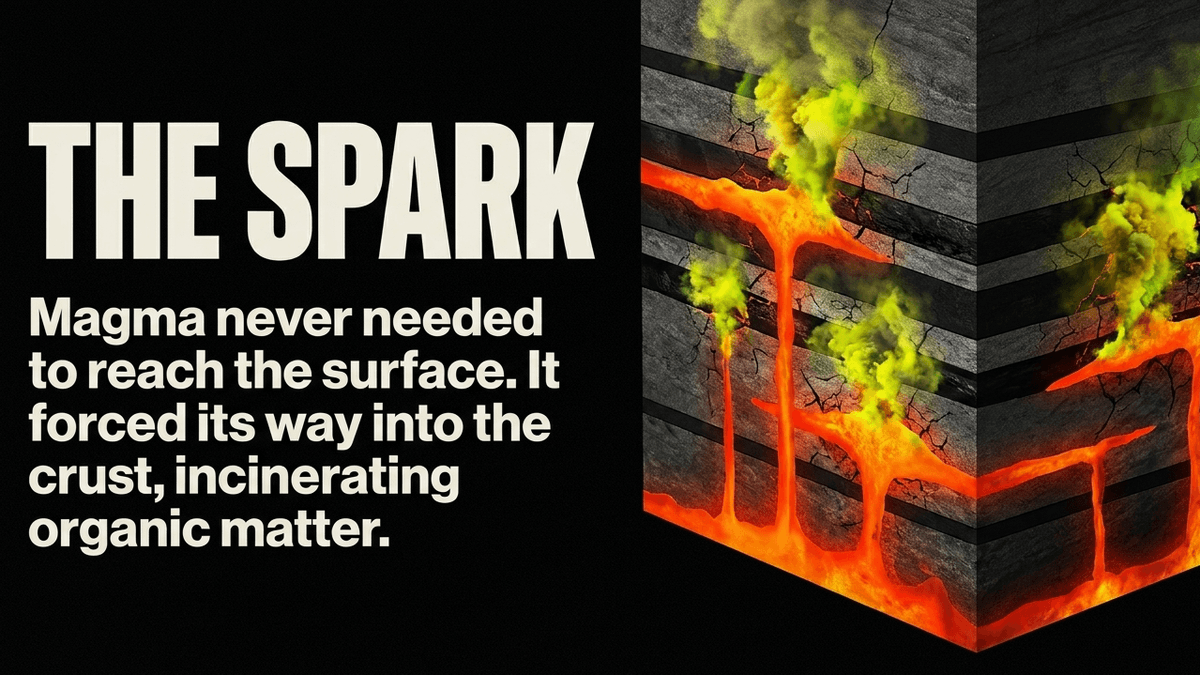
This was not merely a surface event. Much of the magma never reached the surface as lava flows. Instead it forced its way into the crust as sills and dikes, thin sheets of molten rock injected horizontally and vertically between existing rock layers. These intrusions turn out to be critical to understanding the eventual mass extinction, arguably more important than the lava flows themselves.
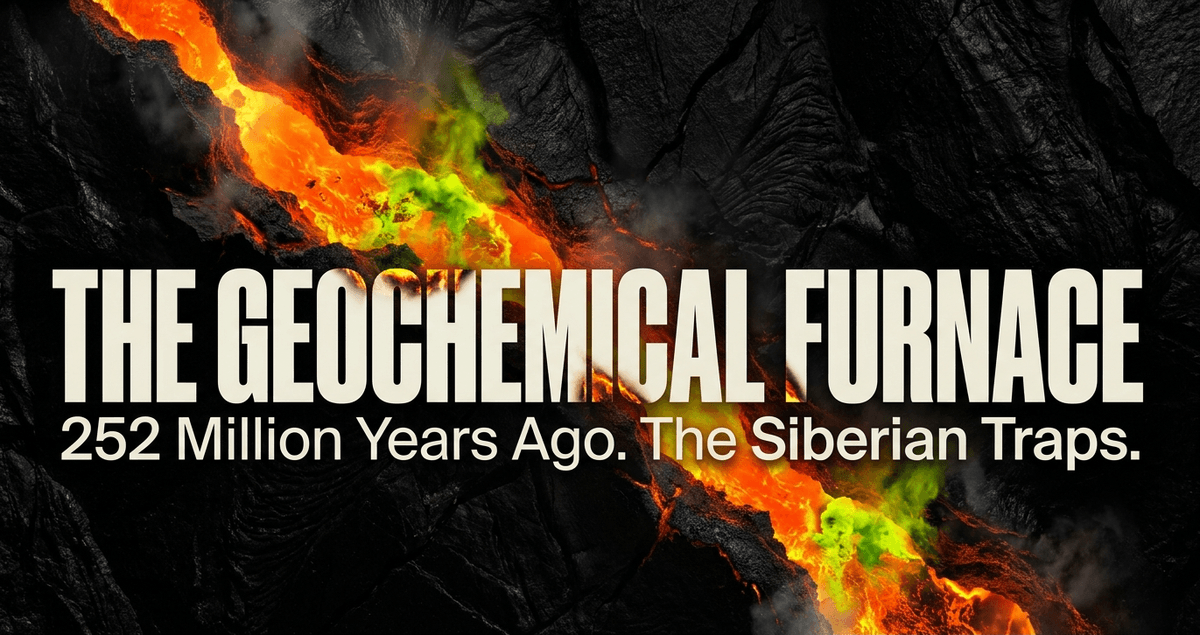
In the Tunguska sedimentary basin, the rising magma encountered thick sequences of Carboniferous-Permian coal beds and hydrocarbon-rich sediments. As the molten rock "cooked" these organic materials, it triggered a massive, secondary release of methane and carbon dioxide - effectively turning the Siberian landscape into a giant geochemical furnace. Field evidence for this coal combustion has been documented directly in the Tunguska Basin's sedimentary record, where researchers have identified baked contact zones and altered coal seams sitting immediately adjacent to intrusive sills.
"We now can say it's plausible" - Seth Burgess, on establishing the Siberian Traps as the leading suspect behind the end-Permian extinction, once the timing of the eruptions was pinned down with high-precision radiometric dating.

The carbon threshold and atmospheric poisoning
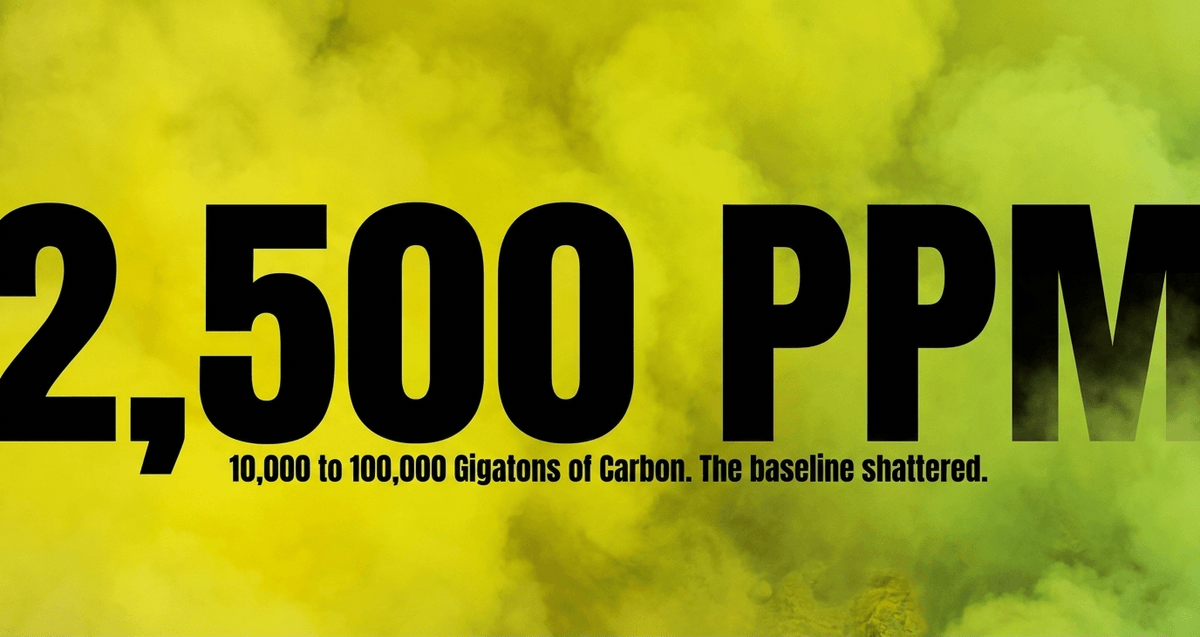
The primary driver of the Permian-Triassic mass extinction was the rapid alteration of the atmosphere. Estimates of carbon dioxide released during the Siberian Traps event vary considerably depending on the modeling approach, ranging from roughly 10,000 to 40,000 gigatons (Gt) over a period of 300,000 to 500,000 years. Some more aggressive estimates place the total closer to 100,000 gigatons of CO2 released across roughly a million years. This injection of carbon was likely sufficient to push atmospheric concentrations from a Late Permian baseline into the thousands of parts per million, representing a fundamental breach of the planet's carbon threshold.
The rate of this release is a subject of intense scientific scrutiny, and it is here that the geological record becomes genuinely instructive rather than merely dramatic. The average rate of CO2 release from the Siberian Traps has been estimated at somewhere between 0.02 and 0.13 gigatons per year across the full duration of the event. But averages can be deceiving. Certain pulses were almost certainly far more intense than the mean would suggest, and researchers have proposed episodes where tens of thousands of gigatons of carbon were released over intervals short enough, geologically speaking, to look almost instantaneous.
This is the detail worth sitting with: even at its most violent, the fastest pulses of Siberian Traps carbon release still unfolded over centuries to millennia. Human civilization is now moving a comparable volume of carbon on a timescale of decades.
Tracing the eruptions in mercury and nickel
One of the more elegant advances in this field has come not from studying the basalts themselves, but from tracing trace metals scattered across the globe. Mercury is emitted by volcanic systems in disproportionately large quantities relative to other elements, and it settles into marine sediments where it binds to organic matter. Because of this, mercury concentrations preserved in Permian-Triassic boundary sections have become a widely used proxy for pulses of volcanic activity, even in locations thousands of kilometers from Siberia itself.
Researchers have identified mercury spikes coinciding with the extinction horizon in marine sections across the Northern Hemisphere, from Arctic Canada to South China, and the isotopic signatures of that mercury point to an atmospheric rather than a local terrestrial source. In other words, the metal traveled on the wind. Later work extended this signal even further, into terrestrial sediments of southern Pangea, nearly on the opposite side of the planet from the eruptions, confirming that the atmospheric fallout from the Siberian Traps was a genuinely global phenomenon rather than a regional catastrophe.

Nickel tells a similar story. Anomalous nickel enrichment has been documented in Permian-Triassic boundary sections stretching from China to Israel to the Canadian Arctic, and the isotopic ratios in some of these deposits are among the lightest ever measured in sedimentary rock. The leading explanation connects this nickel to aerosol particles generated when Siberian magma intruded into nickel-rich crustal rocks, particularly around what is now the Norilsk region - itself later mined for some of the richest nickel-copper-platinum deposits on Earth, a strange economic inheritance from a planetary catastrophe.
Together, these trace-metal fingerprints do something the basalt outcrops alone cannot: they tie the timing of Siberian volcanism directly to the biological extinction horizon, wherever on Earth that horizon happens to be preserved.
Environmental consequences: the Great Dying
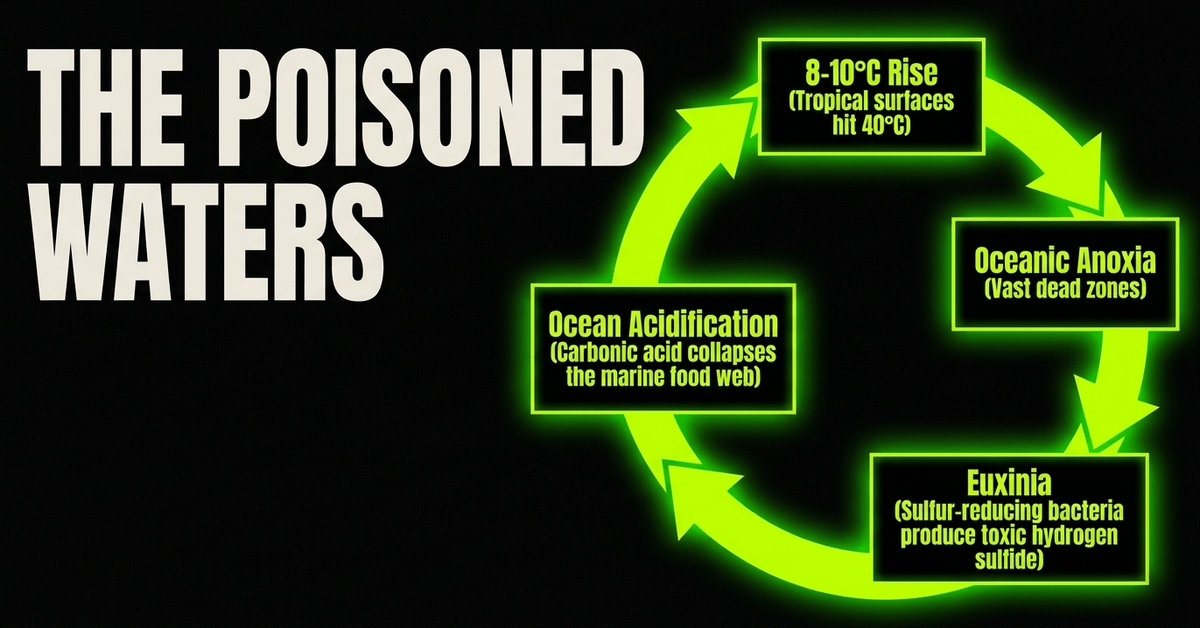
The result of this carbon surge was the most severe extinction event in Earth's history, often referred to as "The Great Dying." As temperatures climbed by an estimated 8 to 10 degrees Celsius, the global climate entered what many researchers describe as a runaway greenhouse state. Tropical ocean surface temperatures may have reached as high as 40 degrees Celsius in the Early Triassic aftermath - a condition lethal for most complex marine life and inhospitable even for many organisms we would consider heat-tolerant today.
The environmental impacts were multifaceted and synergistic, meaning each disaster compounded the effects of the next rather than operating in isolation.
- Oceanic anoxia and euxinia. As oceans warmed, they lost much of their capacity to hold dissolved oxygen. This produced vast dead zones where oxygen-starved conditions prevailed for extended stretches. In many of these areas, sulfur-reducing bacteria flourished, producing hydrogen sulfide - a toxic gas that turned parts of the ocean into a poisonous, sulfurous soup known to geologists as euxinia.
- Ocean acidification. The absorption of CO2 by seawater generated carbonic acid, lowering ocean pH. This made it far harder for calcifying organisms, such as corals and many forms of plankton, to build and maintain their shells, contributing to a broader collapse of the marine food web.
- Atmospheric poisoning. Beyond CO2 itself, the eruptions released halogen gases and metals into the stratosphere. This likely damaged the ozone layer and increased the prevalence of acid rain, which in turn devastated terrestrial vegetation already under thermal stress.
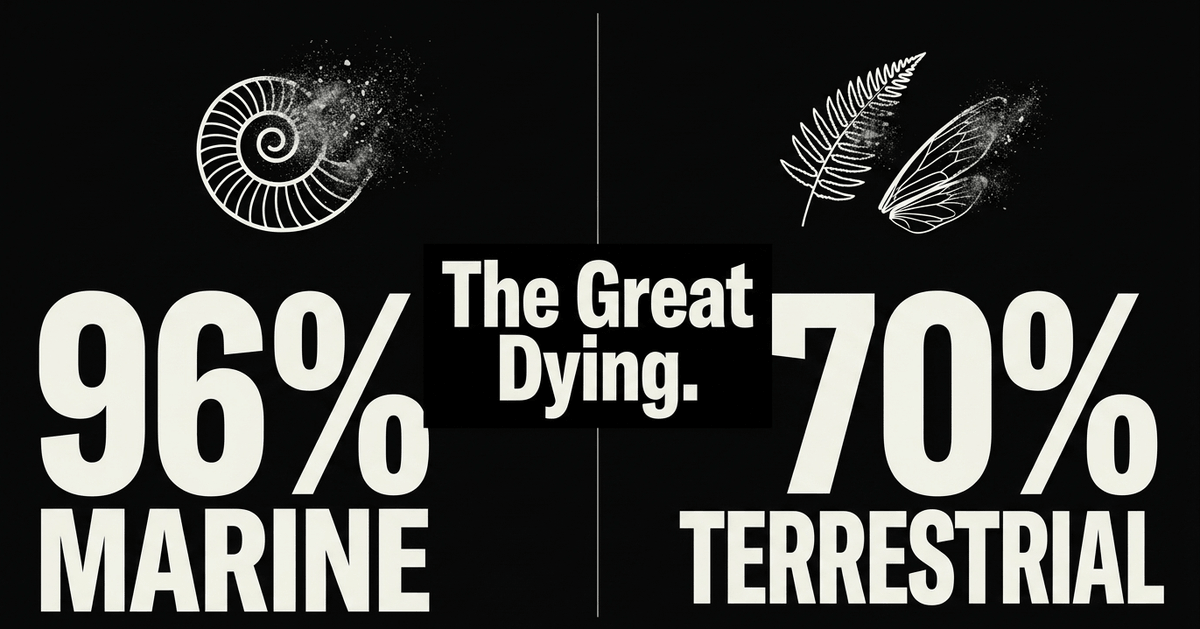
The biological toll was staggering by any measure. Fossil record data suggest that somewhere around 90 to 96 percent of marine species and roughly 70 to 78 percent of terrestrial vertebrate genera perished. Even insects, a group typically resilient to mass extinctions because of their short generation times and ecological flexibility, suffered their only confirmed global die-off in the fossil record.
It is worth pausing on that insect figure specifically, because it is the detail that tends to surprise people most familiar with the "Big Five" extinctions. Insects sailed through the end-Cretaceous impact that killed the non-avian dinosaurs relatively unscathed. They did not sail through this one. That single fact is often cited as the clearest possible measure of how severe the Great Dying really was.
The strange arithmetic of recovery
The recovery from the Great Dying was not swift, and the way it unfolded tells us something important about how ecosystems rebuild themselves after a threshold has been crossed. In the immediate aftermath, life did not so much recover as get taken over by a narrow set of opportunists.
The best-known of these is Lystrosaurus, a stocky, burrowing dicynodont roughly the size of a large dog. It had been an unremarkable presence in the Late Permian world, but in the earliest Triassic it exploded in abundance, at some sites accounting for as much as 70 to 90 percent of all terrestrial vertebrate specimens found in the rock. Paleontologists refer to organisms like this as disaster taxa - hardy generalists that flourish precisely because the specialists that would normally out-compete them have been wiped out.
It is tempting to read this rapid dominance as evidence of a quick recovery, and for decades many researchers did exactly that. But closer study of the fossil record tells a more sobering story. The reappearance of a few hardy survivors is not the same as the reconstruction of a complex, functioning ecosystem. True ecological recovery, meaning the return of diverse food webs, multiple predator tiers, and stable community structures, took several million years longer than the initial rebound of disaster taxa would suggest.
This distinction matters enormously for how we think about the modern biosphere. A landscape dominated by a handful of resilient generalist species is not a healthy landscape. It is a landscape still in shock.
Comparing ancient and modern carbon rates
The most critical lesson from the Siberian Traps lies in the comparison between ancient volcanic rates and modern anthropogenic emissions. According to Professor Ben Mills at the University of Leeds, past climate changes were often slow, drawn-out releases that ecosystems had at least some chance to adapt to, and even the Siberian Traps event, fast by the standards of deep time, still looks slow set against the present day. Human activity currently releases somewhere in the range of 36 to 40 gigatons of CO2 annually from fossil fuels and industry, a rate that is hundreds of times faster than the average pace of Siberian Traps emissions, even if it may be broadly comparable to some of the most intense volcanic pulses.
This discrepancy in speed is vital, and it is worth explaining why. When carbon is released over hundreds of thousands of years, the planet's natural buffers, such as the chemical weathering of silicate rocks, can gradually work to sequester that carbon back into the crust. It is a slow process, but given enough time, it functions. When the release happens over decades or centuries instead, those buffers are simply overwhelmed. They cannot draw down carbon fast enough to matter on a human timescale.
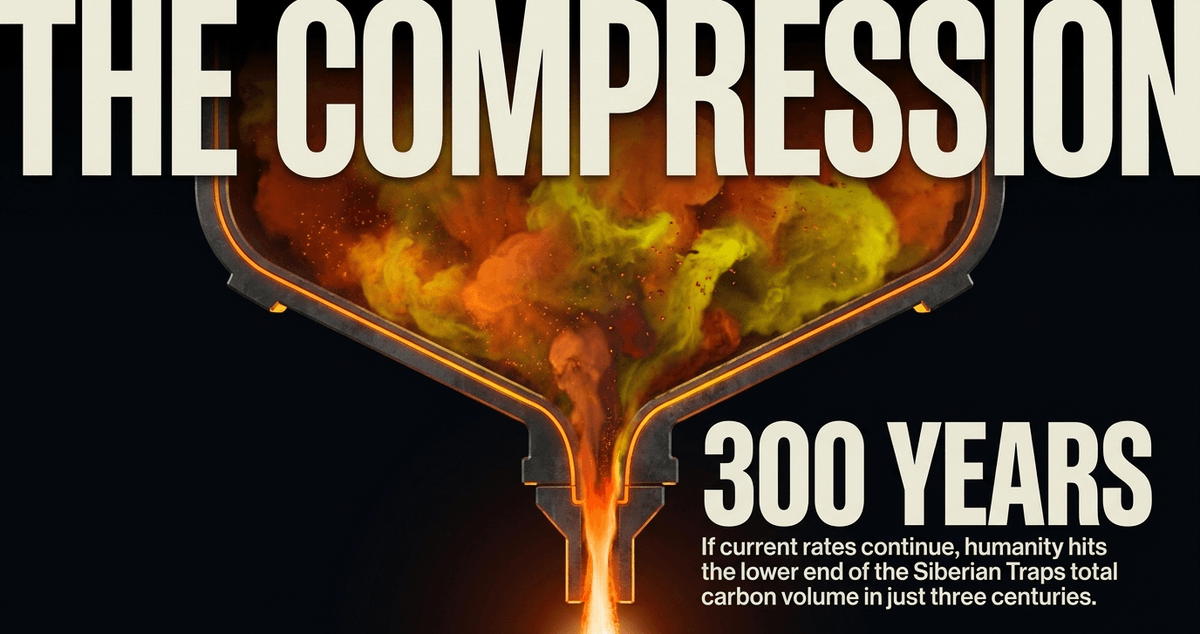
If current emission rates continue, humanity could reach the lower end of the total carbon volume released during the entire Siberian Traps event in a period measured in centuries rather than the hundreds of thousands of years it took the volcanic province to do the same. We are, in effect, compressing a geological disaster that once unfolded across a million years into a window barely longer than a few human lifetimes.

The fragility of tropical forests and terrestrial sinks
Terrestrial ecosystems played a dual role during the Permian-Triassic crisis. Initially, they functioned as a carbon sink, drawing atmospheric carbon into biomass and soil. But as temperatures climbed past a certain threshold, forests appear to have flipped from sink to source. Recent modeling combined with plant fossil evidence has traced how the biosphere transitioned toward roughly 10 degrees of warming, a shift severe enough to eradicate tundra habitats entirely and turn the planet's polar regions temperate.
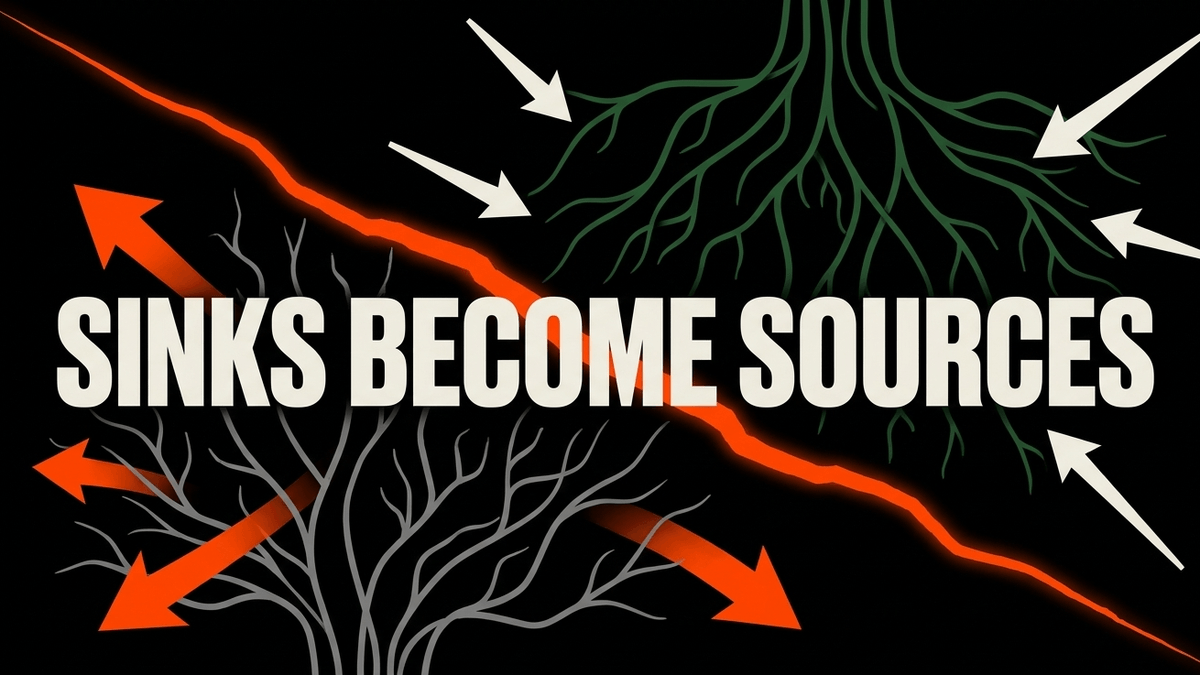
When forests die at this scale, the carbon stored in their biomass and in the surrounding soil is released back into the atmosphere, feeding a loop that accelerates the very warming that killed them. This is not a hypothetical mechanism. It is written into the geological record as one of the clearest signals of the Permian-Triassic collapse, and it bears an uncomfortable resemblance to concerns raised today about the long-term stability of tropical rainforest carbon sinks under sustained warming.
The loss of vegetation also reshaped the physical landscape. Without roots to stabilize soil and without plants to regulate the water cycle, erosion rates appear to have increased sharply during the Siberian Traps era. This drove a substantial influx of sediment and nutrients into the oceans, further contributing to eutrophication and compounding the oxygen depletion already underway from warming seas. Readers interested in how modern forest systems maintain this fragile carbon balance today, and what happens underground when that balance holds, may find it useful to look at how forests communicate and share resources through fungal networks - a system with no ancient equivalent to fall back on if it fails.
Resilience and the long road back
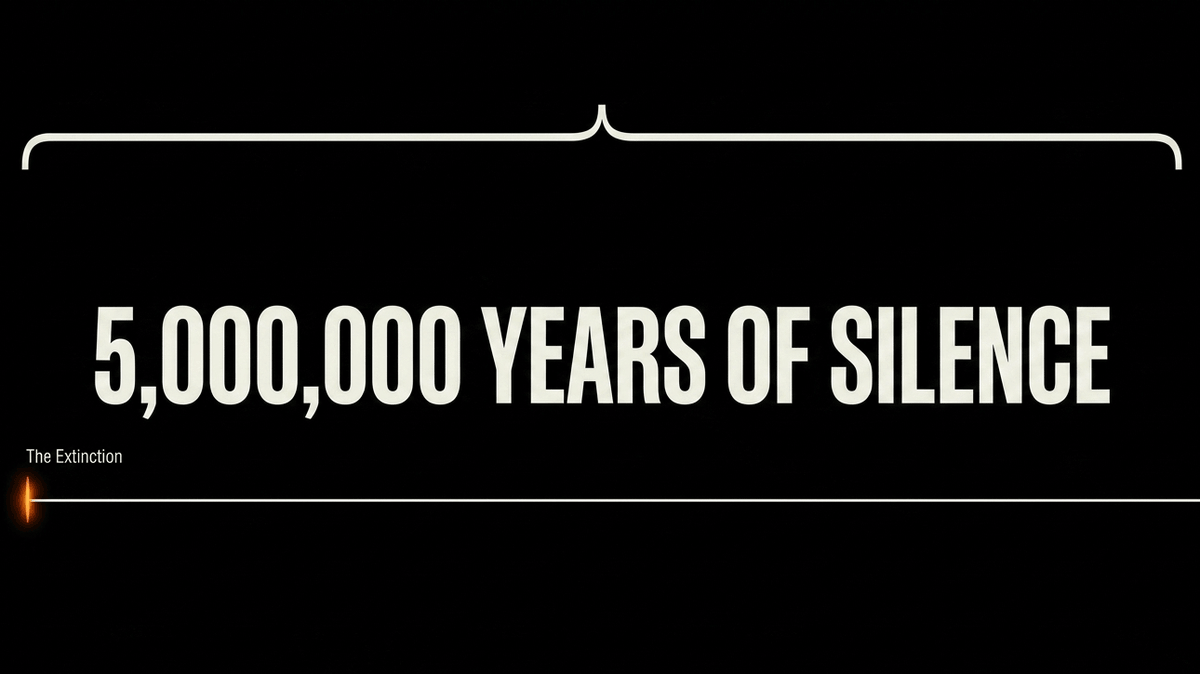
One of the most striking aspects of the Permian-Triassic extinction is the sheer length of the recovery period. Unlike the extinction that ended the reign of the dinosaurs, which saw a comparatively swift biological rebound within roughly a million years, the Great Dying left the planet in a prolonged state of ecological instability for perhaps 5 to 10 million years. This extended disruption was likely driven by continued, lingering pulses of volcanism from the Siberian Traps well into the Early Triassic, layered on top of the collapse of the ocean's biological carbon pump.
Mercury records from this recovery interval show that volcanic activity did not simply stop once the initial mass extinction pulse had passed. Instead, episodic magmatic activity appears to have continued for at least another million years afterward, repeatedly disturbing an already destabilized climate system and helping explain why the Early Triassic world remained so unusually hostile for so long, even as disaster taxa like Lystrosaurus multiplied across the land.
During this extended interval, the Earth's self-regulating systems were pushed close to their limits. The carbon-climate regulation system, which relies on a rough balance between volcanic outgassing and the weathering of silicate and carbonate rocks, simply could not keep pace with an environment shifting this fast. This highlights a fundamental truth about our planet: while the Earth is remarkably resilient on a scale of millions of years, it can be extremely vulnerable on a scale of centuries. The geological record shows that once a threshold like this is crossed, the return to equilibrium is an agonizingly slow process, one that proceeds with complete indifference to the survival of any particular species, our own included.
Strategic takeaways for the modern era
Studying the Siberian Traps provides something close to a natural laboratory for understanding how carbon shapes climate over the long run. It removes some of the uncertainty inherent in computer models and replaces it with hard physical evidence of what happens when a carbon threshold is well and truly breached. The primary takeaway, echoed across the research on this topic, is that the rate of change is the most dangerous variable in the equation. The Earth has weathered higher atmospheric CO2 concentrations in the distant past. It has rarely, if ever, experienced such a rapid increase within such a narrow window of time.
To draw meaningful lessons from the geological record, a few insights stand out:
- Identify tipping points. The transition from a stable climate to a runaway greenhouse effect is often non-linear rather than gradual. Small increases in temperature can trigger disproportionately large releases of methane from permafrost or seabed clathrates, not unlike the way Siberian magma "cooked" the Tunguska coal beds and released a secondary pulse of greenhouse gas far larger than the initial trigger.
- Respect the timescales involved. Earth's self-regulating systems, from silicate weathering to ocean circulation, operate on geological timescales measured in tens of thousands of years at minimum. We cannot reasonably expect oceans or forests to absorb the current excess of atmospheric carbon quickly enough to prevent significant warming in the near term.
- Focus on the rate of emission, not just the total. Decarbonization is not only a question of the total amount of carbon eventually in the atmosphere. It is, just as importantly, a question of slowing the rate of emission to something closer to what the planet's remaining natural systems, however diminished, can actually absorb.
The Siberian Traps remind us that we are participants in a far larger geological story than our own historical moment suggests. The forces that reshaped the Earth 252 million years ago, the movement of carbon between rock, ocean, and atmosphere, are the same forces being manipulated today through the combustion of fossil fuels. Understanding the mechanisms behind the Great Dying helps clarify just how narrow the environmental corridor is that allows a civilization like ours to flourish at all.
Conclusion: a geological perspective on the future
The Siberian Traps stand as a monument to the power of carbon to reshape a world. The legacy of this two-million-year eruption is written into layers of basalt, into the strange near-absence of certain fossils across the earliest Triassic strata, and into trace metals scattered across continents that, at the time, sat nowhere near Siberia at all. It is the story of a planet that came close to catastrophic biological failure because its internal heat and its atmospheric chemistry fell out of balance with one another.
Nature does not appear to offer do-overs on any timescale that matters to us. The recovery from the Siberian Traps took several million years and involved the near-total replacement of the planet's dominant land animals, clearing the ecological stage for groups, including the distant ancestors of dinosaurs, that would go on to define the next chapter of life on Earth. The Earth itself will eventually stabilize regardless of what humanity does or does not do. But the geological record is unambiguous that the transition periods between one stable state and the next are characterized by extreme suffering and a catastrophic loss of biodiversity, not a graceful hand-off.
The task in front of us, if the rock record is any guide, is to avoid crossing the same thresholds that the Siberian Traps breached so long ago. Treating the carbon cycle with the seriousness it deserves may be the only thing that keeps our own moment from becoming a footnote in some future geological epoch's account of the past.
Share now









Key takeaways
- The Siberian Traps eruptions began roughly 252 million years ago and persisted for approximately two million years, straddling the Permian-Triassic boundary.
- Visible volcanic products cover at least 1.5 million square kilometers, with some estimates of the original extent reaching as high as 7 million square kilometers.
- Much of the magma never reached the surface, instead intruding as sills and dikes that "cooked" organic-rich coal beds in the Tunguska Basin, triggering a secondary release of methane and CO2.
- Estimates of total CO2 released range from 10,000 to 40,000 gigatons, with some models suggesting totals as high as 100,000 gigatons.
- Global temperatures are estimated to have risen by 8 to 10 degrees Celsius, pushing tropical ocean surface temperatures toward 40 degrees Celsius.
- Around 90 to 96 percent of marine species and roughly 70 to 78 percent of terrestrial vertebrate genera went extinct, making this the most severe biotic crisis of the Phanerozoic Eon.
- Insects experienced their only confirmed global die-off in Earth's history during this event, despite typically being resilient to mass extinctions.
- Mercury and nickel anomalies preserved in marine sediments worldwide provide a chemical fingerprint linking Siberian volcanism directly to the extinction horizon.
- The dicynodont Lystrosaurus became a dominant "disaster taxon" in the Early Triassic, but true ecological recovery with complex food webs took several million years longer than this initial rebound.
- Full ecosystem recovery is estimated to have taken 5 to 10 million years, longer than the recovery following the extinction that ended the age of dinosaurs.
- Current human CO2 emissions, at roughly 36 to 40 gigatons annually, occur at a rate hundreds of times faster than the average pace of Siberian Traps emissions.
- At present emission rates, humanity could match the lower-end total carbon output of the entire Siberian Traps event in a matter of centuries, rather than the hundreds of thousands of years the original event took.
Sources
- Wikipedia https://en.wikipedia.org/wiki/Siberian_Traps
- MIT News https://news.mit.edu/2015/siberian-traps-end-permian-extinction-0916
- Frontiers in Earth Sciences https://www.frontiersin.org/news/2025/03/11/252-million-year-old-climate-crisis-permian-extinction-co2-frontiers-earth-sciences
- University of Leeds https://www.leeds.ac.uk/news-environment/news/article/5624/ancient-volcanoes-sound-warning-bell-over-climate-warming
- Nature Communications https://www.nature.com/articles/s41467-019-09620-0
- Published 2026-07-11 16:29
- Modified 2026-07-11 16:29
