

-
 Redaction
Modern urban warfare: The siege reimagined
An in-depth analysis of urban siege theory, exploring how megacities, drone swarms, and dense civilian populations are redefining the nature of modern warfare.
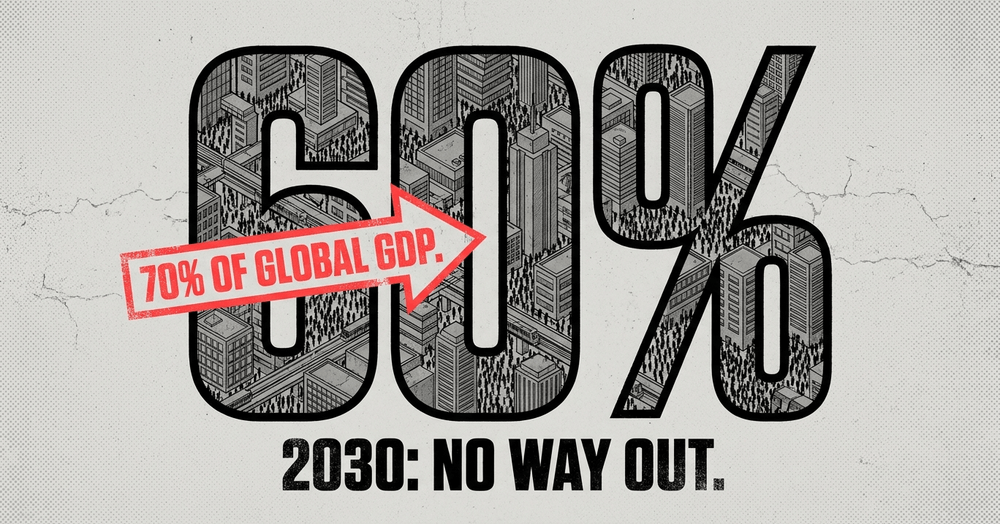
Data suggests that by 2030, 60% of the human population will reside in cities - dense, interconnected metropolises that already generate approximately 70% of the world's GDP. Where power concentrates, violence follows. This is not a new observation; it is a law of history. What is new is the scale.
Consider Greater Jakarta. With a metropolitan population exceeding 34 million spread across approximately 6,800 square kilometers, it represents a scale of complexity that simply dwarfs historical precedents. To put this in perspective, the Second Battle of Fallujah - a widely studied benchmark in modern urban combat doctrine - took place across just 25 square kilometers with a population estimated between 250,000 and 300,000 residents.
A conflict in a megacity is not just a larger version of Fallujah. It is a different species of war entirely.
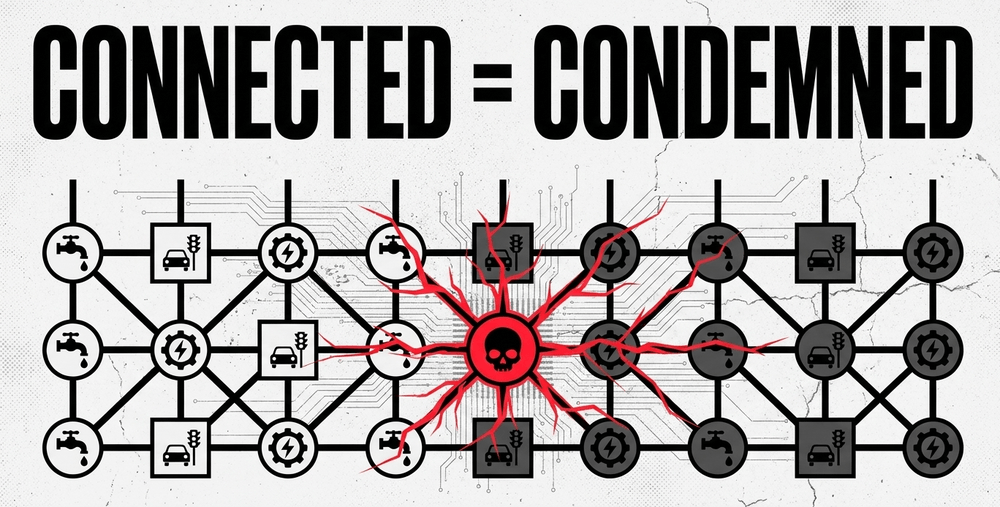
In these environments, the "domino effect" is lethal. A single precision strike on a water treatment plant or a power substation can trigger systemic collapse rippling through millions of lives within hours. The sheer density of interconnectedness turns the city into a fragile organism - and the siege is the thumb on its windpipe. Military planners at institutions such as the West Point Modern War Institute have long acknowledged that no existing doctrine fully prepares a conventional force for this reality.
The geometry of the concrete trap
Traditional military doctrine - from Sun Tzu's The Art of War through to the US Army's FM 3-06 Urban Operations manual - has consistently advised commanders to avoid the city unless there is no other choice. That choice is being taken away.
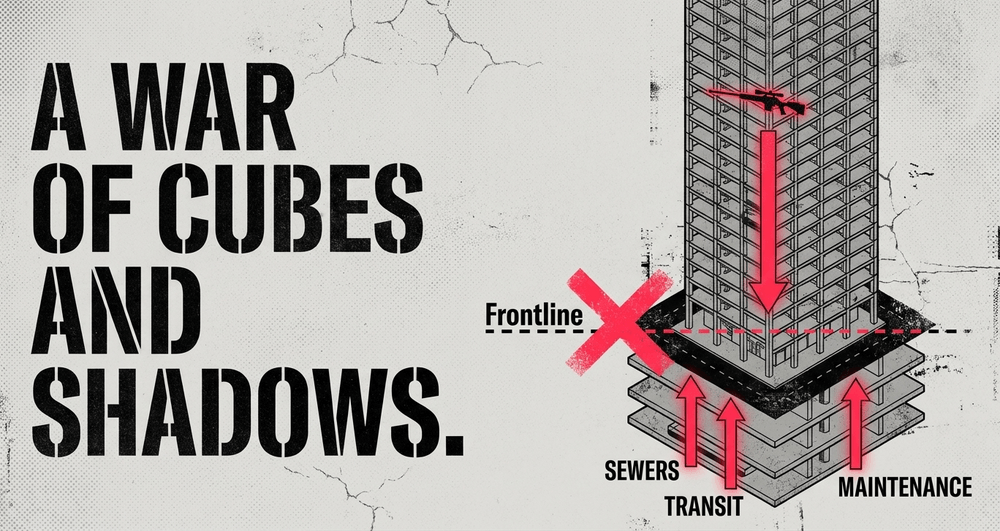
High-rise structures create vertical battlefields where the threat can come from thirty stories above or three levels below the pavement. Underground infrastructure - sewers, transit tunnels, and maintenance shafts - provides a subterranean highway for defenders to reposition and strike from behind supposed front lines. This is not a war of lines drawn on a map; it is a war of cubes, volumes, and shadows.
This complex environment severely degrades situational awareness in ways that expensive technology cannot simply override:
- Radio signals bounce and dissipate against steel-reinforced concrete
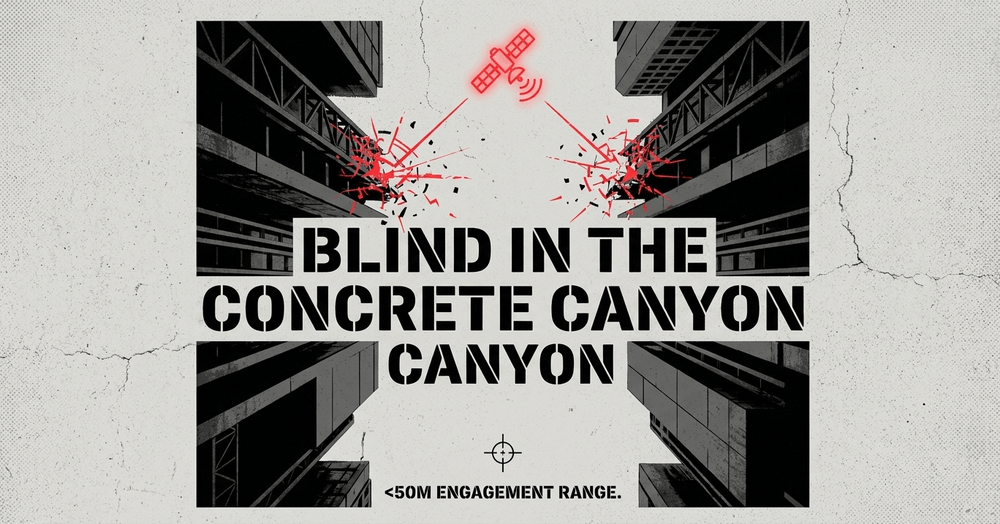
- GPS accuracy falters in narrow alleys and deep street canyons
- Engagement ranges frequently collapse to less than 50 meters, reducing high-tech optics to a secondary concern behind reflexive speed and close-quarters instinct
- Rubble - created by the very artillery intended to clear a path - becomes an impenetrable barrier for tanks and a perfect nest for anti-tank teams
The Battle of Grozny remains the most instructive lesson. Chechen fighters systematically disabled the lead and trail vehicles in each Russian armored column, trapping units in improvised killing grounds where RPG teams engaged from basements and upper floors that tank barrels could neither depress nor elevate to reach.
A ruined city is often harder to take than a functional one.
It proved something that military historians had long suspected but that Cold War doctrine had suppressed: the technological gap between a superpower and a determined urban defender narrows sharply in the concrete canyon.
The civilian conundrum: fighters, residents, and legal gray zones
Perhaps the most harrowing dimension of the modern urban siege is the persistence of the non-combatant. In a total siege, the distinction between a fighter and a resident blurs into a tragic gray zone that International Humanitarian Law (IHL) - specifically Additional Protocol I to the 1949 Geneva Conventions - was designed, but struggles, to govern.
IHL is clear: sieges must be directed solely against armed forces. The deliberate starvation of civilians as a method of warfare is explicitly prohibited. Yet the physics of a city often make perfect compliance functionally impossible. When a military force occupies a residential tower, that tower becomes a legitimate target - but the families on the floors below remain protected persons under international law.
The conflict in Syria illustrated this grim reality in stark detail. Humanitarian rescue workers - including the volunteers of the Syria Civil Defence (White Helmets), operating under near-constant threat of secondary strikes targeting active rescue operations - documented a systematic pattern of what critics labeled "double-tap" strikes. The ICRC has documented these concerns extensively, noting that siege conditions create pressure-cooker environments of hunger, dehydration, and medical collapse that disproportionately destroy civilian populations long before a military surrender is achieved.
While IHL mandates that civilians must be allowed to evacuate, the reality on the ground often involves:
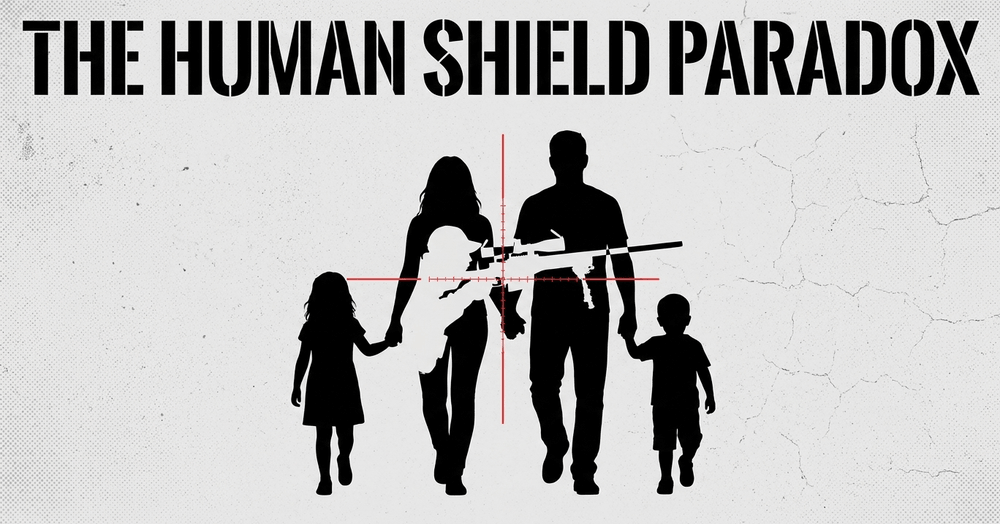
- Civilians being used as deliberate human shields
- Evacuation corridors being targeted by snipers from both sides
- Populations too terrified to trust any corridor as safe
- Long-term forced displacement of entire communities - itself a practice explicitly forbidden under the laws of war
The siege has evolved from a military instrument into a mechanism for the permanent destruction of civilian urban fabric, a reality that the International Committee of the Red Cross continues to flag as one of the defining humanitarian crises of the 21st century.
The psychological siege: breaking will without a single shot
A dimension of urban warfare that receives insufficient doctrinal attention is the psychological siege - the deliberate targeting of civilian morale, institutional trust, and collective resilience.
Information operations, disinformation campaigns, and the strategic amplification of atrocity footage are now standard tools deployed alongside kinetic strikes. The goal is not simply to destroy a city's physical infrastructure but to collapse the psychological infrastructure holding its population together. When residents believe their own government cannot protect them, that water will not return, that hospitals are deliberate targets, the city surrenders itself long before the last defender lays down arms.
This psychological dimension is compounded by social media. A teenager in a basement with a smartphone can broadcast a botched airstrike to millions in seconds, shifting geopolitical narrative before the dust has settled. Military theorist David Kilcullen, in his influential analysis of networked urban conflict, has argued that the information battlespace above a contested city is now as strategically significant as the physical one below it.
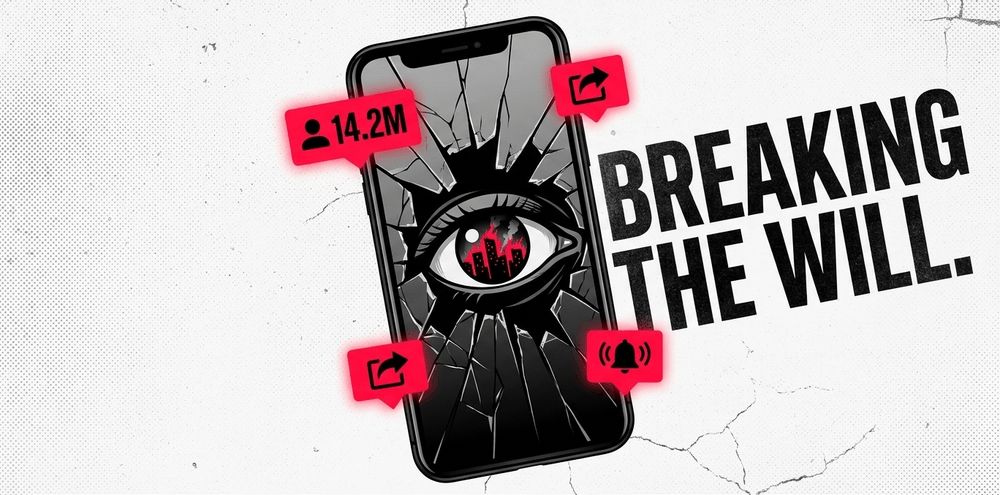
Information warfare is now as vital as the kinetic struggle for the city square.
Commanders who win the rubble but lose the narrative have, in a meaningful strategic sense, not won at all.
Logistics and the appetite of the beast
War in the city is hungry. Urban operations consume roughly four times the ammunition of comparable rural combat. Every room must be cleared, every corner suppressed, every basement searched. This creates a logistical chain of extraordinary complexity and fragility.
The traditional siege model was straightforward: encircle, wait, starve. The "virtual siege" has rendered this model obsolete.
The conflict in Ukraine - particularly the battle for Mariupol - demonstrated the emergence of drone-led interdiction as a replacement for physical encirclement. Both sides employed Unmanned Aerial Vehicles (UAVs) extensively: to conduct real-time reconnaissance, to strike supply convoys, and to contest the logistical arteries feeding the urban front. By targeting fuel trucks and ammunition carriers miles away from the city center, the effect of a siege - supply scarcity and restricted movement - could be imposed without ever completing a physical ring around the urban perimeter.
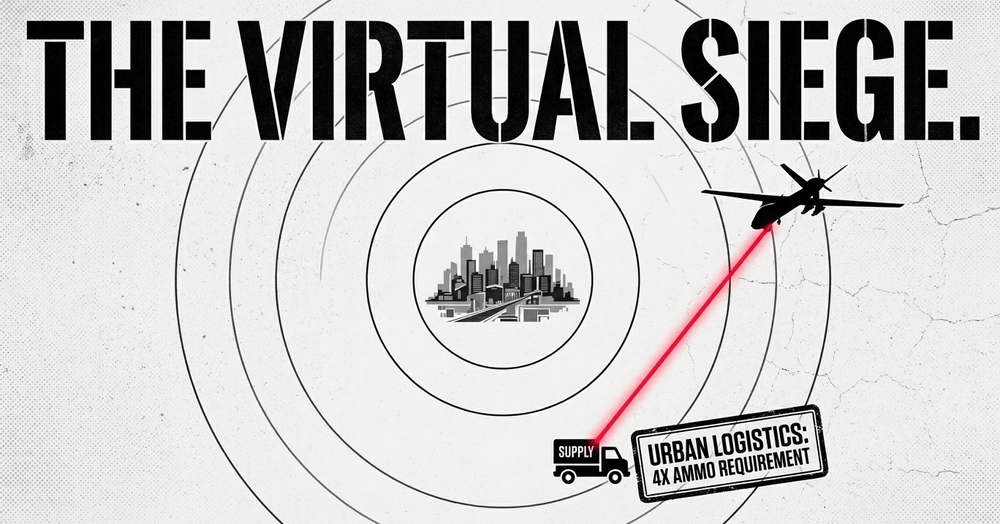
This is the evolution of the blockade: precise, remote, and relentless. The modern siege is not a wall of men. It is a ceiling of sensors and a persistent, invisible threat to every supply line feeding the fight.
Technology as a double-edged sword: smart cities and digital vulnerabilities
The integration of the Internet of Things (IoT) and Artificial Intelligence into the "smart city" framework has created a digital layer onto the physical battlefield that neither civilian planners nor military strategists fully anticipated.
For a modern commander, a smart city is simultaneously a goldmine and a minefield. Traffic cameras, smart meters, and environmental sensors can be co-opted to track enemy movements or monitor civilian health trends in real time. AI-driven analytics can identify patterns in urban acoustic data to locate snipers or predict where localized insurgency might flare - capabilities being actively developed by defense contractors and academic institutions across NATO member states.
However, this same connectivity is a massive, largely undefended vulnerability.
A sophisticated cyberattack on a city's electrical grid or water management system can achieve the effects of a multi-week artillery bombardment with none of the physical risk and a fraction of the cost. Unlike a bombed bridge, a corrupted SCADA system leaves no visible crater - but the humanitarian consequences can be equally catastrophic. The Stimson Center's research on technology and civilian protection in future urban conflict has consistently highlighted this asymmetric risk as one of the least-prepared-for threats in current military doctrine.
The democratization of battlefield information through social media adds a further layer of complexity. Technological superiority no longer guarantees information control. The fog of war has been replaced by something arguably more dangerous: a flood of unverified information that all sides struggle equally to navigate.
Autonomous systems and the FPV revolution
The rapid proliferation of commercial and military-grade drones has introduced a new category of combatant to the urban battlefield: the autonomous sensor network.
Small quadcopters - cheap enough to be deployed in swarms, sophisticated enough to map rubble fields in real time - now perform reconnaissance missions that once required specialist soldiers or expensive manned aircraft. They peer through windows, relay targeting data with millisecond latency, and operate in the sub-200-meter airspace that traditional air power has always treated as irrelevant.
First-person-view (FPV) attack drones, prominently demonstrated and iterated upon at scale in the war in Ukraine, have effectively placed precision strike capability within reach of any organized fighting force, regardless of defense budget. A commercially sourced drone frame, a modified munition, and a trained pilot operating from a safe distance can destroy a main battle tank that costs millions of dollars.
This cuts both ways with surgical precision:
- A defending force with minimal resources can contest the airspace above a single city block using consumer-grade hardware
- Swarm tactics - multiple drones attacking simultaneously from different vectors - are beginning to saturate the air defense systems of even well-equipped forces
- Counter-drone technology is advancing rapidly but remains behind the curve of offensive drone proliferation
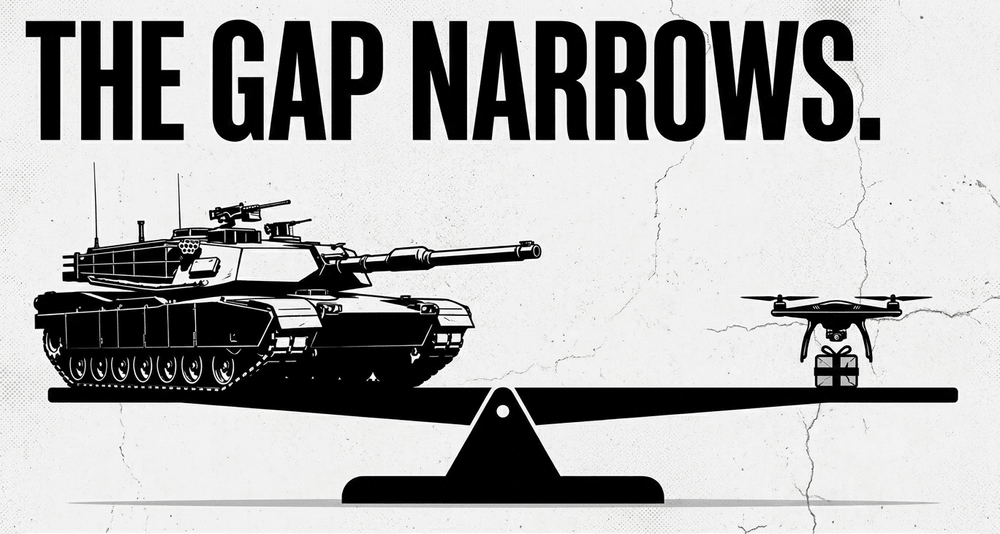
Urban airspace below a few hundred meters, once largely irrelevant to military planners, has become a fully contested domain that neither attacking nor defending forces can afford to cede.
The micro-siege: warfare room by room
We must move away from the idea of the siege as a singular, decisive event. Modern metropolitan warfare is better understood as a collection of thousands of micro-sieges running simultaneously, each with its own tempo, its own tactical logic, and its own humanitarian calculus.
A single apartment complex can become a fortress holding out for weeks, requiring a coordinated effort of infantry, combat engineers, electronic warfare teams, and drone operators to overcome. Defenders employ "mouse-holing" - blasting through interior walls to move between buildings without ever exposing themselves to the street - creating a three-dimensional passage network that renders standard military mapping completely useless.
This form of combat systematically negates the primary advantages of a conventional military superpower:
- Massive air superiority is mitigated by collateral damage risk and the proximity of friendly forces
- Heavy armor is vulnerable to a single insurgent with an RPG on a third-story balcony
- Numerical superiority is diluted across hundreds of individual building clearances happening simultaneously
- Communication advantages are degraded by the signal-blocking properties of dense urban construction
Military theorists including John Spencer, Chair of Urban Warfare Studies at the West Point Modern War Institute, have consistently argued that the technological gap between conventional and irregular forces narrows more sharply in urban terrain than in any other combat environment. The defender, armed with local knowledge, fortified positions, and low-cost precision drones, can hold off a sophisticated force for a duration previously unthinkable under classic military doctrine.

Lessons from the frontlines: Grozny, Fallujah, Mariupol, and Gaza
Each major urban siege of the post-Cold War era has added a new chapter to an evolving body of doctrine, and each has been bloodier and more complex than the one before it.
Grozny (1994-1996 and 1999-2000) established that armored columns without infantry support are coffins in an urban environment. The first assault cost Russia an estimated 1,000 soldiers in the first days of fighting. The second assault, redrawn around methodical artillery reduction and infantry clearing, succeeded militarily but left the city effectively destroyed - a Pyrrhic template that subsequent commanders would study and largely ignore.
Fallujah (2004) demonstrated that a pre-conflict civilian evacuation - however imperfect - dramatically reduced non-combatant casualties during clearing operations, and that combined arms integration (infantry, armor, engineers, close air support) at the squad level was essential to manageable casualty rates for the attacker.
Mariupol (2022) introduced the drone-interdiction siege model and showed how a defender dug into industrial infrastructure - specifically the Azovstal steel plant - could pin down a vastly superior force for weeks through a combination of prepared defenses, determined will, and information operations that turned the siege into a global news story.
Gaza (2023-2024) raised questions that remain deeply contested: about the legal limits of siege warfare in a densely populated enclave, about the humanitarian obligations of a besieging force, and about whether the tactical success of urban clearance can ever be decoupled from the strategic and reputational cost of the destruction required to achieve it. The ICRC and multiple UN agencies have flagged the conflict as one of the most acute humanitarian crises produced by urban warfare in the modern era.
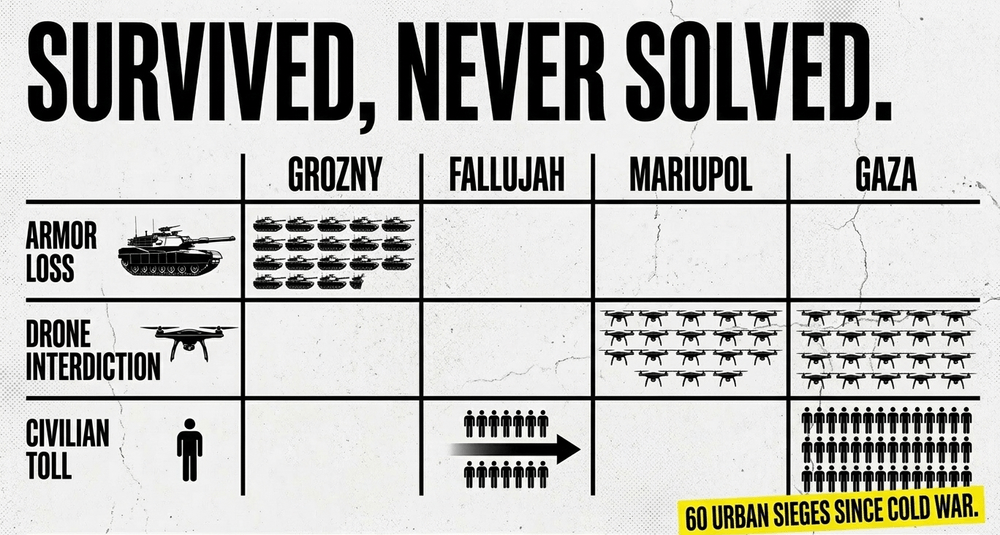
Each of these cases reinforces a single, uncomfortable truth: no force has yet solved urban warfare. They have only survived it at varying costs.
Post-conflict recovery as strategic calculation
A dimension of urban warfare that receives chronically insufficient attention in tactical discourse is the cost of what comes after.
Rebuilding Mosul following the campaign against ISIS was estimated at $88 billion - a figure that dwarfs the military expenditure of the operation itself by an order of magnitude. The destruction of critical infrastructure - water networks, power grids, hospitals, bridges - does not end when the last shot is fired. It compounds. A population without clean water or electricity becomes a humanitarian emergency that, left unmanaged, seeds the next cycle of instability and recruits the next generation of fighters.
This reality has begun - slowly, reluctantly - to reshape doctrinal thinking. Military planners at the RAND Corporation and within US Army doctrine development increasingly factor reconstruction timelines and civilian governance capacity into pre-conflict assessments. The questions being asked before an urban operation are shifting:
- Who will govern the liberated city on day one?
- Which infrastructure is essential for minimum civilian survival and must be protected rather than targeted?
- What is the reconstruction cost at each level of physical destruction - and is the military objective worth that cost?
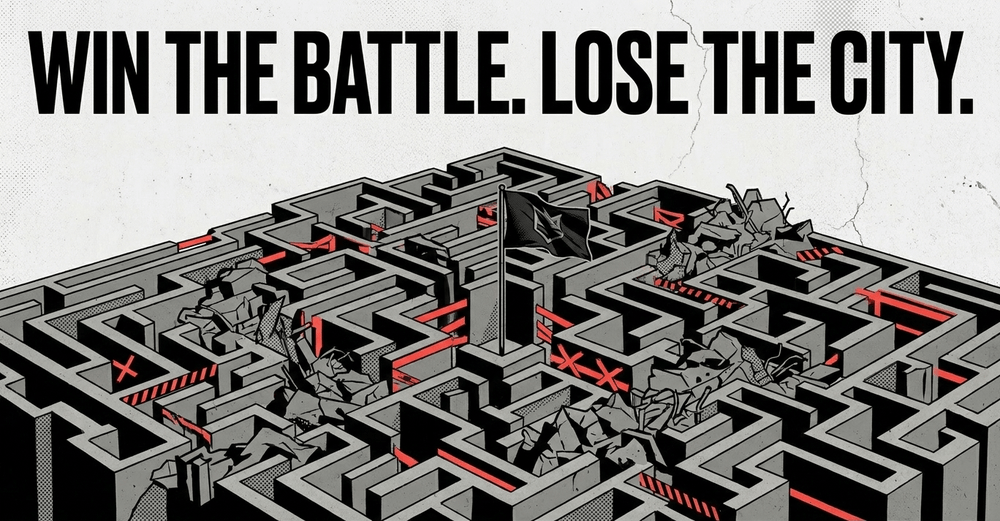
A city taken cannot be held if it cannot function. The siege, in this light, is not the end of a campaign but the opening of a far longer and more expensive obligation. The side that wins the battle but loses the reconstruction effort has, in a meaningful strategic sense, not won at all.

The enduring relevance of the urban wall
History shows that military leaders have always preferred to avoid the city. From Sun Tzu to modern US Army doctrine, the counsel has been consistent: do not attack fortified urban areas unless there is no other choice.
That choice is being taken away by demographic reality.
Since the end of the Cold War, the world has witnessed approximately 60 significant urban sieges - every one of them fought within an urban area. From the ruins of Grozny to the scorched streets of Mosul, from the tunnels beneath Mariupol's steel plant to the devastated blocks of Gaza, the city has become the definitive arena of human conflict in the 21st century.
Modern urban siege theory teaches us that victory in these environments is not measured by flags on a map. It is measured by the management of complexity - a struggle of endurance in which the winner is often the side that best manages its logistical footprint while navigating the moral, legal, and informational minefields of a dense civilian presence.
The city is no longer the backdrop of the war.
The city is the war.
As the world continues its migration toward the glow of metropolitan lights, the shadow of the siege grows longer, darker, and more difficult to escape. The forces that will shape the conflicts of the coming decades are not being forged in remote valleys or open deserts. They are being forged, floor by floor and room by room, in the concrete heart of the modern city.
Share now









Key takeaways
- By 2030, 60% of the global population will live in cities that generate an estimated 70% of world GDP - making large-scale urban conflict not a possibility but a strategic inevitability.
- The Second Battle of Fallujah - a modern benchmark for urban combat doctrine - was fought across approximately 25 square kilometres with a population of 250,000-300,000; Greater Jakarta covers 6,800 km² and houses over 34 million people.
- Engagement ranges in urban environments routinely collapse to below 50 metres, negating the optical and standoff advantages held by conventional military forces and reducing combat to reflexes and local knowledge.
- Urban operations consume up to four times the ammunition of equivalent rural combat, creating severe logistical strain on attacking forces and compressing operational timelines.
- The battle for Mariupol (2022) demonstrated the rise of the "virtual siege": drone-led interdiction of supply lines can impose a full blockade effect without ever physically encircling the urban perimeter.
- FPV attack drones - deployed at scale in Ukraine - have placed low-cost precision strike capability within reach of any organized fighting force, fundamentally changing the calculus of contested urban airspace.
- Rebuilding Mosul after the defeat of ISIS was estimated to cost $88 billion - dwarfing the military cost of the operation and underscoring the long-term strategic burden that urban warfare imposes on the winning side.
- International Humanitarian Law (IHL), specifically Additional Protocol I to the 1949 Geneva Conventions, explicitly prohibits the use of civilian starvation and forced displacement as instruments of siege warfare - though enforcement in active conflict zones remains deeply problematic.
- Since the end of the Cold War, approximately 60 significant urban sieges have been recorded globally - every single one fought within an urban environment, not in open terrain.
- The "mouse-holing" technique - blasting through interior walls to move unseen between buildings - renders standard military maps useless and creates a three-dimensional subterranean maze that heavily advantages the defender.
- Smart city infrastructure - including IoT sensors, traffic cameras, and AI-driven analytics - offers military commanders powerful intelligence tools, but the same connectivity creates a massive cyberattack surface that adversaries can exploit to cause humanitarian-scale damage without kinetic action.
- John Spencer, Chair of Urban Warfare Studies at the West Point Modern War Institute, has argued that the technological gap between conventional and irregular forces narrows more sharply in urban terrain than in any other combat environment.
- A cyberattack on a city's electrical or water management systems can replicate the humanitarian effect of weeks of artillery bombardment at a fraction of the cost and with no physical risk to the attacker.
Sources
- Wikipedia - Urban warfare https://en.wikipedia.org/wiki/Urban_warfare
- West Point Modern War Institute - Second Battle of Fallujah case study https://mwi.westpoint.edu/urban-warfare-case-study-7-second-battle-of-fallujah/
- War on the Rocks - Urban warfare, sieges, and Israel's looming invasion of Gaza https://warontherocks.com/urban-warfare-sieges-and-israels-looming-invasion-of-gaza/
- ICRC - Protection of the civilian population during sieges: what the law says https://www.icrc.org/en/document/protection-civilian-population-during-sieges-what-law-says
- Irregular Warfare Initiative - The future of urban warfare https://irregularwarfare.org/articles/the-future-of-urban-warfare/
- Stimson Center - Future urban conflict: technology and the protection of civilians https://www.stimson.org/2021/future-urban-conflict-technology-and-the-protection-of-civilians/
- West Point Modern War Institute - The eight rules of urban warfare https://mwi.westpoint.edu/the-eight-rules-of-urban-warfare-and-why-we-must-work-to-change-them/
- RAND Corporation - Urban warfare and the future of conflict https://www.rand.org/topics/urban-warfare.html
- US Army - FM 3-06 Urban Operations field manual https://armypubs.army.mil/epubs/DR_pubs/DR_a/ARN31420-FM_3-06-000-WEB-1.pdf
- ICRC - Additional Protocol I to the Geneva Conventions (1977) https://www.icrc.org/en/doc/assets/files/other/icrc_002_0321.pdf
- Modern War Institute - John Spencer on urban warfare https://mwi.westpoint.edu/author/jspencer/
- Published 2026-06-10 19:19
- Modified 2026-06-11 18:09

-
Redaction