

-
 Redaction
Why reserves determine the outcome of long wars
Strategic reserves - oil, munitions, personnel and finances - are the hidden engine behind every long war. Discover why the deepest stockpile usually wins.
Imagine a machine that never stops grinding. It does not care for the elegance of a lightning strike or the prestige of a quick surrender. This machine is the war of attrition. To keep it running, a nation must feed it more than bravery - it must feed it metal, fuel, and human lives in a relentless stream.
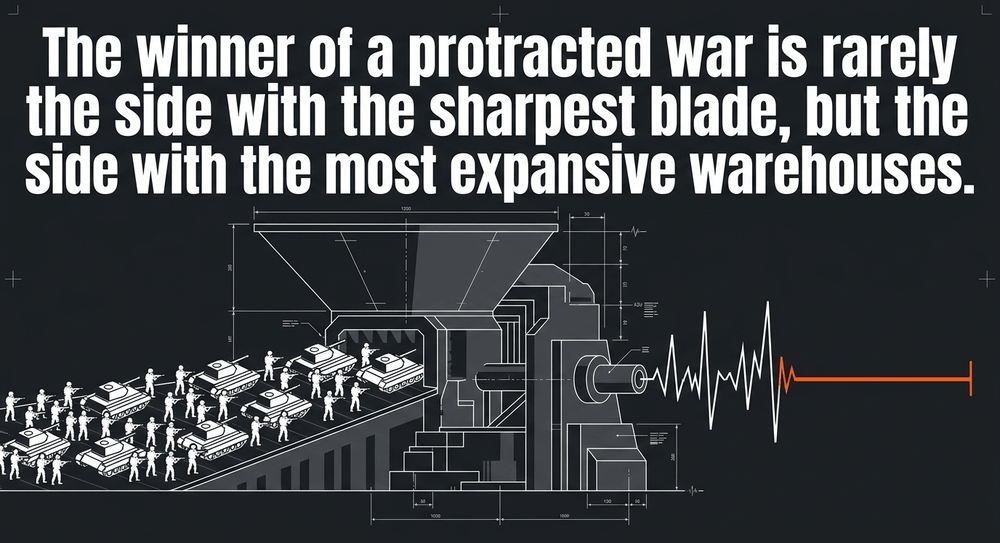
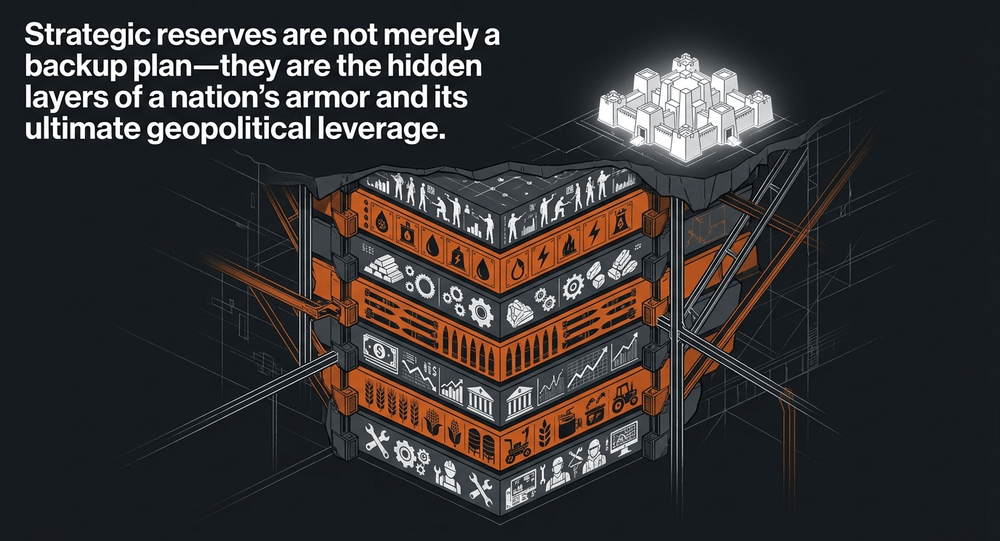
The global strategic landscape reflects a reality where the winner of a conflict is rarely the side with the sharpest blade, but the side with the deepest pockets and the most expansive warehouses. Strategic reserves are the silent guardians of this endurance. They are the hidden layers of a nation's armor - encompassing everything from elite rifle divisions held in the rear to billions of barrels of crude oil buried in salt caverns.
In the brutal theater of long-term conflict, the concept of the strategic reserve is multi-faceted. It is not merely a backup plan. It is the ultimate geopolitical leverage.
What strategic reserves actually are
Before understanding why reserves win wars, it is worth defining what they actually include. The term extends far beyond ammunition depots and fuel tanks. Strategic reserves encompass:
- Military human mass - trained reserve personnel and mobilizable civilian populations
- Energy stockpiles - crude oil, natural gas, and refined fuel held in strategic petroleum reserves
- Industrial raw materials - rare earth elements, steel, lithium, and semiconductor-grade silicon
- Munitions and finished weapons systems - prepositioned equipment, shells, and missiles
- Financial reserves - foreign currency holdings, gold, and sovereign wealth funds
- Food and grain stockpiles - often overlooked, but historically decisive in sieges and blockades
- Specialized personnel - engineers, logisticians, and technical operators who cannot be rapidly replaced
When two powers lock horns in a struggle lasting years rather than weeks, the initial standing army often vanishes within the first few months of kinetic engagement. What remains is a contest of replenishment. The side that can replace a lost tank, a fallen soldier, or a spent shell faster than the enemy can destroy them wins. This process relies on a robust defense-industrial complex, which in turn depends on stockpiles of rare earth elements, steel, and energy. Without these reserves, the industrial engine seizes, and the front line collapses into a hollow shell.
Replacing the irreplaceable: military human mass
At the heart of any attritional struggle is the grim tally of casualties.
In the early stages of World War II, the Soviet Union faced a catastrophic collapse as German forces tore through their forward defenses in 1941, capturing or destroying entire army groups within weeks. Yet the Soviet High Command reached into a seemingly bottomless well of strategic military reserves. Planners rapidly formed hundreds of new rifle and cavalry divisions - many entirely absent from pre-war order-of-battle documents - and funneled them into the grinding defensive battles around Moscow, Leningrad, and Stalingrad.
This surge of human mass did not just check the German advance. It absorbed the blow and allowed the Red Army to trade space for time. By the winter of 1941-1942, the Wehrmacht had consumed irreplaceable offensive momentum against reserves it had not accounted for. That miscalculation ultimately cost Germany the war.

Today, the economics of human attrition have shifted but remain equally lethal. Modern reserve components - personnel who maintain military skills part-time - offer a way to generate mass without the staggering cost of a full-time professional force. Reserve units are often five times cheaper to maintain during peacetime than regular active-duty forces, yet when mobilized, they provide the necessary depth to reconstitute catastrophic losses.
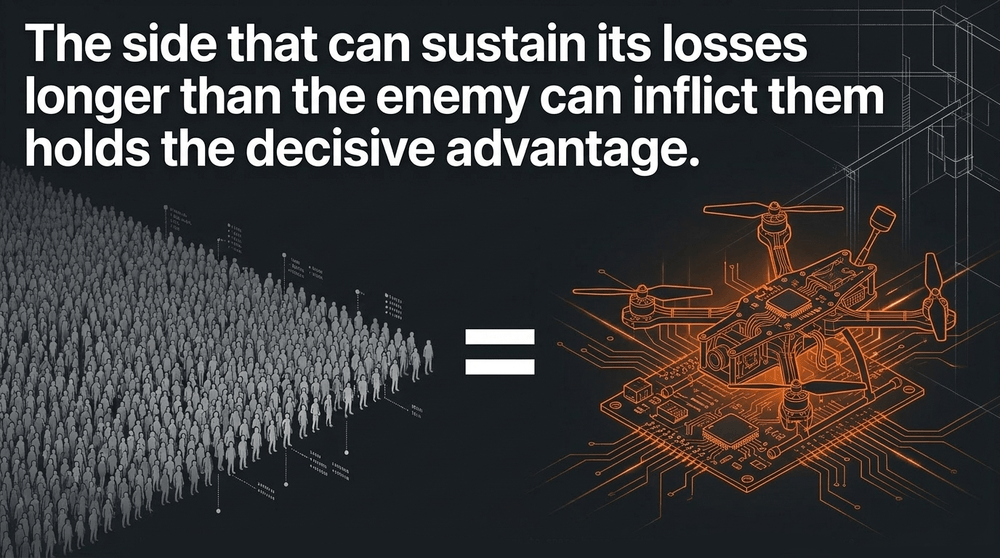
In the war in Ukraine that began with Russia's full-scale invasion in February 2022, both sides adopted a hybrid approach. While human reserves were mobilized in waves, the sheer lethality of the modern battlefield forced a concurrent pivot toward attrition economics. Cheap, replaceable systems like first-person view drones are increasingly used to spare human warfighters who are far harder and slower to replace than a printed circuit board and a plastic frame.
"The side that can sustain its losses longer than the enemy can inflict them holds the decisive advantage in any protracted war." - A principle consistently validated from the Eastern Front to the Donbas.
The industrial heart and commodity buffers
Waging war is, at its core, an industrial process.
Every artillery shell fired is a product of a factory that requires electricity, heat, and raw precursor chemicals. Every missile demands semiconductors that may originate from a supply chain spanning a dozen countries. Strategic reserves of essential commodities ensure that these factories do not go dark when trade routes are severed or ports are blockaded.
Defense analysts have long described these stockpiles as the ultimate source of geopolitical staying power - and recent events have validated that assessment in stark terms.
This advantage is visible in the actions of nations like China, which has amassed an estimated 900 million to 1.3 billion barrels in strategic oil reserves, though precise figures remain difficult to verify given the opacity of Chinese state reporting. These are not just fuel for military trucks. They are a guarantee that the nation can withstand a total maritime embargo while its factories continue to churn out the tools of war.

Strategic Petroleum Reserves (SPRs) act as temporary shock absorbers. When a conflict disrupts the global flow of energy, markets panic, prices spike, and domestic stability begins to fray. An SPR release can buy critical weeks or months for diplomats to work or for domestic production to ramp up.
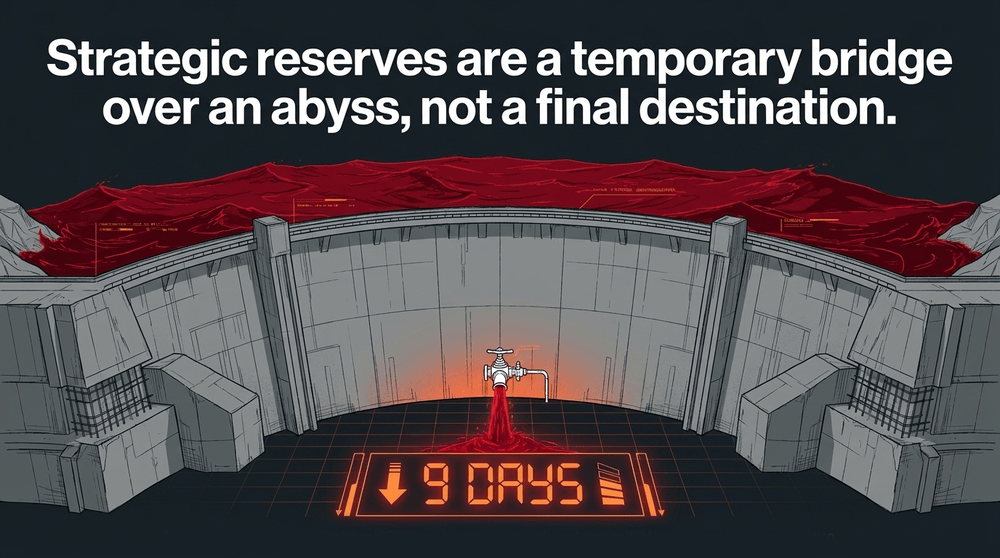
However, these reserves have hard limits. The largest coordinated release in history from International Energy Agency (IEA) member stockpiles - approximately 182 million barrels, mobilized in 2022 in response to the energy shock following Russia's invasion of Ukraine - would cover only around nine days of a major supply disruption at 20 million barrels per day. This underscores a fundamental limitation: reserves are a bridge, not a destination. If a war lasts five years and the supply lines are gone, that bridge eventually ends over an abyss.
Financial reserves as a strategic weapon
Energy and munitions dominate discussions of strategic reserves, but financial reserves are equally decisive - and far more frequently ignored until they are gone.
A nation's foreign exchange holdings, sovereign wealth fund, and access to international credit markets determine how long it can finance the enormous economic burden of sustained conflict. Russia's pre-war accumulation of over $600 billion in foreign exchange reserves was a deliberate strategic hedge against exactly the kind of sanctions imposed after 2022. That financial buffer allowed Moscow to continue funding military operations for far longer than many Western analysts initially projected, even as sections of its economy contracted.
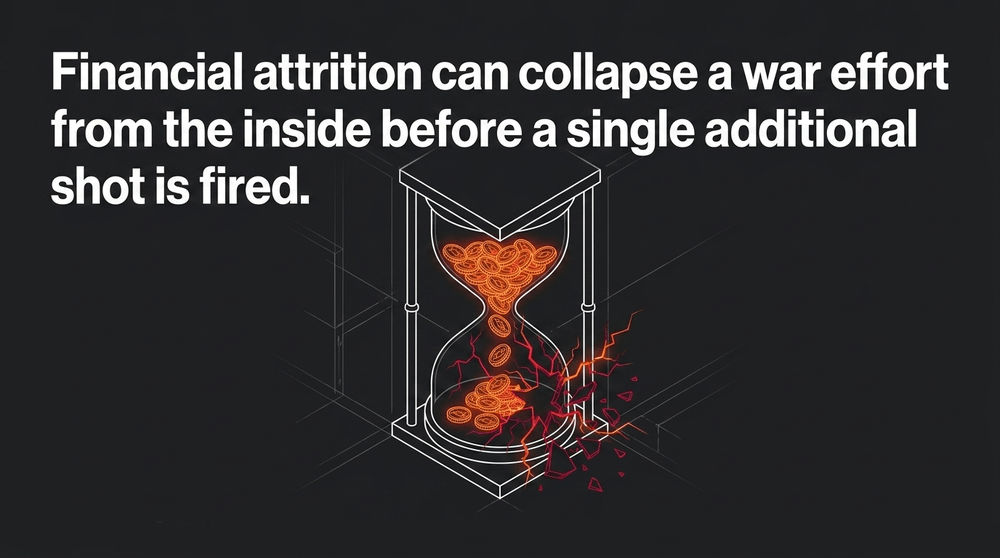
Conversely, a state that enters a prolonged war with depleted financial reserves faces a compounding crisis: it cannot purchase critical imports, service domestic debt, maintain public wages, or finance the emergency industrial expansion the battlefield demands. Financial attrition can collapse a war effort from the inside before a single additional shot is fired.
Prepositioned materiel and the threat of long-range fire
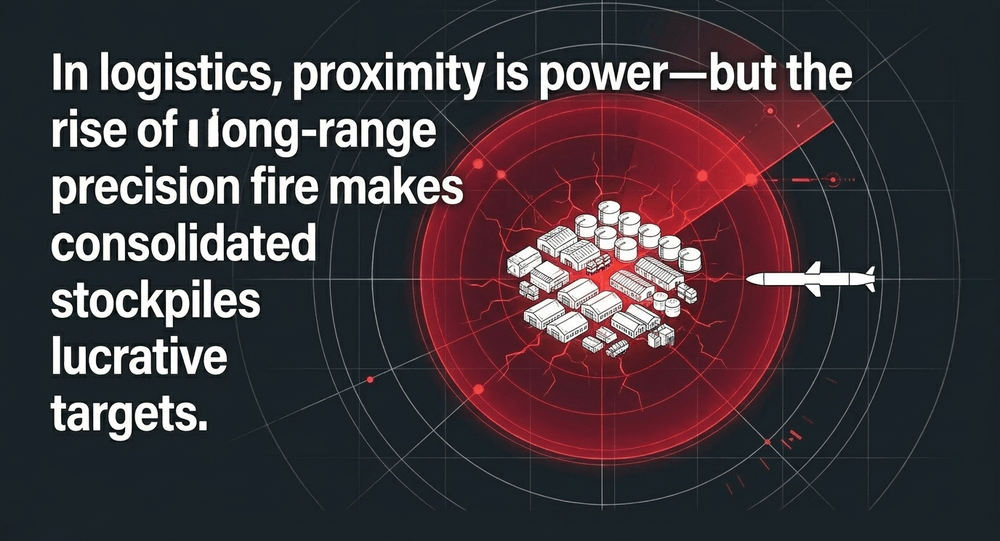
In the logistics world, proximity is power.
Prepositioned War Reserve Materiel (PWRM) - such as the Army Prepositioned Stocks (APS) maintained by the United States across Europe, the Pacific, and the Middle East - allows for rapid deployment. Instead of shipping heavy armored vehicles across an ocean under fire, a nation ships the soldiers, who then marry up with equipment already waiting near the theater of operations. This system is essential for Large-Scale Combat Operations (LSCO) where the first 48 hours can determine the fate of an entire region.
Yet this strategy now faces a new shadow.
The rise of long-range precision fires - cruise missiles, ballistic missiles, and loitering munitions with ranges measured in hundreds or thousands of kilometers - means that consolidated stockpiles are lucrative, high-priority targets. A single precision strike can incinerate a reserve of munitions that took a decade to accumulate and years to transport. The tension between the logistical efficiency of large depots and the survivability of dispersed, hardened caches is a defining challenge for modern military planners - and one with no easy resolution.
Historical echoes of the long grind
The annals of history are littered with the bones of armies that forgot to study their supply ledgers.
World War I (1914-1918) is the most haunting example. The Battle of Verdun, fought from February to December 1916, was a deliberate attempt to bleed the French army white - a war of statistics where the goal was not to capture territory but to kill more men than the enemy could replace. The French survived only because they could funnel fresh reserves and supplies into the meat grinder via the Voie Sacrée - the "Sacred Road" - a single supply route that kept the pulse of the entire front beating. When that road faltered, France nearly broke.
Going further back, Napoleon's invasion of Russia in 1812 provides the textbook case of environmental and logistical attrition. The Russian army deliberately avoided the decisive engagement Napoleon craved. Instead, they retreated, scorched their own crops, and let the vastness of the Russian interior and the brutality of the coming winter serve as their primary strategic reserve. They did not need to win a single grand battle. They simply needed to wait until the Grande Armée had consumed its physical and moral capital. By the time Napoleon's forces reached Moscow, the army was a ghost of itself - defeated not by a superior sword, but by empty granaries and the steady depletion of horses and men.
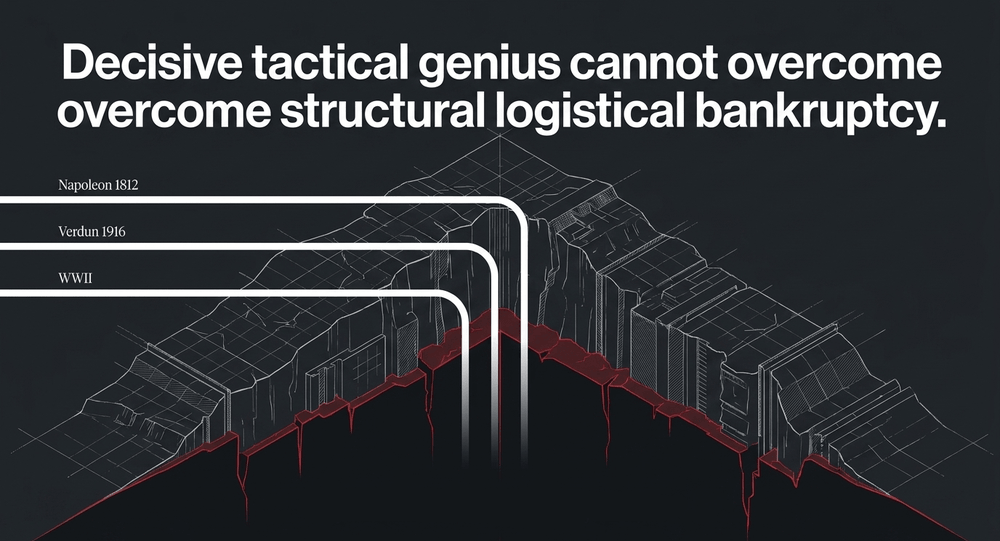
The lesson that emerges across centuries: decisive tactical genius cannot overcome structural logistical bankruptcy.
The moral dimension of attrition
While we tend to speak of reserves in terms of tons of grain or numbers of tanks, there is a psychological reserve that is just as vital and far harder to replenish: the collective will to continue fighting.
Moral attrition targets the mind of the policymaker and the heart of the civilian. In the War of Attrition between Israel and Egypt from 1969 to 1970, Egypt's strategic objective was not to recapture the Sinai militarily but to make the political cost of holding it so high that Israeli public and governmental resolve would eventually crack. The strategy forced a continuous drain on Israeli reserves - personnel, ammunition, and political capital - without a single large decisive engagement.
This is a double-edged weapon.
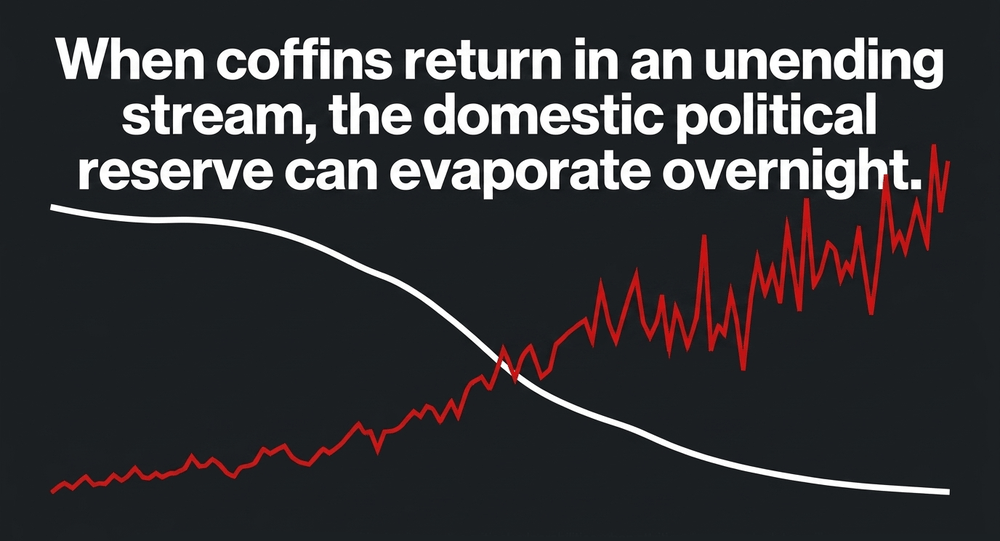
A nation that relies on high-casualty attritional strategies risks exhausting its own public tolerance just as surely as the enemy's. When the coffins return home in a steady, unending stream, the domestic political reserve can evaporate overnight - forcing a cessation of hostilities regardless of the physical resources remaining in the warehouses. The United States learned this in Vietnam. Russia has faced this dynamic since 2022 as battlefield casualties have required successive, politically sensitive mobilization waves.

The dangers of depletion and political short-sightedness
One of the most persistent and dangerous threats to national security is the misuse of strategic reserves for short-term political gain.
Reserves are constructed for existential crises. They are not instruments for managing temporary energy price spikes at the pump or for generating favorable polling numbers before an election. Yet this is precisely how they are sometimes used.
When the U.S. Strategic Petroleum Reserve was reduced to its lowest levels since the early 1980s following significant drawdowns in 2022, it created a measurable vulnerability. If a major kinetic conflict were to break out requiring sustained energy support to allies, the buffer that should have lasted months might only sustain operations for weeks. Rebuilding these reserves is a slow, expensive, and politically unglamorous process. A nation cannot flip a switch and refill a salt cavern, nor can it conjure a million rounds of 155mm artillery ammunition from an idle factory floor.
The lead times for producing critical munitions and military hardware are often measured in years, while wartime consumption is measured in minutes. This is perhaps the starkest and most underappreciated asymmetry in all of modern defense planning. Jarosław Szulc's analysis America's empty magazine: The Iran war costs 2026 offers a sobering projection of precisely this gap - mapping what reserve depletion looks like in a real near-term high-intensity campaign and the compounding operational costs that follow.
The depletion risk is further amplified by the complexity of modern logistics. Releasing reserves is not as simple as opening a valve. It requires:
- Specialized personnel trained in safe handling and transport
- Secure, functioning transport networks and rail corridors
- Integration planning to marry materials with active units at the front
- Quality-control procedures to verify that stored munitions remain functional after years in storage
If the logistics corps has been systematically underfunded and understaffed - as has been the case in several NATO member states over the post-Cold War "peace dividend" era - the reserves stay in the ground while the soldiers at the front run out of bullets. The mismatch between the physical existence of a reserve and the operational ability to deliver it is one of the most common and catastrophic failure points in military history.
Precision vs. mass: the future of strategic reserves
A fierce debate is raging among defense analysts and procurement officials: do we prioritize high-tech precision or low-tech mass production?
The cult of precision suggests that if you can reliably hit exactly what you aim at, you do not need millions of shells. Exquisite weapons eliminate targets cleanly. Manufacturing capacity can be focused on a smaller number of highly capable systems. The argument is compelling in peacetime budget environments.
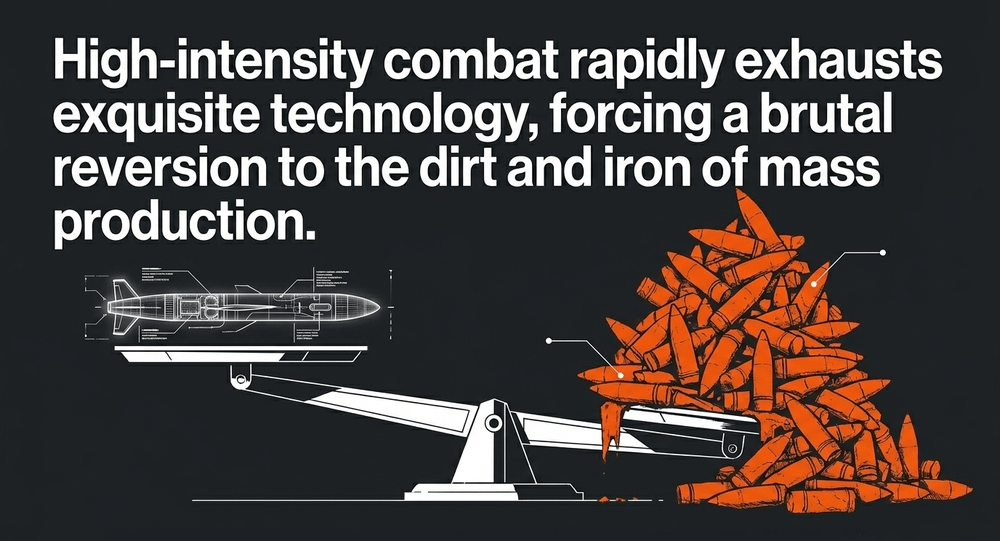
However, recent high-intensity conflicts have challenged this logic directly. In high-intensity combat, precision systems are frequently the first to be exhausted - because they are the most expensive and the most difficult to manufacture at scale. Once the smart bombs are gone, the war returns to the dirt and the iron. Ukraine's experience after 2022 demonstrated that even modern, well-supplied militaries rapidly exhaust sophisticated air-defense interceptors, precision artillery rounds, and anti-armor missiles - reverting to mass artillery exchanges that consume shells at First World War rates.
This realization is forcing a return to attrition economics, where the ability to manufacture thousands of simple, reliable, effective weapons is valued more highly than possessing a small inventory of technically brilliant ones.
Securing the supply chain: the new frontier of reserve strategy
The next evolution of strategic reserve doctrine is focused not on finished weapons, but on the ingredients of mass-producible systems.
Stockpiling semiconductors, lithium for batteries, magnet-grade rare earth elements, and precursor chemicals for explosives will be at least as strategically important as stockpiling completed tanks or aircraft. The nation that secures its supply chains and builds deep reserves of these foundational inputs will have the flexibility to adapt, substitute, and scale production to match whatever the battlefield demands.
This pivot reflects a painful lesson from the conflicts and supply chain crises of the 2020s: fragile, just-in-time logistics models are liabilities, not efficiencies, the moment a war begins. Supply chain resilience - the ability to source, store, and rapidly process critical materials domestically or through resilient allied networks - has become a strategic imperative equivalent in importance to the size of the standing army itself.
Securing rare earth element processing capacity, building redundant domestic semiconductor fabrication, and investing in homegrown chemical and explosive precursor industries are no longer purely economic policy decisions. They are acts of pre-war deterrence. A nation that can demonstrably outlast an opponent in the production of basic but lethal systems forces any potential aggressor to recalculate the true cost of initiating a long war. That recalculation, in itself, may be the most powerful deterrent of all.

The bedrock of national survival
In the final analysis, strategic reserves are the difference between a nation that can absorb a devastating blow and a nation that is knocked unconscious in the first exchange.
They provide the depth and resilience required to absorb catastrophic early losses and keep fighting. They buy time for mobilization, for diplomacy, and for industrial production to catch up with consumption. Whether it is the grain in the silo, the oil in the salt cavern, the financial cushion in the sovereign wealth fund, or the reservist reporting to the local armory, these assets are the bedrock of national survival.
They allow a state to negotiate from a position of strength rather than desperation. They signal to adversaries that a quick, cheap victory is not available. And ultimately, they allow a nation to endure the long, dark grind of a protracted war - the kind of war that, historically, decides the fate of nations.
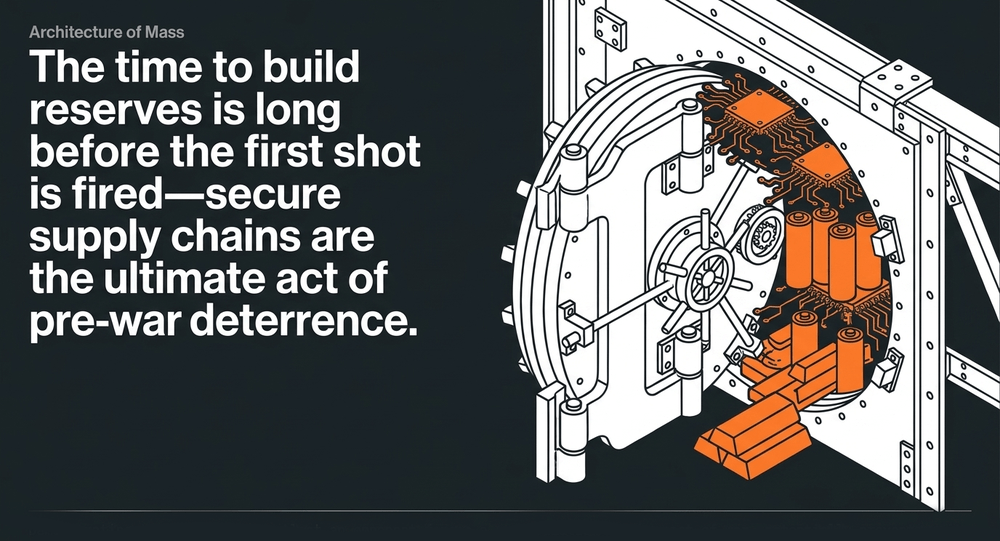
The lesson for any sovereign power is unambiguous: the time to build your reserves is long before the first shot is fired. Once the attrition begins, it is already too late.
Share now









Key takeaways
- Strategic reserves span multiple categories: military personnel, energy stockpiles, raw industrial commodities, munitions, financial holdings, food supplies, and specialized technical personnel - not just finished weapons systems.
- Attrition warfare aims to exhaust an opponent's physical, financial, and moral capacity over time rather than seek a single decisive battlefield victory.
- Reserve military components can generate combat mass up to five times more cost-effectively than regular active-duty forces during peacetime, making them a critical tool for generating depth without maintaining a massive standing army.
- China's strategic oil reserves are estimated at between 900 million and 1.3 billion barrels, though precise figures remain difficult to verify given the limited transparency of Chinese state reporting.
- The largest coordinated release in IEA member history - approximately 182 million barrels in 2022 - would cover only around nine days of a major supply disruption at 20 million barrels per day, illustrating the hard limits of energy reserves as a war-fighting tool.
- The U.S. Strategic Petroleum Reserve fell to its lowest levels since the early 1980s following significant drawdowns in 2022, creating a strategic vulnerability that requires years and substantial capital investment to rebuild.
- In the war in Ukraine, both sides increasingly relied on low-cost FPV drone systems to reduce human casualties in a high-attrition environment, reflecting a broader structural shift toward attrition economics on the modern battlefield.
- Long-range precision fires have made large prepositioned materiel depots high-value targets for single-strike destruction, forcing military planners to weigh logistical efficiency against the survivability of geographically dispersed, hardened caches.
- Production lead times for critical munitions and military hardware are often measured in years, while wartime consumption operates at a rate measured in minutes - a fundamental and frequently underestimated tension in reserve strategy.
- Securing supply chains for semiconductors, lithium, rare earth elements, and explosive precursor chemicals is increasingly treated as a strategic imperative equivalent in weight to maintaining a standing army.
- Financial reserves - including foreign exchange holdings, gold, and sovereign wealth funds - are a decisive but frequently overlooked dimension of strategic depth, determining how long a nation can sustain the economic burden of prolonged conflict.
- Napoleon's 1812 Russian campaign remains the definitive historical case study in logistical attrition: the Grande Armée was not defeated by superior Russian tactics but by the systematic depletion of food, horses, and forward momentum across an unresupplyable theater.
- The mismatch between the physical existence of a reserve and the operational ability to deliver it - caused by neglected logistics infrastructure and undertrained personnel - is one of the most common failure points in modern military history.
- Fragile just-in-time logistics models, optimized for peacetime economic efficiency, function as strategic liabilities the moment large-scale conflict begins.
Sources
- U.S. Army - War reserves: strategic opportunities to manage risk and cost-effectiveness https://www.army.mil/article/255103/war_reserves_strategic_opportunities_manage_risk_cost_effectiveness
- RUSI - Attritional art of war: lessons from the Russian war in Ukraine https://www.rusi.org/explore-our-research/publications/commentary/attritional-art-war-lessons-russian-war-ukraine
- RUSI - Long war: fighting beyond the first battle https://www.rusi.org/explore-our-research/publications/commentary/long-war-fighting-beyond-first-battle
- Northern Trust - The role and limits of strategic oil reserves https://www.northerntrust.com/united-states/insights-research/2026/weekly-economic-commentary/the-role-and-limits-of-strategic-oil-reserves
- ETEdge Insights - Will strategic oil reserves help if the Strait of Hormuz is disrupted? https://etedge-insights.com/featured-insights/will-strategic-oil-reserves-help-if-the-strait-of-hormuz-is-disrupted/
- George Mason University - The role of U.S. reserve forces https://csps.gmu.edu/2019/11/18/the-role-of-us-reserve-forces/
- Published 2026-06-03 19:09
- Modified 2026-06-11 18:11

-
Redaction