

-
 Redaction
Ammunition burn rates: The gap nobody planned for
Western doctrine assumed short wars. The Ukraine conflict exposed how real ammunition burn rates outpace production - and the Iran war has deepened the gap.
Why planning fails
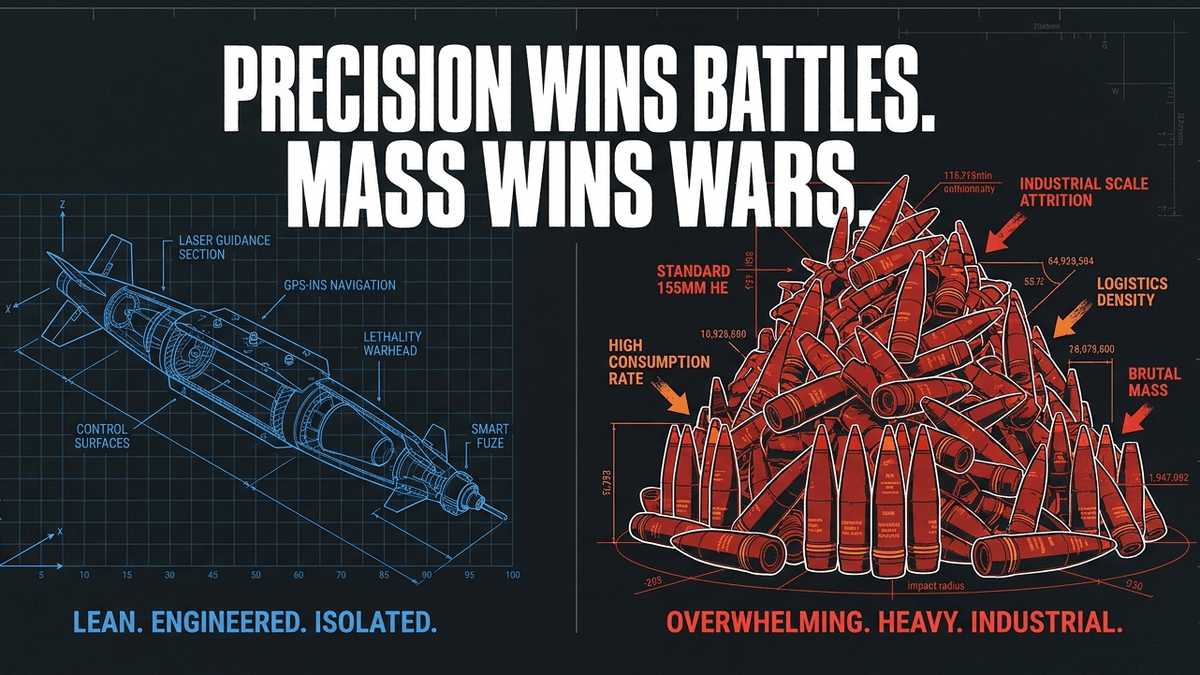
The fundamental disconnect in modern military strategy lies in the gap between the theoretical elegance of precision warfare and the brutal reality of industrial-scale attrition. For decades, Western military doctrine emphasized lean operations - prioritizing high-technology precision over mass. This approach assumed that conflicts would be short, decisive, and surgically executed.
The war in Ukraine changed that assumption permanently.
What it revealed is a systemic underestimation of the volume of munitions required for sustained combat. The discrepancy between planned ammunition stockpiles and actual burn rates is not merely a logistical oversight. It is a strategic vulnerability that threatens the integrity of national defense postures across the globe.

When military planners calculate stockpile requirements, they typically rely on models based on low-intensity engagements or short-duration high-intensity sprints. These models consistently fail to account for what the West Point Modern War Institute terms the "Industrial Window of War" - a state where the rate of consumption exceeds the rate of production for months or even years. In such scenarios, victory is not determined solely by tactical brilliance on the field, but by the throughput capacity of the defense industrial base.
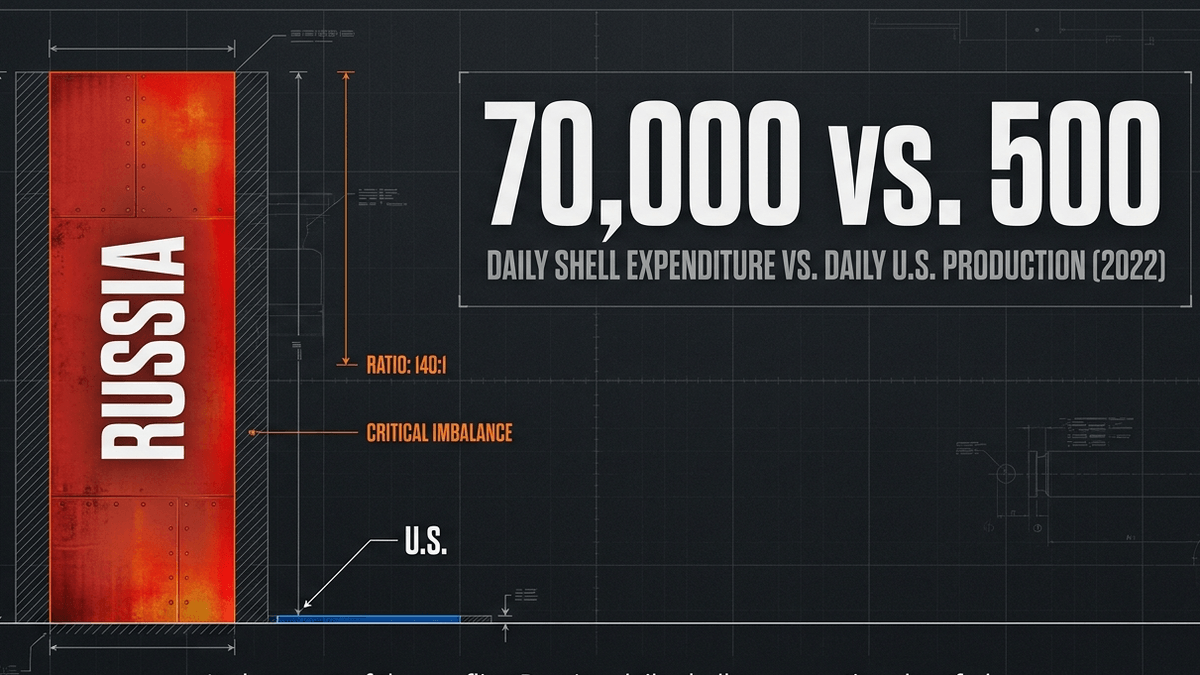
Data from the Ukraine theater makes this painfully clear. Russia averaged roughly 70,000 shells per day in the early phases of the conflict - a figure that dwarfed the entire monthly production of many NATO nations at that time. That single comparison tells you everything you need to know about the planning assumptions that prevailed before the guns started firing.
Quantifying the burn: Statistical reality of the Ukraine theater
The scale of ammunition expenditure in Ukraine is staggering in ways that are difficult to fully communicate without simply listing the numbers.
According to Ukrainian commander-in-chief Oleksandr Syrskyi, Russian expenditure reached up to 40,000 rounds per day before Ukrainian strikes on production facilities forced a reduction. Even with those disruptions, Russia fired approximately 7 million rounds in 2024 - averaging around 600,000 shells per month. Ukraine's consumption, smaller due to supply constraints, has nonetheless remained massive. Ukrainian officials have stated a requirement of up to 600,000 artillery shells monthly for maximum operational effect, yet they have frequently been forced to operate with as few as 2,000 per day due to shortages.
That gap - between 20,000 shells needed and 2,000 available - is not a planning variance. It is the difference between holding ground and losing it.
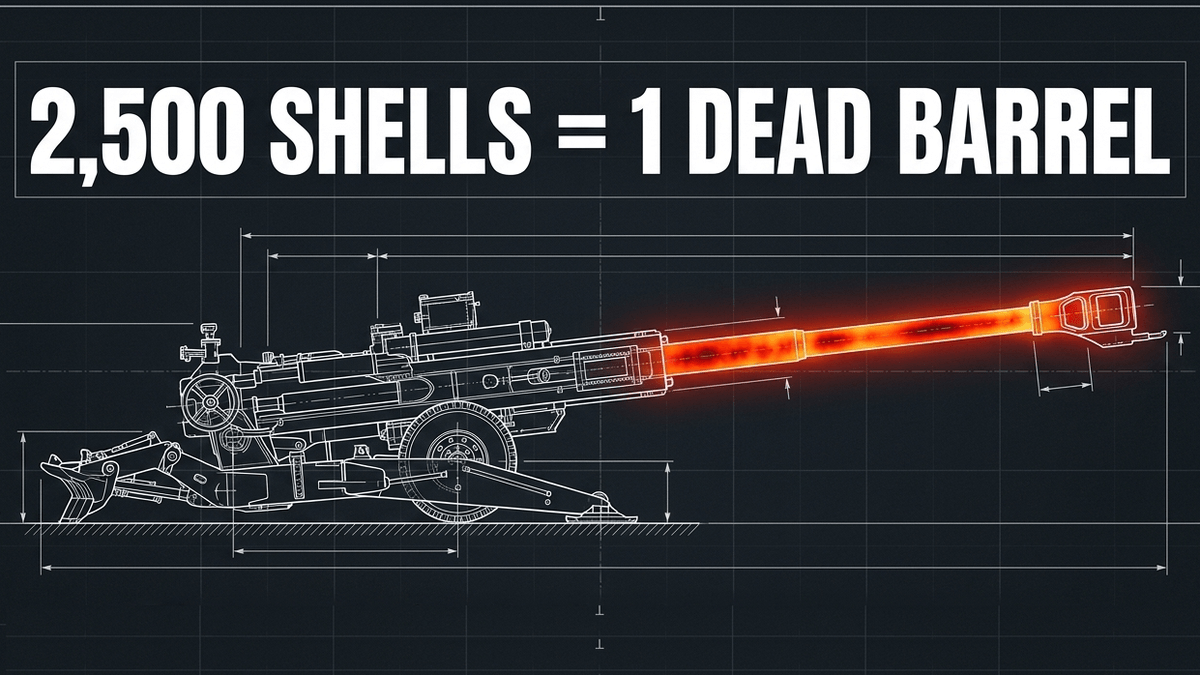
The consumption is not limited to the projectiles themselves. The physical toll on hardware is an often-overlooked component of the burn rate problem. An M-777 howitzer requires a complete barrel replacement after approximately 2,500 rounds. The German-made Panzerhaubitze 2000 handles roughly 4,500 before the same requirement kicks in. When a force is firing thousands of rounds daily, the maintenance cycle becomes as critical as the supply chain itself.
Since the conflict began, an estimated 487 million shells have been fired by both sides - a level of kinetic intensity Western industries have not been structured to support since the mid-20th century.
The production gap: Russia versus the West
Russia has demonstrated a far more aggressive pivot toward a war economy than Western planners anticipated or modeled for.
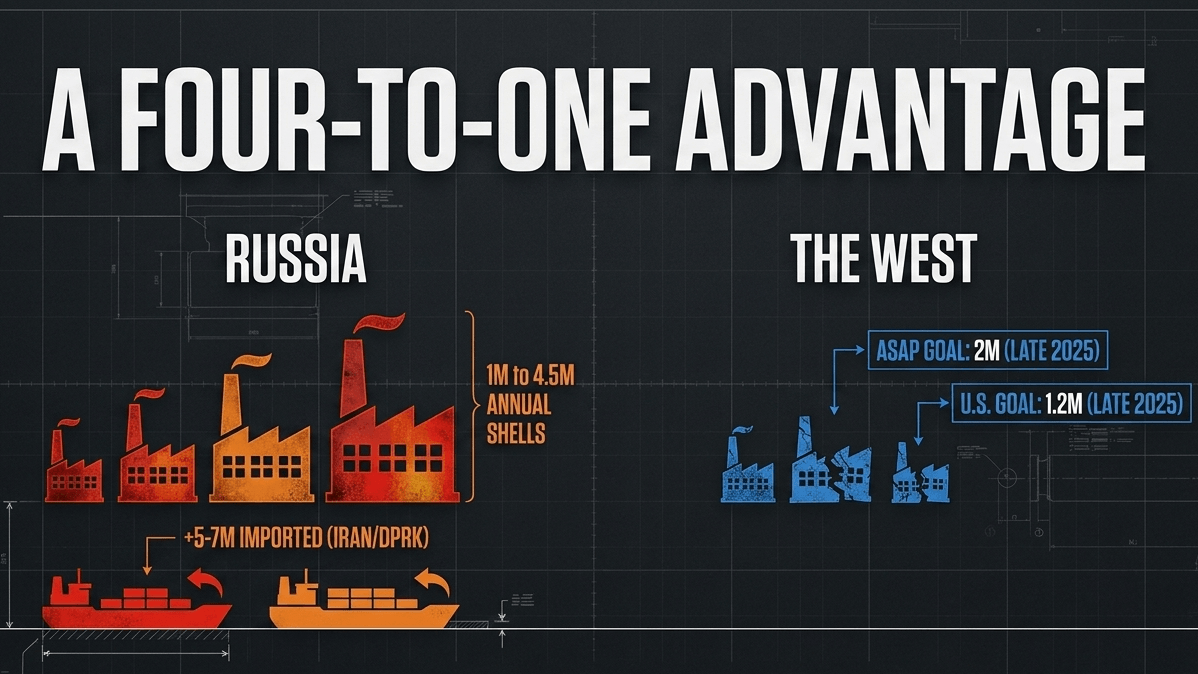
Its shell production expanded from roughly 1 million annually before the full-scale invasion to an estimated 4.2 million 122mm and 152mm rounds annually by 2025. This internal growth is supplemented by significant imports - Russia has cumulatively received between 5 and 7 million shells from Iran and North Korea since 2023. Combined domestic production and external sourcing allows Russia to maintain firing rates of 10,000 to 15,000 rounds per day, even after absorbing significant battlefield losses.
The contrast with the NATO side is stark.
At the start of the Ukraine war, the United States produced fewer than 3,000 artillery rounds per month - a figure that reflects peacetime assumptions more than operational realities. Production had risen to approximately 40,000 per month by mid-2025, but the target of 100,000 rounds per month - or 1.2 million per year - has been delayed to mid-2026 at the earliest. Europe's Act in Support of Ammunition Production (ASAP), backed by €500 million in EU funding, aims for 2 million shells annually by late 2025, but these figures remain insufficient to meet Ukraine's stated minimum operational requirement of 356,000 rounds per month.
The headline number here is damning: in the first quarter of 2024, Russia produced as much ammunition as all of NATO produced in an entire year.
That is a four-to-one advantage in firepower - on an economy roughly 25 times smaller than the combined NATO alliance. NATO Secretary General Mark Rutte has repeated this warning publicly multiple times, calling it an "unacceptable" disparity for an alliance that purports to maintain credible deterrence.
Systemic hurdles in the defense industrial base
The inability to rapidly scale production is not a recent failure. It is the accumulated result of two decades of deliberate choices.
The U.S. Army Science Board noted in September 2023 that two decades of fighting low-intensity conflicts provided "false confidence" in the industry's ability to meet sudden production spikes. The defense industrial base was optimized for just-in-time logistics - a business model that prioritizes efficiency and cost-saving over redundancy and surge capacity. This has resulted in a fragile network characterized by single points of failure precisely where resilience is most required.
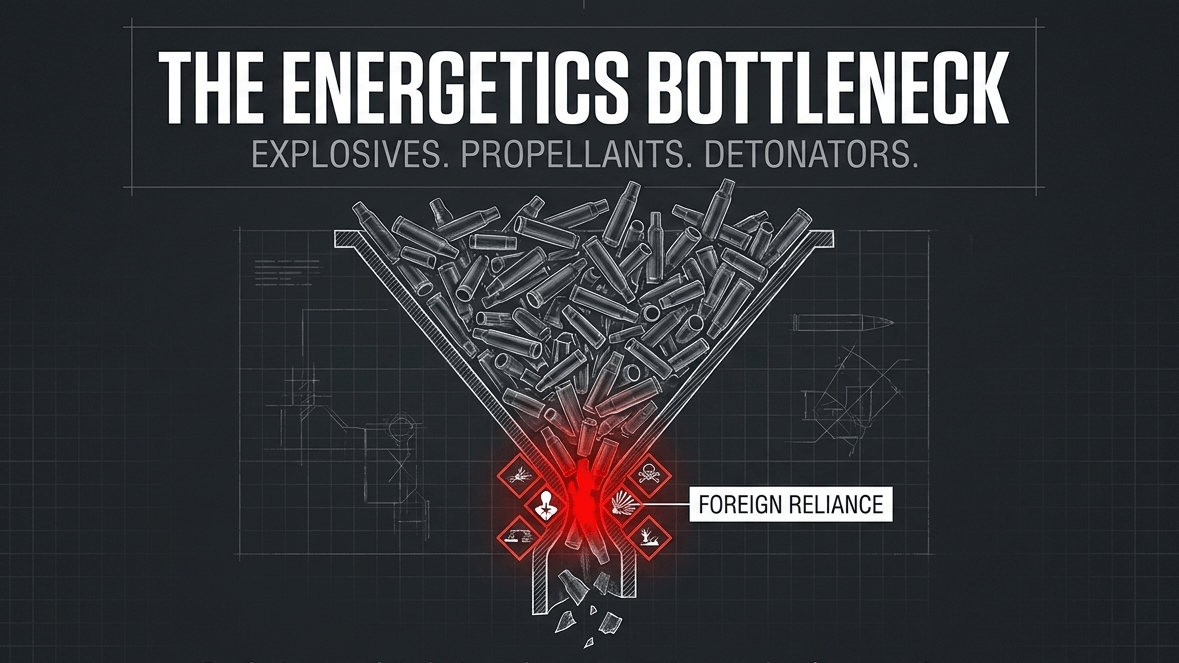
One of the most critical bottlenecks sits below the visible level of the arsenal: energetics - the explosives, propellants, and detonators that make shells lethal. Kevin Capozzoli, CEO of Critical Materials Group, describes energetics as the foundation most people overlook. The U.S. supply chain for these materials suffers from limited domestic capacity and a reliance on fragile foreign sources. The Department of Defense has identified specific chokepoints where production steps depend on too few suppliers and lack any redundancy. In at least one area, the United States remains dependent on a single European source for TNT.
The scale gap between historical and current capacity is significant. During the Second World War, U.S. facilities such as Holston Ordnance Works were producing and shipping more than 1 million pounds of explosives per day. Current efforts are focused on expanding annual RDX production capacity from roughly 8 million pounds to about 15 million. That comparison illustrates the depth of deindustrialization that has occurred.
The cotton problem nobody talks about
Behind every propellant charge is nitrocellulose. Behind nitrocellulose is cotton.
This supply chain reality has become one of the more uncomfortable revelations of the current rearmament effort. Nitrocellulose - the core material in most artillery propellants - requires cotton cellulose as a feedstock. Western nations have allowed production of this foundational explosive material to migrate overseas, specifically to China, which is also the world's largest cotton producer.
Today, the only TNT manufacturer physically located within NATO territory is Poland's Nitrochem. Military-grade nitrocellulose for NATO effectively comes from a single factory in Redmond, Virginia. Europe's propellant situation is similarly concentrated: the continent relies on a single major TNT producer in Poland, making the entire alliance dependent on one facility for a material required in virtually every artillery round it fires.

Nitrocellulose production is not easily relocated. The manufacturing process leaves as waste enormous quantities of nitric and sulphuric acid - byproducts that take decades to remediate. Environmental regulations, industrial permitting timelines, and the hazardous nature of the work itself have made Western governments reluctant to invest in domestic capacity when cheaper foreign alternatives existed. That calculation looks very different now.
Rheinmetall moved to address part of this vulnerability in early 2025, acquiring Hagedorn-NC, a German industrial nitrocellulose producer, with plans to shift output toward military-grade propellant. Nammo, meanwhile, has reopened a shuttered plant in Denmark and is leading research into wood-pulp-based nitrocellulose - an effort to reduce the 70% reliance on Asian cotton linters. BAE Systems in the United Kingdom is pursuing an even more fundamental redesign, developing distributed manufacturing in shipping containers capable of producing RDX at geographically dispersed sites - a direct lesson drawn from the vulnerability of large, concentrated facilities to either accident or attack.
These are the right moves. They are also moves that should have been made twenty years ago.
The reality of replenishment timelines
Expansion of ammunition production is a marathon, not a sprint. Lead times are measured in years.
A 2023 Army Science Board report concluded that aging facilities and rigid certification processes mean that changes to approved military manufacturing processes require 18 to 24 months for testing alone. This bureaucratic friction prevents the rapid adoption of new technologies or alternative materials that could accelerate production.
The situation for more complex systems is considerably worse. An analysis by the Center for Strategic and International Studies found that replacing key weapon systems can take years to decades depending on the system in question:
- A HIMARS system takes approximately 2.5 years to replace
- Stinger missiles can take up to 18 years given current industrial constraints
- Tomahawk cruise missiles and Patriot interceptors require contractors at least three to four years to significantly scale production
- Lockheed Martin stated that scaling Patriot production from 650 to 2,000 units per year would take nearly four years
- The Patriot air defense network faces delivery delays that some assessments place at up to ten years
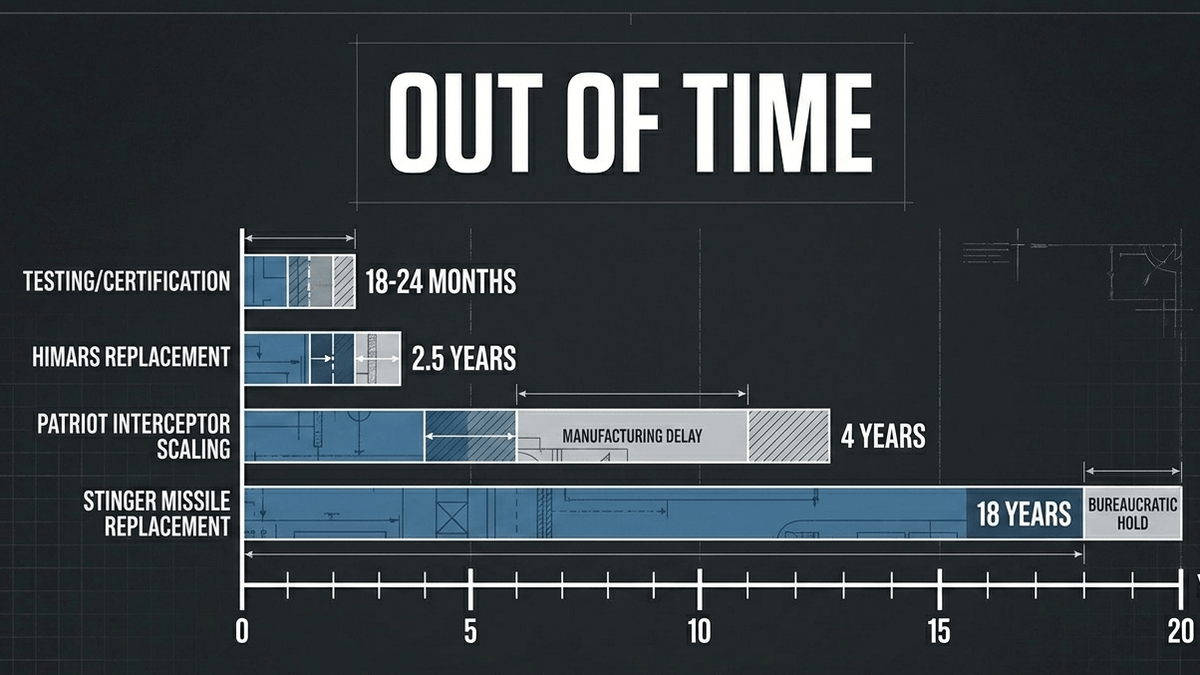
These timelines were always known to planners. They were treated as acceptable risk when the assumption was that conflicts would be short. That assumption is no longer available.
Operation Epic Fury and the stockpile shock
The tension between theoretical stockpile sufficiency and operational reality came into sharp focus with the Iran war beginning in early 2026.
In the 39 days of air and missile operations before the ceasefire, U.S. forces heavily expended seven key munitions. For four of them, the United States may have used more than half of the prewar inventory. These included Tomahawk Land Attack Missiles, THAAD interceptors, Patriot air defense missiles, and SM-3 and SM-6 ship-based surface-to-air missiles. The Center for Strategic and International Studies assessed that the U.S. expended at least 45% of its Precision Strike Missile stockpile, at least half its THAAD inventory, and nearly 50% of its Patriot interceptors.
As CSIS concluded: "The United States has enough munitions for any plausible scenario in the Iran war, but the depleted inventories have created a window of vulnerability for a potential Western Pacific conflict. The time needed to rebuild those inventories has thus become a major concern."
Rebuilding prewar levels for the four most depleted munitions will take at least two years - and in some cases more than three - assuming no additional conflicts arise in the interim. The missiles most useful in a potential conflict over Taiwan, specifically long-range precision strike systems, are now in demonstrably short supply. As one analyst summarized: it is not tactical exhaustion - it is a strategic inventory shock that will affect other theaters.
Historical precedents and the lessons of the past
This is not without historical context. The pattern repeats with uncomfortable regularity.
The Shell Crisis of 1915 during the First World War serves as the clearest precedent. Pre-war expectations in the United Kingdom severely underestimated shell consumption on the Western Front, leading to a political scandal and the eventual creation of a Ministry of Munitions. At the height of that crisis, British artillery was sometimes rationed to seven shells per day. Seven. Against fortified positions.
Similar patterns emerged in Vietnam, where artillery consumed massive quantities of ammunition relative to casualties inflicted. As noted in the Army's own analysis, some 340 rounds of artillery were fired for every recorded casualty through 1971. In the Russo-Japanese War of 1904-1905, riflemen expended 200 rounds per day - a ten-fold increase from the volume fired at the Battle of Leipzig ninety years earlier.
The historical trend is clear and consistent: as military technology evolves, the volume of fire required to achieve operational objectives increases exponentially. Modern warfare has shifted even further toward explosive effects. The majority of contemporary combat wounds are caused by fragmenting weapons - rockets, mortars, artillery - rather than small arms fire.
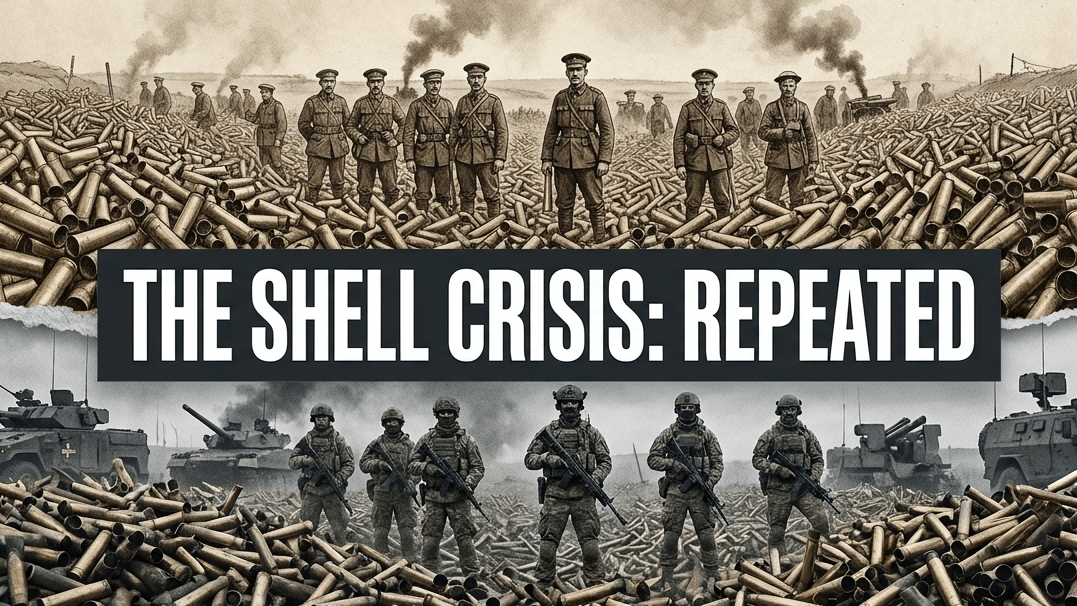
Despite these clear indicators across more than a century of industrialized warfare, the just-in-time mindset of the 21st century ignored the necessity of mass. The lesson was available. The choice was made to ignore it.
Fragility of NATO's defense posture
The war in Ukraine has revealed structural flaws in NATO's posture that cannot be explained away by budget constraints alone. Decades of underinvestment and offshoring have left the alliance ill-prepared for sustained peer-to-peer conflict.
The problem today, as a CSIS report from 2026 put it plainly, is not money. It is time.
NATO members now face what amounts to a compressed readiness window. NATO Secretary General Rutte has repeatedly warned that Russia will likely pose a military threat to alliance territory by 2029. German Army Inspector General Christian Freuding confirmed this is not a German assessment in isolation - it reflects consensus across all 32 NATO members. A 2023 joint threat assessment concluded that Russia could raise a fully equipped army of 1.5 million troops within five years. The math is not reassuring.
The gap between when the threat materializes and when European rearmament closes critical capability gaps is, by some analyses, five to seven years. NATO's frontline states - Norway, Finland, Estonia, Latvia, Lithuania, and Poland - remain particularly exposed during this period.
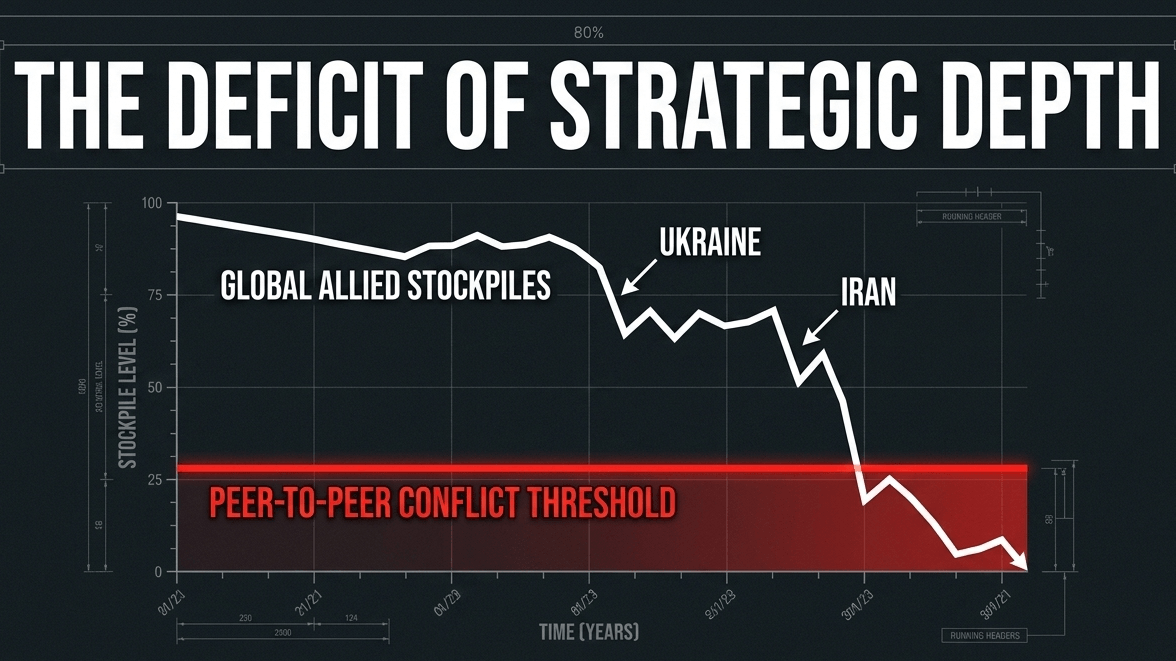
The focus of allied strategy must shift from merely counting existing stockpiles to measuring and influencing throughput capacity. Capacity is not a static number. It is a kinetic capability that must be nurtured through long-term contracts, workforce development, and the hardening of supply chains against foreign interference.
Operational implications of the ammunition deficit
On the ground, the ammunition deficit dictates the nature of the fight. When shells are scarce, artillery units cannot perform suppression fire - the sustained volume required to protect advancing infantry and deny the enemy freedom of maneuver. They are limited instead to counter-battery fire or strikes on high-value targets. That lack of volume allows an adversary to reposition, reinforce, and fortify with minimal interference.
For Ukraine, the forced reduction of monthly firing rates to roughly 110,000 shells against a requirement for 600,000 means that tactical decisions are driven by logistics rather than strategy. A commander who knows where to attack may be unable to attack there because the shells simply are not available.
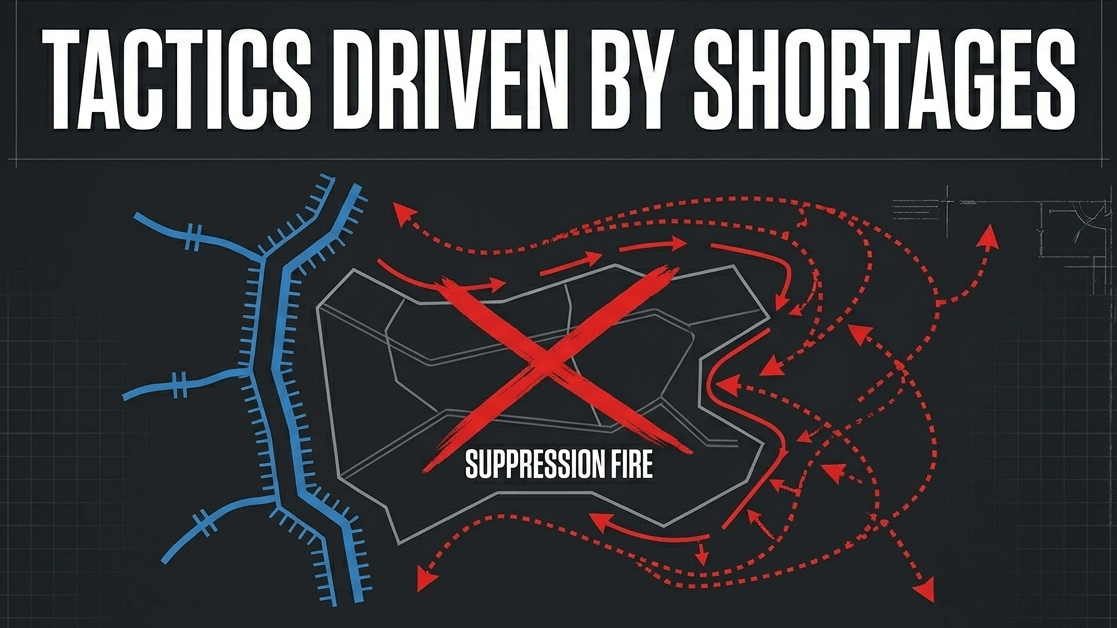
The strategic depth of an army is ultimately its ability to sustain burn rates over time. As U.S. Army General Christopher Cavoli, NATO's Supreme Allied Commander Europe, remarked in 2023, the scale of current warfare is "out of proportion" with recent military thinking. That observation remains as true now as when he made it.
The industrial response: Progress and its limits
The Western industrial response has been real. It has also been insufficient.
Rheinmetall has emerged as perhaps the most aggressive responder on the European side. The company launched Europe's largest artillery ammunition plant in Unterlüß, Germany, in August 2025 - capable of producing up to 350,000 155mm shells annually when fully ramped. Its broader ambition is to reach 1.1 million rounds annually by 2027, up from 70,000 before the invasion. The company is simultaneously building facilities in Ukraine, Lithuania, Hungary, and Romania, and has negotiated expansions in Poland.
Poland itself has become a significant contributor. The Polish Armaments Group secured over $600 million in state funding to expand large-caliber production, with plans for three new factories and a target of 150,000 shells annually by 2027. In a February 2026 agreement, Northrop Grumman and Polish manufacturer Niewiadow-PGM established a joint venture to produce more than 180,000 155mm shells annually. Rheinmetall and Bulgaria's VMZ established a similar joint venture with roughly $1.1 billion in investment.
The Czech Republic has led a coalition procurement initiative that, since its launch, has delivered 1.6 million shells to Ukraine from non-Western sources.
Aggregated allied programs are expected to yield around 3 million shells annually by 2026. That would bring NATO closer to matching Russia's current output - but only if supply chains remain uninterrupted and political will for sustained defense spending holds. Even at parity in production numbers, NATO's 2026 monthly target of approximately 267,000 rounds would barely match Russia's output, leaving nothing for rebuilding depleted inventories or meeting alliance stockpile requirements.
Parity in production is not the same as parity in readiness.
Future projections and the path forward
The Industrial Window of War remains open. Until production capacity not only matches but exceeds the daily burn rate of a high-intensity conflict, any military is effectively fighting on borrowed time.
The lessons available are not subtle. The Ukraine theater, the Shell Crisis of 1915, the sobering statistics of modern barrel wear, the stockpile depletion during Operation Epic Fury - all point to the same conclusion: mass still matters.
Precision can win battles. Mass wins wars.
Addressing this requires a shift in how the defense industrial base is conceptualized and funded. Long-term multi-year contracts rather than procurement orders subject to annual budget cycles. Workforce development programs to rebuild the technical skills that left with the manufacturing economy. Vertical integration of energetics supply chains - bringing propellant and explosive production back within alliance territory, regardless of the short-term cost premium.
The West must also address the gap between what it is producing and what it actually needs for its own readiness, separate from what it is providing to partners. The Iran war demonstrated that even a regional conflict of limited duration can deplete strategically significant munition categories to the point where follow-on commitments in other theaters become constrained.
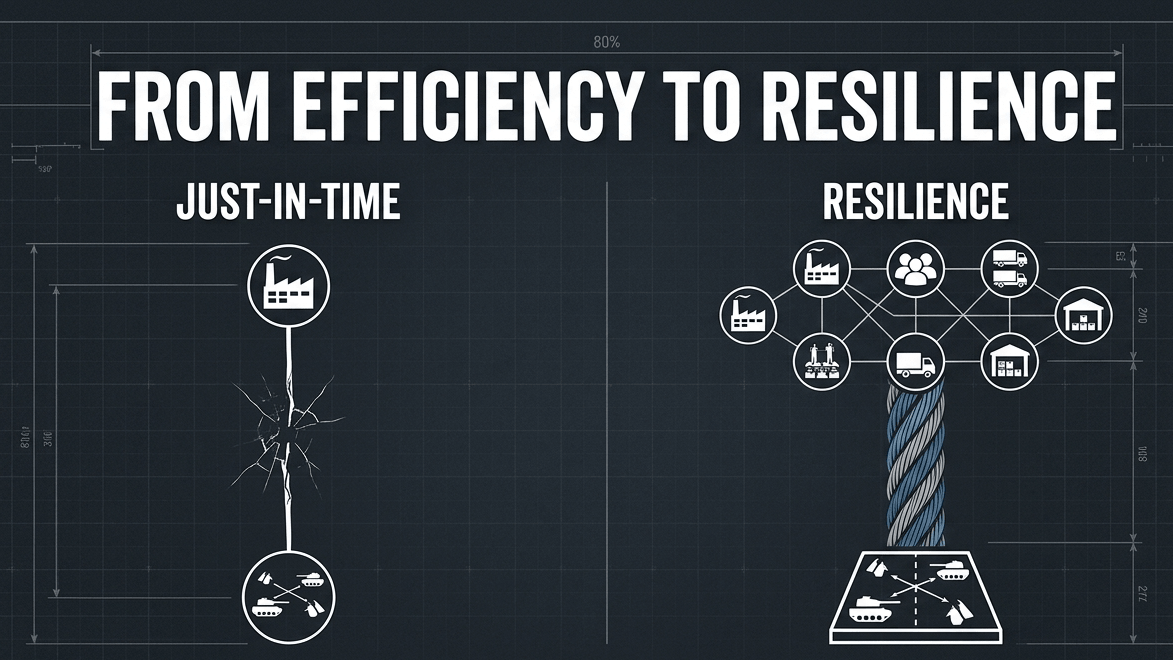
To contend with the threat timeline NATO's own members have assessed - a Russian capability to threaten alliance territory by 2029, with European rearmament not closing critical gaps until 2035 - the West must treat ammunition production not as a series of procurement orders, but as a core pillar of national security. That means a resilience-driven readiness model, funded consistently, insulated from political cycle pressures, and measured by throughput capacity rather than theoretical inventory levels.
The discrepancy between planned stockpiles and reality is a gap that must be closed with steel, explosives, and the industrial depth that was once the hallmark of Western defense. The timeline to close it is shorter than the timeline to build it.
Share now









Key takeaways
- Russia fired approximately 7 million artillery rounds in 2024, averaging 600,000 shells per month - a pace no NATO nation could individually sustain for even a fraction of that period.
- In the first quarter of 2024, Russia produced as much ammunition as the entire NATO alliance produced in a full year - a four-to-one production advantage despite NATO's economy being roughly 25 times larger.
- Ukraine's operational requirement is up to 600,000 artillery shells per month; at the worst points of the shortage it received as few as 2,000 rounds per day.
- The U.S. produced fewer than 3,000 artillery shells per month in the 2010s; by mid-2025 that had risen to 40,000, with the 100,000-per-month target delayed to mid-2026.
- NATO's only TNT manufacturer within alliance territory is Poland's Nitrochem; military-grade nitrocellulose for the entire alliance effectively comes from a single factory in Redmond, Virginia.
- An M-777 howitzer requires barrel replacement after just 2,500 rounds - when firing thousands of rounds daily, hardware maintenance becomes as critical as the supply chain itself.
- Operation Epic Fury against Iran expended at least 45% of U.S. Precision Strike Missile stockpiles, nearly 50% of Patriot interceptors, and over half of THAAD inventories in roughly 39 days of operations.
- Rebuilding depleted U.S. missile inventories from the Iran war will take one to four years per munition type, with some critical systems taking more than three years to restore - assuming no further conflicts arise.
- Replacing a Stinger missile system can take up to 18 years given current industrial constraints; scaling Patriot production from 650 to 2,000 units per year would take Lockheed Martin nearly four years.
- All 32 NATO members share the assessment that Russia could have the capability to threaten alliance territory by 2029, while European rearmament will not close critical capability gaps until 2035.
- Russian 122mm and 152mm shell production expanded from 0.4 million rounds in 2022 to an estimated 4.2 million annually by 2025, supplemented by 5-7 million shells imported from Iran and North Korea since 2023.
- Rheinmetall's new Unterlüß plant - Europe's largest artillery ammunition facility - is capable of producing up to 350,000 155mm shells annually, part of a company-wide target of 1.1 million rounds per year by 2027.
Sources
- West Point Modern War Institute https://mwi.westpoint.edu/the-industrial-window-of-war-how-to-measure-russias-munitions-throughput-and-how-to-disrupt-it/
- Center for Strategic and International Studies (CSIS) https://www.csis.org/analysis/last-rounds-status-key-munitions-iran-war-ceasefire
- Atlas Institute for International Affairs https://atlasinstitute.org/the-strategic-ammunition-gap-natos-industrial-lag-risks-deterrence/
- Military.com https://www.military.com/feature/2026/04/03/americas-munitions-bottleneck-becoming-national-security-problem.html
- Kyiv Independent https://kyivindependent.com/why-cant-the-west-match-russias-ammunition-production/
- Published 2026-07-24 02:04
- Modified 2026-07-24 02:04

-
Redaction