

-
 Redaction
Hypersonic flight: Managing heat beyond Mach
From ultra-high temperature ceramics to electron transpiration cooling, discover the science protecting hypersonic vehicles from extreme aerodynamic heating.
The brutal physics
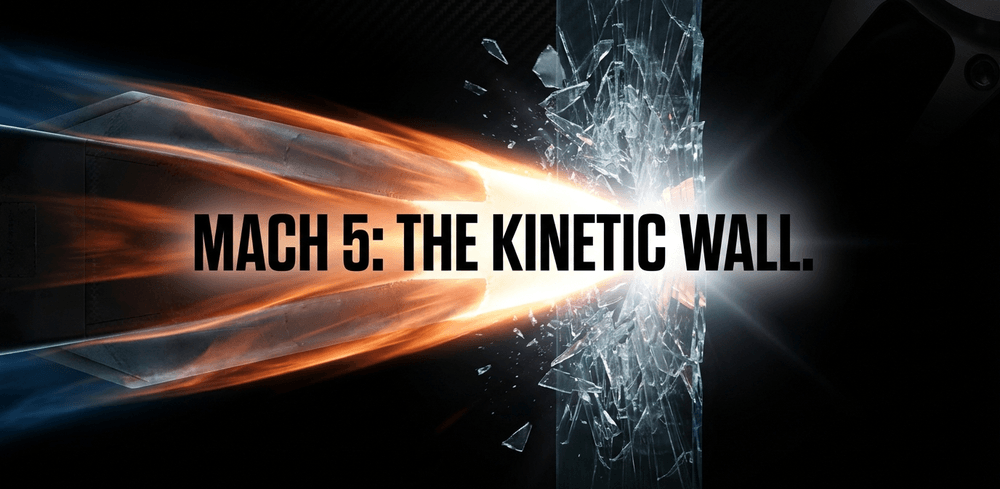
To understand the magnitude of the challenge facing modern aerospace engineers, one must first visualize the air not as a fluid, but as a kinetic wall. When a vehicle accelerates beyond Mach 5 - approximately 6,100 kilometers per hour - the very nature of the atmosphere changes. We are no longer dealing with simple aerodynamics; we are entering the realm of aerothermodynamics, where the energy of motion is so vast that it begins to tear the chemistry of the air apart. This is the thermal barrier, a threshold where the heat generated by friction and compression threatens to liquefy the very machines attempting to pierce it.

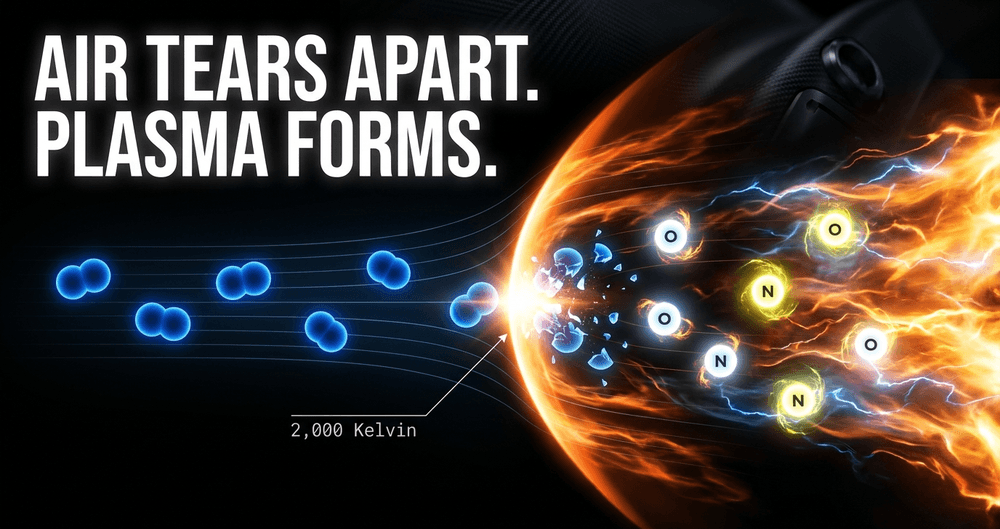
At these velocities, the air molecules simply cannot move aside fast enough. They pile up in a compressed shock layer, creating a pressure-cooker environment. The kinetic energy of the vehicle is converted into internal energy of the gas with terrifying efficiency. This process doesn't just heat the air; it excites the molecules to the point of dissociation. At around 2,000 Kelvin, oxygen molecules begin to break apart. As the temperature climbs further, nitrogen follows. The result is a superheated, chemically reactive plasma sheath that envelops the craft, reaching temperatures often exceeding 2,500°C at the nose and leading edges.
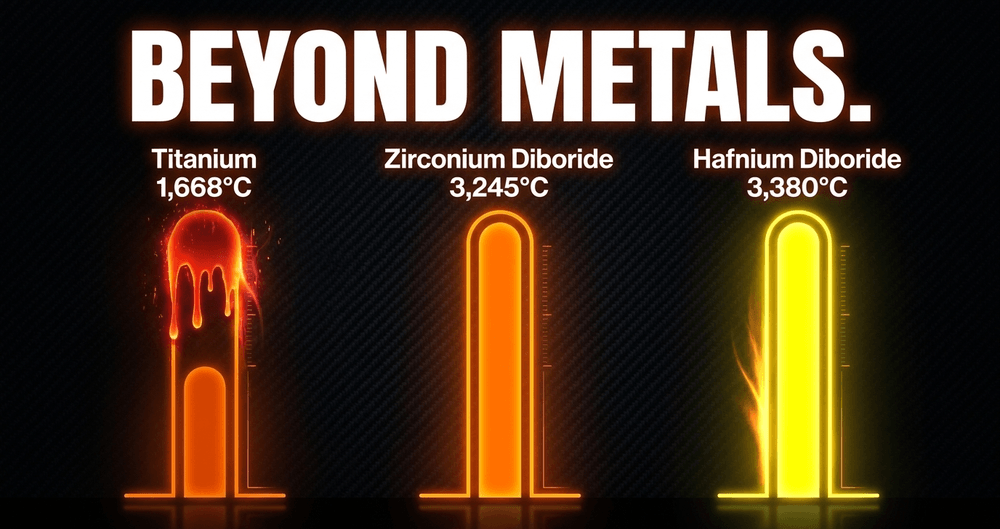
For perspective: the melting point of titanium is roughly 1,668°C. Without intervention, a state-of-the-art fighter jet would effectively vaporize in the hypersonic stream.
Mapping the thermal environment: From shock waves to plasma
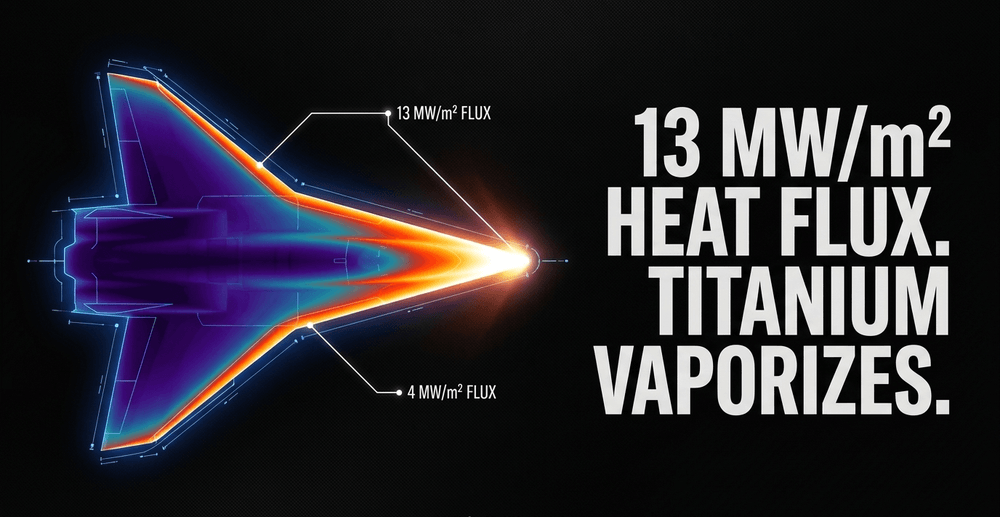
The distribution of heat across a hypersonic vehicle is far from uniform. It is a landscape of extremes. The most critical areas are the stagnation points - the tip of the nose and the leading edges of the wings - where the air is brought to a complete halt relative to the vehicle. In these localized zones, the heat flux is staggering. While a conventional industrial furnace might operate at a few tens of kW/m², the stagnation point of a blunt hypersonic body can experience over 4 MW/m². On more aggressive, sharp-edged geometries, this can spike to 13 MW/m².
Research from global aerospace agencies, including JAXA, indicates that the temperature rise within the boundary layer at Mach 5 is approximately 871°C. As velocity increases toward Mach 10, however, surface temperatures can skyrocket to around 2,426°C. This environment is not merely hot; it is corrosive. The ionized air molecules in the plasma sheath are highly reactive, leading to rapid oxidation and surface degradation.
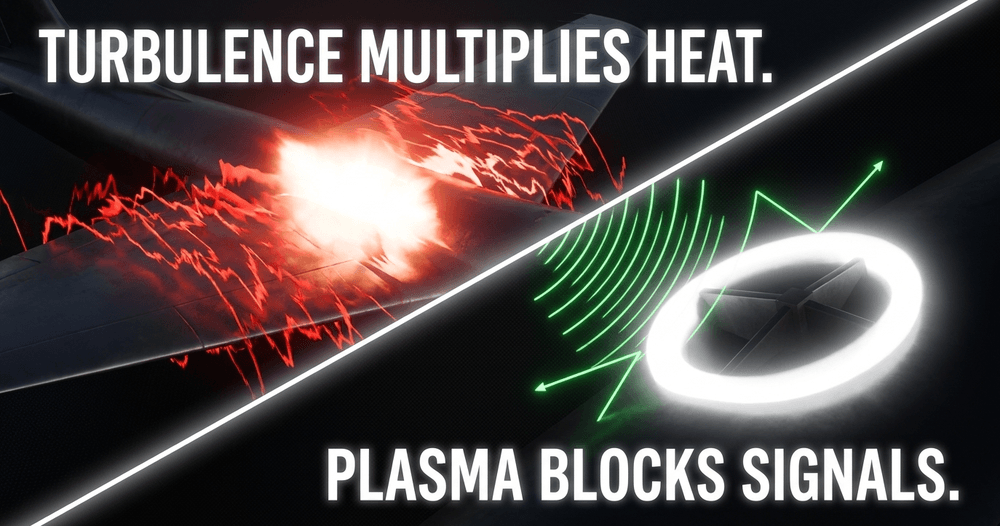
Furthermore, the transition from laminar to turbulent flow in the boundary layer acts as a force multiplier for thermal stress. Turbulent flow can increase the heating rate dramatically compared to laminar flow, turning a manageable thermal load into a catastrophic structural failure risk in a matter of milliseconds.
Passive thermal protection: The first line of defense
Historically, the answer to atmospheric heating was sacrifice. Early re-entry capsules, such as those in the Apollo program, utilized ablative materials - reinforced polymers or resins designed to char and erode deliberately. As the material pyrolyzes, it absorbs energy and carries it away from the vehicle in the form of hot gases and shed mass. While effective for one-way trips, ablatives change the aerodynamic shape of the vehicle as they wear away. That makes them poorly suited for precision hypersonic cruise missiles or reusable spaceplanes, where dimensional accuracy is everything.
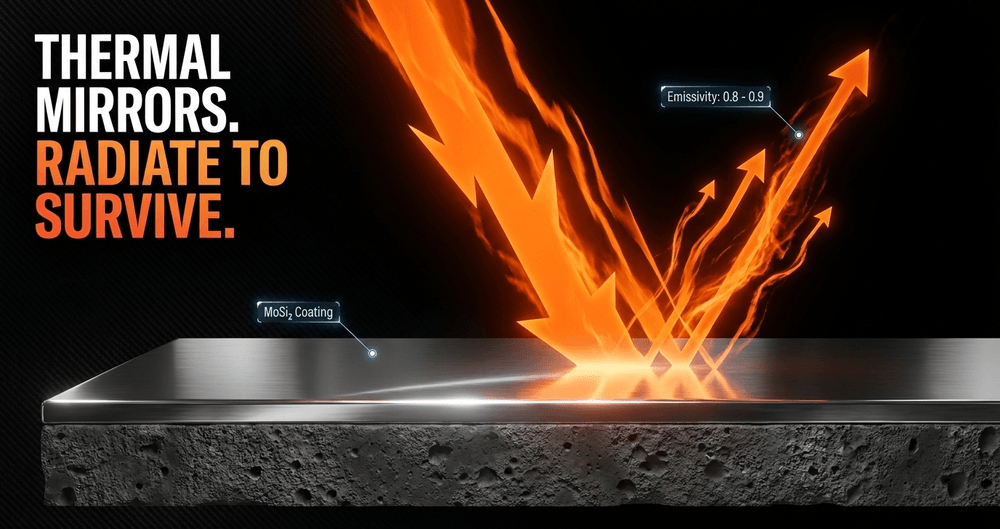
Modern passive systems focus instead on "hot structures" and radiative cooling. High-emissivity coatings, such as molybdenum disilicide (MoSi₂), are applied to ceramic substrates. These coatings act as a thermal mirror, allowing the vehicle to radiate absorbed heat back into the atmosphere. Reusable thermal protection systems aim for emissivity levels of 0.8 to 0.9. By radiating the majority of the absorbed energy away, the internal structure remains at a survivable temperature. Even the best radiative coatings have limits, though, when faced with the sustained, multi-thousand-degree heat of a long-range hypersonic flight.
Active cooling and the role of liquid fuels
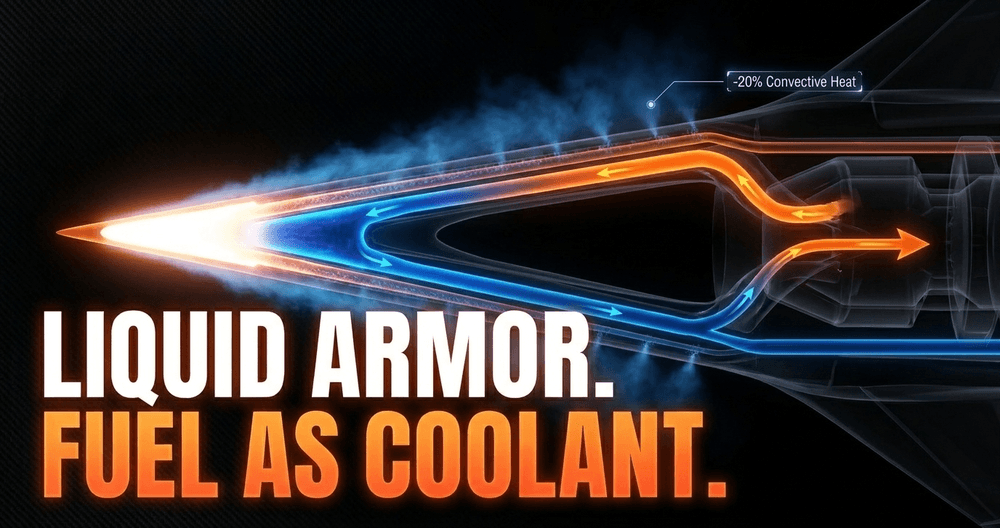
When passive materials reach their limits, engineers turn to active cooling - a process akin to the radiator in a car, but operating at the very edge of physical possibility. One of the most elegant solutions in hypersonic design is the use of the vehicle's own fuel as a coolant. Liquid hydrogen or specialized endothermic hydrocarbon fuels are circulated through micro-channels embedded within the leading edges and engine struts before being injected into the combustion chamber.
This "regenerative cooling" serves two purposes simultaneously. First, it pulls heat away from critical surfaces, maintaining structural integrity. Second, it pre-heats the fuel, increasing the propulsion system's efficiency. It is the rare engineering solution that solves two problems with one elegant intervention.
Beyond convective cooling, researchers are exploring transpiration cooling - forcing a coolant such as nitrogen or water through a porous skin material. The fluid forms a thin insulating film over the surface, creating a barrier between the vehicle and the superheated boundary layer. Experiments have shown that coolant injection can reduce convective heat flux meaningfully, though the added weight and complexity of the required plumbing remain significant engineering hurdles. The field is also investigating supercritical CO₂ as an active coolant, with research confirming the feasibility of harnessing aerodynamic heat flux to generate power through thermodynamic cycles at speeds around Mach 7.
Material science: The era of ultra-high temperature ceramics
The search for materials that can withstand the hypersonic inferno has led to the development of Ultra-High Temperature Ceramics (UHTCs). These refractory materials - primarily transition metal borides and carbides - are capable of maintaining their strength at temperatures where most alloys become liquid. Zirconium Diboride (ZrB₂) and Hafnium Diboride (HfB₂) are the current front-runners in this field, with melting points exceeding 3,000°C. Both materials have been applied to nose tips and leading edges of hypersonic vehicles, where the thermal and oxidative demands are most extreme.
To overcome the inherent brittleness of ceramics, these materials are integrated into Ceramic Matrix Composites (CMCs). Silicon carbide-based systems (SiC/SiC) and more advanced Ultra High Temperature Ceramic Matrix Composites (UHTCMCs) use carbon fiber reinforcement to provide the toughness needed to survive the intense vibrations and mechanical loads of Mach 5+ flight. Thermal stresses in leading edge components at around 1,500°C can reach 400 MPa - demanding mechanical strength that monolithic ceramics alone cannot reliably deliver.

These materials face a persistent enemy: oxidation. Carbon-carbon composites, while incredibly strong and light, begin to oxidize in air at temperatures as low as 370°C, with dramatic oxidation occurring beyond 500°C. Protecting them requires complex multi-layer coatings that must survive the different thermal expansion rates of the substrate and the protective layer - a challenge known as thermal expansion mismatch. Adding SiC to ZrB₂ matrices partially addresses this gap, but the balance between thermal expansion compatibility and SiC content requires precise engineering at concentrations typically between 10 and 30 percent by volume.
Nature Communications research on materials design for hypersonics confirms that no single material system has yet emerged as the complete solution. Each involves distinct trade-offs: metals for moderate loads below 800°C, refractory ceramics for conditions above 1,700°C, and fiber-reinforced composites when high-temperature strength-to-weight ratios become paramount.
The invisible wall: Boundary layer instabilities and communication
Thermodynamics in the hypersonic regime is not just about temperature; it is about the behavior of the air itself. At high Mach numbers, second-mode instabilities - known as Mack modes, essentially acoustic waves trapped within the boundary layer - become the dominant mechanism driving the transition to turbulence. These waves vibrate at high frequencies, creating localized thermal hot spots that can cause sudden, unpredictable structural stress. The Mack-mode instability becomes the most dominant cause of boundary-layer transition at speeds above Mach 4, making its prediction and control one of the most difficult problems in fluid mechanics today.
Predicting where and when this transition occurs requires massive computational power and specialized wind tunnel testing capable of replicating the high-enthalpy conditions of actual flight. Research has demonstrated that cooling the entire vehicle wall surface to suppress first-mode instabilities can destabilize second-mode waves instead - effectively trading one problem for another. Solutions being explored include localized surface temperature control, metasurface treatments, and the deliberate introduction of controlled streaks in the boundary layer.

Beyond the physical structure, the thermal environment creates an invisible barrier to communication. The plasma sheath generated by ionized air is electrically conductive. It can reflect or absorb radio waves, leading to the infamous "blackout" period experienced during spacecraft re-entry. For a hypersonic missile or manned vehicle that requires continuous guidance updates and telemetry, this is a potentially fatal flaw. S-band communication between 2 GHz and 4 GHz - the main bands used during re-entry - can be blocked for minutes at a time.
Researchers are investigating several solutions. Low-frequency (LF) communication signals, inspired by techniques used for underwater submarine communication, show promise in penetrating magnetized plasma sheaths - with the key finding that signal strength decreases with flight speed but remains relatively insensitive to wave frequency. Another avenue involves deliberate manipulation of the plasma electron density through gas injection at the vehicle surface, simultaneously mitigating both communication blackout and aerothermal heating.
Future horizons and the quest for reusability
The current state of hypersonic technology is dominated by single-use systems - where the thermal protection is allowed to degrade because the vehicle's mission is short. The future of hypersonic travel, whether global rapid transport or quick-response space launch, depends entirely on reusability. That means materials that can survive not just one thermal cycle, but hundreds.
Self-healing Thermal Barrier Coatings (TBCs) are one promising avenue. Recent AIAA research confirms that smart TPS - integrating adaptive materials, sensor networks, and AI-driven analytics - is moving from concept toward application, enabling real-time thermal management and structural adjustments during flight. Materials like molybdenum disilicide can flow into and seal micro-cracks that form during the cooling phase of a flight, preventing oxidation from reaching the underlying structure and preserving aerodynamic geometry across repeated missions.
Another frontier is energy harvesting. The very heat that threatens to destroy the vehicle can potentially be converted into electricity. Electron Transpiration Cooling (ETC) uses thermionic emission - where electrons carry heat energy away from the surface - as a thermal management tool. Research from the University of California Los Angeles and the University of Michigan has established that ETC can lower surface temperatures at sharp leading edges, particularly at higher velocities where the ionized flowfield becomes denser. Computational studies have shown that some ETC circuit configurations can even allow for net power generation alongside the cooling effect - turning the thermal barrier into an asset rather than an adversary.
The concept was originally studied in the 1950s as a power-generation mechanism for orbital re-entry vehicles. Its modern application as an active thermal protection strategy represents a full-circle moment in aerospace engineering history.

A parallel research thread involves direct liquid cooling using novel material architectures. New composite materials have demonstrated the ability to withstand simulated hypersonic aerodynamic heating at flame temperatures reaching 3,000°C - well above the melting point of their own substrates - by dramatically elevating the Leidenfrost point of the coolant. This removes the insulating vapor film that normally forms around droplets near extremely hot surfaces, allowing direct liquid contact and vastly more efficient heat transfer.
Conclusion: Solving the ultimate engineering puzzle
Managing the thermodynamics of hypersonic flight is perhaps the most complex puzzle in modern engineering. It requires a perfect symphony of material science, fluid dynamics, and mechanical engineering - and every decision involves brutal trade-offs. Every gram of weight added for thermal protection is a gram taken away from the payload or fuel. Every cooling channel in a wing increases manufacturing complexity and the risk of failure.
The fields pushing hardest on these boundaries - high-energy lasers and integrated air defense networks - are already grappling with the consequences of hypersonic threats, precisely because the thermal barrier is also a defensive barrier. Vehicles that glow white-hot at Mach 10 are also, in that same plasma sheath, partially invisible to radar and impossible to radio-command. Defense planners and engineers are confronting the same physics from opposite ends.
Yet the rewards of cracking these problems are immense. Vehicles that can operate reliably at Mach 5 and beyond will redefine global reach, reshape national defense, and change our access to space. As researchers continue to push against the thermal barrier - through smarter materials, more elegant cooling strategies, and increasingly sophisticated computational tools - they are doing more than building faster machines. They are learning to navigate the raw, violent physics of the high-speed frontier, one degree at a time.

Share now









Key takeaways
- Hypersonic flight begins at Mach 5 (approximately 6,100 km/h), the point at which aerodynamic heating transitions into aerothermodynamic heating, fundamentally changing the behavior of the surrounding air.
- At around 2,000 Kelvin, oxygen molecules begin to dissociate; at higher temperatures, nitrogen follows - producing a superheated, chemically reactive plasma sheath around the vehicle.
- Stagnation point temperatures at the nose and leading edges can exceed 2,500°C, far above the melting point of titanium (approximately 1,668°C).
- Heat flux at sharp leading edges can reach 13 MW/m² - orders of magnitude higher than conventional industrial furnaces, which typically operate at tens of kW/m².
- At Mach 10, surface temperatures can reach approximately 2,426°C (4,400°F), posing extreme challenges for all known structural materials.
- Carbon-carbon composites begin to oxidize in air at temperatures as low as 370°C, with dramatic oxidation occurring beyond 500°C - requiring complex multi-layer protective coatings.
- Ultra-High Temperature Ceramics (UHTCs) like Zirconium Diboride (ZrB₂) and Hafnium Diboride (HfB₂) have melting points exceeding 3,000°C, making them leading candidates for nose tips and wing leading edges.
- Mack-mode (second-mode) instabilities - high-frequency acoustic waves trapped in the boundary layer - become the dominant cause of laminar-to-turbulent transition at speeds above Mach 4\, significantly amplifying local heating.
- The plasma sheath surrounding a hypersonic vehicle is electrically conductive and can block S-band radio communication (2-4 GHz) for minutes at a time - a critical guidance challenge for any vehicle requiring continuous telemetry.
- Electron Transpiration Cooling (ETC) leverages thermionic emission to carry heat away from leading edges as an electric current; some circuit configurations have been shown computationally to simultaneously cool surfaces and generate net electrical power.
Sources
- Nature Communications: Materials design for hypersonics https://www.nature.com/articles/s41467-024-46753-3
- AIP Publishing: Electron transpiration circuits for hypersonic leading edges https://pubs.aip.org/aip/jap/article/138/16/163304/3370087/Electron-transpiration-circuits-for-hypersonic
- AIP Publishing: Effect of plasma sheath on high hypersonic vehicle communication systems https://pubs.aip.org/aip/pop/article/32/7/073504/3351797/Effect-of-plasma-sheath-on-high-hypersonic-vehicle
- PatSnap: Thermal protection systems for hypersonic leading edges https://www.patsnap.com/resources/blog/articles/thermal-protection-systems-for-hypersonic-leading-edges/
- AIAA: Evolving thermal protection systems - smart materials and sensing https://arc.aiaa.org/doi/10.2514/6.2025-4066
- Published 2026-07-15 16:03
- Modified 2026-07-15 16:03
