-
118
Views
-
0
Comments
-
0
Like
-
Bookmark

-
 Redaction
From stellar nurseries to massive black holes
New 2026 data reveals how Sun-like stars dim their X-ray output and why aging red giants engulf nearby planets during their final expansion.
Stellar nurseries and protostars
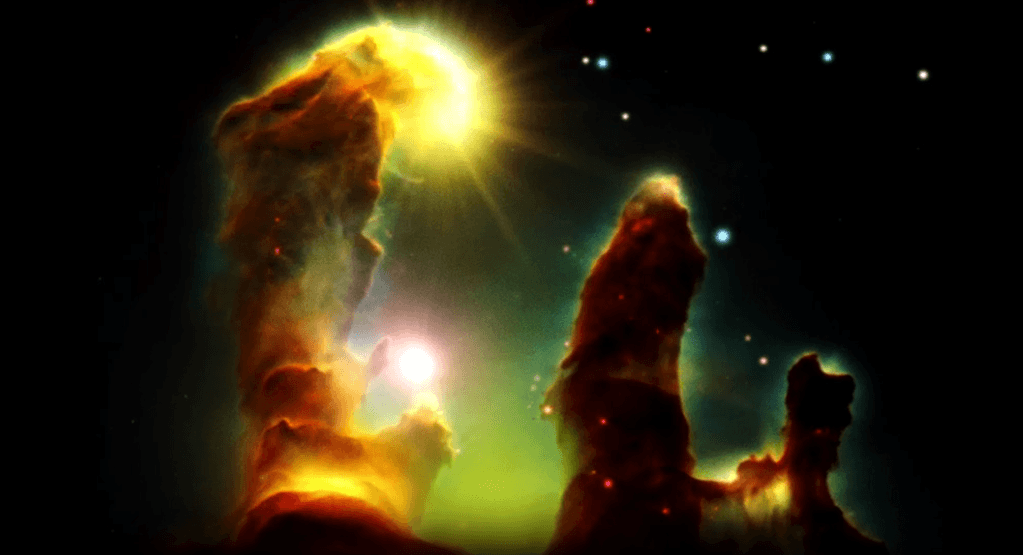
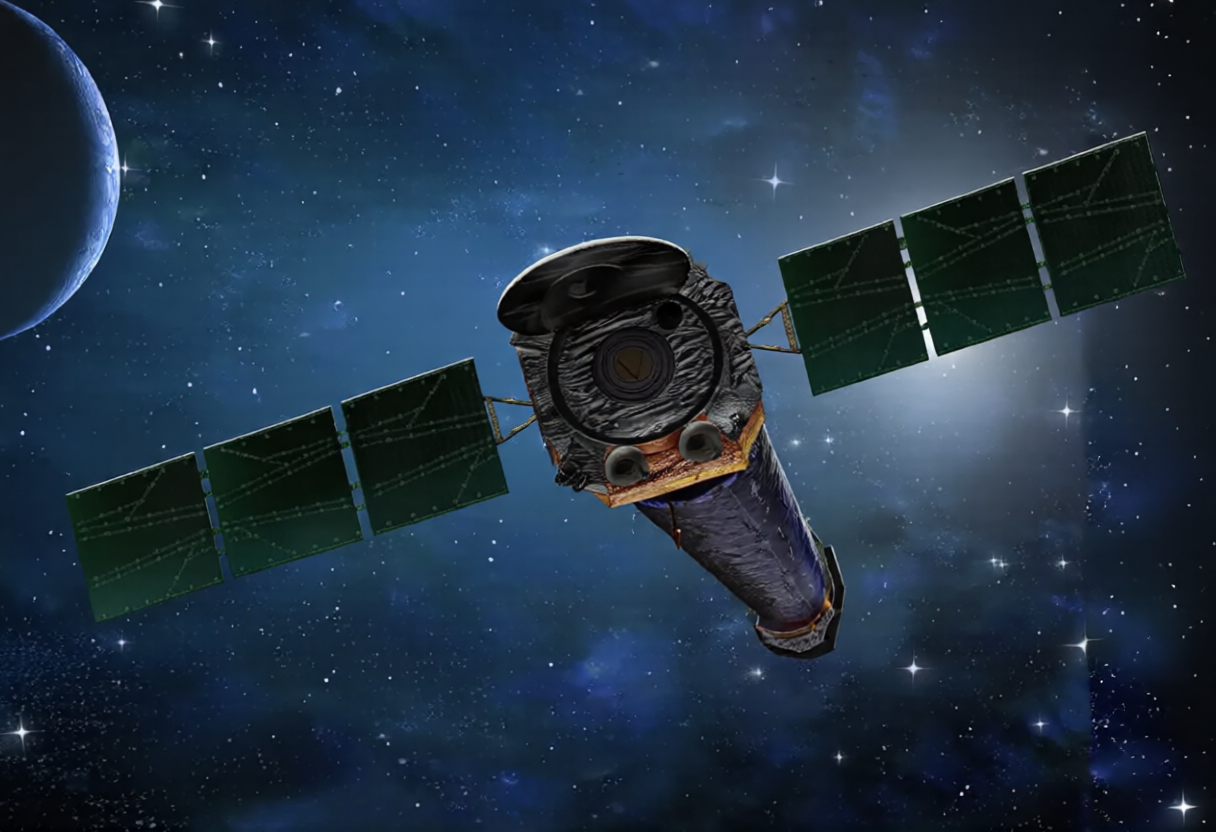
Star formation begins in stellar nurseries, which are regions of dense gas and dust. The European Space Agency's Hubble image, released April 3, 2026, showcases NGC 3603, a bustling star-forming region located approximately 20,000 light-years away. This image highlights dense groups of hot, blue stars that formed in a brief burst, carving out a large cavity in the surrounding gas. X-ray observations, such as those from NASA's Chandra X-ray Observatory, are crucial for studying the interiors of these nurseries, as X-rays can penetrate the obscuring gas and dust.
Protostars, the precursors to fully formed stars, are observed to behave unpredictably, with their growth accompanied by powerful outbursts of gas and dust that create cavities and channels in the surrounding clouds. A study published in The Astrophysical Journal Letters on April 16, 2026, using NASA's James Webb Space Telescope, investigated 29 Cygni b, an object 15 times the mass of Jupiter, finding evidence for heavy chemical elements like carbon and oxygen. This suggests it formed through accretion within a protoplanetary disk, akin to planet formation, rather than by disk fragmentation like stars. This object sits at the dividing line between planets and stars, orbiting its star at an average distance of 1.5 billion miles (2.4 billion kilometers), similar to Uranus in our solar system.
Main sequence stars
Young, Sun-like stars are observed to dim their X-ray output more quickly than previously theorized. A new study utilizing NASA's Chandra X-ray Observatory, released April 14, 2026, examined eight star clusters ranging from 45 million to 750 million years old. Researchers found that Sun-like stars older than about 100 million years in these clusters emitted only about 25% to 33% of the expected X-rays. This "quieting" is attributed to the less efficient generation of magnetic fields within the stars and could be beneficial for the formation of life on orbiting planets, as excessive X-rays can erode a planet's atmosphere. For context, a 3-million-year-old solar-mass star produces approximately 1,000 times more X-rays than the present-day Sun, while a 100-million-year-old solar-mass star is about 40 times brighter in X-rays.
In a discovery announced April 4, 2026, undergraduate students at the University of Chicago identified one of the oldest known stars in the universe. This "ancient immigrant" star, designated SDSSJ0715-7334, possesses a remarkably low metallicity of just 0.005% of the metals found in the Sun, making it the most metal-poor star ever observed. Its composition, primarily hydrogen and helium, indicates it formed near the dawn of the universe, not in the Milky Way, but in the Large Magellanic Cloud before migrating.
Red giants and supergiants
Observations of dying red giants through asteroseismology, the study of starquakes, have revealed that magnetic fields buried deep within these stars can survive and later reemerge on the surfaces of white dwarfs. This finding, published April 17, 2026, by Lukas Einramhof, Ph.D. student at ISTA, suggests that magnetism extends across a broad interior region of the star, with a shell-like layout where the field is compressed near a zone of active fusion. By the time white dwarf cooling begins, this magnetic layer is about 35% of the way out from the core.
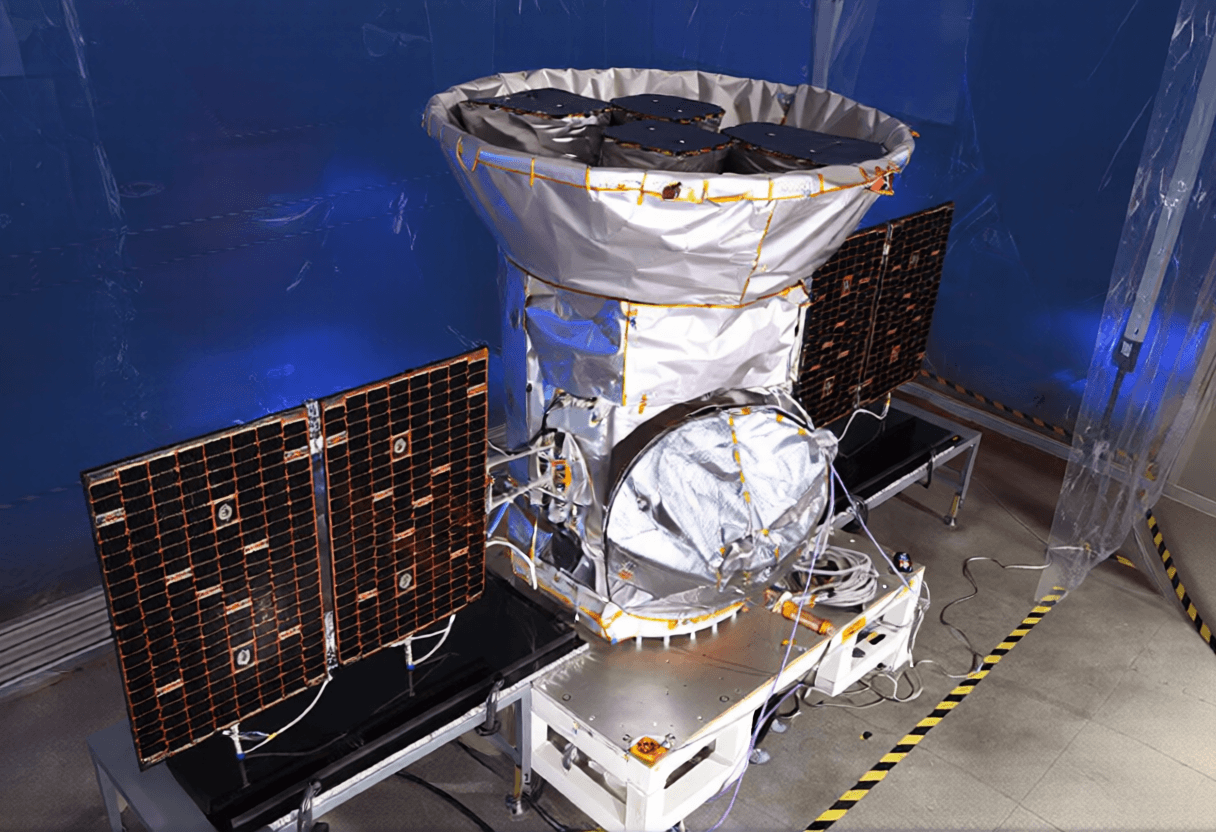
A new study published April 17, 2026, observed by the Transiting Exoplanet Survey Satellite (TESS), indicates that less than 1% of red giant stars still host orbiting planets. Specifically, around the most evolved stars, the presence of close-orbiting giant planets drops to 0.11%. This suggests a widespread process where aging stars engulf their nearby planets as they expand.
The B[e] supergiant LHA 115-S 18, located in the Large Magellanic Cloud, is an evolved, post-red supergiant object surrounded by a rotating ring of gas. High-resolution spectroscopy has identified an inner hot disk of ionized material and an outer cool disk of neutral material. Researchers are working to identify water vapor emission, which would further reveal the physical properties of LHA 115-S 18. Separately, the massive star WOH G64 in the Large Magellanic Cloud, estimated to have a radius 1,540 times that of the Sun, has entered an unstable phase, potentially transitioning from a red supergiant to a hotter, yellower hypergiant stage. Observers reported it began fading again in 2025, dropping by approximately two magnitudes in less than a year.
Supernovae
As of April 17, 2026, a total of 7335 supernovae have been reported for the year 2026, with 533 confirmed and 6802 unconfirmed. The brightest supernova observed this year is 2026fvx (Magnitude 12.3) in NGC 4205, followed by 2026fov (Magnitude 13.5) in NGC 7292, and 2026acd (Magnitude 13.6).
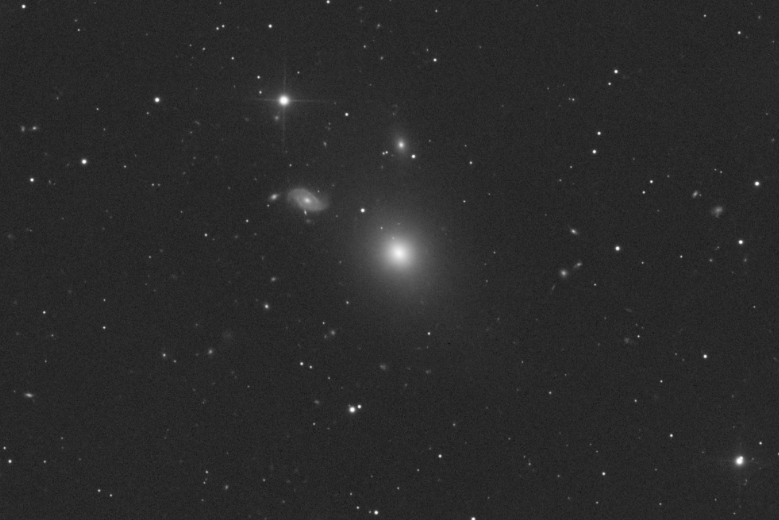
An unusual event, initially detected by LIGO and Virgo gravitational wave detectors, and then by optical telescopes, has been identified as a possible "superkilonova"- a kilonova occurring within a supernova. This event, named AT2025ulz, happened in a galaxy 1.3 billion light-years away and may be the result of a merger between two or more neutron stars. Initially, it exhibited red light and faded quickly, similar to the 2017 kilonova event (GW170817), but then brightened again and showed hydrogen in its spectra, characteristic of a stripped-envelope, core-collapse supernova. Stellar physics predicts neutron stars should have a mass greater than about 1.4 times that of the Sun, but at least one neutron star in this merger appeared to have less mass.
The process of nucleosynthesis in explosive cosmic events, like X-ray bursts on neutron stars, is being refined. New high-precision measurements of two unstable atomic nuclei, phosphorus-26 and sulfur-27, indicate that nuclear reactions within X-ray bursts occur faster than previously believed. At 1 Gigakelvin (GK), the reaction rate of 26P(p,γ)27S can be five times higher than earlier estimates.
Stellar remnants: White dwarfs, neutron stars and black holes
White dwarfs are the dense stellar cores remaining after stars exhaust their fuel. New research accepted in March 2026, led by Stefan Arseneau, uses gravitational redshifts to constrain the hydrogen envelope structure of white dwarfs. This work combines precise gravitational redshifts and Gaia-inferred radii for nearly 500 objects, favoring evolutionary models with thick, mass-dependent hydrogen envelopes. In January 2026, NASA's IXPE captured an unprecedented view of a white dwarf star, EX Hydrae, actively accreting material from a companion, revealing giant columns of ultra-hot gas approximately 2,000 miles high, shaped by the white dwarf's magnetic field and glowing in X-rays.
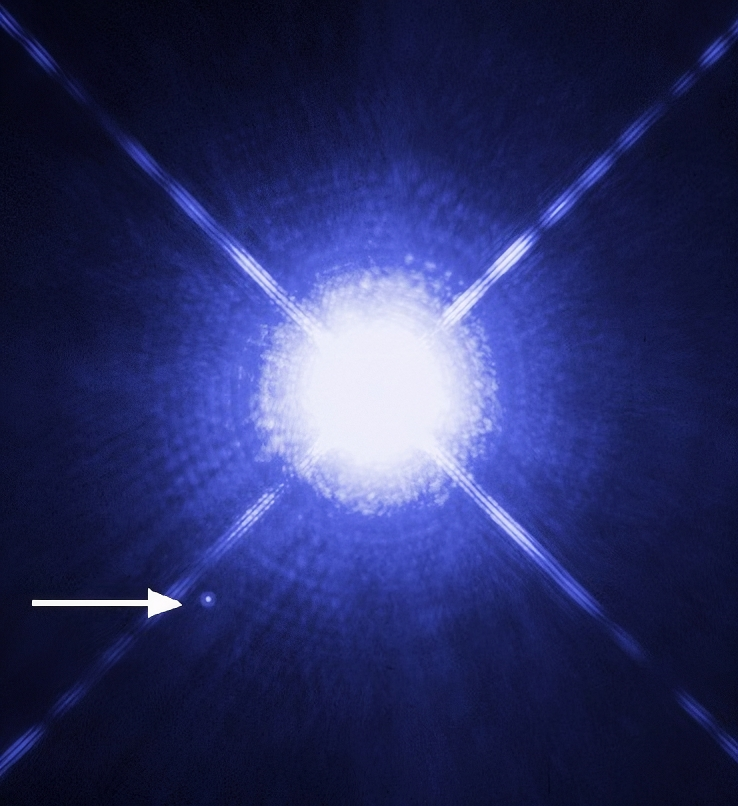
Neutron stars are extremely dense remnants of massive stars. A typical neutron star packs 1.18 to 1.97 times the mass of the Sun into a sphere only about 12 to 20 kilometers in diameter. A single teaspoon of neutron star material weighs approximately 1 billion tons. A binary system, PSR J0514-4002E, located in the globular cluster NGC 1851, contains a pulsar orbiting a massive and mysterious companion, which is either the most massive neutron star known or the least massive black hole ever observed. The merger of two neutron stars is confirmed to produce heavy elements like gold and platinum through the r-process (rapid neutron capture). The GW170817 event, a neutron star merger, produced a gamma-ray burst that arrived 1.74 seconds after the gravitational wave signal, confirming that binary neutron star mergers are responsible for short gamma-ray bursts.
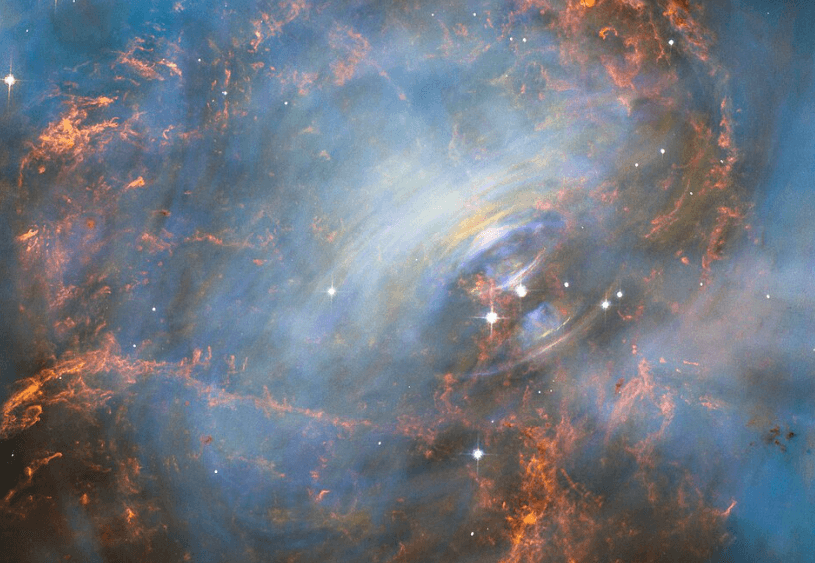
Black holes, the ultimate endpoint for the most massive stars, continue to be a subject of intense research. A study published April 17, 2026, explores whether small galaxies, specifically dwarf spheroidal galaxies orbiting the Milky Way, can host central black holes. The findings place strong upper limits on the masses of central black holes in these dwarf galaxies, typically below one million solar masses, and are consistent with the existence of intermediate-mass black holes. This research supports the idea that the black hole mass-velocity dispersion relation, well-established for large galaxies, may also apply to dwarf spheroidals, albeit with greater uncertainty at lower masses.
In the Cygnus X-1 system, the first black hole ever discovered, new research published April 17, 2026, has precisely measured the power of its jets. These jets, moving at approximately half the speed of light (150,000 km per second), carry away about 10% of the energy released as matter falls into the black hole. The companion star's intense stellar wind causes these jets to bend and change direction.
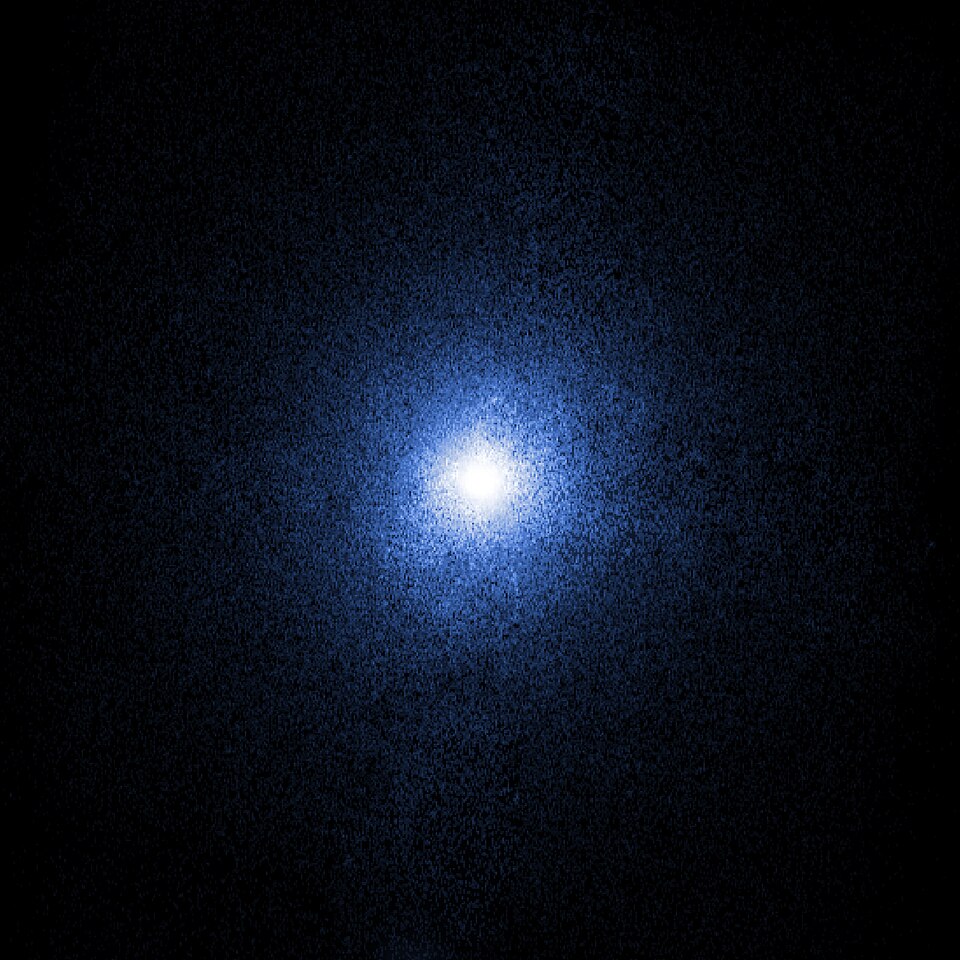
Furthermore, two supermassive black holes, each with a combined mass ranging from 100 million to 1 billion solar masses, have been directly identified in the final stages of orbital decay at the center of the galaxy Markarian 501, approximately 450 million light-years away. These black holes are predicted to merge within the next 100 years, an event that will send detectable gravitational waves through space-time.
Share now








Key takeaways
- The Hubble Space Telescope captured NGC 3603, a bustling star-forming region 20,000 light-years away, in an image released April 3, 2026, highlighting hot, blue stars.
- A study using the James Webb Space Telescope, published April 16, 2026, found heavy elements in 29 Cygni b, an object 15 times Jupiter's mass, suggesting accretion similar to planet formation.
- NASA's Chandra X-ray Observatory revealed on April 14, 2026, that young, Sun-like stars dim their X-ray output faster than expected, potentially benefiting orbiting planets.
- Undergraduate students at the University of Chicago identified on April 4, 2026, SDSSJ0715-7334, an ancient, metal-poor star that likely formed near the universe's dawn in the Large Magellanic Cloud.
- Research published April 17, 2026, indicates magnetic fields from red giants can survive and reemerge on white dwarfs, according to asteroseismology.
- TESS observations, published April 17, 2026, show less than 1% of red giant stars host orbiting planets, suggesting stars engulf nearby planets as they expand.
- As of April 17, 2026, 7335 supernovae have been reported for the year, with 533 confirmed.
- An unusual event, AT2025ulz, detected by LIGO, Virgo, and optical telescopes, may be a "superkilonova" from a neutron star merger within a supernova.
- New measurements of phosphorus-26 and sulfur-27 indicate nuclear reactions in X-ray bursts occur faster than previously believed.
- Research accepted in March 2026, using gravitational redshifts and Gaia data, constrains the hydrogen envelope structure of white dwarfs, favoring thick, mass-dependent envelopes.
- NASA's IXPE captured in January 2026 X-ray images of EX Hydrae, a white dwarf with giant columns of ultra-hot gas from accretion.
- The binary system PSR J0514-4002E in NGC 1851 contains either the most massive neutron star or the least massive black hole known.
- A study published April 17, 2026, places strong upper limits on central black hole masses in dwarf spheroidal galaxies, consistent with intermediate-mass black holes.
- New research published April 17, 2026, precisely measured the jets of Cygnus X-1, finding they carry about 10% of the energy from infalling matter at half the speed of light.
- Two supermassive black holes in Markarian 501, with combined mass up to 1 billion solar masses, are predicted to merge within the next century, generating gravitational waves.
Sources
- earth.comhttps://www.earth.com/image/million-year-old-starburst-shines-with-extreme-stellar-activity/
- universetoday.comhttps://www.universetoday.com/articles/to-celebrate-the-coming-of-spring-nasa-releases-images-of-blossaming-stellar-nurseries
- russpain.comhttps://russpain.com/en/analysis/hubble-telescope-captures-birth-of-new-stars-in-ngc-1333-nebula-370721/
- nasa.govhttps://science.nasa.gov/missions/webb/nasas-webb-redefines-dividing-line-between-planets-stars/
- earthsky.orghttps://earthsky.org/space/superkilonova-double-explosion-star-supernova-kilonova/
- physicsworld.comhttps://physicsworld.com/a/unusual-astronomical-event-might-be-a-superkilonova/
- sciencenews.orghttps://www.sciencenews.org/article/double-explosion-by-star-superkilonova
- sciencedaily.comhttps://www.sciencedaily.com/releases/2025/12/251223084532.htm
