-
234
Views
-
0
Comments
-
0
Like
-
Bookmark

-
 Redaction
Mystery of the Pisco Valley: Decoding Peru's band of holes
New archaeological research suggests the enigmatic Band of Holes at Monte Sierpe functioned as a sophisticated landscape-scale accounting system for the Inca Empire.
The enigma of the Pisco Valley
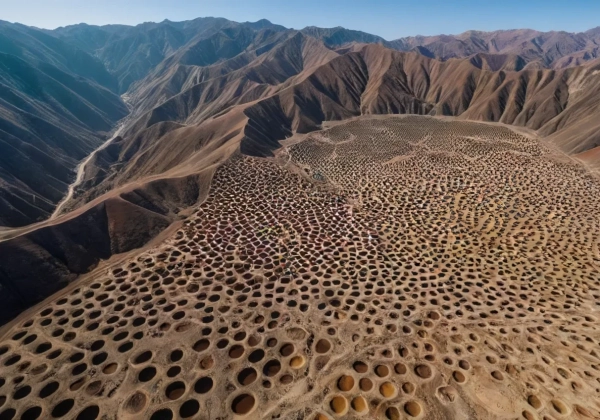
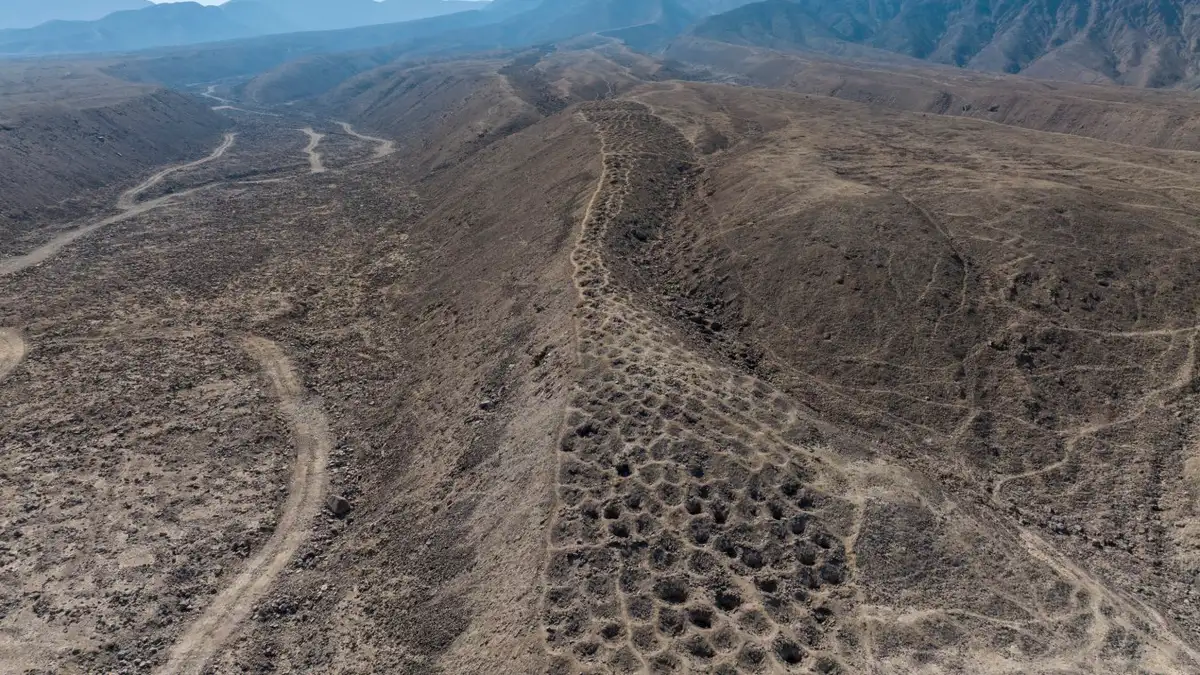
High above the Pisco Valley in Peru, a series of pockmarks scars the landscape of the Monte Sierpe ridge. For decades, this site, known colloquially as the Band of Holes, has remained one of South America's most persistent archaeological puzzles. Stretching for nearly a mile and a half, these 5,200 depressions have invited a spectrum of wild interpretations, ranging from ancient defensive fortifications and agricultural silos to the fringe theories of extraterrestrial construction. However, a new narrative is emerging from the dust of the Andean foothills, one that trades science fiction for the sophisticated logistics of a pre-Columbian superpower.
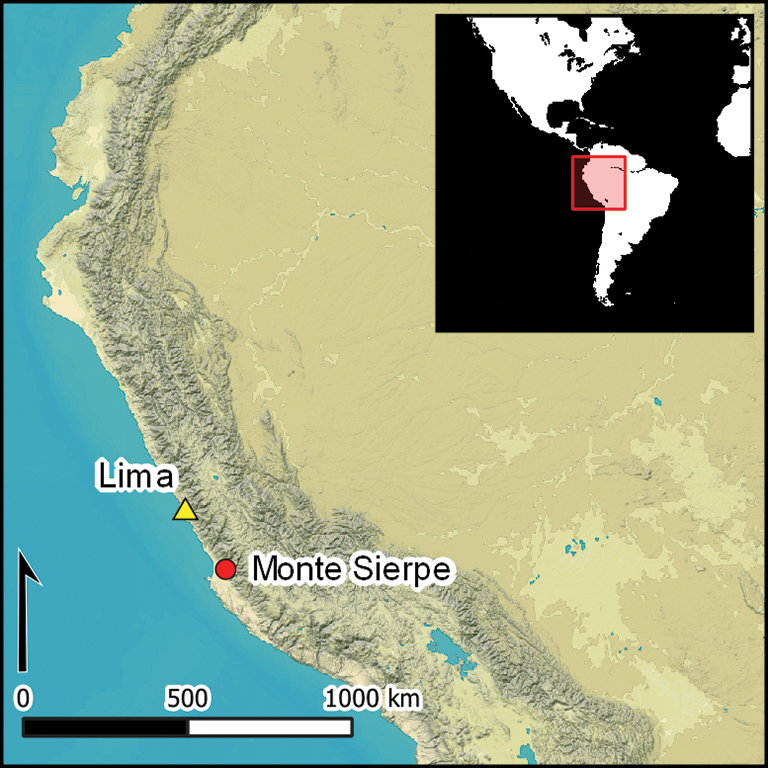
Recent investigations led by researchers from the University of Sydney and other international institutions are painting a picture of Monte Sierpe as a monumental center of commerce and administration. By combining 21st-century technology with the study of ancient record-keeping, archaeologists have proposed that this site served as a massive, landscape-based accounting system, essentially acting as a physical ledger for the movement of goods and the collection of imperial tribute.
A ledger in the earth
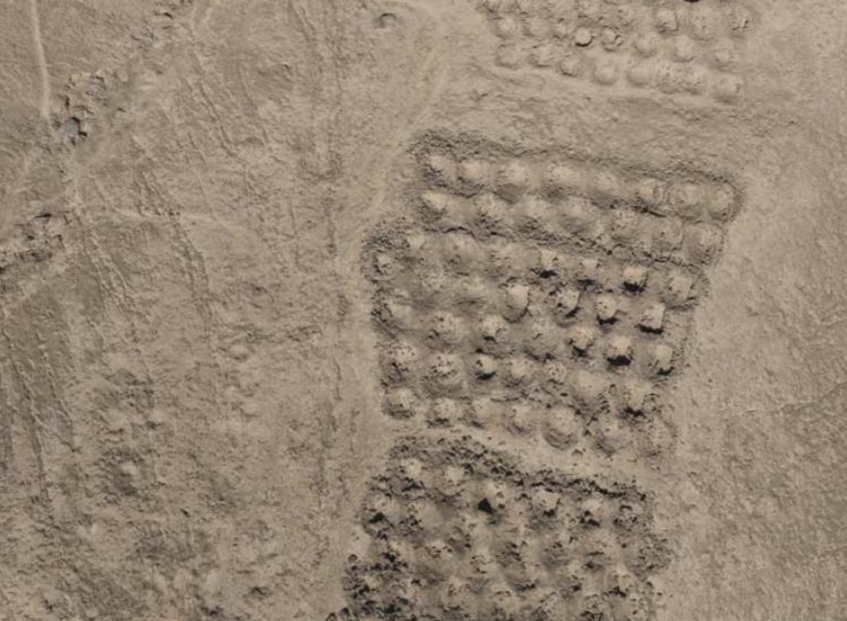
The breakthrough in understanding Monte Sierpe began with a change in perspective. Utilizing drone-mounted high-resolution cameras, researchers were able to map the site with unprecedented precision. From the air, the seemingly random holes revealed a deliberate, rhythmic organization. The holes are not scattered but arranged in groups and rows that mirror the structural logic of a khipu (or quipu), the famous knotted-string devices used by the Inca to record everything from census data to tax obligations.
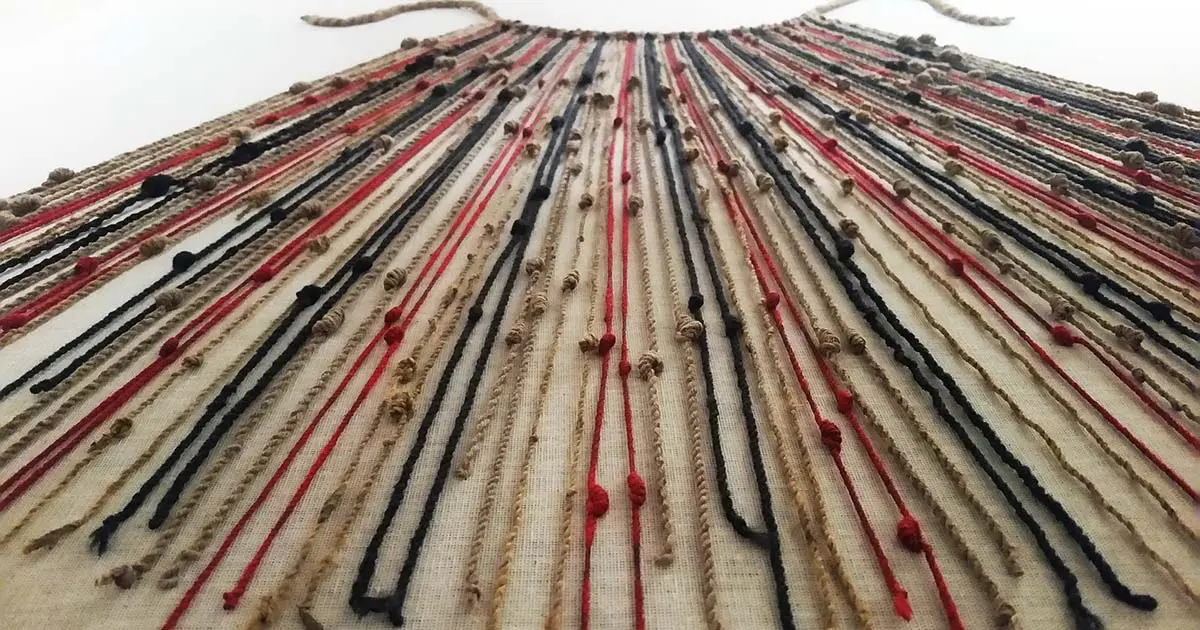
This spatial arrangement suggests that the holes were more than just containers; they were data points. In a society without a written alphabet, the physical placement of items within these groups may have communicated quantities, origins, and destinations of trade goods. This theory transforms the hillside from a passive landscape into a dynamic tool of statecraft.
Evidence in the soil
If the holes were indeed part of an accounting system, they would need to hold the very assets being tracked. To test this, scientists conducted microbotanical analysis of the sediment trapped within the depressions.
The results were revealing. Soil samples uncovered traces of the backbone of the Andean economy:
- Maize and squash: Primary staples of the Incan diet and tribute system.
- Chili peppers: Highly valued trade items used for seasoning and ritual.
- Cotton: Essential for the production of textiles, which were often more valuable than gold in Andean cultures.
- Reeds and other plant fibers: Likely used for weaving the baskets that held these commodities.
The presence of pollen and plant remains suggests that these commodities were deposited directly into the holes. Archaeologists believe the goods were likely contained in woven baskets or ceramic vessels for transport and exchange. The variety of crops indicates that Monte Sierpe was a hub for diverse regional products, connecting the fertile valley floors with the administrative centers of the highlands.
From barter to bureaucracy: An evolution of use
The history of the site appears to reflect the shifting political landscape of ancient Peru. Scholars suggest that during the Late Intermediate Period (roughly 1000-1400 CE), Monte Sierpe may have functioned as a neutral barter marketplace. In this era, local groups would gather at the ridge to trade coastal fish for highland wool or valley crops. It was a site defined by horizontal exchange and community interaction.
However, following the expansion of the Inca Empire after 1400 CE, the character of the site likely changed. The Inca were masters of central planning and logistics. They likely recognized the existing infrastructure at Monte Sierpe and repurposed it for imperial administration. Under Inca rule, the marketplace became a collection point for mit'a, the mandatory public service or tribute owed to the Sapa Inca. The holes were no longer just for local trade; they became the physical manifestation of the imperial tax code, where goods were measured, recorded, and then funneled toward the empire's vast network of storehouses (qullqas).
The scale of logistics
To put the scale of the Band of Holes into perspective, consider the following metrics:
- Total Length: Approximately 1.5 kilometers (0.9 miles).
- Average Diameter: 1 meter (approx. 3.3 feet) per hole.
- Total Capacity: Thousands of individual "data cells" for granular tracking of regional assets.
Debating the decimal: Expert perspectives
Despite the compelling evidence linking the site to the khipu system, the archaeological community remains cautious. Dr. Karenleigh Overmann, an expert in the evolution of numeracy, has noted potential discrepancies in the mathematical layout. The Inca administration was famously reliant on a decimal system, organizing its population and resources into units of ten, one hundred, and one thousand.
While many rows at Monte Sierpe appear to follow this logic, some groupings do not consistently align with a strict base-10 structure. This raises two primary theories among researchers:
- Hybridization: The site may have retained older, local traditions of measurement that were eventually "layered" over by Inca decimal standards.
- Specific Categorization: The non-decimal rows might represent specific types of goods or units of measurement that didn't require a decimal count (e.g., volume-based rather than unit-based).
Furthermore, researchers are utilizing strontium isotope analysis to determine the exact origins of the plant remains. Pinpointing where the maize or cotton was grown will clarify the scale of the trade network. If the goods originated from hundreds of miles away, it would solidify Monte Sierpe's status as a critical node in the macro-imperial infrastructure.
A monument to information
The ongoing work at the Band of Holes serves as a reminder that the great monuments of antiquity were not always built of gold or towering stone. Sometimes, the most impressive feats of an empire are its systems of information and organization. Monte Sierpe represents a sophisticated indigenous solution to the eternal problem of managing a complex economy across a rugged, vertical landscape.
As researchers continue to explore potential connections with other Andean record-keeping systems, the Band of Holes stands as a testament to the ingenuity of the people of the Pisco Valley. It is a site where the earth itself was used to count, record, and sustain a civilization, turning a dusty hillside into a vital engine of ancient South American life.
Share now






Key takeaways
- The Monte Sierpe site consists of approximately 5,200 holes stretching 1.5 kilometers across a Peruvian hillside.
- New theories suggest the site was an indigenous trading and accounting system dating back to the 14th century.
- Drone mapping revealed numerical patterns similar to the structure of Inca khipus (knotted-string devices).
- Soil analysis found traces of maize, cotton, chili peppers, and squash, suggesting the holes held goods for exchange.
- Researchers believe the site evolved from a barter marketplace into an imperial tribute management center.
Sources
- newatlas.comhttps://newatlas.com/environment/5-200-holes-peruvian-mountain/
- usf.eduhttps://www.usf.edu/news/2025/new-study-suggests-accounting-not-aliens-explains-perus-mysterious-band-of-holes.aspx
- heritagedaily.comhttps://www.heritagedaily.com/2025/11/secrets-of-the-band-of-holes-revealed/156351
- thedebrief.orghttps://thedebrief.org/archaeologists-decode-perus-mysterious-band-of-holes-revealing-ancient-indigenous-accounting-system/
- archaeology.orghttps://archaeology.org/news/2025/11/11/drone-mapping-offers-insight-into-perus-band-of-holes/
- arkeonews.nethttps://arkeonews.net/monte-sierpe-perus-mysterious-band-of-holes-may-have-been-an-ancient-marketplace/
- sci.newshttps://www.sci.news/archaeology/monte-sierpe-14343.html
- archaeology.orghttps://archaeology.org/issues/march-april-2026/features/return-to-serpent-mountain/
