-
87
Views
-
0
Comments
-
1
Like
-
Bookmark

-
 PRO
PRO -
 Redaction
Why deep-sea exploration may cost more than we can pay
Deep-sea mining threatens fragile ocean ecosystems, from sediment plumes to noise pollution, endangering newly discovered species before we fully understand them.
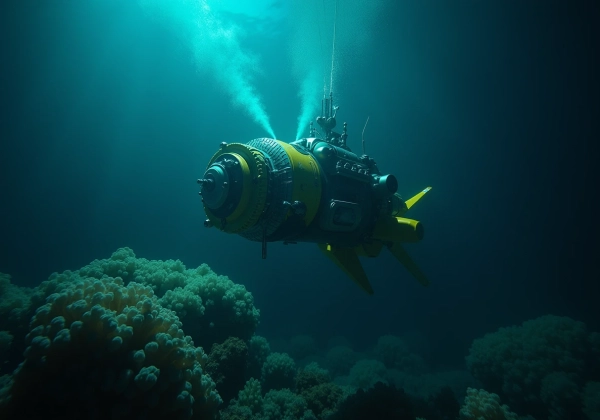
The depths of our oceans have long been considered the final frontier of biology, a place where life persists in the crushing dark and freezing cold. Recently, discoveries like the 'Glass Castles' off the coast of Japan have revealed sprawling, delicate structures teeming with species never before seen by human eyes. Yet, these newfound wonders are already facing an existential threat. While commercial deep-sea mining has not yet officially begun, the preliminary exploration phase is proving to be far from harmless, casting a shadow over these fragile ecosystems before we even fully understand them.
The invisible shadow: Sediment and plumes
One of the most insidious threats posed by exploration is the generation of sediment plumes. When heavy machinery disturbs the seafloor, it kicks up clouds of silt and debris that do not settle quickly. These plumes can drift for vast distances through the midwater, fundamentally altering the environment for organisms that have evolved in crystal-clear water.
For many deep-sea creatures, the impact is physical and physiological. Filter-feeders find their delicate mechanisms clogged by nutrient-poor dust, while species relying on bioluminescence for communication and hunting find their signals obscured by the haze. Beyond the visual, these plumes can introduce heavy metals into the food chain, poisoning the foundation of the marine web. Recent studies offer a sobering timeline for recovery: microbially mediated biogeochemical functions-the very engine of the deep-sea ecosystem-may take more than half a century to return to baseline levels after a single sediment disturbance.
Sound and light in the silent deep
The deep sea is naturally a realm of near-total silence and absolute darkness. The introduction of human technology shatters this equilibrium. Exploration involves powerful sonar arrays and the mechanical thrum of surface vessels and submersibles. This noise pollution is not contained; sound travels efficiently through water, meaning a single operation could disrupt life within a radius of 500 kilometers.
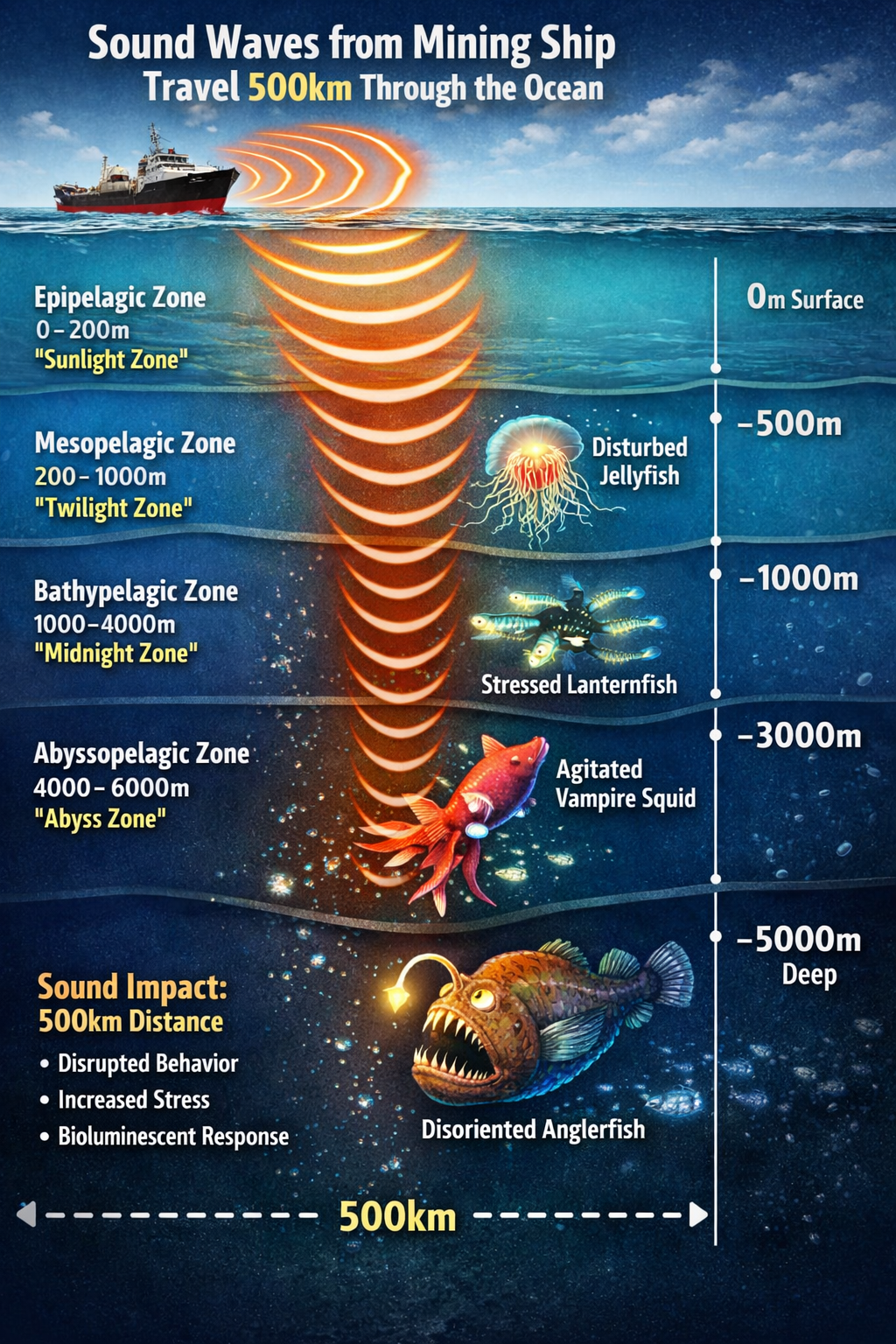
This acoustic intrusion has devastating consequences for marine life:
- It impairs the ability of species to detect predators or locate mates.
- It interferes with the complex navigation systems used by migratory species.
- It disrupts feeding patterns, as many deep-sea hunters rely on sound to locate prey in the dark.
Equally disruptive is light pollution. Creatures that have lived for millennia in the absence of sunlight possess eyes-or other sensors-tuned to the faintest glimmer of bioluminescence. The floodlights of exploration vehicles can cause permanent ocular damage or drive away species essential to the local habitat.
The permanence of destruction
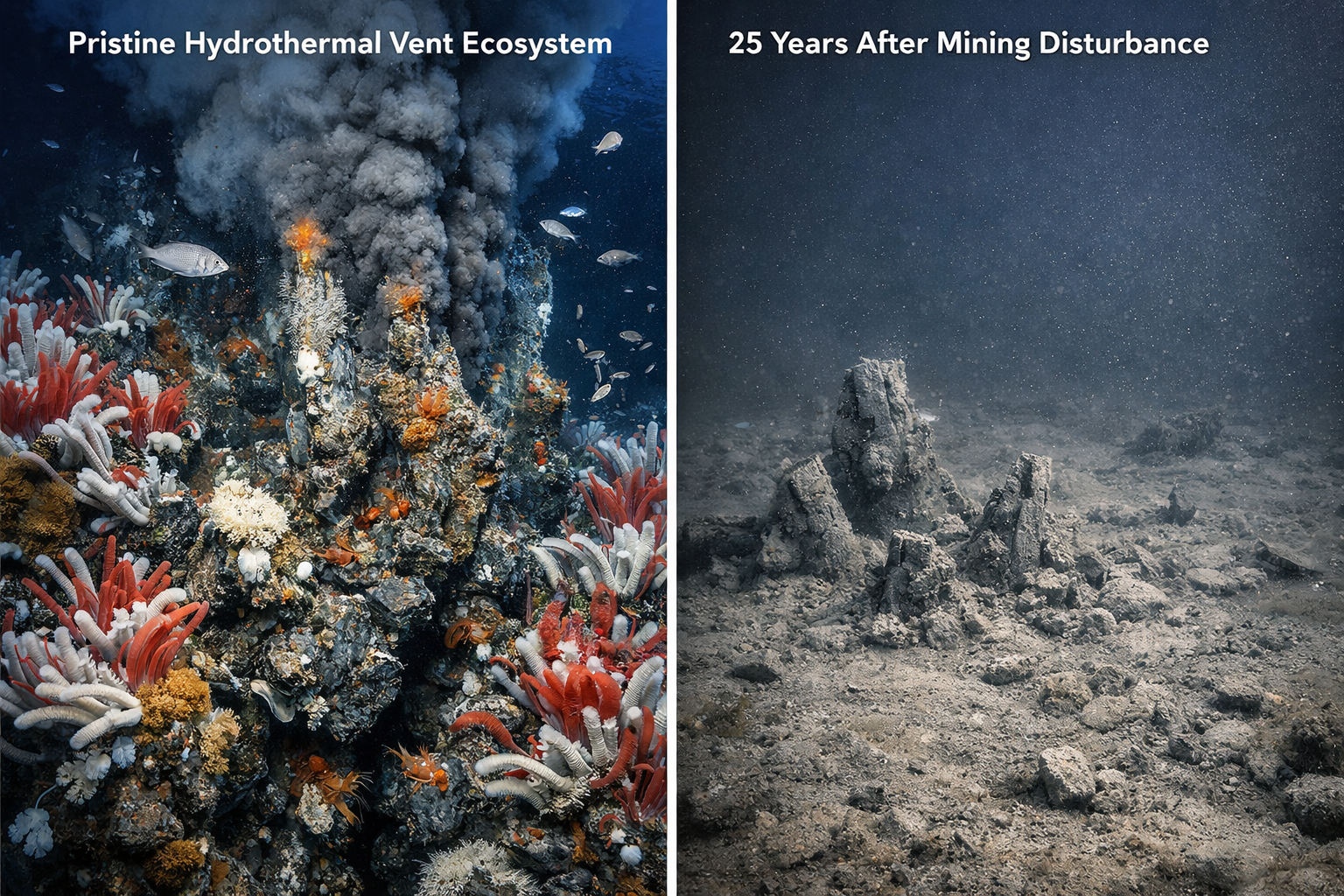
Unlike terrestrial environments, where forests might regrow over decades, the deep sea operates on a different temporal scale. The stripping of seamounts and the disturbance of hydrothermal vents are actions that many scientists believe are virtually irreversible. In experiments where deep-sea mining was simulated on abyssal plains, researchers returned 26 years later to find that carbon cycling-a critical function for global climate regulation-was still significantly reduced.
This raises a profound ethical dilemma. We are currently risking the extinction of species we have only just met. The precautionary principle suggests that in the face of such profound scientific uncertainty, protection must take precedence over profit. Nearly 1,000 scientists have joined environmental organizations in calling for a moratorium, arguing that it is irresponsible to proceed without a complete understanding of the ecological consequences.
Rethinking the green transition
The primary driver for deep-sea mineral interest is the demand for cobalt, nickel, and lithium-materials essential for the green energy transition. However, the narrative that we must destroy the ocean to save the climate is increasingly being challenged by alternative resource strategies.
Circular economy and recycling
Advancements in material science and urban mining-recycling used electronics and batteries-offer a pathway to mineral security. Experts suggest that circular economy strategies could meet projected supply gaps for copper and nickel by 2030. By refining how we reuse existing materials, we can significantly narrow the demand for virgin minerals from the seafloor.
Seawater and sustainable mining
Innovative technologies are being developed to harvest minerals dissolved in seawater. These methods could potentially utilize existing offshore infrastructure, such as retired oil and gas platforms, reducing the need for new, invasive seafloor operations. Furthermore, improving the governance and technology of land-based mining remains a viable, if challenging, alternative to opening an entirely new industrial front in the ocean.
A regulatory void
At the center of this controversy is the International Seabed Authority (ISA). While it manages exploration in international waters under the framework of the United Nations Convention on the Law of the Sea (UNCLOS), the organization is struggling to keep pace with industrial interest. The ISA missed a critical July 2023 deadline to finalize a 'mining code' for commercial exploitation, leaving the industry in a regulatory gray zone.
Furthermore, the United States is not a party to UNCLOS, which complicates jurisdictional oversight and international cooperation. This lack of a robust, finalized legal framework means that current exploration activities are occurring with insufficient safeguards.
The discovery of the Glass Castles reminds us that the deep sea is not a wasteland of rocks and minerals, but a vibrant, living library of biological history. As we stand on the precipice of a new industrial era, the question is not just whether we can reach the bottom of the ocean, but whether we have the wisdom to leave it intact. The exploration phase has already shown us the sensitivity of this environment; perhaps the most valuable thing we can extract from the deep is the knowledge of how to protect it.
Share now






Sources
- deep-sea-conservation.orghttps://deep-sea-conservation.org/wp-content/uploads/2024/02/DSCC_FactSheet2_DSM_science_4pp_OCT_23.pdf.pdf
- oceanographicmagazine.comhttps://oceanographicmagazine.com/news/deep-sea-mining-plumes-could-starve-life-in-pacific-s-twilight-zone/
- wri.orghttps://www.wri.org/insights/deep-sea-mining-explained
- faunalytics.orghttps://faunalytics.org/deep-sea-mining-and-noise-pollution/
- wwfwhales.orghttps://wwfwhales.org/news-stories/a-noisy-abyss-how-deep-seabed-mining-could-impact-whales
- oceancare.orghttps://www.oceancare.org/en/stories_and_news/deep-sea-mining-noise/
- ceramics.orghttps://bulletin.ceramics.org/article/the-environmental-impacts-of-deep-sea-mining/
- oceans-research.comhttps://www.oceans-research.com/deep-sea-mining-threats-alternatives/
