

-
 Redaction
Finlandization: the underrated art of survival
Finlandization is often dismissed as weakness. Discover how Finland's Cold War buffer strategy shaped modern ideas of neutrality and survival.
The study of international relations often favors the dramatic over the subtle. We tend to celebrate the defiant stand or the absolute alliance, yet history suggests that for many nations, survival is not found in the clarity of confrontation but in the ambiguity of the buffer. The concept of Finlandization, coined in 1961 by the German political scientist Richard Löwenthal and frequently deployed as a pejorative in Western academic circles during the latter half of the twentieth century, represents one of the most misunderstood and underrated arts of national preservation. It is a testament to the idea that a nation can yield its external alignment without sacrificing its internal soul.

To understand the dignity of the buffer, one must look back to the closing months of the Second World War. Finland found itself in a precarious position, having fought two grueling wars against the Soviet Union: the Winter War of 1939-1940 and the Continuation War of 1941-1944. Unlike the Baltic states, which had been forcibly annexed in 1940, Finland was never occupied by the Red Army. This distinction was not an accident of geography but a result of blood and iron. The Finns suffered roughly 89,000 dead or missing in those two wars, a staggering toll for a nation of fewer than four million people, yet they inflicted casualties on the Soviet side severe enough to make further conquest appear costly. The subsequent victory was Pyrrhic in every sense. Finland ceded roughly a tenth of its territory, including the industrial city of Vyborg, and was obligated to pay substantial war reparations in the form of ships, machinery, and raw materials to Moscow.
The 1948 Agreement of Friendship, Cooperation, and Mutual Assistance, known by its Finnish acronym YYA, became the foundation of what we now call Finlandization. It was a cold, hard bargain. Finland would remain outside the Western military orbit and consult with Moscow on matters of mutual defense, in exchange for the right to remain a democratic, capitalist state, free of the Communist governments imposed on Poland, Hungary, and the rest of Eastern Europe. As the world once again fractures into competing blocs, the lessons of this delicate dance have rarely felt more relevant.
The architecture of strategic restraint
At its core, Finlandization is the management of asymmetry. It is the recognition that when a small state shares a border with an empire, the primary duty of the statesman is not the pursuit of idealist glory, but the maintenance of the neighbor's confidence. This requires a level of domestic discipline that is often alien to modern polarized societies. In the Finnish context, this approach is known as the Paasikivi-Kekkonen line, named after the two presidents who steered the nation through the Cold War: Juho Kusti Paasikivi, who served from 1946 to 1956, and Urho Kekkonen, who followed him and remained in office until 1981. Paasikivi's famous dictum, that Finland must "pay heed to its powerful neighbor," became something close to a national catechism.
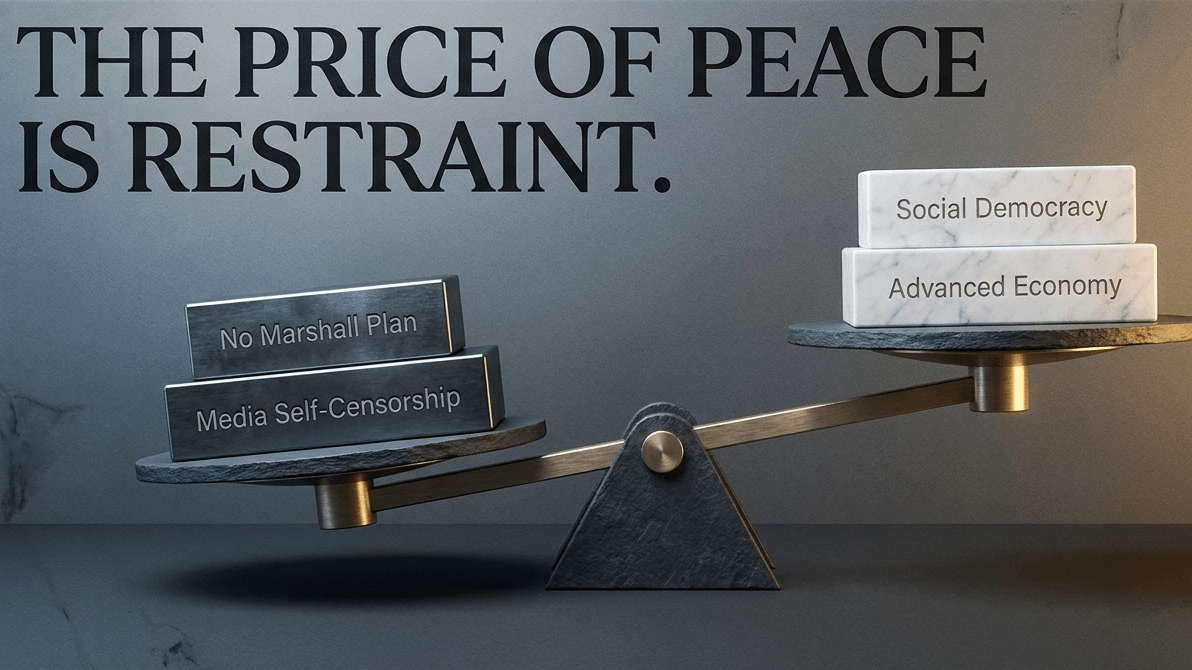
They understood that Finnish independence was not a static right but a daily negotiation. This negotiation involved a series of silent concessions. Helsinki largely avoided criticizing Soviet policy on the international stage. It declined to participate in the Marshall Plan, under direct Soviet pressure, even though doing so cost the country access to American reconstruction capital. It maintained a notable degree of self-censorship in its press to avoid provoking the Kremlin. To the outside observer, this appeared to be a slow erosion of sovereignty.
"Small countries fated by geography to live amid great powers do not regard balancing, hedging and bandwagoning as mutually exclusive alternatives," the Singaporean diplomat Bilahari Kausikan once observed of states navigating exactly this kind of asymmetry. "Instead, they see nothing contradictory in pursuing all three courses of action simultaneously."
Beneath this surface of compliance, Finland built a resilient social democracy. By keeping the Soviet Union's security concerns at bay, Finland gained the breathing room to construct an advanced economy and a robust welfare state, one that would eventually rank among the most generous and effective in the world. The buffer was not a cage; it was a shield.
The internal price of external peace
One cannot discuss the dignity of the buffer without acknowledging the psychological and political cost. Finlandization demanded a peculiar form of national stoicism. The Finnish leadership had to operate in a shadow world of backchannel diplomacy. Kekkonen, who served as president for a quarter-century, became the ultimate practitioner of this art. He cultivated personal relationships with Soviet leaders, and the Finnish sauna became, somewhat famously, a venue for informal, high-stakes diplomacy. This brand of personal trust-building helped reduce the perceived need for more coercive forms of Soviet pressure.
This came at the expense of political pluralism. During the height of Finlandization, ambitious politicians understood, even if it was never written into law, that reaching the highest offices of state required avoiding positions that might unsettle Moscow. The Finnish Security Intelligence Service, known by its Finnish acronym SUPO, had the delicate task of monitoring both domestic radicals and foreign intelligence activity without unbalancing the broader relationship with its eastern neighbor. The dignity here was found in the trade-off. The Finns traded the vanity of outspoken foreign policy for the reality of domestic freedom. After the Second World War, Finland was the only part of the former Russian Empire that did not fall under communist rule, a fact that speaks to the singular success of their strategy, even as it leaves open the deeper question of what such success actually cost the country's political culture.
It is worth pausing here on one of the more curious footnotes of the era. Finland was, for a time, the only nation that participated in both the Western-aligned Eurovision Song Contest and its short-lived Soviet-bloc counterpart, Intervision, a small but telling illustration of a country straddling two worlds simultaneously rather than choosing decisively between them.
If readers are curious about other territorial peculiarities born of contested sovereignty, the strange and often overlooked world of enclaves and exclaves offers a useful companion study in how borders rarely behave as cleanly as the maps suggest.
The evolution of the buffer state in a multipolar world
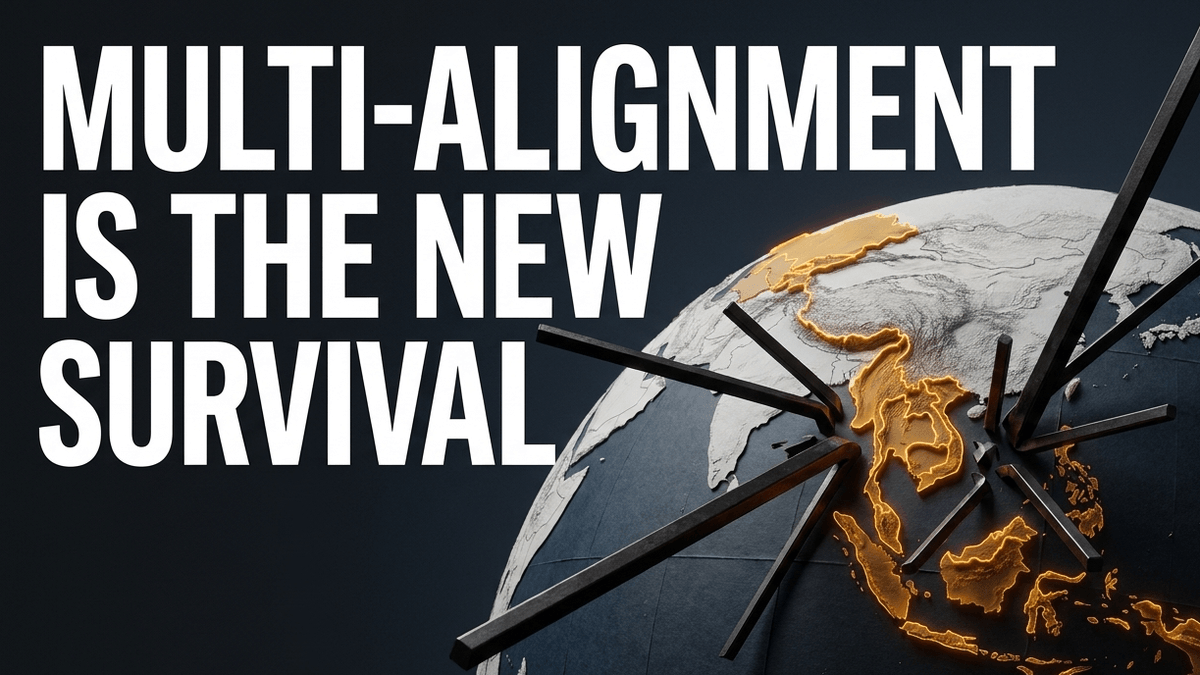
As the unipolar moment of the post-Cold War era recedes further into memory, the concept of the buffer state is undergoing something of a renaissance. The binary logic of "with us or against us" is increasingly failing to account for the realities of middle powers. Nations across Central Asia, Southeast Asia, and the Caucasus are finding that the art of being a buffer can provide more leverage than the role of junior partner in a superpower alliance. The dignity of the buffer is being rediscovered as a way to navigate the competition between the United States and China.
In this modern context, Finlandization is being rebranded, more often than not, as "strategic autonomy," "hedging," or "multi-vector diplomacy." The fundamental principle remains largely the same: avoid becoming a battlefield for the great powers by proving your worth as something closer to neutral ground. A successful buffer state can act as a pressure valve in the international system, a space where adversaries communicate without the baggage of formal alignment.

Kazakhstan offers perhaps the clearest contemporary illustration. Sharing a border of more than 7,600 kilometers with Russia and nearly 1,800 kilometers with China, Astana has spent more than three decades cultivating what its own officials call multivectorism: simultaneous strategic partnerships with Moscow, Beijing, Washington, and Brussels, none of them exclusive. President Kassym-Jomart Tokayev's government has, at various points, declined to recognize Russian territorial claims in Ukraine while continuing to host Russian energy transit and signing tens of billions of dollars in agreements with American firms. Scholars studying the country increasingly describe this not as passive hedging but as a deliberate strategy of enmeshment, drawing great powers into overlapping economic relationships that make any single power's coercion more costly to itself. It is not a flawless strategy. Analysts have noted that Kazakhstan's posture sometimes tilts more visibly toward whichever partner is most economically salient in a given moment, a reminder that the buffer's equilibrium is never perfectly stable.
Singapore presents a related but distinct case. Lacking Finland's land border with a single dominant neighbor, the city-state instead practices what scholars term "hedging" between Washington and Beijing: deep security cooperation with the United States, including base access for American forces, paired with extensive economic integration with China and a deliberate diversification of arms suppliers across Germany, France, Israel, and beyond. Former Singaporean officials have been candid that this is not equidistant neutrality so much as a calculated refusal to be cornered by either power's demands.
Economic sovereignty through geopolitical silence
One of the more compelling arguments for the buffer strategy is economic. By declining to join exclusive trade blocs or military alliances, a state can position itself as a bridge rather than a battleground. During the Cold War, Finland's trade agreements with Moscow, dating back to the 1950s, gave Finnish firms a foothold in Soviet markets that Western competitors largely lacked. The Finnish Cable Works, one of the three companies that would later merge to form Nokia, began supplying cable to the Soviet Union as part of Finland's war reparations, a relationship that deepened into a substantial commercial partnership through the 1960s and 1970s.
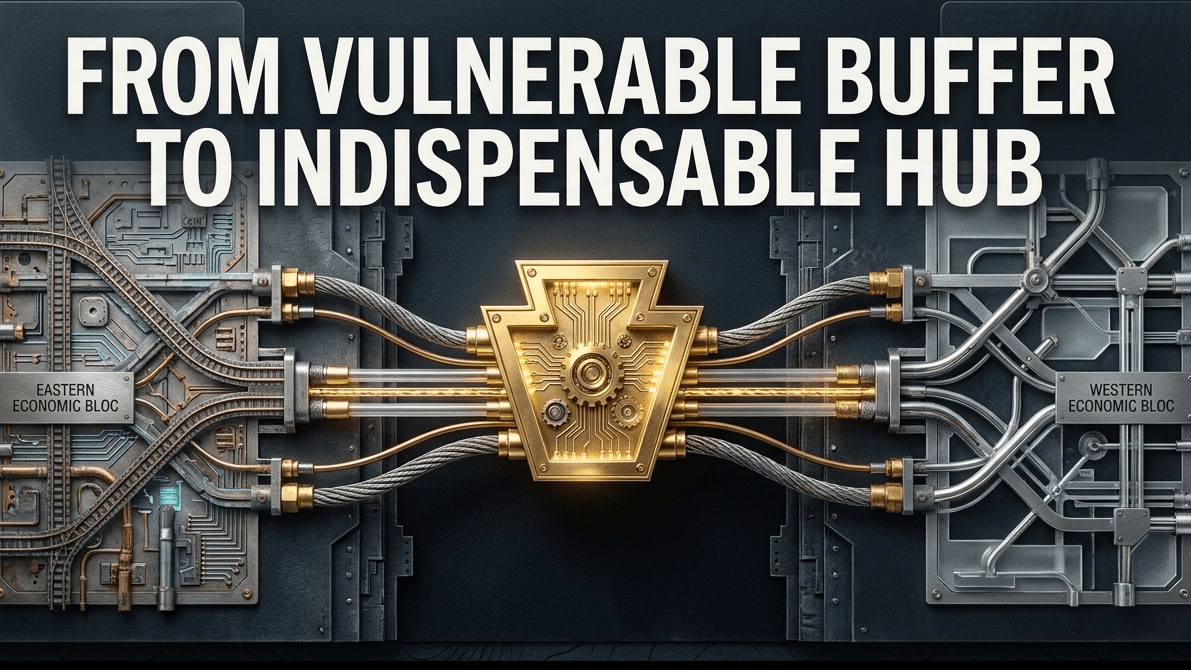
It would be an overstatement, however, to credit Nokia's later rise to global telecommunications dominance primarily to this Soviet trade relationship. The company's transformation into a global giant came largely after the Cold War's end, driven by Finland's own telecoms deregulation in the 1980s, the country's accession to the European Union in 1995, and Nokia's early and aggressive embrace of the pan-European GSM mobile standard. The Soviet connection mattered, but it was the opening to Western markets, not the closed Soviet one, that ultimately built the Nokia of the 1990s and 2000s. The more accurate lesson is narrower but still instructive: Finland's buffer status allowed it to keep one foot in each economic sphere during the years when that mattered most, without becoming dependent on either.
In the contemporary era, similar patterns are visible in states like Kazakhstan, which has used its energy reserves to draw investment from Russia, China, the Gulf states, and the West simultaneously, or the Gulf monarchies, which increasingly court Washington, Beijing, and Moscow at once on questions of defense procurement and infrastructure investment. These states understand that their security is tied to their economic indispensability. They invite investment from multiple sides, creating a web of mutual interests that makes coercion against them costlier for everyone involved.
A reader interested in the deeper structural forces shaping which states get to play this game at all might find the analysis of rare earth monopoly dynamics a useful complement, since control over critical resources often determines whether a small state has genuine leverage or merely the appearance of it.
The risks of the middle path
It would be intellectually dishonest to present Finlandization as a risk-free endeavor. The greatest danger for any buffer state is the loss of its internal cohesion. When the "national line" becomes so rigid that it stifles legitimate political debate, the state risks becoming a hollow shell rather than a resilient one. Furthermore, the buffer state is always at the mercy of the prevailing international temperature. When great power tensions reach a boiling point, the space available for neutrality contracts sharply.
This is precisely what occurred following Russia's full-scale invasion of Ukraine in February 2022. Finland and Sweden submitted their applications to join NATO that May, and on 4 April 2023, Finland formally became the alliance's thirty-first member, more than doubling NATO's existing land border with Russia in a single stroke. Public support for the move, which had hovered for decades around twenty to thirty percent, surged past eighty percent within weeks of the invasion.
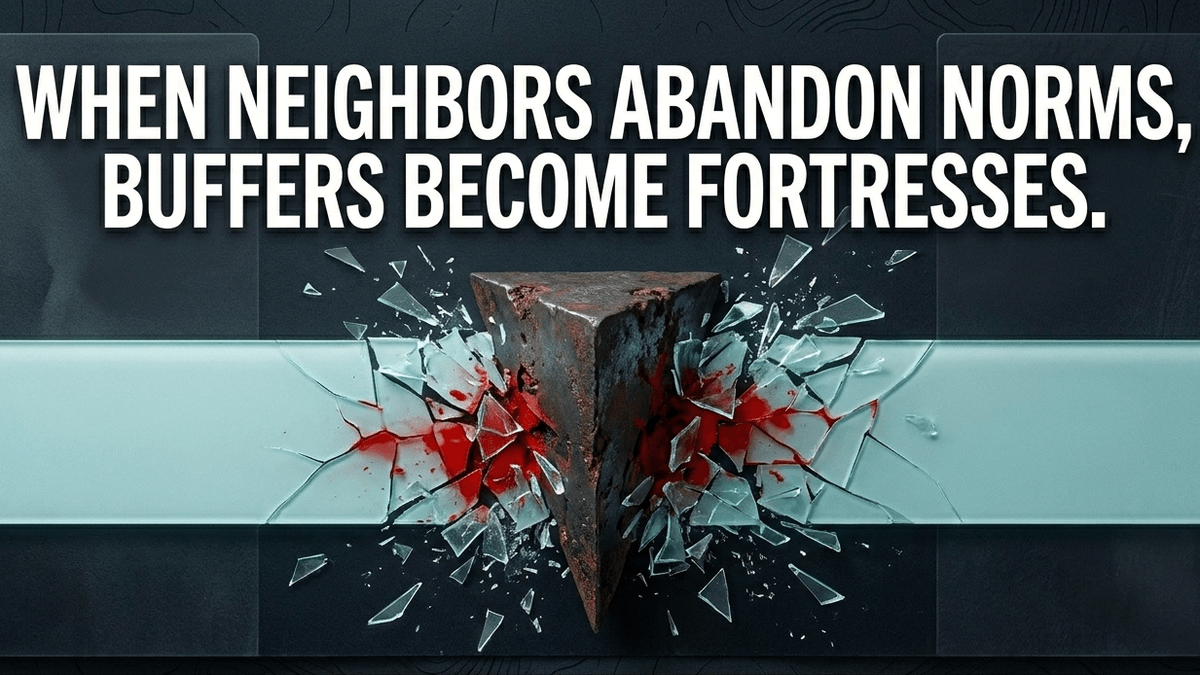
The decision was not, in any meaningful sense, a failure of Finlandization. It was a recognition that the conditions for it had vanished. For a buffer to function, there must be at least a baseline respect for international norms by the neighboring power, particularly the norm against territorial conquest. When that neighbor demonstrates a willingness to seize territory by force, the dignity of the buffer is replaced by the necessity of the fortress. For many other regions of the world, however, where the prevailing threat is more ideological or economic than kinetic, the Finnish model retains a great deal of relevance.
If this question of where great-power friction tends to concentrate interests the reader, the discussion of strategic chokepoints offers a useful geographic counterpart, since buffer states and chokepoints both derive their importance from the same underlying logic of position.
The role of intelligence and transparency
A critical, if often overlooked, component of the buffer art is the role of the intelligence community. To maintain the trust of a wary neighbor while remaining a sovereign democracy requires an elite level of statecraft. Information must be managed with a kind of surgical precision. The buffer state must understand its neighbors thoroughly, yet it must never present itself as a threat. This creates something of a paradox, in which the most successful buffer states are often those with the most sophisticated internal security apparatuses, deployed not for aggression but for reassurance.
Transparency about one's own security posture functions as a key determinant of a state's ability to sustain neutrality over time. By being explicit about what it will not do, such as hosting foreign military bases, a buffer state reduces the likelihood of miscalculation by its larger neighbor. This clarity is, in many respects, the bedrock of the buffer's dignity. It amounts to a quiet but firm statement of intent: we are not your enemy, but neither are we your servant. That distinction, more than any single treaty, is what allowed Finland to navigate the twentieth century intact.

Reclaiming the narrative of neutrality
In much of the current global discourse, neutrality is treated as a synonym for cowardice or moral evasion. This is, in this author's assessment, a shallow reading of the historical record. The history of Finland suggests that neutrality, properly understood, is a proactive and demanding choice rather than a passive one. It requires a nation to stand without the collective security of a formal treaty for decades at a time, relying instead on diplomatic skill and the resilience of its own society. The dignity of the buffer is the dignity of a state that declines to be drawn into another power's crusade, not because it lacks conviction, but because it has weighed the costs with unusual clarity.
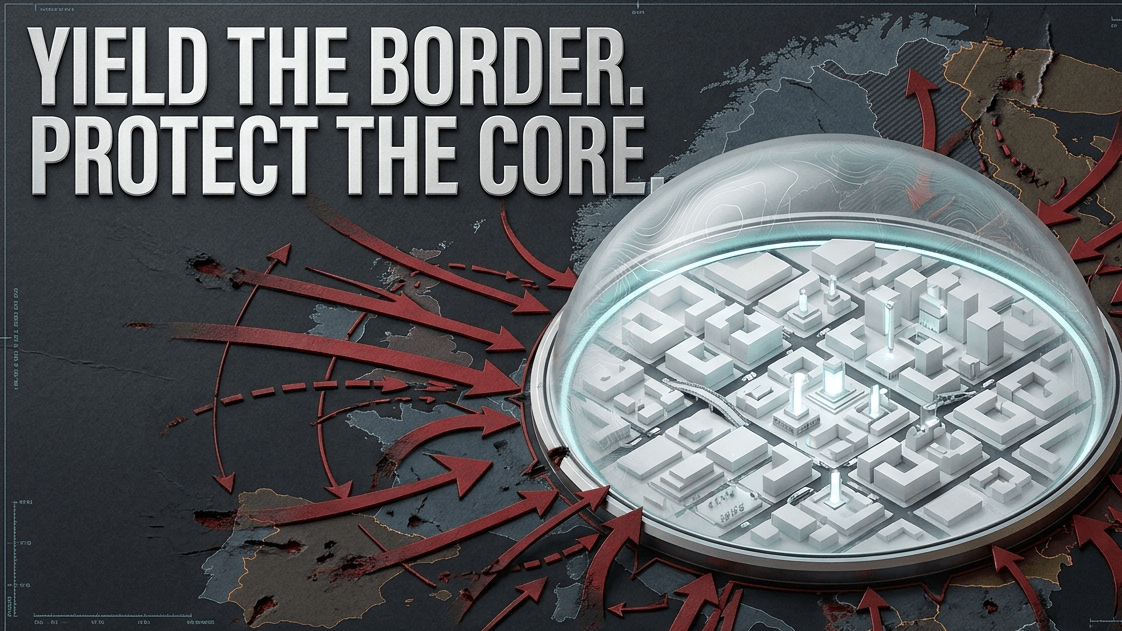
We would do well to move past the Cold War-era stigma attached to the term Finlandization. It is, in essence, a masterclass in realpolitik for the small state. It teaches that sovereignty is not an all-or-nothing proposition but rather a spectrum of possibilities. By yielding ground on the peripheral matters of foreign alignment and international rhetoric, a state can protect the core: its laws, its culture, and its people. In a world growing increasingly impatient with nuance, the art of the buffer remains a vital, if undervalued, instrument of peace.
Lessons for the future security architecture
As the international community searches for ways to manage ongoing tensions and forestall new ones, the Finnish experience offers several concrete lessons worth weighing carefully.
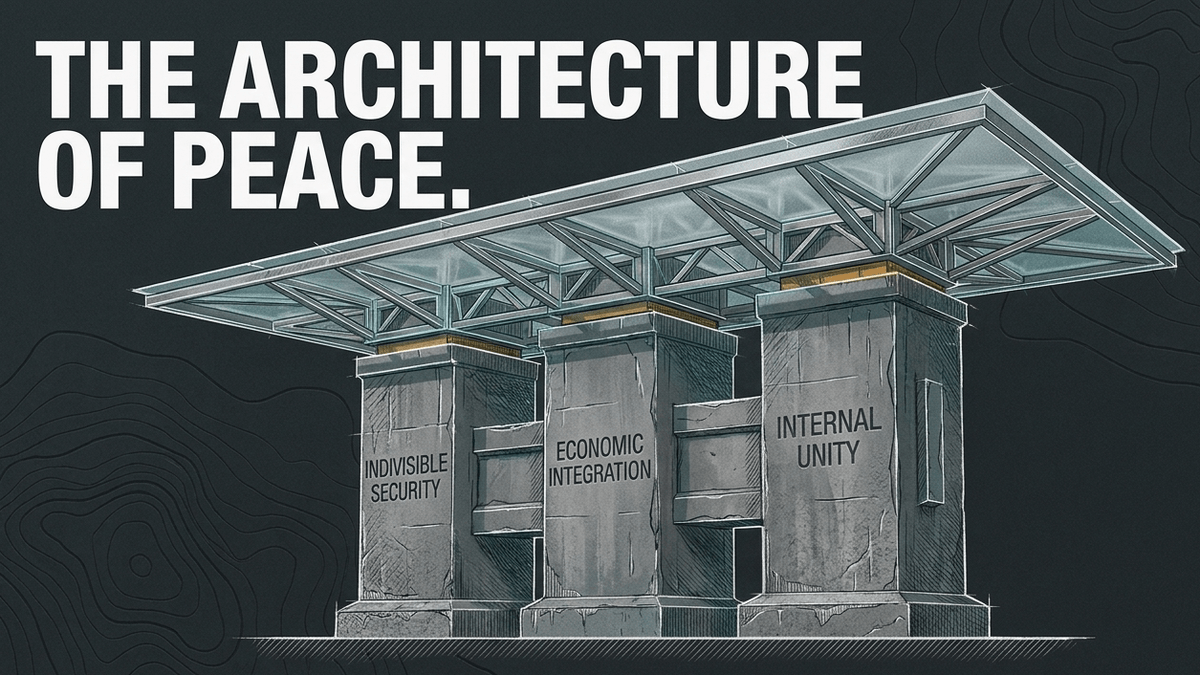
- Security is rarely indivisible. A state cannot feel secure for long if its neighbor feels profoundly insecure; the search for absolute safety on one side of a border tends to produce instability on the other.
- Economic integration functions as a defense against political subversion. States that are woven into multiple economic networks become more costly to coerce, and coercion that damages a partner's own interests becomes self-defeating.
- A nation's deepest strength lies in its internal unity. Finland endured the constraints of its Cold War position in large part because its citizens retained confidence in their democratic institutions even while those institutions operated under real external pressure.
The future of global stability may well depend on the emergence of new states willing to occupy this middle ground, states prepared to forgo the comforts of formal alliance for the complexities of the buffer position. Such states are unlikely to be popular in the capitals of the great powers, which generally prefer total loyalty over careful ambiguity. But they may prove essential nonetheless. They function as friction that slows the gears of conflict, evidence that there remains another way to exist in the world, one that does not require the wholesale submission of the small to the will of the great.
For readers drawn to the deeper theoretical undercurrents of why rising and established powers so often collide in the first place, the analysis of the Thucydides trap provides a useful theoretical backdrop against which the buffer strategy's value becomes clearer still.
The enduring legacy of a misunderstood strategy
The story of Finlandization is not one of a nation that lost its way, but of a nation that found a way when most of the conventional doors seemed closed. It is a story, above all, of pragmatism under duress. It reminds us that the primary obligation of any government is the preservation of its people's lives and their way of life. If that requires a measure of strategic silence, it may, in the right circumstances, be a price worth paying, though never one to be paid lightly or without democratic consent.
As the world looks ahead, the Finlandized state of the past may well serve as something resembling the strategic autonomy of the future. The terminology will continue to shift, as it already has from Finlandization to multivectorism to hedging, but the underlying realities of power are unlikely to change as quickly. We may be entering a period in which the capacity to navigate the spaces between empires becomes one of the most valuable skills a nation can possess. Finland demonstrated, across several difficult decades, that this could be done with intelligence and with its essential dignity intact, even if the path it walked was narrower and more constrained than its admirers sometimes wish to acknowledge.
Final reflections on this strategy suggest that its success depends almost entirely on the domestic health of the nation attempting it. A divided country cannot sustain the role of buffer indefinitely; it will simply be pulled apart by the competing gravitational forces of the powers around it. Finland's deeper achievement was not, in the final analysis, its diplomacy with Moscow but its social contract at home. Because the Finns largely trusted one another, they could afford to play a careful, double-sided game with the wider world. In the end, the buffer was never merely a geographic condition. It was, and remains, a state of mind.
Share now









Key takeaways
- Finlandization describes the influence a powerful neighboring state can exert over a smaller state's foreign policy while that smaller state retains internal sovereignty, democracy, and a market economy.
- The term was coined in 1961 by German political scientist Richard Löwenthal, originally as a critical description of Finland's posture toward the Soviet Union.
- The strategy is rooted in the Paasikivi-Kekkonen line, named for Presidents Juho Kusti Paasikivi (1946-1956) and Urho Kekkonen (1956-1981).
- Its legal foundation was the 1948 Agreement of Friendship, Cooperation, and Mutual Assistance (YYA Treaty) between Finland and the Soviet Union.
- Finland fought two wars against the USSR, the Winter War (1939-1940) and the Continuation War (1941-1944), losing roughly 11% of its territory but avoiding occupation.
- After 1945, Finland was the only part of the former Russian Empire that did not fall under communist rule, unlike the Baltic states, which were forcibly annexed.
- Finland declined to participate in the Marshall Plan under Soviet pressure, while practicing self-censorship in domestic media regarding Soviet affairs.
- Finland joined NATO on 4 April 2023, ending decades of military non-alignment following Russia's 2022 invasion of Ukraine; public support for membership rose from roughly 20-30% to over 80%.
- Modern equivalents of Finlandization include Kazakhstan's "multivector" foreign policy and Singapore's "hedging" strategy between the United States and China.
- Kazakhstan shares borders of over 7,600 km with Russia and nearly 1,800 km with China, making great-power balancing a structural necessity rather than a choice.
- Nokia's rise into a global telecommunications leader was driven primarily by 1990s EU accession, telecoms deregulation, and the GSM standard, not chiefly by its earlier Soviet trade ties, contrary to a common oversimplification.
- A successful buffer strategy depends heavily on domestic political cohesion; internal division undermines a state's capacity to sustain external neutrality over time.
Sources
- NATO - Relations with Finland https://www.nato.int/en/what-we-do/partnerships-and-cooperation/relations-with-finland
- Wikipedia - Finno-Soviet Treaty of 1948 https://en.wikipedia.org/wiki/Finno-Soviet_Treaty_of_1948
- Wikipedia - Finland-Russia relations https://en.wikipedia.org/wiki/Finland%E2%80%93Russia_relations
- Oxford Academic, International Affairs - Between the bear and the dragon: multivectorism in Kazakhstan https://academic.oup.com/ia/article/96/4/975/5855019
- Oxford Academic, International Relations of the Asia-Pacific - Navigating great power competition: a neoclassical realist view of hedging https://academic.oup.com/irap/article/24/1/29/7043153
- Published 2026-07-20 10:00
- Modified 2026-07-20 10:00

-
Redaction