

-
 Redaction
Auchan Phase II: Ukraine's artillery drone strike
Ukrainian drones struck 231 Russian artillery targets in two nights, destroying 171 with a specialized barrel-rupturing munition called ArtAuchan payload.
The kinetic reality of Ukraine's eastern and southern fronts shifted in early June 2026. Over two nights, Ukrainian drone units did not launch a generalized offensive. They executed a surgical removal of the Russian military's primary tool of attrition: its tube and rocket artillery. Military officials have labeled this the second phase of Operation Auchan, and at its center sits a purpose-built munition known as ArtAuchan.
The first phase, carried out in 2025, established the precedent. Ukrainian bomber drones struck roughly 949 to 980 Russian targets over three nights, destroying close to 800 armored vehicles and artillery pieces more than 50 kilometers behind the front line. Phase II went further. It introduced a level of technical specificity that suggests the era of repairable battlefield damage, for Russian artillery at least, is closing.
The numbers behind the strike
Data confirmed by Ukraine's Ministry of Defense and the National Guard's Lasar Group puts the scale of Phase II in stark terms. Ukrainian forces identified and struck 231 Russian artillery targets. Of these, 171 were confirmed destroyed.
That is not a routine attrition statistic. It represents an estimated 10 to 14 artillery battalions gone from the Russian order of battle, or roughly three full brigades. The strikes involved more than 800 drones deployed along the eastern and southern fronts, according to a Lasar Group statement.
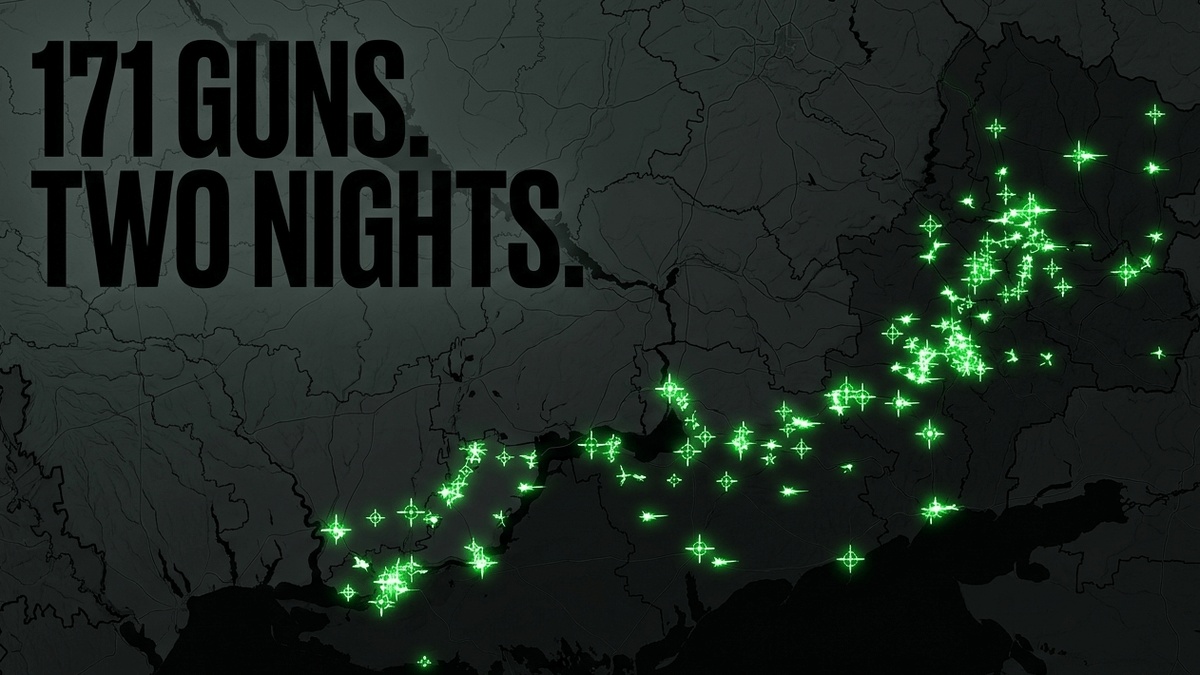
The strikes were concentrated across four sectors: Kherson, Zaporizhzhia, Donetsk, and Starobilsk. Ukrainian officials say the effectiveness of the operation was confirmed through objective monitoring systems and intercepted Russian communications.
Across both phases of the campaign, the cumulative total now stands at 1,180 targets struck.
"Each target hit means less fire on Ukrainian positions and cities," Ukraine's military said in a statement. "Each such operation weakens the enemy and brings closer the moment when it loses the ability to impose its terms on the battlefield."
Anatomy of a barrel-killer
For most of the preceding year, the core challenge for Ukrainian drone operators was the resilience of modern artillery pieces. A conventional high-explosive drop, or a proximity detonation nearby, tends to chew up the peripherals - tires, optics, exposed electronics. The gun goes quiet. It does not stay quiet. Russian repair depots have proven adept at cycling damaged systems back to the front within weeks, sometimes days.
Phase II targeted the one component that cannot be swapped out in a field workshop: the barrel.
Defense Minister Mykhailo Fedorov has said disabling heavy artillery through standard drone drops or conventional shells has proven difficult, since damaged units are frequently repaired and returned to service. Engineers built a warhead around a narrower objective - not to wound the gun, but to end it. The Lasar Group has said its engineers developed the payload specifically to rupture howitzer barrels, rendering the weapons permanently inoperable. Fedorov has offered no further technical detail, and neither has the Lasar Group. What is known comes from effects, not specifications: a barrel that no longer fires is a barrel that no longer matters, however the alloy failed.
Footage geolocated from the Donetsk sector shows a different kind of drone behavior than the FPV dives that have defined much of this war. These quadcopters hover. They hold position directly above gun emplacements with a stillness built for precision, not speed, before delivering the payload to the barrel's mid-section or breech. The carriage may survive. The gun does not fire again.

For a broader look at how drone saturation is reshaping combined-arms doctrine on both sides of the front, see Modern deep battle: the rebirth of Soviet doctrine.
Why artillery, and why now
Artillery has been among the deadliest weapon systems of this war, responsible for a large share of casualties on both sides of a front line that stretches for hundreds of miles. Fedorov has said Ukraine's leadership examined General Staff casualty data and asked a direct question: what could be done to reduce losses tied specifically to persistent Russian artillery fire. The ArtAuchan program was the answer that emerged.
The logic is blunt. Fewer working guns means fewer shells landing on Ukrainian trenches. The funding behind the program traces to a decision by the Staff of the Supreme Commander-in-Chief in 2025, backed by additional resources initiated by President Volodymyr Zelensky. The early June strikes are the first large-scale proof that the investment produced results.
Two units, one kill web
The 412th Separate Brigade of Unmanned Systems, known as NEMESIS, and the National Guard's Lasar Group carried out the strikes. Neither unit operates like the volunteer drone cells that defined the war's early years. Both represent something closer to an industrial-scale corps - engineers, reconnaissance specialists, and pilots working from verified intelligence rather than improvisation.
The Lasar Group's contribution went beyond the strike itself. Artillery is rarely left exposed. Russian batteries hide inside tree lines, behind berms, under camouflage netting rebuilt after every rain. Locating them is most of the fight. The Lasar Group has been credited by Kyiv officials with destroying an estimated $15 billion worth of Russian equipment since its founding by television producer Pavlo Yelizarov, and its reconnaissance work here was the prerequisite for everything that followed. Small, vertical, numerous threats are difficult for counter-battery radar built to track incoming shells, not hovering quadcopters.
What the silence looked like on the ground
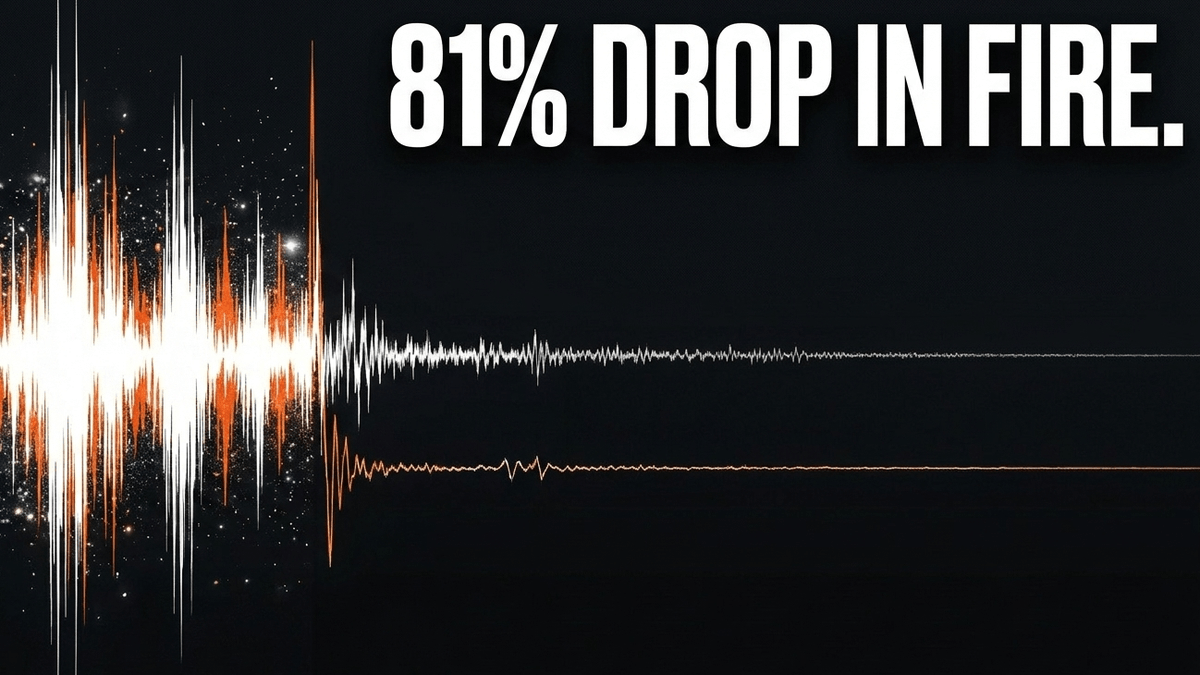
Russian activity across the affected sectors dropped by 30 to 81 percent within the first 24 hours, according to Ukrainian military figures based on objective monitoring and intercepted communications. That range is wide, and it should be treated as an estimate rather than a precise measurement - Ukraine's battlefield figures cannot be independently verified by outside observers. But even the low end of that range represents a meaningful operational disruption.
The immediate effect, according to Ukrainian accounts, was room to breathe. Units used the reduced fire to consolidate positions and rotate personnel with a safety margin that had not existed in these sectors for months.
Russian forces have historically responded to this kind of pressure by withdrawing equipment rather than losing it outright. That pattern held after Phase I in 2025, when the initial strikes reportedly delayed a planned Russian mechanized offensive by roughly six months, according to Fedorov's account. The mechanized assault Russia had planned for May was only carried out in October, he said - nearly half a year in which Moscow effectively lacked the capability to attempt it.
What outside analysts make of it
The Institute for the Study of War has tracked the operation as part of its ongoing assessments of the front. Its July 8 assessment described Operation Auchan as evidence of the maturation of Ukrainian operational planning and technological adaptation, aimed at achieving effects that support combined-arms warfare on the battlefield. ISW is a Washington-based think tank with ties to the US defense industry and has been described by some journalists as taking a hawkish editorial line - a detail worth carrying alongside any assessment it publishes, favorable or otherwise.
ISW has also tracked a broader monthly rise in Ukrainian strikes on Russian artillery systems: 1,447 in March 2026, 1,834 in April, 2,043 in May, and 2,053 in June. Phase II's 231 targets sit inside that June total, a concentrated spike within a trend that was already climbing before ArtAuchan entered service.
The industrial bottleneck
Shells can be stockpiled, imported, mass-produced under sanctions pressure that Russia has learned to route around. Barrels are a different problem. High-quality artillery tubes require specialized steel and precision rifling machinery, both of which sit under tightening international export controls. A barrel that ruptures beyond repair is not a battlefield loss Russia can manufacture its way out of on a fast timeline.

That is the strategic logic behind targeting the barrel specifically rather than the carriage, the optics, or the crew. It is a bet that Ukraine's adversary has a slower production cycle for this one component than for nearly anything else in its artillery park.
Countermeasures, or the lack of them
Russian crews have relied on cope cages and overhead netting to blunt horizontal FPV strikes for more than two years now. Those defenses were built for drones approaching at an angle, skimming toward a vehicle or a trench line. A hovering drone delivering a payload from directly overhead is a different threat profile, and early reporting from the front suggests existing overhead defenses have not adapted to it.
There are also reports, unverified independently, of Russian crews abandoning gun positions in anticipation of a strike rather than after one lands. Whether that reflects a real shift in behavior or wartime narrative from the Ukrainian side is difficult to confirm from open sources. It is the kind of claim that deserves to be flagged as such rather than repeated as settled fact.
Where this goes next
Operation Auchan's two phases now total 1,180 confirmed targets struck since 2025. Ukrainian officials have signaled this pace is not slowing down; the Ministry of Defense reported that Ukrainian forces struck more than 200,000 enemy targets across the entire battlefield in June 2026 alone, of which artillery-specific strikes were a growing share.
Whether ArtAuchan becomes the template for the rest of the 2026 campaign season depends on production. A specialized warhead built for a narrow purpose is only as useful as the supply chain behind it. If Ukraine can scale manufacturing of the payload the way it scaled FPV drone production earlier in the war, the de-gunning approach could extend well past these four sectors.
For now, what is confirmed is narrower and more precise: two nights, four sectors, more than 800 drones, 171 barrels that will not fire again.
Editorial note: Details of the ArtAuchan payload's technical specifications remain undisclosed by Ukrainian officials. Casualty percentages and equivalence figures (battalions, brigades) are as stated by Ukrainian military sources and have not been independently verified by outside observers. This report reflects information available as of July 2026 and should be read with that caveat, as battlefield figures in any active conflict are subject to revision.
Share now









Key takeaways
- Operation Auchan Phase II ran over two nights in early June 2026, targeting Russian artillery across the Kherson, Zaporizhzhia, Donetsk, and Starobilsk sectors.
- Ukrainian forces struck 231 Russian artillery targets during Phase II, of which 171 were confirmed destroyed.
- The confirmed losses are estimated to equal 10 to 14 artillery battalions, or roughly three full brigades.
- More than 800 drones were deployed during the two-night operation.
- A specialized warhead, known as ArtAuchan, was engineered specifically to rupture artillery gun barrels rather than damage peripheral components like optics or tires.
- Phase I of Operation Auchan took place in 2025, striking roughly 949-980 targets over three nights and destroying close to 800 armored vehicles and artillery pieces.
- Combined, both phases of Operation Auchan have struck a cumulative total of 1,180 targets.
- Russian operational activity in the targeted sectors reportedly dropped by 30 to 81 percent within the first 24 hours, per Ukrainian military figures.
- Participating units included the 412th Separate Brigade of Unmanned Systems "NEMESIS" and the National Guard's Lasar Group.
- The Institute for the Study of War (ISW) has characterized Operation Auchan as evidence of the maturation of Ukrainian operational planning in support of combined-arms warfare.
- Ukrainian officials say Russia's earlier mechanized offensive, planned for May, could not be launched until October - a roughly six-month delay attributed to Phase I.
- High-quality artillery barrels require specialized steel and precision rifling machinery, both subject to international export controls, making them harder for Russia to replace quickly than shells.
Sources
- United24 Media https://united24media.com/war-in-ukraine/whats-behind-ukraines-secret-operation-that-destroyed-250-russian-artillery-systems-in-two-nights-19928
- Kyiv Post https://www.kyivpost.com/post/79785
- Institute for the Study of War (Critical Threats) https://www.criticalthreats.org/analysis/russian-offensive-campaign-assessment-july-8-2026
- Militarnyi https://militarnyi.com/en/news/operation-ashan-ukraine-strike-1000-targets/
- Ukraine Ministry of Defense https://mod.gov.ua/en/news/1-180-enemy-targets-struck-how-operation-auchan-halted-the-enemy-s-mechanized-offensive-for-six-months
- Published 2026-07-12 16:30
- Modified 2026-07-12 16:30
