-
86
Views
-
0
Comments
-
0
Like
-
Bookmark

-
 Redaction
The end of New START and the rise of nuclear risk
Nuclear stability vanishes as New START ends. The U.S. must now deter Russia and China simultaneously while AI shrinks critical decision windows
The silence is what should keep you awake at night. In the cold geometry of nuclear deterrence, silence is not peace; it is the sound of data exchanges stopping and inspection teams packing their bags. On February 5, 2026, the New Strategic Arms Reduction Treaty (New START) expired, and with it, the last legal guardrails on the world's two largest nuclear arsenals dissolved. For the first time in decades, the United States and Russia are operating without the treaty's formal verification mechanisms of mutual transparency. As Senator Deb Fischer noted on February 3, nuclear deterrence only functions if the force is safe, reliable, and credible. Today, that credibility is being tested by a toxic mix of technological acceleration and the collapse of the old diplomatic order.
The crumbling walls of predictability
The expiration of New START serves as a warning flare-intensified by war, deepened by silence, and made lethal by inaction. Since the mid-twentieth century, the logic of Mutually Assured Destruction (MAD) relied on a degree of predictability. You knew what the other side had because they showed you through data exchanges and inspections. Now, that predictability has been replaced by suspicion. Without the treaty's verification regime, military planners must assume the worst-case scenario. This shift is driving a global arms race that has moved beyond the bilateral tension of the Cold War.
Data from multiple analyses confirm that the United States is currently undertaking a modernization of its nuclear triad-encompassing submarines, bombers, and land-based missiles-estimated at approximately $1.7 trillion over three decades. This is no longer a theoretical upgrade. It is a response to a world where the two-peer threat is the new reality. Robert Kadlec, assistant secretary of defense for nuclear deterrence, chemical, and biological defense policy and programs, stated on March 17, 2026, that the U.S. must now plan for aggression in multiple theaters, possibly coordinated by adversaries. China has achieved what Kadlec calls a strategic nuclear breakout, rapidly expanding its arsenal and fielding its own triad. The math of the Cold War, which balanced one peer against another, is broken. The U.S. nuclear force must now be robust enough to deter both Russia and China simultaneously.
The algorithm in the bunker
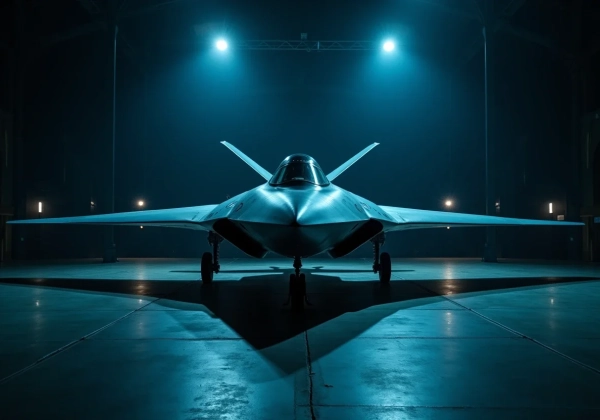
While hardware like the B-21 Raider-noted by Air Force Chief of Staff Gen. Ken Wilsbach for its fuel efficiency and long-range lethality-provides the physical backbone of deterrence, the brain of the system is changing. Artificial intelligence (AI) has moved from the laboratory to the theater of operations. In the recent US-Israel-Iran conflict, AI-enabled systems identified and struck thousands of targets within mere days. Traditionally, such a targeting cycle would have taken months of human analysis.
This speed is a double-edged sword. In a conventional fight, it is an advantage; in a nuclear-weaponized environment, it is a risk multiplier. When AI compresses decision-making timelines, it strips away the hours or minutes leaders once used to de-escalate. In regions like South Asia, where India and Pakistan are integrating AI-guided warfare, the danger is acute. We are entering a period where crises could be pushed toward high-speed feedback loops. If an AI misidentifies a dual-capable system-one that can carry both conventional and nuclear warheads-it might trigger a response based on perceived intent rather than reality. The psychological pressure on a human commander to 'use them or lose them' becomes overwhelming when the machine says the incoming strike is seconds away.
The erosion of the threshold
The war in Ukraine has fundamentally altered our understanding of the nuclear threshold. Conventional wisdom once held that nuclear weapons existed to prevent major wars between great powers. Instead, the world has watched a major power wage a full-scale conventional war under the cover of its nuclear arsenal. This has created a zone of uncertainty. Hostile acts now accumulate without automatically triggering a nuclear response, yet the threat of escalation remains a constant, looming shadow.
Russia's testing of the Burevestnik, a nuclear-powered cruise missile (with a notable successful test in October 2025), and the Bipartisan Strategic Posture Commission's 2023 conclusion that current U.S. modernization is essential although not sufficient, both point to a volatile future. The commission argued that the U.S. must be prepared to inflict unacceptable costs on two peers under any contingency. This is a return to a grimmer, more kinetic era of strategic thinking. The assumption of utilitarian rationality-that leaders will always make the logical, cost-benefit choice-is being questioned. Human psychology is prone to tail risks, where the magnitude of a catastrophe is so high that even a low probability should make the action unthinkable. Yet, the logic of deterrence requires a genuine, credible willingness to use these weapons. It is a moral and psychological paradox that is only becoming more complex as machines join the decision-making chain.
Looking toward the horizon
The upcoming weeks will see these tensions come to a head. The 2026 Nuclear Non-Proliferation Treaty (NPT) Review Conference, scheduled for April 27 to May 22, arrives at a moment of decaying interest in P5 cooperation. Later, the annual Nuclear Triad Symposium at Louisiana State University Shreveport will gather the architects of this new strategy to discuss force readiness. They face a world where the old treaties are dead, the new adversaries are numerous, and the machines are getting faster. Deterrence in 2026 is no longer about maintaining a status quo; it is about surviving a high-speed evolution of the most dangerous game ever played.
Buy me a coffee
Share now









Key takeaways
- The New Strategic Arms Reduction Treaty (New START) between the U.S. and Russia expired on February 5, 2026, ending the last bilateral treaty with formal verification mechanisms including inspections and data exchanges (suspended earlier by Russia in 2023).
- The U.S. is executing a long-term nuclear triad modernization program estimated at approximately $1.7 trillion over 30 years as China achieves a strategic nuclear breakout with its own triad.
- AI-enabled decision systems compressed targeting cycles dramatically in the 2026 US-Israel-Iran conflict, creating a high-speed risk multiplier in potential nuclear environments.
- Russia conducted a successful test of the Burevestnik nuclear-powered cruise missile in October 2025.
- The B-21 Raider has entered the strategic landscape as a flexible, dual-capable platform noted for superior fuel efficiency.
- The 2023 Bipartisan Strategic Posture Commission concluded that the current U.S. nuclear modernization program is essential although not sufficient for a two-peer threat environment.
Sources
- U.S. Department of StateNew START Treatyhttps://www.state.gov/new-start-treaty
- Arms Control AssociationNew START at a Glance and related analyseshttps://www.armscontrol.org/factsheets/new-start-glance
- Congressional Budget OfficeProjected Costs of U.S. Nuclear Forceshttps://www.cbo.gov/publication/61362
- Reuters / multiple reportsRussia Burevestnik missile test October 2025https://www.reuters.com/world/china/russia-tested-new-nuclear-powered-cruise-missile-top-general-says-2025-10-26/
- U.S. Congress / Strategic Posture Commission Report 2023https://www.ida.org/research-and-publications/publications/all/a/am/americas-strategic-posture
- United Nations2026 NPT Review Conferencehttps://www.un.org/en/conferences/treaty-on-the-non-proliferation-of-nuclear-weapons-npt-2026
- Air Force Global Strike CommandB-21 Raider detailshttps://www.afgsc.af.mil/News/Article-Display/Article/4460722/b-21-raider-accelerates-delivery-of-long-range-strike-capability/
