
-
164
Views
-
0
Comments
-
1
Like
-
Bookmark

-
 Redaction
Engineering the future of defense systems in 2026
Agentic AI and digital engineering standards drive the 2026 defense hardware lifecycle, from rapid OTA procurement to predictive maintenance tech.
oncept design and digital research
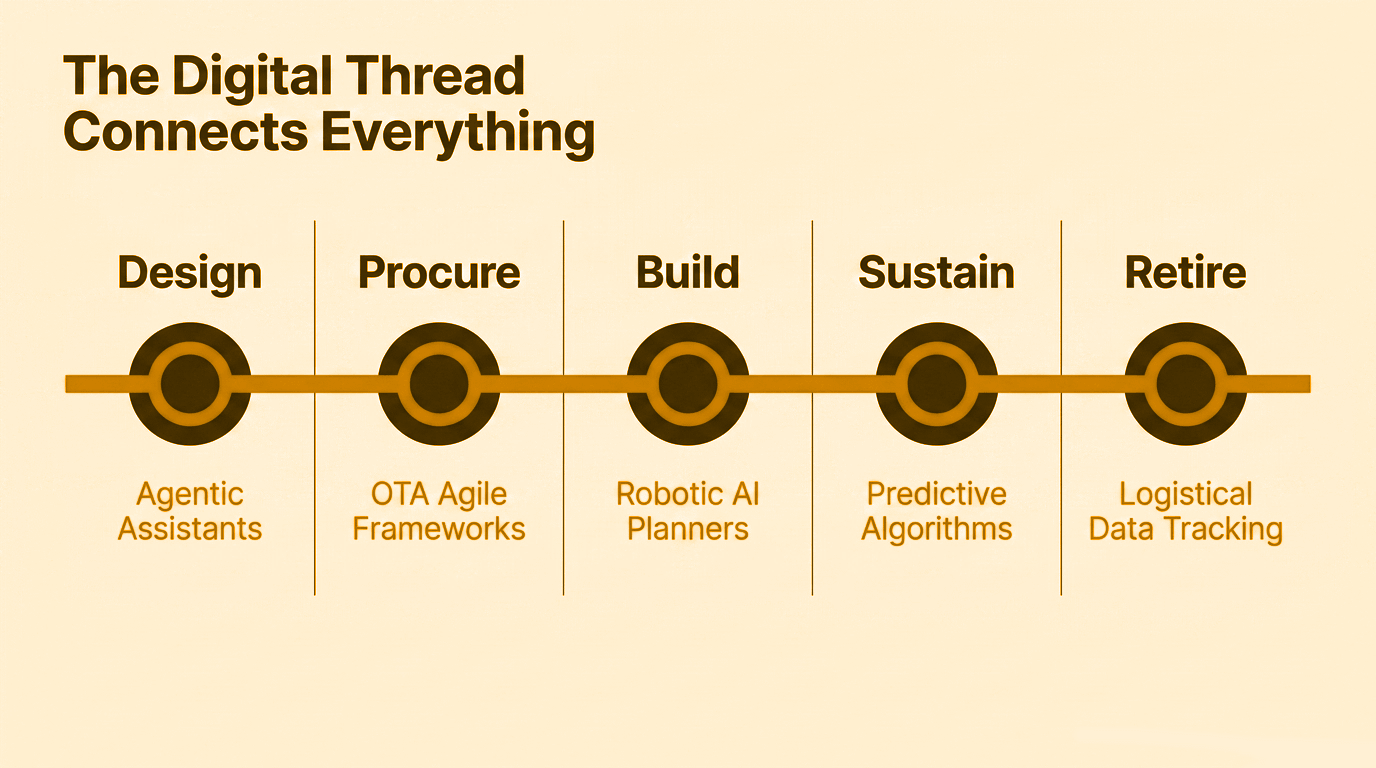
The fundamental methodology for developing defense hardware is transitioning from manual, siloed processes to integrated digital environments. The Department of Defense (DoD) continues to prioritize Agentic AI and Generative AI as key enablers of innovation. These technologies serve as intelligent assistants that optimize technical workflows and accelerate the ideation and development of complex systems.
Digital engineering and agentic workflows
Agentic AI enables the creation of autonomous workflows capable of managing vast datasets generated during the initial research phase. By adopting Digital Engineering standards, such as DoD Instruction 5000.97, engineers can maintain a single authoritative source of truth for technical data. This approach ensures that every design iteration is documented and synchronized across defense contractors and stakeholders.
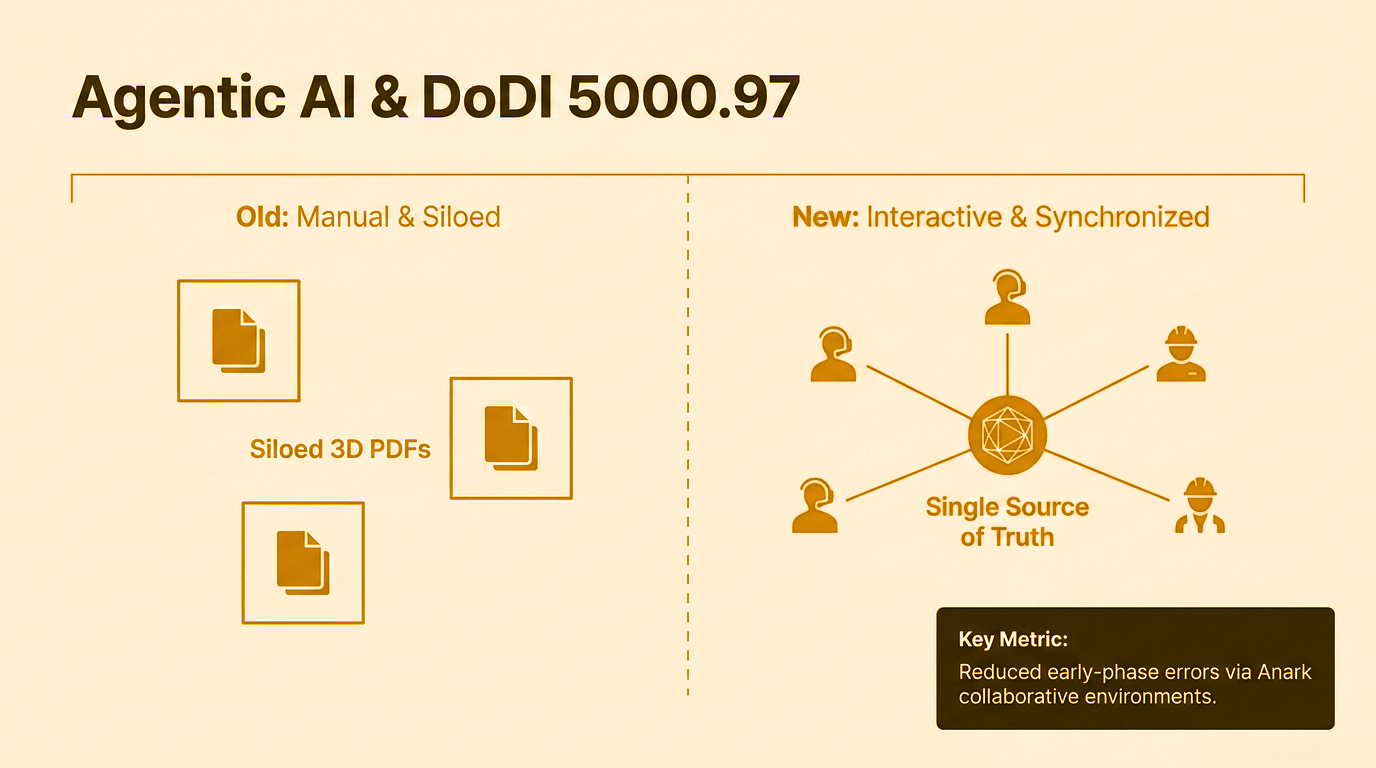
According to presentations at the 2026 Defense Manufacturing Conference, companies like Anark have demonstrated that hosting technical data in interactive, collaborative digital environments - moving beyond traditional 3D PDF documents - significantly reduces errors in the early design phases and improves collaboration in line with DoDI 5000.97.
Accelerated procurement via Other Transaction Authority
To keep pace with rapid technological change, the U.S. military continues to utilize Other Transaction Authority (OTA) as a flexible procurement mechanism that bypasses many standard bureaucratic requirements and shortens development timelines.
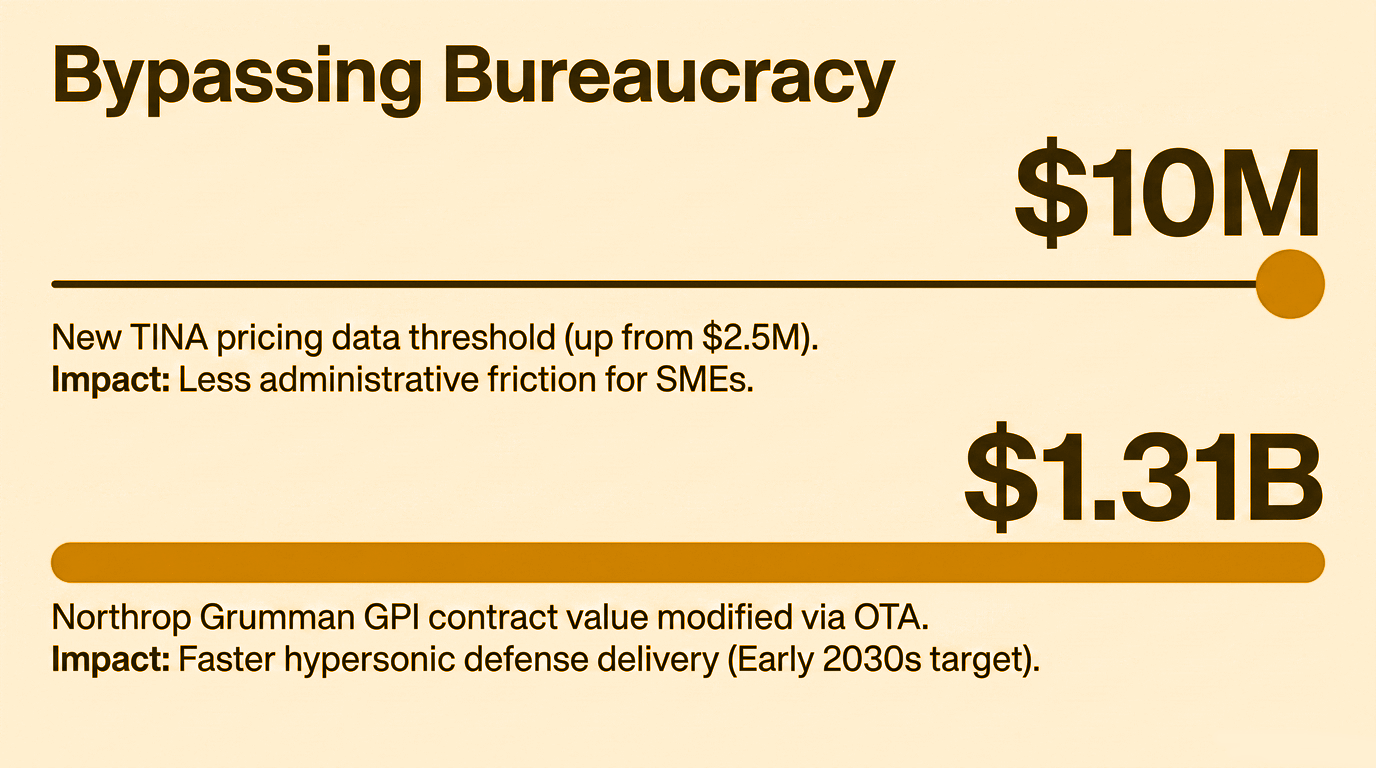
A prominent example is the Glide Phase Interceptor (GPI) program led by Northrop Grumman. In April 2026, the Missile Defense Agency awarded a $475.3 million contract modification under an OTA, increasing the total agreement value from approximately $832.8 million to $1.31 billion. The modified agreement accelerates development, with work scheduled for completion by June 2028 and a target Preliminary Design Review in 2028. The program aims to deliver an initial operational capability against hypersonic threats in the early 2030s.
Manufacturing and the 2026 industrial base modernization
The production phase of the weapon lifecycle requires significant modernization to address capacity constraints and improve efficiency. The 2026 Organic Industrial Base (OIB) Modernization Challenge, managed by America Makes and the National Center for Defense Manufacturing and Machining (NCDMM) in cooperation with OSD ManTech, is a key initiative in this effort.
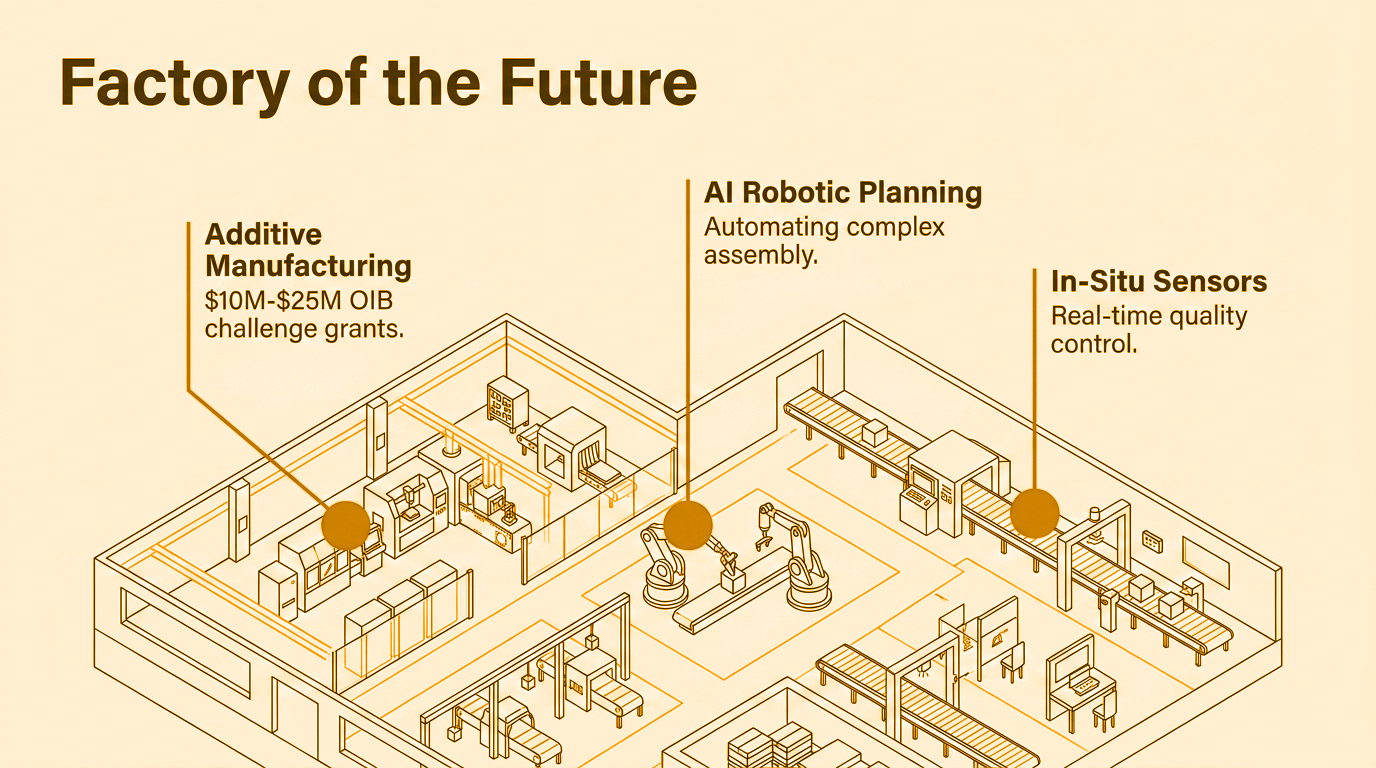
The challenge provides funding for projects integrating additive manufacturing (AM) and related advanced technologies into the Organic Industrial Base. Typical awards range from $10 million to $15 million, with larger concepts up to $25 million considered with appropriate justification. Focus areas include AI robotic process planning, in-situ quality checks using sensors, mobile automation for large surface work, reduced operator exposure to hazards, and pilot lines for emerging military products.
Automation and commercial partnerships
The Pentagon actively seeks partnerships with commercial industry, including automakers, to adapt high-volume automation expertise for defense production of munitions and hardware. Emphasis is placed on AI-driven robotic planning for complex assembly and welding, real-time sensor-based quality control, and mobile automation solutions that minimize manual labor in hazardous environments.
Fiscal and regulatory reforms
The National Defense Authorization Act for Fiscal Year 2026 (FY 2026 NDAA) introduces important changes to defense contracting. A key provision raises the Truth in Negotiations Act (TINA) / Truthful Cost or Pricing Data threshold. For contracts entered into after June 30, 2026, the requirement for certified cost or pricing data increases from $2.5 million to $10 million. This adjustment aims to reduce administrative burdens on small and medium-sized manufacturers and encourage greater participation by commercial entities in the defense industrial base.
Operations and the shift to predictive sustainment
In the sustainment phase, the focus is on improving system availability and readiness. The Air Force is requesting funding in FY 2027 that would raise weapons system sustainment to a 93 percent level of requirements - up from a historical average of approximately 85 percent (86 percent in the prior year). This includes an additional $3.2 billion primarily dedicated to spare parts to enhance aircraft readiness and reduce downtime.
AI-driven maintenance optimizers
The Army continues testing maintenance optimizers through platforms such as Vantage Edge 2: AIP. These systems use real-time data from weapon platforms to predict failures before they occur, enabling a shift from reactive to predictive maintenance. This approach relies on the data integrity established earlier in the digital engineering process and helps extend the operational life of both legacy and new systems.
Maritime expansion and shipbuilding
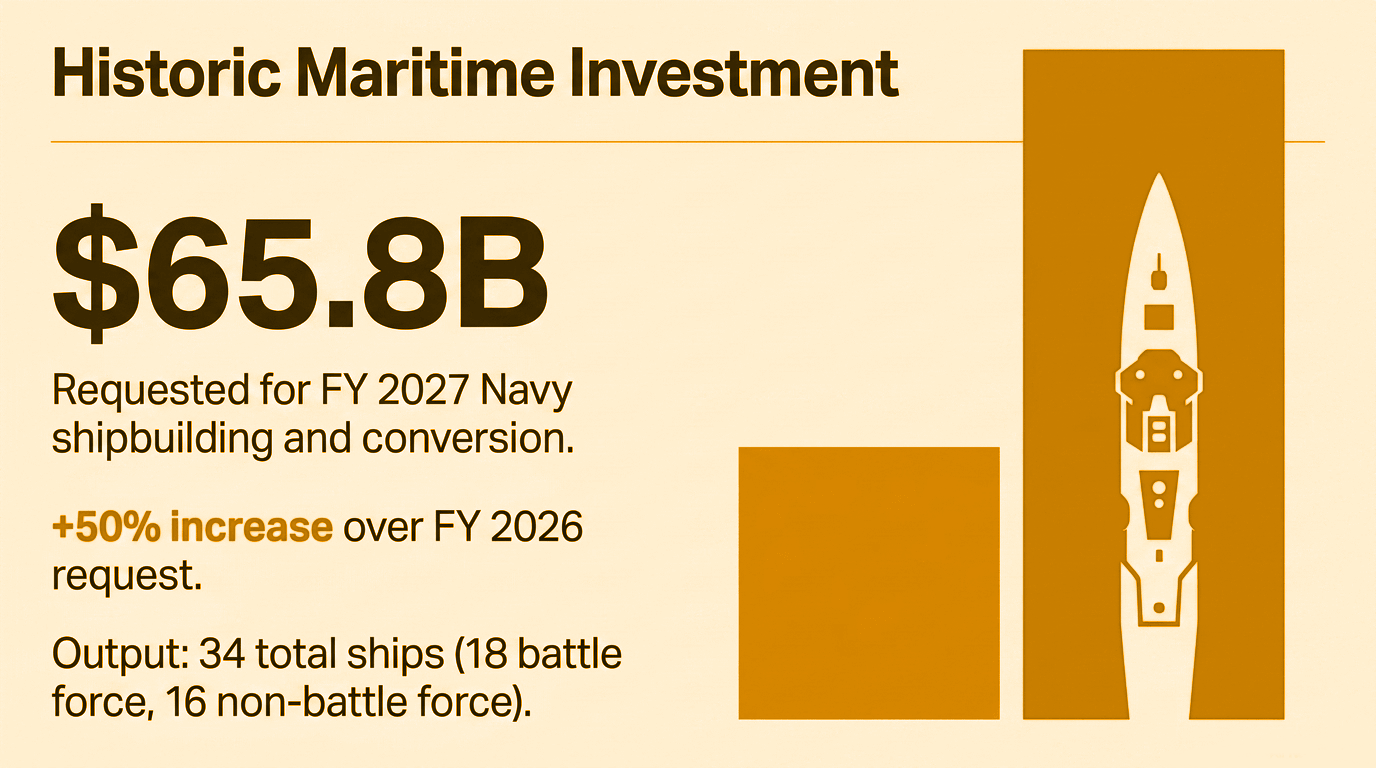
Naval shipbuilding receives substantial investment in the FY 2027 budget request. The White House has requested $65.8 billion for Navy shipbuilding and conversion - representing a significant increase (approximately $20.7 billion or nearly 50 percent) over the FY 2026 request level. This funding supports procurement of around 18 battle force ships and 16 non-battle force ships, along with preliminary work on new ship classes, including concepts for expanded maritime capabilities.
Decommissioning and the final lifecycle phase
The decommissioning phase demands careful logistical and technical management, especially for systems involving hazardous materials or sensitive technologies.
Surface ship retirement and transfers
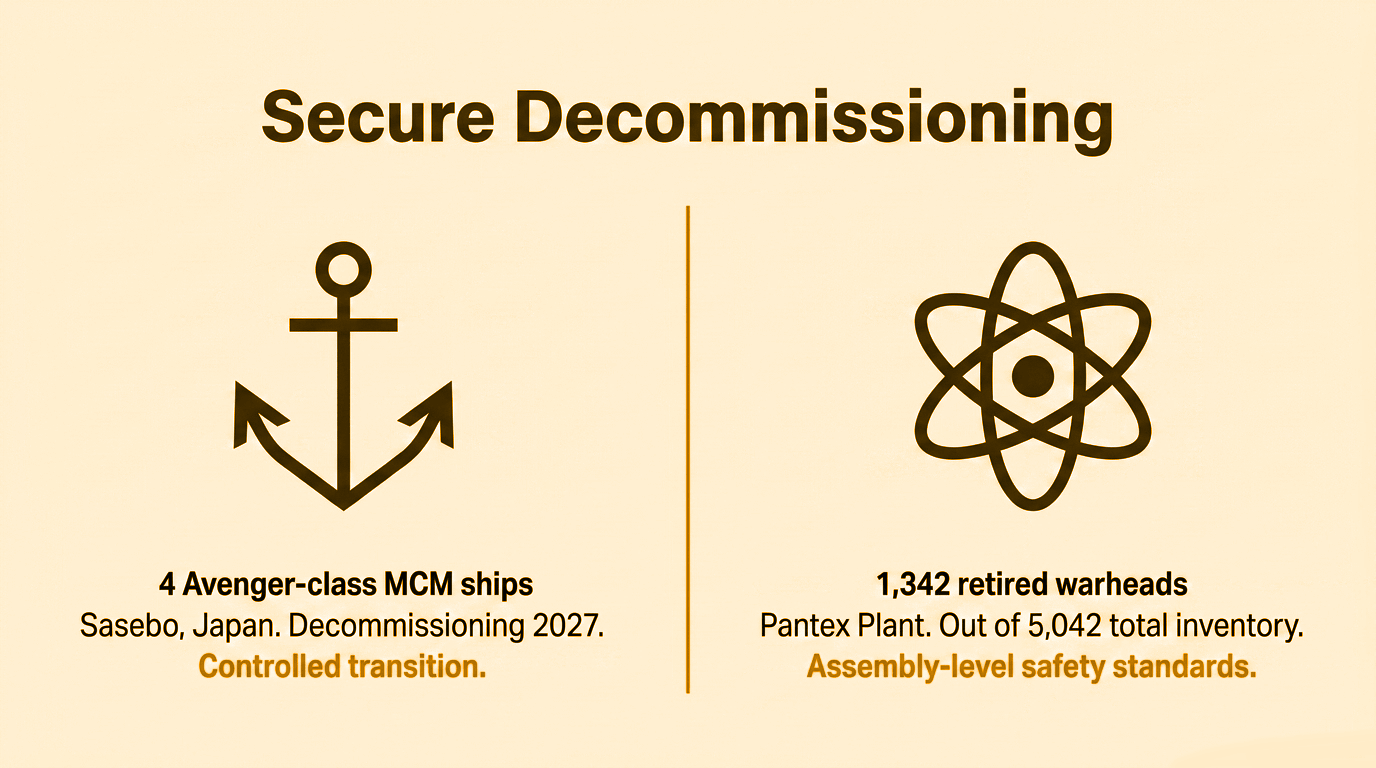
The U.S. Navy plans to decommission its remaining Avenger-class mine countermeasures (MCM) ships in 2027. These four vessels (USS Patriot, USS Pioneer, USS Warrior, and USS Chief), currently homeported in Sasebo, Japan, feature fiberglass-coated wooden hulls designed to minimize magnetic signatures. Two of the ships (USS Chief and USS Pioneer) have conducted temporary deployments to the Middle East in 2026, but the overall decommissioning schedule remains targeted for 2027. Japan is simultaneously transitioning from its Abukuma-class destroyer escorts to newer Mogami-class frigates and has explored options for exporting some of the older vessels to partner nations after appropriate modifications.
Nuclear warhead dismantlement
At the Pantex Plant in Texas, dismantlement of retired nuclear warheads continues as a priority. As of early 2026 (including data referenced around February), approximately 1,342 retired warheads were awaiting dismantlement, within a total U.S. nuclear inventory of roughly 5,042 warheads. The facility has increased staffing levels to meet recent and ongoing commitments, applying rigorous safety and technical standards consistent with those used during assembly.
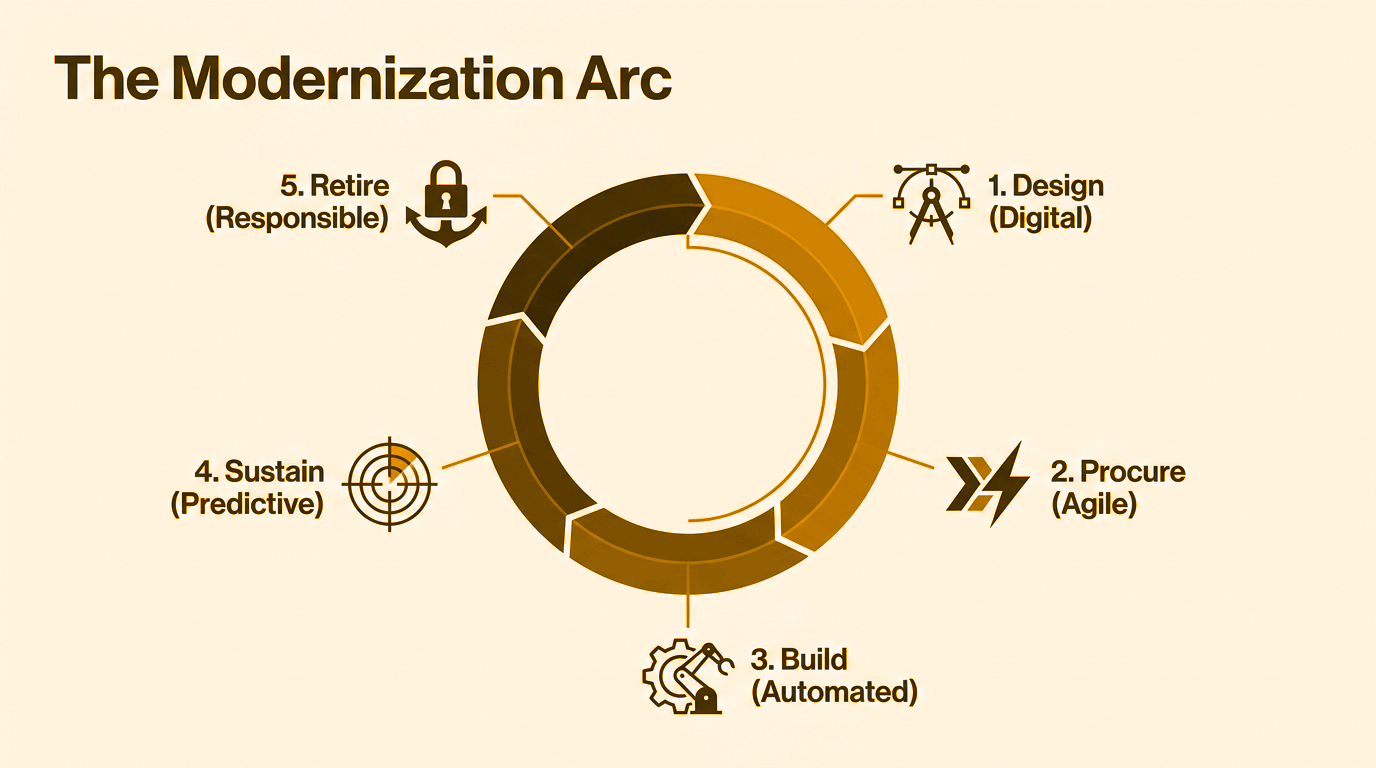
This comprehensive, data-driven approach across the entire lifecycle - from digital concept design through production, sustainment, and responsible decommissioning - supports a more agile, efficient, and resilient defense industrial ecosystem in 2026 and beyond.
Share now