

-
 Redaction
Can we communicate with parallel universes?
New quantum theory suggests possible communication between parallel universes, alongside Hiroshima photon experiments and high-dimensional entangled structures.
Does the universe possess a memory of the paths we did not take? For decades, the Many-Worlds Interpretation (MWI) has stood as a silent sentinel in the corridors of theoretical physics, suggesting that every quantum event acts as a fork in the road of reality. This framework - first proposed by physicist Hugh Everett III in 1957 - posits that the universal wave function is an objective reality, one that never truly collapses but merely branches. When we observe a particle, we are not witnessing the death of possibility, but rather our own migration into one of many blooming realities. Is it possible that we are merely living through a single verse in an infinite, echoing song?
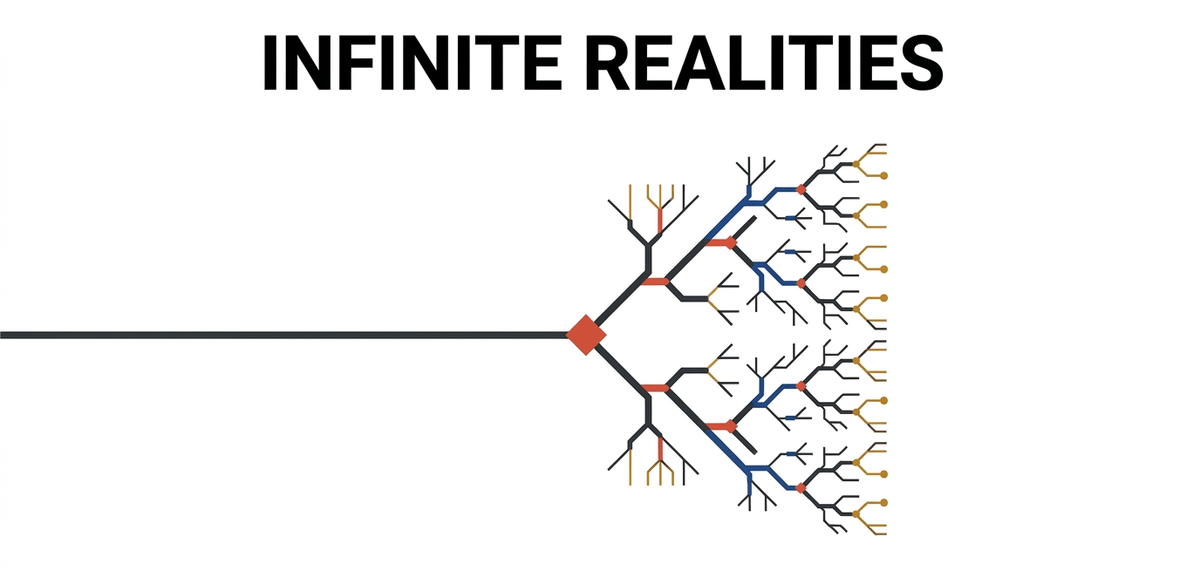
According to the foundational tenets of MWI, the subjective appearance of wave function collapse is not a physical event but an effect of quantum decoherence. As a system interacts with its environment, it becomes entangled, and the coherence of the original state dissipates into the vastness of the surroundings. Yet, the other possibilities do not vanish. They remain, as real as the air we breathe, in branches of the multiverse that are usually considered inaccessible. But recent inquiries are beginning to pull at the threads of this isolation - and the results from 2025 and 2026 are quietly extraordinary.
Interbranch communication: can parallel universes send messages?
In January 2026, a theoretical paper proposed a startling shift in our understanding of these boundaries. While the branching of universes is typically viewed as an irreversible journey governed by the steady march of entropy, this research suggests that communication between parallel universes may be possible - at least in principle - within the confines of standard quantum theory.

The paper, by physicist Maria Violaris at the University of Oxford (arXiv:2601.08102), presents a Wigner's-friend thought experiment in which one observer, under the quantum control of another, can receive a message written by a distinct copy of themselves in the multiverse. This interbranch communication protocol hinges on a crucial condition: the observer who sends the message must retain no memory of having done so.
The memory-erasure requirement is not a loophole but a necessary condition - without it, the unitarity of quantum theory would be violated. This is a profound constraint. It implies that any information crossing the branching divide must do so at the cost of the sender's own continuity of experience. If such a theoretical pathway exists, it challenges the traditional view of decoherence as a permanent divorce and raises profound questions about the nature of individuality and reality.

This theoretical possibility does not yet allow practical messaging between branches, but it demonstrates that the framework of quantum physics may permit subtle connections that were previously considered forbidden. The implications for our understanding of the quantum measurement problem could be far-reaching.
Photon delocalization: new experimental evidence from Hiroshima
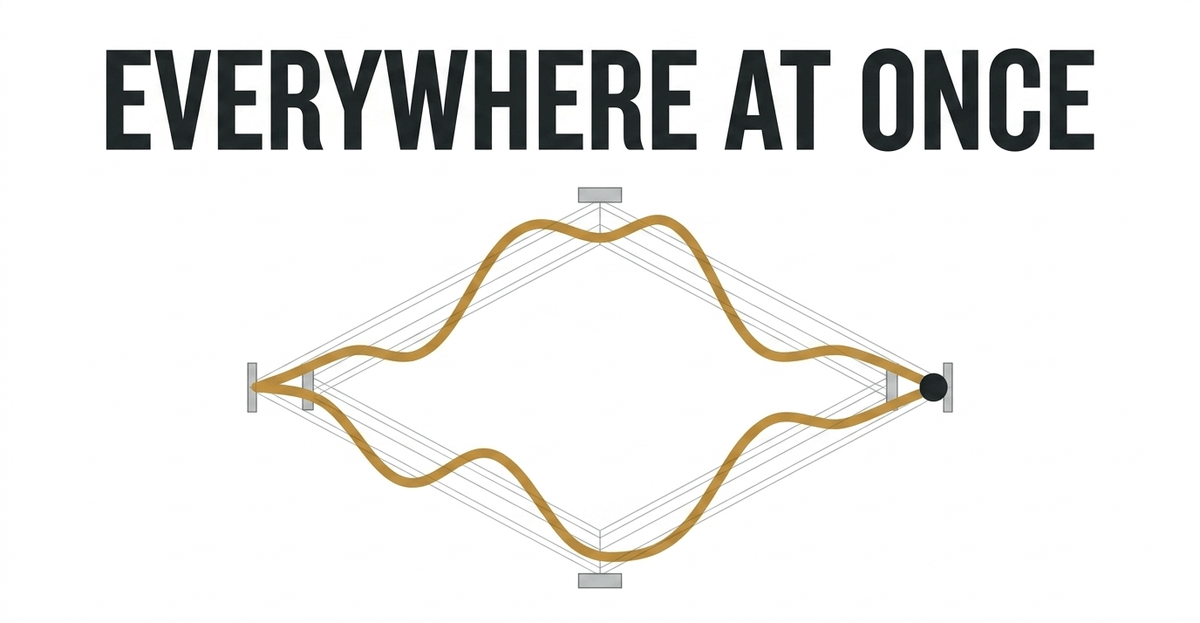
While theorists explore these conceptual bridges, experimentalists at Hiroshima University have been busy interrogating the very nature of the quantum path. In May 2025, researchers led by Holger F. Hofmann published a preprint describing a sophisticated experiment using a Sagnac-like two-path interferometer (later published in New Journal of Physics in March 2026).
By applying small, opposite polarization rotations along the two paths inside the interferometer, the team developed a method to quantify the delocalization of individual photons without disturbing their wave-like propagation.

Their results provide experimental evidence that photons can be physically delocalized across both paths simultaneously under certain conditions - specifically, when detected at the output port favored by constructive interference. This finding has been interpreted by some as a challenge to the strictest branching narrative of Many-Worlds Interpretation, in which a photon in a given branch is expected to take only one path.
However, the precise implications for MWI remain a subject of ongoing scientific debate. What the experiment does demonstrate, compellingly, is that:
- Interference physically spreads the presence of a photon across space
- Physical reality at the quantum scale depends on the context established by a future measurement
- The path a particle "takes" is not a fixed classical fact, but a relational one
This last point - retrocausal context-dependence - is among the most philosophically striking results in recent experimental quantum physics.
Topological structures: 48-dimensional quantum information alphabet
In the pursuit of understanding the hidden architecture of quantum reality, a collaborative effort between the University of the Witwatersrand and Huzhou University unveiled a new 'alphabet' of quantum information, published in Nature Communications in December 2025.
The study identified topological structures in entangled photons that reached an unprecedented 48 dimensions. These structures, containing over 17,000 distinct topological signatures, were derived from the orbital angular momentum of light - a single property previously considered insufficient to generate such rich topologies on its own.
This discovery reveals that within a single property of light lies an almost unlimited capacity for complexity. In the context of Many-Worlds, this is more than a technical footnote. The branching structure of reality, if it is governed by quantum mechanics, must somehow encode and preserve the enormous informational content of every diverging branch. High-dimensional topological structures offer a stable method for encoding quantum information, suggesting that the quantum world possesses a deep, inherent geometry that governs the flow of information far beyond simple binary choices.
For quantum computing and secure quantum communication, the practical implications are also significant - 17,000 distinguishable states encoded in a single photon property represents a leap in information density that researchers are only beginning to map.

The muon g-2 breakthrough and the fine-tuning of our universe
On April 18, 2026, the scientific community honored the pioneers of the Muon g-2 experiments at CERN, Brookhaven National Laboratory, and Fermilab with the Breakthrough Prize in Fundamental Physics - one of the most prestigious awards in science.
The muon, a heavier cousin of the electron, has long been a source of tension in the Standard Model of particle physics. For years, its anomalous magnetic moment appeared to hint at new physics beyond the Standard Model. However, updated theoretical predictions based on lattice QCD calculations have brought the Standard Model prediction into much closer agreement with experimental measurements, significantly softening the case for a major revolution.
Some discrepancies between different computational approaches - data-driven versus lattice methods - remain under active study. In the context of Many-Worlds, the muon's behavior serves as a reminder of the extraordinary precision required to define our reality. If the universe we inhabit is finely tuned for life, as noted by physicist Paul Halpern, then every measurement of a fundamental particle is a measurement of the very conditions that allow us to exist.
Geraint Lewis reminds us that in a multiverse, most worlds would be 'dead' - silent reaches of space where the laws of physics failed to find harmony. We are the rare inhabitants of a habitable branch, looking out at the stars and wondering why the math works.

How long does the universe last? The final stellar clock
As we contemplate a universe whose last stellar remnants - white dwarf stars - would take approximately 10⁷⁸ years to decay via Hawking-like radiation (according to 2025 calculations by Heino Falcke, Michael Wondrak, and Walter van Suijlekom of Radboud University, published in the Journal of Cosmology and Astroparticle Physics), the Many-Worlds Interpretation remains a compelling, if controversial, map of the cosmos.
It solves the measurement problem by removing the need for a conscious observer to 'collapse' reality, yet it replaces that mystery with a sprawling infinity of others. Is the multiverse a physical reality or a mathematical necessity?
The timescale of 10⁷⁸ years dwarfs even the proton decay estimates of grand unified theories. In a Many-Worlds universe, this is not merely a number - it is a measure of how long the branching tree of reality continues to grow, leaf by leaf, quantum event by quantum event, before the last light goes out.
The enduring horizon: what comes next for many-worlds theory
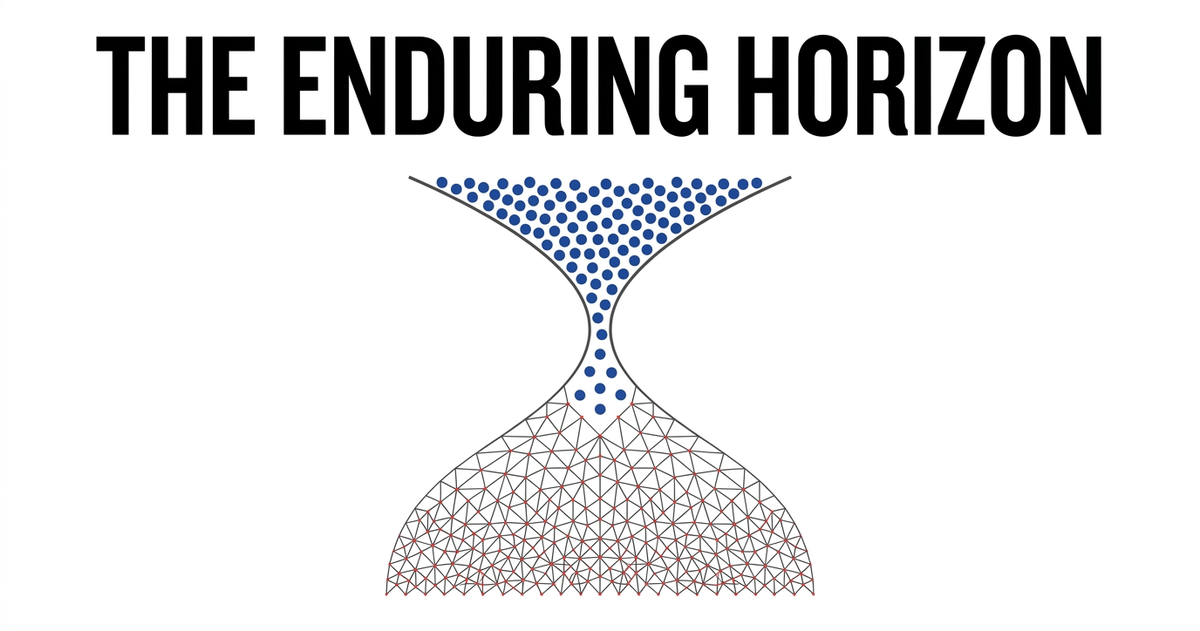
We stand at a threshold where the testability of our most profound theories is genuinely advancing. While we cannot yet perform a Schrödinger's cat experiment that directly proves the existence of alive and dead cats in separate branches, the experiments and theoretical insights of the past year continue to refine our understanding of quantum boundaries.
The convergence of results in 2025-2026 paints a striking picture:
- Interbranch communication is theoretically permitted under specific, constrained conditions
- Photon delocalization experiments challenge classical notions of a single definite path
- High-dimensional topological encoding reveals a quantum geometry rich enough to support vast informational structures
- Precision muon measurements sharpen our picture of the physical constants that make our branch habitable
None of these findings proves Many-Worlds. But together, they suggest that the boundaries between quantum branches are less absolute than previously assumed - and that the tools to probe them are finally becoming available.
Science continues to peel back the layers of the mundane to reveal the magnificent, reminding us that we are part of a story that may be unfolding in a vast number of ways simultaneously. In the quiet moments of the night, one might wonder: in how many of those possible descriptions of reality are we also looking at the moon, asking the same questions?
Frequently asked questions about the many-worlds interpretation
What is the Many-Worlds Interpretation of quantum mechanics? The Many-Worlds Interpretation (MWI), developed by Hugh Everett III in 1957, proposes that the universal wave function never collapses. Instead, every quantum measurement causes the universe to branch into multiple non-communicating copies, each realizing a different outcome. There is no randomness in MWI - only a proliferation of equally real worlds.

Is the Many-Worlds Interpretation accepted by physicists? MWI is one of several serious interpretations of quantum mechanics, alongside the Copenhagen interpretation, pilot-wave (Bohmian) mechanics, and relational quantum mechanics. It has notable supporters including David Deutsch and Sean Carroll, but also strong critics. It remains a live and contested area of foundational physics.
Can we ever communicate with parallel universes? Under normal conditions, no - quantum decoherence makes branches effectively inaccessible to one another. However, a 2026 theoretical paper by Maria Violaris at Oxford suggests that interbranch communication is not strictly forbidden by quantum theory, under very specific conditions that require the sender to erase all memory of the transmitted message.
What is quantum decoherence and why does it matter for MWI? Quantum decoherence is the process by which a quantum system loses its coherence - its ability to interfere with itself - due to interactions with its environment. In MWI, decoherence explains why we perceive a single classical world rather than a superposition, even though all branches remain real. It is, in effect, the mechanism that makes parallel worlds invisible to each other.
What did the 2025 Hiroshima photon experiment show? Researchers at Hiroshima University demonstrated that individual photons can be physically present across two paths simultaneously in an interferometer - not merely statistically likely to be on either path, but genuinely delocalized. The experiment also showed that this physical spread depends on which detector port the photon is ultimately registered at, implying that future measurement context shapes present physical reality.
Share now









Key takeaways
- Photon delocalization confirmed (2025-2026): Researchers at Hiroshima University, led by Holger F. Hofmann, published a preprint in May 2025 (arXiv:2505.00336) and a peer-reviewed study in New Journal of Physics (March 2026) demonstrating that individual photons can be physically delocalized across both paths of a Sagnac-like two-path interferometer simultaneously. The team used small, opposite polarization rotations to measure photon spread without disrupting wave-like propagation.
- Interbranch communication theorized (January 2026): A theoretical paper by Maria Violaris of the University of Oxford (arXiv:2601.08102) proposed that communication between parallel universe branches is in principle permitted within standard quantum theory, via a Wigner's-friend scenario. A critical condition applies: the sender must retain no memory of the transmitted message, preserving the unitarity of quantum mechanics.
- Universe's end estimated at 10⁷⁸ years: A May 2025 study published in the Journal of Cosmology and Astroparticle Physics by Heino Falcke, Michael Wondrak, and Walter van Suijlekom of Radboud University calculated that the last stellar remnants - white dwarf stars - will decay via Hawking-like radiation in approximately 10⁷⁸ years, significantly revising earlier estimates.
- 48-dimensional quantum topology discovered (December 2025): Scientists from the University of the Witwatersrand and Huzhou University identified topological structures in entangled photons spanning 48 dimensions, containing over 17,000 distinct topological signatures, derived solely from the orbital angular momentum of light. The study was published in Nature Communications and has implications for high-density quantum information encoding.
- Muon g-2 pioneers awarded Breakthrough Prize (April 18, 2026): The experimental teams behind the Muon g-2 experiments at CERN, Brookhaven National Laboratory, and Fermilab received the Breakthrough Prize in Fundamental Physics for more than six decades of precision measurements of the muon's anomalous magnetic moment. Updated lattice QCD calculations have brought the Standard Model prediction into closer alignment with experimental results, reducing - but not eliminating - the tension with theoretical predictions.
Sources
- arXiv - Hofmann et al., "Physical delocalization of photons in a Sagnac interferometer" (preprint, May 2025) https://arxiv.org/abs/2505.00336
- Phys.org - "Experimental evidence that photons can travel multiple paths simultaneously" (March 2026) https://phys.org/news/2026-03-experimental-evidence-photons-multiple-paths.html
- arXiv - Violaris, "Interbranch communication in the many-worlds interpretation" (January 2026) https://arxiv.org/abs/2601.08102
- Nature Communications - University of the Witwatersrand & Huzhou University, "Topological structures in high-dimensional entangled photons" (December 2025) https://www.nature.com/articles/s41467-025-66066-3
- ScienceDaily - "48-dimensional quantum topology discovered using orbital angular momentum of light" (March 2026) https://www.sciencedaily.com/releases/2026/03/260321012705.htm
- Phys.org - Radboud University, "Universe will decay in 10⁷⁸ years, sooner than previously thought" (May 2025) https://phys.org/news/2025-05-universe-decay-years-sooner-previously.html
- CERN - "Muon g-2 experiment pioneers win Breakthrough Prize in Fundamental Physics" (April 2026) https://home.cern/news/press-release/cern/muon-g-2-experiment-pioneers-win-breakthrough-prize-fundamental-physics
- Published 2026-04-26 20:29
- Modified 2026-05-25 13:31

-
Redaction