

-
 Redaction
Mirror neurons and the chemistry of empathy
Discover how mirror neurons drive empathy, moral behavior, and emotional contagion - and what science now says about their role in autism and social cognitio
The biological imperative of shared experience
The human brain is not a solitary processor but a social organ, wired to bridge the gap between self and other through specialized cellular networks. At the center of this bridge are mirror neurons - a class of cells that activate both during the execution of a motor task and during the observation of the same task performed by another. Originally identified by Giacomo Rizzolatti and his team at the University of Parma in macaque monkeys, these neurons - and the analogous systems observed in humans - have become a key focus for understanding the biological basis of empathy, imitation, and social understanding.
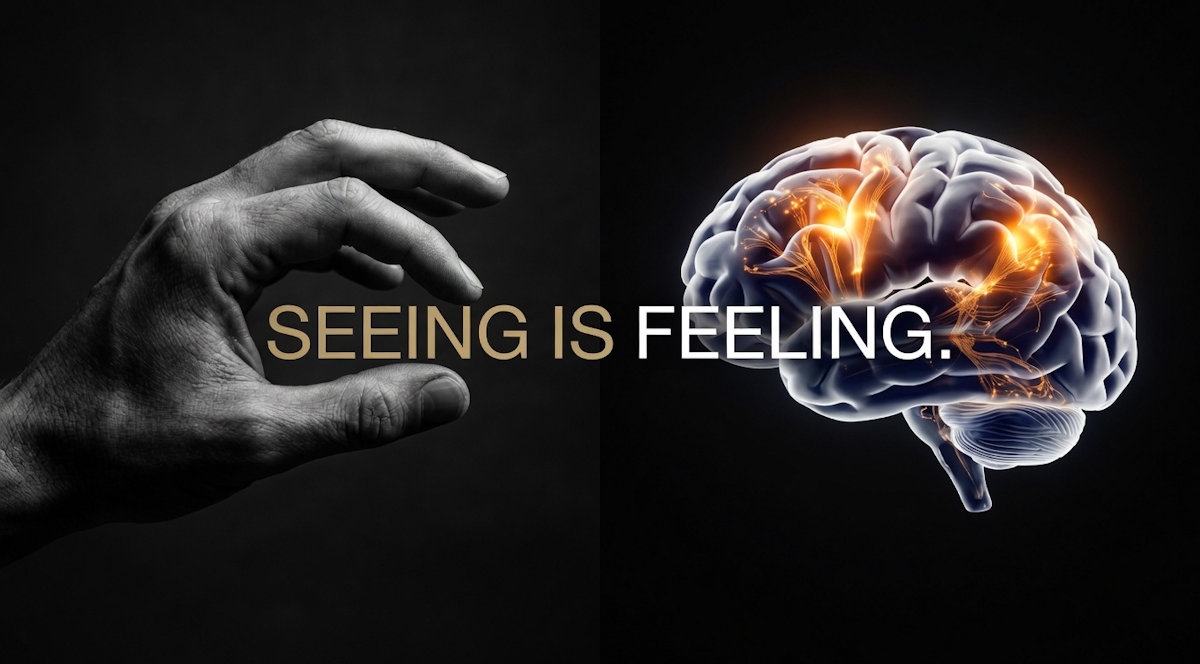
Research indicates that the mirror neuron network, particularly in the premotor cortex and inferior parietal lobule, contributes to the processing of observed emotional expressions, including distress signals such as crying. This activation is thought to play a role in eliciting supportive behaviors from observers, helping to reduce aggression and promote care.
The chemical modulation of aggression
The impact of tears extends beyond visual processing into the realm of chemosignaling. A landmark study published in PLOS Biology by researchers at the Weizmann Institute of Science demonstrated a significant physiological response to the scent of emotional tears. In controlled experiments, male participants who unknowingly inhaled the chemical components of women's emotional tears showed a 43.7% decrease in aggressive behavior in a standardized behavioral task - a reduction the lead author described as remarkable even by laboratory standards.
This finding suggests that emotional tears act as a chemosignal capable of promoting prosocial responses. The researchers identified four specific olfactory receptors that responded in a dose-dependent manner to tears but not to saline, and functional brain imaging confirmed that exposure to tears reduced overall neural activity in aggression-related regions. The visual and olfactory cues of distress may therefore work together in a multi-sensory manner to support social harmony, although the precise interaction with the broader mirror neuron system requires further investigation.
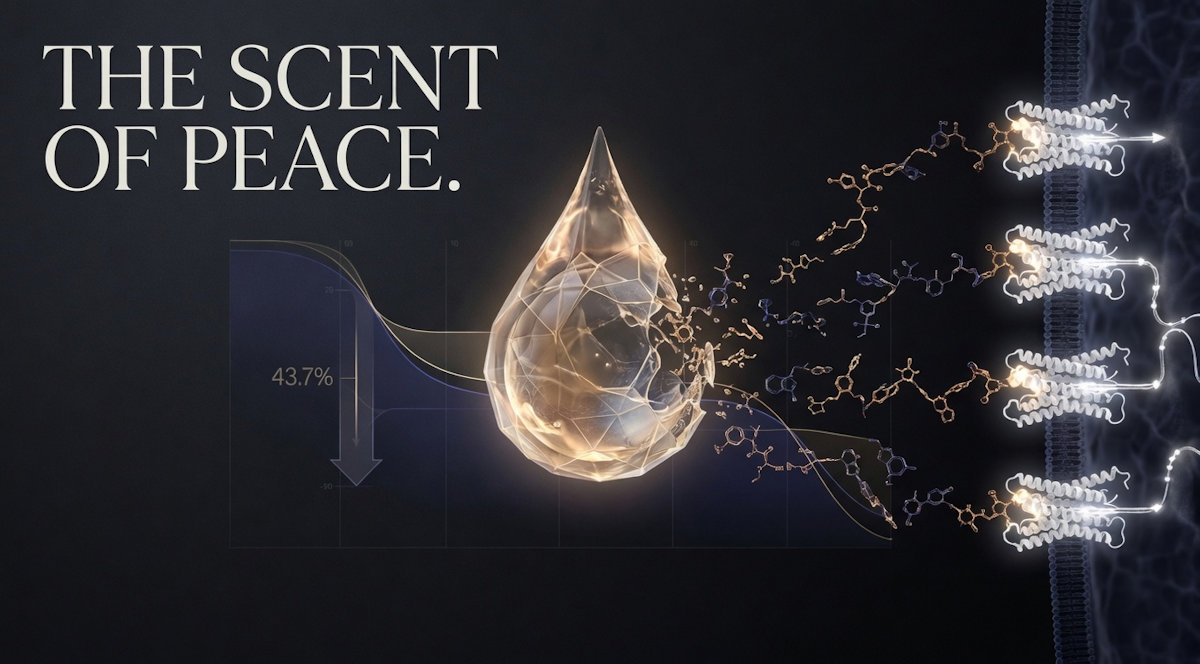
Clinical and experimental data indicate that observing distress can trigger a vicarious emotional response via mirror mechanisms, while the chemical signal from tears may help modulate threat-related brain activity, fostering calmer and more receptive states.
Moral decision-making and the inferior frontal cortex
The implications of mirror neuron activity extend into the domain of ethics. Research from UCLA, published in Frontiers in Integrative Neuroscience, used functional neuroimaging to examine how activity in mirror neuron regions relates to moral choices. In scenarios where participants had to decide between personal gain and avoiding harm to others, individuals showing stronger activation in the inferior frontal cortex were significantly less likely to choose actions that directly harmed others.
These results suggest that the mirror neuron system may provide a neural mechanism that makes inflicting harm on others feel more aversive by simulating their experience. This internal simulation offers a biological contribution to moral intuitions - such as the golden rule - though moral decision-making also involves many other brain networks and cultural factors.

Emotional contagion and physiological synchronization
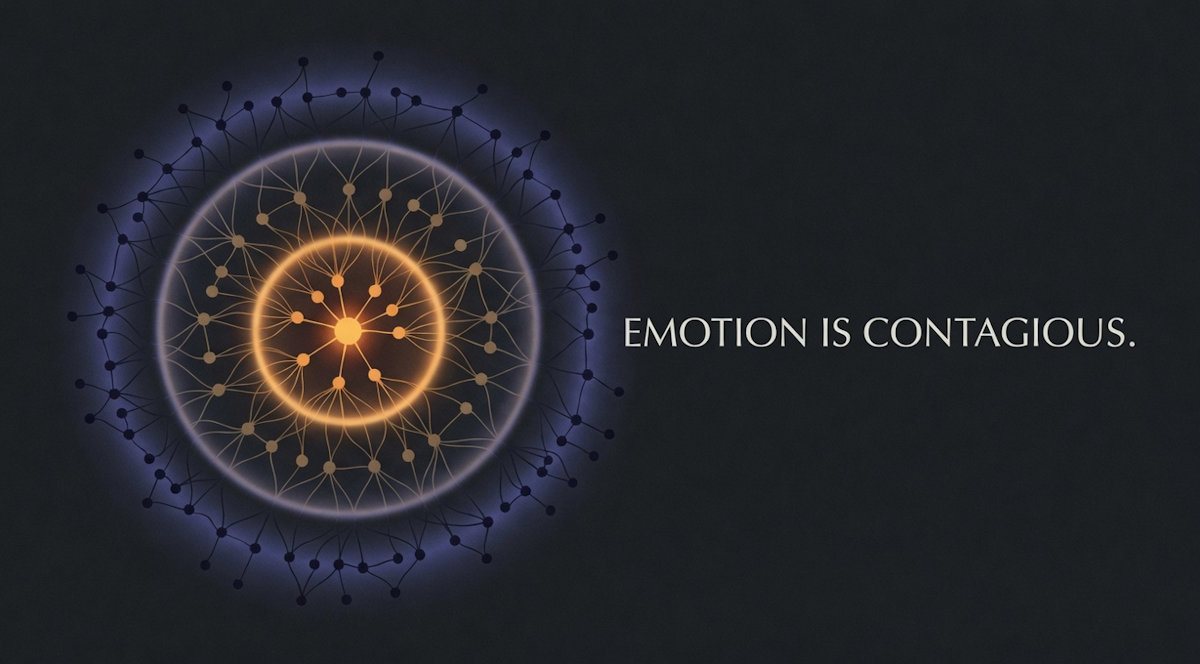
Beyond individual moral choices, mirror-like mechanisms contribute to emotional contagion - the unconscious mimicry of expressions and emotions that can lead to shared physiological states. The measurable effects of this process are striking.
In a study of 321 older couples, researchers observed that a positive mood in one partner was associated with a reduction in cortisol levels in the other. Long-term social network analysis of approximately 5,000 individuals in the Framingham Heart Study showed that happiness can spread through up to three degrees of social separation, an effect likely supported by mirroring and contagion processes. Emotional contagion is not limited to positive states; it also transmits stress and anxiety, underscoring the profound influence of social environments on endocrine function and mental health.
Gender-specific patterns in empathic processing
Investigations using the Balanced Emotional Empathy Scale (BEES) have revealed consistent gender differences in empathic responsiveness. Women, on average, score higher on self-reported emotional empathy than men. Research led by Marzoli and colleagues linked these scores to specific patterns of motor identification.
Highly empathic women showed a stronger tendency to imagine actions performed by an observed agent using their own dominant hand, suggesting a deeper integration between their motor systems and the perceived actions of others. This heightened motor resonance may help explain greater attunement to subtle social and emotional cues in certain individuals - a finding with potential implications for understanding variation in empathic capacity across the population.
Mapping the extended mirror system
While the premotor cortex and inferior parietal lobule form the core of the mirror neuron system, it is now understood as part of a broader socio-cognitive network spanning multiple brain regions.
The insula helps map internal bodily states, enabling observers to "feel" visceral sensations experienced by others. The anterior cingulate cortex participates in the emotional processing of pain, contributing to the shared discomfort felt when witnessing another person's injury. The hippocampus provides contextual memory to help interpret the intentions behind observed actions, while the cerebellum supports the precise timing and coordination involved in social mimicry and imitation. Together, these structures form what researchers increasingly describe as an extended social brain network, rather than a set of isolated mirror-specific circuits.
The scientific debate: what mirror neurons can and cannot explain
It would be incomplete to discuss mirror neurons without acknowledging the substantial scientific controversy surrounding the theory. Since the early surge of popular interest, a number of prominent researchers have cautioned against overstating the role of these cells.
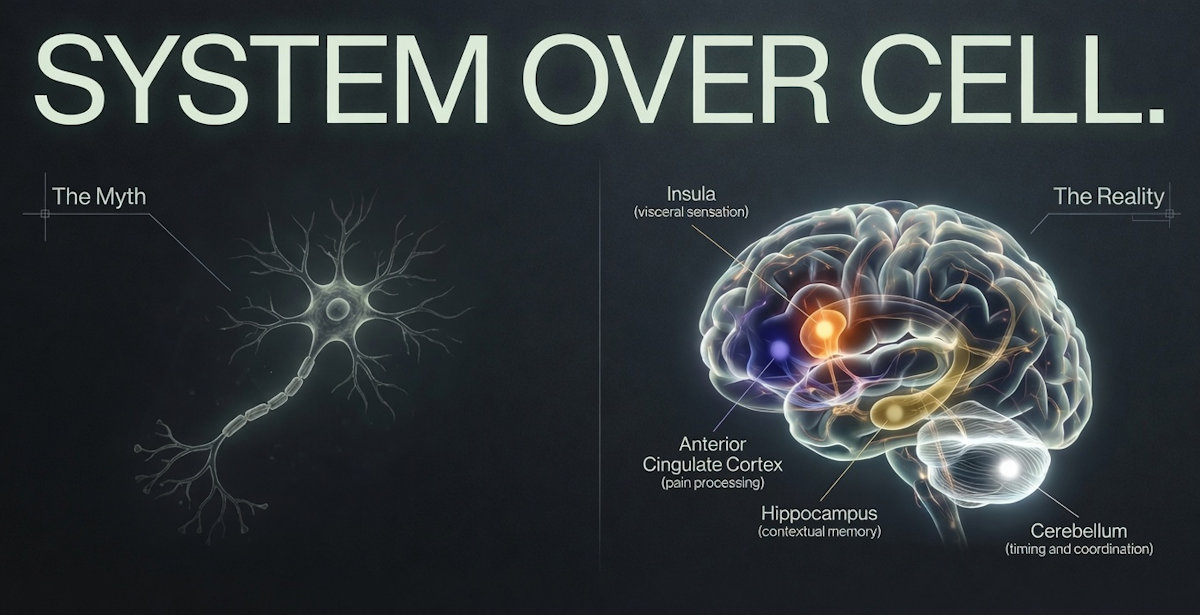
Neurologist Gregory Hickok, author of The Myth of Mirror Neurons, argues that humans clearly demonstrate the ability to understand actions that they cannot physically perform themselves - which would be difficult to explain if mirror neurons were the primary engine of action understanding. Other critics point out that individual neurons have never been directly recorded firing in the "mirror" pattern in living human subjects, meaning that human evidence relies on indirect neuroimaging data rather than single-cell recordings of the kind obtained in macaque monkeys.
The consensus position in contemporary neuroscience is more measured: mirror neurons, and the wider systems that share their functional logic, contribute to empathy, imitation, and social cognition, but they are neither the sole nor the sufficient cause of these capacities. Moral and empathic behavior depends on a broad constellation of neural systems, developmental experience, and cultural learning. This nuance is important - both for scientific accuracy and for managing the expectations placed on research into conditions such as autism spectrum disorder.
Mirror neuron research and autism spectrum disorder
One of the most discussed clinical implications of mirror neuron science concerns autism spectrum disorder (ASD). The "broken mirror hypothesis" proposed that disrupted mirror neuron functioning might underlie the difficulties in social communication and imitation observed in many autistic individuals. Early neuroimaging studies found atypical activation in the pars opercularis - a mirror-system region - when individuals with ASD processed facial expressions, and EEG research has found evidence of disrupted mu rhythm suppression, a standard proxy for mirror neuron activity.
However, the picture is considerably more complex than the original hypothesis suggested. Recent work, including a 2025 study published in Frontiers in Neurology, found that children with ASD are capable of robust motor imagery, challenging the idea that their mirror neuron systems are simply broken or absent. The emerging view is that mirror system differences in ASD may be one component of a broader and more heterogeneous pattern of atypical social brain development, rather than a single root cause.

Despite these caveats, MNS-based therapeutic interventions - including action observation therapy, where patients watch goal-directed movements before practicing them - have shown improvements in social interaction abilities in some clinical populations. Research into these applications continues to grow, particularly using multimodal neuroimaging approaches that combine EEG, fMRI, and behavioral measures.
Clinical applications and therapeutic potential
Beyond ASD, mirror neuron research is informing rehabilitation approaches in a range of conditions. Action observation therapy has been applied in stroke rehabilitation, where observing purposeful limb movements activates mirror circuits and appears to support motor recovery in patients with motor deficits. A 2024 study in Annals of Physical and Rehabilitation Medicine found that event-related desynchronization during action observation - a mirror system signature - was an early predictor of recovery outcomes following subcortical stroke.
In mood disorders, the role of emotional contagion and mirror mechanisms in shaping shared affective states raises questions about how social environments modulate symptom severity. Therapeutic approaches that leverage positive emotional contagion - such as group-based interventions, music therapy, and movement synchrony practices - may partly owe their efficacy to these same biological substrates.
Importantly, the chemosignaling discovery around emotional tears opens another avenue: understanding how the body involuntarily signals vulnerability to others could eventually inform interventions for aggression regulation and social bonding difficulties.
Perspectives for future integration
Mirror neuron research continues to evolve toward integrating biological insights with clinical applications and emerging technologies. Advances in high-density EEG, real-time fMRI, and multimodal neuroimaging are providing increasingly detailed data on how these networks function during everyday social interactions - not merely in laboratory paradigms.

By better understanding the mechanisms that enable humans to understand and connect with one another, scientists may develop more targeted interventions for conditions involving social cognitive challenges. The evidence that emotional tears can chemically reduce aggression - mediated through specific olfactory receptors and measurable changes in brain connectivity - combined with the role of mirror mechanisms in empathy, represents a genuinely important step in decoding the biology of human prosocial behavior.
The scientific consensus remains nuanced but clear: humans are biologically equipped to connect with others, and mirror neurons form one important part of the neural architecture that makes this possible - operating within rich, complex interactions involving many other brain regions, hormonal systems, and environmental factors. The story of mirror neurons is ultimately not one of a single magical cell type, but of a brain that is profoundly, irreducibly social.
Share now









Key takeaways
- Mirror neurons fire both when an individual performs an action and when they observe the same action performed by another - a dual activation that forms the biological basis of imitation and social understanding.
- Mirror neurons were first identified in macaque monkeys by Giacomo Rizzolatti's team at the University of Parma; analogous systems have since been identified in humans using neuroimaging.
- The mirror neuron system's core regions are the premotor cortex and the inferior parietal lobule, though it operates as part of a far wider socio-cognitive brain network also involving the insula, anterior cingulate cortex, hippocampus, and cerebellum.
- A study published in PLOS Biology by Weizmann Institute researchers found that sniffing emotional tears - with no detectable odor - reduced male aggressive behavior by 43.7%, a reduction attributed to four specific olfactory receptors activated by tear chemosignals.
- Functional brain imaging in that same study showed that exposure to tears increased connectivity between olfactory and aggression-related brain circuits, measurably reducing activity in the latter.
- Individuals showing stronger activation in the inferior frontal cortex during moral dilemmas were significantly less likely to choose actions that harmed others, linking mirror system activity to ethical behavior (UCLA / Frontiers in Integrative Neuroscience).
- A study of 321 older couples found that a positive mood in one partner was associated with lower cortisol levels in the other - a measurable physiological effect of emotional contagion.
- Analysis of approximately 5,000 individuals in the Framingham Heart Study showed that happiness can spread through up to three degrees of social separation, likely supported by mirror and contagion mechanisms.
- Women score higher than men on average on the Balanced Emotional Empathy Scale (BEES), and highly empathic women show deeper motor integration with the actions of observed others.
- The "broken mirror hypothesis" in autism spectrum disorder proposes that disrupted mirror neuron functioning contributes to social communication difficulties, though recent research shows the picture is considerably more complex than a simple deficit model.
- Action observation therapy - a mirror-neuron-informed rehabilitation approach - has shown promise in stroke recovery and social interaction difficulties in some clinical populations.
- Despite widespread popular enthusiasm, mirror neurons remain scientifically controversial: empathy and action understanding are possible even without corresponding mirror neuron activation, and mirror systems are best understood as contributors to, not the sole cause of, social cognition.
Sources
- National Institutes of Health (PMC) https://pmc.ncbi.nlm.nih.gov/articles/PMC11212500/
- National Institutes of Health (PMC) https://pmc.ncbi.nlm.nih.gov/articles/PMC11982629/
- National Institutes of Health (PMC) https://pmc.ncbi.nlm.nih.gov/articles/PMC10734982/
- UCLA Newsroom https://newsroom.ucla.edu/releases/mirror-neurons-in-brain-nature-of-morality-iacoboni
- IASP (International Association for the Study of Pain) https://www.iasp-pain.org/publications/relief-news/article/why-are-my-mirror-neurons-going-crazy-oh-right-its-because-im-female/
- PLOS Biology (Agron et al., tears and aggression study) https://journals.plos.org/plosbiology/article?id=10.1371/journal.pbio.3002442
- Quanta Magazine (mirror neuron controversy overview) https://www.quantamagazine.org/overexposure-distorted-the-science-of-mirror-neurons-20240402/
- Frontiers in Neurology (ASD and mirror neuron imagery, 2025) https://www.frontiersin.org/journals/neurology/articles/10.3389/fneur.2025.1490445/full
- Wiley / Brain and Behavior (bibliometric analysis of mirror neuron research 1996-2024) https://onlinelibrary.wiley.com/doi/10.1002/brb3.70486
- Published 2026-04-19 21:42
- Modified 2026-05-20 23:45

-
Redaction