
-
59
Views
-
0
Comments
-
0
Like
-
Bookmark

-
 Redaction
USS Gerald R. Ford breaks naval endurance record
The USS Gerald R. Ford surpasses 294 days at sea. Contrast American carrier industrial bottlenecks with China's rapid Type 004 nuclear development.
The horizon of the eastern Mediterranean is currently dominated by a 100,000-ton slab of nuclear-powered steel. On April 15, 2026, the USS Gerald R. Ford etched its name into the chronicles of naval endurance, reaching 296 days at sea - surpassing the 295-day mark set by the USS Abraham Lincoln in 2020 and claiming the record for the longest deployment of an American carrier since the Vietnam War. While the ship is a marvel of engineering, its extended presence is a visceral symptom of a world that refuses to settle. From the coastal waters of Venezuela to the volatile theaters of the Iran War, the Ford has become a permanent fixture of American kinetic diplomacy.
The endurance of the Ford-class
The Gerald R. Ford is not merely a larger version of its predecessors. It represents a fundamental shift in how air power is projected from the sea. Measuring 333 meters in length with a flight deck stretching 78 meters wide, the vessel is powered by two Bechtel A1B reactors. These units generate 25% more power than the older Nimitz-class reactors, providing the electrical surge necessary for the Electromagnetic Aircraft Launch System (EMALS). This technology replaces the steam catapults used for decades, allowing for a more precise and varied launch of everything from heavy F-35 fighters to light unmanned combat vehicles.
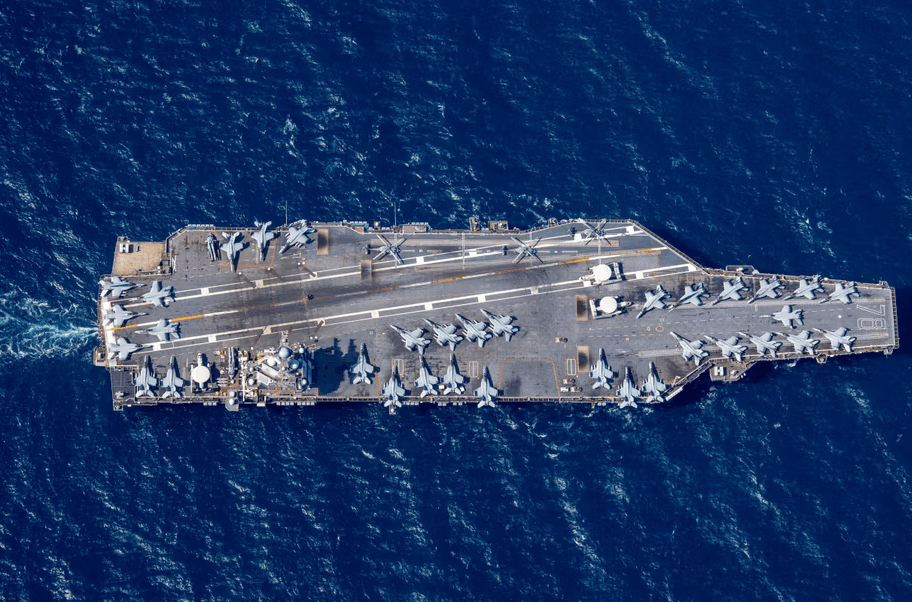
Despite its technological sophistication, the Ford has faced a grueling operational tempo. On March 12, a fire broke out in the ship's main laundry room while it was operating in the Red Sea, injuring three sailors and displacing some 600 personnel from their berthing spaces. After initial repairs at Naval Support Activity Souda Bay in Crete, the carrier made a five-day port call in Split, Croatia, before returning to its station in the eastern Mediterranean. The strain is beginning to show, not just in the metal, but in the personnel. Extended deployments of this magnitude raise significant concerns regarding the long-term psychological impact on the roughly 4,500 crew members and the maintenance cycles of the ship's complex systems. Irina Tsukerman, president of Scarab Rising, notes that the current state of the fleet reflects an accumulated strain, pointing out that the Ford required years of technical corrections after its initial delivery.
Blockades and the Middle East buildup
Further east, the USS Abraham Lincoln Carrier Strike Group (CSG) maintains a heavy presence in the Arabian Sea. This force is the primary instrument of a naval blockade currently strangling Iranian ports. Defense Secretary Pete Hegseth recently observed that this operation, despite its strategic weight, utilizes less than 10% of America's total naval power. The initial blockade force included one aircraft carrier, 11 destroyers, three amphibious assault ships, and additional coastal combat vessels - a commitment that has continued to grow. As of mid-April, at least 21 ships had opted to turn back rather than challenge the American line.
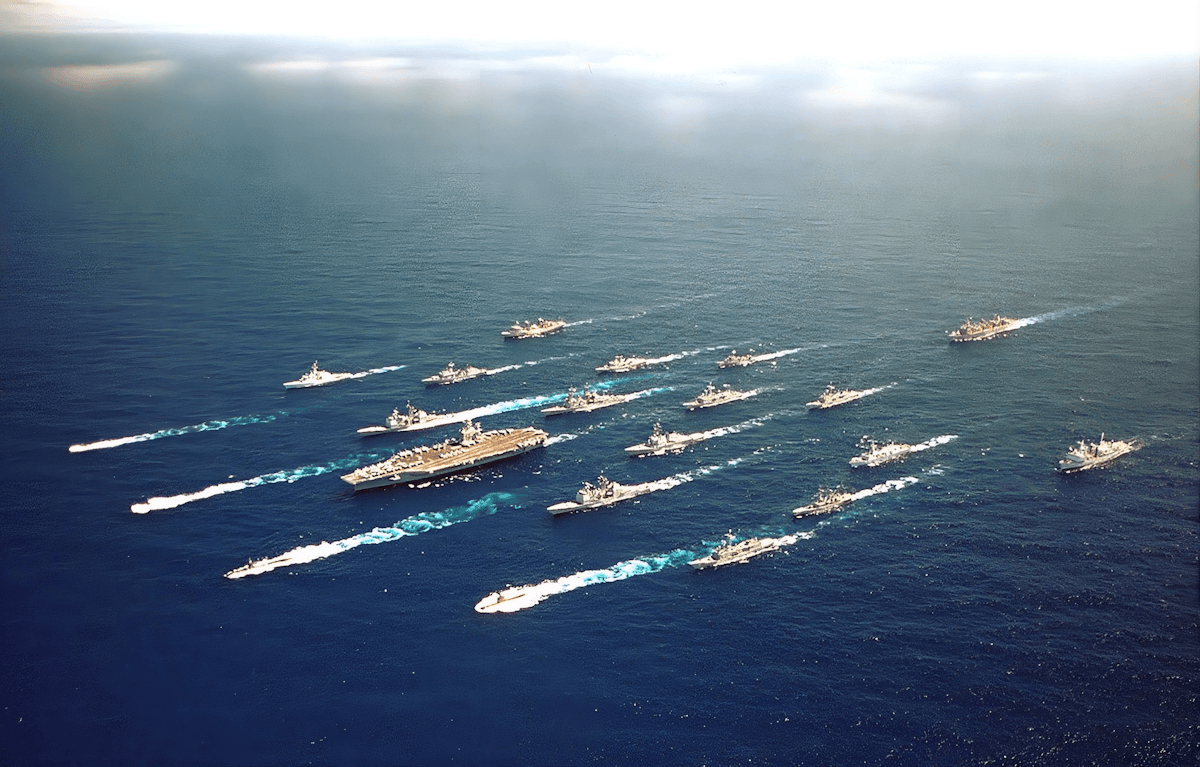
General Dan Caine, Chairman of the Joint Chiefs of Staff, has characterized the enforcement of this blockade as absolute. According to Caine, any vessel attempting to breach the perimeter faces pre-planned tactics designed to bring immediate force, including boarding and seizure. To maintain this pressure, the USS George H.W. Bush CSG departed Norfolk on March 31, taking the long route around the Cape of Good Hope and southern Africa - deliberately bypassing the Red Sea to avoid the threat of Houthi missiles and drones - to reinforce the growing naval presence in the Arabian Sea.
The industrial bottleneck
While the US Navy maintains its goal of an 11-carrier fleet, the industrial infrastructure supporting this ambition is under severe pressure. The USS Nimitz, the oldest active nuclear-powered carrier, was scheduled for decommissioning but will remain in service for another year. This extension is a necessity born of delays in the delivery of the USS John F. Kennedy, which is now expected in March 2027. Labor shortages and supplier inconsistencies have slowed the production line, a reality Tsukerman identifies as a gap between technological ambition and industrial discipline.
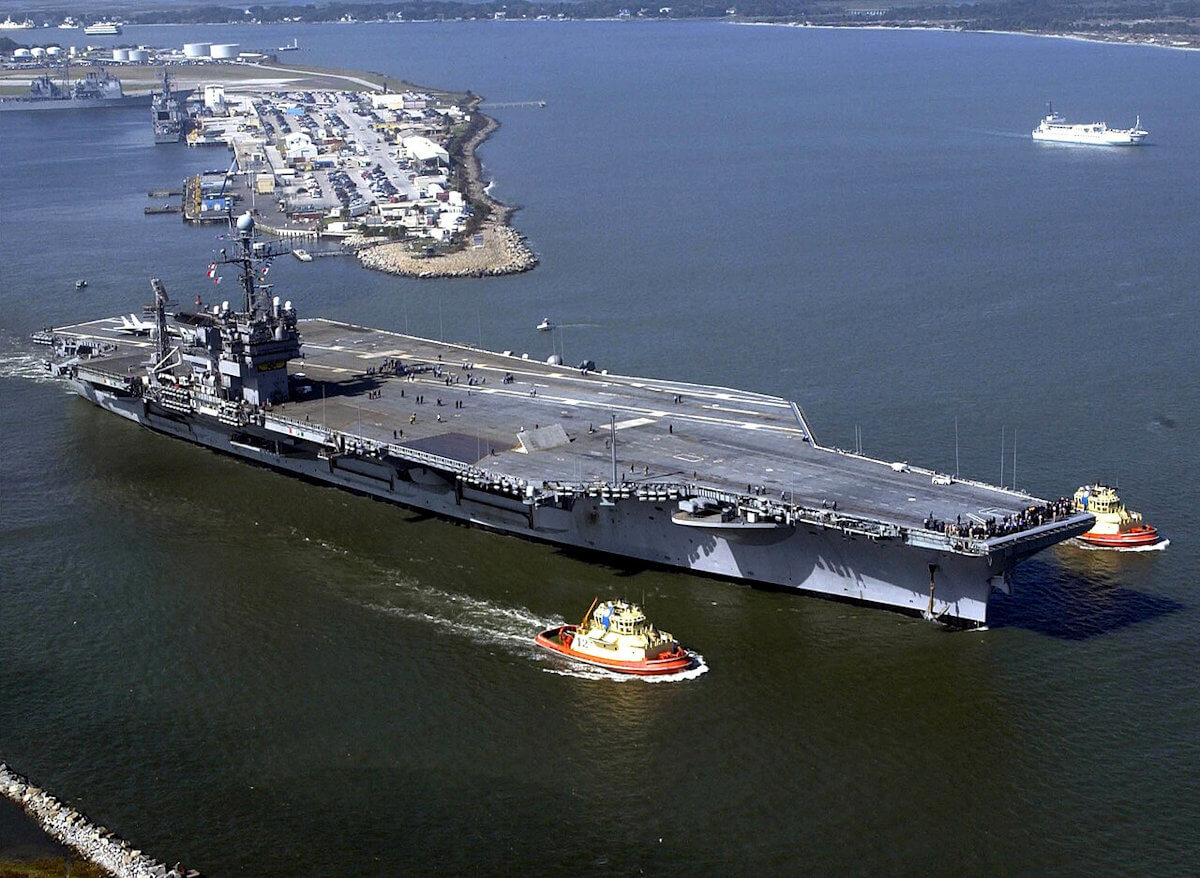
To address these systemic issues, advanced procurement funding has been channeled into CVN-82, the future USS William J. Clinton. The objective is to inject stability into the industrial base and rejuvenate production lines that have struggled to keep pace with the Ford-class's complexity. Meanwhile, the USS Harry S. Truman is preparing for its Refueling and Complex Overhaul (RCOH) in June 2026, a multi-year process that will leave another gap in active carrier availability until at least January 2031.
The rising dragon in the Pacific
As the United States manages its aging fleet and maintenance backlogs, China is executing what the Pentagon's 2026 China Military Power Report describes as the largest carrier buildup in the Indo-Pacific since World War II. Beijing's roadmap aims for nine aircraft carriers by 2035. This represents a production rate of one new carrier every 20 months, supported by a shipbuilding capacity estimated to be 230 times that of the United States.
Satellite imagery from late 2025 confirms that construction of the Type 004, China's first nuclear-powered carrier, is proceeding at the Dalian shipyard. The images reveal internal structures consistent with two armored reactor compartments. The Type 004 is expected to displace between 110,000 and 120,000 tons - potentially outclassing the Ford-class in size - and carry a complement of up to 100 aircraft.
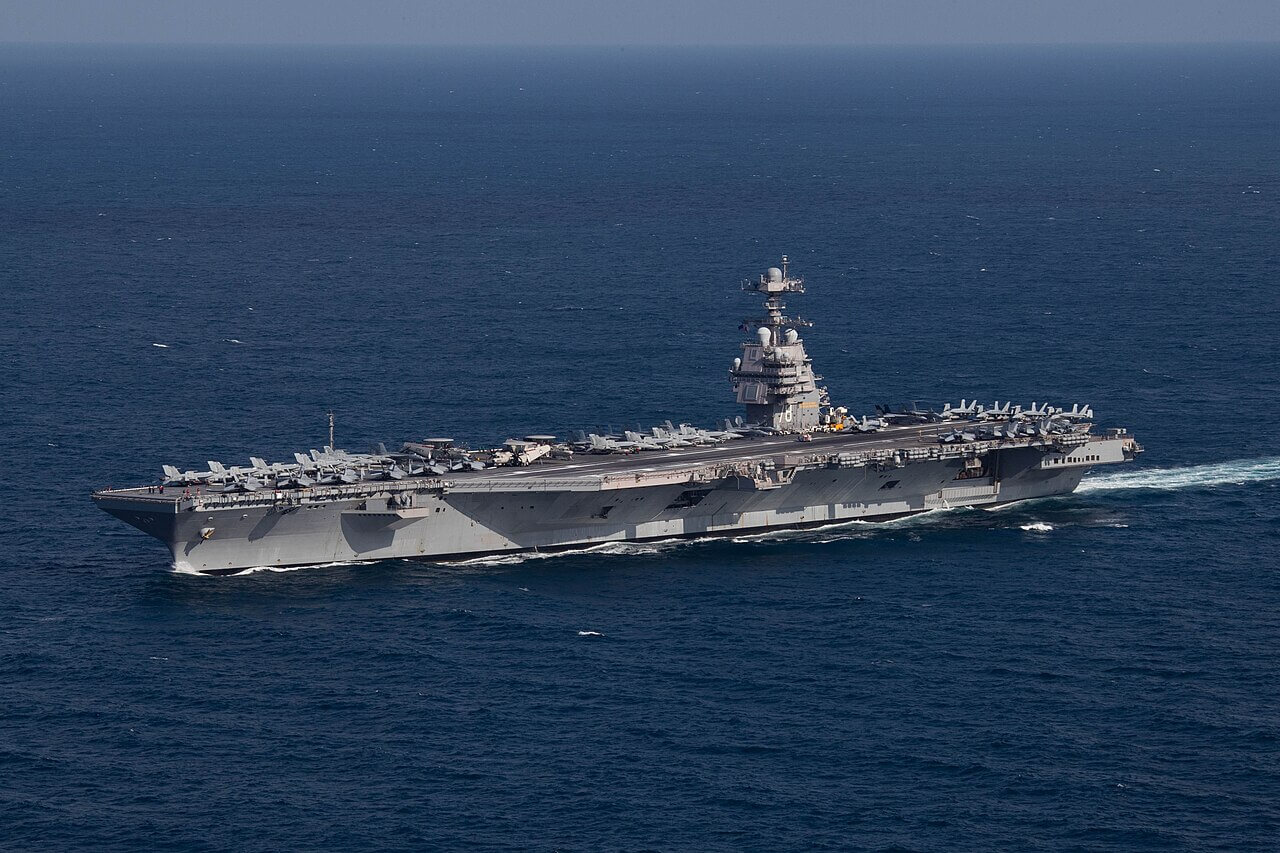
Christopher Sharman of the U.S. Naval War College suggests that a nine-carrier navy provides Beijing with a qualitatively different tool for global power projection. While China has historically focused on asymmetric warfare and anti-ship missiles to deter American carriers, the shift toward a blue-water navy indicates a desire to move beyond coastal defense. James Holmes, a maritime strategy expert, notes that China is utilizing an industrial strategy reminiscent of the U.S. during World War II, producing vast quantities of "good-enough" platforms while the U.S. focuses on a smaller number of high-complexity vessels.
The 21st-century ocean is becoming a landscape of high-stakes logistics and endurance. The record-breaking voyage of the USS Gerald R. Ford proves that the aircraft carrier remains the ultimate symbol of sovereign will, yet the cracks in the industrial foundation and the rapid ascent of a peer competitor suggest that the era of uncontested American maritime supremacy is evolving into a complex, multi-polar struggle for the seas.
Share now









Key takeaways
- The USS Gerald R. Ford reached a record 296 days at sea by April 15, 2026, the longest post-Vietnam War US carrier deployment.
- The US Navy is currently enforcing a blockade on Iranian ports, with at least 21 ships forced to turn back as of mid-April 2026.
- China is pursuing an ambitious expansion to nine aircraft carriers by 2035, with the nuclear-powered Type 004 under construction at Dalian since 2024-2025.
- The Ford-class carriers utilize the Electromagnetic Aircraft Launch System (EMALS), designed to sustain 160 sorties per day in standard operations with a surge capability of 270.
- US shipbuilding capacity faces significant delays: the USS John F. Kennedy delivery is pushed to March 2027, and the USS Harry S. Truman will be out of service from June 2026 until at least January 2031 for its Refueling and Complex Overhaul.
Sources
- military.comhttps://www.military.com/daily-news/2026/04/16/us-aircraft-carrier-breaks-record-longest-deployment-vietnam-war.html
- 19fortyfive.comhttps://www.19fortyfive.com/2026/04/the-u-s-navy-will-soon-have-3-aircraft-carriers-out-of-action/
- wikipedia.orghttps://en.wikipedia.org/wiki/2026_United_States_military_buildup_in_the_Middle_East
- thedefensewatch.comhttps://thedefensewatch.com/naval-maritime/why-aircraft-carriers-remain-the-cornerstone-of-u-s-naval-power/
- naval-technology.comhttps://www.naval-technology.com/projects/gerald-r-ford-class/
- wikipedia.orghttps://en.wikipedia.org/wiki/Gerald_R._Ford-class_aircraft_carrier
- navalnews.comhttps://www.navalnews.com/naval-news/2026/01/second-gerald-r-ford-class-aircraft-carrier-set-sails-for-sea-trials/
- meta-defense.frhttps://meta-defense.fr/en/2026/03/31/type-004-porte-avions-nucleaire-dalian/
