
-
 Redaction
Japan invests $4 billion in Rapidus for chip independence
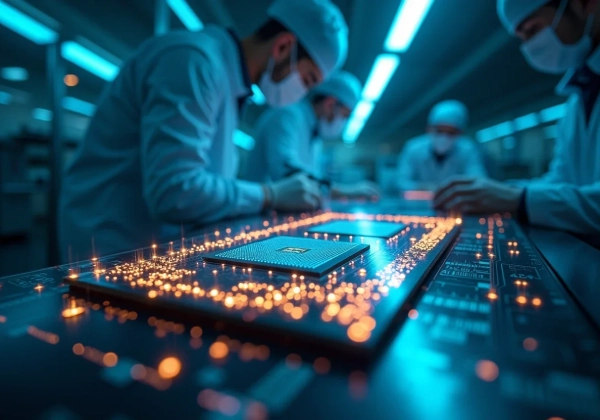
Japan allocates $4 billion to Rapidus for 2nm chip production at the IIM-1 facility. This strategic move aims to secure national semiconductor self-sufficiency.
Questions regarding the sustainability of globalized technological production chains arise with increasing urgency - particularly in critical sectors like advanced semiconductors. While many market participants view a diversified, interconnected supply network as inherently resilient, the realities of geopolitical friction and logistical vulnerabilities present a far more nuanced picture. It is within this context that Japan's latest financial commitment to Rapidus, its state-backed chip manufacturing initiative, merits close examination.
What is Rapidus and why does it matter?
Rapidus is Japan's government-backed semiconductor company, established in 2022 as a direct response to the country's declining position in advanced chip manufacturing. Unlike legacy Japanese chipmakers focused on mature process nodes, Rapidus is explicitly targeting leading-edge 2-nanometer technology - the same generation being pursued by TSMC and Samsung - making it one of the most ambitious domestic semiconductor projects anywhere in the world.
The company operates with a clear national mandate: to rebuild Japan's position in a sector it once dominated, and to reduce the country's dependence on foreign foundries for chips that underpin everything from consumer electronics to defence systems.

Japan's $4 billion METI funding injection for fiscal year 2026
Japan's Ministry of Economy, Trade and Industry (METI) has formally sanctioned an additional allocation of 631.5 billion yen - equivalent to approximately $4 billion - specifically designated for fiscal year 2026. This substantial capital injection signals a deliberate strategic pivot towards enhancing national self-sufficiency in a commodity that underpins nearly every facet of modern digital infrastructure.
This recent tranche follows prior commitments, accumulating a considerable national investment in an endeavour designed to re-establish Japan as a formidable competitor in leading-edge semiconductor fabrication. The total government support for Rapidus has now grown to a scale that places it among the most heavily state-funded chip initiatives globally, alongside the US CHIPS Act beneficiaries and South Korea's K-Chips Act programmes.
IIM-1 facility in Chitose, Hokkaido: the 2nm production hub
The primary focus of this new allocation targets two critical areas within Rapidus's operational framework: the refinement of prototype development and the optimisation of front-end wafer processing at its IIM-1 facility.
Located in Chitose, Hokkaido, the IIM-1 complex is envisioned as the nexus for Japan's 2-nanometer process technology ambitions. These highly technical segments of the manufacturing process are fundamental to achieving the precision and scale required for advanced logic chips - increasingly vital for applications in artificial intelligence, high-performance computing, and advanced telecommunications.
Front-end wafer processing, in particular, involves the intricate deposition, patterning, and etching of materials on silicon wafers to construct the transistors and interconnections that form the basis of integrated circuits. The development of robust prototyping capabilities is equally crucial, enabling Rapidus to iterate designs rapidly and validate manufacturing processes before committing to high-volume production.
Addressing supply chain vulnerabilities and national security
METI's rationale behind this sustained financial backing is rooted in a comprehensive assessment of global supply chain fragilities, exacerbated by recent disruptions. The economic and strategic implications of relying heavily on external foundries for advanced semiconductors have prompted numerous nations to reassess their domestic manufacturing capabilities.
For Japan, a nation with a historical legacy of excellence in electronics and materials science, the decline in domestic chip manufacturing capacity over several decades has presented a significant economic and national security challenge. The Rapidus initiative is explicitly designed to address this deficit, aiming to create a vertically integrated domestic ecosystem that reduces reliance on foreign entities for critical components.
This concern is not hypothetical. Supply shocks during the COVID-19 pandemic exposed how a shortage of chips - produced overwhelmingly in Taiwan and South Korea - could halt automotive production lines in Germany, Japan, and the United States simultaneously. Semiconductor sovereignty has since become a cornerstone of industrial policy across the G7.
How Rapidus fits into the global chip race
The competitive landscape Rapidus is entering is formidable. TSMC currently manufactures chips at 3nm and is ramping 2nm production, while Intel and Samsung are both investing hundreds of billions in next-generation fabs. Rapidus has partnered with IBM for 2nm chip design know-how and with imec, the Belgian semiconductor research institute, for process development - two relationships that give the initiative credible technical foundations.
What distinguishes Rapidus, however, is its explicit focus on gate-all-around (GAA) transistor architecture from the outset, rather than transitioning from older FinFET designs. This is a technical bet that, if executed well, could position Rapidus ahead of some incumbents in specific segments of the advanced logic market.
Workforce development and regional economic impact in Hokkaido
While the immediate financial injection targets specific technical improvements, the broader implications extend well beyond the factory floor. The Rapidus project is expected to stimulate significant regional economic development in Hokkaido - a prefecture that has historically lagged Japan's more industrialised Pacific coast regions.
The initiative is also driving investment in semiconductor engineering education, with Japanese universities and technical colleges expanding relevant curricula to meet the anticipated demand for skilled fabrication engineers, process technicians, and materials scientists. Building this domestic talent pipeline is widely considered as important as the capital investment itself - without it, even a fully equipped fab cannot operate at competitive yields.
Challenges and long-term ambitions
The path to achieving competitive dominance in advanced semiconductor manufacturing is fraught with substantial technical and financial hurdles. Achieving acceptable yields at 2nm requires extraordinarily precise process control, advanced lithography (including EUV and potentially high-NA EUV tools from ASML), and supply chains for speciality chemicals and gases that are themselves highly concentrated.
Rapidus has faced scepticism from some industry analysts who question whether a new entrant can bridge the gap to TSMC and Samsung within a realistic timeframe. The company has targeted volume production by 2027, a schedule many consider aggressive given that its fab is still in the construction and prototyping phase.
Despite these difficulties, Japan's unwavering commitment - underscored by this latest $4 billion allocation - reflects a determined effort to secure its technological future and reinforce its position in the global high-tech landscape. Whether Rapidus ultimately becomes a commercially viable foundry or serves primarily as a strategic hedge against supply disruption, the investment represents a clear statement of national intent in an era where semiconductor access is increasingly treated as a matter of sovereign security.
Share now









Key takeaways
- Japan's Ministry of Economy, Trade and Industry (METI) approved an additional 631.5 billion yen (approximately $4 billion USD) in funding for Rapidus, the state-backed semiconductor company.
- The funding is designated for fiscal year 2026 and forms part of a growing cumulative government investment in domestic chip manufacturing.
- Investment targets the enhancement of prototype development and front-end wafer processing at Rapidus's IIM-1 facility in Chitose, Hokkaido.
- The IIM-1 fab is focused on developing 2-nanometer process technology - one of the most advanced chip manufacturing nodes currently being pursued anywhere in the world.
- The objective is to strengthen Japan's domestic semiconductor supply chain, reduce reliance on foreign foundries, and address national economic and security vulnerabilities.
- Rapidus has key technical partnerships with IBM (2nm design know-how) and imec (process development), providing critical expertise for its leading-edge ambitions.
- The project also aims to drive regional economic development in Hokkaido and build a skilled domestic semiconductor workforce through expanded engineering education programmes.
- Rapidus is targeting volume production by 2027, though some industry analysts consider this timeline highly ambitious given current fab development status.
Sources
- Published 2026-04-15 04:31
- Modified 2026-05-20 14:07
