-
15
Views
-
0
Comments
-
0
Like
-
Bookmark

-
 Redaction
Strait of Hormuz: The 2026 global supply chain crisis
As Middle East conflict severs supply chains, "Fortress America" tariffs emerge. Analyze the 2026 shift toward onshoring and the end of globalized trade models.
The arteries of the world under siege
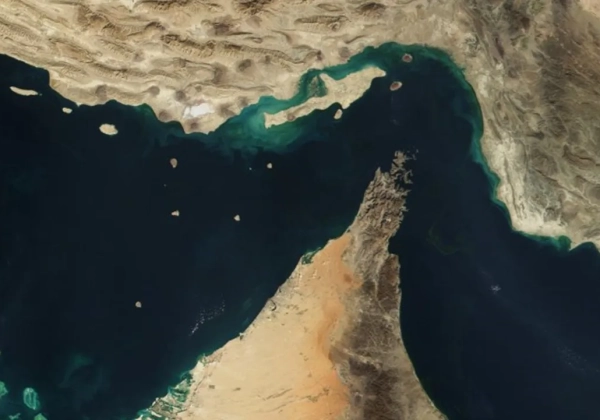
For decades, the Strait of Hormuz has been described as the world's most critical maritime chokepoint, a narrow ribbon of water through which the lifeblood of the global economy flows. Today, that artery is not merely constricted; it is effectively ruptured. As the conflict in the Middle East escalates into a protracted regional war, the consequences have transcended the familiar shocks of the energy market. We are witnessing a total recalibration of global trade, where the physical blockage of the Strait is compounded by a new era of protectionist tariffs and a digital shadow war that threatens the very algorithms managing our supply chains.
From the semiconductor cleanrooms of East Asia to the construction sites of North America, the ripples of this conflict are no longer theoretical. They are felt in the 100% price hikes for industrial gases, the structural deficit of essential metals, and a radical shift in how nations protect their internal markets from the volatility of a world on fire.
The energy crisis: A historic disruption
The International Energy Agency has spared no hyperbole, characterizing the current situation as the largest supply disruption in the history of the global oil market. Since the onset of the Iran war, West Texas Intermediate (WTI) has climbed to a staggering $116.56 per barrel, a surge of more than 50%. The math of the disruption is grim: between 11 and 11.5 million barrels per day of crude have been evaporated from global markets through the end of March.
Approximately 150 vessels, including massive crude carriers and LNG tankers, remain either trapped in the Gulf or are engaged in costly, weeks-long reroutes around the Cape of Good Hope. This is not merely an oil story; the Strait is the exit point for 35% of the world's seaborne methanol. China, which relies on the Middle East for up to 70% of its methanol imports, has seen its futures markets hit daily limits, threatening its domestic chemical and plastics industries with a complete standstill.
The weekend of fire: Aluminum and the industrial void
While oil grabs headlines, the "Weekend of Fire" on March 28, 2026, marked a definitive shift in the conflict's economic toll. Targeted military strikes hit the Al Taweelah smelter in the UAE and the Alba smelter in Bahrain. These facilities are not just local assets; they are the anchors of the global aluminum trade. With both reporting significant damage and declaring force majeure, nearly 9% of the world's primary aluminum supply has been severed from the market.
As of April 6, 2026, London Metal Exchange (LME) aluminum prices have vaulted past $3,500 per tonne. The Middle East's primary metal, once a reliable flow, is now stranded behind a naval blockade. Traders have responded by pulling over 150,000 tonnes from existing LME warehouses, leading to a structural deficit that experts warn could take years to resolve. For industries ranging from automotive to aerospace, the lack of aluminum is no longer a pricing issue-it is an existential supply threat.
Helium and the tech paradox
Perhaps the most specialized, yet devastating, impact is found in the cooling systems of the world's most advanced technology. Qatar provides nearly 40% of the world's helium, a gas essential for semiconductor manufacturing and the cooling of AI-processing servers. Following Iranian attacks on Qatari LNG and helium facilities, production has ceased entirely.
Helium prices have become untethered from reality, with some estimates reaching $2,000 per thousand cubic feet-a 100% increase in some regions. With more than a quarter of the global supply offline, the green energy transition and the AI revolution are facing a physical limit. Without helium, the fiber-optic cables and high-end chips that power our digital world cannot be produced, creating a bottleneck that moves from the sea to the silicon.
The fortress economy: New tariffs and onshoring
In response to this volatility, the United States has pivoted toward an aggressive "Fortress America" trade policy. Effective April 6, 2026, the government has dramatically expanded Section 232 tariffs. Most aluminum, steel, and copper products now face an additional 50% duty. This is a move intended to insulate the domestic market and force a decoupling from vulnerable Middle Eastern and Russian supply chains.
Even more radical is the April 2, 2026, announcement regarding the pharmaceutical industry. To prevent future shortages of life-saving medicine, a 100% tariff will be imposed on certain patented pharmaceuticals and their active ingredients (APIs) by July 31, 2026. While generic drugs remain exempt for now, the message to the corporate world is clear: onshore your manufacturing or pay the price. Companies that submit approved onshoring plans are granted a temporary reprieve at 20%, but the era of cheap, globally-sourced medicine is coming to an end.
Algorithmic chokepoints: The new cyber frontier
As physical trade routes close, the digital systems managing the remaining flows have become primary targets. The maritime industry's rapid adoption of AI for logistics and predictive visibility has inadvertently expanded its attack surface. In 2025, maritime cyber incidents surged by 103%, with ransomware cases increasing by 150%.
We have entered the age of the "algorithmic chokepoint." Hackers are now using AI to launch sophisticated attacks that bypass traditional security. Deepfakes are being used to clone the voices of shipping executives to authorize fraudulent diversions, while AI-generated phishing emails, written in the native languages of multi-national crews, have seen a 54% success rate.
More concerning is the shift from attacking corporate IT to targeting operational technology (OT). Recent incidents have shown attackers gaining control over ballast water management and engine propulsion systems. In the Persian Gulf, GPS jamming and spoofing have become routine, forcing crews to rely on manual navigation in the world's most dangerous waters. The time between the discovery of a software vulnerability and a live attack has shrunk from 63 days to less than 48 hours, leaving traditional defense mechanisms obsolete.
Conclusion: The shift toward resilience
The convergence of kinetic warfare, protectionist trade policy, and AI-driven cyber conflict has created a perfect storm. The old models of "just-in-time" manufacturing and globalized sourcing are being replaced by a focus on resilience and recovery. Organizations are now scrambling to develop "geopolitical-aware" AI-algorithms that can predict not just weather or demand, but the movements of navies and the evolution of malware.
As the Strait of Hormuz remains a graveyard for tankers and a theater for drone strikes, the global economy is learning a hard lesson. Stability was never the default state of the world; it was a luxury. In the new reality of 2026, the price of that luxury has never been higher.
Share now






Key takeaways
- Crude oil prices have surged over 50% since the Iran war began, with WTI hitting $116.56.
- Military strikes in late March 2026 damaged major aluminum smelters in the UAE and Bahrain, stranding 9% of global supply.
- The U.S. implemented aggressive 50% tariffs on most imported aluminum and steel effective April 6, 2026.
- Qatar's helium production has been halted by Iranian attacks, causing prices to spike by up to 100%.
- Maritime cyber incidents rose 103% in 2025, with AI-driven phishing achieving a 54% click-through rate.
Sources
- ig.comhttps://www.ig.com/en/news-and-trade-ideas/_wti-trades-in-1-month-high-as-eur-usd--ftse-100-slip-260407
- air7seas.comhttps://air7seas.com/blog/how-the-2026-war-impacts-global-trade-shipping-disruptions-fixes-for-us-importers
- wikipedia.orghttps://en.wikipedia.org/wiki/Economic_impact_of_the_2026_Iran_war
- economictimes.comhttps://m.economictimes.com/markets/expert-view/crude-oil-prices-to-stay-high-as-hormuz-strait-crisis-deepens-probal-sen-on-what-it-means-for-indian-markets/amp_articleshow/130075623.cms
- sunsirs.comhttps://www.sunsirs.com/uk/detail_news-31121.html
- metal.comhttps://news.metal.com/newscontent/103793863-SMM-Analysis-Hormuz-Crisis-Methanol-Supply-Risks-and-the-Rising-Strategic-Value-of-Green-Methanol
