
-
 PRO
PRO -
 Redaction
Deep geothermal: Drilling into the superhot zone
An analytical investigation into the technical barriers, fiscal subsidies and drilling innovations shaping the pursuit of superhot rock energy.
The structural friction of deep heat
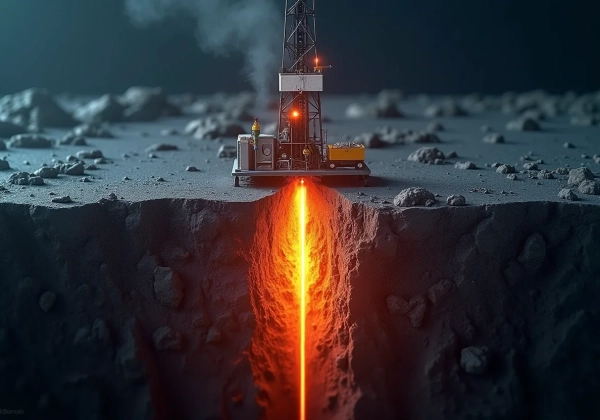
The global energy transition remains tethered to surface-level intermittent sources, yet a capital-intensive push deep into the Earth's crust is quietly working to change the base-load equation. The pursuit of supercritical geothermal energy is not merely a scaling of existing technology - it is a fundamental confrontation with thermodynamics and material science.
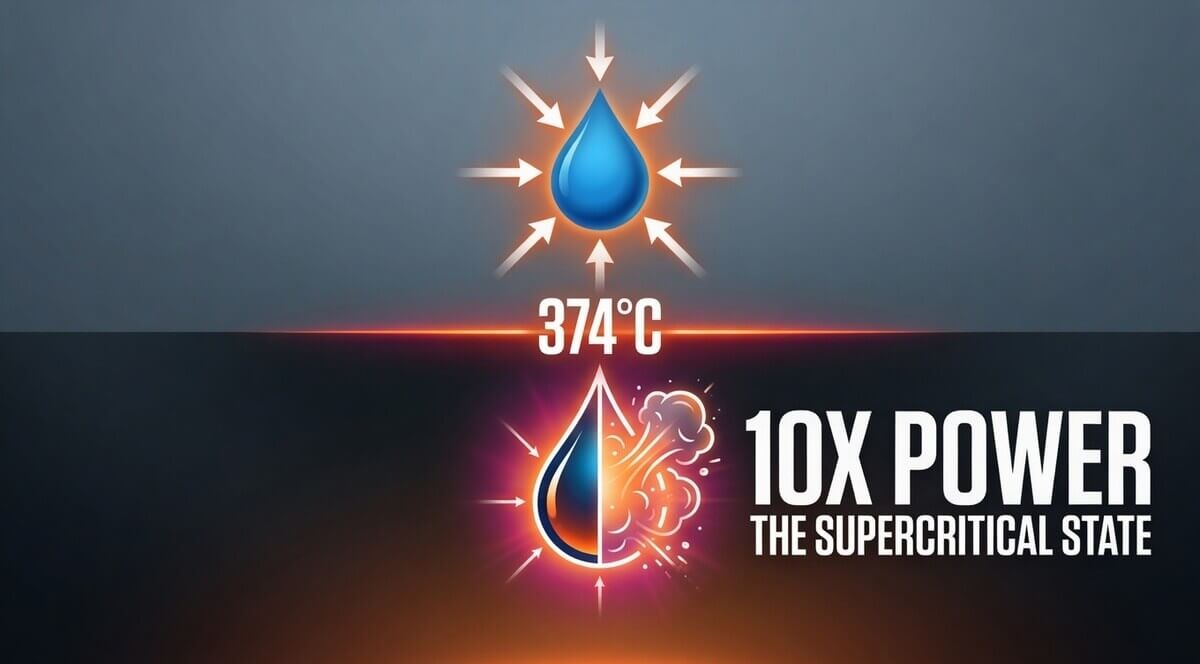
When water is pushed beyond 374°C (at sufficient pressure), it ceases to behave as either a liquid or a gas. In this supercritical state, the fluid possesses the density of a liquid but the viscosity of a gas, offering a theoretical leap in heat extraction efficiency. According to industry researchers, accessing these significantly higher temperatures can increase power output per well by a factor of five to ten compared to conventional geothermal systems.
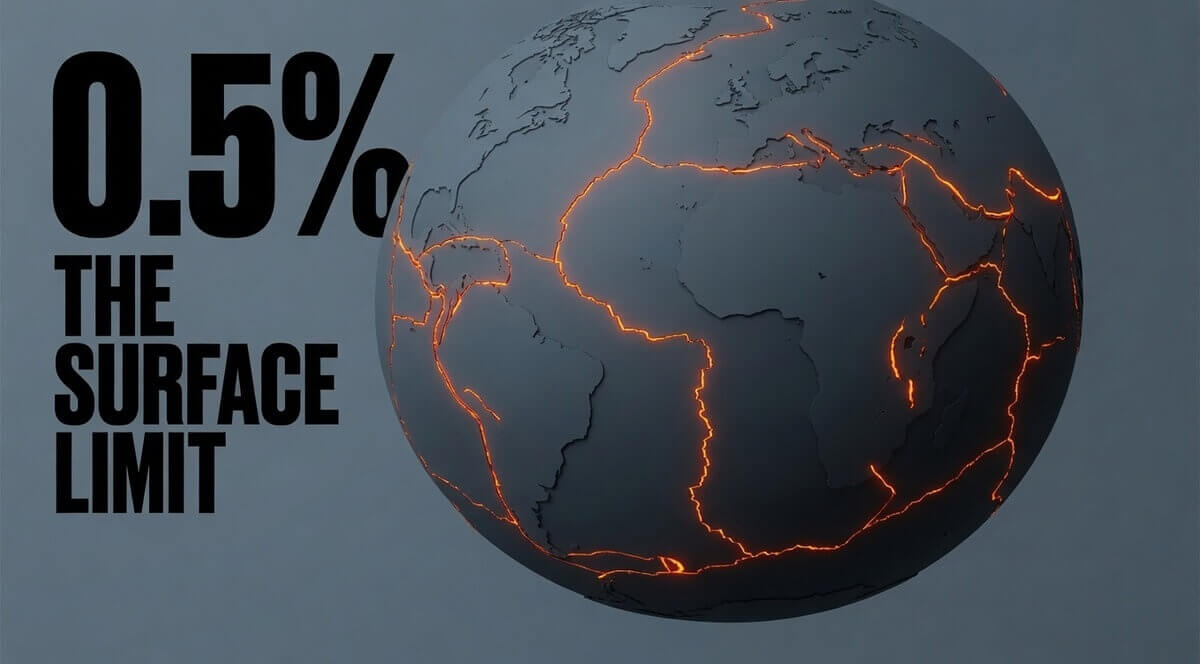
The gap between theoretical thermodynamics and operational reality, however, remains wide. Geothermal energy currently accounts for roughly 0.5% of global electricity generation - a figure that has barely shifted despite decades of project history. Skepticism surrounding the sector is not rooted in a lack of resource, but in the mechanical and chemical volatility of the deep subsurface environment required to harvest it. Rock at these depths is a kinetic furnace that destroys conventional drilling assemblies and renders standard metallurgy obsolete through rapid corrosion and scaling.
How supercritical geothermal differs from conventional systems
Conventional geothermal plants typically tap naturally occurring hydrothermal reservoirs at moderate depths, where water temperatures range between 150°C and 300°C. These systems are geographically constrained - viable sites cluster around tectonic boundaries, volcanic zones, and rift regions.
Supercritical and enhanced geothermal systems fundamentally break this geographic limitation. By engineering artificial reservoirs in hot dry rock or drilling deep enough to reach supercritical temperatures, next-generation geothermal can, in principle, be deployed almost anywhere on Earth where sufficient depth is achievable. This distinction is critical for countries with high energy demand but limited hydrothermal resources - Japan, Germany, South Korea, and much of the continental United States.
The energy density advantage is equally significant. A supercritical well operating above 400°C can deliver power comparable to a cluster of conventional geothermal wells, compressing the infrastructure footprint and reducing the land use burden per megawatt generated.
Advancements in vaporization and fracturing
To bypass the limitations of mechanical drill bits - which dull and fail rapidly in high-heat basement rock - companies are pivoting toward unconventional extraction methods.
Millimeter-wave drilling: Quaise Energy's field breakthrough
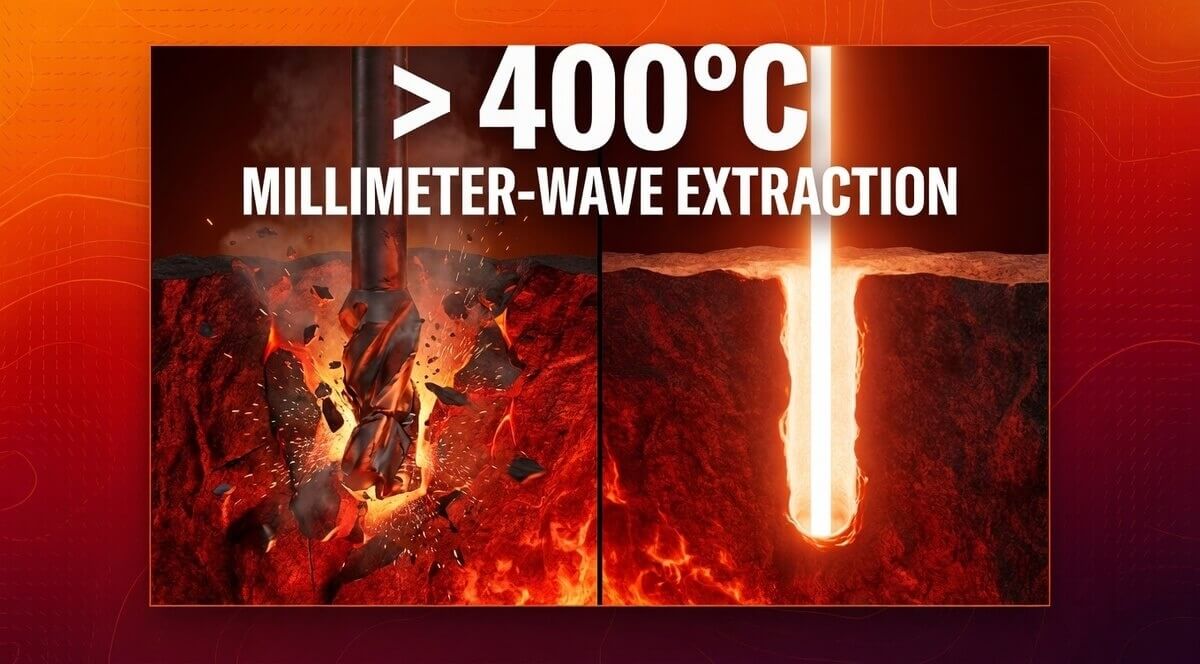
Quaise Energy, an MIT spinout, has advanced its millimeter-wave drilling technology into field testing with concrete results. In July 2025, the system successfully drilled to a depth of 100 meters in hard granite at a quarry in central Texas - a world record for millimeter-wave drilling. By replacing grinding with vaporization using high-power millimeter waves (a technology originally developed for nuclear fusion research), the system targets depths and temperatures previously considered inaccessible, specifically the superhot rock zone above 400°C where energy density peaks.
The company is now advancing toward deeper, commercial-scale demonstrations, with its first superhot geothermal power plant under active development in the western United States. Millimeter-wave drilling represents a potential step-change: if it can be reliably scaled, it removes the single most expensive and technically limiting constraint in the entire geothermal development chain.
Enhanced geothermal systems: engineering the reservoir
Simultaneously, the industry is adapting hydraulic fracturing and horizontal drilling techniques from the petroleum sector to create Enhanced Geothermal Systems (EGS). This approach does not rely on natural hydrothermal reservoirs - it engineers artificial ones by injecting fluid into hot dry rock under pressure to create or widen fracture networks, then circulating working fluid through those fractures to extract heat.
Fervo Energy and its Cape Station project in Beaver County, Utah, serves as the primary commercial benchmark. Phase I is on track to begin delivering power to the grid in 2026 with an initial capacity of approximately 100 MW. A second phase is planned to add around 400 MW by 2028, bringing the full development toward 500 MW total - a scale that would represent a significant proof point for EGS commercialisation.
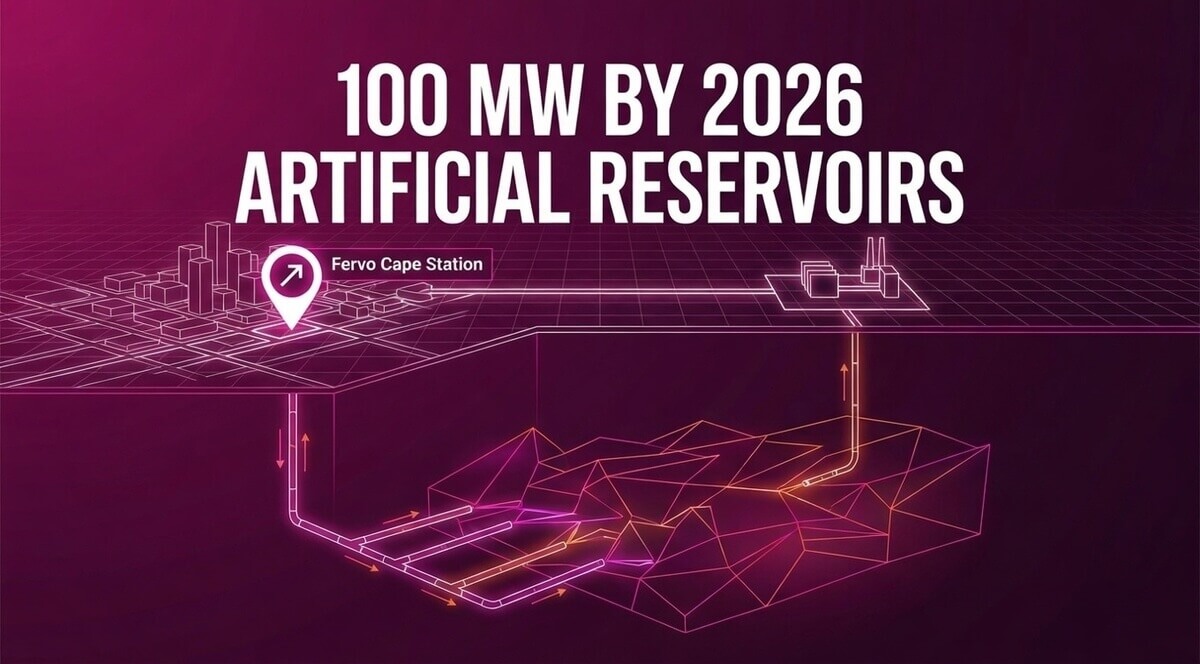
Utah FORGE, the U.S. Department of Energy-supported field laboratory, continues to generate critical data in parallel. Researchers there have successfully demonstrated the circulation of cold water through engineered fractures in crystalline granite, retrieving it as high-grade heat. The site functions as a long-term proving ground for reservoir creation techniques and performance monitoring in hot dry rock conditions.
Closed-loop Advanced Geothermal Systems (AGS) represent a third pathway. These designs circulate working fluid through sealed pipe networks, avoiding direct contact with subsurface minerals. The approach reduces corrosion risk, minimises the chemical complexity introduced by dissolved volcanic gases, and lowers the probability of induced seismicity - a concern that has delayed several EGS projects in Europe and North America.
The brittle-ductile transition and material failure
The move toward supercritical depths introduces a phase change not just in water, but potentially in the rock itself. As drilling approaches the brittle-ductile transition zone (BDTZ), the crust shifts from a material that fractures cleanly to one that flows more plastically under pressure. This behaviour complicates the creation of stable reservoir fracture networks and elevates the risk of borehole closure over time.
Supercritical fluids are also aggressively corrosive. Precipitation of silica and salt at extreme temperatures can rapidly foul boreholes and heat exchangers, while dissolved volcanic gases - particularly hydrogen sulfide and sulfur dioxide - introduce additional chemical complexity that standard oilfield metallurgy cannot withstand.
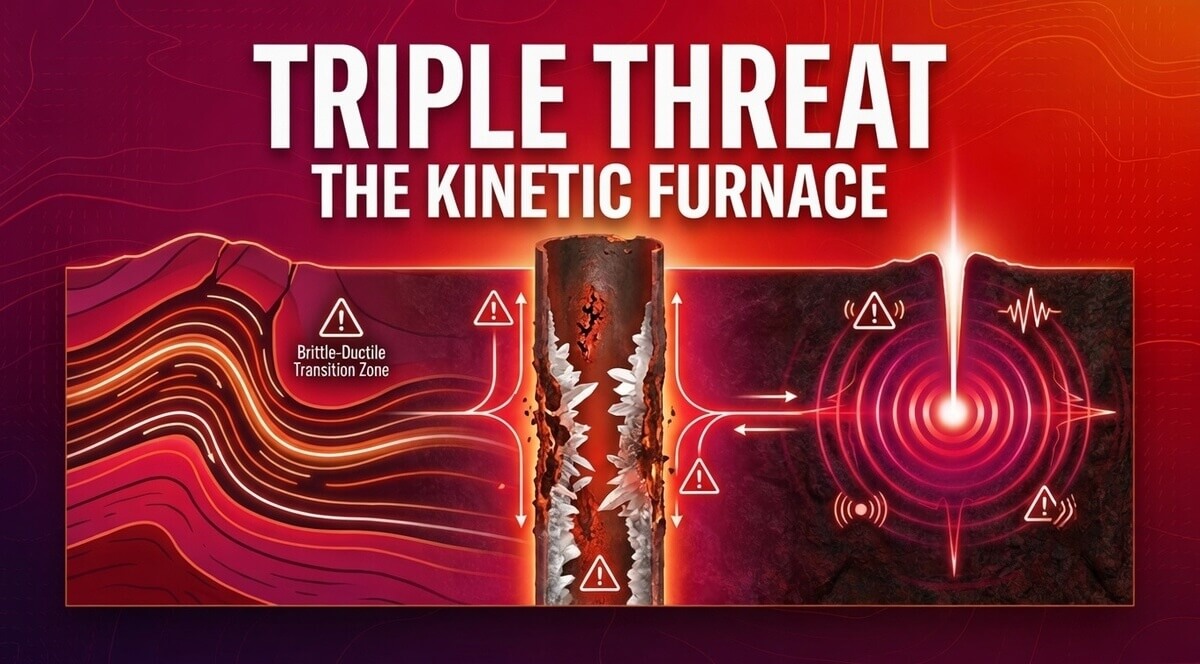
Current heat transfer equipment typically requires significant upgrades, and the capital expenditure required to harden infrastructure against these extremes remains a major barrier to widespread commercialisation. Industry modelling suggests that in geologically favourable conditions, reaching temperatures of 350-400°C could potentially lower electricity costs to approximately 4 cents per kilowatt-hour - competitive with gas peaking plants and some utility-scale solar - but achieving that cost floor requires drilling costs to fall substantially from today's levels.
Induced seismicity and environmental risk
Induced seismicity is the most politically sensitive risk associated with EGS development. The Basel, Switzerland project was abandoned in 2009 after hydraulic stimulation triggered a 3.4 magnitude earthquake, and similar concerns have slowed projects in South Korea and the United States.
Modern EGS developers have responded with real-time seismic monitoring protocols and adaptive stimulation techniques that pause or redirect injection when seismic indicators exceed preset thresholds. The evidence from Utah FORGE and Fervo's operational wells suggests that with careful site selection and rigorous monitoring, induced seismicity can be managed to levels below the threshold of public concern - but this remains an area where the regulatory framework is still catching up with the operational science.
From a land use and water footprint perspective, geothermal systems compare favourably with both fossil fuels and most forms of utility-scale renewables. Closed-loop AGS designs, in particular, operate as near-zero water consumption systems, an advantage in arid regions where water scarcity already constrains energy development decisions.
Fiscal interventions and legislative scaffolding
Recognising the high risk profile of deep geothermal exploration, governments are beginning to deploy meaningful fiscal support.
In April 2026, Japan's Ministry of Economy, Trade and Industry (METI) announced a subsidy package of 110.2 billion yen (approximately $691 million) through the Green Innovation Fund, to be disbursed from 2026 to 2030. This capital is earmarked for site surveys, test well drilling, and development of next-generation technologies - including supercritical, EGS, and closed-loop systems - with the objective of increasing geothermal's share of Japan's domestic energy mix and achieving initial commercial operations in the early 2030s.
In the United States, policy is following a parallel track of strategic de-risking. A report from the Center for Climate and Energy Solutions (C2ES) released in April 2026 emphasises that while oil and gas innovations have provided a valuable technical foundation, sustained federal support - specifically tax credits, demonstration funding, and streamlined permitting - is required to move next-generation geothermal from pilot projects to commercial scale. Bipartisan congressional interest in superhot rock geothermal has grown throughout 2026, reflecting both energy security concerns and the sector's potential as a domestic manufacturing and employment catalyst.
The International Energy Agency and independent analysts project that if drilling and development costs continue on their current decline trajectory, geothermal could play a meaningful role in meeting electricity demand growth through 2050 - particularly as a dispatchable, weather-independent complement to wind and solar. Until those cost curves mature, the sector remains a high-stakes audit of the Earth's internal heat, waiting for material science and operational experience to fully catch up with geological potential.
What to watch: key milestones through 2030
Several near-term indicators will determine whether next-generation geothermal transitions from promising to proven:
Fervo Cape Station Phase I (2026) will be the first major commercial EGS grid delivery at scale. If output ramps reliably and levelised cost data is published, it will reset investor expectations for the entire sector.
Quaise Energy's deeper demonstration will test whether millimeter-wave drilling can progress from the 100-metre granite record toward the multi-kilometre depths required for commercial superhot rock extraction.
Japan's METI-funded projects will indicate whether government risk capital can genuinely accelerate the lead time from exploration to commercial operation in a high-seismic, resource-rich nation that has historically underexploited its geothermal endowment.
Regulatory evolution in the U.S., European Union, and Southeast Asia will determine how quickly EGS permitting can be aligned with the pace of technical progress - or whether bureaucratic friction continues to impose a soft ceiling on deployment speed.
Frequently asked questions
What is supercritical geothermal energy? Supercritical geothermal energy refers to systems that extract heat from deep rock formations where water exceeds 374°C and enters a supercritical state - simultaneously dense like a liquid and mobile like a gas. This thermodynamic property allows dramatically more heat to be extracted per unit of fluid compared to conventional geothermal systems.
How is enhanced geothermal different from conventional geothermal? Conventional geothermal relies on naturally occurring hot water or steam reservoirs, limiting viable sites to geologically active regions. Enhanced Geothermal Systems (EGS) engineer artificial reservoirs by fracturing hot dry rock and circulating water through those fractures, making geothermal energy theoretically viable almost anywhere with sufficient drilling depth.
Is geothermal energy truly baseload? Yes. Unlike solar and wind, geothermal energy is not dependent on weather or time of day. It produces continuous, dispatchable power, making it one of the few renewable technologies capable of providing firm baseload generation at utility scale.
What are the main obstacles to commercialising supercritical geothermal? The primary barriers are drilling cost and durability (conventional drill bits fail in extreme heat), material corrosion from supercritical fluids, the complexity of the brittle-ductile transition zone, and the upfront capital expenditure required before any power is generated. Induced seismicity risk and permitting timelines are secondary but politically significant hurdles.
Which countries are leading investment in next-generation geothermal? The United States and Japan are currently the most active in terms of public funding and commercial demonstration. Iceland, Kenya, and New Zealand have deep operational experience with conventional geothermal. Italy, Indonesia, and the Philippines represent large-scale untapped potential markets where policy frameworks are still maturing.
Share now









Key takeaways
- Supercritical geothermal systems access water temperatures exceeding 374°C, where fluid enters a supercritical state - enabling power output five to ten times higher per well than conventional geothermal.
- In July 2025, MIT spinout Quaise Energy set a world record by drilling 100 metres into hard granite using millimeter-wave vaporisation technology, targeting the superhot rock zone above 400°C.
- Fervo Energy's Cape Station in Beaver County, Utah - the largest commercial Enhanced Geothermal System under development - is on track to deliver ~100 MW to the grid in 2026, with a second phase targeting an additional 400 MW by 2028.
- In April 2026, Japan's METI committed 110.2 billion yen (~$691 million) through its Green Innovation Fund to accelerate supercritical, EGS, and closed-loop geothermal development through 2030.
- Geothermal currently supplies only ~0.5% of global electricity despite decades of operational history - the bottleneck is drilling cost and subsurface engineering, not resource scarcity.
- In geologically favourable conditions, supercritical geothermal could reduce electricity costs to approximately 4 cents per kilowatt-hour - competitive with gas peaking and utility-scale solar.
- Key technical barriers include rapid metal corrosion from supercritical fluids, silica and salt scaling in boreholes, and the unpredictable brittle-ductile transition zone encountered at supercritical depths.
- Unlike solar and wind, geothermal provides firm, weather-independent baseload power - a critical characteristic for grid stability as variable renewable penetration increases.
- The U.S. Department of Energy-backed Utah FORGE test site has demonstrated successful water circulation through engineered fractures in crystalline granite, producing critical long-term reservoir performance data.
- The IEA projects geothermal could play a meaningful role in global electricity supply through 2050 if drilling costs continue to fall at their current trajectory.
Sources
- MIT Energy Initiative - Quaise Energy field demonstration https://energy.mit.edu/news/mitei-spinout-quaise-energy-successfully-demonstrates-their-geothermal-energy-drilling-technology-in-the-field/
- Business Wire - Quaise Energy drilling milestone press release https://www.businesswire.com/news/home/20250721785486/en/Quaise-Energy-Achieves-Drilling-Milestone-with-Millimeter-Wave-Technology
- Fervo Energy - Cape Station project overview https://capestation.com/
- Fervo Energy - Series E funding announcement https://fervoenergy.com/fervo-energy-raises-462-million-series-e-to-accelerate-geothermal-development-and-meet-surging-energy-demand-with-clean-firm-power/
- ThinkGeoEnergy - Japan METI $691M geothermal subsidy announcement https://www.thinkgeoenergy.com/japan-to-offer-690m-in-subsidies-for-next-generation-geothermal-power-projects/
- U.S. Department of Energy - Utah FORGE enhanced geothermal test site https://utahforge.com/
- Center for Climate and Energy Solutions (C2ES) - Next-generation geothermal report, April 2026 https://www.c2es.org/
- International Energy Agency - Geothermal power outlook https://www.iea.org/energy-system/renewables/geothermal
- Published 2026-04-26 22:27
- Modified 2026-05-22 14:23

-
Redaction