-
12
Views
-
0
Comments
-
0
Like
-
Bookmark

-
 PRO
PRO -
 Redaction
The calculus of asymmetric attrition in modern warfare
FPV drones costing $1,200 now threaten $3.8M T-90M tanks. Analyze the shifting economics of asymmetric warfare, C-UAS tech, and global supply chain risks.
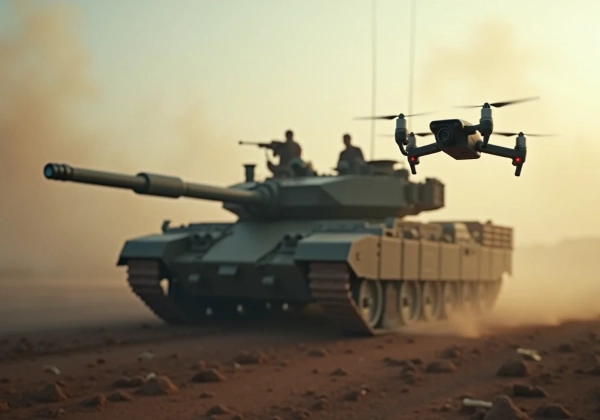
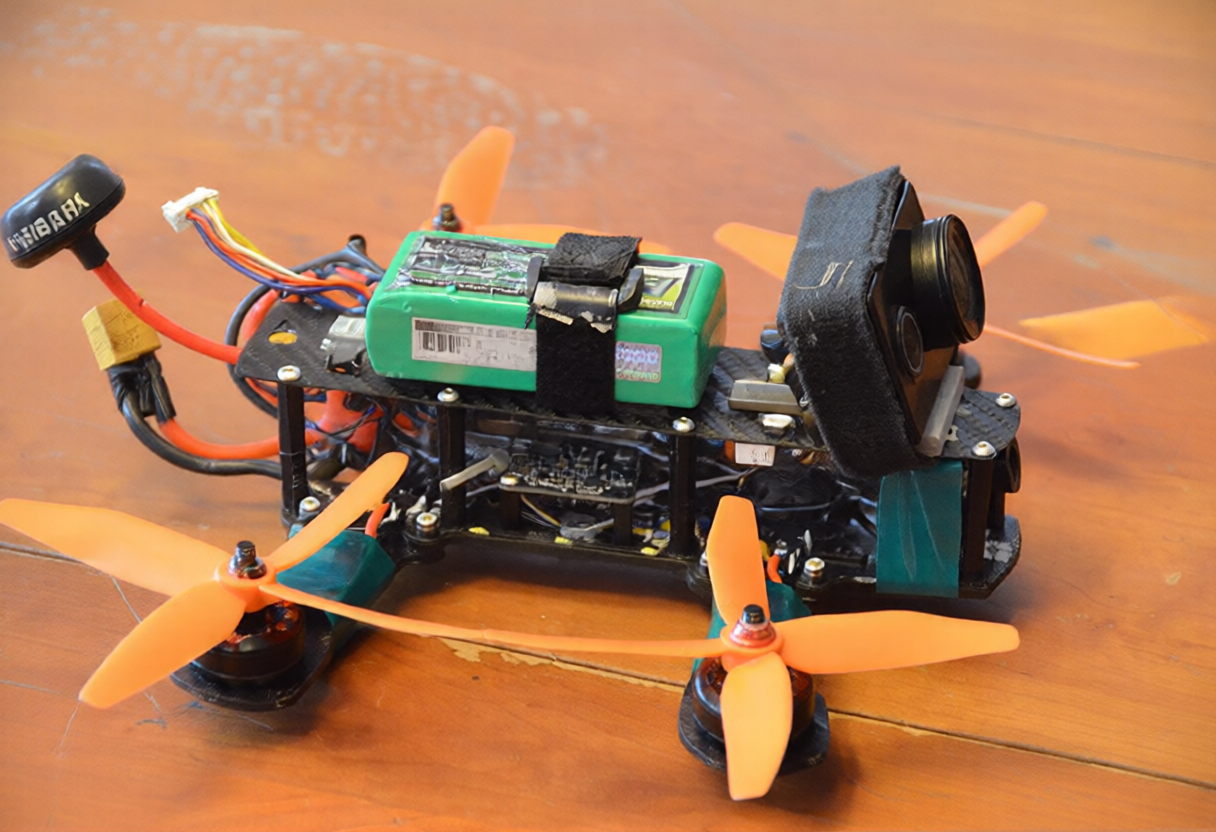
On the modern battlefield, the traditional hierarchy of military power is undergoing a significant shift. Low-cost FPV drones, often assembled using commercial components, now pose a serious challenge to expensive armored vehicles. This change is driven primarily by a stark cost disparity that questions long-held assumptions about armored warfare.
According to a March 2026 Russian-affiliated analytical study, a heavy FPV strike drone costing roughly $1,200 can target assets many times more expensive. For comparison, the replacement cost of a T-90M main battle tank is approximately $3.84 million. This means that, in pure economic terms, destroying one T-90M with FPV drones could theoretically involve up to 3,200 units while maintaining cost parity. A BMP-3 infantry fighting vehicle, valued at over $1 million, equates to roughly 870 drones, while a BTR-82A armored personnel carrier corresponds to around 300 units.
Cost asymmetry is moving precision strike capabilities from specialized air units closer to frontline infantry, enabling close air support that was previously difficult to achieve due to air defense coverage and operational safety distances.
The counter-UAS arms race
The growing effectiveness of FPV drones has accelerated the development of Counter-Unmanned Aircraft Systems (C-UAS). This technological race is split between kinetic “hard kill” solutions, which physically destroy threats, and electronic “soft kill” methods, which interfere with command links or navigation.
In April 2026, the U.S. Joint Interagency Task Force 401 allocated over $600 million to strengthen these capabilities, underlining that drone defense has become a high-priority national security issue.
Hard kill solutions
The main difficulty with kinetic interceptors has long been economics - using a $100,000 missile against a $1,000 drone is unsustainable. Directed-energy weapons are now attempting to change this equation. AeroVironment's LOCUST X3 laser system reportedly achieves engagement costs below $5 per shot. High-power microwave platforms, such as the Leonidas system unveiled in April 2026 by a consortium including Epirus and General Dynamics Land Systems, aim to neutralize drone swarms without expending kinetic munitions.
For scenarios requiring physical destruction, systems like Saab's Nimbrix represent a new generation of fire-and-forget interceptors designed specifically for swarm threats.
Soft kill solutions
In civilian areas or high-density environments, non-kinetic approaches are often preferred due to lower collateral risk. During the upcoming 2026 FIFA World Cup, security forces are expected to use “Cyber-over-RF” technology from companies such as Sentrycs. These systems detect and take control of unauthorized drones rather than jamming them, preserving situational awareness and enabling intelligence collection from captured hardware.
However, as drones increasingly incorporate autonomous navigation and pre-programmed routes that reduce reliance on continuous radio links, the long-term effectiveness of traditional soft kill methods faces growing uncertainty.
The great supply chain vulnerability
Despite rapid progress in C-UAS technology, Western militaries remain heavily dependent on global supply chains dominated by China. China currently controls approximately 80% of the world's drone component market, including motors, sensors, and batteries. It also processes a dominant share of rare earth elements critical for advanced electronics.
This dependency creates strategic risks. In December 2025, the U.S. Federal Communications Commission proposed a ban on Chinese-made drones, only to withdraw the measure shortly afterward due to the lack of viable domestic alternatives. Even the Department of Defense's Blue UAS program, intended to certify secure platforms, continues to face challenges, with many listed systems still relying on Chinese-sourced components.
As China begins to tighten export controls on critical materials, the ability of Western nations to rapidly scale domestic drone and counter-drone production remains constrained.
What it means
The proliferation of low-cost FPV drones does not render traditional armor obsolete, but it fundamentally alters the conditions under which armored forces can operate effectively. The main implications are threefold:
- Tactical level: Armored maneuvers now require robust integration of electronic warfare and directed-energy defenses to avoid rapid attrition.
- Economic level: Defense budgets may gradually shift from a small number of high-value platforms toward larger quantities of affordable, attritable autonomous systems.
- Strategic level: Heavy reliance on Chinese components for both drones and counter-drone systems creates a potential vulnerability that an adversary could exploit during heightened tensions.
Ultimately, the competition in drone warfare is becoming less about superior individual technologies and more about who can secure resilient industrial capacity and supply chains independent of strategic rivals.
Share now








Key takeaways
- A single FPV drone costing $1,200 is economically equivalent to 1/3,200th of a T-90M main battle tank.
- China controls approximately 80% of the global drone component supply chain and 42% of rare earth reserves.
- The US FCC withdrew a ban on Chinese drones in late 2025 due to a total lack of domestic alternatives.
- New directed-energy weapons like the LOCUST X3 aim to reduce engagement costs to under $5 per shot.
Sources
- militarywatchmagazine.comhttps://militarywatchmagazine.com/article/russian-analysts-question-tanks-cost-effectiveness-drone
- awpantidrone.comhttps://www.awpantidrone.com/ru/fpv-drones-reshaping-modern-warfare-and-emerging-security-challenges
- vgi.com.uahttps://vgi.com.ua/en/from-quantity-to-algorithms-how-fpv-warfare-is-changing-in-2026/
- insideunmannedsystems.comhttps://insideunmannedsystems.com/beyond-the-gauntlet-drone-dominance-and-the-lessons-of-ukraines-fpv-war/
