-
73
Views
-
0
Comments
-
0
Like
-
Bookmark

-
 Redaction
Illegal mining crisis: human rights and pollution in Africa
West Africa faces a mining crisis: 60% of Ghana's water is poisoned, while groups like Boko Haram use illicit trade to fund terror and human rights abuses.
Regional environmental degradation
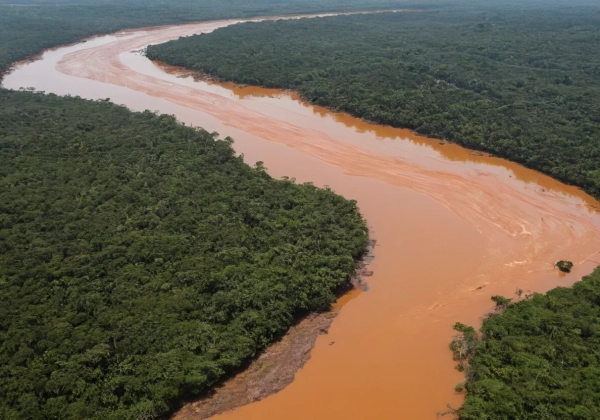
The illegal mining trade has reached a critical point in West Africa, with 11 of 14 districts in Ghana's Western Region facing total landscape devastation. The use of cyanide and mercury has poisoned 60% of the nation's water bodies, leading to massive deforestation and public health crises. Similar environmental decay is reported in Senegal and Guinea, where bauxite and phosphate extraction have displaced thousands and destroyed agricultural livelihoods.
Human rights and insecurity
Criminal organizations and terrorist groups, including Boko Haram, have increasingly turned to illegal mining as a primary funding source. In Guinea and Nigeria, the exploitation of child labor is rampant within illicit gold mines. Furthermore, the convergence of human trafficking and mining is worsening, as migrants seeking passage to Europe are frequently trapped in forced labor or sexual exploitation within mining camps.
Economic and geopolitical impact
Corruption remains a primary barrier to development, with Africa losing over $50 billion annually to illicit financial flows. The Independent Corrupt Practices and Other Related Offences Commission (ICPC) has identified systemic tax avoidance by multinationals and bribery among local officials that allow unauthorized mining to persist.
Global instability, specifically the 2026 conflict in Iran, has exacerbated these domestic issues. The surge in oil prices toward $120 per barrel and the diversion of shipping around the Cape of Good Hope have significantly increased operating costs for legitimate mines. As the West seeks to reduce its reliance on adversarial mineral supplies, African nations face a volatile market characterized by high debt and infrastructure vulnerability.
Share now






Key takeaways
- Over 60% of Ghana's water bodies are contaminated with mercury and cyanide due to illegal mining activities.
- ECOWAS member states lose an estimated $8.8 billion annually to corruption and illicit financial flows.
- Approximately 95% of gold from East and Central Africa is systematically laundered through Dubai.
- The 2026 Iran war is projected to reduce African economic growth by up to 1.5 percentage points due to energy price spikes.
- Rebel groups like the M23 generate approximately $800,000 monthly from mineral smuggling in the DRC.
Sources
- gna.org.ghhttps://gna.org.gh/2026/03/illegal-mining-evolving-into-human-national-security-threat-gangerism-and-degradation/
- africanliberty.orghttps://www.africanliberty.org/2026/02/09/how-illegal-mining-is-undermining-ghanas-future/
- interpol.inthttps://www.interpol.int/en/News-and-Events/News/2025/INTERPOL-operation-highlights-the-human-and-environmental-impact-of-illegal-mining-in-Western-Africa2
- africanminingmarket.comhttps://africanminingmarket.com/african-governments-urged-to-adopt-strategic-communication-to-tackle-illegal-mining/24925/
- atlanticcouncil.orghttps://www.atlanticcouncil.org/in-depth-research-reports/issue-brief/chinese-mining-in-west-africa/
